
What is Deep Cleaning? A Complete Homeowner's Guide
What is deep cleaning and is it worth it? Our expert guide explains the difference from regular cleaning, provides a full checklist, and covers costs.
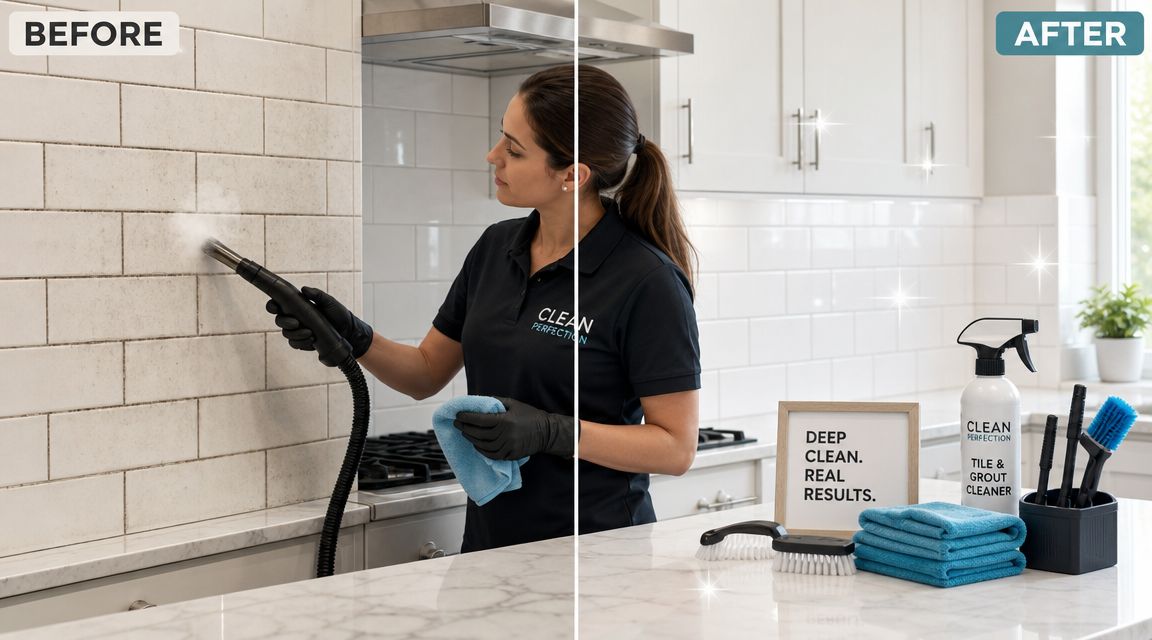
You vacuumed, wiped the counters, straightened the pillows, and the house still doesn't feel clean. That's the moment most homeowners start asking what is deep cleaning, and the answer matters more than people think.
A tidy home looks under control. A thoroughly cleaned home feels reset. The difference usually shows up in the places daily life hits hardest: kitchen grease that's settled into corners, bathroom buildup around fixtures, dust collecting on trim and vents, grime along baseboards, and residue that routine wipe-downs never fully remove.
For busy homeowners in Massachusetts, especially in places like Wellesley, Weston, Needham, Newton, and Wayland, deep cleaning isn't just a bigger chore. It's a practical way to protect indoor comfort, preserve surfaces, and bring a home back to a healthy baseline after heavy use, seasonal shifts, moves, or renovation work.
Deep Cleaning vs Regular Cleaning The Real Difference
A lot of homes in Wellesley or Weston look fine at first glance. Counters are clear, floors are vacuumed, and the bathroom has had a quick wipe. Then sunlight hits the trim, the kitchen starts to hold onto cooking odors, and the house feels tired anyway. That gap is the difference between regular cleaning and deep cleaning.
Regular cleaning handles day-to-day mess so the home stays livable and presentable. Deep cleaning removes the buildup that slowly affects air quality, surface condition, and how a room feels to live in. For busy Massachusetts homeowners, that difference matters because our homes stay closed up for long winters, track in sand and salt, and collect dust in places weekly cleaning rarely reaches.
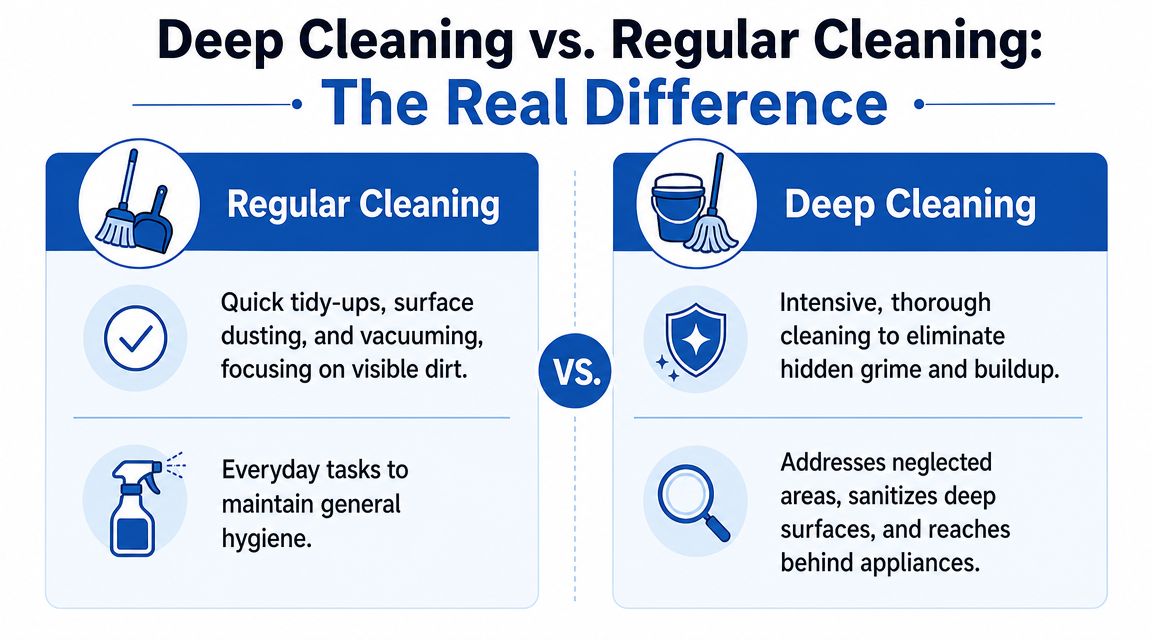
What regular cleaning is meant to do
Regular cleaning is maintenance work. It keeps obvious dirt under control and prevents the house from slipping into chaos between more detailed cleanings.
That usually includes:
- Surface wipe-downs: Counters, tables, and common touch points
- Floor maintenance: Sweeping, vacuuming, or light mopping in open areas
- Basic bathroom cleanup: Toilet, sink, and mirror touch-ups
- Kitchen upkeep: Exterior appliance wipe-downs and sink cleaning
- Visible dusting: Shelves, furniture tops, and reachable surfaces
This work has real value. It protects routines, makes the home easier to manage, and reduces how fast mess builds up. But it does not fully remove grease film, soap scum, dust along trim, residue around fixtures, or grime that settles in corners and edges.
What deep cleaning is meant to do
Deep cleaning is corrective work. It brings the home back to a healthy baseline by removing settled residue, hidden dust, and stuck-on buildup that regular maintenance leaves behind.
At Sunny Day Pro Services, this is usually where homeowners notice the biggest change. Rooms smell fresher. Floors feel cleaner underfoot. Bathrooms stop looking dull around the edges. Kitchens function better because the trouble spots are no longer holding grease and residue. If you want a more targeted example, these kitchen deep cleaning steps that target grease and buildup show how much detail a true reset takes.
A true deep clean often includes:
- Edges and trim: Baseboards, door frames, switch plates, and corners
- Buildup zones: Soap scum, grease, hard water residue, and grout lines
- Hidden dust areas: Under furniture, behind movable items, vents, and ledges
- Overlooked surfaces: Cabinet fronts, appliance handles, and interior problem spots
- Contact-heavy areas: Places hands touch often but rarely get detailed sanitizing
One practical rule helps homeowners decide. If a room looks decent but still feels sticky, smells stale, or seems impossible to keep up with, regular cleaning is no longer enough.
| Area | Regular cleaning | Deep cleaning |
|---|---|---|
| Goal | Keep the home presentable | Restore the home to a healthier, cleaner baseline |
| Focus | Visible mess and daily hygiene | Embedded grime, residue, and neglected details |
| Typical effort | Faster, recurring upkeep | Slower, detailed, restorative work |
| Best for | Weekly maintenance | Seasonal resets, move-ins, move-outs, post-renovation |
| Result | House looks neat | House looks clean and feels clean |
The trade-off is simple. Regular cleaning saves time in the short term. Deep cleaning protects more in the long term. It helps preserve finishes, reduces allergen-heavy dust, cuts odor sources, and keeps small buildup problems from turning into expensive wear on kitchens, bathrooms, and high-use surfaces. For homeowners who care about health, comfort, and property value, that is a smart investment, not just a bigger chore.
Your Ultimate Deep Cleaning Task Checklist
When homeowners ask what is deep cleaning, they usually want a real checklist, not a vague promise. Here's what a thorough home deep clean typically includes when the goal is to remove buildup, not just improve appearances.
Kitchen deep cleaning tasks
The kitchen usually needs the most detailed labor because grease and food residue spread farther than people realize.
- Cabinet fronts and handles: Remove fingerprints, cooking film, and sticky residue
- Backsplash and wall areas near cooking zones: Cut through splatter that routine wiping misses
- Counter edges and seams: Clean creases where crumbs and grease collect
- Sink and faucet detail work: Disinfect and remove residue around the base and fixtures
- Appliance exteriors: Clean fronts, sides, handles, control panels, and top surfaces
- Microwave interior: Remove food splatter and lingering odor
- Stovetop detailing: Scrub burners, grates, and edges where grease hardens
- Floor edges and corners: Reach beneath toe-kicks and around appliances where debris settles
If your kitchen is the main stress point in the house, this more focused guide on kitchen deep cleaning steps that target grease and buildup can help you set priorities.
Bathroom deep cleaning tasks
Bathrooms need more than a quick wipe because mineral deposits, soap film, and bacteria all build on different surfaces in different ways.
- Shower and tub scrubbing: Remove soap scum and residue from walls, doors, and fixtures
- Grout attention: Scrub lines where discoloration and trapped soil show up first
- Toilet detailing: Clean base, hinges, exterior surfaces, and surrounding floor area
- Vanity cleanup: Address splashes, product residue, and drawer-front buildup
- Mirror and glass polishing: Remove haze and water spotting
- Sink and faucet work: Target hard water marks and grime around hardware
- Vent and light dusting: Reduce overhead dust in a moisture-heavy room
Bedrooms and living areas
These rooms often look clean before they are thoroughly clean. Dust settles unobserved, especially around fabrics, trim, and furniture edges.
- Baseboards and trim: Wipe away dust lines and scuff buildup
- Window sills and ledges: Clean dust, debris, and residue
- Door frames and switch plates: Remove hand oils and accumulated dirt
- Furniture-accessible zones: Vacuum or clean under and around beds, chairs, and tables
- Ceiling fans and reachable fixtures: Remove settled dust before it spreads again
- Closet edges and corners: Address areas that don't get touched in weekly cleaning
A room can be uncluttered and still carry weeks of dust, oils, and residue. Deep cleaning fixes that mismatch.
Whole-house deep cleaning details
Some tasks belong on every serious checklist because they affect the overall feel of the home.
- High-touch surfaces: Handles, knobs, railings, and switch plates
- Baseboard lines throughout the home: Especially in hallways and stair areas
- Spot cleaning on doors and walls: Where traffic leaves marks
- Floor detail work: Not just open floor space, but edges, corners, and around fixed features
- Dust removal from neglected surfaces: Tops of frames, trim details, vents, and hard-to-reach horizontal surfaces
A good checklist doesn't just ask, “What's dirty?” It asks, “What gets skipped every week?”
Key Moments to Schedule a Professional Deep Clean
A house in Wellesley can look perfectly under control on Friday night. Floors are picked up. Counters are clear. Then sunlight hits the window trim Saturday morning, the guest bathroom still smells faintly musty, and the kitchen corners tell the complete story. That is usually when homeowners realize they do not need another quick reset. They need a deep clean.
The right time to schedule one is usually tied to a change in how the home is being used. Deep cleaning makes the most sense when buildup, dust, residue, or wear have moved past what weekly upkeep can reasonably handle. In Massachusetts homes, that often has less to do with the calendar itself and more to do with seasons, moves, projects, and heavy use.

Moving in or moving out
Moves expose the parts of a home that get ignored for years. Once furniture is gone, you see the dust along baseboards, the grime inside cabinets, the residue around appliances, and the buildup in closets and bathroom corners.
For a move-in, deep cleaning gives you a healthier starting point before your own belongings come in. For a move-out, it protects how the property shows and cuts down on last-minute stress. If a relocation is coming up, this guide to house cleaning for moving explains where detailed cleaning pays off most.
Seasonal resets in Massachusetts homes
Homes in Weston, Wellesley, Newton, and similar towns go through real seasonal wear. Winter brings salt, sand, moisture, and closed-up air. Spring makes settled dust more obvious. By fall, many families are heading back indoors, windows stay shut longer, and the house starts holding onto more indoor residue.
A seasonal deep clean helps protect finishes and improve day-to-day air quality, especially in homes with rugs, upholstered furniture, pets, or forced-air heat. It is also a practical way to keep small issues from turning into stubborn ones.
After renovation or construction work
Post-renovation dust is different from ordinary household dust. It spreads farther, settles into finer spaces, and keeps reappearing if the cleanup is not detailed enough. We see it collect on trim, inside vents, along window ledges, and in floor edges long after the visible debris is gone.
A home can look finished and still have construction dust circulating through it.
That matters for comfort, but it also matters for maintenance. Fine dust can keep settling onto surfaces, dull finishes, and make a home feel dirty again almost immediately.
Before hosting or after heavy house use
Holiday hosting, graduation parties, long weekends with family, and school-break traffic all put extra pressure on kitchens, bathrooms, floors, and entry points. Surface cleaning helps a house look ready, but it does not remove the built-up grime that guests notice in corners, fixtures, and high-touch areas.
The same logic applies after the event. Once the house has taken on extra foot traffic, spills, and bathroom use, a professional deep clean restores it faster and more thoroughly than trying to chip away at it room by room.
When the house feels harder to keep up with
This is one of the clearest signs. The home starts feeling dusty sooner after cleaning. Floors stay tacky. Bathrooms lose that fresh feel quickly. Kitchen surfaces seem to collect grease faster than they should.
That pattern usually means residue is sitting in the background and regular cleaning is spending too much time maintaining the visible layer. A deep clean resets the home so routine upkeep starts working again.
For many busy homeowners, that reset is not just about appearances. It protects materials, improves comfort, and helps the home hold its value over time.
DIY Deep Clean vs Hiring a Professional Service
A common Saturday plan in Wellesley or Weston goes like this. Clear the schedule, pull out the mop, buy a few extra cleaners, and expect to reset the house in a day. By late afternoon, the counters look better, one bathroom is partly done, and the baseboards, shower buildup, vent covers, and kitchen grease are still waiting.
That gap is the fundamental difference between tidying up and deep cleaning. Deep cleaning asks for time, product knowledge, hand-detailing, and access to areas that are easy to skip when the job is your own weekend.
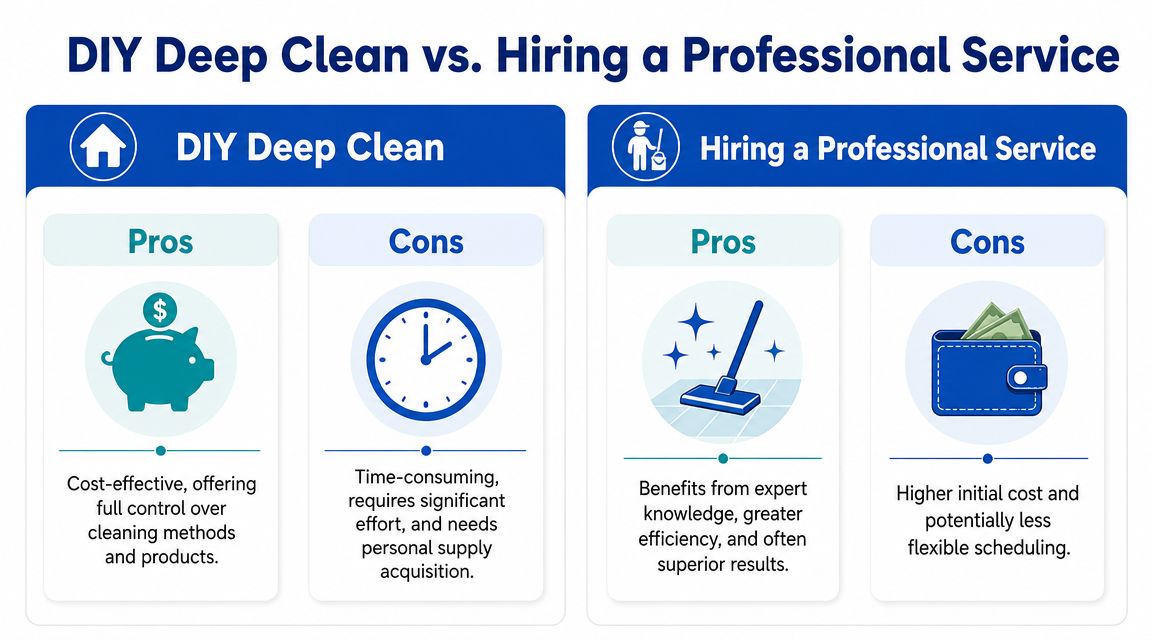
Where DIY makes sense
DIY works well when the home is already fairly well maintained and the goal is a focused reset, not a whole-house recovery.
It usually makes sense when:
- Buildup is light: Everyday dust, minor soap film, and routine kitchen residue
- The scope is limited: One or two rooms instead of the entire home
- You know your surfaces: You understand what is safe for natural stone, sealed wood, painted trim, stainless steel, and grout
- You have the right tools: A good vacuum, microfiber cloths, scrub brushes, mop system, and surface-safe products
- You can spread the work out: A staged plan over several days is often more realistic than trying to finish everything at once
For homeowners who are disciplined and detail-oriented, DIY can absolutely get good results. The trade-off is that your time becomes part of the cost, and that cost is usually higher than people expect.
Where DIY usually falls short
Deep cleaning gets harder when the job has age, buildup, or square footage behind it.
The trouble spots are predictable:
- Grout and textured tile: Soil sinks below the surface and does not wipe off easily
- Kitchen grease: Cabinet faces, backsplash lines, trim edges, and areas above the range collect residue slowly, then all at once
- Hard water deposits: Shower glass, faucets, tile edges, and drain surrounds often need the right chemistry and technique
- Post-renovation dust: Fine particles settle again and again, especially around trim, vents, and upper surfaces
- Large homes: The challenge is not one hard task. It is the accumulated detail work across bathrooms, bedrooms, stairs, fixtures, and edges
This matters for more than appearance. In Massachusetts homes, especially larger properties with multiple baths, mudrooms, finished basements, and detailed millwork, missed buildup can shorten the life of finishes and keep the house feeling dusty or worn even after hours of effort.
What professionals do differently
Professional deep cleaning works because the process is controlled from start to finish. Standards for deep cleaning equipment and surfaces describe a method that includes removing loose dust and debris first, preparing the correct solutions, testing in inconspicuous areas for color fastness or shrinkage, applying treatment methodically, and using specialized agents such as heavy-duty degreasers, de-waxers, acid cleaners, solvent degreasers, waxes, and polishes, as outlined in these UK deep cleaning standards.
That sequence protects the home. More product does not mean better cleaning. Wrong product choice or poor dwell time can haze stone, dull metal, weaken sealers, or leave residue that attracts new soil faster.
At Sunny Day Pro Services, we see this often after well-intentioned DIY attempts. The issue usually is not effort. It is using household tools and general-purpose products on buildup that needs a more deliberate approach.
Field note: Good deep cleaning depends on chemistry, agitation, and judgment. If one is off, the result is usually incomplete or the surface pays for it.
Time, cost, and expected results
The fundamental choice is not just DIY versus professional service. It is whether the result justifies the time, physical work, and risk to surfaces.
DIY usually costs less in direct dollars. It costs more in labor, lost weekend time, repeat work, and the chance that some areas still need professional attention later. Hiring a service costs more upfront, but it often produces a fuller reset in one visit, especially in homes where buildup has been steadily building for months.
As noted earlier, cleaning prices have risen in recent years. That makes the decision worth thinking through carefully. If you are comparing options, weigh the quote against what you are buying. Better access, better equipment, trained technique, and a result that helps regular maintenance work again.
For homeowners deciding whether outside help makes sense, local deep cleaning services near you are often the better choice for move-related cleaning, post-renovation cleanup, or whole-home detail work that affects comfort, indoor air quality, and resale readiness.
A practical rule works well here. Handle it yourself if the buildup is light, the surfaces are straightforward, and the job fits your real schedule. Hire a professional when the home needs a true reset that protects materials, improves day-to-day health, and saves you from spending two weekends getting halfway there.
How to Prepare for and Maintain a Deep Clean
A home can look picked up and still block a proper deep clean. In Wellesley, Weston, and other busy Massachusetts households, the difference usually comes down to access. If counters are crowded, floors are covered, and problem areas are not identified ahead of time, the appointment turns into part cleaning and part sorting. That lowers the value of the visit.
Before the appointment
Start by making the home workable.
Clear the surfaces the team needs to reach. Kitchen counters, bathroom vanities, shower ledges, and the floor around beds, toilets, and furniture matter more than decorative tidying. A cleaner can remove buildup from a surface. They should not spend paid time deciding where your paperwork, toys, chargers, or laundry belong.
Then set priorities. If hard water on shower glass is the issue, say that. If the kitchen needs attention because grease has collected around the range and cabinets, say that. Older homes in Massachusetts often have a mix of delicate finishes, painted trim, natural stone, and newer replacement materials in the same room, so surface notes help prevent damage and wasted time.
A few prep steps make the service more productive:
- Declutter the high-use zones: Counters, vanity tops, bedside tables, mudroom benches, and stair landings
- Secure pets: It keeps animals calmer and lets the team work room to room without interruption
- Open access around fixtures and appliances: Move small bins, bath mats, and lightweight items when possible
- Flag sensitive materials: Mention marble, unsealed grout, specialty wood finishes, or fresh caulk
- Confirm the scope: Ask whether inside appliances, baseboards, blinds, and hand-wiped trim are included
Good preparation saves time. It also improves results, because the crew can focus on soil removal instead of basic pickup.
After the deep clean
A true deep clean resets the home. The next goal is protecting that reset long enough for it to pay off in comfort, air quality, and less wear on surfaces.
That does not require daily perfection. It requires consistent habits in the spots where buildup returns fastest. In my experience, homeowners get the best return by treating kitchens, bathrooms, entryways, and floors near exterior doors as maintenance zones. In Massachusetts, that matters even more through wet spring weather, winter sand and salt, and the leaf debris that gets tracked in during fall.
This quick video walks through helpful upkeep habits:
Simple habits that make the clean last
- Wipe moisture off fixtures and glass: Standing water leaves mineral film and shortens the fresh-clean look in bathrooms
- Remove cooking residue early: Grease on backsplash tile, cabinet faces, and range hoods gets harder to break down once it cures
- Vacuum edges and under furniture fronts: Dust lines start along baseboards, vents, and room perimeters
- Keep entry dirt contained: Use mats, shake them out, and stay ahead of grit that scratches hardwood and dulls tile
- Rotate one detail task each week: Baseboards, fan blades, switch plates, door frames, and vents stay manageable that way
- Wash bedding and clean bathrooms on a steady schedule: Regular attention slows the return of odors, dust, and soap buildup
The best maintenance plan is realistic. Busy homeowners do better with a short repeatable routine than a long list they abandon after two weeks.
A deep clean has long-term value only if the home stays within reach of that standard. Done well, maintenance protects indoor air quality, reduces wear on finishes, and makes the next professional visit lighter, faster, and less expensive.
Frequently Asked Questions About Deep Cleaning
How long does a professional deep clean take?
It depends on the home's size, layout, condition, and the scope of work. A tidy house with light buildup moves much faster than a home with neglected bathrooms, heavy kitchen grease, pet hair, or post-renovation dust. The better question to ask is what's included and which areas are the priority.
Is deep cleaning worth it if I already clean every week?
Usually, yes. Weekly cleaning maintains order. Deep cleaning deals with the residue and hidden dirt that slowly build up around that routine. If your home looks fine but never feels fresh for long, that's often the sign.
Can eco-friendly products still be used for a deep clean?
Yes, in many cases. Eco-friendly options can work well for a lot of deep cleaning tasks, especially general soil, dust, and routine buildup. The key is matching the product to the surface and the type of residue. Some situations may still require stronger specialty chemistry, especially for heavy grease, mineral buildup, or construction residue.
Will deep cleaning remove every stain?
No cleaner should promise that. Some stains lift well. Others have permanently altered the material, especially on grout, natural stone, old caulk, damaged finishes, or porous surfaces. A good professional will tell you the difference between cleanable soil and permanent discoloration.
Is deep cleaning a one-time service or something to repeat?
Both can be true. Some homeowners book it for a move, renovation, or seasonal reset. Others use it periodically to restore the home before returning to maintenance cleaning. The right schedule depends on how quickly buildup returns and how much detail work you want to handle yourself.
What should I ask before booking?
Ask what rooms are included, whether inside appliances are part of the service, if supplies are provided, how delicate surfaces are handled, and what level of decluttering is expected beforehand. Clear scope prevents disappointment.
If your home looks tidy but doesn't feel fully clean, Sunny Day Pro Services can help you decide whether a deep clean makes sense for your space, your schedule, and your priorities. Request a quote to get clear next steps for move-in, move-out, post-construction, or whole-home deep cleaning in Massachusetts.

