
How to Get Rid of Gnats with Spray: Your 2026 Guide to a Pest-Free Home
Tired of gnats? Find the ultimate get rid of gnats spray solutions. Our 2026 guide has DIY and pro tips for a pest-free home.
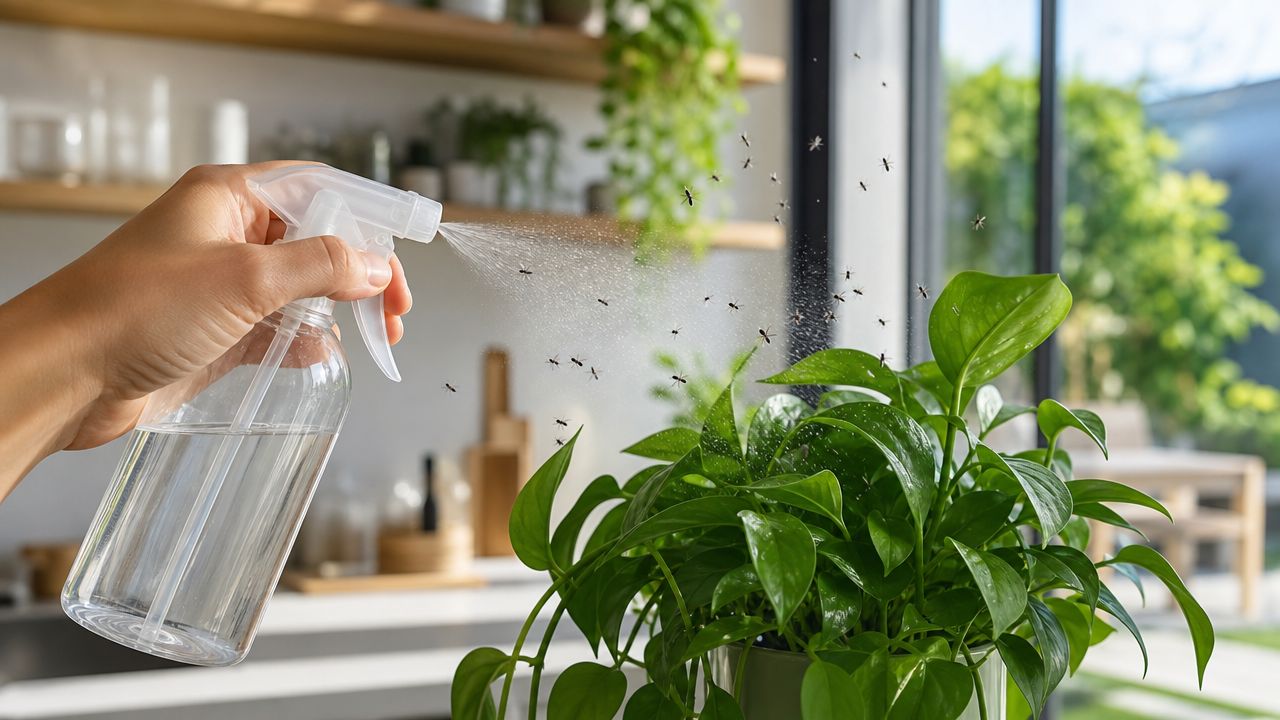
It’s a uniquely frustrating experience: a persistent cloud of tiny, buzzing gnats that has taken over your home. You swat, you spray, but they always seem to come back. What gives?
The secret to winning this battle isn’t just swatting them out of the air. The real solution is a two-part strategy: first, you have to play detective and figure out what kind of gnat you're dealing with to find their breeding ground. Then, you can use the right get rid of gnats spray to eliminate the adult population for good. If you skip that first step, you're just fighting a battle you can't win.
Table of Contents
- Are DIY gnat sprays really effective?
- How can I make my gnat spray pet-safe?
- Why do gnats keep coming back after I spray?
- Can I use the same gnat spray indoors and outdoors?
Your Action Plan for Immediate Gnat Control
When you spot gnats swarming your kitchen, houseplants, or patio in Weston, MA, you need a plan that works—and works fast. I've seen countless homeowners get frustrated because they spray and spray, only to have the gnats return the next day. This happens because a scattered approach just doesn't cut it.
Real success comes from spending a few minutes identifying the problem before you even pick up a spray bottle.
Know Your Enemy: Identify the Gnat
Your first move is to figure out exactly what you’re up against. Different gnats have different habits and hangouts, and knowing which is which is crucial for effective treatment.
- Fungus Gnats: These little pests look like tiny black mosquitoes and are almost always found near houseplants. If you see gnats hovering around your indoor plants, you’ve likely got fungus gnats. They thrive in damp potting soil, where their larvae feed on fungus and decaying organic matter.
- Fruit Flies: Often mistaken for gnats, these are usually tan with noticeable red eyes. True to their name, they're attracted to fermenting sugars. You'll find them buzzing around your fruit bowl, open bottles of wine, or a sticky recycling bin.
- Drain Gnats (or Phorid Flies): These are fuzzy, darker, and have a moth-like appearance. They breed in the slimy, organic gunk that builds up inside sink drains, garbage disposals, and shower pipes. Their presence is a tell-tale sign that your drains are due for a serious cleaning.
Once you’ve identified the culprit, you can confidently choose a fast-acting spray and, more importantly, target the source.
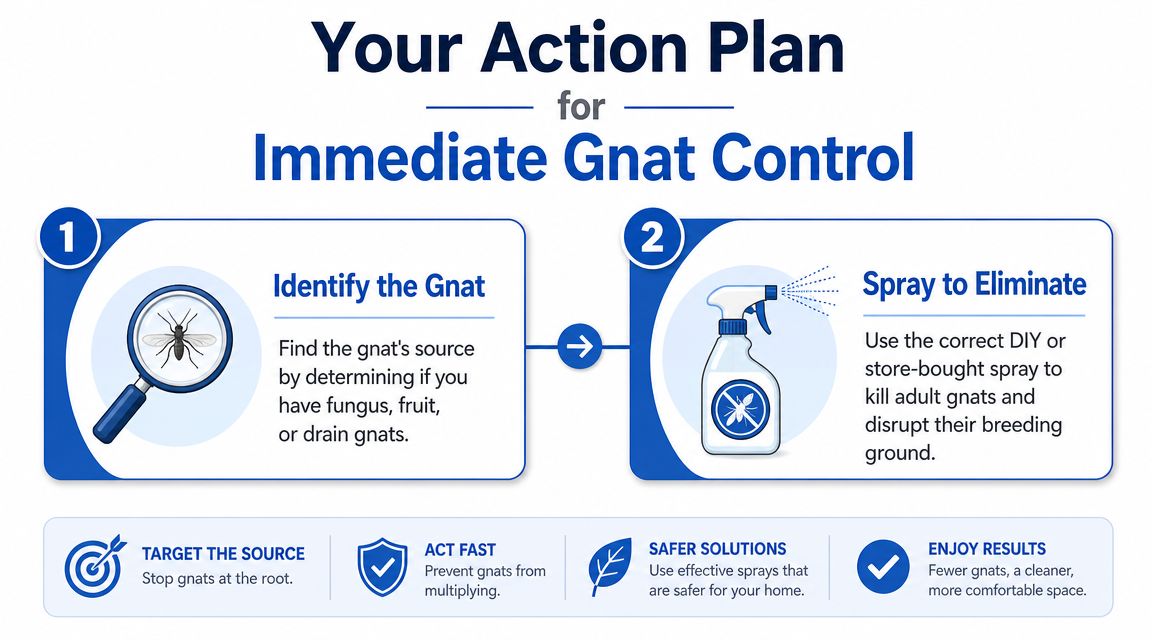
As the infographic highlights, the only way to truly break the gnat life cycle is to tackle both the adult gnats you see and the source where they lay their eggs. Just spraying the air gives you temporary relief, but eliminating their breeding ground is what provides a lasting solution.
This approach fits perfectly with good home hygiene. For more ideas on keeping your home pest-free, check out our spring cleaning hacks for a healthier home.
Choosing the Right Gnat Spray for Inside and Outside Your Home
The spray that saves your indoor fiddle-leaf fig from fungus gnats is not the one you want to use on your patio before a barbecue. I’ve seen this mix-up happen time and again, and grabbing the right product is half the battle won, especially for those of us in places like Needham and Wellesley dealing with our classic humid Massachusetts summers.
Think about the environment first. For inside your house, you need to be surgical. You’re looking for a spray that’s safe to use around your family, your pets, and your prized houseplants. Most indoor-safe options use gentler active ingredients, often plant-based oils or insecticidal soaps, designed specifically to tackle pests like fungus gnats without scorching your plant’s leaves.
Differentiating Indoor and Outdoor Sprays
| Feature | Indoor Gnat Sprays | Outdoor Gnat Sprays |
|---|---|---|
| Primary Use | Targeted treatment for houseplants (soil) and small indoor areas. | Creating a defensive barrier on patios, decks, and foliage. |
| Active Ingredients | Often pyrethrins, insecticidal soaps, neem oil, or hydrogen peroxide-based. | Typically stronger pyrethroids (e.g., bifenthrin, permethrin) for residual effect. |
| Safety Profile | Formulated for use in enclosed spaces; lower odor and residue. | Not safe for indoor air quality; requires ventilation and drying time. |
| Longevity | Short-term effect, requires reapplication to break life cycle. | Can provide protection for up to several weeks on treated surfaces. |
Once you step outside, the game changes entirely. You're no longer just spot-treating a single plant; you’re creating a defensive perimeter. Outdoor sprays are built to be tougher and provide residual protection that can withstand sun and rain. These products often contain powerful ingredients like pyrethroids that stick to surfaces—think fences, decks, and foliage—killing gnats and other bugs on contact for weeks.
A critical mistake I see people make is using an outdoor barrier spray inside. These formulas can release fumes that are not safe in an enclosed space and are way too harsh for your delicate indoor plants. Always, always read the label to confirm where it’s meant to be used.
Maximizing Value with Multi-Pest Formulas
For outdoor use, many multi-pest formulas offer fantastic value. Instead of buying a different bottle for every little bug, you can find outdoor sprays that not only control gnats but also take care of mosquitoes, ticks, and fleas. Many of these products provide protection for up to four weeks on treated surfaces. This approach saves time and money, and you can see a great breakdown of a multi-pest barrier spray to understand how they work.
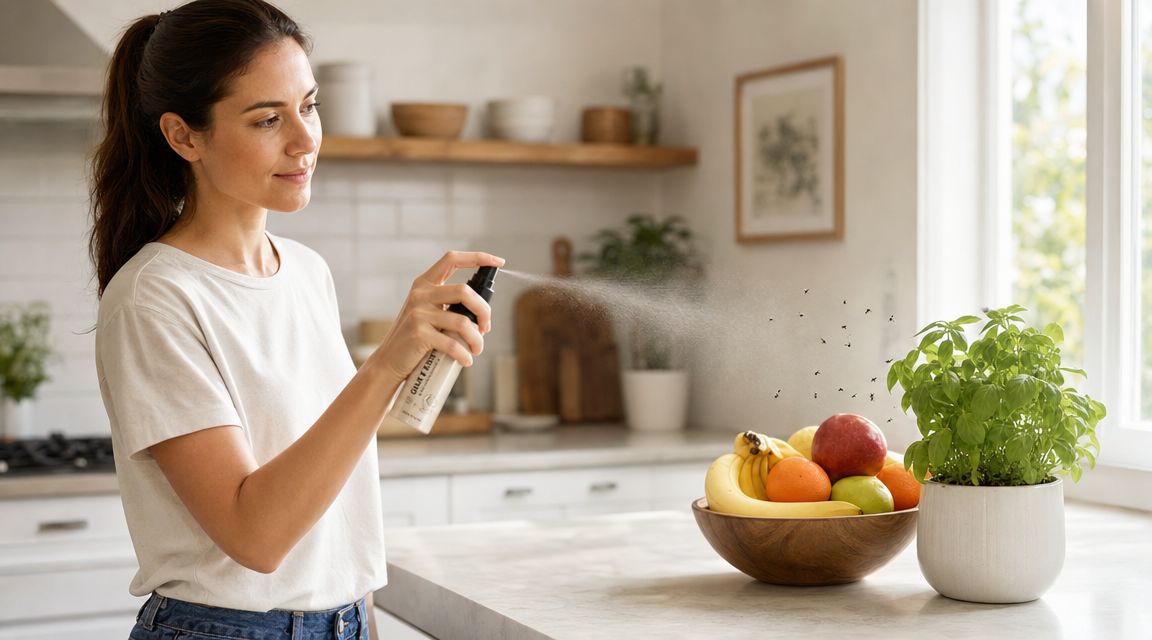
Ultimately, your most important job is to read the product label. It's your guide to not only where you can spray and what pests it targets but, more importantly, the safety precautions for your family and pets. If you're leaning toward non-chemical methods, our guide on eco-friendly cleaning products has some excellent alternatives for keeping your home healthy.
Mastering Gnat Spray Application Like a Pro
Choosing the right gnat spray is a great start, but your application technique is what will truly solve the problem. I’ve seen it time and again: people just spray clouds into the air, hoping for the best. That’s a temporary fix, not a real solution. To get rid of gnats for good, you have to be more strategic and target them where they live, breed, and rest.
How to Spray for Gnats Outdoors
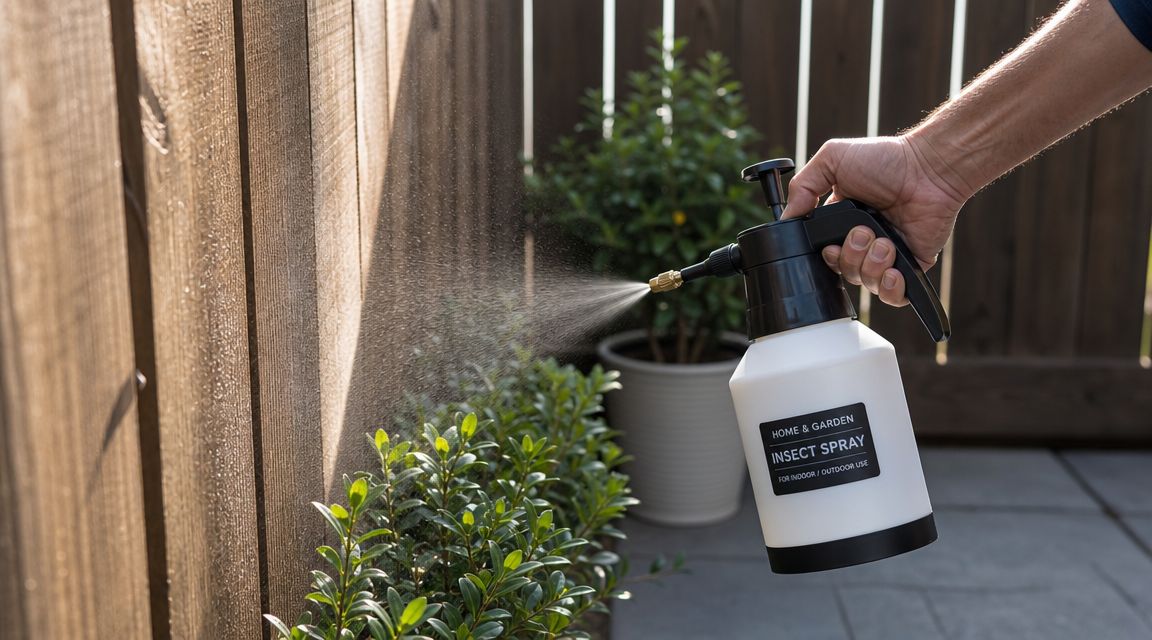
When you're dealing with gnats swarming your deck or patio, don't just spray the open air. Your goal is to create a defensive "barrier" on the surfaces where gnats land to rest.
Pro Tip: Gnats are notoriously weak fliers. They often cling to vertical surfaces to escape even the slightest breeze. Instead of wasting spray in open areas, concentrate on fences, the exterior walls of your house, dense bushes, and underneath deck railings. This turns those surfaces into a kill zone.
Think of it like you're painting. Apply an even, consistent coat of an outdoor get rid of gnats spray to these key resting spots. Many modern barrier sprays are designed to stick to surfaces, giving you protection that can last for weeks. For example, some products offer up to 4 weeks of defense on places like fences and shrubs, which is a total game-changer. It lets you treat your yard on a schedule, rather than reacting every time you see a swarm. You can learn more about how these long-lasting outdoor gnat treatments work.
How to Get Rid of Gnats in Houseplants
Now, when you take the fight indoors against fungus gnats, your strategy must shift. Forget the air; your real target is the soil in your houseplants. Zapping the adult gnats you see flying around is satisfying, but it does absolutely nothing to stop the next generation from hatching. The source of the infestation is the larvae thriving in the top inch or two of moist potting soil.
To break the life cycle, follow these steps:
- Let the Soil Dry Out: Fungus gnat larvae cannot survive in dry soil. Before you spray, make sure the top one to two inches of soil are completely dry to the touch. This makes the environment less hospitable and allows the treatment to penetrate better.
- Saturate the Top Layer of Soil: You don’t need to drench the whole pot, but you must thoroughly spray the top one to two inches of soil with an indoor-safe gnat spray. This is where the gnat larvae live and feed.
- Stay Consistent: A one-and-done approach won't work. Fungus gnats go from egg to adult in about three to four weeks. You'll need to reapply the spray according to the product's directions (typically every 7-10 days for a few cycles) to eliminate newly hatched larvae and finally end the infestation. You can see this method in action in this helpful guide on fungus gnat control.
By combining a targeted spray routine with smarter watering habits (like watering from the bottom), you can finally reclaim your houseplants and get rid of those annoying fungus gnats for good.
When to Call a Professional for Gnat Problems
Let's be honest. You’ve mixed up every homemade gnat spray you can find, set out traps, and been vigilant about moisture. Yet, the gnats are still there. If you feel like you're fighting a losing battle, you're not alone. A stubborn infestation that just won't quit, even with your best efforts, is a huge red flag that the problem is bigger than what's buzzing in front of your face.
Sometimes, the issue isn't what you can see—it's what you can't. An unrelenting gnat problem often points straight to a hidden, large-scale breeding ground. Think of things like a slow, undetected pipe leak inside a wall, a backed-up drain line, or a serious buildup of organic gunk deep in your plumbing. These are places no surface spray can ever hope to reach.
When you’ve tried everything and the gnats keep coming back, it’s time to stop treating the symptom and find the source. This is where professional expertise isn't just helpful—it's necessary.

Signs It's Time for Expert Help
So, when do you make the call? Look out for these tell-tale signs that your DIY efforts aren't enough:
- The Infestation Spreads: Are you seeing gnats in the bathroom, the kitchen, and the living room? When they appear all over the house, it suggests a widespread problem or even multiple breeding sites.
- They Bounce Back Instantly: You spend an afternoon spraying and cleaning, and the next day, they’re back. If gnats return in full force within 24-48 hours, their source is still active and churning out new adults faster than you can eliminate them.
- You Can't Find the Source: You've searched everywhere—checked every plant, cleaned every drain—and come up empty. Professionals have specialized tools, like moisture meters and borescopes, and the experience to trace these pests back to hidden moisture pockets that the average homeowner would never find.
For those of us in the Wayland area, we've seen how frustrating this can be. If you're at your wit's end with a persistent pest issue, it might be time to address the root cause. Learn more about how our deep cleaning services are designed to eradicate those hidden breeding grounds for good and give you your home back.
FAQs: How to Get Rid of Gnats with Spray
Even with the best plan, it's natural to have a few lingering questions. Let's tackle some of the most common concerns I hear from homeowners in the Boston suburbs.
Are DIY gnat sprays really effective?
Yes, they can be, especially for minor issues. A simple mix of apple cider vinegar, water, and a few drops of dish soap in a bowl is a classic trap for fruit flies. For fungus gnats, a soil drench with one part 3% hydrogen peroxide to four parts water can kill larvae on contact. However, for a persistent or widespread infestation, a commercial product specifically formulated to get rid of gnats will provide more reliable and long-lasting control.
How can I make my gnat spray pet-safe?
This is a critical concern for pet owners. Always choose sprays labeled as "pet-safe" or those using natural ingredients like insecticidal soap. Avoid homemade recipes with essential oils known to be toxic to animals, such as tea tree, pennyroyal, or certain citrus oils (especially for cats). The golden rule is to keep pets out of the treated area until the spray has completely dried. When in doubt, consult your veterinarian.
Why do gnats keep coming back after I spray?
This is the most common frustration, and the answer is almost always the same: the breeding source is still there. Spraying kills the adult gnats buzzing around, but it does nothing to stop the eggs and larvae from maturing and starting the cycle all over again. If gnats return, you must re-investigate the source:
- Fungus Gnats: Your plant soil is still too wet.
- Drain Gnats: You still have organic gunk deep in your pipes.
- Fruit Flies: There's a missed spill or forgotten piece of fruit somewhere.
Can I use the same gnat spray indoors and outdoors?
No, and it's a critical safety mistake to do so. Outdoor-rated sprays contain stronger chemicals designed to withstand sun and rain, and their fumes are not safe for indoor air quality. Conversely, gentle indoor sprays are not powerful enough to be effective in an outdoor environment. Always read and follow the product label—it will clearly state where the product is designed to be used safely.
A gnat problem that won’t go away can be a sign of a deeper issue that regular cleaning just can't reach. For homeowners struggling with stubborn pests in Wayland, Newton, or the surrounding areas, Sunny Day Pro Services offers professional deep cleaning that targets the hidden grime and moisture where gnats thrive. Request your free estimate today and let us help you get your home back.

