
How Often Should You Deep Clean Your House? a 2026 Guide
How often should you deep clean your house? Our 2026 guide covers personalized schedules, key factors for your home, and when to call pros in the Boston area.
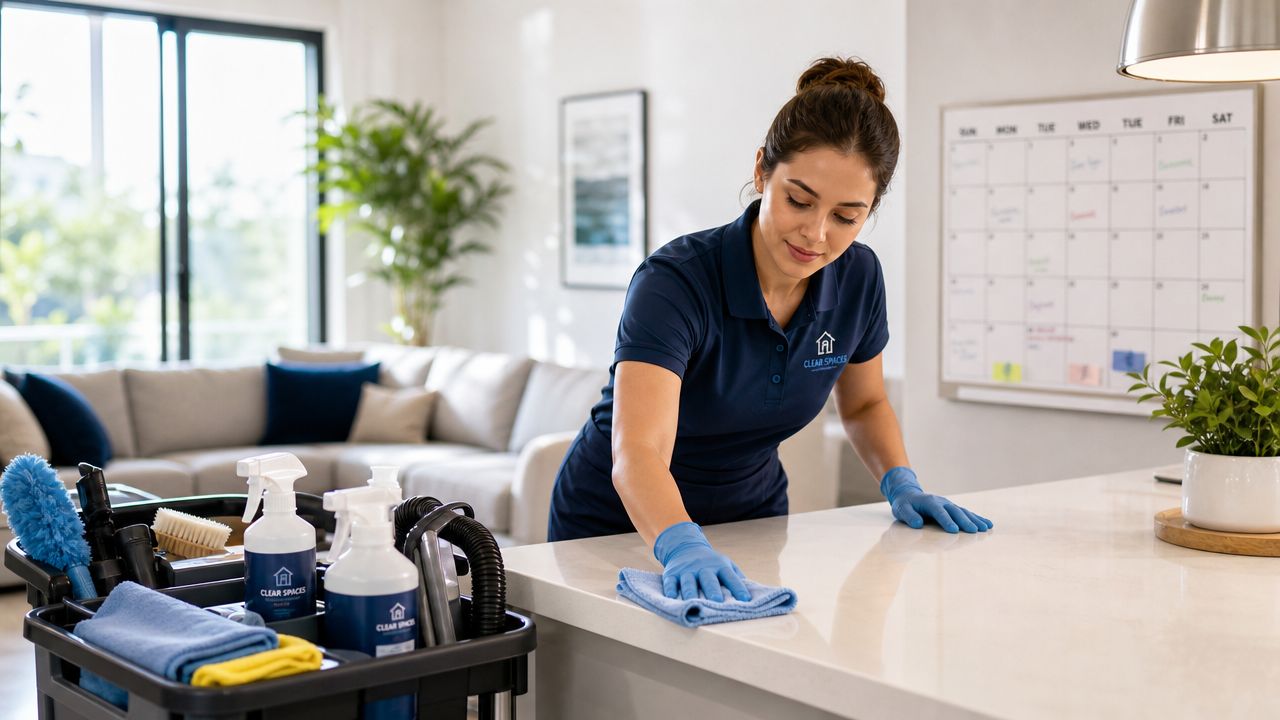
Most homes benefit from a deep clean 2 to 4 times per year, or about every 3 to 6 months. That's the general rule of thumb, but the right schedule for your house depends on who lives there, how you use the space, and what each season brings.
If you're reading this after vacuuming, wiping the counters, and straightening the living room, but your home still feels a little off, you're not imagining it. A house can look picked up and still need a deeper reset. That “still not clean” feeling usually comes from buildup in the places regular cleaning skips, like baseboards, grout lines, ceiling fans, inside appliances, under furniture, and the corners that collect dust.
For busy homeowners in places like Wayland, Newton, Needham, Wellesley, and Weston, the question usually isn't whether deep cleaning matters. It's how often should you deep clean your house without overdoing it or falling behind. The answer gets a lot easier when you stop looking for one universal schedule and start building one around your actual life.
Table of Contents
- Is deep cleaning the same as move-in or move-out cleaning
- Do I need to provide cleaning supplies
- What do people forget most during a deep clean
- Should I deep clean the whole house at once
That Feeling of 'Still Not Clean' and What to Do About It
A lot of homeowners hit the same wall. The floors are vacuumed, the pillows are fluffed, the sink is empty, and the bathrooms got a quick wipe-down. But the house still feels dull, dusty, or stale.
That's usually the moment when regular cleaning stops being enough.
According to Care.com's guidance on how often to deep clean a house, a widely cited baseline is that most homes should be deep cleaned 2 to 4 times per year, which works out to about once every 3 to 6 months. That seasonal rhythm fits ordinary households because deep cleaning isn't meant to replace your weekly upkeep. It fills the gap that routine cleaning leaves behind.
Why tidy doesn't always feel clean
The issue usually isn't clutter. It's residue.
Dust settles on trim, vent covers, blinds, and light fixtures. Grease settles on kitchen cabinet faces. Soap scum builds on shower walls even when the bathroom looks neat from the doorway. Over time, those layers change how a home smells, feels, and even how bright it looks in natural light.
Practical rule: If your home looks fine at eye level but feels heavy, stale, or harder to reset each week, you're probably dealing with hidden buildup rather than a housekeeping problem.
What to do instead of guessing
The biggest mistake I see is waiting until the house feels overwhelming. By then, every room takes longer, and the work feels bigger than it should.
A better approach is to treat deep cleaning like preventive maintenance:
- Use seasons as a reminder. Spring, late summer, fall, and mid-winter are natural checkpoints.
- Watch the hard-working rooms first. Kitchens and bathrooms usually show the earliest signs of buildup.
- Adjust for life changes. New puppy, new baby, working from home, frequent guests, and allergy flare-ups all change the cleaning load.
If you've been wondering how often should you deep clean your house, start with the broad answer above, then customize it. A smart schedule should make your home easier to maintain, not turn cleaning into a constant project.
Deep Cleaning vs Regular Cleaning What's the Difference
Regular cleaning maintains your home. Deep cleaning restores it.
The easiest comparison is dental care. Brushing keeps things under control day to day. A professional cleaning reaches the buildup that daily habits don't fully remove. House cleaning works the same way.
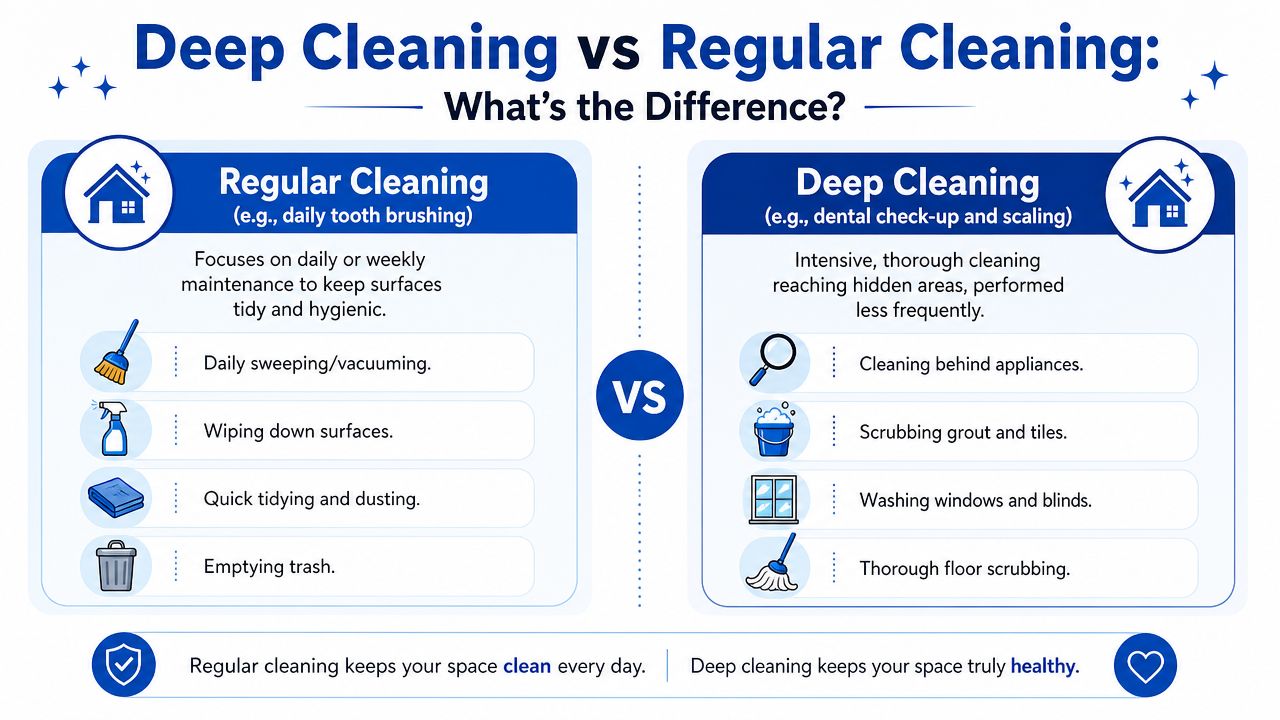
If you want a fuller definition, this guide on what deep cleaning includes breaks down the scope in more detail. The short version is that one type of cleaning keeps up appearances, and the other handles what slowly gets missed.
What regular cleaning covers
Regular cleaning focuses on visible, high-use surfaces and repeat tasks.
- Floors and rugs: Vacuuming, sweeping, and quick mopping in the main traffic paths.
- Kitchen touch-ups: Wiping counters, the sink, stovetop surface, and appliance exteriors.
- Bathroom basics: Cleaning the toilet, sink, mirror, and obvious splashes.
- General reset: Dusting reachable surfaces, taking out trash, and tidying common spaces.
This kind of cleaning keeps the home functional and presentable.
What deep cleaning adds
Deep cleaning goes after the grime that doesn't show up in a fast weekly pass.
- Behind and under furniture: Dust and debris collect where vacuum heads rarely reach.
- Detail work: Baseboards, door frames, switch plates, vents, blinds, and ceiling fan blades.
- Kitchen buildup: Cabinet fronts, backsplash splatter, inside appliances, and sticky residue around handles.
- Bathroom restoration: Grout lines, shower edges, tile buildup, and neglected corners around fixtures.
A home usually needs deep cleaning when regular cleaning starts taking longer but getting you less satisfaction.
That's the point where homeowners often feel stuck. They're still cleaning, but the results don't match the effort. Once the hidden grime is removed, weekly cleaning becomes lighter again.
Key Factors That Determine Your Deep Cleaning Frequency
The best deep cleaning schedule comes from your lifestyle, not a generic calendar. Two homes with the same square footage can need very different timing depending on how many people live there, whether pets are involved, and how much wear the house takes week to week.

For households with more activity, Texas Betty Miller Cleaning notes that quarterly deep cleaning is recommended for high-traffic, pet-friendly, or allergy-sensitive homes because buildup gets harder to remove after about six months, especially in kitchens and bathrooms.
Who lives in the home
A one-person household with neat habits won't load a house the same way a family does.
If you have kids, the cleaning pattern changes fast. Fingerprints show up on doors, crumbs travel farther than they should, and bathrooms need more attention. If you have pets, fur, tracked-in debris, nose prints, and dander add another layer. Even well-trained pets change the cleaning demands of a home.
Allergy-sensitive households also need a tighter rhythm. Dust on blinds, fabric surfaces, vents, and under beds doesn't stay politely in one spot. It moves back into the room every time air circulates or someone walks through.
How the house gets used
Some homes stay cleaner because people are gone for much of the day. Others work hard from morning to night.
A few common examples:
- Remote work households: More daytime use means more kitchen traffic, fuller trash bins, and faster dust accumulation in lived-in rooms.
- Frequent entertainers: Guest bathrooms, entryways, dining areas, and kitchen surfaces get used harder and need more restorative cleaning.
- Open-concept homes: Dirt spreads more visibly, but it also travels more easily between kitchen, living, and dining spaces.
- Homes with renovation dust or older finishes: Fine dust settles into trim, sills, and textured surfaces faster than expected.
If your home has people in it all day, every day, it usually needs a more active deep-cleaning cycle than a home that sits empty for long stretches.
What Massachusetts weather adds to the mix
Massachusetts homes deal with a very specific pattern of mess.
Spring often means mud, sand, and wet debris at the entry. Summer can bring open windows, pollen, and extra dust on sills and screens. Fall usually adds leaves and more foot traffic from outdoor activity. Winter creates its own indoor load because everyone spends more time inside, and that means more cooking, more bathroom use, and less fresh-air ventilation.
In towns like Needham, Wellesley, and Weston, I'd pay special attention to mudrooms, entry tile, rugs near exterior doors, bathroom exhaust covers, and window tracks. Those areas often tell the truth about how often the rest of the house needs a deeper reset.
Your Personalized Deep Cleaning Schedule and Checklist
Saturday morning starts with good intentions. You wipe the counters, run the vacuum, clean the bathroom sink, and by lunch the house still feels a little off. In my experience, that usually means the routine is fine, but the schedule is wrong for the way the home is being used.
A workable deep cleaning plan matches your traffic, your trouble spots, and the time of year. One home does well with a whole-house reset twice a year. Another needs kitchen and bath detail work every season because kids, pets, guests, or work-from-home days put more wear on the space. The goal is not to force every room onto the same calendar. The goal is to clean on a schedule you can keep without letting buildup get ahead of you.
A simple schedule you can match to your home
| Frequency | Household Profile | Key Focus Areas |
|---|---|---|
| Once or twice a year | Low-use home, smaller household, tidy routines, lighter day-to-day wear | Whole-home reset, inside appliances, baseboards, windowsills, forgotten corners |
| Every 3 to 6 months | Typical household with moderate daily activity | Kitchens, bathrooms, dusting high and low surfaces, floor edges, trim, blinds |
| Quarterly | High-traffic home, pets, kids, allergy concerns, frequent hosting, work-from-home lifestyle | Entryways, upholstered areas, bathrooms, kitchen buildup, fur and dust collection zones |
Use the table as a starting point, then adjust by room. A condo with one busy kitchen may need more kitchen attention than a large house with rarely used guest rooms. A family home in Massachusetts may also shift by season. Spring and winter usually create more pressure on entry areas, floors, and bathrooms, while summer often pushes window sills, screens, and dusting higher up the list.
One practical rule helps a lot. Schedule the whole-house deep clean by household type, then schedule problem rooms by condition. If the kitchen looks worn out a month before the rest of the house, treat it on its own cycle. For homeowners who want a stronger kitchen reset between full-house cleanings, this deep kitchen cleaning guide is a practical place to start.
Room-by-room deep cleaning checklist
A good checklist keeps the work honest. Visible surfaces get attention first, but the biggest improvement usually comes from the details that collect residue, dust, and grime over time.
Kitchen
- Appliance details: Clean inside the microwave, wipe refrigerator shelves, and degrease handles and control panels.
- Cabinet fronts: Remove cooking residue from doors, pulls, and edges near the stove.
- Sink zone: Scrub around the faucet base, drain area, and backsplash.
- Floor edges: Vacuum and mop along kick plates, corners, and under movable furniture.
Bathrooms
- Shower and tub surfaces: Scrub tile, grout, glass, and the edges where soap scum collects.
- Vanity and fixtures: Clean drawer fronts, faucet bases, and buildup around sink seams.
- Toilet surround: Get the base, wall area behind it, and floor edges.
- Vent and trim: Dust the exhaust cover, wipe baseboards, and clean overlooked wall splashes.
Bedrooms
- Under-bed cleaning: Remove dust and anything collecting beneath the frame.
- High dusting: Fan blades, light fixtures, curtain rods, and upper trim.
- Fabric touchpoints: Vacuum upholstered headboards, benches, or bedroom chairs.
- Closet edges: Wipe shelves and corners where dust settles.
Living areas
- Soft surfaces: Vacuum under cushions, along sofa edges, and beneath side chairs.
- Detail dusting: Clean blinds, baseboards, frames, lamps, and electronics exteriors.
- Entry zone reset: Wipe doors, trim, and any area where outdoor dirt gets introduced first.
- Floor perimeter work: Do not stop at the center of the room. The edges hold the dust.
Working method: Deep cleaning goes faster and comes out better when you work top to bottom and room by room. That keeps dust from falling onto surfaces you already finished.
If a full-house reset feels too big, break it into zones over several sessions. Start with kitchens and bathrooms. Then handle bedrooms. Finish with living spaces and detail work like trim, blinds, and baseboards. That approach is more realistic for busy homeowners, and it is also how many professional cleaners structure a deep-clean visit so the highest-impact areas get handled first.
Telltale Signs Your Home Needs a Deep Clean Now
Sometimes the calendar says you're fine, but the house says otherwise. That's why I tell homeowners to pay attention to what they can see, smell, and feel.
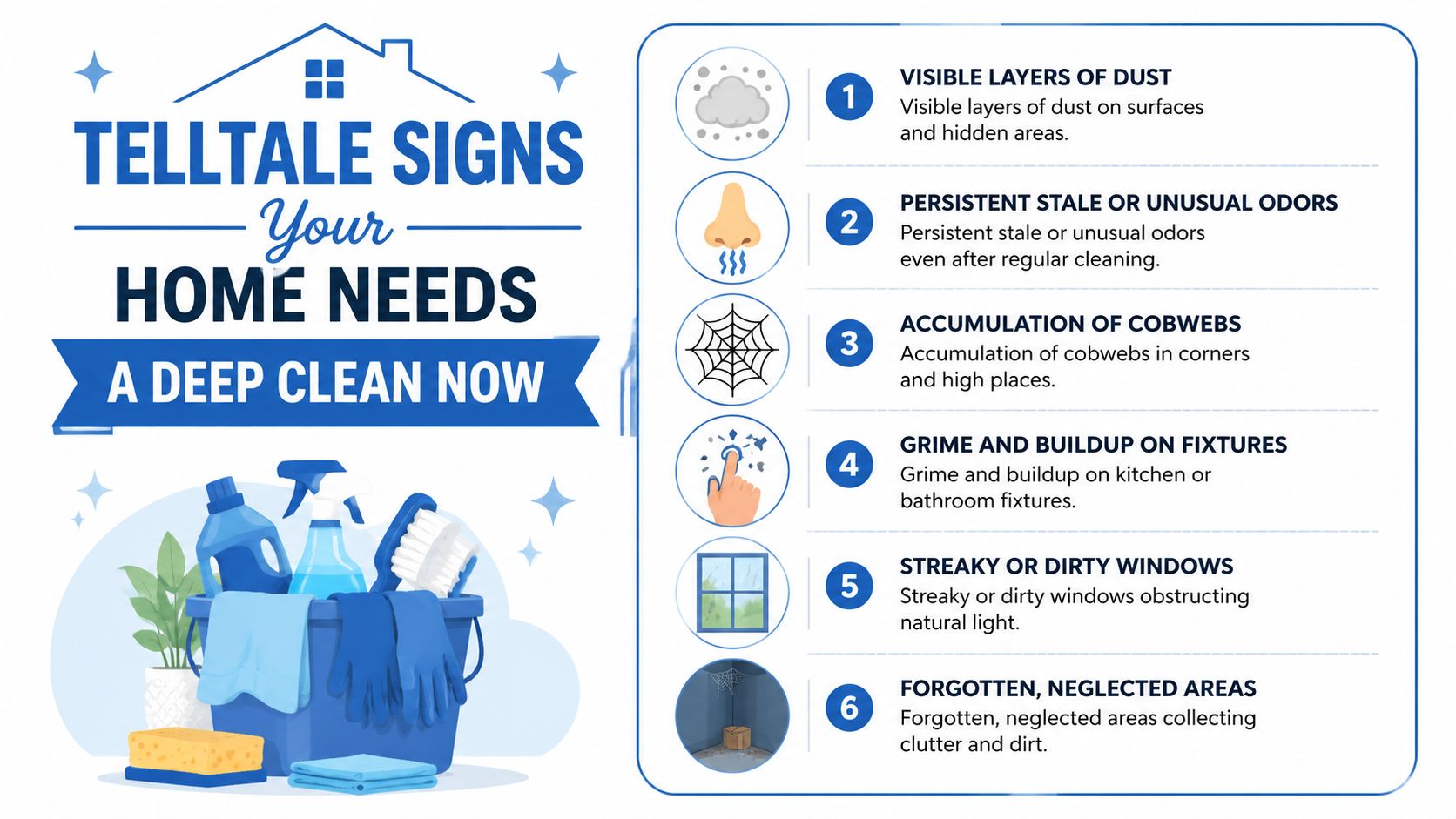
When several small signs show up at once, they usually point to one larger issue. The house isn't just messy. It's carrying buildup in the background.
What your senses are telling you
A home that needs deep cleaning often signals its need.
- The air smells stale: You clean the obvious surfaces, but the room still feels closed in or slightly musty.
- Kitchen surfaces feel tacky: That light film on cabinet doors or around the stove is residue, not clutter.
- Bathrooms never look fully bright: If tile, grout, or glass still looks dull right after cleaning, buildup is sitting deeper.
- Dust comes back immediately: That usually means neglected high and low surfaces are feeding it back into the room.
The areas homeowners miss most often
What gets skipped tends to repeat across homes.
Cobwebs in upper corners. Dust on fan blades. Dirt packed along baseboards behind furniture. Smudges around light switches and door frames. Window tracks that collect grit for months at a time. These aren't dramatic problems on their own, but together they change the whole feel of the home.
A few clues matter more than people think:
- Muted natural light from dirty interior glass, dusty blinds, or grimy sills
- Grime around fixtures in kitchens and bathrooms
- Corners that look darker than the rest of the room
- A home that feels harder to “freshen up” no matter how often you tidy
When you notice that pattern, don't keep chasing it with quick wipe-downs. Those signs usually mean it's time for a deeper pass.
DIY Deep Cleaning vs Hiring a Professional Service
A DIY deep clean sounds manageable until Saturday turns into a full day of scrubbing, moving chairs, rinsing cloths, and circling back to the same room because the details took longer than expected. That does not mean you should always hire it out. It means the right choice depends on what kind of home you have, how much buildup you are dealing with, and which resource is tighter right now: time, energy, or budget.
For some homeowners, doing it yourself is the better call. If your home gets regular upkeep, the work usually stays within reach. You can break the house into zones, use the products you trust on your own surfaces, and spread the job over a week instead of losing a whole weekend.
When DIY makes sense
DIY deep cleaning tends to work well when the goal is maintenance, not recovery.
It is a practical option if you:
- Keep up with regular cleaning: There is less grease, soap scum, dust buildup, and neglected detail work to fight through.
- Can work in stages: One bathroom, then the kitchen, then bedroom trim and baseboards is more realistic than trying to do everything in one push.
- Have the right tools on hand: A good vacuum with attachments, microfiber cloths, scrub brushes, a safe degreaser, and a sturdy step stool make a big difference.
- Know your surfaces: Natural stone, specialty finishes, wood cabinets, and older grout all need the right approach.
The cost savings are real. So is the labor.
When hiring help is the better trade-off
Professional service makes more sense when the house needs a true reset, not just extra attention.
I see this most often in busy family homes, homes with pets, houses getting ready for guests, and properties that have fallen behind during a hectic season. In Massachusetts, that can happen fast. Winter tracks in sand and salt. Spring brings pollen. Summer adds humidity, and fall often kicks off holiday hosting. The cleaning schedule that worked in February may not work in October.
A service such as professional deep cleaning services for whole-home resets can also make sense when the task list includes heavier detail work, like buildup in bathrooms, grease around kitchen cabinets, dust on trim and vents, or post-project residue after repairs.
Hiring out deep cleaning is often less about convenience and more about getting your home back to a condition that regular weekly cleaning can actually maintain.
That is the trade-off. DIY usually costs less out of pocket. Professional service gives you back hours, handles the hard-to-reach and easy-to-delay tasks, and often gets better results in one visit because the team arrives with a system.
The best choice is the one that fits your current season of life. Some homeowners deep clean their own homes most of the year and bring in help before holidays, after winter, or during a busy stretch at work. That kind of hybrid plan is often the most realistic. It also fits the larger goal of this article: building a cleaning schedule around your home, your workload, and the way you live.
Frequently Asked Questions About Deep Cleaning
Is deep cleaning the same as move-in or move-out cleaning
Not exactly. Deep cleaning focuses on restoring a lived-in home and addressing buildup in detail areas. Move-in or move-out cleaning is usually more vacancy-focused, with extra attention on emptied cabinets, appliance interiors, and handoff-ready presentation.
Do I need to provide cleaning supplies
That depends on the company or your own DIY setup. Some homeowners prefer that a service brings its own products and tools. Others want specific products used on certain finishes, especially stone, specialty tile, or delicate surfaces.
What do people forget most during a deep clean
The most commonly missed areas are baseboards, door frames, switch plates, vent covers, blinds, under furniture, and the edges around toilets and vanities. Those details often create the biggest change in how clean a home feels.
Should I deep clean the whole house at once
Not always. If your schedule is tight, room-by-room deep cleaning works well. Kitchens and bathrooms usually deliver the biggest immediate payoff, then you can move on to bedrooms and living areas.
If your home in Wayland, Newton, Needham, Wellesley, Weston, or a nearby Massachusetts community is due for a reset, Sunny Day Pro Services can help you build a practical cleaning rhythm around your home, your schedule, and the way you live. Request a fast quote, choose the service that fits, and get your house back to that clean, fresh, under-control feeling.

