
How to Clean Rust Stains Off Bathtub
How to clean rust stains off bathtub. Learn how to clean rust stains off a bathtub safely, choose methods for different surfaces, remove stubborn marks, prevent
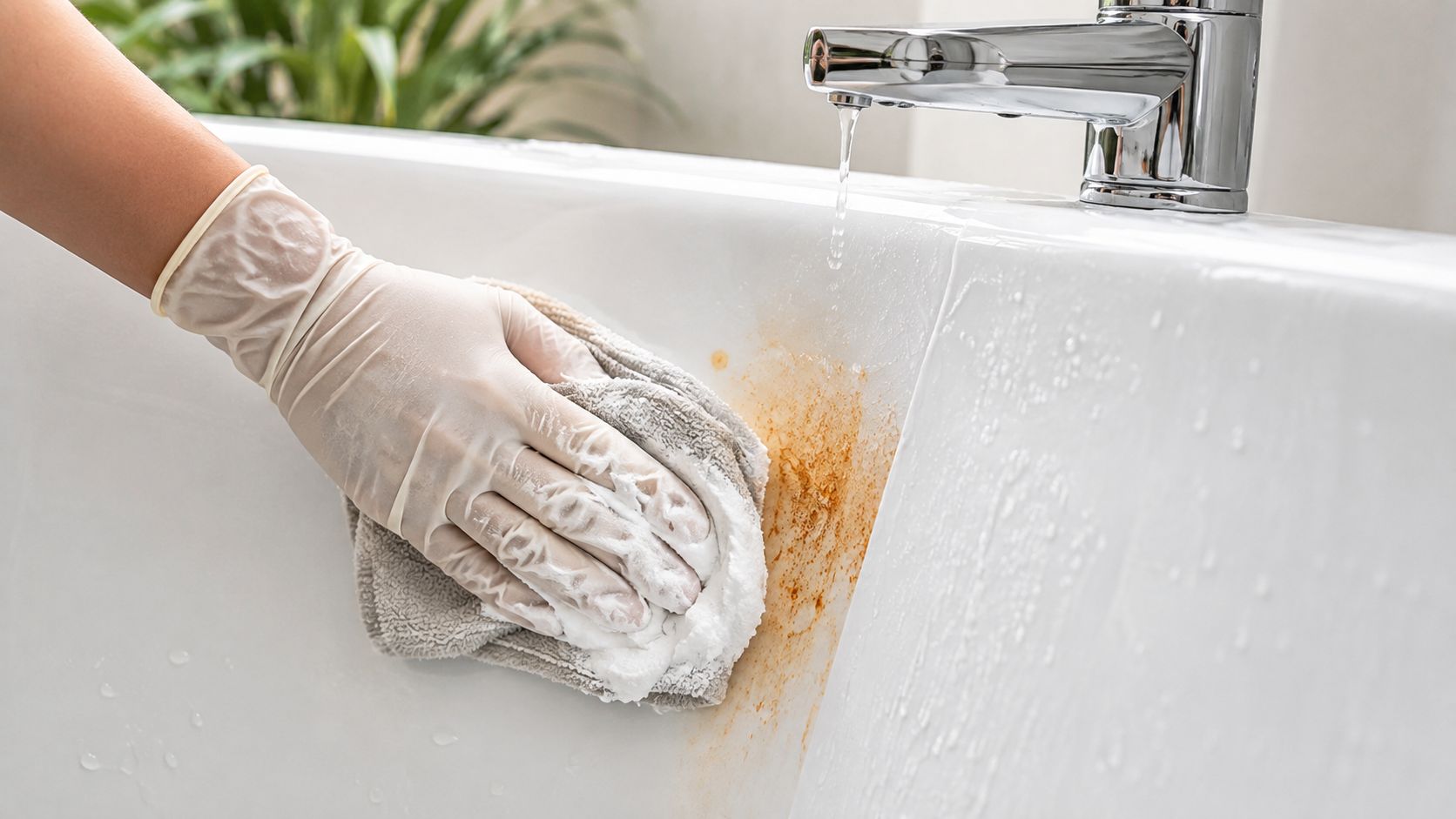
You're standing over the bathtub with an orange streak beneath a dripping faucet, wondering whether the strongest cleaner in the cabinet will finally solve it. That instinct can create a second problem. A product or scrubber that lifts rust from one tub can dull, etch, or scratch another.
The safest way to clean rust stains off a bathtub is to match the treatment to the tub finish, the stain severity, and the source of the rust. Oxalic acid based cleaners, including the widely available Bar Keepers Friend, are commonly used for rust on bathtubs, sinks, and tile because oxalic acid helps dissolve iron-based discoloration instead of covering it. Guidance for these products commonly recommends a controlled contact period of about 10 to 30 minutes before gentle scrubbing, but no formula is safe for every surface. Clean Day Maids explains the role of oxalic acid and measured contact time in rust removal.
Table of Contents
- Apply the chosen cleaner sparingly
- Let contact time do the work
- Agitate gently, then rinse fully
- Dry and inspect under angled light
What to Check Before Removing Bathtub Rust
A homeowner may see a narrow orange mark under a faucet and assume the answer is more pressure. In practice, the better first move is to identify what the tub is made of and where the rust is coming from. Porcelain-enameled steel, cast iron, acrylic, fiberglass, and enameled cast iron can respond differently to acids and abrasives, especially if the surface has already lost some of its protective gloss.
Look around the stain before applying anything. A metal shampoo can, shaving cream can, razor, drain component, or corroding overflow cover can leave iron directly on the finish. A slow faucet drip or iron-bearing water supply can spread rust repeatedly, which means a perfectly cleaned surface may discolor again unless the source is corrected. Guidance on recurring bathtub rust emphasizes that source control often matters as much as surface treatment. KJ Bath outlines water, plumbing, and metal-object causes of repeat rust staining.
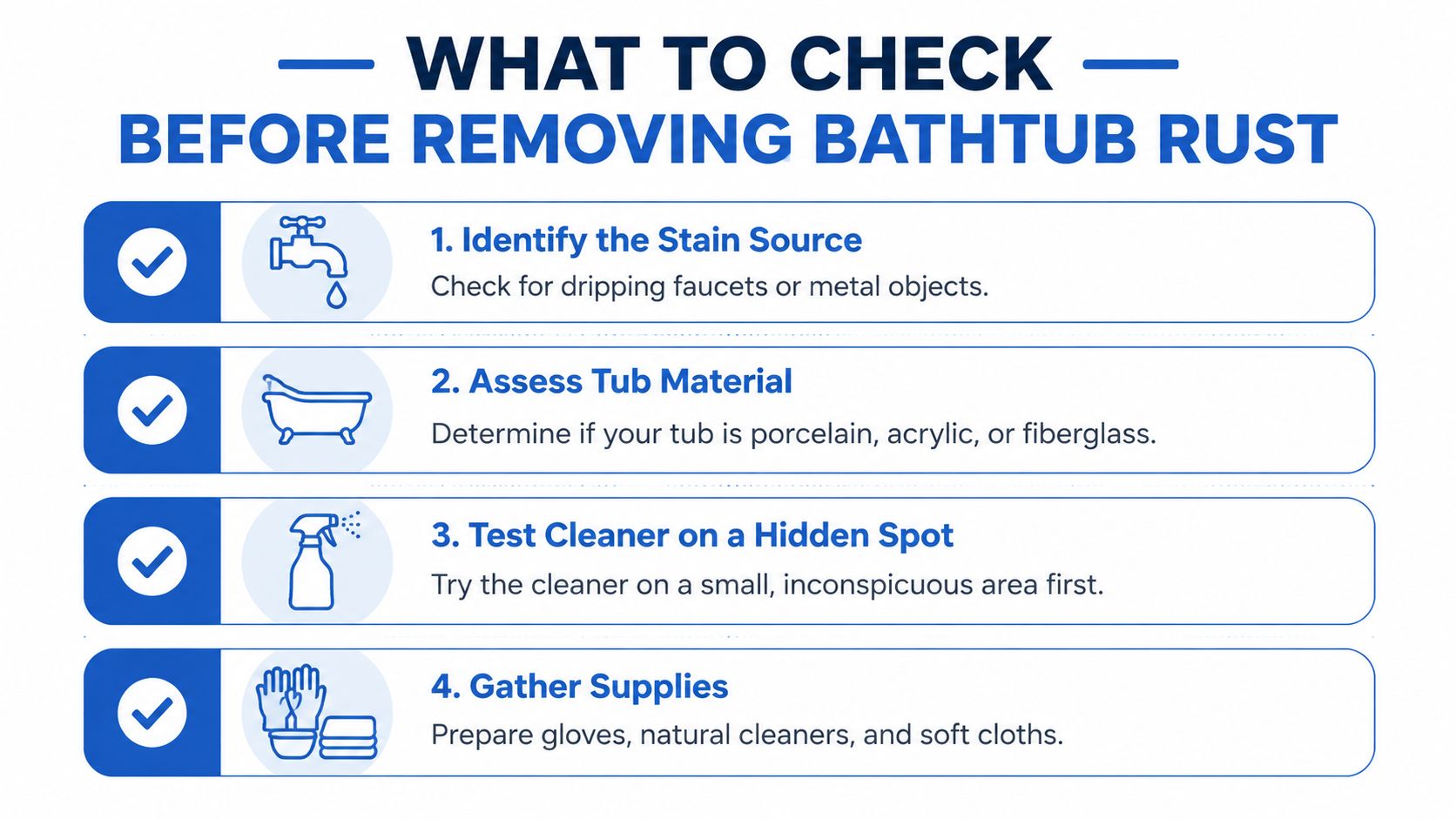
Identify the finish and test the cleaner
Start with a hidden spot near the tub wall or beneath the rim. Apply a mild paste first, leave it in place for several minutes, rinse, and inspect for dulling. If the finish looks unchanged, test a diluted solution in the same concealed area and check again before treating the visible stain.
A proper test looks for more than discoloration. Run a clean fingertip over the dry test area and compare its feel and sheen with the surrounding finish. Stop if the spot feels rough, looks cloudy, or loses its reflection.
Have the essentials ready before the first pass:
- Nitrile gloves: Protect your hands from acidic cleaners and residue.
- Ventilation: Run the bathroom fan or open a window where practical.
- Soft cloths: Keep separate cloths for application and final drying.
- Non-scratch pad: Use a soft sponge or pad rather than a wire brush or aggressive abrasive.
Practical rule: If you can't identify the finish, treat the tub as delicate until the manufacturer or a professional confirms otherwise.
DIY and Commercial Rust Removal Options
No single rust remover deserves universal approval. A light mark on a sound porcelain surface may respond to lemon juice and salt, while a heavy deposit near a corroding drain may need a purpose-made product and professional assessment. Surface compatibility should decide the method before stain strength does.
For a mild stain, a baking soda paste offers gentle mechanical cleaning with limited chemical action. Lemon juice can help with light organic rust discoloration, while a mixture of 2 tablespoons of fine salt and lemon juice can be left on the mark for 3 to 5 minutes before gentle agitation. Vinegar-soaked paper towels can remain on a stain for 1 to 2 hours, keeping the area damp while the acid works. These household timings and methods are described in this bathtub rust removal guide from DG Floors.
Cream of tartar blended with hydrogen peroxide provides another paste option. The cited household guidance recommends leaving that mixture for 30 minutes. Hydrogen peroxide spot treatments should be approached cautiously on non-porcelain finishes, and abrasive ingredients should be avoided on acrylic and fiberglass.
Commercial products provide more predictable rust chemistry, but they still require label directions and a spot test. Oxalic acid based products can be effective on appropriate surfaces, pH-balanced bathroom rust removers may offer a gentler profile, and porcelain-specific poultice powders can work by holding a cleaner against a concentrated deposit. Some poultice treatments require substantially longer contact than a quick scrub, so don't let a product dry unless its instructions specifically allow it.
| Method | Best For | Surface Compatibility | Typical Dwell Time |
|---|---|---|---|
| Baking soda paste | Light residue and gentle cleaning | Often suitable for hard finishes, test acrylic and refinished surfaces | Short, controlled application |
| Lemon juice and fine salt | Light rust discoloration | Hard finishes after testing, avoid unnecessary abrasion on soft coatings | 3 to 5 minutes |
| Vinegar-soaked paper towels | Small, localized deposits | Test carefully, avoid natural stone surrounds | 1 to 2 hours |
| Cream of tartar and hydrogen peroxide paste | Moderate discoloration | Use cautiously and test before applying broadly | 30 minutes |
| Oxalic acid based cleaner | Stubborn iron-based staining | Use only where the label and finish allow | About 10 to 30 minutes |
Don't combine cleaners to make them “stronger.” Read the label, ventilate the room, and remember that an acid suitable for a toilet or tile may not be appropriate for a tub coating. For context on why acidic bathroom products require careful surface selection, review this explanation of acid toilet bowl cleaner.
How to Remove Rust Stains from a Bathtub
Start by clearing and drying the work area. Ventilate the bathroom, then remove bottles, toys, drain screens, and loose debris from the tub. Dry the stained section completely so you can judge the color and keep the cleaner from becoming diluted.
Rinse away dust and grit before applying any product. Particles trapped under a sponge or pad can create micro-scratches on a glossy finish, even when the tool is labeled non-scratch.
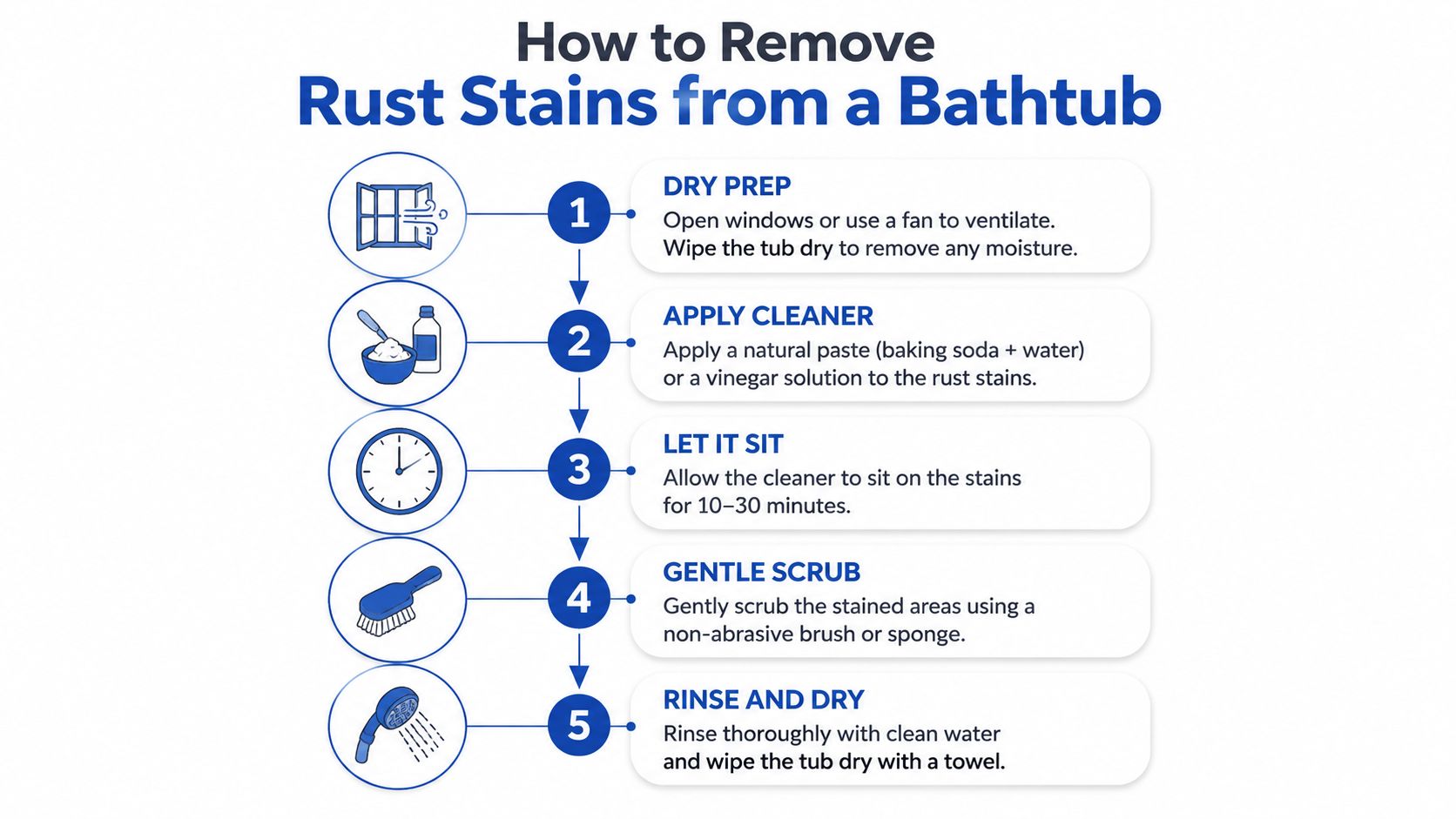
Apply the chosen cleaner sparingly
Pre-rinse the tub with warm water, then wipe off excess moisture. The treatment should remain concentrated on the stain, not spread across the entire surface. Put a small amount of the tested cleaner on a soft cloth, sponge, or non-scratch pad, and work in small sections.
Use the measured lemon and salt, vinegar, or cream-of-tartar method described earlier if the stain and finish allow it. With a commercial cleaner, follow that product's label instead of borrowing timing from another formula. Bar Keepers Friend and similar oxalic acid based cleaners are used for suitable bathtub surfaces, but the tub material and coating determine whether the product is appropriate.
Let contact time do the work
Keep the stain damp for the product's intended dwell period and check it at intervals. Many cleaner or paste applications call for about 10 to 30 minutes. Specific household methods may require shorter or longer contact, including 3 to 5 minutes for fine salt with lemon juice and 1 to 2 hours for vinegar-soaked paper towels. The cited cleaning guidance explains why dwell time helps loosen iron deposits while reducing the need for force.
Do not leave an unlabeled mixture unattended. If the cleaner dries, it may leave residue. Prolonged contact can also change the appearance of a tub coating. A darker slurry or a visibly lighter orange-brown mark usually indicates that the deposit is loosening.
Agitate gently, then rinse fully
Use small circular motions with a soft sponge or soft nylon brush. Keep pressure light on acrylic, fiberglass, refinished tubs, and glossy enamel. The goal is to lift softened residue, not grind it across the finish.
Rinse the treated area thoroughly with cool, clean water to stop the chemical action and carry away dissolved iron. Wipe the surrounding surface as well. Residue left around the edge can dry into a new shadow or streak.
Dry and inspect under angled light
Finish with a clean microfiber cloth. View the tub from several angles, or use light from the side, to reveal any remaining shadow. A faint mark may justify another mild cycle if the finish remains unchanged.
A stubborn stain generally calls for a careful repeat application rather than harder scrubbing. If a second pass produces no improvement, stop escalating. Reassess the tub finish and the likely rust source before applying a stronger cleaner, because repeated abrasion can leave permanent dull spots or micro-scratches.
Adjusting the Method for Stubborn Stains and Tub Finishes
A faint orange ring and a textured brown deposit aren't the same job. Color, thickness, and location offer useful clues. A thin, even shadow may be surface discoloration, while a raised or rough patch can indicate a heavier iron deposit or damage around a fixture.
Begin with the least aggressive method that your finish can tolerate. Repeat a mild acid application before choosing a stronger product, and keep the area damp under cotton or a paper towel only when the product directions and tub material permit it. Move to a soft nylon pad before considering anything more abrasive.
Porcelain and enamel can tolerate more controlled cleaning than acrylic, but that doesn't make them scratch-proof. Hydrochloric acid, pumice, and metal brushes should stay away from porcelain enamel and acrylic unless a manufacturer specifically approves the application. Fiberglass and gel-coat surfaces should generally be limited to non-scratch pads and compatible products. Cast iron with a porcelain layer is relatively forgiving across the broad finished surface, but an exposed iron edge near a chip can corrode and needs repair rather than repeated cleaning.
| Stain Severity | Porcelain Enamel | Acrylic / Fiberglass | Cast Iron (Porcelain) | Tools to Avoid |
|---|---|---|---|---|
| Faint orange shadow | Tested mild paste, light wiping | Non-scratch cloth and compatible cleaner | Mild paste, careful rinse | Steel wool, wire brush |
| Visible localized stain | Controlled acid-assisted treatment | Product-approved non-scratch treatment | Oxalic acid product only if approved | Hard abrasive pads |
| Raised or dark deposit | Repeat measured cycle, reassess source | Stop before finish dulls, seek advice | Repeat only on intact porcelain | Hydrochloric acid, pumice on unsuitable finishes |
| Stain near a chip or corrosion | Inspect for coating failure | Check for gel-coat damage | Repair exposed iron rather than grind it | Grinding tools and metal brushes |
Pumice is a special case. One source advises keeping the stone and porcelain surface wet and using very light pressure on porcelain surfaces only, while steel wool can scratch enamel and create additional places where rust may form. The finish-safety guidance on pumice and steel wool is available from Cozy Home Club.
Stop when there's no visible change after two full cycles, when the surface starts dulling, or when it feels rough beneath your fingertip. Those signs point away from a simple removable deposit. For fiberglass-specific stain-care considerations, see this guide to removing stains from a fiberglass tub.
Why Rust Stains Keep Coming Back
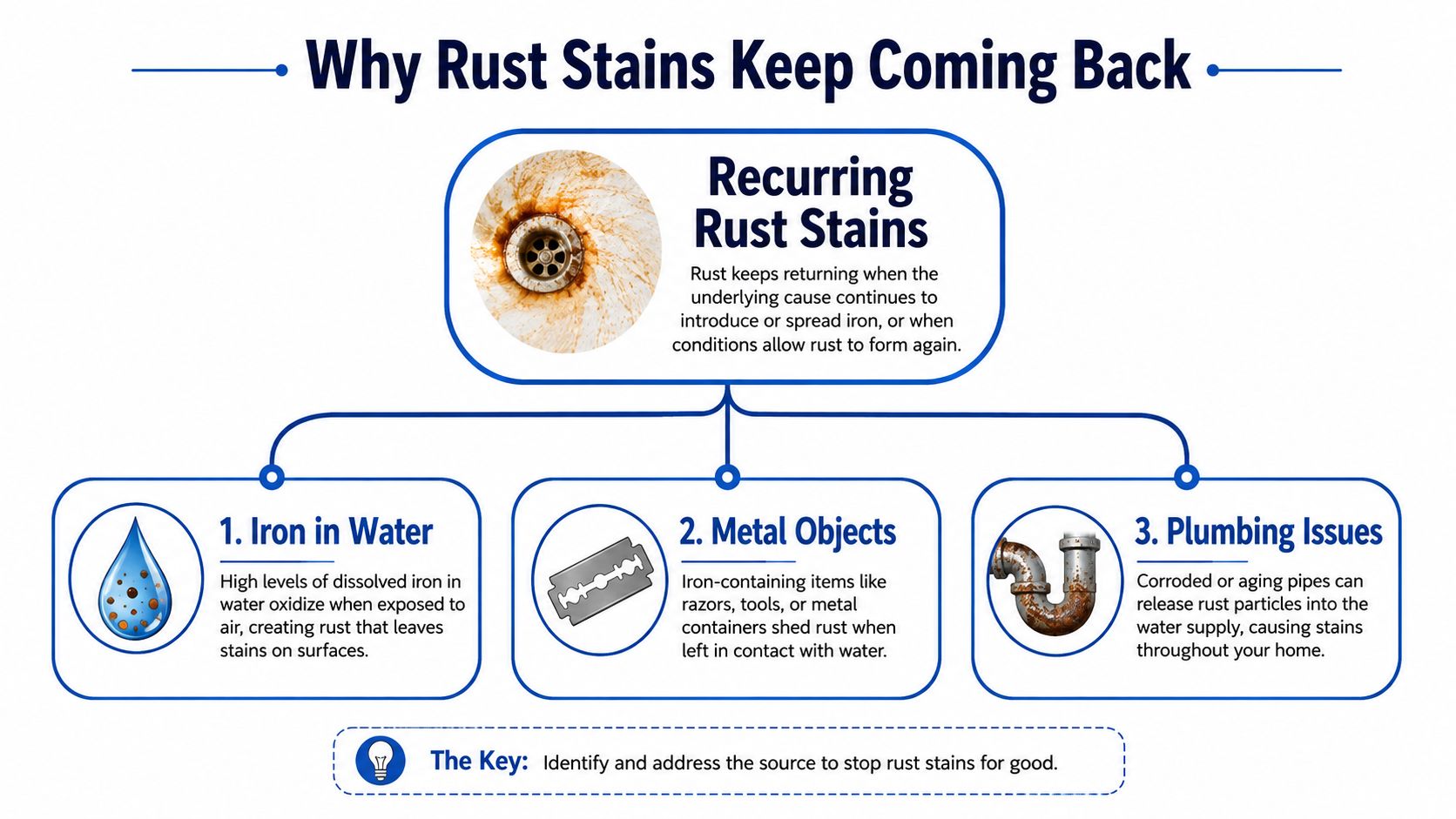
If rust returns in the same spot, trace what is feeding it. Common sources include iron in the water, corroding plumbing, or a metal item resting against the wet finish.
Water from a high-iron well or municipal supply can leave deposits after repeated use. Aging galvanized supply lines may release rust particles, and a steel drain flange corroding beneath the stopper can form a lasting ring. A shampoo rack, aerosol cap, shaving cream can, razor, or steel wool remnant may also sit on a damp ledge and transfer rust directly to the tub.
Inspect less obvious contact points before cleaning again. Look for rusty water dripping from a radiator pipe above the tub, corrosion hidden beneath a metal shampoo caddy, or a faucet that keeps dripping because its internal parts are corroding. A stain beside a chip or rough spot deserves closer attention, since exposed metal can keep reacting with water.
Cleaning removes the deposit. Source control prevents the next one.
Iron that remains on a damp surface can build another layer with each shower. Treating the visible mark without correcting the drip, fixture, water condition, or stored object leads to repeated cleaning and greater finish wear. Identify the source first, then use the least aggressive treatment that suits the tub surface and allow only a measured dwell time.
Preventing Rust Stains and Getting Professional Help
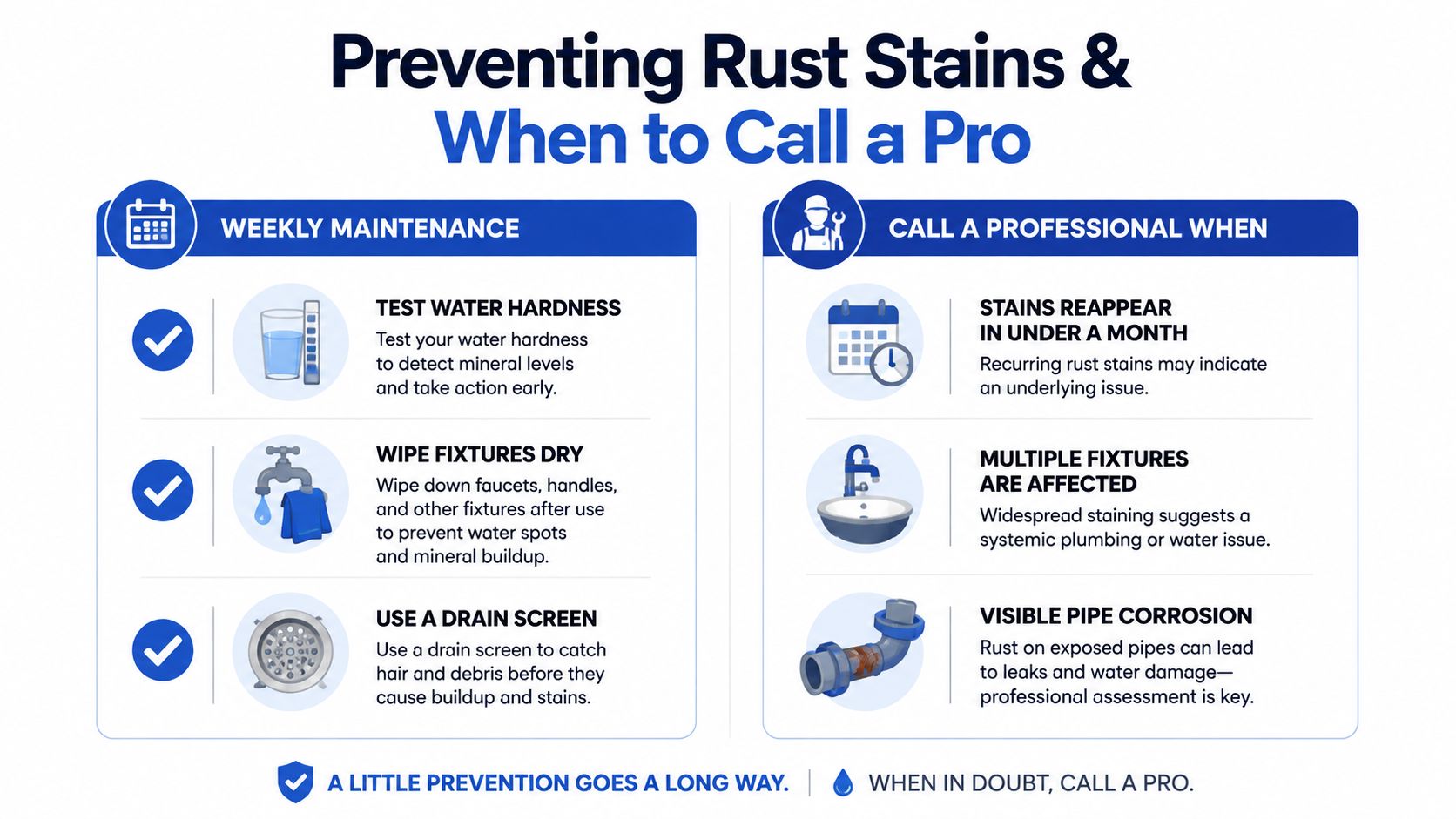
A practical maintenance routine should address both water and contact points:
- Rinse and squeegee weekly: Remove residue before it dries onto the finish.
- Dry fixtures: Wipe the faucet, drain trim, overflow cover, and metal accessories after cleaning.
- Test the supply: If water testing shows high iron or hardness, discuss a water softener or iron filter with a qualified professional.
- Replace aging galvanized lines: Corroding supply lines can continue introducing particles until the plumbing is repaired.
- Remove metal storage items: Swap rust-prone cans, racks, and accessories for plastic or corrosion-resistant alternatives.
- Repair chipped enamel: Reseal exposed areas so water can't reach underlying iron.
Call a professional if stains persist after the apparent source has been corrected, corrosion is visible around the drain or overflow, several fixtures show discoloration, the tub has lost its gloss, or you notice a structural concern. A professional can distinguish surface residue from coating failure, plumbing corrosion, or water-quality issues before more abrasive cleaning causes damage.
For homeowners who need the bathroom addressed as part of a broader service, Sunny Day Pro Services offers deep cleaning services alongside other home-care options. Keep cleaners separate, never mix products, ventilate the room, and wear gloves throughout the work.
If rust stains keep returning in your Massachusetts bathroom, Sunny Day Pro Services can assess the affected area and provide careful cleaning suited to the surrounding finishes. Visit Sunny Day Pro Services to request a quote for dependable local home-service support in Wayland, Newton, Needham, Wellesley, Weston, and nearby communities.

