
7 Life Hacks Home Tips for Busy Homeowners
Discover 7 practical life hacks home tips for quick cleaning, organization, repairs, and eco-friendly swaps tailored to busy Massachusetts homeowners.
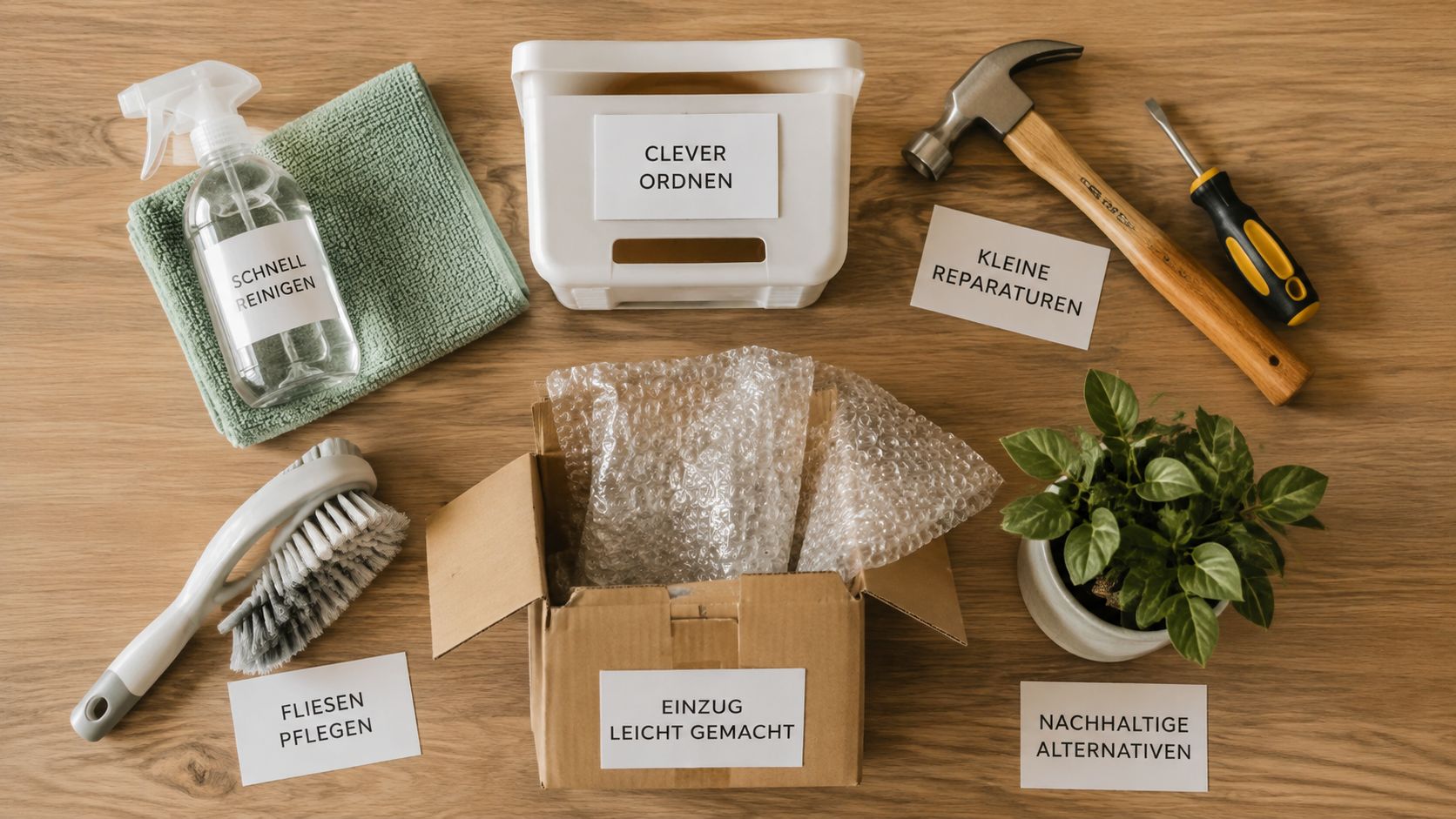
If your week feels packed before it even starts, you're not alone. Between school runs, work calls, grocery pickups, and the kind of cleaning that never seems to stay finished, the best life hacks home ideas are the ones that save time without creating more work later. In a Massachusetts home, that usually means practical moves for cleaning, organizing, tile care, and maintenance that hold up through muddy seasons, heating season dust, and the constant churn of family life.
Busy homeowners in Wayland, Newton, Needham, Wellesley, Weston, and nearby towns usually want the same thing, a house that looks cared for without spending every weekend on it. That's why the smartest shortcuts are rarely the flashiest ones. They're the routines that reduce friction, protect surfaces, and make the next task easier instead of harder.
Table of Contents
1. Strategic Deep Cleaning Before Moving Maximizes Your Home's Appeal and Value
A move is one of the few times when every overlooked corner suddenly matters. Baseboards, appliance interiors, grout lines, and fixture details all show up in a buyer's or renter's first impression, so a deep clean before a sale or move-in is more than a courtesy, it's part of presenting the home well. For sellers in Newton or Wayland, that often means the house feels more finished during open houses, while landlords in Wellesley and property managers in Needham use the same approach to reset a space between occupants. The practical win is simple, the home looks cared for because it is cared for.

Time the cleaning around the transition, not after the chaos starts
The best results usually happen when cleaning is scheduled 1 to 2 days before the move or listing change, so there's room for touch-ups without letting dust settle again. If you're selling, the cleaning should happen after the final walkthrough but before the buyer takes possession. If you're moving in, it's much easier to start with a clean kitchen and bathroom than to unpack around grime.
A useful local habit is to coordinate with the realtor or property manager before booking the service. That helps avoid the common problem of cleaning too early, then needing a second pass after last-minute repairs or staging work. If tile work or a backsplash install happened before the move, ask for grout and tile attention as part of the cleanup.
Practical rule: moving-week cleaning should reduce stress, not add another project to your calendar.
For homeowners comparing service scope, Sunny Day Pro Services keeps a detailed breakdown of what affects the job through its move-out cleaning cost guide. That kind of detail matters when you're deciding whether you need a quick reset or a full transition clean.
2. Eco-Friendly Home Cleaning Protects Your Family and the Environment
Green cleaning works best when it's treated like a system, not a buzzword. In practice, that means using fewer harsh products, choosing tools that don't leave residue behind, and sticking with combinations that are easy to repeat. For families in Newton or Wellesley, that can be a real advantage in bathrooms, kitchens, and bedrooms where children, pets, and anyone with sensitivities spend the most time.
A simple starter kit goes a long way; white vinegar, baking soda, hydrogen peroxide, and microfiber cloths cover more routine tasks than generally expected. For glass, mirrors, and stainless steel, a 1:1 vinegar-and-water mix is a practical option. For grout or bathroom buildup, baking soda and water make a scrubbing paste that gives you more control than a harsh spray.
Keep the products simple and the routine consistent
The trade-off with eco-friendly cleaning is that some soils need a little more dwell time. That's not a flaw, it's just part of the method. If you let the product sit long enough to do its job, you usually need less aggressive scrubbing later.
- Choose the right base ingredients: White vinegar, baking soda, hydrogen peroxide, and microfiber cloths are enough to cover a lot of day-to-day cleaning.
- Use fragrance carefully: If you like scent, add a small amount of essential oil to a cleaning mix instead of relying on synthetic air fresheners.
- Verify the label: Products with third-party certifications like EcoLogo, Green Seal, or EPA Safer Choice are easier to trust than vague “green” claims.
- Keep upkeep frequent: The more often you clean lightly, the less often you need a heavy reset.
If you want a deeper breakdown of chemical-free options, Sunny Day Pro Services has a useful chemical-free cleaning products overview. That's especially helpful for homeowners trying to balance appearance, air quality, and day-to-day practicality.
3. Grout Sealing and Maintenance Protects Your Tile Investment Long-Term
Grout is where a lot of tile jobs succeed or fail over time. Unsealed grout absorbs water, dirt, soap residue, and stains, which means a bathroom or kitchen can start looking tired long before the tile itself wears out. For Massachusetts homes with baths, kitchens, mudrooms, or entryways, sealing grout is one of the most useful home maintenance moves because it protects the part of the floor or wall that gets hit first.
The timing matters. Fresh grout should be sealed within 72 hours of installation, and existing grout should be assessed before sealing if it's already stained or compromised. In older tile jobs, restoration may be needed first. That's the difference between protecting a good surface and locking in a problem.
Match the sealer to the room and the finish
Penetrating sealers are usually a good fit for bathrooms and kitchens because they preserve the natural look while adding water resistance. Topical sealers can make sense in entryways or other areas where appearance is a priority, but they're not always the right choice for every tile surface. Test the product on a hidden spot first so you know how the color and finish will look before committing to the full space.
After sealing, keep water off the area for 48 to 72 hours so the product can cure properly. High-moisture spaces may need resealing more often than lower-use rooms, so a maintenance calendar helps. That's the kind of boring habit that saves money later.
Grout doesn't usually fail all at once, it wears down gradually because no one notices it until discoloration has already set in.
If you want a practical walkthrough for grout care before or after sealing, Sunny Day Pro Services has a tile grout cleaning guide that fits well with this kind of routine maintenance.
4. Baseboards and Crown Molding Cleaning Restores Overlooked Home Details
Cleaning efforts often focus on what is visible at eye level. That's why baseboards and crown molding tend to collect dust until they start making a room look dull no matter how tidy the floor is. In a polished home, those edges matter because they frame the room and signal whether the rest of the house has been cared for.
In homes around Newton and Wayland, I've seen well-kept molding change the feel of a living room faster than a small decor refresh. It's especially noticeable during move-outs, showings, and post-construction cleanups, when people scan for the details that tell them how the house has been maintained. A clean edge line makes the whole room feel fresher.
Use the lightest method that gets the job done
Dry microfiber cloths handle most dusting jobs without spreading grime around. If the buildup is stuck on, a slightly damp cloth works, but too much moisture can be a problem on stained wood or finished trim. That's why this task rewards patience more than force.
- Dust quarterly at minimum: That keeps buildup from becoming a heavy cleaning project.
- Focus on room transitions: Dust gathers at doorways and corners where air movement and foot traffic meet.
- Ask for this detail specifically: It's often an add-on in professional cleaning, not a default.
- Check after remodeling: Construction dust settles on molding long after the visible mess is gone.
This is one of those home hacks that doesn't feel exciting, but it changes how the whole house reads. Clean trim makes even a modest room look intentional. Dirty trim does the opposite.
5. Post-Construction Cleanup Is Essential After Tile Installation and Remodeling
A remodel isn't really finished when the last tile is set. There's still dust on vents, haze on the tile, adhesive residue on surfaces, and fine particles in places homeowners don't think to check. That's why post-construction cleanup is a different service from routine cleaning, it's the final step that turns a work site back into a home.
This matters a lot after kitchen and bathroom tile projects in Massachusetts homes, where new finishes deserve a clean reveal. In Wayland or Newton, a fresh backsplash can look completely different once grout haze is removed correctly. In Wellesley or Needham, a new bathroom needs more than a wipe-down, it needs dust control that reaches the HVAC vents and returns too.
Clean in the right order or you'll do the work twice
The best sequence is straightforward, all trades finish first, then the cleanup begins. If you clean too early, dust resettles and the job has to be repeated. A final walkthrough with both the contractor and the cleaning team helps catch missed punch-list items before everyone leaves.
Use tile-safe products for grout haze removal, especially on newly installed surfaces. Aggressive cleaners can damage fresh grout or leave the finish looking uneven. If you're starting to live in the home right away, ask for air filtration and fresh airflow while the dust is being managed.
Construction cleanup should protect the new work, not just remove what's visible on the floor.
I also tell homeowners to photograph the area before and after. That gives them a simple record of what was cleaned and helps confirm that the detailed work was done.
6. Recurring Maintenance Cleaning Prevents Deep Cleaning Needs Through Consistency
The smartest cleaning system is the one that keeps dirt from getting a foothold. Weekly, bi-weekly, or monthly service is often enough to stop grime from building into a bigger problem, especially in homes with kids, pets, or a lot of foot traffic. In practice, recurring maintenance cleaning gives homeowners a way to keep the house under control without treating every weekend like a repair shift.
In Newton, families often use this kind of schedule to stay ahead of the mess that comes with school, sports, and pets. In Wayland or Needham, busy professionals use it to keep the house presentable without sacrificing the whole day to chores. The benefit isn't just visual, it's also mental, because fewer backlogged tasks means less pressure to “catch up” on cleaning.
Build the schedule around how your home actually gets used
Start with bi-weekly service if you're unsure, then adjust based on traffic, pets, and how often the kitchen and bathrooms are used. High-priority spaces should stay on every visit, especially floors, sinks, and bathrooms. If you have recently installed tile or flooring, say so clearly so the cleaner can protect the finish from the start.
A predictable day matters more than often realized. When the cleaning happens on the same day every week or every other week, the whole household starts to work around it. That makes tidying before service easier, and it usually helps the cleaner move more efficiently.
- Keep the targets clear: Bathrooms, kitchen, and high-traffic floors should always be named first.
- Add seasonal adjustments: Muddy months and heavy-shedding seasons usually need more frequent attention.
- Layer in detail work occasionally: Baseboards and crown molding can be rotated into deeper visits.
- Protect new surfaces early: Good maintenance is cheaper than fixing worn finishes later.
Recurring service is the classic home hack that doesn't feel like a hack, because it's really about consistency. But consistency is what keeps the home from slipping back into chaos.
7. Tile Selection and Care Keeps Surfaces Durable and Attractive
The easiest tile to live with is usually the one chosen for the room it has to serve. Porcelain, ceramic, marble, and granite all look good in the right setting, but each one needs a different level of care. If you match the material to the traffic, moisture, and cleaning habits of the household, the surface will stay attractive much longer.
Porcelain makes sense in kitchens and high-traffic areas because durability and water resistance matter there. Ceramic can be a practical option in lower-traffic rooms where budget matters more. Natural stone, including marble and limestone, needs more attention because acidic cleaners can damage it.
Choose for maintenance first, then design
The biggest mistake homeowners make is choosing a tile style they like without asking how it will age. A dramatic look can be beautiful on day one, but if the care routine is unrealistic, the surface becomes harder to keep up. That's especially true in homes with kids, pets, or frequent guests.
- Use pH-neutral cleaners on tile: They're the safest general choice for daily care.
- Avoid vinegar and bleach on natural stone: Those products can create damage that's hard to reverse.
- Seal grout early: Within 72 hours is the right window for new work.
- Ask the installer for care notes: The best maintenance plan starts at installation.
The right tile should fit the room, the routine, and the amount of upkeep the household can actually sustain.
For Massachusetts homeowners, that's the ultimate challenge. A kitchen backsplash in Wellesley, a bathroom shower in Newton, or an entryway floor in Wayland should look good, but it also has to survive weather, traffic, and routine cleaning without constant drama. If you're planning a tile project, choose the surface you can live with, not just the one that looks best in photos.
7-Point Home Cleaning & Care Comparison
| Item | Implementation complexity | Resource requirements | Expected outcomes | Ideal use cases | Key advantages |
|---|---|---|---|---|---|
| Strategic Deep Cleaning Before Moving: Maximize Your Home's Appeal and Value | High, comprehensive, time-sensitive, coordinated with move/closing | Full cleaning crew, deep-clean equipment (shampooers, appliance tools), time | Turnkey, showroom-ready home; improved sale/rental appeal; deposit protection | Move-in/move-out, pre-showings, seller staging, rental turnover | Maximizes appeal/value, reduces relocation stress, professional results |
| Eco-Friendly Home Cleaning: Protecting Your Family and the Environment | Low–Medium, requires product knowledge and adjusted techniques | Plant-based cleaners, microfiber, refillable packaging, staff training | Safer indoor air, reduced chemical exposure, comparable cleanliness when applied properly | Homes with children/pets, allergy/asthma concerns, eco-conscious clients | Protects health and environment, reduces fumes and irritants, aligns with sustainable values |
| Grout Sealing and Maintenance: Protecting Your Tile Investment Long-Term | Medium, timing and surface prep critical; professional recommended | Specialty sealers (penetrating/topical), applicators, testing, occasional professional labor | Water/stain resistance, reduced mold growth, extended grout and tile lifespan | New tile installations, bathrooms/kitchens, outdoor patios, recent remodels | Protects investment, simplifies cleaning, lowers long-term repair costs |
| Baseboards and Crown Molding Cleaning: Restoring Overlooked Home Details | Low–Medium, detail-oriented work, safe access to high areas | Microfiber cloths, extension poles/ladders, mild cleaners, careful technique | Noticeably cleaner rooms, reduced dust sources, improved indoor air quality | Move-out inspections, home showings, post-construction, periodic deep cleans | High visual impact for relatively low cost; reduces allergens; restores finishes |
| Post-Construction Cleanup: Essential First Steps After Tile Installation and Remodeling | High, specialized methods to remove fine dust, adhesives, grout haze | HEPA filtration vacuums, tile-safe cleaners, protective equipment, debris disposal | Move-in-ready, safe indoor air, clear finishes free of haze and residues | After renovations, tile installation, builder turnover, final inspection stage | Removes hazardous dust, reveals true finish quality, enables immediate occupancy |
| Recurring Maintenance Cleaning: Preventing Deep Cleaning Needs Through Consistency | Low, routine schedules and consistent teams | Regular cleaning supplies, trained staff, scheduling/logistics system | Consistent home cleanliness, reduced deep-clean frequency, allergen control | Busy households, families with pets/children, property managers | Prevents heavy buildup, cost-effective long term, predictable results |
| Tile Selection and Care: Choosing Durable Surfaces That Maintain Beauty Long-Term | Medium, requires material knowledge and planning | Consultation, professional installers, tile-specific cleaners, periodic sealers | Durable, long-lasting surfaces that retain appearance and resale value | New installations, kitchen/bath remodels, high-traffic areas | Right material choice prevents premature wear, lowers lifecycle costs, maintains aesthetics |
Take Control of Your Home Efficiency
The strongest life hacks home routines are the ones you can keep doing without burning out. Deep cleaning before a move, greener daily products, grout sealing, trim detailing, post-construction cleanup, recurring maintenance, and smarter tile choices all do the same thing in different ways, they cut down on future work. That matters in a busy Massachusetts household, where weather, schedules, and family life all push against your time.
If you want the biggest payoff, start with the tasks that protect your home from repeat problems. Keep grout sealed so tile stays easier to clean. Keep trim and baseboards from collecting dust until they change the feel of a room. Keep maintenance cleaning on a schedule so mess doesn't turn into a weekend project.
These habits also work well together. A cleaner home is easier to maintain, and a well-maintained home needs fewer emergency fixes. That's the key advantage of using practical shortcuts instead of chasing clever tricks that only work once.
Sunny Day Pro Services fits naturally into that approach because the company handles recurring cleaning, deep cleaning, move-in and move-out service, and post-construction cleanup for busy homeowners who want reliable results. If your kitchen, bath, tile, or trim needs professional attention, the right next step is to request help before the mess gets bigger.
If you're ready to make your home easier to manage, visit Sunny Day Pro Services and schedule the cleaning or tile service that matches your home's needs. Their team works with Massachusetts homeowners who want dependable scheduling, careful workmanship, and fewer headaches around the house.

