
Your 2026 Move in Cleaning Checklist for a Fresh Start
Get your Boston-area home truly clean with our ultimate move in cleaning checklist. Covers every room, supplies, and pro tips for a sanitized, stress-free move.
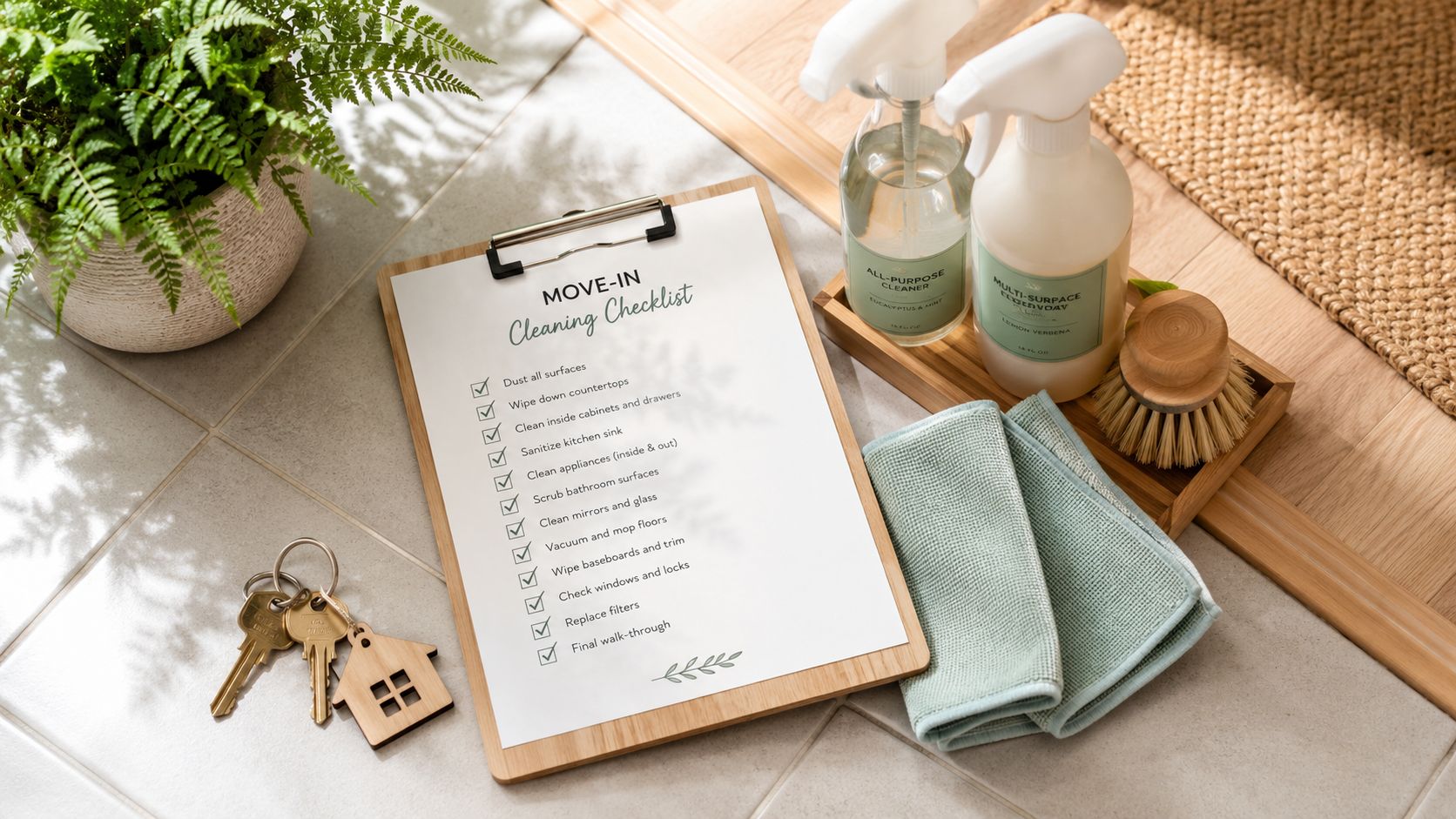
You get the keys to a place in Wellesley or Newton, step inside, and it passes the first glance test. Floors look decent. Counters look wiped down. Then you open a cabinet, remove a vent cover, or slide out the refrigerator drawers and see what was missed.
An empty house gives you the best cleaning window you will get. No rugs blocking corners. No furniture sitting on dust lines. No moving boxes packed into closets before the shelves have been washed. If you want your dishes, towels, and bedding going into a clean home, the work needs to happen before the first box is opened.
That timing matters in Boston-area homes. Older properties in Needham, Weston, and Wayland tend to hold dust in detailed trim, radiator fins, door casings, vent grilles, and basement utility areas. Coastal humidity, spring pollen, and winter sand tracked in from sidewalks all add to the mess. A quick turnover wipe-down rarely reaches the spots that affect how the home feels once you are living in it.
I see the same trade-off all the time. You can spend the first day of your move washing hidden surfaces while the truck waits and the family stands around, or you can handle the dirty work first and unpack into a space that is ready to use. For busy homeowners, that usually means following a clear before, during, and after-move plan, or handing the heavy cleaning off to a crew that can get through the house room by room without missing the details.
The checklist below focuses on the areas that make the biggest difference right away, especially in older Boston homes where dust, grime, and leftover residue collect out of sight.
Table of Contents
1. Deep Cleaning All Floors and Baseboards
Floors tell the truth about a house. A place can smell fine and still have months of dust packed into baseboard edges, pet hair in corners, and tracked-in grit from old Boston winters lodged along thresholds.
Start dry, not wet. Vacuum carpet, hardwood, tile, and vinyl before you mop anything. That sequence matters. Emerging data from the International Sanitary Supply Association found improper cleaning order increases cleaning time by 22% and re-contaminates 40% of cleaned floor surfaces, as noted in this workflow discussion on move-in cleaning order.
What Works Best on Boston-Area Floors
In Newton colonials and older Needham homes, I'd pay special attention to floor edges, radiator lines, closets, and under-stair pockets. Those areas catch heating dust all winter and often get skipped for years.
Use the right cleaner for the material. Hardwood needs a wood-safe product with minimal moisture. Tile and vinyl can handle a stronger wash, but the grout lines need separate attention if they're dingy.
- Vacuum first: Use a vacuum with a HEPA filter if you can. It catches fine dust instead of pushing it back into the air.
- Hand-wipe baseboards: A damp microfiber cloth beats a quick duster. Dust sticks to trim, especially in older homes with layered paint.
- Leave carpet time to dry: If you schedule extraction cleaning, keep furniture off it until it's fully dry.
Practical rule: Clean from hard surfaces down to floors, and finish floors last. If you mop before dusting trim, vents, or sills, you'll do the same work twice.
A Wellesley buyer once found years of dust tucked behind built-in baseboard details that looked clean from standing height. Once the trim was hand-cleaned, the entire first floor felt brighter and smelled fresher.
2. Kitchen Appliance and Cabinet Interior Cleaning
You notice kitchen shortcuts the minute you start unpacking. Open one cabinet in an older Boston-area home after a humid July move, and you can find grease film, shelf dust, and that stale smell that builds up when interiors were wiped lightly or not at all.
This part of a move-in clean works best on a timeline. Before the truck arrives, clear every cabinet and drawer so surfaces are reachable. During the clean, wash removable refrigerator parts, wipe cabinet interiors, and treat appliance seals and tracks. After move-in, do one quick check behind small appliances and in pantry corners once boxes are out of the way.
Commonly Missed Spots
Cabinet interiors need a full hand wipe, especially in Brookline condos, Dorchester triples, and older Newton kitchens where painted wood, worn shelf paper, and narrow face frames trap grime. Clean the corners, shelf pin holes, drawer tracks, and the underside of uppers. Dry everything well before lining shelves or loading dishes. In older cabinets, extra moisture can swell wood and leave a musty smell behind.
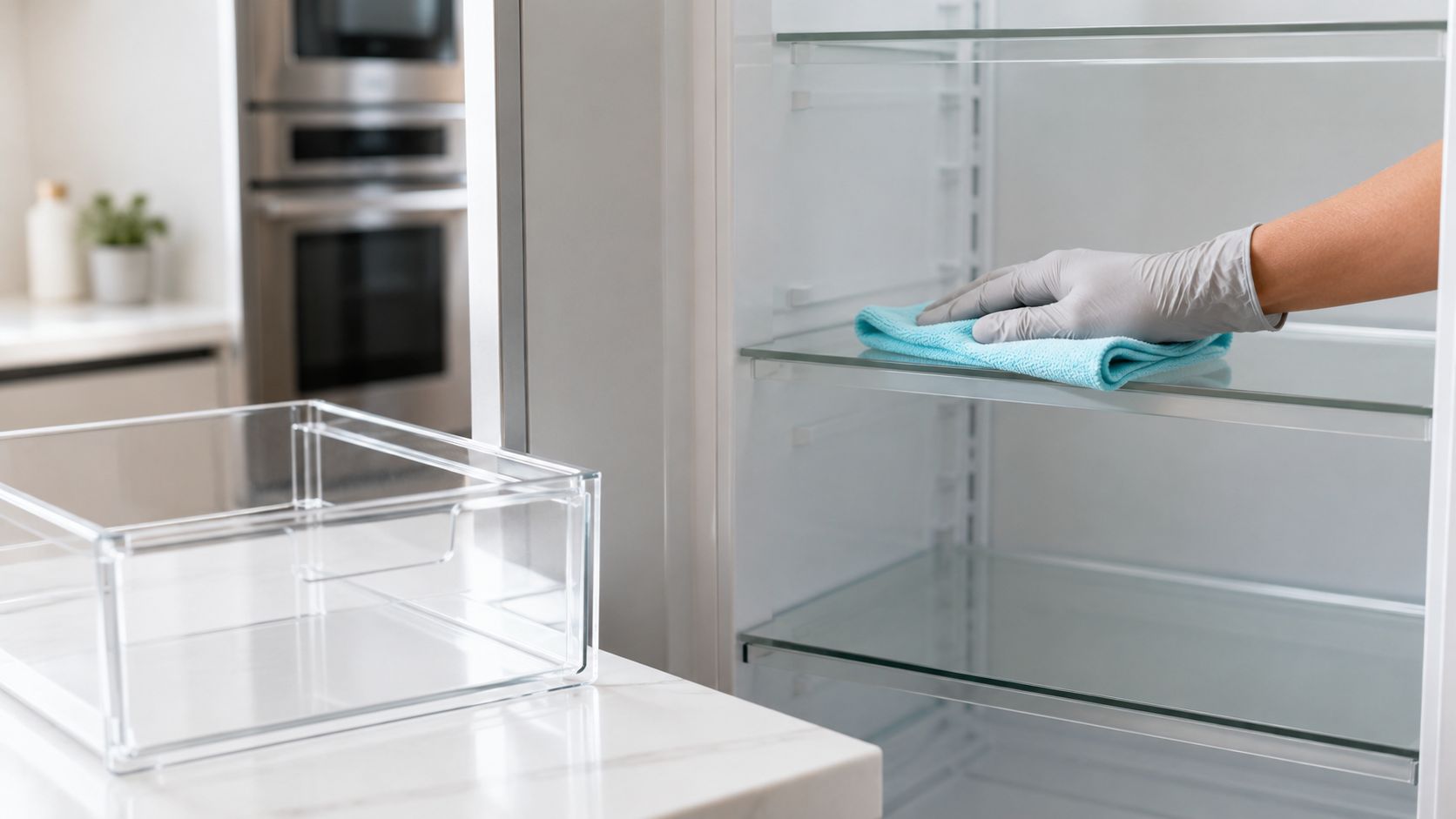
Appliances deserve the same level of detail. Remove and wash refrigerator shelves and bins separately. Degrease the oven interior and racks. Check the dishwasher filter, door gasket, hinges, and utensil basket. If the microwave is built in, wipe the vent area and the top edge of the frame where grease settles.
I also tell Boston-area homeowners to check the top of the refrigerator and the gap beside the stove. Winter heating dust collects there, and summer humidity helps it cling to grease. In multifamily buildings, crumbs under appliances can also invite pests fast.
A Needham buyer once opened every cabinet during the final walkthrough and found sticky residue and dried food in nearly all of them. The counters looked fine. The storage space was not ready for plates, pantry goods, or baby bottles.
For a more detailed room-by-room process, Sunny Day Pro Services explains it clearly in this kitchen deep cleaning guide. If you want the same level of detail in the bath before move-in day, use this deep bathroom cleaning guide for move-in prep.
- Use food-safe products: Choose cleaners you are comfortable using around dishes, pantry shelves, and refrigerator compartments.
- Pull out what can move: Crumbs and grease under stoves, fridges, and rolling carts are common trouble spots.
- Check shelf liners and drawer mats: Replace them if they smell stale, feel sticky, or show old water stains.
- Finish with a dry cloth: That extra pass matters in humid weather and in older wood cabinetry.
3. Bathroom Sanitization and Fixture Cleaning
Bathrooms need scrubbing, not cosmetics. If you only wipe visible surfaces, you leave behind soap film, bacteria, hard water scale, and mildew in exactly the places your family will use on day one.
In Boston-area homes, bathroom trouble often shows up in grout, caulk, exhaust covers, and the area behind the toilet. Older homes in Weston and Newton also tend to have tighter bath layouts, which means more hidden buildup around pedestals, radiator pipes, and vanity legs.
Where Sanitizing Actually Matters
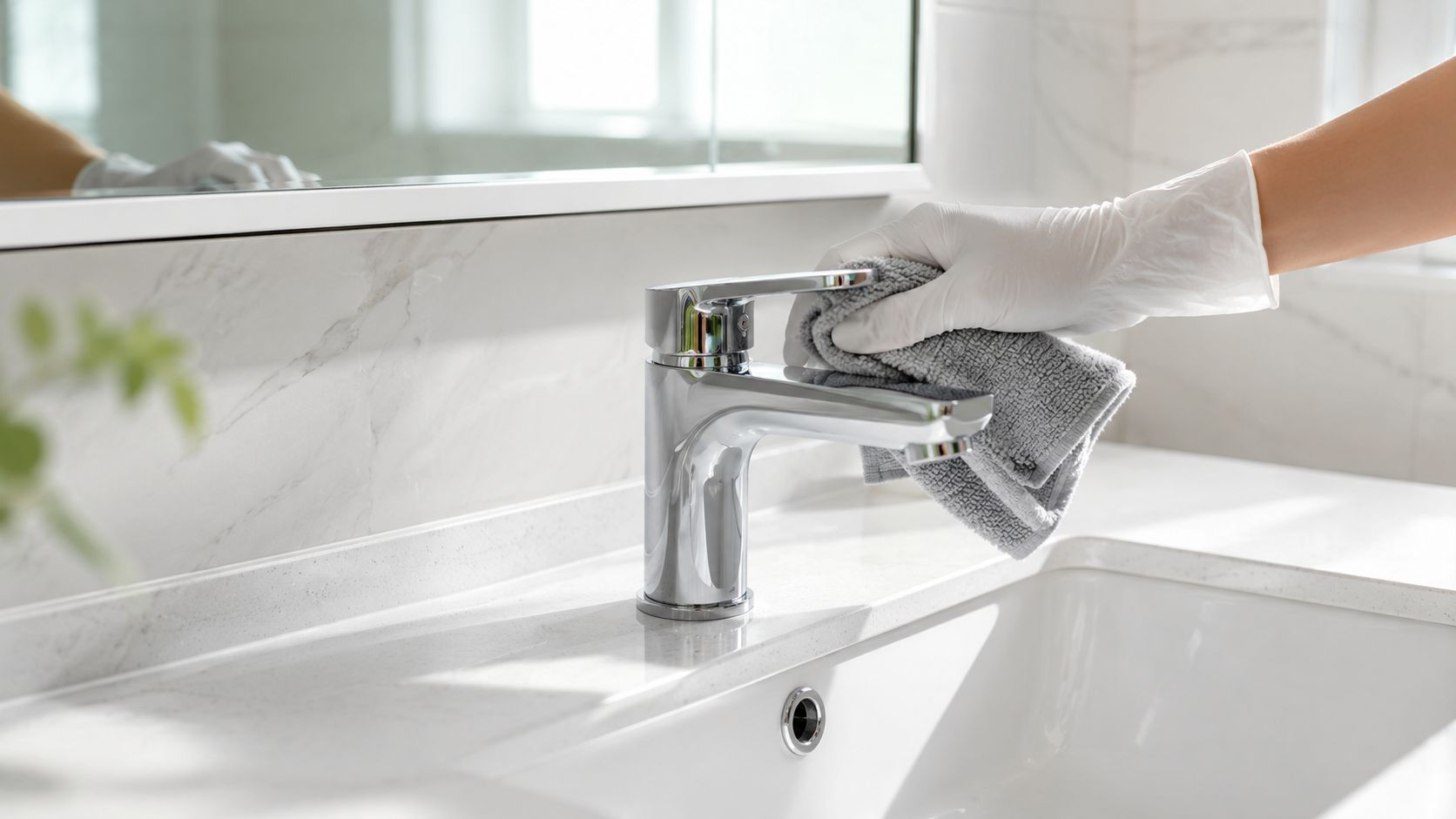
Toilets should be cleaned top to bottom, including the hinges, seat underside, base, and floor around it. Shower walls and doors need soap scum removal, and grout lines need a stiff brush, not a casual wipe. That's especially important because bathroom checklists should require dedicated grout and soap scum removal, as outlined in this bathroom-focused move-in cleaning guidance.
An International Cleaning Research Institute study found homes cleaned with a professional checklist had 50% lower microbial counts on kitchen counters and bathroom sinks than homes cleaned informally, and 90% of bacteria were eliminated from surfaces like refrigerator interiors and dishwasher trays when EPA-approved disinfectants were used.
Bathrooms reveal whether the last clean was detailed or rushed. Check grout, the toilet base, and the underside of the vanity first.
A Wellesley homebuyer once thought the bathroom only needed glass cleaner and fresh towels. Once the soap scum came off the shower walls, the grout discoloration and failing caulk became obvious. Cleaning didn't just improve hygiene. It exposed what needed repair.
For a practical step-by-step bathroom process, see Sunny Day Pro Services' deep bathroom cleaning guide.
4. Windows, Mirrors, and Glass Surface Cleaning
Clean glass changes how a house feels. In older Massachusetts homes with lots of divided-light windows, even a thin film of dust, pollen, or winter residue can dull natural light across the whole room.
Always clean frames, sills, and tracks before the glass itself. If you don't, loosened dirt ends up right back on the pane or in the lower track after you finish.
Boston-Area Window Problems
Homes around Wayland and Weston often deal with a mix of spring pollen, road dust, and moisture marks. In older houses, window sills can also hide peeling paint chips, insect debris, and mildew at the corners.
Use microfiber cloths for detailing and a squeegee when you want a cleaner finish on large panes. For mirrors and shower glass, don't overspray. Apply product to the cloth when possible so it doesn't drip into wood trim or painted casings.
- Do the sill first: Dirt in the sill makes clean glass look unfinished.
- Brush out tracks: A dry brush or vacuum attachment lifts packed debris better than a wet rag.
- Inspect as you clean: Window cleaning often reveals failed caulk, swollen trim, and moisture staining that was hidden by dust.
A Needham colonial with a lot of original windows can look permanently dim when the underlying issue is dirty interior glass and dusty muntins. Once the frames, panes, and tracks are cleaned carefully, the room usually feels sharper and brighter with no decorating required.
5. Dust and Debris Removal from Vents, Fans, and HVAC Systems
Boston-area move-ins often happen with the heat still running, the AC just starting up, or both systems switching hard between seasons. In older homes around Wellesley, Newton, and Needham, that first blast of air can push out years of dust from floor registers, return grilles, and fan housings if nobody cleaned them before move-in day.
A house can look spotless at eye level and still feel stale within an hour.
What to Clean Before the First Night
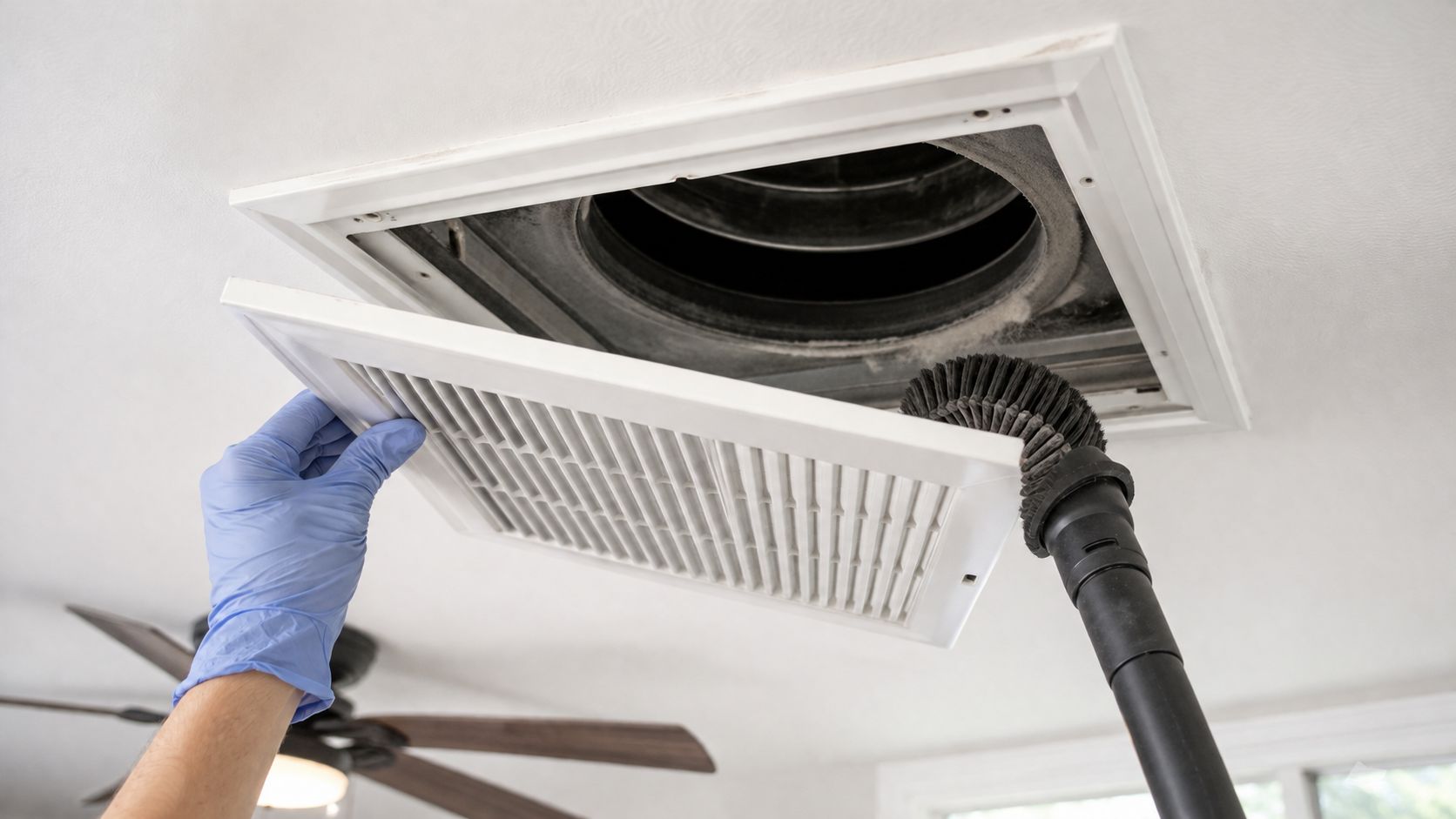
Start with the parts you can reach safely and remove without tools. Wash vent covers in warm soapy water, let them dry fully, and vacuum the opening before you put them back. On return grilles, use a brush attachment first so you pull dust out instead of spreading it across the wall or into the room.
Change the HVAC filter right away. I do not care if the previous owner or tenant says it was replaced recently. Unless you installed it yourself or can verify the date, treat it as overdue. In Greater Boston, filters load up fast with winter dust, spring pollen, and the fine grit that gets tracked in from snow, sand, and old driveways.
Do one more check while you are there. Bathroom exhaust fans often hold a thick layer of lint and dust on the cover, and kitchen range hood filters are usually worse than they look. If the dryer vent termination outside is packed with lint or the flap is stuck, put that on the short list for service before laundry starts.
A Wellesley family with pet allergies once called after moving into a home that had already been cleaned top to bottom. The issue was not the counters or floors. Pet hair was packed into the return vent, and every heating cycle brought it back into the living space.
- Remove and wash vent covers: Dry them completely before reinstalling so dust does not cling to damp metal.
- Vacuum return grilles and vent openings: A brush attachment is safer on older painted covers and plaster walls.
- Replace the HVAC filter: Start with a clean baseline on day one.
- Check bath fans and the range hood: These collect hidden dust, grease, and moisture residue.
- Flag anything beyond surface cleaning: Heavy buildup inside ductwork, mold concerns, or inaccessible vents are jobs for an HVAC or duct-cleaning pro.
If you are building a before, during, and after move plan, handle vents and filters before furniture arrives. It is faster, cleaner, and easier to spot problems. If time is tight, this is one of the first jobs worth handing off so the home feels clean in the air, not just on the surfaces.
6. Light Fixture and Ceiling Cleaning
Ceilings and fixtures are usually the most ignored part of a move in cleaning checklist. They're also where a home's age shows up fast, especially in Boston suburbs filled with older colonials, capes, and split-levels with textured ceilings, recessed cans, and decorative trim.
Dust on fixture bowls, fan housings, and recessed trim rings cuts light output and makes rooms feel dingy even after the floors are cleaned. Cobwebs in ceiling corners do the same thing.
Older Homes Need a Gentler Approach
Popcorn ceilings and old painted plaster don't respond well to aggressive wiping. A soft brush or vacuum attachment is safer. Smooth ceilings can handle a microfiber pass, but use light pressure and look for water staining while you work.
On fixtures, remove glass shades if they're easy to handle and wash them separately. Wipe bulbs only when they're cool, and check whether any burned-out bulbs need replacement before move-in day ends.
Overhead dust falls onto everything below it. If you skip the ceilings and fixtures, you're asking floors and counters to get dirty again.
A Weston colonial with decorative ceiling medallions can look flat until someone cleans the dust packed into the molding detail. Once that's done, the architecture comes back.
7. Door Frames, Doors, and Hardware Sanitization
You notice this part during the first trip in with boxes. The front door feels grimy, the pantry knob has a sticky film, and the top edge of the bedroom door is carrying a stripe of dust that has probably sat there through a full Boston winter and spring.
In older homes around Newton, Needham, and the western suburbs, doors pick up more than fingerprints. Humidity can leave painted wood tacky. Winter grit gets tracked onto lower panels by boots and movers. Older brass, glass knobs, and mortise hardware need a gentler hand than a basic spray-and-wipe approach.
Clean the Parts People Touch and the Parts They Miss
Start high and work down. Wipe the top edge of the door, then the frame head, side jambs, hinge side, latch area, and the full door face. Finish with the handle, lock, deadbolt thumb turn, and any nearby switch plate.
For painted trim, use a mild pH-neutral cleaner and a damp microfiber cloth, not a soaking wet rag. Too much moisture can swell older wood and soften tired paint. On stained doors, test first in a hidden spot. On vintage hardware, avoid abrasive pads that can scratch the finish in one pass.
A good wipe-down also doubles as a condition check. Sticky latches, loose knobs, misaligned strike plates, and old tape residue show up fast once you stop rushing past the door.
- Check closet and pantry doors, not just entry doors and bathrooms.
- Remove sticker or alarm decal residue with rubbing alcohol or a specialty adhesive remover.
- Clean around hinges and latch plates where dark buildup collects.
- Sanitize touchpoints after the surface soil is removed, because disinfectant works better on a clean surface.
I also tell Boston-area homeowners to time this work properly. Do one pass before furniture arrives, especially on closet doors and bedroom doors, then a quick second pass after the move. That catches fresh handprints, stairwell dust, and the grime that shows up once movers have been in and out all day.
If the home still has carpet, schedule door and trim cleaning after any extraction work is dry, since damp air can pull lint and residue right back onto lower panels and jambs. If you are weighing DIY against hiring help, this guide on the benefits of professional carpet cleaning before move-in lays out the trade-offs clearly.
A lot of people skip doors because they seem minor. They are not. Clean, smooth doors make the whole house feel cared for, especially in older Boston homes where trim and hardware carry a lot of the character.
8. Carpet and Upholstered Surface Treatment
You get the keys, walk into the living room, and the place looks clean enough until the carpet gives off that closed-up smell older Boston homes are known for after a humid week. That is the moment to deal with soft surfaces properly, before boxes, bed frames, and sectionals trap the problem in place.
Carpet holds more than visible dirt. It hangs onto salt tracked in through winter, pollen and grit from spring, pet residue, and the musty odor that builds up in basements and first-floor rooms with limited airflow. Upholstered pieces left behind can carry the same issues, especially in condos and triple-deckers where windows stay shut for long stretches.
Timing makes the difference. Clean carpet early, then give it real drying time before furniture arrives. In Massachusetts, that matters most in lower levels, shaded bedrooms, and older homes where humidity lingers longer than people expect.
Clean, Treat, or Replace
Hot water extraction usually does a solid job on general soil, light pet accidents, and dull traffic lanes. Spot treatment can help with isolated stains. Enzyme products are often the right call for odor from pets or food spills, but they need enough dwell time to work, and over-wetting the area creates a new problem.
Sometimes replacement is the better decision. If the carpet has recurring odor, visible backing damage, loose seams, or stains that return after cleaning, putting more money into treatment rarely pays off.
I see this a lot around Greater Boston. A carpet can look acceptable in an empty room, then the odor shows up once the house warms up in the afternoon. That is common in Needham, Newton, and older Dorchester homes where previous moisture issues may have reached the pad, not just the surface fibers.
If you are weighing DIY against hiring help, this guide on the benefits of professional carpet cleaning before move-in gives a clear breakdown of the trade-offs.
If a light DIY carpet cleaning makes the room smell stronger, moisture likely reached residue below the surface. At that point, schedule extraction or replace the carpet if the pad or backing is affected.
Do not forget upholstered surfaces. Vacuum sofas, dining chair seats, and built-in bench cushions with an upholstery attachment, then check for odor, staining, and pet hair packed into seams. If the fabric still smells stale after vacuuming, professional upholstery cleaning is usually the faster fix than repeated spray-and-wipe attempts.
9. Bedroom and Closet Deep Cleaning
You notice bedroom dust fastest on the first night. The room looks fine during a walkthrough, then the afternoon sun hits the windowsill, the closet smells stale, and a layer of grit shows up along the baseboards after the movers leave.
That is common in Greater Boston homes, especially older houses with plaster dust, radiator covers, drafty trim, and closets that have been shut up through a humid summer.
Start with the closets while they are still empty. Wipe shelves, rods, trim, and door edges with a damp microfiber cloth that lifts dust instead of pushing it around. Vacuum the corners and track edges with a crevice tool, then use a flashlight to check high corners for insect debris, mouse droppings, or old moisture marks. If the closet smells musty, do not cover it with fragrance. Find the cause first, because Boston humidity and poor air movement can turn a minor closet odor into a recurring problem once coats, shoes, and linens are packed in.
Then clean the sleeping area from high to low. Dust fan blades, curtain rods, window trim, headboard walls, and any built-ins that stayed with the house. In older Brookline, Cambridge, and Jamaica Plain homes, I also check radiator fins, the narrow gap behind them, and the top edge of door casing, because those spots collect years of fine dust.
Be picky here.
Bedrooms do not need harsh products, but they do need detail work. Wipe switch plates, closet knobs, and drawer pulls. Check under window locks for grime and dead insects. If there are cedar closets or painted wood shelves, use a lightly damp cloth, not an over-wet spray, so you do not raise the grain or leave tacky residue behind.
One practical trade-off. If you are already juggling movers, school schedules, and utility setup, bedroom closets are a smart area to hand off to a professional crew. Empty shelves and bare floors let us move faster, and it is far easier to correct dust, odor, and neglected corners before the room is furnished than after everything is in place.
I have seen plenty of closets that looked clean at eye level and failed everywhere else. The back upper corner usually tells the truth.
10. Laundry Room and Utility Space Cleaning
The laundry room is often the last place a homeowner checks before move-in, and it causes more day-one problems than people expect. I see the same pattern across Boston basements, condo utility closets, and older triple-deckers. The room looks passable until the first wash cycle smells sour, the dryer runs hot, or a slow leak shows up behind the machines.
Start here before you bring in hampers, shelving, or bulk supplies. Utility spaces are easier to clean and inspect while they are still open, and that matters in homes with basement humidity, older shutoff valves, or years of lint and detergent buildup.
Hidden Appliance Filters and Safety Checks
Laundry rooms collect residue in places that are easy to miss. Pull the washer and dryer forward if you can do it safely. Vacuum lint, dust, and grit from the floor, the wall behind the machines, the water lines, and the dryer connection point. In older Boston-area homes, I also check for rust marks on the floor, white mineral crust near valves, and dark staining at the base of the wall, because those clues often point to small moisture problems that get worse once the room is closed up and busy again.
COIT highlights overlooked move-in cleaning tasks in its discussion of move-in cleaning gaps, and that applies here. The hidden parts of appliances usually tell you more than the visible ones.
A few checks matter more than people realize:
- Run a washer cleaning cycle: If the drum or gasket smells musty, clean it before the first load of clothing or towels.
- Check the dryer vent path: Remove lint from the trap housing, inspect the vent connection, and make sure airflow is strong outside.
- Wipe detergent spills and shelf residue: Liquid soap, bleach drips, and softener buildup get sticky fast in humid spaces.
- Inspect utility sink areas: Look under the rim, around the faucet base, and inside the cabinet or legs for mildew, rust, or old splash marks.
- Keep clearance around mechanicals: Leave the furnace, boiler, and water heater accessible instead of boxing them in on move-in day.
One trade-off is time. If you are handling the move yourself, do the safety checks first and the cosmetic work second. A clean shelf matters less than a clogged dryer vent or a washing machine hose that looks ready to fail.
If you would rather hand this room off, it is a smart area to delegate. A professional crew can clean around hookups, reach behind appliances, and flag early warning signs before you start daily use. That is especially helpful in Boston homes where basements stay damp in summer and utility spaces were never designed with easy access in mind.
Move-In Cleaning: 10-Area Comparison
| Item | Implementation complexity | Resource requirements | Expected outcomes | Ideal use cases | Key advantages |
|---|---|---|---|---|---|
| Deep Cleaning All Floors and Baseboards | Moderate to high, varied methods per floor type and detailed baseboard work | Vacuums (HEPA), mops, floor-specific cleaners, hand tools, time for large homes | Thorough removal of embedded dirt, allergens; floors ready for furniture | Move-ins, post-tenant turnover, homes with pets or seasonal dirt | Healthier indoor air, extended flooring life, visible floor restoration |
| Kitchen Appliance and Cabinet Interior Cleaning | High, careful handling of appliances and food surfaces | Food-safe degreasers, scrubbers, steam/soak setups, time for soaking/removal | Sanitized food storage/prep areas; grease and residue eliminated | New occupants, kitchens with unknown appliance history, pest prevention | Ensures food safety, prevents pests, identifies appliance issues |
| Bathroom Sanitization and Fixture Cleaning | High, requires disinfectant dwell times and grout/tile expertise | Hospital-grade disinfectants, grout brushes, descalers, ventilation | Pathogen reduction, mold/preventive treatment, restored fixtures | Move-ins, bathrooms with poor ventilation or hard-water stains | Reduces infection risk, prevents mold, improves appearance and function |
| Windows, Mirrors, and Glass Surface Cleaning | Moderate, technique-sensitive for streak-free results; exterior can add complexity | Squeegees, microfiber cloths, glass cleaners, ladders or lift for exterior | Clear, streak-free glass; increased natural light and curb appeal | Homes with many windows, coastal/winter-exposed properties, staging | Dramatically improves brightness and visual appeal; removes corrosive residues |
| Dust and Debris Removal from Vents, Fans, and HVAC Systems | Moderate to high, access and potential HVAC coordination needed | Vacuums, brushes, ladders, filter replacements, possible HVAC tools | Improved indoor air quality and system efficiency from day one | Allergy-sensitive households, homes with forced-air heating | Reduces allergens, improves airflow, identifies HVAC maintenance needs |
| Light Fixture and Ceiling Cleaning | Moderate, overhead access and delicate fixtures require care | Ladders, soft brushes, microfiber cloths, protective coverings | Brighter lighting, removal of cobwebs/insects, revealed ceiling condition | Homes with textured ceilings, decorative fixtures, long-unseen overheads | Enhances perceived cleanliness and lighting efficiency |
| Door Frames, Doors, and Hardware Sanitization | Low to moderate, straightforward but extensive surfaces and hardware care | pH-neutral cleaners, disinfectants, lubricant for hinges, microfiber cloths | Disinfected high-touch points and improved hardware function | High-traffic homes, properties needing sanitization before occupancy | Reduces pathogen transmission, restores function, improves aesthetics |
| Carpet and Upholstered Surface Treatment | High, requires professional equipment and careful moisture control | Hot-water extraction machines, spot treatments, enzyme cleaners, drying equipment | Deep allergen and odor removal; restored carpet appearance | Stained carpets, pet-occupied homes, move-ins requiring odor control | Removes embedded dirt/odors and extends carpet lifespan |
| Bedroom and Closet Deep Cleaning | Moderate, many small, enclosed spaces and inspection needs | Microfiber cloths, vacuums, mold-inspection tools, time for detailed work | Allergen-reduced sleeping spaces; closets cleared and inspected | Families, bedrooms used infrequently, closets with unknown history | Prepares safe storage and sleeping areas; reveals moisture or pest issues |
| Laundry Room and Utility Space Cleaning | Moderate, can reveal safety/maintenance issues requiring care | Lint-cleaning tools, vacuums, HVAC/vent inspection tools, disinfectants | Safer, more efficient appliances; reduced fire and moisture risks | Homes with laundry appliances, older utility rooms, rental turnovers | Improves appliance function, identifies leaks/pests, reduces hazards |
Your Fresh Start Awaits (Or Let Us Handle the Work)
You get the keys, open the front door, and the house is technically empty. Then you notice the sticky cabinet shelves, dust packed along the baseboards, and that stale smell older homes can hold onto after months of limited airflow. In the Boston area, that first walk-through often comes with extra baggage too. Winter salt at the entry, spring pollen on sills, summer humidity in baths and basements, and years of buildup in trim and vents in older houses.
A good move in cleaning checklist fixes that before your first full day in the home. It gives you clean shelves for food and dishes, bathrooms you can use without a second thought, and floors that do not leave grit on bare feet. It also helps you catch issues early, especially in homes around Newton, Needham, Wellesley, Weston, and nearby towns where original woodwork, aging caulk, older vent covers, and damp lower levels need a closer look.
The work takes time, and order matters. Dust high surfaces first. Clean cabinets and appliances before you stock them. Leave floors and carpet work for the empty-house window so you are not cleaning around boxes. Then do a final wipe of handles, switches, and other touchpoints after the move.
A Smart Move-In Cleaning Timeline
- Before movers arrive: Clean ceilings, light fixtures, vents, cabinet interiors, closets, appliances, and bathrooms.
- During the empty-house window: Wash baseboards, deep clean floors, polish interior glass, and treat carpet or upholstery that needs stain or odor removal.
- After move-in day: Re-wipe high-touch surfaces, swap HVAC filters if needed, and take care of any maintenance items you uncovered during cleaning.
That sequence works well in Massachusetts because the weather keeps changing the job. A March move may bring mud and sand. A January move usually means salt residue and wet entry floors. In July and August, drying time matters more, especially in carpeted rooms, bathrooms, and basements where humidity can linger.
If your schedule is tight, hiring the work out is a practical call. A proper move-in clean is detailed, physical work, and busy homeowners often have better uses for that window between closing, movers, school schedules, and utility setup. Sunny Day Pro Services helps homeowners across Wayland, Newton, Needham, Wellesley, Weston, and nearby communities with move-in cleaning focused on all problem areas, not just the obvious ones. The company also offers recurring cleaning, deep cleaning, post-construction cleanup, and tile and flooring installation for homeowners who want one reliable local team.
A fresh start should feel clean right away.
If you want your new home cleaned before the first box is opened, contact Sunny Day Pro Services for a fast quote. Their Massachusetts-based team offers detailed move-in cleaning, eco-friendly options, flexible scheduling, and the kind of careful finish work many homeowners do not have time to handle during a move.

