
Move Out Cleaning Services: Checklist, Pricing and Tips
Learn what move out cleaning services include, what drives pricing, how to prepare, and how to choose a trusted Massachusetts provider for your move-out clean.

The moving truck is booked, boxes are stacked by the door, and you're trying to work out when anyone will clean the oven. Meanwhile, the landlord wants the keys, or your agent has scheduled the buyer's final walkthrough. At that point, a vague cleaning appointment can easily turn into another moving-day problem.
Move out cleaning services should deliver more than a tidy-looking home. You need an agreed scope, enough time to correct missed work, and a record of the condition you handed over. For Massachusetts renters and property owners, that means treating the clean as part of the inspection process, not as a guarantee that every deposit dispute or maintenance issue will disappear.
Table of Contents
- How much does move-out cleaning cost?
- How is move-out cleaning different from a deep clean?
- Will a professional clean guarantee my deposit back?
- How far ahead should I book?
- Can I mix bleach and ammonia to save time?
What Move-Out Cleaning Services Include, Room by Room
A buyer's agent runs a finger along the window track while the truck idles outside, and suddenly the “cleaned” kitchen has a new line item. A move-out clean should leave the vacant home ready for inspection, agreed landlord or buyer requirements, or the next occupant, with the scope written down before anyone argues over a switch plate.
Use this table as a scope template. Providers itemize differently, and the written quote controls what is included.
| Area | Standard tasks | Commonly missed |
|---|---|---|
| Kitchen | Counters, sink, cabinet fronts, range, microwave, exterior of fridge | Cabinet interiors, drawer tracks, grease behind and under the range |
| Refrigerator and freezer | Empty, wipe shelves and door seals, clean bins | Defrosting the freezer, space behind the unit |
| Bathrooms | Toilet, tub and shower, sink, mirror, floor | Grout lines, caulk, exhaust fan cover, tile behind the toilet |
| Floors | Vacuum, mop, spot-clean stains | Areas under appliances, baseboards, carpet condition and deep cleaning |
| Windows | Glass, sills, screens | Window tracks, troughs, blinds |
| Walls, doors and fixtures | Spot-clean scuffs, switch plates, door frames | Light fixtures, vents, walls around switches |
| Closets and storage | Empty, vacuum, wipe shelves and rods | Corners, back walls, interior door tracks |
| Garage, patio or balcony | Sweep, clear debris, wipe railings and handles | Corners, drains, exterior surfaces left by previous tenants |
Hidden work needs explicit permission and access
Crews and inspectors tend to flag the same concealed spots: beneath appliances, freezer interiors after defrosting, cabinet interiors, window tracks, fixtures, walls, bathroom tile, and carpet condition. A room can look finished while those surfaces still hold grime, and that gap is where deposit deductions and walkthrough complaints start.
In the kitchen, opening an empty drawer may reveal crumbs that were invisible during the estimate. A freezer may look clean outside but still need defrosting before its interior is accessible. In the bathroom, the exposed floor can shine while residue remains on tile behind the toilet.
The same distinction applies elsewhere. A vacuum will pass over carpet staining unless the booked service includes the right treatment. Clean window glass can sit above a gritty track, and wiping a switch plate leaves fingerprints on the surrounding wall untouched.
Closets need attention after shelving and stored belongings are cleared. Outdoor areas need their own boundaries: sweeping a balcony is a different job from clearing a drain, hauling discarded furniture, or removing residue left before the current tenancy.
Practical rule: If a task requires moving furniture or appliances, using a ladder, or applying specialty products, treat it as excluded until the written quote says otherwise.
Do not pull out a connected range or a refrigerator that cannot be moved safely just to expose more floor. Agree on who handles movement, who carries the risk, and what happens when an area remains inaccessible after reasonable effort.
Move-Out Cleaning Compared With Deep and Regular Cleaning
| Service type | Main purpose | Typical scope | When it is booked | Occupancy |
|---|---|---|---|---|
| Regular cleaning | Routine upkeep of a home you live in | Dusting, vacuuming, kitchen and bath surfaces, trash | Weekly, biweekly or monthly | Occupied |
| Deep cleaning | Reset a lived-in home | Baseboards, cabinet fronts, grout, light fixtures, inside appliances on request | Once or seasonally | Usually occupied |
| Move-out cleaning | Prepare a vacated home for inspection, handoff or the next occupant | Full room-by-room scope, appliance and cabinet interiors, wall spot-cleaning, agreed documentation | Once, around departure and inspection | Vacant |
| Move-in cleaning | Make a home ready for a new occupant | Sanitizing kitchens and bathrooms as specified, dusting vents and surfaces, removing leftover residue | Once, before the move-in date | Vacant |
The central difference is the handoff standard. Regular and deep cleaning maintain or refresh a home you're using; move-out cleaning prepares an empty home for someone else's review. Move-in cleaning approaches that same empty property from the incoming occupant's perspective.
Think of regular cleaning as an oil change, deep cleaning as a tune-up, and move-out cleaning as pre-inspection preparation. You're working against a checklist you may not have written, which makes agreement about the scope especially important.
Similar work, different priorities
A move-out service can overlap substantially with a deep clean. The distinction is whether the crew can access empty cabinets, appliance interiors, closets, and areas previously blocked by belongings. Wall spot-cleaning and handoff photographs should also be discussed rather than assumed.
A move-in clean focuses on the places the new occupant will immediately use: food-storage shelves, bathroom fixtures, counters, and floors. It shouldn't be booked as a substitute for resolving construction debris, unfinished repairs, or a previous occupant's abandoned possessions.
The comparison of deep cleaning and regular cleaning can help when you're staying put and deciding how much additional detail your home needs.
Choose by situation, not by whichever service name sounds most thorough:
- Still living there: Choose deep cleaning when routine upkeep isn't enough.
- Vacant home awaiting inspection: Request move-out cleaning against the actual handoff requirements.
- Preparing to unpack: Choose move-in cleaning and identify any residue or concerns before belongings arrive.
What Massachusetts Landlords and Buyers Expect at Handoff
Massachusetts requires a landlord to return the security deposit or remaining balance within 30 days after the tenancy ends and, when claiming damages, provide a detailed list of claimed damages and required repairs within that same period, according to Massachusetts security-deposit guidance. Tenants aren't responsible for reasonable wear and tear from normal residential use.
That distinction matters before anyone starts scrubbing. Cleaning addresses removable grease, soap scum, residue, and neglected buildup. It doesn't restore aging paint, reverse worn carpet fibers, or make deteriorated grout new again.
Separate cleaning from restoration
A stained-looking area needs assessment, not an automatic promise. If residue comes off, it's a cleaning task; if the finish is worn or the material is damaged, additional scrubbing may not solve it. Don't authorize aggressive work just because someone wants every surface to look newly installed.
For a home sale, use the purchase agreement and agent's handoff list rather than importing rental expectations. A sensible target is a photo-ready property, a clean final walkthrough, empty storage areas, and no unexplained lingering odor. Any contractual requirement takes priority over a generic checklist.
A clean home and a newly renovated home are different standards. Agree on which conditions are removable before deciding what the cleaning crew must deliver.
In Wayland, Newton, Needham, Wellesley, Weston, and nearby Massachusetts communities, the practical questions are the same: What condition was documented at the start, what work is required now, and who is responsible for anything beyond cleaning?
For tenants, a professional receipt supports the record of work performed, but it doesn't decide whether a deduction is lawful. This is general information, not legal advice; use the state guidance linked above for Massachusetts security-deposit requirements.
What Drives Move-Out Cleaning Prices
Move-out cleaning prices come down to five things: the size of the property, its condition, appliance and specialty-surface work, access, and how tight the deadline is. The table below breaks each factor into the question worth asking before you agree to anything.
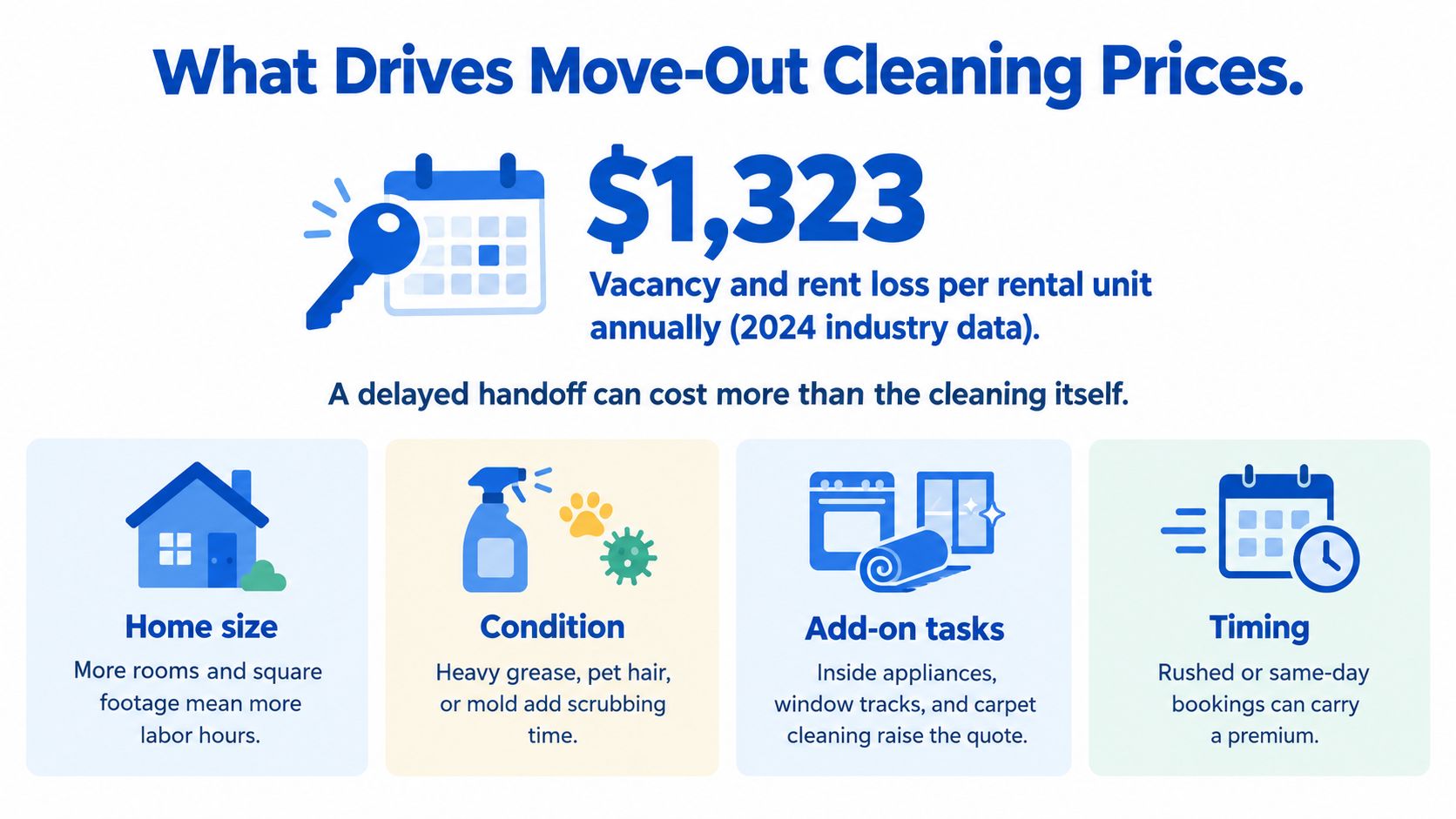
| Price factor | How it changes the price | Question to ask |
|---|---|---|
| Home size and room count | More rooms and square footage add labor | Is the quote based on square footage, bedrooms or bathrooms? |
| Condition and buildup | Heavy grease, pet odor or neglect adds work; suspected mold needs separate assessment | Is condition assessed before the quote is final? |
| Appliance interiors | Freezer defrosting and oven or dishwasher interiors add time | Are appliance interiors included? |
| Carpet and specialty surfaces | Carpet extraction and stone or grout care may be separate | Is carpet cleaning part of this quote? |
| Access and parking | Stairs, elevator reservations and loading docks affect setup | Does the quote cover building access? |
| Timing and deadlines | Tight windows can require different staffing or additional fees | Is there a rush or after-hours fee? |
| Post-construction dust | Fine dust requires a distinct equipment and cleaning plan | Is construction dust removal included? |
| Junk removal and repairs | Hauling, disposal and repairs are separate work | Is disposal or repair work excluded? |
Compare the scope before comparing the total
Pricing structure matters as much as the number itself. A flat rate by home size is easy to compare only when condition assumptions and exclusions are clear. Hourly billing accommodates uncertain conditions, but ask for an estimated labor allowance and approval before overruns. Add-on pricing works fine when each optional task is named in writing.
Take a two-bedroom apartment with a greasy oven, an iced-up freezer, carpet that needs extraction, and stair-only access. The oven adds detailed degreasing, the freezer needs to be defrosted before the crew can finish it, carpet work may require separate equipment, and stairs slow down setup. A quote priced on square footage alone misses all four, and the gap surfaces later as either a surprise charge or a skipped task.
The clearest arrangement is a written scope plus a pricing method and a change-approval process. This cleaning-service quote guide walks through what to gather before requesting estimates.
A lower headline price can cost more once exclusions become add-ons or someone has to return. For a tenant, a return visit can mean the difference between a receipt dated before the inspection and a deduction you end up disputing. Prices vary by property and market, so request a property-specific estimate rather than treating an advertised starting price as the final bill.
How to Choose a Move-Out Cleaning Provider You Can Trust
How do you tell a dependable provider from a risky one before letting anyone into an empty home? Look for written answers about access, accountability, and what happens if the crew misses something.
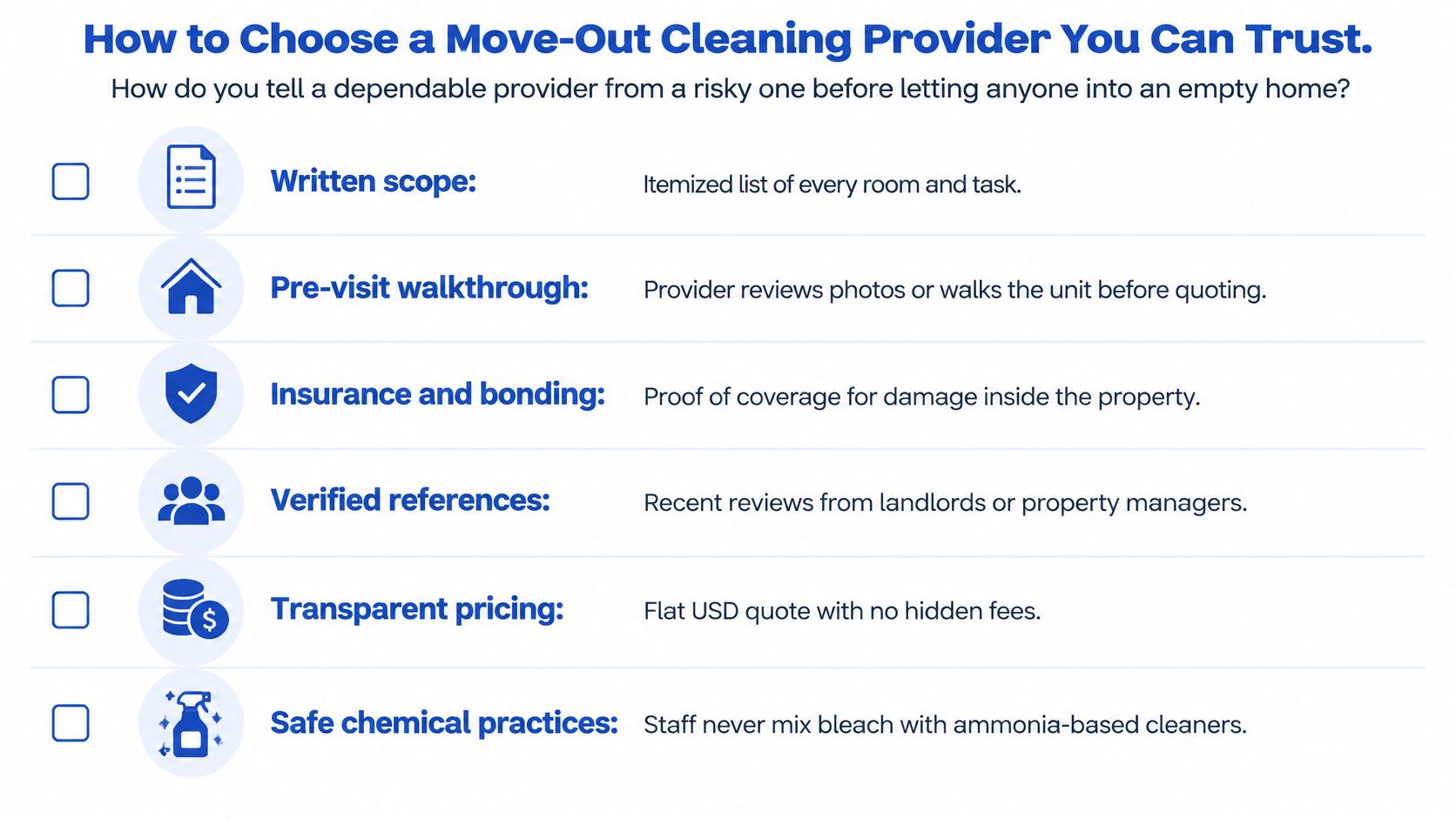
| Criterion | What good looks like | Red flag |
|---|---|---|
| Written scope | Room-by-room checklist attached to the quote | Standard clean with no task list |
| Pre-visit questions | Questions about appliances, access, pets, carpet, stone and construction dust | A final quote without questions about the property |
| Staff vetting | Training, background-check practices and crew assignment explained | No information about who enters the home |
| Satisfaction guarantee | Written re-clean policy with a stated timeline | A verbal guarantee with unclear limits |
| Itemized invoice | Tasks, add-ons and exclusions listed | A lump sum with unclear extras |
| Chemical practices | Labeled products, safe use and a ventilation plan | Vague answers about products or fumes |
| Scheduling | Date, arrival window and key handoff confirmed in writing | Verbal-only confirmation |
Who enters the property matters
Staff vetting and a written re-clean policy deserve particular attention. An empty property may contain keys, alarm information, appliances, and finishes that require care. Ask who supervises the assignment, whether subcontractors may attend, and how the provider controls access information.
Request evidence of applicable insurance rather than assuming a background check covers accidental damage. Recent references from similar vacant-property jobs can also help you assess communication and deadline management. Neither a polished website nor a friendly phone call replaces clear answers.
A satisfaction guarantee needs operating terms. Find out how quickly you must report a missed task, whether photographs are required, and whether the provider can return before your inspection. A promise to return eventually won't help if possession changes first.
Ask these questions before handing over access:
- Re-clean accountability: What is your re-clean policy, reporting window, and return timeline?
- Crew identity: Who will be in my home, and how are they trained and vetted?
- Product safety: What products will you use, and how will you ventilate while working?
For local move-in and move-out services, ask specifically about flexible scheduling and lower-emission product options rather than assuming either is available for every booking. Keep the written answers with the appointment confirmation so the person opening the property and the crew lead are working from the same agreement.
Safe Chemical Use and Dust Control in Older Homes
Never mix bleach with ammonia-based cleaners. OSHA's cleaning-chemical guidance warns that the combination can release dangerous gases capable of causing severe lung damage.
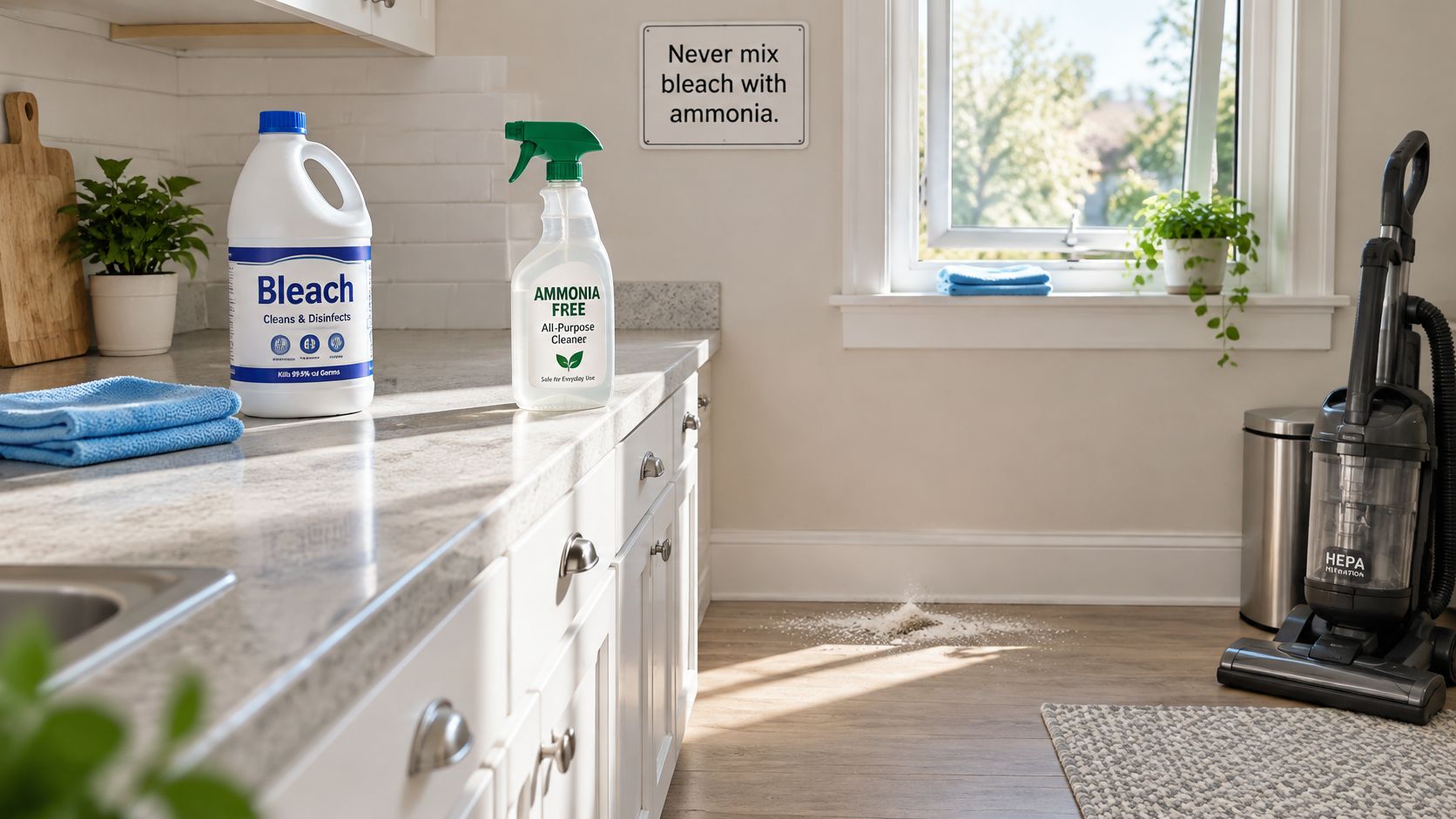
Use products according to their labels, read dilution instructions, and keep containers properly labeled. Wear gloves and eye protection when required. Don't apply a different cleaner over unknown residue just to speed up bathroom work.
Plan airflow before opening products
The EPA's indoor-air-quality guidance identifies household cleaning products as indoor pollution sources and explains how inadequate outdoor-air exchange allows pollutants to accumulate. Confirm that windows and exhaust fans can be used safely, create cross-ventilation where practical, and complete strong-odor work before the final airing out.
Discuss product sensitivities before arrival. This guide to chemical-free cleaning product options can help frame that conversation, but don't treat a marketing label as a substitute for ingredient information or safe-use instructions.
Treat suspected lead dust as specialist work
For older painted surfaces that may contain lead, follow EPA guidance on controlling renovation dust. Contain the affected area, reduce dust generation, and use HEPA vacuuming followed by wet wiping or wet mopping rather than dry sweeping.
Check corners, window troughs, baseboards, floor transitions, and vent-adjacent surfaces for remaining residue. Coordinate containment removal so dirty sheeting doesn't contaminate finished rooms.
Safety boundary: A visually clean room is not proof of lead clearance. Don't sand or scrape suspect painted surfaces without appropriate training, and have regulated verification requirements assessed by a qualified professional.
Move-Out Cleaning Questions Answered
How much does move-out cleaning cost?
The price depends on the property and the agreed work. Use the price-factor table to describe the home's condition, appliance needs, specialty surfaces, access, and deadline. A written estimate after photographs or a walkthrough is worth more than any general range, because it locks down the scope you can point to if a dispute comes later.
How is move-out cleaning different from a deep clean?
Move-out cleaning prepares a vacant home for handoff. Deep cleaning refreshes a home that's still in use. Check the comparison table, then confirm whether the provider's move-out package includes the interior work and documentation you need. I've seen tenants pay for a “deep clean” that skipped the oven and cabinet interiors, then lose part of the deposit over exactly those items.
Will a professional clean guarantee my deposit back?
No, professional cleaning doesn't guarantee a deposit refund. It can address agreed removable dirt, but it doesn't settle damage claims or determine whether a deduction is legal. Keep the condition record, written scope, and invoice together, and use the Massachusetts guidance discussed earlier if a dispute arises.
How far ahead should I book?
Reserve the appointment once your move-out and inspection dates are set. Leave at least a day or two between the cleaning and the inspection so there's room for a corrective visit if the landlord flags something. Book earlier when elevator reservations, weekend-only access, or same-day key return leave little room to adjust. In practice, providers fill up fast around month-end, when most Massachusetts leases turn over, so waiting until the week of your move often means settling for whoever is free rather than who quoted a clear scope.
Can I mix bleach and ammonia to save time?
Never mix them. Follow the safety precautions above and don't improvise combinations when a stain resists treatment. If you don't know what product was previously applied, tell the crew before they begin.
Prepare and Book Your Move-Out Clean Before Inspection
The strongest deposit-protection plan connects the landlord's expectations, the cleaning assignment, and the handoff record. British Columbia's official move-out guidance recommends leaving a rental reasonably clean, documenting its condition with photographs, and completing the condition inspection with the landlord. Those documentation habits are useful, although Massachusetts law governs a Massachusetts tenancy.
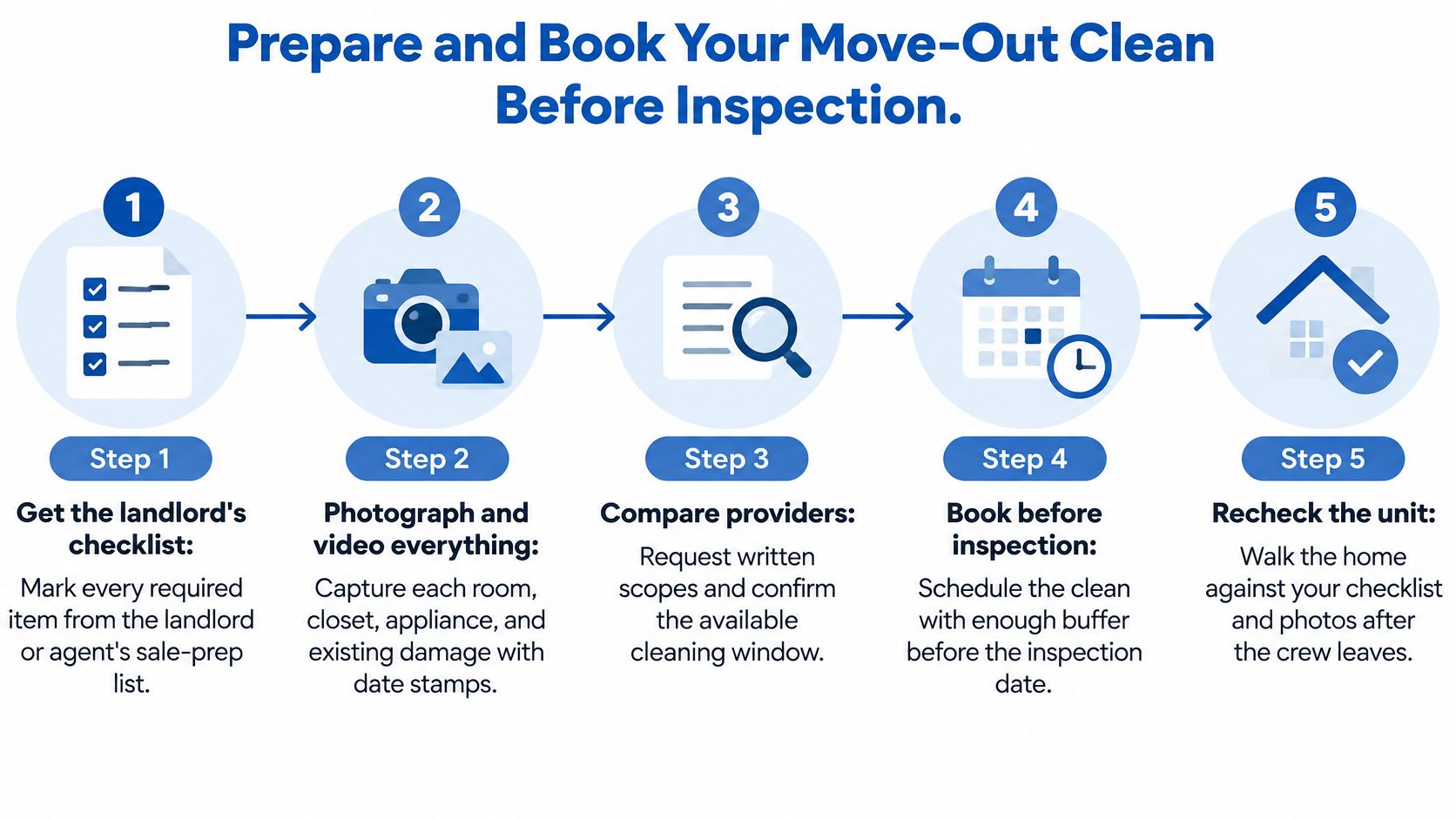
Build the cleaning and handoff record together
Get the property-specific checklist. Ask the landlord for the required cleaning list or obtain your agent's sale-preparation requirements so the crew isn't guessing what the final reviewer expects. Flag anything that sounds like repair or restoration rather than cleaning.
Document the baseline before work starts. Photograph and video each room, closet, appliance interior, and existing defect with dates preserved, then retain any move-in condition report for comparison. Capture both wide views and close details so a mark's location is clear.
Send a complete scope request. Include home size, bedroom and bathroom layout, appliance interiors, carpet, stone, construction dust, pets, access restrictions, and disposal needs when requesting a written, itemized estimate. Clear photographs help the provider distinguish ordinary cleaning from work requiring another service.
Leave time before inspection. Schedule after belongings are removed but with enough room for the walkthrough and any agreed corrective visit. Confirm the provider's actual re-clean availability rather than assuming a return appointment will fit.
Clear the work areas. Remove personal items, trash, boxes, and hazards so the crew can reach floors, baseboards, shelves, and storage interiors. Don't leave unwanted belongings for the cleaners unless hauling is explicitly included.
Prepare appliances according to their instructions. Empty the refrigerator and arrange any necessary freezer defrosting early enough for safe access and cleanup. Leave the oven and dishwasher accessible, and tell the provider about any appliance fault before work begins.
Confirm access in writing. Specify keys, alarm procedures, parking, elevator reservations, pet placement, and permission to use windows or exhaust fans. Agree on how the crew will secure the property afterward and return or store access devices.
Inspect the completed work. Walk through against the agreed checklist and baseline photographs, checking interiors rather than only viewing each room from the doorway. Send clear photographs of any missed included task within the provider's reporting window.
Keep the final record together. Request an itemized invoice and retain it with the finished-condition photographs, correspondence, and inspection notes. Record any inaccessible areas or unresolved maintenance issues separately so the paperwork describes what actually happened.
Paying for cleaning is not the same as proving the handoff condition. The useful result is a clean property supported by a clear record, with exclusions and remaining defects identified before keys change hands.
Sunny Day Pro Services offers move-in and move-out cleaning, post-construction cleanup, flexible scheduling, and eco-friendly options for Wayland, Newton, Needham, Wellesley, Weston, and surrounding Massachusetts communities. Visit Sunny Day Pro Services to request a fast, itemized quote with your property photos, required tasks, and inspection deadline, and review its related cleaning services if renovation dust or move-in preparation is also part of the job.

