
Cleaning Checklist for House: 10 Room-by-Room Routines
Cleaning checklist for house upkeep with daily, weekly, monthly, and deep-clean tasks, time estimates, eco tips, and printables for Massachusetts homes.

Saturday starts with coffee and a plan to clean the kitchen. Then you notice the sticky backsplash, dusty shelves, and grit under the dining chairs. What should have been a one-hour reset turns into six hours of scrubbing because grease, dust, and dirt went unchecked all week.
A useful cleaning checklist for house maintenance prevents that pileup. It separates daily mess from weekly upkeep and periodic deep cleaning. You don't need to clean every room equally often. You need to catch food residue quickly, remove dust consistently, and schedule the hidden jobs before they become frustrating.
Keep your supplies simple: washable microfiber cloths, a soft brush, a suitable vacuum, mild dish soap, and a surface-compatible floor cleaner. Dawn Free & Clear can handle appropriate washable surfaces when diluted according to its directions. Bona Hardwood Floor Cleaner is an option for compatible finished wood. Neither replaces a labeled disinfectant when disinfection is needed.
The schedule below is a starting point, not a promise that every home takes the same time. Room size, clutter, pets, and existing buildup determine the workload. The kitchen reset has a defined time budget; larger routines work better as separate calendar appointments than as rushed races.
Practical rule: Clean what gets dirty fastest most often. Don't spend your evening polishing a spare-room shelf while food residue hardens on the stove.
Table of Contents
1. Daily 15-Minute Kitchen Reset
Keep the evening kitchen routine focused on dishes, food residue, and the surfaces you'll use again tomorrow. Leave cabinet interiors and appliance detailing for a separate session.
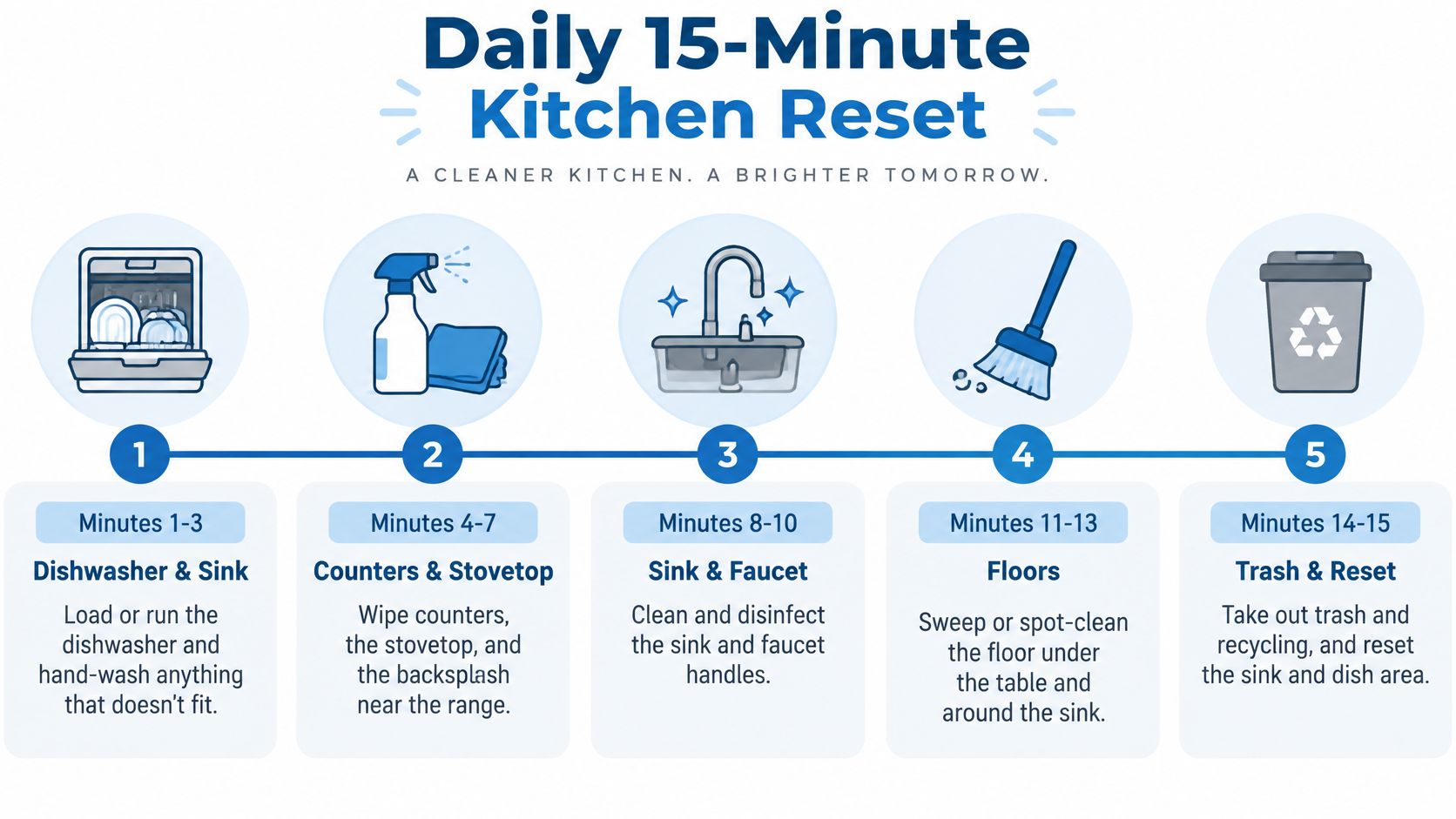
Follow the same closing sequence
- Clear dishes: Load the dishwasher or wash dishes, then remove scraps from the sink strainer.
- Wipe counters: Move countertop items rather than cleaning around them. Use mild dish soap or a cleaner approved for the countertop.
- Clean the cooking area: Once cool, wipe the stovetop and backsplash before grease hardens.
- Finish the sink: Wash the basin, rinse away residue, and dry the faucet.
- Check the floor: Pick up crumbs and wipe sticky spills without turning the reset into a whole-floor wash.
For porcelain, ceramic, or natural-stone backsplashes, choose a compatible pH-neutral cleaner. Keep labeled products accessible to adults but secured from children and pets.
Cleaning isn't the same as disinfecting. The CDC's home cleaning guidance says soap-and-water cleaning removes most germs in most household situations; disinfection becomes more important when someone is sick or has a weakened immune system. Clean first, then follow the disinfectant's wet-contact time when it's needed.
For a family juggling dinner and homework, assigning dishes to one person and counters to another makes this routine easier to finish. A recurring professional clean can handle the buildup that daily resets don't reach.
2. Weekly Bathroom Cleaning Checklist
Start above the vanity and finish at the floor. Otherwise, dust and shower residue can land on surfaces you've already cleaned.

Remove towels and bathmats first. Dust accessible vent covers, clean the mirror, wash the vanity, and scrub the shower before cleaning the toilet with bathroom-only tools. Vacuum or sweep loose hair before damp-mopping.
Match the product to the deposit
Use a nonabrasive bathroom cleaner for soap residue on compatible surfaces. Mineral-deposit removers may suit some shower glass and fixtures, but they aren't interchangeable with stone cleaners. Keep acidic products away from marble and other acid-sensitive finishes.
- Shower glass: Use a squeegee after bathing to limit lingering water.
- Caulk and grout: Inspect monthly for gaps, loose sections, and recurring discoloration. Don't seal over a damp or failing joint.
- Toilet: Clean the seat hinges, handle, exterior base, and surrounding floor, not just the bowl.
- Ventilation: Run an outdoor-vented exhaust fan during moisture-producing work.
The Consumer Product Safety Commission's household safety guidance warns against mixing cleaning chemicals, particularly bleach and ammonia. Don't combine bleach with vinegar or other acidic products either.
For a Newton household with mineral spotting, frequent squeegeeing plus scheduled glass cleaning is more manageable than repeated aggressive scrubbing. Older tile in Wayland, Weston, or Wellesley may need a grout assessment rather than stronger chemicals.
3. Weekly Bedroom and Linen Refresh
A bedroom can look tidy while dust collects behind the headboard and pet hair gathers under the bed. Strip the bedding first so you can clean the surrounding surfaces before putting fresh linens on.

Keep a spare sheet set ready if laundry usually delays bed-making. Follow care labels for sheets, pillows, blankets, and mattress protectors rather than assuming every textile tolerates the same wash.
Clean the areas closest to the bed
- Bedside surfaces: Lift lamps and charging docks, then wipe underneath.
- Headboard and frame: Use a soft vacuum attachment on upholstery and a compatible cloth on finished wood.
- Floor edges: Vacuum around legs, along baseboards, and beneath accessible furniture.
- Bedding: Replace sheets and pillowcases, then check protectors for spills or wear.
The EPA's indoor particulate-matter guidance recommends vacuuming carpets and upholstered furniture at least weekly, or more often when needed, and using a damp cloth to capture dust. It also notes that a HEPA-equipped vacuum may help reduce dust buildup.
For a couple whose dog sleeps beside the bed, concentrate on that resting spot and the floor beneath nearby furniture. Don't spend the whole session rearranging drawers while overlooking accumulated hair.
Before a home showing, finish with clear bedside tables, fresh bedding, and an unobstructed floor. Ask about scheduling availability if you need professional pre-showing cleaning.
4. Weekly Living Room Dusting and Surface Care
A feather duster isn't the best tool for a dusty entertainment center. Use a lightly dampened microfiber cloth on compatible hard surfaces so you collect dust instead of sweeping it into the room.
Work from upper shelves toward coffee tables and lower furniture. Vacuum upholstery and floors after dusting, including the edges beneath sofas where hair and crumbs collect.
Treat electronics and upholstery differently
Electronics need their own cleaning method. Turn equipment off, follow the manufacturer's instructions, and never spray cleaner directly onto a screen, speaker, remote, or connection port. A clean, dry screen-safe cloth is the safer starting point.
- Shelves and décor: Lift objects, wipe the surface underneath, and dry moisture-sensitive finishes.
- Upholstery: Read the care code before using water or solvent-based products.
- Cushions: Remove loose debris from seams and rotate cushions where the design allows.
- Touchpoints: Clean handles, switches, and remotes using methods suitable for each material.
Use the least aggressive method that removes the soil. A wet sofa isn't evidence of a thorough clean.
For a Needham household with a shedding dog, a fabric-safe brush can loosen hair before vacuuming. Test the brush in an inconspicuous spot and avoid aggressive rubbing on delicate upholstery.
Persistent stains, odors, or unknown fabrics call for an assessment before treatment. Ask Sunny Day Pro Services which upholstery-cleaning options are available and whether the fabric suits the proposed method. Don't assume a general house-cleaning visit includes specialist fabric restoration.
5. Biweekly Floor Care and Entryway Maintenance
Treat the biweekly appointment as detailed floor care, not permission to leave grit untouched between visits. Entryways, kitchens, and pet areas may need spot cleaning much sooner.
Massachusetts households can track in wet leaves, sand, and winter deicing residue. Put a practical mat at each frequently used entrance, create a place for wet shoes, and clean beneath mats instead of leaving moisture trapped underneath.
Remove grit before adding water
- Dry-clean first: Vacuum or sweep using an attachment appropriate for the finish.
- Match the cleaner: Use a wood-floor product on compatible sealed wood and a pH-neutral stone cleaner on suitable natural stone.
- Control moisture: Wring out the mop well. Wood and laminate shouldn't remain wet.
- Inspect thresholds: Remove debris from door tracks and check for worn mats or damaged transitions.
Bona Hardwood Floor Cleaner can suit compatible finished wood, while a stone-specific product such as StoneTech Stone & Tile Cleaner may suit appropriate stone and tile installations. Check the flooring manufacturer's requirements before choosing either.
In a Weston entryway, removing sandy debris before mopping avoids dragging grit across the finish. Use a fresh mop pad when the current one becomes dirty rather than spreading the same residue into adjoining rooms.
Reserve bathroom cloths and mop pads for bathroom work. Wash reusable textiles according to their care directions and skip fabric softener on microfiber. For dull tile or persistent residue, request a floor assessment before trying abrasive pads or stronger chemicals.
6. Monthly Kitchen Appliance Deep Clean
A clean countertop won't fix food trapped in a dishwasher filter or a sticky refrigerator gasket. Put appliance interiors on the monthly calendar, then adjust the actual work to use, condition, and manufacturer instructions.
Start with the appliance causing the clearest problem. A refrigerator spill needs attention now; a lightly used oven may not need a full chemical clean at every appointment.
Work through the hidden collection points
- Refrigerator: Remove food in manageable batches, wash compatible shelves, and clean door seals gently. Avoid temperature shock when washing glass shelves.
- Dishwasher: Inspect and clean the removable filter where the manual allows. Use an approved dishwasher cleaner when needed.
- Microwave: Soften food residue with gentle steam, then wipe the interior once it's safe to handle.
- Oven: Remove loose debris and follow the manual before choosing oven cleaner or a self-clean cycle.
- Small appliances: Unplug before cleaning accessible crumb trays, removable parts, and exterior surfaces.
For a Wellesley homeowner noticing gritty dishes, inspecting the dishwasher filter is more useful than adding extra detergent without checking the cause. Likewise, refrigerator odors require removing spoiled food and cleaning spills, not just masking the smell with baking soda.
Use the deep-cleaning kitchen checklist to coordinate appliances with cabinets and surrounding surfaces. Keep strong oven products away from incompatible finishes, and never improvise chemical mixtures.
After appliance installation or a kitchen remodel, book cleanup after dusty work ends so newly cleaned interiors aren't immediately contaminated.
7. Quarterly Tile and Grout Maintenance
Grout discoloration doesn't always mean the grout needs replacing. It may be embedded soil, cleaner residue, moisture, or a failed joint. Inspect before choosing a treatment.
Use a compatible pH-neutral cleaner and a soft nylon grout brush for routine maintenance. Allow the cleaner to work according to its directions, agitate gently, and remove the dirty solution instead of letting it dry back onto the floor.
Inspect before sealing
- Identify the grout: Cementitious, epoxy, and premixed products don't share identical maintenance requirements.
- Check the joints: Look for missing grout, cracks, and separation around fixtures.
- Assess the surface: Note loose tiles, new movement, or persistent dampness.
- Review sealer instructions: A water-drop check can help assess some sealed cementitious grout, but it isn't a universal test for every installation.
In a Needham bathroom, grout that darkens when damp may warrant further inspection. It doesn't automatically justify applying another sealer coat. Clean, dry, and identify the existing material first.
Tile-care judgment: Stronger chemistry can't repair loose tile, failed caulk, or water entering behind the installation.
Avoid wire brushes, abrasive pads, and acidic household remedies on sensitive finishes. Marble needs acid-safe care; granite also needs a cleaner compatible with its surface treatment.
The grout cleaning and sealing guide explains how cleaning and sealing fit together. Sunny Day Pro Services installs porcelain, ceramic, marble, and granite tile and can assess whether the next step is maintenance, repair, or replacement.
8. Seasonal Deep Clean for Baseboards, Fans, and Windows
Spring and fall are useful reminders for surfaces that don't need constant attention. Divide the work by room or floor so ladder work, window cleaning, and furniture moving don't become an exhausting all-day project.

Turn off power at the breaker before cleaning fans or light fixtures. Let bulbs cool, use a stable ladder, and avoid reaching sideways beyond a comfortable working position.
Include the overlooked edges
- Fan blades: Slip a pillowcase over each blade to catch loose dust, then wipe with a suitable cloth.
- Baseboards: Vacuum first, then wipe with mild soapy water where the finish permits.
- Window tracks: Remove loose debris before wiping channels and drying them.
- Blinds: Use a soft brush; wet-clean only materials approved for it.
- Glass: Apply glass cleaner to the cloth and protect nearby wood and stone.
A Wayland homeowner preparing for heating season might combine interior windows with baseboards and accessible vent covers. Leave upper-floor exterior windows to properly equipped professionals.
Ventilation belongs on the checklist too. The CPSC's indoor-air-quality guide recommends outdoor-vented kitchen and bathroom exhaust, manufacturer-directed ventilation, and avoiding mixed household products. Open windows when conditions permit and the product directions call for fresh air.
A room isn't finished if cleaner odors, dampness, or an unresolved musty smell remain.
9. Move-In and Move-Out Cleaning Checklist
Empty rooms reveal what furniture concealed: dusty closet shelves, greasy cabinet edges, scuffed baseboards, and debris behind appliances. Schedule the clean after belongings leave but before the final walkthrough or new furniture delivery.
For Massachusetts renters and property managers, the cleaning scope should reflect the lease and documented property condition. A cleaning appointment doesn't guarantee a deposit outcome, and a room-by-room record is more useful than assumptions about what's included.
Confirm the scope before booking
- Cabinets and closets: Specify interior shelves, drawers, door fronts, and closet floors.
- Appliances: Confirm whether oven and refrigerator interiors are included and whether they must be emptied.
- Bathrooms: Include fixtures, shower surfaces, toilet exteriors, and accessible ventilation covers.
- Edges and details: List baseboards, doors, switches, tracks, and accessible areas behind movable items.
- Documentation: Photograph each room before and after cleaning, noting preexisting damage separately.
A Newton seller preparing for listing photos may prioritize glass, kitchens, bathrooms, and presentation. A property manager preparing for new tenants needs a consistent completion standard across the entire unit.
Use the move-in cleaning checklist to agree on details before the appointment. Tell the team about parking, stairs, utilities, access arrangements, and any work still underway.
Don't book the final clean while movers or contractors are still carrying materials through the house. Sunny Day Pro Services offers move-in and move-out cleaning; request a quote tied to the property's condition and your handover date.
10. Post-Renovation and Construction Cleanup Checklist
Construction dust isn't ordinary weekly dust. It collects inside cabinet edges, settles on trim, and can reappear when work continues nearby. Wait until dust-producing trades finish before scheduling the final detail clean.
A Weston kitchen remodel needs a different scope from a bathroom refresh in Wellesley. Tell the cleaning team which materials were installed, what products were used, and whether any hazardous-material concerns remain.
Separate debris removal from finish cleaning
- Clear approved debris: Confirm who handles packaging, offcuts, and construction waste.
- Capture fine dust: Use equipment suitable for the dust involved, with appropriate filtration and containment.
- Clean from high to low: Work through trim, cabinets, fixtures, and counters before floors.
- Treat residue carefully: Don't scrape glass or remove adhesive without checking the finish and approved method.
- Respect curing requirements: Follow installer guidance before cleaning or sealing new grout and stone.
Suspected lead, asbestos, or other hazardous dust requires specialist assessment, not a standard house-cleaning vacuum. Don't dry-sweep unknown renovation dust through occupied rooms.
Check for leaks and trapped moisture as well as visible soil. The EPA's mold and moisture guidance recommends drying wet materials preferably within 24 to 48 hours and keeping relative humidity ideally between 30% and 50%.
For new porcelain tile with grout haze, ask the installer to identify the grout before choosing a remover. Sunny Day Pro Services provides post-construction cleanup and tile installation, allowing cleanup requirements to be discussed alongside the project schedule.
How the 10 cleaning routines compare by time, frequency, and focus
| Item | Typical Time | Frequency | Main Focus | Best For |
|---|---|---|---|---|
| Daily 15-Minute Kitchen Reset | About 15 minutes | Daily | Dishes, counters, sink, stovetop, and floors | Keeping the kitchen ready for daily use |
| Weekly Bathroom Cleaning Checklist | Not specified | Weekly | Shower, toilet, sink, vents, and floors | Controlling soap scum, mildew, and germs |
| Weekly Bedroom and Linen Refresh | Not specified | Weekly | Bedding, dusting, vacuuming, and clutter | Reducing bedroom dust and allergens |
| Weekly Living Room Dusting and Surface Care | Under an hour | Weekly | Dusting, electronics, upholstery, and surfaces | Keeping living areas fresh and dust under control |
| Biweekly Floor Care and Entryway Maintenance | Not specified | Every two weeks | Floors, carpets, mats, and entryways | Protecting floors from grit and foot traffic |
| Monthly Kitchen Appliance Deep Clean | Not specified | Monthly | Refrigerator, oven, dishwasher, microwave, and range hood | Removing appliance grime, odors, and debris |
| Quarterly Tile and Grout Maintenance | Not specified | Quarterly | Grout cleaning, tile inspection, and sealant checks | Preventing tile and grout damage |
| Seasonal Deep Clean: Baseboards, Fans, and Windows | Not specified | Twice a year, typically spring and fall | Baseboards, fans, windows, blinds, and vents | Tackling dust and grime missed by routine cleaning |
| Move-In and Move-Out Cleaning Checklist | Not specified | Once per move | Cabinets, appliances, bathrooms, surfaces, and floors | Preparing a home for occupants, listing, or inspection |
| Post-Renovation and Construction Cleanup Checklist | Often takes multiple passes | After renovation or construction | Debris, fine dust, residue, tile, and fixtures | Making a renovated space clean and move-in ready |
Turn This Checklist Into a Routine That Sticks
Put recurring tasks on one shared calendar instead of keeping separate lists that nobody checks. Attach the kitchen reset to dinner cleanup, give bathrooms and bedrooms predictable weekly slots, and rotate appliance, tile, and seasonal work into less crowded weeks.
Assign ownership, not vague reminders. A calendar entry that names the person, room, and finish standard is easier to act on than a general instruction to clean the house. Include what finished means: counters cleared and wiped, shower residue removed, or floor edges vacuumed.
The Bureau of Labor Statistics' American Time Use Survey found that 48% of women and 22% of men performed housework on an average day in 2023. Those are participation rates, not measures of effort or quality, but they reinforce why households shouldn't assume someone else will handle recurring work.
Build a workable household calendar
- Daily: Handle dishes, food residue, spills, and obvious entryway debris.
- Weekly: Refresh bathrooms, bedding, living spaces, carpets, and upholstery.
- Biweekly: Detail hard floors and entryways while continuing spot care between appointments.
- Monthly: Inspect appliance filters, seals, hidden food debris, and bathroom caulk.
- Quarterly and seasonally: Assess tile and grout, then schedule fans, baseboards, blinds, and windows.
- At transitions: Create a separate scope for moving, selling, or finishing a renovation.
Don't invent a household cleaning time based on someone else's floor plan. Run each routine at a sustainable pace, note how long it takes in your home, and adjust the calendar. Separate active cleaning from laundry cycles, product contact time, and drying.
Choose reusable cloths and measured product doses where practical, but don't confuse eco-friendly with harmless. A fragrance-free cleaner still needs compatible surfaces, safe storage, and correct use. Vinegar isn't a universal substitute for a stone-safe cleaner.
Hand off work when it requires specialist equipment, difficult access, finish identification, or more uninterrupted time than you have. Move-outs and post-construction projects are especially worth scoping professionally because missed details can interfere with a handover or walkthrough.
Before requesting a quote, gather your room count, flooring types, priorities, access details, and preferred date. Tell Sunny Day Pro Services whether you need ongoing maintenance or a catch-up clean, and identify concerns such as natural stone, persistent residue, pets, or recent construction.
Sunny Day Pro Services offers recurring house cleaning, deep cleaning, move-in and move-out cleaning, post-construction cleanup, and tile installation across Wayland, Newton, Needham, Wellesley, Weston, and nearby communities. Visit Sunny Day Pro Services to request a quote, discuss your home's surfaces, and choose a service schedule that supports your daily routine.

