
Deep Cleaning Bedroom Checklist: 10 Essential Steps
Use this deep cleaning bedroom checklist to clean your mattress, bedding, floors, closets, windows, fixtures, and hidden dust from top to bottom.
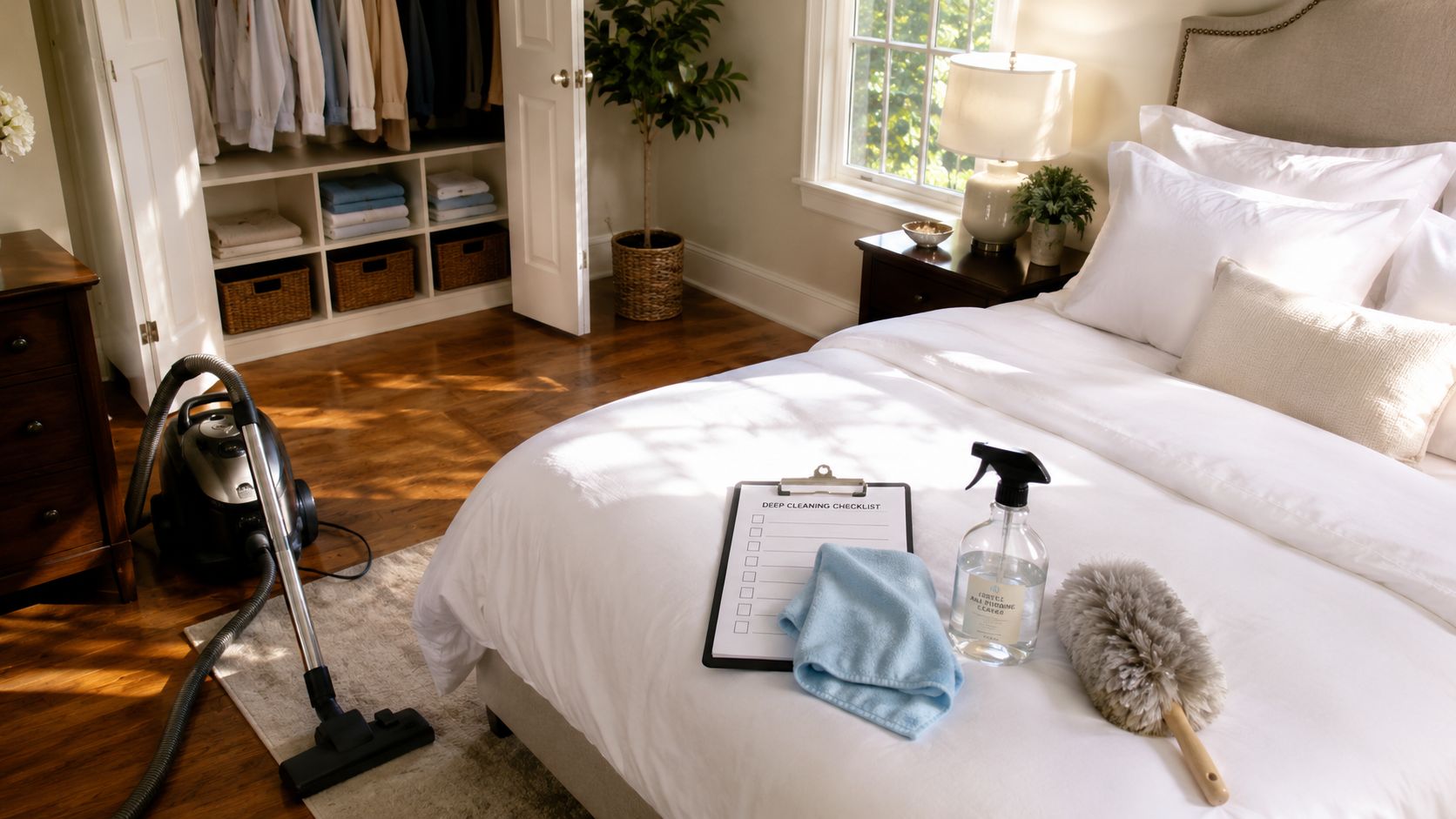
Your bedroom can look tidy while dust sits on the ceiling fan, inside window tracks, behind the dresser, beneath the bed, and throughout the mattress and closet. A quick vacuum and fresh sheets improve appearances, but they won't reach every hidden reservoir that collects over time.
A dependable deep cleaning bedroom checklist follows a top-to-bottom, dry-to-wet sequence. Start by opening windows when weather permits, gathering supplies, and protecting furniture. Finish with clean bedding, a final floor pass, and a maintenance rhythm that keeps the room from returning to its starting point.
For a standard bedroom, plan for roughly 1 to 2 hours for a monthly deep-clean workflow, depending on room size, clutter, furniture, and whether rugs or mattresses need specialty treatment. Use a vacuum with a hose and brush attachments, preferably with HEPA filtration, microfiber cloths, a pH-neutral cleaner, glass cleaner, a squeegee, soft brushes, a drop cloth, laundry detergent, and labeled containers for closet sorting. Consumer cleaning-appliance use is already routine, with 68% of consumers using home cleaning appliances at least weekly and 29% using them daily, according to Grand View Research's home cleaning appliance survey.
Disconnect power before cleaning electrical fixtures, test products on hidden areas, keep wood and upholstery from becoming saturated, and never move heavy furniture without the right equipment or help. If you're in Wayland, Newton, Needham, Wellesley, Weston, or a nearby Massachusetts community, Sunny Day Pro Services offers deep cleaning support for busy homeowners, including overlooked bedroom areas.
Sequence matters: Clean high surfaces first, work from dry dust removal to controlled wet cleaning, and leave bedding and floors until the room is otherwise finished.
Table of Contents
1. Light Fixtures and Ceiling Fan Deep Cleaning
Dust starts at the ceiling and travels downward. Begin with ceiling fans, recessed lights, pendant fixtures, sconces, corners, and cobwebs before touching walls, furniture, or floors. Place a sheet or drop cloth beneath the work area, especially if the bed or a large rug sits directly below the fixture.
Turn off lights and ceiling fans at the breaker, not only at the wall switch. A wall switch can prevent normal operation, but breaker-level shutoff provides a safer boundary when your hands, tools, or ladder are near electrical components. Don't use water on bulbs, sockets, wiring, or fixed electrical parts.
A pillowcase works particularly well on ceiling-fan blades. Slide it over one blade, press the fabric gently around the top and bottom, and pull it toward the tip so dust falls inside the case instead of across the room. Follow with a dry microfiber cloth for remaining film. Use a separate dry cloth on glass shades, metal fixtures, and bulbs to reduce streaking.
Cleaning access is not fixture repair
A reachable fixture can be dusted and wiped safely. Loose wiring, cracked housings, unstable fans, damaged sockets, and fixtures that require disassembly belong with an electrician or qualified repair professional. Cleaning can restore brightness by removing visible dust from surfaces, but it won't correct an electrical or mechanical fault.
For planning, allow roughly 1 to 1.5 hours for this ceiling-level work when the room has multiple fixtures, a high ceiling, or accumulated cobwebs. The National Heart, Lung, and Blood Institute's dust-mite guidance also reinforces why a bedroom reset shouldn't stop at visible surfaces. Dust and allergens can remain in bed-related and fabric areas even when fixtures look clean.
2. Bedroom Walls and Ceiling Spot Treatment and Touch-Up
Once overhead dust is loose, move down to ceiling corners, wall edges, switch areas, and visible marks. Work from the top toward the floor so loosened dust doesn't settle on surfaces you've already cleaned.
Paint finish matters. A lightly dampened microfiber cloth and pH-neutral cleaner are usually safer starting points than aggressive degreasers or abrasive sponges. Test the product in an inconspicuous area first, particularly on flat paint, older paint, wallpaper, or a wall with a decorative finish. If the test area dulls, changes color, or leaves a halo, stop and choose a gentler method.
Separate cleaning from repair
A removable scuff is a cleaning issue. Bubbling paint, recurring discoloration, peeling surfaces, and brown or yellow water stains may indicate damage or moisture that cleaning can't resolve. Water stains deserve special attention because covering them without addressing the source can lead to repeated staining or broader deterioration.
Textured and popcorn ceilings require a light touch. Don't scrub aggressively or saturate the texture. Use a soft duster or carefully controlled microfiber technique, and avoid disturbing older ceiling materials when their composition or condition is uncertain.
Plan for roughly 1.5 to 2.5 hours when walls and ceiling areas need detailed spot treatment. For rooms affected by renovation dust, Sunny Day Pro Services' drywall dust cleaning guidance offers a useful reference for controlling fine residue without spreading it across finished surfaces.
3. Window Sills, Frames, and Track Deep Cleaning
Window tracks hold outdoor soil, pollen, hair, and compacted dust. Clean them after overhead work, but before the final floor pass. Begin dry with a vacuum hose and narrow attachment, removing loose debris before moisture turns it into muddy residue.
Use a soft detail brush in corners, drainage channels, and around hardware. Wipe frames and sills with a slightly damp microfiber cloth. Apply cleaner to the cloth rather than spraying into tracks or onto the sill, especially near painted walls, wood trim, and older windows. Keep the surface damp, not wet, so wood and painted areas have time to dry without swelling or lifting finish.
Interior glass can be cleaned with a suitable glass cleaner and squeegee. Dry the edges with a clean microfiber cloth to prevent drips onto the frame. Clean screens separately with gentle soap and water, rinse thoroughly, and let them dry fully before reinstalling. Do not force screens, balances, latches, or sash components that resist movement.
Massachusetts windows need careful handling
Historic double-hung windows in Wellesley colonials often have painted-over sash latches and narrow tracks. A detail brush and controlled wiping are safer than spraying cleaner into the assembly. Older Newton homes may also have painted tracks, fragile glazing, or hardware that loosens when excess water reaches the joint. Modern vinyl windows usually tolerate faster wiping, but their drainage openings still need to remain clear.
Wear gloves when removing compacted debris, and pause if you find deteriorated paint, suspected lead paint, damaged glazing, or trapped moisture. Those conditions may require a window specialist rather than aggressive cleaning.
Allow roughly 1 to 2 hours per bedroom, depending on the number and condition of windows. EPA guidance on indoor particulate matter explains that indoor dust can contain dust mites, pet dander, mold spores, skin flakes, hair, and soil tracked indoors. Window areas therefore deserve more than a quick glass wipe.
4. Blinds, Curtains, and Window Treatments Deep Cleaning
Window treatments need material-specific care. Begin with a low-suction vacuum and upholstery or brush attachment, working from the top down. For blinds, close the slats in one direction, vacuum gently, reverse them, and repeat. Damp wiping can work for vinyl or faux-wood blinds, but wood treatments shouldn't be saturated because moisture can swell, warp, or damage the finish.
Curtains and drapes are less forgiving. Check the care label before removing them, and spot-test any solution on a hidden hem. Machine-washable panels may be manageable at home, while lined, oversized, ornate, or delicate treatments may require laundering, steaming, or off-site textile care.
Choose the least aggressive method
A low-suction vacuum is often enough for routine dust reduction. Damp wiping is useful for washable hard treatments. Professional fabric care becomes the better choice when the treatment has smoke odor, heavy pet residue, fragile fibers, complex lining, or a shape that could change during washing.
A Wayland bedroom with heavy blackout curtains may need planned laundering and enough drying time before re-hanging. In a Newton bedroom, vinyl blinds with sticky residue require a different approach from a Wellesley room with ornate draperies. Sunny Day Pro Services' guide to cleaning blinds provides additional practical direction for choosing a method without treating every blind material alike.
Plan for approximately 1 to 2 hours for a bedroom with standard treatments. Schedule textile cleaning before staging or showings, not immediately before them. Treatments should be completely dry before they return to the window, and protective coatings should only be used when the fabric-care professional confirms compatibility.
5. Closet Organization and Deep Cleaning
Treat the closet as a small room, not as a storage drawer attached to the bedroom. Before removing clothing, create a staging area with bags or bins labeled for keeping, donating, relocating, or discarding. That prevents clean items from landing in a hallway pile and makes it easier to see the closet floor, corners, shelves, and rods.
Remove contents in manageable groups if the closet is crowded. Vacuum ceiling corners, shelf surfaces, floor edges, and the area behind storage containers. Wipe rods and shelves with a slightly damp microfiber cloth, then let them dry before returning clothing. If you notice a musty odor, dampness, staining, or suspected mildew, pause and investigate the moisture source rather than covering the smell with fragrance.
Organization remains the homeowner's choice
A cleaner can create a clean, accessible foundation, but personal decluttering decisions belong to the homeowner. Shelf liners, bins, cedar blocks, seasonal categories, and additional shelving can support future upkeep, but they shouldn't be installed without confirming dimensions and preferences.
Plan for roughly 2 to 3 hours when the closet needs both deep cleaning and sorting. A Needham closet with years of accumulated belongings may take longer in practical terms because decision-making slows the workflow. A move-in or move-out clean usually focuses on empty surfaces, dust-free floors, and odor concerns, while a homeowner may also want categories, seasonal rotation, and improved storage access.
Return items only after surfaces are dry. Keep clothing slightly away from damp walls, avoid blocking ventilation points, and use cedar or another suitable deodorizer only after confirming it won't contact or stain garments.
6. Mattress Deep Cleaning and Dust Mite Treatment
The mattress is the bedroom's largest soft-surface reservoir. Strip sheets, pillowcases, protectors, blankets, comforters, and duvet inserts before cleaning, then launder each item according to its care label. Check the mattress label and warranty guidance before using cleaner, rotating the mattress, or applying extraction equipment.
Vacuum the top, seams, sides, piping, and edges with HEPA-filtered equipment when available. Use controlled suction around tufting, and keep moisture away from the mattress core. Spot-treat compatible stains by blotting instead of scrubbing. A mattress treated with liquid needs ventilation until completely dry before the bed is remade.
A historical mattress study found that daily vacuum cleaning over 8 weeks reduced total dust-mite allergens by 85.1%, from a geometric mean of 4.07 micrograms to 0.42 micrograms, as reported in the reviewed mattress-cleaning evidence. The practical takeaway is consistent, targeted maintenance rather than relying on one large cleaning visit.
Control reservoirs, not just appearances
Dust-mite allergens can remain in mattresses, pillows, protectors, and bedding even when the bed looks clean. The NHLBI reports that roughly four out of five U.S. homes have dust-mite allergens in at least one bed, and a national survey detected dust-mite allergen in 84.2% of U.S. beds, according to the published national survey.
Wash bedding at 60°C, or 140°F, where the care label allows. If the fabric cannot tolerate that temperature, tumble-dry it on high heat as an alternative mitigation when the care instructions permit. This reconciles the lower temperature guidance summarized in Wyndly's dust-mite control checklist with the higher laundering target.
Plan for roughly 45 minutes to 1.5 hours of active mattress work. Moisture-based treatment may require a 4- to 6-hour drying and ventilation window, and the room should remain unused until the surface and interior are dry. Enzyme, antimicrobial, UV, and extraction services may suit specific stains or materials, but they are not guaranteed medical treatments. In Massachusetts, professional help is worthwhile for persistent odor, extensive contamination, moisture damage, or a mattress too heavy to handle safely.
7. Under-Furniture Deep Cleaning and Area Rug Shampooing
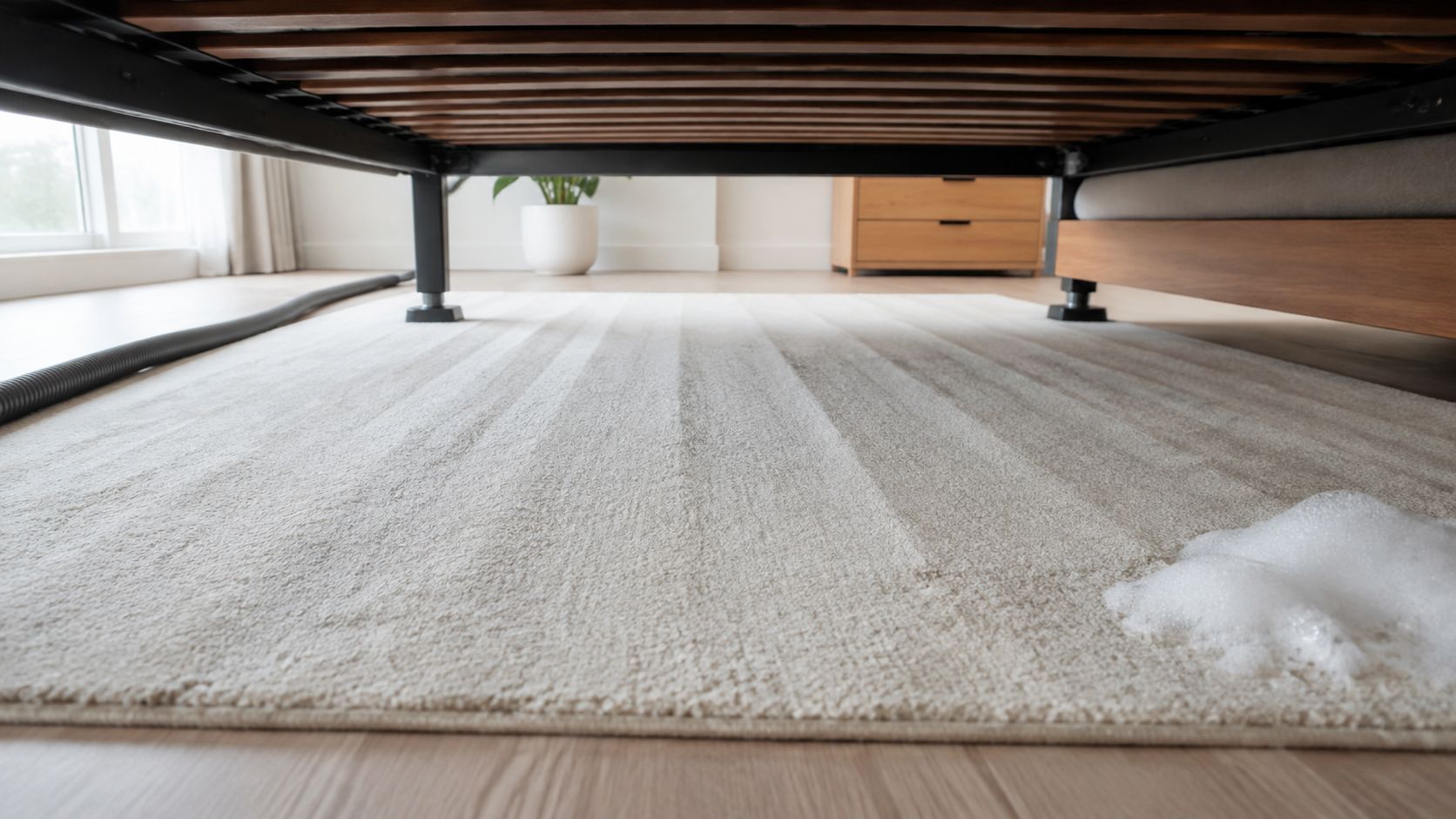
Dust and hair collect beneath beds, behind dressers, along floor edges, and in corners that routine cleaning misses. Clear bedding and portable items first, then move lightweight furniture only when the path and flooring are safe. Check for fragile belongings stored underneath before anything shifts.
Begin with dry HEPA vacuuming. Work around the bed frame, perimeter, corners, and the space behind dressers to remove loose soil without adding moisture to hardwood or upholstery. Vacuum an area rug thoroughly before wet extraction. Protect furniture feet, and confirm that both the rug and floor beneath can tolerate water.
Drying time is part of the service
A shampooed rug may require 8 to 12 hours of drying time before furniture returns. Wet floor or rug work can take 4 to 12 hours to dry, depending on the material, airflow, and moisture level. Fans can improve air movement, and open windows may help when weather permits. Do not trap damp flooring or rugs beneath furniture.
Antique, hand-knotted, silk, heavily dyed, and structurally fragile rugs belong with a qualified rug-care professional. Heavy beds, armoires, and dressers also require appropriate moving equipment. Avoid lifting injuries, scratched flooring, and tipped furniture for a narrow strip of dust.
Vacuum carpets and furniture weekly, or more often, to control loose dust between deep cleans, following the EPA guidance noted earlier. Allow approximately 2 to 3 hours for under-furniture cleaning and standard area-rug work, excluding extended drying. In Massachusetts, schedule extra time during humid weather or ask a professional to assess rugs that remain damp, smell musty, or show color bleeding.
8. Baseboards and Trim Deep Cleaning
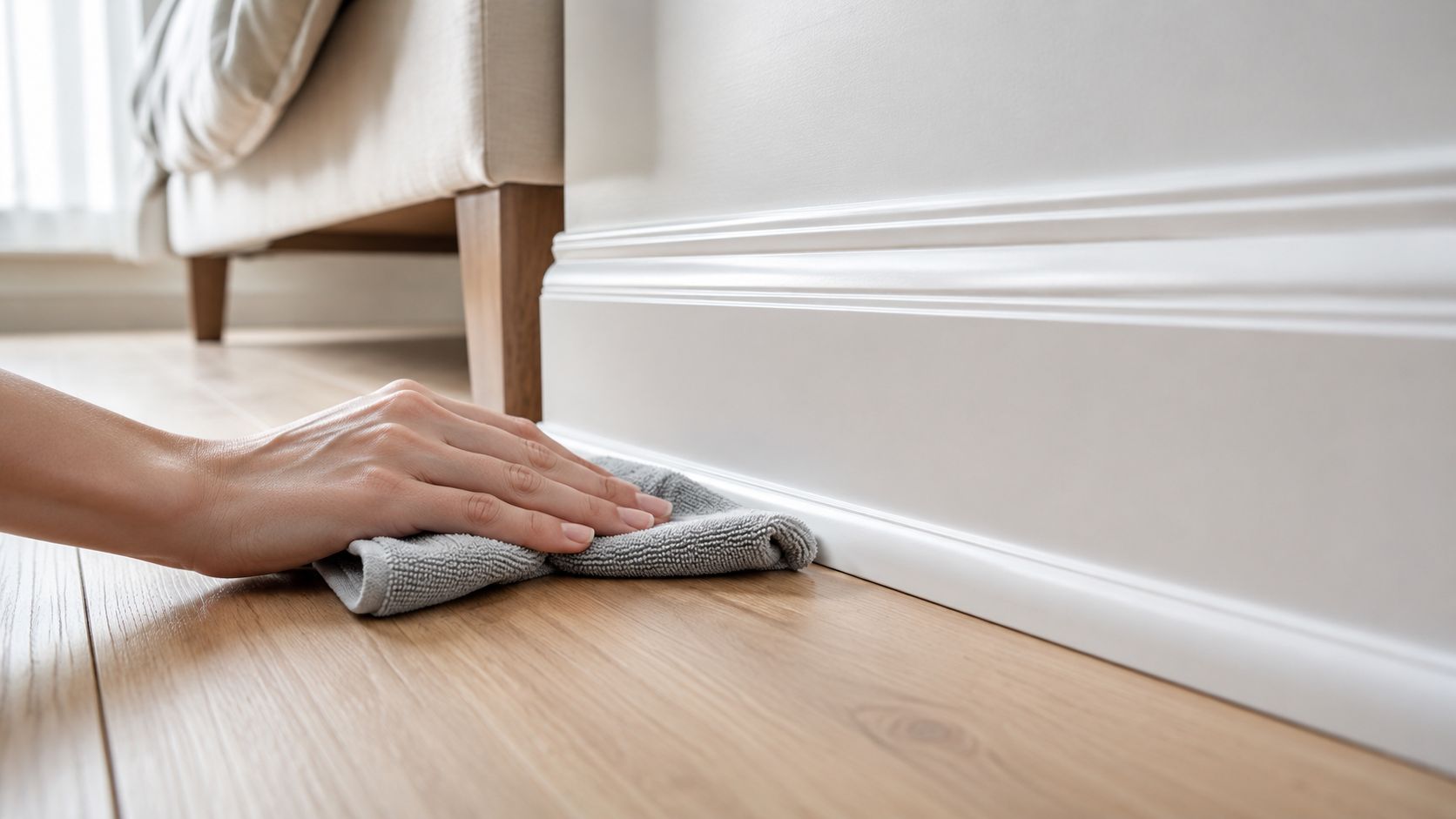
Baseboards, crown molding, door trim, and the narrow strips behind furniture should be cleaned after wall work and before the final floor pass. Dust falls onto the perimeter as you work above it, so cleaning trim too early creates unnecessary repetition.
Vacuum textured edges and corners with a brush attachment, then wipe with a microfiber cloth lightly dampened with a pH-neutral cleaner. Test painted wood and finished trim in an inconspicuous location. A wet cloth can damage wood, swell joints, or leave streaks, so controlled moisture matters more than force.
Work around access limits
Move lightweight nightstands or chairs when you can do so safely. Bed frames, large dressers, armoires, and other heavy pieces should be handled by trained movers or cleaning technicians with appropriate equipment. Tell the service team about delicate flooring, loose trim, or fragile items before work starts.
For a typical room, allow approximately 45 minutes to 1.5 hours. A long perimeter, multiple furniture pieces, pet hair, or post-construction dust can increase the labor involved. Baseboard cleaning is particularly useful before a move-in, move-out, or showing because it reveals the condition of the room's edges, where quick cleaning often stops.
A practical sequence is simple:
- Vacuum first: Remove loose dust and hair before damp wiping.
- Wipe from high to low: Start with crown molding, then trim, then baseboards.
- Spot-treat carefully: Address scuffs only after testing the product.
- Finish the floor later: Complete the final vacuum or mop after trim has dried.
9. Bedroom Door and Hardware Deep Cleaning
The bedroom door is a high-contact transition point that collects fingerprints, dust, and residue along its face, edges, frame, threshold, hinges, handles, and lock area. Clean both sides, including the top edge if it's accessible, because that ledge can hold a surprising amount of settled dust.
Match the cleaner to the finish. Painted doors need a gentle, controlled solution. Finished wood needs minimal moisture and a product compatible with the finish. Stainless steel, nickel, brass, and copper hardware each respond differently, so don't use abrasive pads or a universal polish without checking compatibility.
Small tools make the difference
Use a soft detailing brush or cotton swab around hinges, latch plates, corners, and frame crevices. Remove adhesive residue with a finish-safe product and a test patch. Brass or copper may need a dedicated polish, while stainless steel benefits from a product that reduces water spotting and fingerprints.
A Newton rental bedroom may need careful handle and frame cleaning before a new tenant arrives. In a Wayland home being shown for sale, clean hardware and door edges help the room present as maintained rather than merely picked up. A dingy Wellesley bedroom door can often look substantially better after residue is removed, without repainting the entire surface.
Plan for about 30 to 45 minutes. Don't spray directly onto locks, hinges, or electrical access points. Apply cleaner to the cloth, use enough moisture to lift grime, and dry the surface promptly, especially around wood edges and thresholds.
10. Bedroom Air Vents and HVAC System Cleaning
Clean registers and accessible return grilles after dusty ceiling, wall, trim, and door work, but before the final floor vacuum. Turn off the relevant HVAC equipment before removing a detachable cover. Vacuum loose debris from the grille, wash or wipe the cover according to its material, dry it completely, and clean only the accessible surfaces inside the opening.
Check filters against the home's system guidance and replace them when appropriate. A filter change supports the cleaning plan, but it doesn't replace duct inspection or repair. Stop if you find suspected internal mold, biological growth, insulation damage, pests, or debris beyond safe reach.
Know where household cleaning ends
A Wellesley bedroom with recurring dust on furniture may need more than a surface wipe if the register is visibly clogged. A Newton home with pets may need attention to accessible dander and hair around circulation pathways. A Wayland post-construction bedroom may require HVAC evaluation when fine dust has entered areas a household vacuum can't safely reach.
Plan for approximately 1 to 1.5 hours for accessible register and grille work. Schedule it before seasonal HVAC startup, such as spring for cooling or fall for heating. Vacuum around registers with a hose attachment during routine cleaning, and follow the home's filter instructions rather than adopting a universal replacement schedule.
Use a qualified HVAC professional when duct interiors, suspected biological growth, or system performance problems are involved. Cleaning an exposed register is a housekeeping task. Opening, sealing, sanitizing, or repairing ductwork is not.
11. Final Bedding, Floor, and Maintenance Reset
A bedroom can look clean while damp bedding, rug fibers, and under-bed dust remain. Wash sheets, pillowcases, blankets, comforters, duvet inserts, mattress protectors, and washable pillows according to their care labels. Dry every item completely before remaking the bed. Mattresses and rugs also need their full drying period before linens or furniture cover them, or trapped moisture can create odor and material damage.
Finish with vacuuming or mopping after overhead fixtures, walls, windows, treatments, closets, trim, doors, vents, and under-furniture areas are complete. Work around corners, behind the door, beneath the bed, furniture feet, and baseboards, where dust and allergens often collect. For hardwood, laminate, or other hard flooring, choose a compatible cleaner and remove excess moisture promptly.
Use a repeatable finish line
Before remaking the bed, confirm:
- Soft items are dry: Do not trap moisture beneath protectors, sheets, or blankets.
- Rugs are ready: Follow the stated drying window after shampooing, and extend it if the room has poor airflow.
- Furniture is stable: Return pieces only after the floor and furniture feet are dry.
- Air paths are clear: Confirm registers and returns are properly reinstalled after the prior HVAC work.
- The room passes inspection: Check ceiling corners, window tracks, closet floors, and under-bed edges in good light.
If dust or allergens return quickly, identify the reservoir before repeating surface cleaning. For a larger reset, the Sunny Day Pro Services deep cleaning service covers bedroom areas such as under and behind furniture, closets, window tracks, ceiling fans, wall sconces, mattress surfaces, under-bed edges, curtains when the fabric allows, and closet floors. In Massachusetts homes, professional help is worthwhile when drying, access, or material-specific cleaning exceeds what household equipment can handle.
11-Point Bedroom Deep-Clean Comparison
| Service | Implementation complexity | Resource requirements | Expected outcomes | Ideal use cases | Key advantages |
|---|---|---|---|---|---|
| Light Fixtures and Ceiling Fan Deep Cleaning | Medium, working at height and electrical safety precautions | Ladder, breaker shutdown, microfiber, pillowcase method; 1–1.5 hr | Removed dust from fans/fixtures and restored visible brightness | Homes with ceiling fans, post-construction, staging | Reduces recirculated dust; restores lighting output; extends fixture life |
| Bedroom Walls and Ceiling Spot Treatment and Touch-Up | Medium, paint-finish sensitivity and textured ceiling caution | pH‑neutral cleaners, microfiber, touch-up paint, 1.5–2.5 hr | Reduced marks and stains while preserving paint finish; spot touch-ups as needed | Move-in/out prep, showings, water‑stain concerns | Improves visual finish without full repaint; addresses stains early |
| Window Sills, Frames, and Track Deep Cleaning | Medium, water control and narrow crevice access; historic windows need care | Vacuum, squeegee, track tools, cleaners; 1–2 hr per bedroom | Cleaner sills/tracks, clearer glass, smoother window operation | Improve natural light, seasonal grime, rental turnovers | Boosts perceived brightness; restores window function; removes debris |
| Blinds, Curtains, and Window Treatments Deep Cleaning | Medium, material‑specific methods; some items need off‑site care | Low‑suction vacuum, steam/laundering options, spot treatments; 1–2 hr | Reduced trapped dust/allergens, refreshed fabrics, cleaned hardware | Homes with heavy fabrics, pet dander, staging | Improves air quality; restores appearance; prevents premature wear |
| Closet Organization and Deep Cleaning | Medium, content handling and moisture inspection | Staging area, vacuum, cleaners, organizers; 2–3 hr | Cleaned surfaces, organized storage, reduced musty odors | Decluttering projects, move-in readiness, musty closets | Functional organization; extends clothing life; reveals storage |
| Mattress Deep Cleaning and Dust Mite Treatment | Medium–High, warranty checks and specialized equipment | HEPA vacuum, enzyme/UV/extraction tools; 45–90 min + 4–6 hr drying | Surface debris removal, odor reduction, reduced allergen presence when treatments applied | Allergy‑sensitive households, rental turnovers, periodic maintenance | Improves mattress hygiene; extends mattress life; odor removal |
| Under-Furniture Deep Cleaning and Area Rug Shampooing | High, moving heavy furniture and wet extraction with long drying | Moving aids, HEPA vacuum, hot‑water extraction, 2–3 hr + 4–12 hr drying | Removed hidden dust/allergens, restored rug appearance and texture | Homes with large rugs, pets, move-in/out, allergy concerns | Addresses hidden contaminants; restores rug color/texture; odor removal |
| Baseboards and Trim Deep Cleaning | Low–Medium, detailed work and possible reveal of damage | Microfiber, pH‑neutral cleaner, small tools; 45–90 min | Cleaned trim, reduced scuffs, preserved finish | Staging, move-in/out, post-construction touch-ups | Improves overall cleanliness perception; cost‑effective detail work |
| Bedroom Door and Hardware Deep Cleaning | Low, material‑appropriate cleaning for different finishes | Small brushes, finish‑specific cleaners/polish; 30–45 min | Clean door faces, polished hardware, improved touchpoint hygiene | High‑traffic doors, rentals, showings | Enhances entrance appearance; restores hardware shine; removes residue |
| Bedroom Air Vents and HVAC System Cleaning | Medium–High, accessible vent work vs. professional duct needs | HEPA vacuum, basic tools, replacement filters; 1–1.5 hr (accessible parts) | Cleaned grilles/registers, removed accessible dust, filter checks | Seasonal HVAC prep, homes with dust recirculation, post-construction | Reduces dust at circulation points; complements filter maintenance |
| Final Bedding, Floor, and Maintenance Reset | Medium, coordinates multiple drying windows and final inspection | Laundry, vacuum/mop, steam/extraction, fans; 2–3 hr (varies) | Washed bedding, final floor pass, fully reset room and maintenance plan | Completion of deep‑clean projects, move-in/move-out, staging | Consolidates tasks into a clean, dry finish; establishes upkeep rhythm |
Keep the Deep Clean From Rebuilding
The correct order is straightforward: overhead fixtures first, then walls and windows, followed by blinds and curtains, closet surfaces, mattress and bedding, hidden floor areas and rugs, baseboards and trim, doors and hardware, vents, and finally clean bedding and floors. This sequence reduces resettling because each task sends some dust downward.
A bedroom deep clean also deserves an allergen-aware priority order. Indoor dust can contain multiple materials, including dust mites, pet dander, mold spores, skin flakes, hair, and tracked soil, according to EPA indoor-air guidance. The bedroom's mattress, pillows, comforter, protector, curtains, rug, and under-furniture spaces are therefore more important than polishing every decorative object.
A practical maintenance rhythm
- Weekly: Change or wash bedding according to household needs and care labels, vacuum floors and furniture, and vacuum around registers with a hose attachment. Homes with pets, allergies, or heavier bedroom use may need attention more often.
- Monthly: Dust fixtures, clean accessible vents, wipe baseboards and trim, inspect window sills and tracks, refresh closet floors, and check mattress and pillow protectors.
- Seasonally: Deep-clean the mattress and coordinate pillow or comforter care, wash or professionally treat curtains, clean rugs, rotate the mattress according to its manufacturer guidance, and review closet storage.
- Annually: Schedule a more complete bedroom reset, inspect difficult-to-reach areas, assess delicate rugs and window treatments, and consider professional help for a full-home or post-construction clean.
Don't use a calendar as a substitute for observation. A humid room, pets, renovation dust, allergy concerns, or a bedroom that receives little ventilation may need more frequent targeted work. Conversely, a lightly used guest room may need a different rhythm.
Frequently asked questions
How long does a bedroom deep clean take?
A monthly workflow is commonly estimated at 1 to 2 hours, based on a practical bedroom-cleaning benchmark from George's Designs. A complete reset with windows, closet organization, mattress treatment, furniture movement, and rug shampooing can take longer because drying and specialty-care windows are separate from active cleaning time.
What should you clean first in a bedroom?
Start with supplies, ventilation, and protective coverings. Clean ceiling fixtures and corners first, then walls, windows, treatments, closets, mattress surfaces, hidden floor areas, trim, doors, and vents. Finish with bedding and the floor.
How often should you deep-clean a mattress?
Use the manufacturer's care guidance and adjust for pets, allergies, spills, and household conditions. Regular vacuuming between deeper treatments is sensible, while specialized cleaning can be scheduled seasonally when the mattress can ventilate and dry fully.
Is professional help useful for heavy furniture or delicate rugs?
Yes, when moving a piece could injure someone or damage flooring, or when a rug is antique, hand-knotted, silk, heavily dyed, or structurally fragile. Professionals can also help with high fixtures, difficult window treatments, mattress extraction, and post-construction dust that household equipment can't safely control.
Is a monthly bedroom deep clean enough?
It may be a useful baseline for many homes, but it isn't a universal rule. The Care.com bedroom cleaning checklist highlights a recurring gap in standard checklists, they often mention bedding and mattress vacuuming without explaining how hidden fabric reservoirs affect prioritization. Homes with pets, allergies, or humid conditions may need more frequent targeted cleaning.
What schema and content elements should a service business use?
An Article schema can describe the guide, while FAQ schema may help identify genuine question-and-answer content when it meets search-engine guidelines. An HTML-embedded checklist or timing table can also make the workflow easier to scan and support practical comparison without forcing readers through long paragraphs.
If you're a busy homeowner in Wayland, Newton, Needham, Wellesley, Weston, or a nearby Massachusetts community, request a quote from Sunny Day Pro Services for bedroom deep cleaning, recurring maintenance, move-in or move-out cleaning, or post-construction cleanup. Share the rooms, surfaces, furniture constraints, window treatments, rugs, and mattress needs so the scope and drying requirements can be planned accurately.
Sunny Day Pro Services offers detailed bedroom deep cleaning for busy Massachusetts homeowners, including hidden floor areas, closets, window tracks, ceiling fixtures, vents, mattress surfaces, and fabric treatments where appropriate. Visit Sunny Day Pro Services to request a quote and schedule a bedroom reset that follows the right sequence from overhead dust to fresh bedding.

