
Hard Water Stains on Tile How to Remove and Prevent Them
Learn how to remove hard water stains on tile safely, protect grout and stone, and prevent buildup with daily habits that keep showers sparkling.
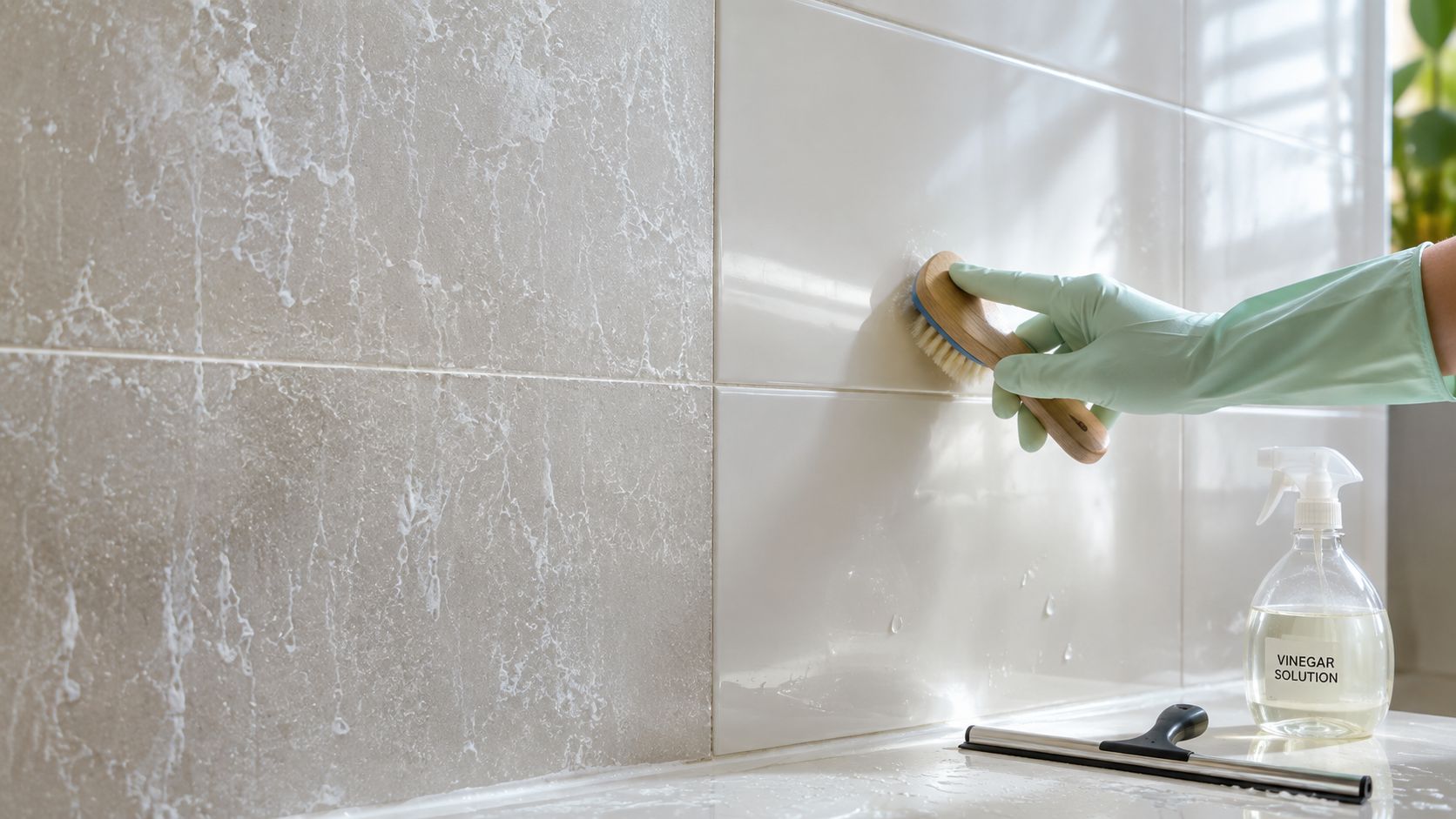
You've just finished cleaning the shower, the glass looks clear, and the tile seems spotless. Then the surface dries, the bathroom light hits it, and a cloudy white film appears again. In Massachusetts homes, that cycle is common in showers, around fixtures, and along grout lines where every splash leaves something behind.
The frustrating part is that hard water stains on tile aren't ordinary dirt. They're mineral deposits, so more scrubbing often creates more work without addressing the cause. The right approach depends on the tile material, the thickness of the buildup, and how much exposure the grout or sealer can tolerate.
Table of Contents
Why Hard Water Stains on Tile Keep Coming Back
A shower can look spotless while wet, then turn cloudy as the water evaporates. The chalky film is usually limescale, a calcium-carbonate-based mineral deposit left behind by evaporated water. Calcium and magnesium in the water can also leave harder films on household surfaces, as described in University of Nebraska Extension guidance on hard-water deposits.
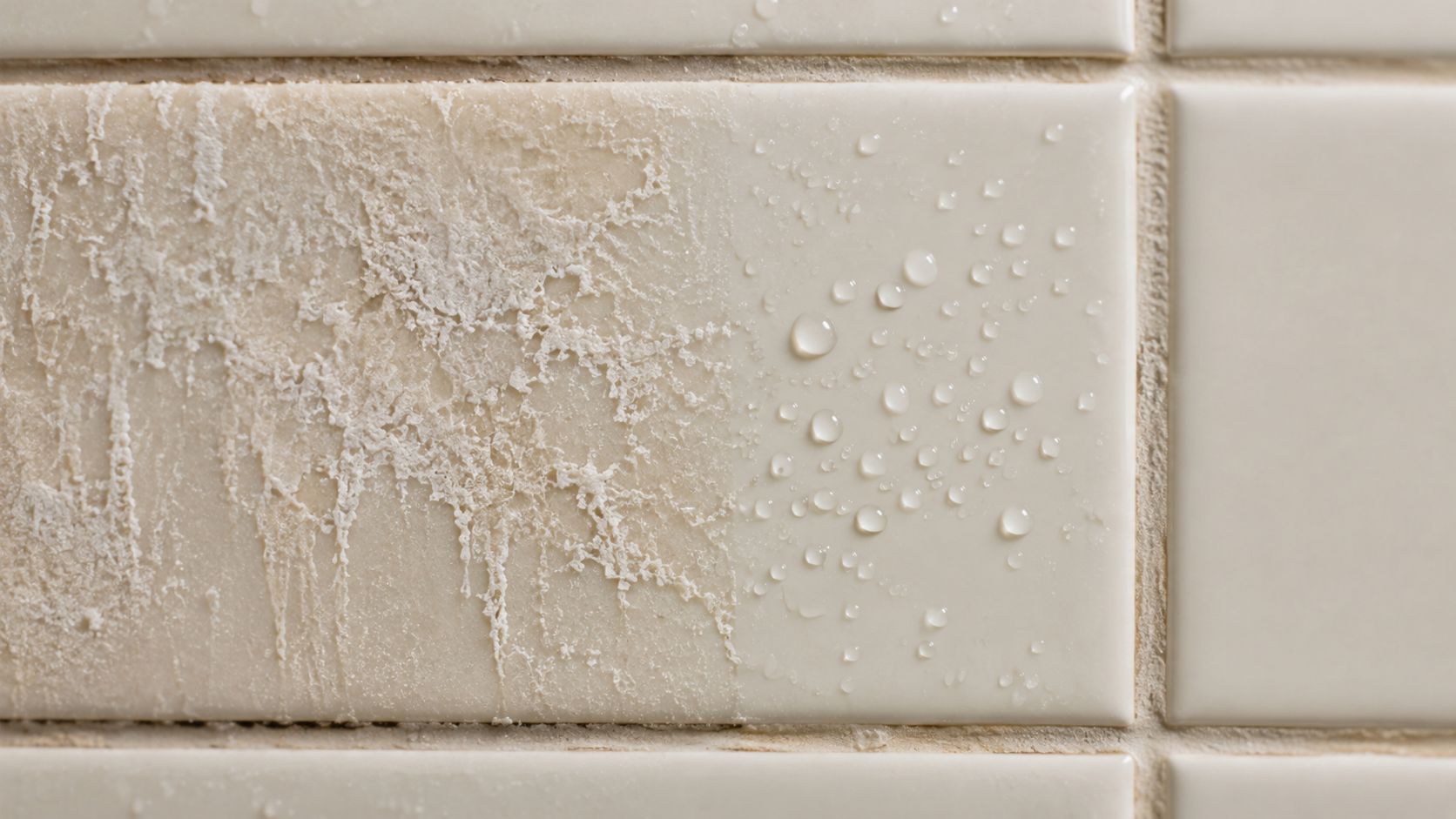
On glazed ceramic and porcelain, deposits usually appear as a white haze, dull patch, or crust along an edge. Grout holds residue differently. Its more porous surface lets minerals settle into the joints, so wiping the tile face does not remove what has collected below.
Light film versus hardened scale
A recent film may feel rough but still respond to a mild descaler followed by gentle agitation. Older scale becomes more tightly bonded where water repeatedly dries on a shower wall, curb, niche, or grout line. Soap residue can sit over the minerals and create a greasy or gray appearance, but the deposit underneath must soften before scrubbing can work safely.
Water hardness helps explain why the problem returns. Water above 121 mg/L, measured as calcium carbonate, is classified as hard, while water above 181 mg/L is classified as very hard, according to water-hardness guidance from Hydrology University. In a hard-water home, the cleaning method and surface material must be considered together. Repeated descaling can gradually weaken grout or sealer, especially when the deposit is removed without reducing the water left behind.
Practical rule: If water keeps drying on the tile, cleaning removes yesterday's deposit while today's deposit is already forming.
That explains the recurring spots. A descaler handles the mineral layer, while drying the surface, improving ventilation, or addressing the water source reduces how quickly another layer forms. For stone, grout, or sealed surfaces, prevention is often safer than repeated acid treatment.
What to Check Before You Clean Any Tile Surface
Before reaching for vinegar, CLR, or a commercial descaler, identify the surface. A cleaner that works well on glazed ceramic can permanently damage marble or travertine. If you're unsure whether the tile is stone, treat it as stone until you confirm the material.
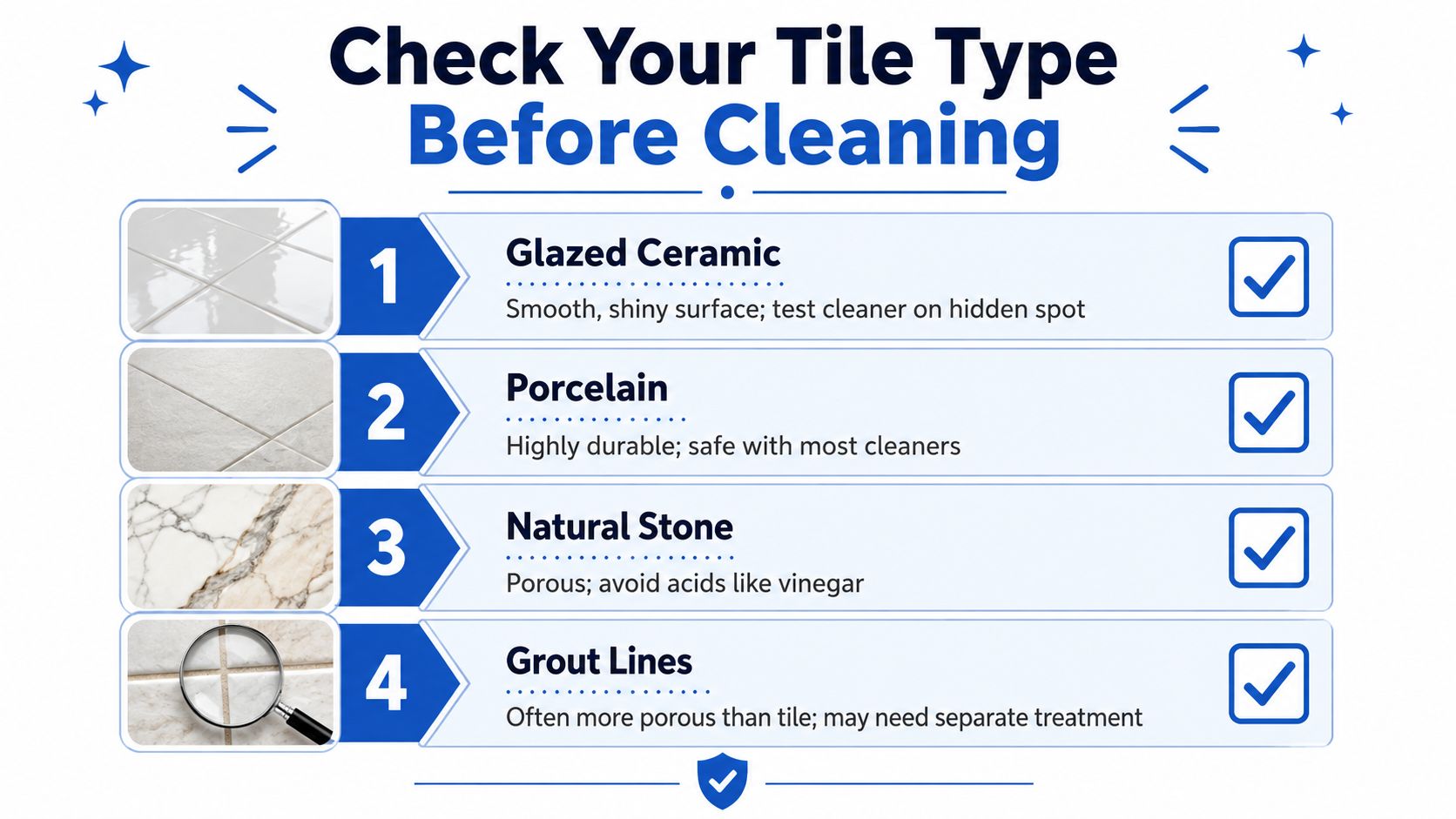
Use this pre-clean checklist
- Glazed ceramic: A smooth, shiny face generally tolerates a mild acidic descaler, but test it in a hidden area first.
- Porcelain: Dense porcelain is durable, yet grout, caulk, metal trim, and specialty finishes may not tolerate the same treatment.
- Natural stone: Marble, travertine, limestone, and similar calcium-based stones can etch when exposed to acids. Don't use vinegar on them.
- Grout lines: Grout may be more absorbent than the tile and may have a penetrating sealer that repeated acid exposure can weaken.
Wear gloves and eye protection, keep the bathroom ventilated, and never mix acidic cleaners with bleach or other products. Remove loose hair and soap residue first, but don't start aggressive scrubbing while the deposit is dry.
Mask chrome, brushed metal, and other fixtures if the cleaner could contact them. Acid may leave spotting or damage on incompatible metals, so protect surrounding hardware and rinse thoroughly. You'll find additional context on combining household cleaning ingredients in this guide to vinegar and baking soda cleaning.
Test before treating the whole shower
Choose a concealed section behind a fixture or low on the wall. Apply the intended cleaner, follow the planned dwell time, rinse, and inspect the finish after it dries. Stop if the area becomes dull, cloudy, discolored, or unusually rough.
Abrasive powders, stiff scraping tools, and steel wool can scratch or dull a glaze. On unsealed or failing grout, prolonged acid exposure can soften the cementitious surface. Preparation takes only a few minutes, but it prevents a cleaning job from becoming a repair job.
How to Remove Hard Water Stains from Ceramic and Porcelain Tile
A shower wall can look clean after scrubbing, yet leave a chalky ring as soon as the water dries. On glazed ceramic and porcelain, the reliable sequence is acid first, controlled dwell time, gentle agitation, and thorough rinsing. Acid dissolves calcium carbonate scale, while alkaline cleaners generally do little against mineral deposits. This pH-based approach to tile and grout cleaning also limits unnecessary force.
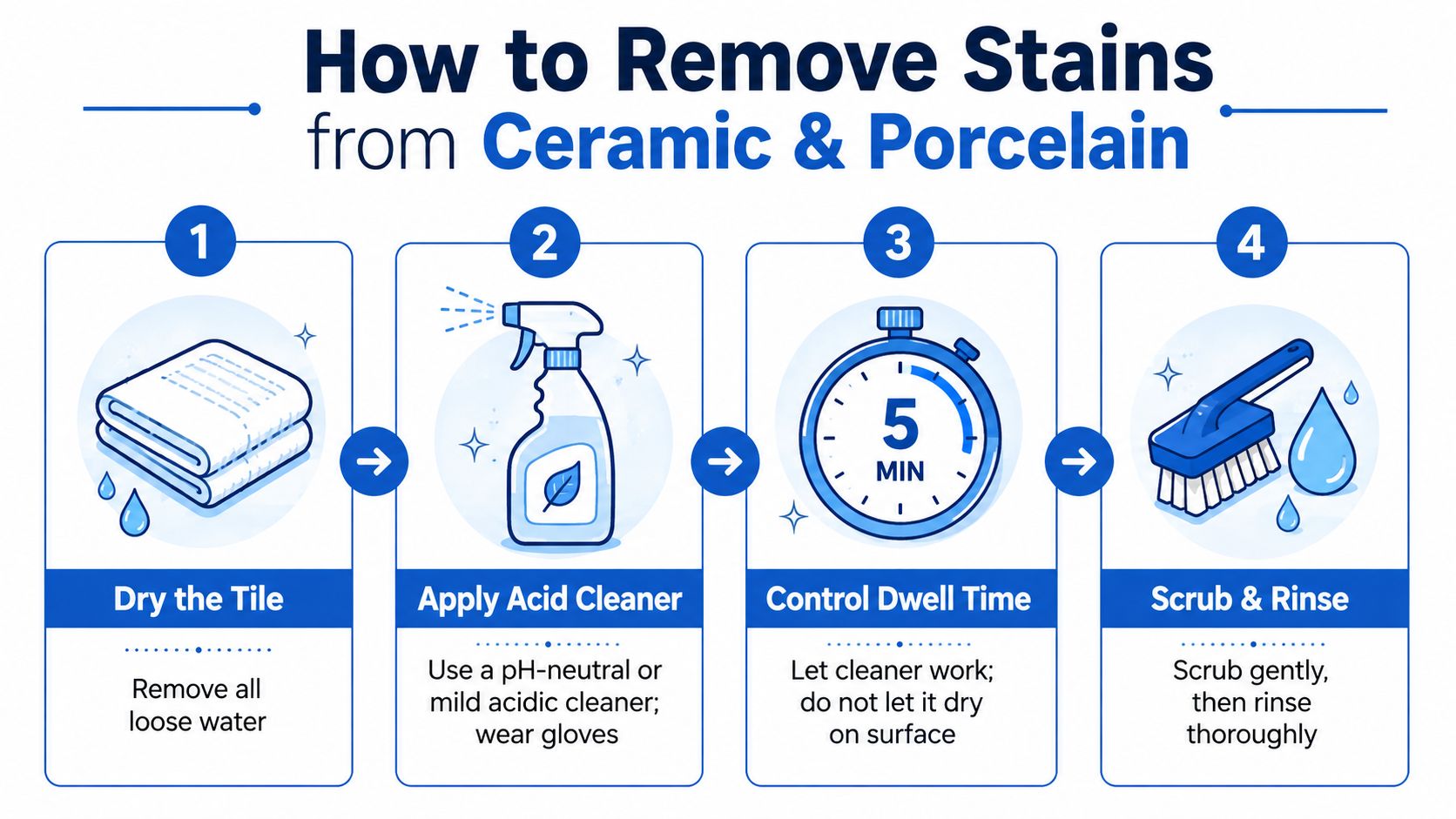
Start with a dry, controlled test area
Dry the tile with a towel so the deposit is visible and the cleaner is not diluted immediately. Treat half of the stained area first. The untreated side gives you a quick comparison and shows whether the product is working before you escalate.
For a light film, use diluted white vinegar or a mild descaler labeled for ceramic and porcelain. Vinegar has a pH of about 2.4, and lemon juice has a pH of about 2.0, as described in natural hard-water stain removal guidance. Apply the solution with a spray bottle, cloth, or soaked compress. Keep the surface wet during the dwell period.
Allow a light deposit to sit for roughly 10 to 15 minutes, then work it with a non-scratch pad, microfiber cloth, or nylon brush. Heavier buildup may need 15 to 30 minutes, followed by nylon-brush agitation and rinsing. Lighter residue can respond in under ten minutes. The bathroom tile cleaning guide offers similar material-specific timing.
Increase contact time before increasing force
If the scale softens but remains attached, repeat the treatment or extend the controlled dwell instead of applying more pressure. For stubborn shower deposits, some cleaning guidance recommends an 8-hour vinegar dwell, typically with a soaked compress held against the area. Test first, and keep the solution away from stone, vulnerable grout, chrome, and metal trim.
A phosphoric-acid cleaner may suit ceramic or porcelain when its label specifically approves that surface. Follow the label, protect nearby materials, and prevent the product from drying on the tile.
Rinse with plenty of clean water after agitation, then dry the surface fully. Cleaner left behind can affect grout and fixtures, while mineral-rich rinse water can form another ring as it evaporates. For broader floor-care practices, review this guide to the best way to clean tile floors.
Don't confuse pressure with progress. If the mineral layer has not softened, harder scrubbing is more likely to dull the finish than remove the deposit.
Material Specific Cautions for Natural Stone and Grout
A white ring on marble may look like scale, but the surface itself may already be etched. Marble, travertine, and limestone contain minerals that react with acid. Vinegar can leave a permanent dull mark instead of removing a temporary deposit. As noted above, lemon juice is more acidic than vinegar and therefore more likely to etch stone.
If a dull area remains after careful cleaning with a stone-safe product, stop treating it as hard-water scale. Further descaling can enlarge the damaged area.
Match the cleaner to the surface
| Surface | Safe Cleaner | Dwell Time | Avoid |
|---|---|---|---|
| Glazed ceramic | Mild acidic descaler or white vinegar | About 10 to 30 minutes, based on buildup | Steel wool, aggressive scraping, uncontrolled acid exposure |
| Porcelain | Surface-approved mild descaler or phosphoric-acid cleaner | Follow the label and test first | Leaving cleaner to dry, abrasive pads, incompatible fixtures |
| Marble or travertine | pH-neutral stone cleaner or stone-safe mineral remover | Follow the product directions | Vinegar, lemon juice, CLR, and other acids |
| Cementitious grout | Grout-safe cleaner, gentle brush, and careful rinsing | Short, controlled contact | Repeated acid cycles, prolonged soaking, harsh abrasion |
Grout requires its own decision. Acid may dissolve mineral deposits, yet repeated or prolonged exposure can weaken cementitious grout and reduce sealer performance, especially in porous or damaged joints. Choose the mildest cleaner that works, limit contact time, rinse thoroughly, and inspect the joints once dry. Repeated descaling is a poor trade-off when the grout or sealer is deteriorating faster than the deposits are being removed.
If grout absorbs water quickly, changes color, crumbles, or keeps holding deposits deep in the joint, cleaning alone may not solve the problem. Follow this guidance on grout cleaning and sealing before resealing. Clean and dry the joints fully first, and never use sealer to cover active residue.
Everyday Habits That Prevent Hard Water Buildup for Good
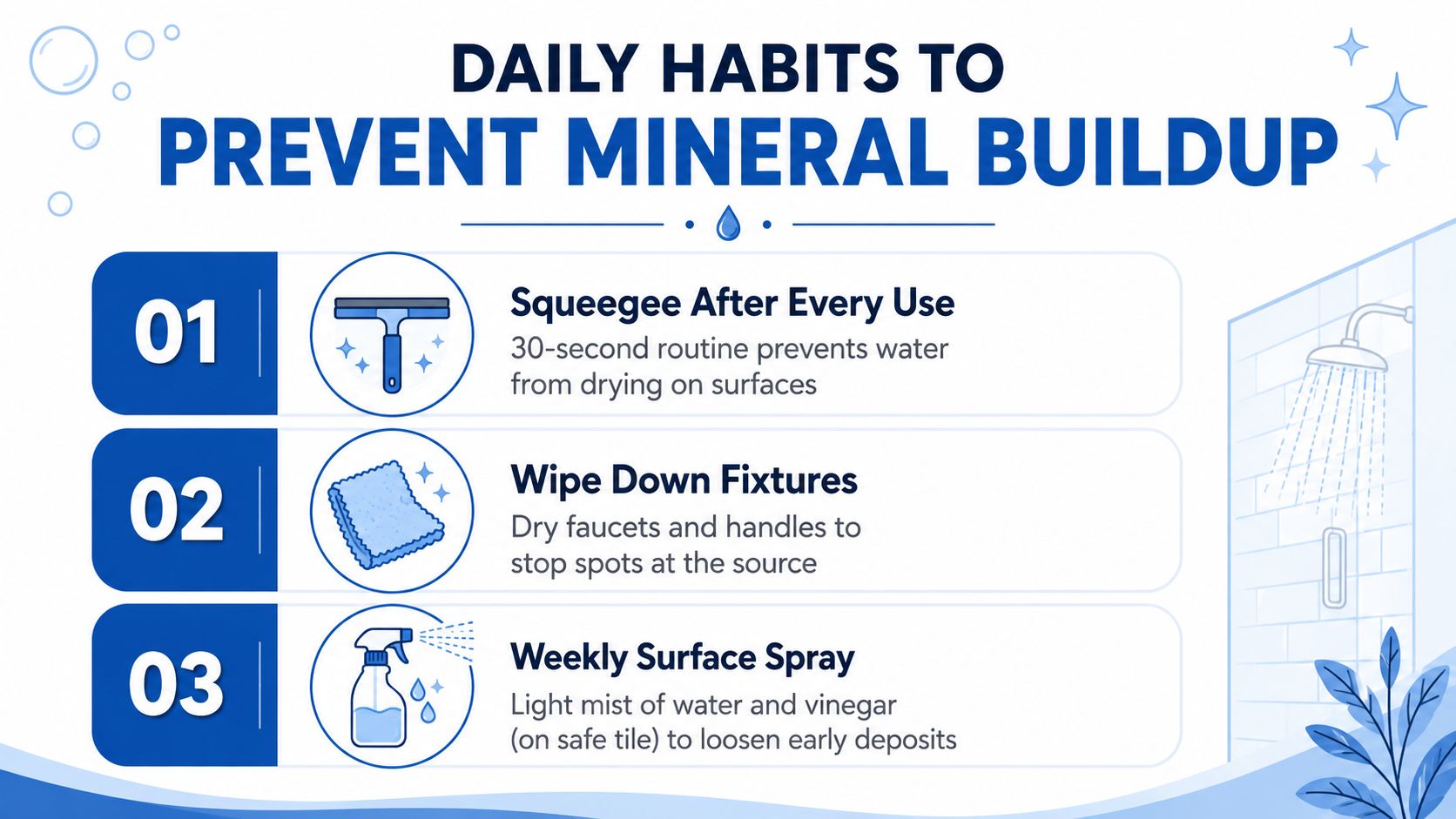
In a Massachusetts shower, prevention starts before the water dries. A squeegee or absorbent towel removes mineral-heavy water from tile, glass, and fixtures, so fresh residue does not harden into scale.
Build a routine that fits real life
- After every shower: Squeegee walls, doors, and ledges. Towel-dry splash zones, faucets, and other fixtures. Daily wiping is especially useful where water pools or evaporates slowly.
- Every week: Clean grout and high-splash areas with a compatible, non-abrasive product. This removes early film before it bonds tightly to the surface.
- Every 6 to 18 months: Check whether the grout sealer still repels water. Reapply a penetrating sealer when needed, following the cadence recommended in tile and grout prevention guidance.
- Periodically: Use a light, tile-safe descaling treatment while deposits remain thin. Natural stone needs a stone-approved, non-acid treatment instead.
Repeated descaling has a cost. Acid can remove minerals, but frequent or prolonged exposure may weaken cementitious grout and shorten the useful life of a sealer. Use the mildest product that works, keep contact brief, rinse thoroughly, and inspect the joints after they dry.
Choosing between habits and a softener
A daily squeegee costs little and protects the shower immediately, but it does not change the mineral content of the water. A water softener addresses the source for a persistently hard-water household, although it requires a larger home-system decision and cannot remove scale already bonded to tile or grout.
If your water tests in the hard or very-hard range defined earlier, and deposits return despite consistent drying and routine maintenance, investigate treatment at the water supply instead of repeatedly increasing cleaner strength. Water hardness varies by property and source, so testing is more useful than guessing.
For many homes, use this sequence: dry surfaces daily, clean grout weekly, maintain the sealer, then consider a softener if deposits remain heavy. If drying stops the spots, improve the routine. If spots return quickly, test the water and inspect the grout or stone before escalating the chemistry.
Troubleshooting Stubborn Stains and When to Call a Professional
A stain that returns within days usually points to an unresolved cause, not a need for a harsher spray. The surface may be receiving very hard water, the grout sealer may have failed, or the area may be etched rather than coated with removable scale.
Water above 181 mg/L as calcium carbonate is classified as very hard, which can help explain rapid recurrence when deposits form in high-splash areas. If a treated patch stays dull even after the mineral residue is removed, suspect etching. If grout darkens quickly, absorbs water, or sheds material, suspect porosity or deterioration rather than a simple surface stain.
Stop and reassess when
- The tile is marble, travertine, or limestone: Don't retry vinegar or another acid. Use a stone-safe cleaner or arrange professional assessment.
- The finish looks dull after cleaning: More scrubbing can worsen an etched or abraded surface.
- Grout crumbles or joints are missing: Cleaning won't rebuild damaged grout. Repair and sealing may be necessary.
- Scale covers the shower or glass: Widespread buildup often needs material-specific descaling and controlled rinsing.
- Post-construction residue is present: Cement haze, grout haze, and mineral scale require different treatments, and the wrong acid can damage a new installation.
For homeowners in Wayland, Newton, Needham, Wellesley, Weston, and nearby Massachusetts communities, professional help is especially useful when tile, grout, glass, and metal fixtures all need different treatment. A qualified technician should inspect the materials first, test a small area, choose a compatible descaler, control contact time, rinse thoroughly, and identify whether grout sealing or surface repair belongs in the solution.
Sunny Day Pro Services handles tile and grout cleaning, deep cleaning, post-construction cleanup, and tile-related work for Massachusetts homes, so persistent mineral buildup can be evaluated alongside the condition of the surrounding surfaces.
If hard water stains have taken over your shower, Sunny Day Pro Services can assess the tile, grout, and surrounding fixtures before cleaning begins and use a surface-appropriate approach. Visit Sunny Day Pro Services to request a quote for professional tile and grout cleaning or related home services in the Massachusetts communities they serve.

