
The Ultimate Guide to Vinegar and Baking Soda Cleaning in 2026
Discover the right way to use vinegar and baking soda cleaning solutions. Our guide offers safe recipes, practical tips, and advice on when to call the pros.
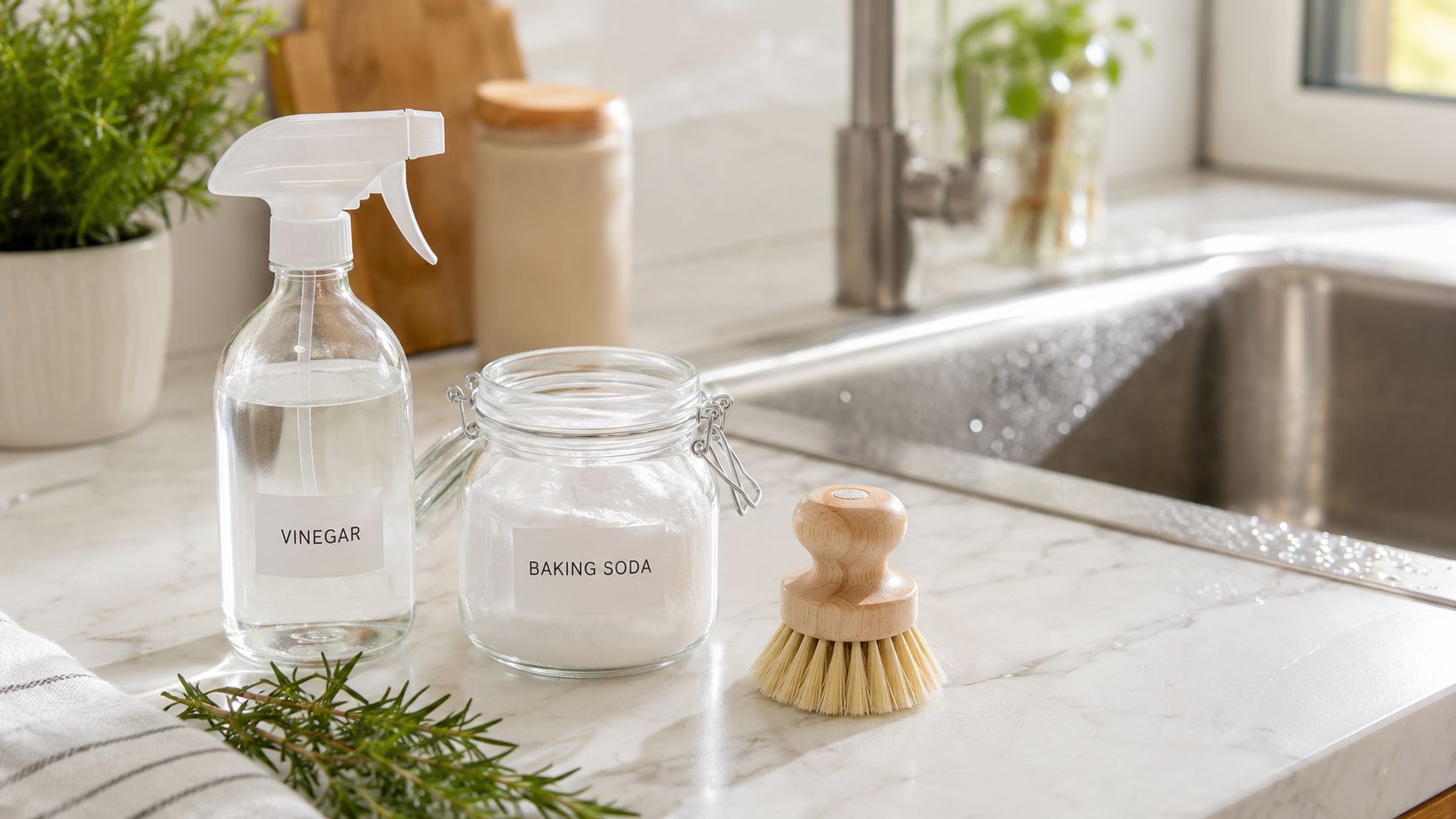
It's one of the most popular cleaning "hacks" out there: combining vinegar and baking soda. That explosive fizz you see when they meet looks impressive, but here’s a little secret from the pros—it's actually the sign of a cleaning fail. The real magic happens when you use them separately.
Think of them as two specialists on your cleaning team, each with a unique job to do. As a professional in the home services industry, I've spent years mastering the right way to use these pantry staples. This guide will walk you through the science, the methods, and the crucial warnings to help you clean your home effectively and safely.
Table of Contents
- Creating Your DIY Cleaning Toolkit
- The All-Purpose Vinegar Spray
- The Heavy-Duty Baking Soda Paste
- The Simple Drain Refresher
The Truth About Vinegar and Baking Soda Cleaning
We’ve all seen it online. Someone pours vinegar into a sink full of baking soda, and the fizzy eruption looks like it's melting away years of grime. It's a satisfying visual, but unfortunately, it’s mostly just for show.
What's really happening is a basic chemical reaction. You're mixing an acid (vinegar) with a base (baking soda), and the result is mostly just carbon dioxide gas and slightly salty water (sodium acetate). The bubbling means they are actively canceling each other out, neutralizing the very properties that make them such powerful cleaners in the first place. The key to effective vinegar and baking soda cleaning is to let them work on their own terms.
This infographic lays it out perfectly.
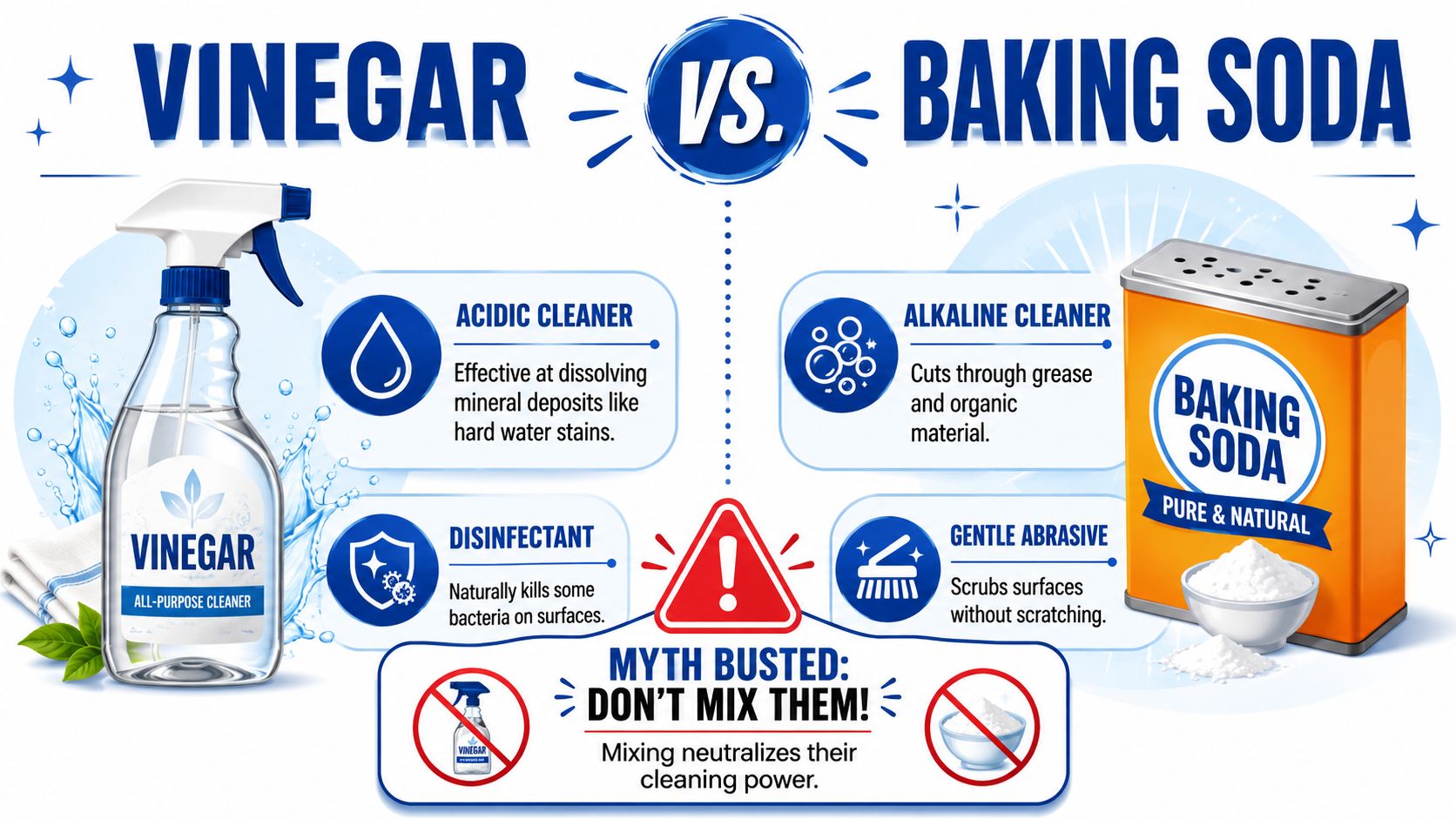
As you can see, they have opposite strengths. Using them together is like trying to use a hammer and a screwdriver at the exact same time on the same screw—it just doesn't work.
How to Use Them the Right Way
To get the most out of these pantry staples, you need to understand what makes each one special.
Vinegar is an acid, which makes it a champion at dissolving mineral-based messes. I always reach for it when I'm dealing with:
- Tough hard water stains on shower doors and faucets.
- That chalky soap scum that builds up in tubs.
- Limescale deposits inside coffee makers and tea kettles.
Baking soda, on the other hand, is a mild alkali and a gentle abrasive. It’s my go-to for cutting through greasy, oily, and organic messes. It really shines when you need to:
- Scrub away burnt-on food from your oven or stove.
- Absorb and neutralize odors in the fridge or on carpets.
- Gently lift greasy films from kitchen counters and backsplashes.
According to experts at the Good Housekeeping Institute and chemists everywhere, that fizzy reaction is a dead end. As LiveScience.com explains in detail, the resulting solution has none of the cleaning power you started with.
The best approach is to use them in sequence. For a really tough job, like a clogged drain, you might pour baking soda down first to work on the gunk, let it sit, and then follow with vinegar to create a short, targeted fizzing action right on the problem spot before rinsing with hot water. This way, each ingredient gets a chance to do its job.
For more great tips, you should explore our guide to other eco-friendly cleaning products.
Your Go-To Recipes for Natural Cleaning
Alright, let's get down to the practical side of things. Forget the confusing advice and wild concoctions you might see online—I’ve found that a few simple, proven formulas are all you really need. We'll be working with the basics: standard white vinegar (with 5% acidity) and a fresh box of baking soda.
The secret to getting great results isn't some magic ingredient; it's about matching the right formula to the right job. A thin spray just won't cut through caked-on oven grease, and a thick paste is no good for cleaning windows. Using these simple pantry staples correctly is what makes all the difference.
Creating Your DIY Cleaning Toolkit
Here are the three foundational recipes that I rely on for most day-to-day cleaning. These simple but powerful mixes will cover almost everything, from grimy stovetops to musty drains.
To make it even easier, I've put my go-to recipes into a simple table. These are the exact ratios I use to tackle everything from kitchen counters to slow-draining sinks.
| Cleaning Solution | Ingredients & Ratios | Best For |
|---|---|---|
| All-Purpose Spray | One part white vinegar to one part water in a spray bottle. | General surface cleaning, glass, windows, and disinfecting non-stone countertops. |
| Heavy-Duty Paste | Three parts baking soda to one part water, mixed until thick. | Scrubbing greasy stovetops, oven interiors, burnt-on food, and stainless steel sinks. |
| Simple Drain Refresher | 1/2 cup baking soda followed by 1/2 cup white vinegar. | Deodorizing drains and breaking up minor buildup in kitchen and bathroom sinks. |
These three solutions form the core of a powerful, natural cleaning arsenal. Keep them handy, and you'll be prepared for most everyday messes.
The All-Purpose Vinegar Spray
This is the workhorse of my cleaning caddy. It’s what I grab to quickly wipe down countertops, erase fingerprints from stainless steel appliances, and get a perfect, streak-free shine on mirrors and windows.
Just mix one part white vinegar with one part water in a spray bottle, and you're ready to go. It's fantastic for cutting through light water spots on faucets and leaving surfaces looking and feeling truly clean.
The Heavy-Duty Baking Soda Paste
When you run into stubborn, caked-on grime, this paste is your best friend. It gives you the scrubbing power you need without the harsh abrasives that can scratch delicate surfaces.
I make a thick paste using about three parts baking soda to one part water. It works wonders on greasy stovetops, the inside of your oven, and even those burnt-on food spots on the bottom of a pan. It's also my go-to for making a stainless steel sink sparkle again.
The Simple Drain Refresher
For drains that are getting a little slow or starting to smell funky, this two-step fizzing action works like a charm. It’s a great bit of monthly maintenance to keep things flowing smoothly.
First, pour 1/2 cup of baking soda directly down the drain and let it sit for about 15 minutes. Then, pour 1/2 cup of white vinegar on top. The chemical reaction helps break up gunk and neutralizes odors, leaving your drain fresh and clear.
Tackling Kitchen Grease and Grime Naturally
The kitchen is the ultimate testing ground for your cleaning skills. It’s where grease, food splatters, and daily messes collect, making it the perfect place to put the vinegar and baking soda cleaning method to work. The real secret isn't just knowing that they work, but how to use them on different surfaces for the best results.
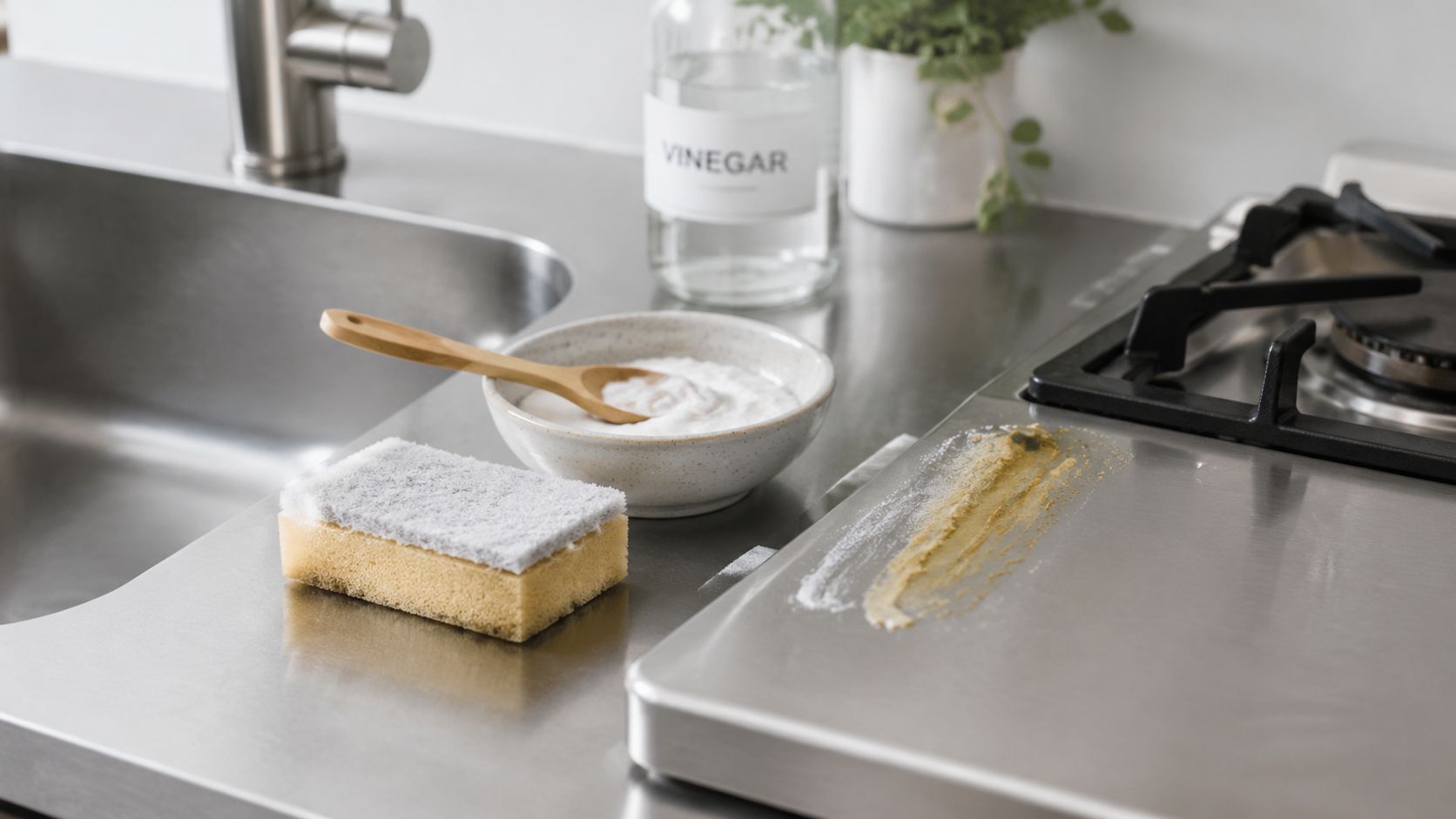
It all boils down to basic chemistry. White vinegar is a potent acid with a pH between 2.0 and 2.5, which is why it’s so good at dissolving mineral deposits. On the flip side, baking soda is a mild alkali with a pH of 8.0 to 9.0, making it a champion at cutting through organic stuff like grease and food grime. If you're a fan of these kinds of kitchen science facts, you can find some fun examples in home science reels online.
Understanding this acid-alkali dynamic is what lets you conquer just about any kitchen mess.
How to Revive Your Stovetop and Sink
A greasy stovetop is no match for a simple baking soda paste. Just mix baking soda with a little water, spread the paste over the splatters and caked-on food, and let it sit for 15-20 minutes. This gives the alkali time to break down the grease. Afterward, a gentle scrub with a non-abrasive sponge should lift it all away without scratching your appliance.
Want a stainless steel sink that truly sparkles? Give it a good rinse, then sprinkle baking soda all over the basin. Using a soft cloth, scrub gently in the direction of the steel's grain to avoid creating tiny scratches. Rinse everything away, then give the sink a final spritz with your vinegar-water spray and buff it dry with a microfiber cloth to eliminate water spots.
If you're dealing with cookware that has seen better days, our guide on how to clean a burnt stainless steel pan has some more advanced tips for you.
A Crucial Warning for Stone Surfaces
Here’s a critical piece of advice: Never use vinegar on natural stone. It's an amazing cleaner, but its acidity will permanently damage these beautiful surfaces. Keep it far away from:
- Marble countertops
- Granite islands
- Travertine backsplashes
The acid etches and dulls the finish, leaving behind a permanent cloudy spot. This is especially important for homeowners in areas like Wayland or Wellesley, where stone finishes are common. Always protect your investment by using a pH-neutral cleaner made specifically for stone. If you’re ever unsure, it’s best to call in a professional. Sunny Day Pro Services has the right tools and expertise to handle delicate surfaces without risk.
Bathroom Cleaning with Vinegar and Baking Soda
If there's one room that really puts your cleaning skills to the test, it's the bathroom. This is where soap scum, hard water stains, and dingy grout can seem to take over. But this is also where vinegar and baking soda, used correctly, can work wonders. You just have to know which one to use for which job.
Brightening Grout and Tiles
Nothing makes a bathroom look grimy faster than discolored grout. For this, you want the gentle scrubbing power of baking soda.
Mix up a thick paste with about three parts baking soda to one part water. I find it easiest to just apply it directly onto the grout lines with a finger, but a small brush works too. Let that paste sit for at least 15 minutes; it needs time to break down the grime. Then, get in there with a firm-bristled brush—an old toothbrush is perfect for this—and scrub. A quick wipe with a damp cloth, and your grout will look remarkably brighter.
Here’s a little trick for really stubborn spots: right before you start scrubbing, give the baking soda paste a light spray with your vinegar solution. That fizzing reaction gives you an extra bit of lift to pull dirt out of the porous grout. Just remember, the real cleaning power here comes from the baking soda paste and the scrubbing.
Getting Rid of Hard Water Stains
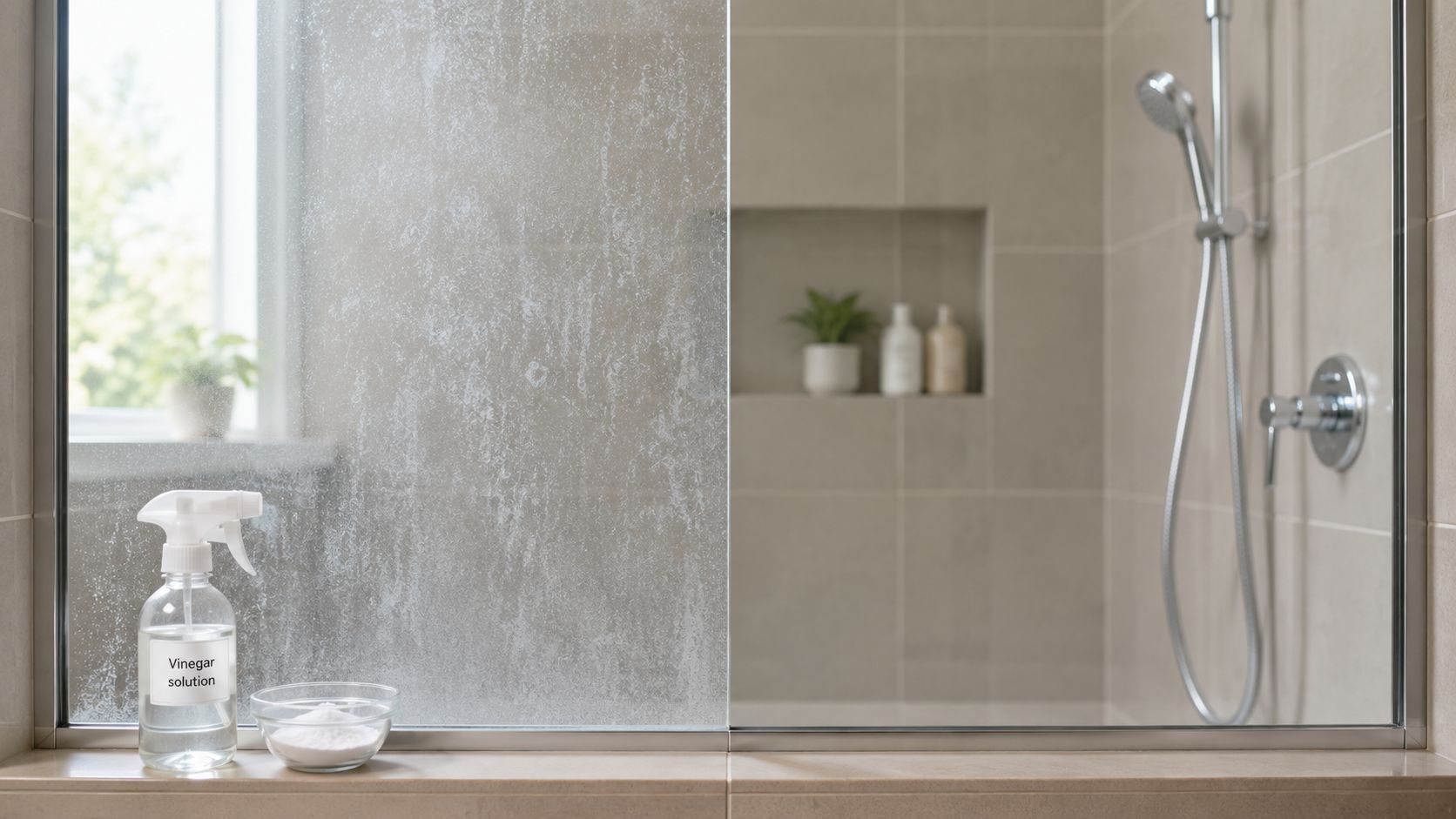
That cloudy film on your shower doors and chrome fixtures? That’s from hard water mineral deposits, and acidic vinegar is the perfect tool to dissolve them.
Grab your 50/50 vinegar and water spray bottle and apply it generously to the glass and fixtures. If the buildup is really bad, don't be afraid to let it sit for 5-10 minutes. This gives the vinegar time to really work on those mineral deposits. After it's had a chance to soak, a quick wipe with a squeegee or a microfiber cloth is all it takes for a clear, streak-free finish. For more in-depth strategies, check out our guide on what is best for cleaning showers.
A Simple Toilet Bowl Refresh
You can easily keep your toilet fresh without resorting to harsh chemical cleaners. Just sprinkle a 1/2 cup of baking soda into the bowl. Let it sit for about 15 minutes to help deodorize and gently clean the porcelain.
After it's had a moment, grab your toilet brush and give the bowl a good scrub, paying special attention to any rings at the waterline. Doing this regularly is a great way to prevent stubborn stains from setting in and reduces the need for heavy-duty cleaners down the road.
When to Skip DIY and Call a Professional
I’m a huge advocate for using vinegar and baking soda cleaning solutions for everyday messes—they’re effective, affordable, and eco-friendly. But let's be realistic: even this powerhouse duo has its limits. Knowing when to put the spray bottle down and call in a professional is just as important for keeping your home in great shape.
Some jobs are simply too big, too stubborn, or too delicate for a simple pantry-based cleaner. Think about a massive move-out clean where every surface needs to be flawless, or years of hard water buildup on expensive fixtures. These situations often demand professional-grade equipment and specialized formulas to get the job done right without causing damage.
Scenarios That Demand Professional Expertise
Over the years, I’ve seen firsthand when a DIY approach can go wrong. Certain cleaning challenges are best left to a trained team that can guarantee perfect, risk-free results.
- Deep-Set Mold: If you spot mold that has worked its way deep into grout or drywall, a surface-level clean isn't going to cut it. That mold will just come right back. Professionals have the right containment gear and antimicrobial treatments to eliminate the problem at its source, safely and permanently.
- Delicate Surfaces: I can't stress this enough—vinegar's acidity will permanently etch and dull beautiful, natural stone like marble, granite, and travertine. It’s a costly mistake to make. The team at Sunny Day Pro Services uses pH-neutral cleaners specifically designed to clean these materials without compromising their finish.
- Widespread or Stubborn Buildup: That thick, crusty layer of soap scum that’s been building for years or a large-scale cleaning project is often too much for a simple paste or spray. Professionals have the tools and strength to power through it efficiently.
Trust me, knowing when to call for help is one of the smartest things a homeowner can do. Investing in a professional for these tough jobs protects your property, saves you hours of frustration, and ensures the work is done perfectly.
Even as DIY cleaning has grown in popularity, pros are listening. A recent survey showed that 42% of professional cleaners in Massachusetts, including those in Wayland and Newton, now use vinegar and baking soda for certain tasks when clients ask for greener options. The difference is, they have the experience to know when those ingredients are right for the job and when a more specialized product is the only safe and effective choice. Learn more about how pros use these ingredients in their protocols.
Frequently Asked Questions About Natural Cleaning
Even with a great plan, a few questions always pop up when you start cleaning with vinegar and baking soda. It's completely normal. Let’s go over some of the most common ones I hear from clients so you can feel confident tackling any mess.
Can I Use Other Types of Vinegar?
I get this question all the time. While your standard distilled white vinegar with 5% acidity is the gold standard for cleaning—it’s cheap, clear, and effective—you do have other options in a pinch. Apple cider vinegar, for instance, has a similar acidity and will clean just as well. The only catch is its brownish color, which could potentially leave a faint stain on light-colored grout or porous surfaces.
My advice? Save your expensive balsamic and red wine vinegars for your salad dressings. They often contain sugars that will leave behind a sticky film, creating a whole new mess to clean up. For a foolproof, streak-free shine, white vinegar is always your best bet.
How Should I Store My DIY Cleaners?
Proper storage is what keeps your homemade cleaners ready for action. Your all-purpose vinegar spray is easy—just keep it in a clearly labeled spray bottle in a cool, dark spot like under the kitchen sink. It will last pretty much indefinitely.
That baking soda scrubbing paste, however, is a different story. You should always mix it fresh for each use. If you make a big batch and let it sit, the water will evaporate, and you'll be left with a hard, useless clump. It only takes a few seconds to whip up a fresh paste, and doing so ensures you get the fizzy, abrasive power you need for tough jobs.
Here's a pro-tip I've shared countless times: If your spray bottle nozzle keeps getting clogged, the culprit is likely hard water. The minerals build up over time. An easy fix is to start making your vinegar solution with distilled water instead of tap water.
Keeping these simple points in mind will make sure your natural cleaning toolkit is always effective and ready to go.
When you run into a job that's too tough or delicate for a DIY approach, Sunny Day Pro Services is ready to step in. For a professional-grade clean without the stress, request your free estimate today.

