
Top 10 House Cleaning Schedules Checklists to Use in 2026
Get your home spotless with our 2026 house cleaning schedules checklists. Download printable templates for daily, weekly, and deep cleaning. For MA homeowners.
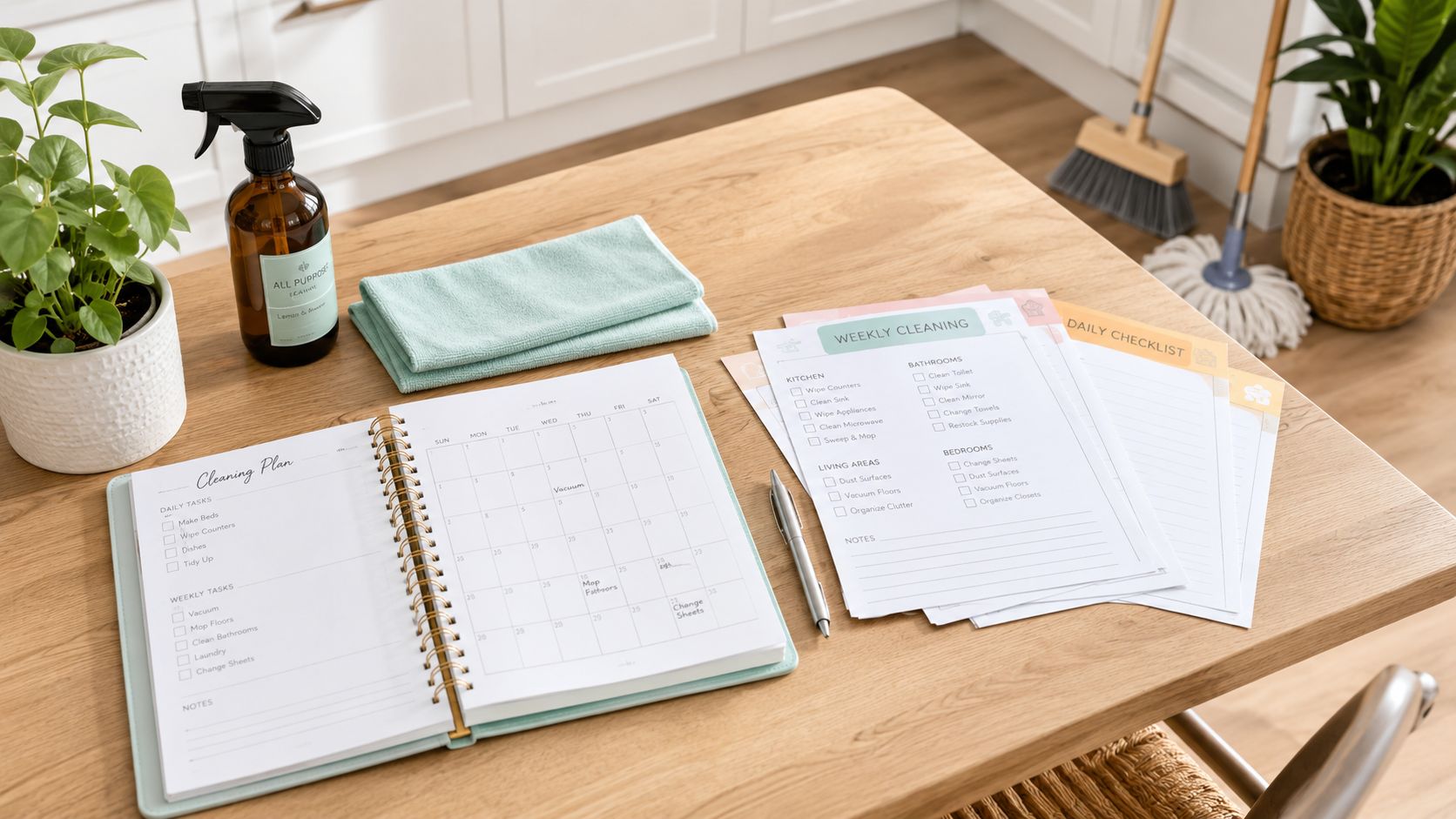
Monday night usually tells the truth about a cleaning routine. The dishes are handled, the counters are passable, and the house looks decent at a glance. Then the light hits the floor, dust shows up along the baseboards, and the bathroom corners remind you which jobs keep getting pushed.
A workable cleaning schedule fixes that. The goal is not to clean the whole house in one long, exhausting stretch. The goal is to assign the right jobs to the right interval so daily mess stays under control, deeper buildup gets handled on schedule, and high-value surfaces like new tile, grout, hardwood, and luxury vinyl get the care they need.
That matters because different tasks carry different consequences. Miss a quick kitchen reset, and the house feels cluttered. Skip floor maintenance for too long, and grit starts wearing on finishes. Put off post-renovation dust removal, and fine debris keeps settling into vents, trim, and grout lines. Good house cleaning schedules checklists account for those trade-offs instead of treating every room and task the same way.
This guide lays out 10 practical systems you can use as a full plan or mix into a custom routine. Some are built for pure DIY upkeep. Others work better as a hybrid setup, where you handle the day-to-day work and bring in Sunny Day Pro Services for deep cleans, seasonal resets, post-construction cleanup, or floor-focused care that helps protect newer surfaces and home investments.
Table of Contents
- The simplest version that actually sticks
- How to make 10 minutes enough
- Where this schedule falls short
1. The FlyLady Zone Cleaning System
Monday night gets away from you. Tuesday turns into errands, dinner, and school forms. By Wednesday, the whole house feels off, and the problem is not always dirt. It is the feeling that every room needs attention at once.
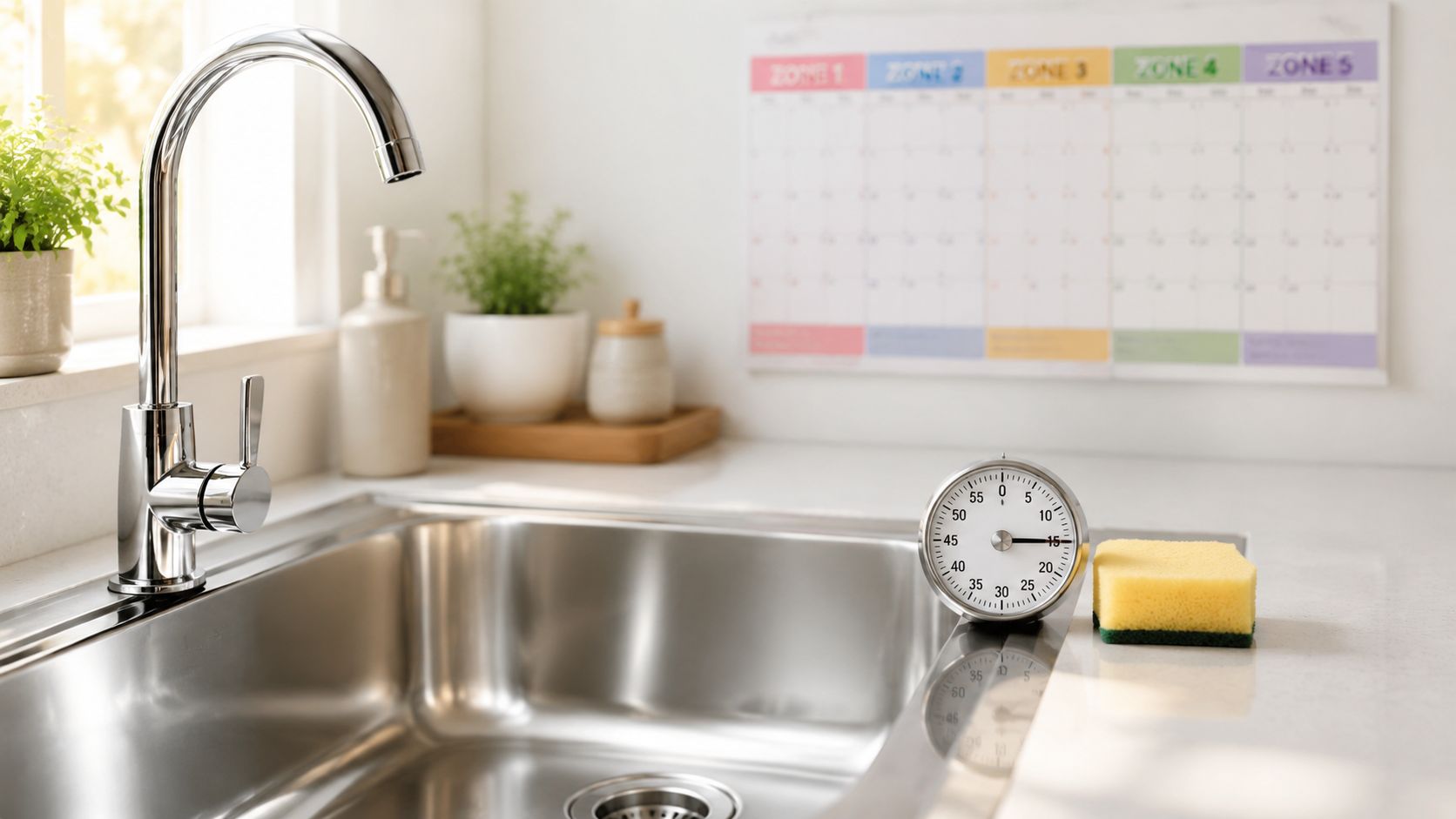
The FlyLady zone system solves that by narrowing the target. You assign one area of the home to each week and give it a short, focused cleaning session each day. That approach works well for busy households, sellers preparing for listing photos, and landlords trying to keep turnover cleaning from becoming a full reset every time.
How to make zones realistic
Start smaller than you think you should. Five to ten minutes of steady work is easier to repeat than a 45-minute plan that falls apart the first week someone gets sick or work runs late. Once the habit holds, expand the session.
A practical setup looks like this:
- Zone 1 entry and dining areas: Dust flat surfaces, wipe switch plates, spot-clean fingerprints on walls, and clear drop-zone clutter.
- Zone 2 kitchen: Wipe cabinet fronts, clean around pulls, remove splatter from backsplash tile, and lift small appliances to clean underneath.
- Zone 3 bathrooms: Detail faucets, clean mirrors, wipe baseboards, and check grout lines before buildup settles in.
- Zone 4 bedrooms: Dust furniture, vacuum edges, rotate under-bed cleaning, and clear nightstands.
- Zone 5 living spaces: Tidy shelves, disinfect remotes and other touch points, and vacuum floor corners and along trim.
Keep the daily foundation simple. Dishes handled. Counters cleared. Laundry moving. A quick evening reset. Without those basics, zone work starts to feel like catch-up instead of maintenance.
This system also works well as a hybrid plan. Homeowners can stay on top of weekly zone tasks themselves, then schedule Sunny Day Pro Services for the jobs that need more labor, more equipment, or a sharper eye for detail. That is especially useful after guests leave, before a home goes on the market, or after new tile or flooring is installed. Regular zone cleaning protects the investment day to day. A professional reset helps prevent grit, haze, and residue from shortening the life of those surfaces.
2. The Spring Clean Deep Cleaning Checklist
Some dirt hides in plain sight. You stop noticing fan blades, baseboards, the top edge of door trim, and the dust that gathers behind furniture until you decide to do a real deep clean. That's where a seasonal checklist earns its place.
A spring-clean style schedule works well for homeowners getting ready for open houses, new owners taking possession, or anyone trying to protect new finishes after a remodel. It's also one of the best house cleaning schedules checklists for catching neglected areas before they start affecting the overall look of the home.
What belongs on a real deep-clean list
A useful deep-clean checklist should include the jobs that fall outside normal weekly cleaning:
- Baseboards and trim: Vacuum first, then wipe so you're not dragging grit across painted surfaces.
- Ceiling fans and light fixtures: Clean top-down so dust doesn't fall onto finished work below.
- Windows and tracks: Don't just polish the glass. Vacuum the tracks and wipe the sills.
- Behind and under furniture: Move what you safely can. Dust and grit collect fastest where airflow is poor.
- Appliance detail: Clean fronts, handles, sides, and reachable areas beneath.
One mistake I see often is treating spring cleaning like a single weekend event. That sounds productive and usually ends in half-finished rooms. Better results come from breaking it into weekly projects or pairing DIY detail work with a professional deep clean.
Deep cleaning works best when you separate “visible tidy” from “hidden buildup.” Most homeowners handle the first part easily. The second part is what changes how the home actually feels.
If you've had new tile or flooring installed, seasonal deep cleaning is also preventive care. Fine dust, leftover residue, and missed debris can dull the finish and scratch surfaces if they're left to circulate through the house.
3. The Daily 10-Minute Tidy Checklist
You get home, drop your keys, glance at the kitchen, and can already feel the mess pulling your attention in five directions. That is the moment this checklist is built for. Ten focused minutes will not deep clean a house, but it will keep everyday disorder from turning into sticky counters, tracked-in grit, and a weekend catch-up session.
I use this kind of reset as the maintenance layer between bigger cleaning days and recurring professional visits. It works especially well for busy households in Newton and Needham, and it matters even more in homes with newer tile, hardwood, or luxury vinyl. Fine debris and entry grit wear on those surfaces faster than people expect.
The simplest version that actually sticks
Keep the order the same every day so you spend your time cleaning, not deciding.
- Start with dishes and counters: Clear the sink, load or run the dishwasher, and wipe the main prep areas.
- Pick up visible clutter: Put away shoes, mail, toys, chargers, and loose laundry.
- Reset one bathroom: Wipe the sink, faucet, mirror, and toilet exterior.
- Do a quick floor pass: Sweep or vacuum crumbs, pet hair, and entry debris after clutter is off the floor.
- Finish at the front entry: Straighten shoes, shake out the mat if needed, and check for dirt that can spread through the house.
That last step is easy to skip. I would not skip it. Entry dirt is one of the fastest ways to dull fresh flooring and spread grit into grout lines and along baseboards.
How to make 10 minutes enough
This routine works best when each task has a hard limit. Two minutes in the kitchen. Two minutes picking up clutter. Two minutes in the bathroom. Three minutes on floors. One minute at the entry.
Stop when the timer ends.
That discipline matters because a tidy routine can expand into a 45-minute cleaning session if you let it. The goal is consistency, not perfection. A short reset done five or six days a week keeps the home easier to manage and makes your weekly checklist faster.
Where this schedule falls short
A daily tidy handles surface mess. It does not remove bathroom buildup, kitchen grease, dust on trim, or debris under furniture. Homeowners often mistake a visually neat room for a clean one, and that gap gets wider over time.
That's why this checklist works best as a maintenance layer, not your whole system. If the house already feels behind, start with a full reset, then use the 10-minute routine to hold the line. For many homeowners, the practical setup is hybrid: handle the daily pickup yourself, protect high-value surfaces like new floors with regular light maintenance, and bring in Sunny Day Pro Services for the deeper work that keeps buildup from settling in.
4. The Weekly Room-by-Room Rotating Checklist
This is one of the most dependable systems for households that like structure. One room, one day. No guessing, no decision fatigue, no trying to scrub the whole house on Saturday.
It also mirrors how many practical home cleaning plans are organized. Home cleaning checklists often spread work across daily, weekly, biweekly, and monthly intervals, with examples such as bathrooms on Monday, dusting on Tuesday, vacuuming on Wednesday, and floor washing on Thursday, as shown in this layered house cleaning checklist. That kind of rotation is simple enough to remember and flexible enough to adapt.
A sample weekly rotation
You don't need a fancy app. A whiteboard on the fridge works fine.
- Monday bathrooms: Toilets, sinks, mirrors, tub or shower surfaces, and floor edges
- Tuesday dusting and surfaces: Bedrooms, living room furniture, shelves, and trim
- Wednesday vacuuming: Rugs, stairs, upholstered furniture, and corners
- Thursday hard floors: Kitchen, baths, hallways, and entry areas
- Friday kitchen detail: Appliance fronts, cabinet faces, microwave interior, and backsplash
- Weekend flex day: Catch-up, laundry reset, or one deeper project
This system is especially effective for families with school-age kids because it gives each day a job without making every day feel like “cleaning day.”
Who should use it
This schedule fits households that need predictability. It's also strong for rental prep and showing prep, where rooms need weekly attention but the property doesn't require a full deep clean every time.
What doesn't work is overloading each room day with every possible task. Room-day cleaning should cover the core work only. Save inside ovens, grout detailing, vent cleaning, and furniture moving for monthly or seasonal tasks. If you cram too much into each day, the schedule becomes another abandoned checklist on the counter.
5. The Move-In-Move-Out Cleaning Checklist
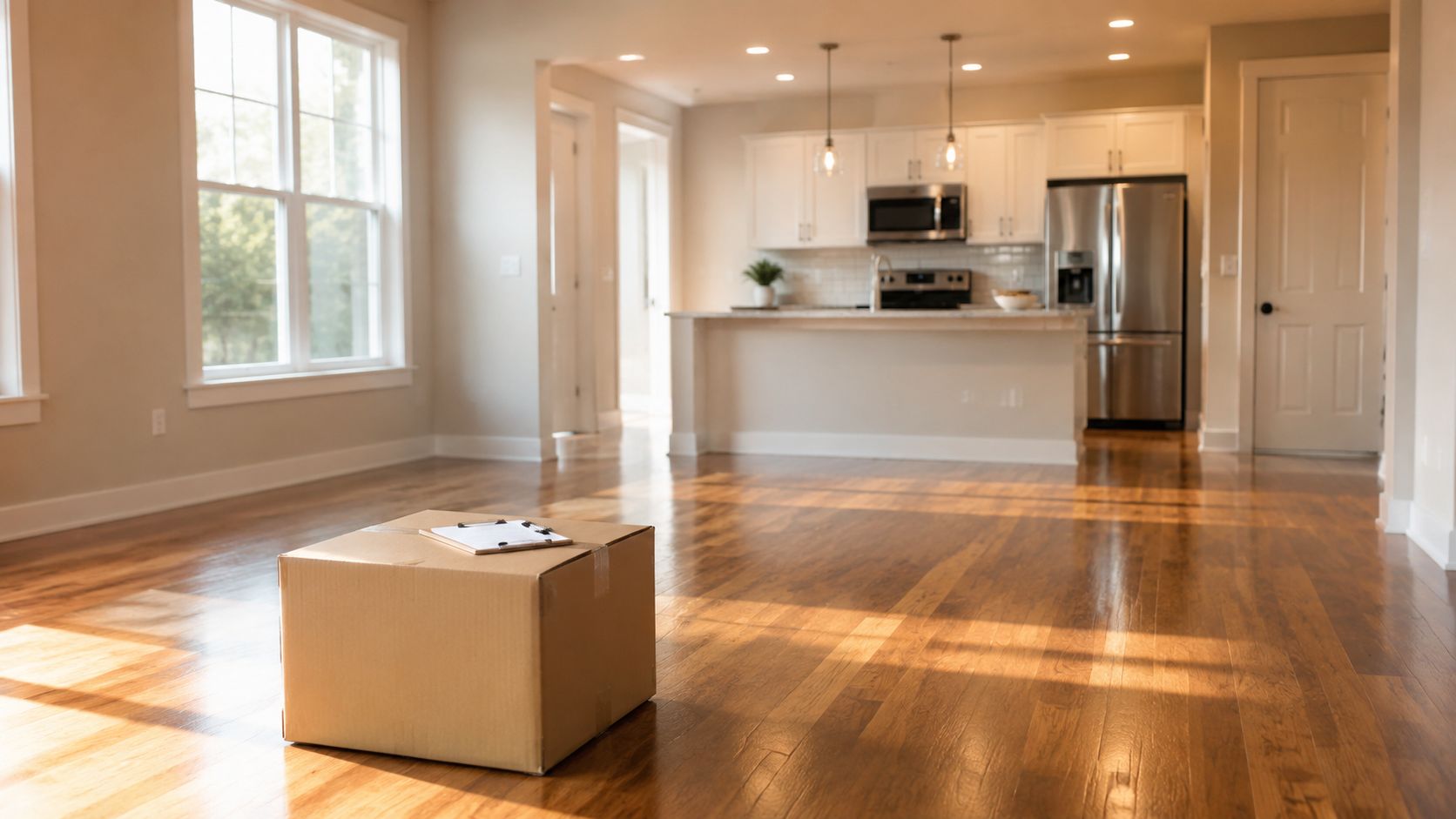
The moving truck is loaded, the rooms are empty, and suddenly every missed spot is obvious. Dust bands show along baseboards, grease stands out on cabinet fronts, and closet corners that never mattered before are now part of the first impression. Move-in and move-out cleaning needs a tighter system than routine upkeep because the home is being judged at close range.
The safest approach is simple. Clean high to low, work from the farthest room toward the exit, and leave floors for last. That sequence saves time and cuts down on rework, especially in empty properties where every speck shows.
Required tasks for a property transition
A solid checklist covers the areas buyers, tenants, landlords, and agents inspect first:
- Inside appliances: Refrigerator shelves and drawers, oven interior, dishwasher lip and filter area, microwave interior
- Cabinets and drawers: Interiors, fronts, pulls, top edges, and crumbs in the corners
- Baseboards and trim: Scuffs, dust buildup, and paint-safe wipe-downs in empty rooms
- Closets and storage spaces: Shelves, rods, floor edges, and ceiling corners
- Bathrooms: Fixtures, vanity interiors, mirrors, tile surfaces, grout lines, and exhaust covers
- Doors and touch points: Knobs, light switches, door frames, and wall marks near handles
- Floors: Vacuum first, then use the correct mop or cleaner for the material
Floor care deserves extra attention during a move because the house is empty and the surface is fully exposed. New tile, sealed stone, luxury vinyl, and recently finished wood can all be damaged by the wrong product or too much water. A hybrid plan works well here. Handle light dusting, cabinet wipe-downs, and wall checks yourself, then bring in professional help for stubborn buildup or specialty floor care if you want to protect a recent flooring investment.
DIY vs professional help
Homeowners can usually manage move cleaning if the property has been maintained well and the schedule has some breathing room. The calculation changes when there is pet hair packed into corners, baked-on kitchen residue, hard-water buildup, or a same-day turnover. In those cases, paying for help often costs less than losing time, re-cleaning, or risking a complaint after handoff.
Sunny Day Pro Services lays out what to look for when choosing the right cleaners for a house move. That guidance is especially useful if you plan to do part of the checklist yourself and hire out the detailed work, such as appliances, bathrooms, or floor finishing.
One last step saves arguments later. Take clear before-and-after photos of appliances, bathrooms, cabinets, and floors. That record helps tenants protect deposits, helps sellers document condition, and helps property managers close out turnover work without guesswork.
6. The Post-Construction Cleanup Checklist
Construction dust behaves differently from normal household dust. It gets into trim joints, vent covers, cabinet interiors, window tracks, and every flat surface you thought was already clean. After tile installation, flooring replacement, or a bathroom remodel, the cleanup plan needs to be deliberate or the finished project won't look finished.
This is one area where generic house cleaning schedules checklists usually fall short. Post-construction cleaning is less about tidying and more about removing fine debris without damaging new surfaces.
The safest cleanup sequence
Use a dust-control sequence, not a random one:
- Dry pickup first: Vacuum dust from ceilings, trim, walls, and floors before using damp cloths.
- Detail hard surfaces second: Wipe sills, ledges, cabinets, doors, and switch plates.
- Clean glass and fixtures third: Remove film, fingerprints, and residue after surrounding dust is gone.
- Finish floors last: Use the right tools for the material. New tile, stone, and grout need extra care.
If new grout is still curing, aggressive scrubbing is a mistake. So is reaching for harsh chemicals because the room “still looks dusty.” On marble, granite, and some specialty surfaces, the wrong cleaner can create damage faster than most homeowners expect.
Fresh installations don't just need cleaning. They need protection while you clean them.
When this checklist matters most
This schedule is a must after kitchen backsplash work, bathroom tile installation, whole-home flooring changes, and any remodeling that generates sanding dust. It's also valuable for contractors handing a job back to a homeowner. A clean finish tells the client the project is done. A dusty finish tells them they still have work ahead.
For Sunny Day Pro Services clients, the best results usually come from coordinating cleanup with the installation timeline, not treating it as an afterthought after everyone has left.
7. The Bathroom Deep Clean Checklist
Bathrooms punish inconsistent cleaning faster than any other room. Moisture, soap residue, body oils, and mineral deposits all collect in layers. If you wait too long, the work gets harder, not just longer.
A dedicated bathroom checklist is especially important in homes with ceramic, porcelain, marble, or granite tile. Those surfaces can look durable and still be vulnerable to the wrong tools and chemicals.
The bathroom tasks people skip most
Most homeowners clean the obvious areas and miss the ones that change the room's overall condition.
- Tile and grout lines: Dirt builds in the joints long before the tile face looks dirty.
- Shower door tracks and corners: These hold moisture and residue.
- Exhaust fan covers: Dust and moisture collect together here.
- Vanity fronts and hardware: High-touch surfaces need regular attention.
- Base of the toilet: One of the most commonly skipped spots in any home.
A solid bathroom routine should include quick maintenance between deep cleans. Squeegeeing shower walls, running ventilation, and using a pH-neutral cleaner on tile all help preserve grout and finish.
Protecting tile and stone finishes
Bathrooms with new tile need more than elbow grease. They need the right cleaning chemistry. Abrasive pads can scratch surfaces. Harsh cleaners can break down sealant or leave residue in grout lines. That's why stone and decorative tile deserve a separate care plan from a basic fiberglass surround.
If you want a more detailed room-specific process, Sunny Day Pro Services shares a helpful walkthrough on how to deep clean a bathroom. For homeowners in Wayland, Wellesley, and Weston who've invested in a bathroom remodel, that kind of routine protects both appearance and finish quality.
8. The Kitchen Deep Clean Checklist
A kitchen can look decent and still be dirty. That's the trap. Counters get wiped, dishes are done, and the room feels under control, but grease settles on cabinet faces, appliance vents, backsplash grout, and the tops of trim lines.
Kitchen deep cleaning needs its own checklist because the mess is different. Food residue and grease spread beyond the obvious cooking zone, especially in open-concept homes where the kitchen affects how the entire main level feels.
A practical kitchen deep-clean sequence
Don't start with the floor. Start where the grease is.
- Upper surfaces first: Cabinet fronts, range hood exterior, backsplash, and shelf edges
- Appliance fronts and touch points: Refrigerator handles, microwave keypad, oven knobs, and dishwasher panel
- Sink and faucet detail: Basin, drain edge, faucet base, and disposal splash area
- Lower cabinets and toe kicks: These collect more splatter than often realized
- Floors last: Sweep or vacuum first, then wash after debris is removed
For kitchens with tile backsplashes, cleaner choice matters. Stone tile needs a gentler approach than glazed ceramic, and grout should never be treated like a junk-drawer surface that can handle anything.
A kitchen doesn't stay clean because you mop often. It stays clean because grease gets removed before it hardens.
Best use cases for this checklist
This schedule works well for family kitchens, rental turnovers, pre-holiday resets, and homes being photographed for sale. It's also a smart routine after backsplash installation, when owners want to keep a new finish looking sharp instead of letting cooking residue dull it right away.
If your household cooks daily, deep kitchen work belongs on a recurring schedule, not a once-a-year wish list.
9. The Quarterly Floor Care and Maintenance Checklist
Floors take the most abuse and get the least strategic care. People vacuum and mop, but they don't always adjust methods based on material. That's where damage starts. What works on one surface can shorten the life or dull the appearance of another.
A dedicated floor checklist is one of the most valuable house cleaning schedules checklists for homeowners who've invested in tile, stone, or new flooring. It's not only about appearance. It's about protecting the installation.
How to divide floor care by frequency
Professional cleaning checklists often segment tasks by daily, weekly, monthly, quarterly, and yearly frequency, which is useful for floors because not every task belongs in the same cycle. High-touch and visible maintenance should happen often. Lower-frequency preservation work belongs on a longer schedule.
A strong floor plan might look like this:
- Weekly: Sweep or vacuum grit, spot-clean spills, and wash traffic lanes
- Monthly: Clean edges, transitions, under movable furniture, and grout-prone areas
- Quarterly: Inspect sealant condition, review problem spots, and do a more careful material-specific deep clean
- Yearly: Evaluate whether professional sealing, polishing, or restorative cleaning makes sense
What protects flooring investments
Entry mats matter. Fast spill response matters. Using the right vacuum head matters. On tile, beater bars and trapped grit can cause avoidable wear. On natural stone, harsh cleaners can dull the finish.
For Massachusetts homeowners with mud, winter salt, and heavy entry traffic, quarterly floor care is often where the biggest visual improvement happens. This is also where a hybrid plan works well. Homeowners can handle the weekly care, while Sunny Day Pro Services supports deeper maintenance that protects porcelain, ceramic, marble, and granite surfaces over time.
10. The Seasonal Cleaning Schedule with Professional Service Integration
If you want a cleaning plan that survives real life, this is usually the best one. Daily resets and weekly checklists handle the visible mess. Professional service handles the heavier work that busy households tend to postpone too long.
This hybrid model is especially useful for professionals, families with travel schedules, homeowners preparing for guests, and anyone trying to protect newly installed tile or floors without turning every weekend into a chore block.
A realistic hybrid cleaning calendar
The key is matching homeowner effort to professional support instead of duplicating the same work.
- Daily homeowner tasks: Dishes, counters, clutter pickup, quick bathroom reset, and floor spot cleanup
- Weekly homeowner tasks: Room rotation, laundry reset, dusting, and kitchen maintenance
- Monthly or seasonal professional tasks: Deep bathrooms, kitchen buildup removal, baseboards, detailed floor care, and neglected areas
- Project-based professional help: Move-outs, post-construction cleanup, and pre-listing cleaning
One of the smartest pieces of mainstream advice on adaptability is the idea of spreading deep-cleaning tasks across 10 to 11 months and leaving one or two months open for illness or vacation. That's the kind of realism most schedules miss. A system isn't good because it looks complete on paper. It's good because it still works when people get sick, travel, or fall behind.
Why this model works for busy Massachusetts homeowners
In places like Wayland, Newton, Needham, Wellesley, and Weston, many homeowners don't need full-service cleaning every week. They need targeted help at the right times. A recurring or seasonal hybrid plan gives them that.
If you're trying to decide how often deeper service belongs in your routine, Sunny Day Pro Services breaks down that decision in their guide on how often you should deep clean your house. For many households, that's the missing piece between good intentions and a system that endures.
10-Checklist Comparison: House Cleaning Schedules
A homeowner with new tile in the mudroom needs a different plan than a landlord turning over a rental or a family trying to keep weeknight clutter under control. That is why comparing these checklists side by side helps. The right schedule depends on time, surface type, budget, and whether you should handle the work yourself or bring in a crew like Sunny Day Pro Services for the heavier jobs.
| Method | Implementation complexity | Resource requirements | Expected outcomes | Ideal use cases | Key advantages |
|---|---|---|---|---|---|
| The FlyLady Zone Cleaning System | Low to medium, built on daily habits | Minimal. About 15 minutes a day, simple checklists, optional community support | Steady baseline cleanliness and less visible buildup | Busy homeowners, property managers, households that need structure without long cleaning blocks | Easy to keep up with, good for maintenance, low daily time commitment |
| The Spring Clean Deep Cleaning Checklist | High, usually spread across multiple sessions | Significant time, cleaning supplies, and sometimes professional help | Full-house seasonal reset and better protection for flooring, tile, and neglected surfaces | Seasonal overhauls, pre-sale prep, homes that have fallen behind | Covers visible rooms and easy-to-miss areas, catches buildup before it turns into damage |
| The Daily 10-Minute Tidy Checklist | Very low, short repeatable tasks | Minimal. Ten minutes and basic supplies | Less clutter, cleaner-looking rooms, easier weekly upkeep | Busy professionals, parents, frequent travelers, households using periodic pro service | Fast, realistic, and useful as the DIY layer in a hybrid plan |
| The Weekly Room-by-Room Rotating Checklist | Low to medium, based on a set weekly rhythm | Moderate weekly time and room-specific task lists | Regular attention across the whole home without one exhausting cleaning day | Families, shared households, property managers, homeowners who prefer routine | Spreads out the workload, keeps rooms from being skipped, easy to assign by day |
| The Move-In/Move-Out Cleaning Checklist | High, standards-driven and detail-heavy | High time and skill, stronger products, and often professional labor | A home ready for handoff, listing, or final inspection | Landlords, sellers, buyers, renters, turnover managers | Helps meet rental or sale standards, reduces disputes, improves presentation |
| The Post-Construction Cleanup Checklist | High, with specialty cleanup steps | HEPA filtration, fine-dust removal tools, coordination with contractors, time | Cleaner finished spaces and better protection for new floors, tile, fixtures, and vents | Renovations, additions, kitchen remodels, flooring and tile installs | Removes fine dust properly, protects new materials, prepares the space for normal use |
| The Bathroom Deep Clean Checklist | Medium, focused on fixtures, grout, and moisture control | Targeted cleaners, grout tools, and sometimes sealing or professional treatment | Better sanitation, less mildew risk, and longer-lasting tile and grout | Tile bathrooms, newer installs, homes with hard water or ventilation issues | Addresses soap scum and moisture problems directly, helps preserve grout and caulk |
| The Kitchen Deep Clean Checklist | Medium to high, with grease and appliance detail | Degreasers, scrub tools, time, and sometimes professional appliance-area cleaning | Cleaner food-prep areas and less residue on backsplashes, cabinets, and appliances | Busy family kitchens, rentals, homes with recent kitchen upgrades | Improves sanitation, removes heavy grease, protects finished surfaces |
| The Quarterly Floor Care and Maintenance Checklist | Medium, because materials need different care | Periodic inspection, floor-safe products, and occasional professional sealing or treatment | Longer floor life, better appearance, and fewer avoidable stains or scratches | New tile, hardwood, LVP, natural stone, high-traffic homes, property managers | Protects flooring investment, helps prevent wear, catches small issues early |
| The Seasonal Cleaning Schedule with Professional Service Integration | Medium, with some scheduling and planning | Homeowner prep time, recurring budget for pro visits, and a clear task split | Year-round control with less homeowner burnout and stronger results in high-impact areas | Busy homeowners, homes with new flooring or tile, multi-property owners | Combines DIY upkeep with professional detail work, keeps standards high without requiring constant homeowner labor |
A few trade-offs stand out fast. Daily and weekly systems are easier to sustain, but they usually miss grout haze, appliance pull-outs, baseboards, and floor-care tasks that protect newer finishes. Project checklists and seasonal plans cover more ground, but they take more time, more skill, and better timing.
For many households, the strongest choice is a hybrid system. Handle the light reset work yourself. Bring in Sunny Day Pro Services for the jobs that protect the house, especially post-construction cleanup, deep bathrooms, kitchens with grease buildup, and quarterly floor maintenance for newer tile and flooring.
Build Your Perfect Cleaning System Today
The best cleaning schedule isn't the most ambitious one. It's the one you'll still use when work runs late, kids have activities, guests are coming over, or a renovation throws the house off for a week. That's why the strongest house cleaning schedules checklists are flexible, layered, and honest about how people live.
If you're overwhelmed right now, don't build a giant master plan all at once. Start with one maintenance layer. For many homeowners, that means a daily reset or a weekly room rotation. Once that feels normal, add one deeper layer, like a seasonal checklist, a bathroom deep clean routine, or a quarterly floor-care plan. That's how sustainable systems are built. Not by doing everything this weekend, but by assigning the right work to the right interval.
This is also where trade-offs matter. A daily tidy keeps surfaces under control, but it won't replace deep kitchen or bathroom work. A room-by-room weekly schedule adds structure, but it can still miss hidden buildup if nobody handles monthly or seasonal tasks. Spring-clean projects feel productive, but they're hard to maintain unless basic weekly habits already exist. The right answer is usually a combination.
For homeowners who've invested in tile and flooring, a hybrid system makes even more sense. New surfaces look great on installation day, but they stay that way only with the right maintenance. Grit at entryways, harsh cleaners in bathrooms, neglected backsplash grease, and postponed post-construction cleanup all chip away at the result. Protecting that investment means assigning regular upkeep to the household and calling in professional help when the work requires more time, more precision, or safer methods.
That's where Sunny Day Pro Services stands out. Most companies only help with cleaning or only handle installation. Sunny Day Pro Services does both, which is a practical advantage for homeowners who want a coordinated system. If your bathroom tile was just installed, your cleaning plan should reflect that. If your kitchen backsplash needs gentle maintenance, your cleaner should know what surface they're working on. If your home just came through a renovation, the cleanup should support the finished project, not risk it.
A lot of local homeowners don't need someone to do every small task every day. They need a dependable partner for the jobs that are hard to fit in or easy to get wrong. Deep cleans before guests. Move-in or move-out service during a tight transition. Post-renovation cleanup after flooring or tile work. Seasonal resets when the house has drifted off track. Those are smart uses of professional service, not luxuries.
If you live in Wayland, Newton, Needham, Wellesley, Weston, or a nearby Massachusetts community, the practical approach is simple. Choose one of these schedules as your base. Adjust it to your household. Keep the daily and weekly work realistic. Then schedule professional support where it saves the most stress and protects the most value.
A clean home doesn't require perfection. It requires a plan that fits your life and support when the bigger jobs show up.
If you want a cleaning routine that holds up in real life, Sunny Day Pro Services can help you build it. From recurring house cleaning and deep cleans to move-in or move-out service, post-construction cleanup, and expert tile and flooring care, their team helps busy Massachusetts homeowners keep homes clean without the usual hassle. Request a fast quote and get the right mix of DIY upkeep and professional support for your home.

