
How to Clean Tubs and Showers the Right Way
Learn how to clean tubs and showers effectively with proven methods for soap scum, mildew, grout, and hard water stains—plus safety tips that protect your

You step out of the shower, towel off, and the bathroom is already working against you. Steam hangs on the mirror, water beads on the glass, and that faint musty smell near the caulk is back again. Learning how to clean tubs and showers properly starts before you reach for any spray. It starts with knowing what you're cleaning.
Table of Contents
- Soap Scum Responds to Degreasing, Not Bleach
- Hard Water Scale Needs the Right Chemistry
- Mildew, Mold, and Grout Lines
- How Often Does a Family Tub or Shower Need a Thorough Clean
- What About Dark Caulk, Vinegar Remedies, and Refinished Tubs
What a Truly Clean Tub and Shower Actually Involves
I see the same scene in homes across Wayland, Newton, and Wellesley. A homeowner has scrubbed hard, the tub looks white again, and within days there's a dull film on the walls and dark specks creeping along the grout. The effort wasn't the problem. The method didn't match the surface or the stain.
A clean tub and shower involves three separate decisions. First, identify the material, whether it's acrylic, fiberglass, glazed ceramic tile, cultured marble, natural stone, or glass. Second, name what you're removing, because soap scum, hard water scale, mildew, and mold don't respond to the same product. Third, control the moisture that lets growth return after you've rinsed everything away.
Why Bathrooms Wear People Down
That frustration is widely shared. In a nationally representative March 2018 survey of U.S. adults, bathrooms were the room most often deep cleaned, cited by 46% of respondents, ahead of kitchens at 36%, and cleaning the tub and toilet jointly ranked as the most dreaded household task at 52%.
People don't dread it because it's complicated. They dread it because buildup left to sit turns a quick wipe into an hour of scrubbing. Soap film bonds with body oils and minerals, scale hardens on glass and fixtures, and damp grout gives mildew a place to settle.
Practical rule: Match the cleaner to the surface first, the stain second, and the scrubbing pressure last. Reversing that order is how finishes get dulled and grout gets damaged.
Consider two common mistakes. A scouring powder that works fine on a porcelain sink can scratch an acrylic tub surround permanently. Bleach sprayed on soap scum won't cut the oily film underneath, so the surface looks pale for a day and feels rough again by the weekend.
The approach that works is less dramatic. You clear the space, choose a nonabrasive cleaner that's safe for your material, let it sit long enough to loosen soil, scrub gently, rinse, and dry. Small habits after each shower then keep you from repeating the heavy work.
Everything that follows builds on that sequence. You'll find specific guidance for prep and safety, the actual top to bottom cleaning order, targeted fixes for stubborn stains, and a maintenance routine that busy Massachusetts households can realistically keep up.
Preparing Your Bathroom Before You Start Scrubbing
Good prep decides whether this job feels manageable or miserable. Start the exhaust fan and open a window if you have one, because ventilation matters for both your lungs and the drying work later. Clear out shampoo bottles, razors, loofahs, bath toys, and the rug so every ledge, corner, and caulk line is reachable.
Put on gloves and eye protection, and put a dry towel or mat on the floor to step onto safely. If you're working inside a slick tub, wear shoes with grip or step on a damp towel rather than bare enamel or acrylic.
Identify Your Surface Before You Choose a Product
Tap and look closely. Acrylic and fiberglass feel warm and slightly flexible, often molded in one piece with built in shelves. Porcelain enameled steel or cast iron feels cold, hard, and glossy, and rings when tapped. Glazed ceramic or porcelain tile has grout joints, while natural stone shows veining and a more matte, porous feel. Cultured marble is smooth and uniform but scratches more easily than tile.
That identification drives everything. A product that's safe on glazed tile can dull fiberglass, etch stone, or strip a refinished tub coating. If you can't name the material with confidence, test any cleaner in an inconspicuous spot and follow the fixture manufacturer's care instructions.
| Surface | Safer cleaner choices | Tool to use | Avoid |
|---|---|---|---|
| Acrylic or fiberglass | Nonabrasive all-purpose or tub and tile cleaner | Soft sponge, microfiber | Scouring powders, stiff pads |
| Glazed ceramic or porcelain tile | Nonabrasive all-purpose, tub and tile, or liquid cleanser | Nylon brush, microfiber pad | Aggressive grout scouring |
| Natural stone | Stone safe, manufacturer approved cleaner only | Soft cloth | Vinegar, acids, bleach unless approved |
| Glass doors | Nonstreaking glass or shower cleaner | Squeegee, dry microfiber | Abrasive pads |
| Refinished tub | Mild, nonabrasive cleaner per refinisher | Soft sponge | Harsh chemicals, abrasives |
Safety deserves plain language here. Never mix cleaning products, and never mix bleach with ammonia, acids, or other cleaners, a warning covered in federal guidance on biological contaminants and indoor air quality. Mixing vinegar and baking soda into a bleach routine, or layering sprays because one didn't work, creates risk without cleaning better.
Disinfection also isn't automatic. For a healthy family bathroom, physically removing soil, soap scum, and body oils with detergent, then rinsing and drying, handles routine care. Reserve disinfectants for illness or specific concerns, and clean first, because disinfectant applied over heavy soil doesn't perform as intended.
Gear Worth Having Ready
- Nonabrasive nylon brush: Reaches grout and textured tub floors without gouging.
- Microfiber cloths: One set for washing, separate dry ones for glass and fixtures.
- Squeegee: Clears water from glass and smooth walls before spots form.
- Two buckets or a caddy: Keeps rinse water and dirty tools separate from clean supplies.
The Cleaning Sequence That Actually Works
Work with the room while it's still warm from a shower if you can. Warm, damp walls help a cleaner spread and soften film, and you won't fight dry, bonded residue. Apply your cleaner to the highest surfaces first, including the area around the showerhead, upper tile, and the top edges of glass doors.
Product form matters on vertical surfaces. In American Cleaning Institute guidance on foaming products for vertical surfaces, foaming sprays and thick liquids are recommended for bathtubs and showers because they stay in contact longer than thin liquids, and daily shower cleaner is suggested right after showering while walls are still wet and warm. Thin products run to the tub floor before they've loosened anything.
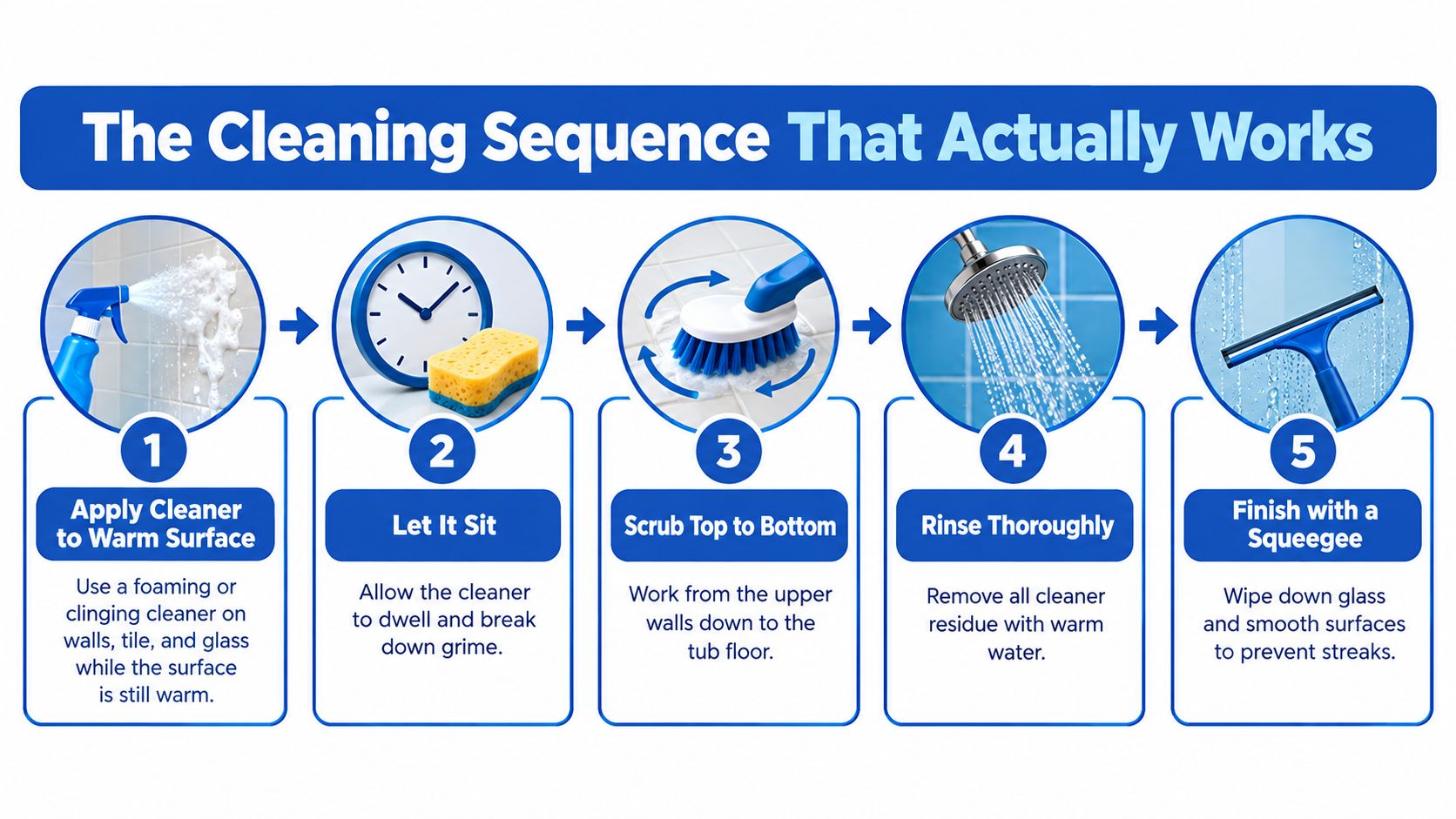
Let the product dwell rather than scrubbing immediately. Dwell time does the loosening work that homeowners often try to replace with pressure. If you're using a disinfectant for a specific reason, the label's contact time means the surface stays visibly wet for that full period, a point reflected in federal listings for registered disinfectants and their label directions.
Walls, Tile, and Glass First
Scrub from the top down with a nylon brush or microfiber pad so dirty runoff never crosses a section you've finished. Pay attention to grout intersections, built in shelves, and the corners where walls meet, because that's where film and water collect together.
For glass doors, switch tools rather than pushing harder. A nonstreaking cleaner and a squeegee followed by a dry microfiber pass leave glass clearer than a soapy sponge, which tends to smear residue into streaks you'll see the moment the light changes.
Tub Basin, Fixtures, and Drain
Move to the tub basin next, working the rim, the sloped back, and the slip resistant texture on the floor. Textured floors trap body oils in the pattern, so small circular motions with a soft brush beat long strokes. Wipe faucet handles, the spout, diverter, and control trim with a damp cloth, then buff dry to reduce water spots.
Rinse everything thoroughly with warm water, from high to low, using a handheld showerhead or a pitcher if needed. Cleaner residue left behind attracts fresh film and can make floors slippery, so rinse until the water runs clear and the surface no longer feels slick from product.
Finish by drying seams, ledges, and the tub floor, then flush the drain with hot water and a small amount of mild cleaner to move along loosened hair and film. Don't skip the drying pass. It's the difference between a shower that looks clean for a day and one that stays clean through the week.
Targeting Soap Scum, Hard Water, Mildew, and Grout
Stubborn problems need diagnosis before they need stronger chemicals. Look at the surface in daylight, run a fingertip across it, and decide what you're feeling. Greasy roughness, chalky white crust, pink or dark spotting, and discolored grout each call for a different response.

Soap Scum Responds to Degreasing, Not Bleach
Soap scum is an oily film built from soap, body oils, skin cells, and minerals. Bleach can lighten its color without removing the film, which is why scum seems to return instantly. A degreasing bathroom cleaner, or a gentle paste used on compatible surfaces, loosens that bond so a nonabrasive scrub can lift it.
For material safe options, American Cleaning Institute guidance for hard bathroom surfaces recommends nonabrasive all-purpose cleaner, tub, tile, or sink cleaner, or liquid cleanser for many tile surfaces, and for fiberglass or plastic tubs suggests tub and tile cleaner, a nonabrasive all-purpose cleaner, or a baking soda paste applied gently and rinsed well. If scum keeps coming back on glass and walls, our detailed guidance on preventing and removing soap scum in the shower covers daily prevention habits.
Hard Water Scale Needs the Right Chemistry
Mineral deposits feel chalky or crusty, especially around faucets, showerheads, and glass edges. They generally need an acid based approach on surfaces that can tolerate it, with dwell time doing most of the work. Natural stone, some metals, and certain tub coatings can't tolerate acid at all, so the surface check from your prep work decides whether vinegar based or proprietary descalers belong anywhere near the job.
Scraping scale with a blade or stiff pad is a common trap on glass and acrylic. You'll remove the crust and leave fine scratches that hold the next round of deposits even tighter.
When a stain isn't moving, change the chemistry or the dwell time before you increase the pressure. Pressure is what turns a cleaning problem into surface damage.
Mildew, Mold, and Grout Lines
Surface mildew in grout and on caulk usually looks spotty and smells musty, and it often responds to scrubbing with water and detergent, followed by complete drying. Treat deeper, persistent growth more seriously, especially if it returns quickly or sits in porous, damaged material. Don't escalate chemical strength repeatedly without asking why moisture keeps feeding the spot.
For grout, begin with the gentlest method that fits the tile and grout type. Use a narrow nylon grout brush with light pressure along the line, rinse often, and stop if the grout sands, crumbles, or lightens unevenly. Aggressive scouring erodes grout, opens the joint to more water, and makes the next cleaning harder, not easier.
Dark staining inside silicone caulk is a different category. Once discoloration runs through the caulk itself, surface scrubbing won't restore it, and replacement after the area is clean and fully dry is the honest fix.
Why Drying and Ventilation Matter More Than Your Cleaner
Mold and recurring mildew are moisture problems first. You can scrub grout lines perfectly on Saturday, and if the room stays damp, you'll see new spotting in the same corners before long. The cleaner removed visible growth. It didn't change the conditions that produced it.
Federal public health guidance gives practical benchmarks. In CDC recommendations for preventing mold growth at home, indoor relative humidity should stay no higher than 50% throughout the day, wet areas should be dried within 24 to 48 hours when possible, and visible mold on hard, nonporous surfaces may be cleaned with a solution of no more than 1 cup of household bleach per 1 gallon of water, with ventilation and protective equipment.

Run the bathroom exhaust fan during every shower and leave it on afterward until the mirror clears and walls feel dry. Confirm it vents outdoors rather than into an attic or wall cavity. A fan that hums but barely moves air won't control humidity, so test it with a tissue held near the grille.
Small Drying Habits That Pay Off
- Squeegee glass and smooth walls: Standing water left behind becomes spots and film.
- Leave doors or curtains open: Closed enclosures trap humid air against caulk and grout.
- Wipe ledges and tub rims: Flat surfaces hold puddles that feed corner growth.
- Check caulk and grout regularly: Cracks and gaps let water reach material you can't clean.
Cleaning alone is temporary when a slow plumbing leak, failed caulk seam, or persistent condensation keeps supplying moisture. Fix the source rather than sealing over it. Don't paint or recaulk over visible mold before cleaning and correcting the dampness, because covering the area hides growth without removing what feeds it.
Know the line between routine mildew and a larger problem. Extensive growth, patches that keep returning despite drying, water damage, or mold involving porous materials like drywall call for professional assessment. Repeatedly reaching for stronger chemicals in that situation exposes you to fumes while the underlying problem continues.
A Simple Routine That Keeps the Deep Clean Away Longer
Frequency beats force in bathroom care. Short, unglamorous habits prevent the bonded film and scale that make a full clean feel punishing, and they protect delicate surfaces better than occasional aggressive scrubbing.
After Every Shower
Squeegee glass and smooth walls toward the drain, swipe the tub ledge, and leave the door or curtain open to dry. Keep the exhaust fan running, ideally on a timer so nobody has to remember it during the morning rush. If your product label allows it, a daily shower cleaner applied while walls are wet and warm can slow film buildup between deeper cleans.
Once a Week
Wipe handles, controls, faucet bases, and the tub basin with a surface safe cleaner and a microfiber cloth. Give grout corners and caulk lines a light pass with a soft brush, then rinse and dry. In a shared family bathroom, include the toilet base and nearby floor in the same session for consistent hygiene, using separate cloths for the toilet area.
Monthly and Seasonally
Inspect the showerhead for mineral clogging and clean it using a method the fixture maker approves. Flush the drain, remove hair from the stopper, and check caulk and grout for gaps, cracking, or staining that no longer scrubs away. Our guidance on grout cleaning and sealing for longer lasting tile explains when sealing helps and when grout repair comes first.
Each season, test the exhaust fan, look under sinks and around the tub access area for slow leaks, and notice condensation patterns during Massachusetts winter cold snaps. Catching a failing seam or a weak fan early prevents the kind of moisture problem that no weekend scrub can solve.
Common Questions and When to Call a Pro
Homeowners usually ask the same honest questions once they've cleaned carefully and a problem remains. These answers help you decide what's normal maintenance and what's a signal to stop scrubbing.
How Often Does a Family Tub or Shower Need a Thorough Clean
A shared bathroom generally needs a full clean more often than a guest bath, with quick drying habits in between. If film feels rough to the touch, glass stays cloudy after rinsing, or grout darkens quickly, your interval is too long for how the room's used. Let the surface tell you rather than following a rigid calendar.
What About Dark Caulk, Vinegar Remedies, and Refinished Tubs
Silicone caulk that's dark through its depth won't scrub white again, so plan on replacement once the joint is clean, dry, and free of leaks. Vinegar can help with light mineral deposits on compatible surfaces, but it doesn't degrease heavy soap scum well and shouldn't be used on natural stone or mixed with other products. Refinished or reglazed tubs need mild, nonabrasive care only, following the refinisher's instructions, because standard abrasives can dull or cut the coating.
Moisture still sets the baseline for all of it. In EPA guidance on mold prevention and humidity control, indoor humidity should be reduced to 30–60%, wet materials and surfaces should be dried within 24–48 hours, and mold on hard, nonporous shower and tub surfaces should be cleaned with water and detergent and dried completely.
Call for help when mold keeps returning despite ventilation and drying, after a water damage event, when natural stone needs specialized products, or before a move in, move out, or post construction clean. Bathrooms that haven't had a real clean in years also benefit from a professional reset, and a deep cleaning bathroom service for a full tub, tile, and grout restoration gives you a clean baseline your own routine can maintain.
If your tub, grout, or glass needs more than a weekend scrub, Sunny Day Pro Services offers recurring and deep house cleaning across Wayland, Newton, Needham, Wellesley, Weston, and nearby Massachusetts communities, including detailed bathroom cleaning for showers, tubs, tile, and grout. Request a fast quote and a cleaning plan matched to your surfaces at Sunny Day Pro Services.

