
Remove Soap Scum in Shower: Expert Guide for Every Surface
Learn proven methods to remove soap scum in shower on tile, glass, stone, and acrylic. Get DIY tips, safety advice, and when to call Sunny Day Pro Services.

You're probably looking at a shower that looks clean for a day or two, then gets that chalky, stubborn film right back on the glass, tile, and fixtures. That's soap scum in shower territory, and it's usually not a sign that you're cleaning wrong. It's a sign that the water, the soap, and the surface are working against you.
What makes this problem tricky is that soap scum isn't just dried soap. It's a mineral-soap residue that bonds to shower surfaces and gets more stubborn as water hardness rises. A quick wipe can help, but if the water chemistry stays the same, the buildup keeps coming back.
Table of Contents
Why Soap Scum Clings to Your Shower Surfaces
A shower that looks clean after one scrub can still haze over again fast. The reason soap scum in shower spaces keeps coming back is chemistry, not weak cleaning. Traditional bar soap contains fatty acids, and those fatty acids react with calcium and magnesium in hard water to form an insoluble residue that bonds to glass, tile, and metal fixtures. That residue is commonly described as a white solid made mainly of calcium stearate and magnesium stearate, which is why it behaves more like a coating than a loose film. Reference on the hard-water reaction and residue chemistry
An industry analysis of a 2022 study reported that scum mass rose sharply at 120 ppm hardness compared with soft water after one rinse cycle, and at 250 ppm hardness, more than 92% of applied soap converted to insoluble residue before reaching the skin surface. Those numbers explain why the same routine can feel ineffective in one home and manageable in another. If the water stays hard and the cleanser stays a bar soap, the residue keeps forming no matter how often the shower gets wiped down. Reference on the hard-water reaction and residue chemistry
Why some showers get hit harder than others
The buildup is worse anywhere water lingers. Corners, glass panels, grout lines, faucet bases, and the lower edges of tile all hold moisture longer, so the mineral residue has more time to harden.
Practical rule: if the surface stays wet, soap scum gets a head start. Drying the shower matters as much as cleaning it.
Hard water is the main driver, but surface conditions change how visible and stubborn the residue becomes. Cleaning and water-treatment sources consistently describe soap scum as an insoluble residue formed when soap reacts with calcium and magnesium minerals, and they note that bar soaps create more of it than liquid or soap-free cleansers. Historical chemistry and prevention methods
On modern shower materials, the trade-offs are clear. Glass shows the haze first, especially when water spots dry into the film. Glazed tile and metal trim can usually tolerate more aggressive wiping, but textured grout, natural stone, and acrylic need a lighter hand because the wrong cleaner can etch, dull, or scratch the finish. The cleaning method has to match the surface, or the fix becomes its own problem.
That is why one shower can look clear after one use and cloudy again a few days later. The surface did not fail. The water chemistry kept feeding the residue.

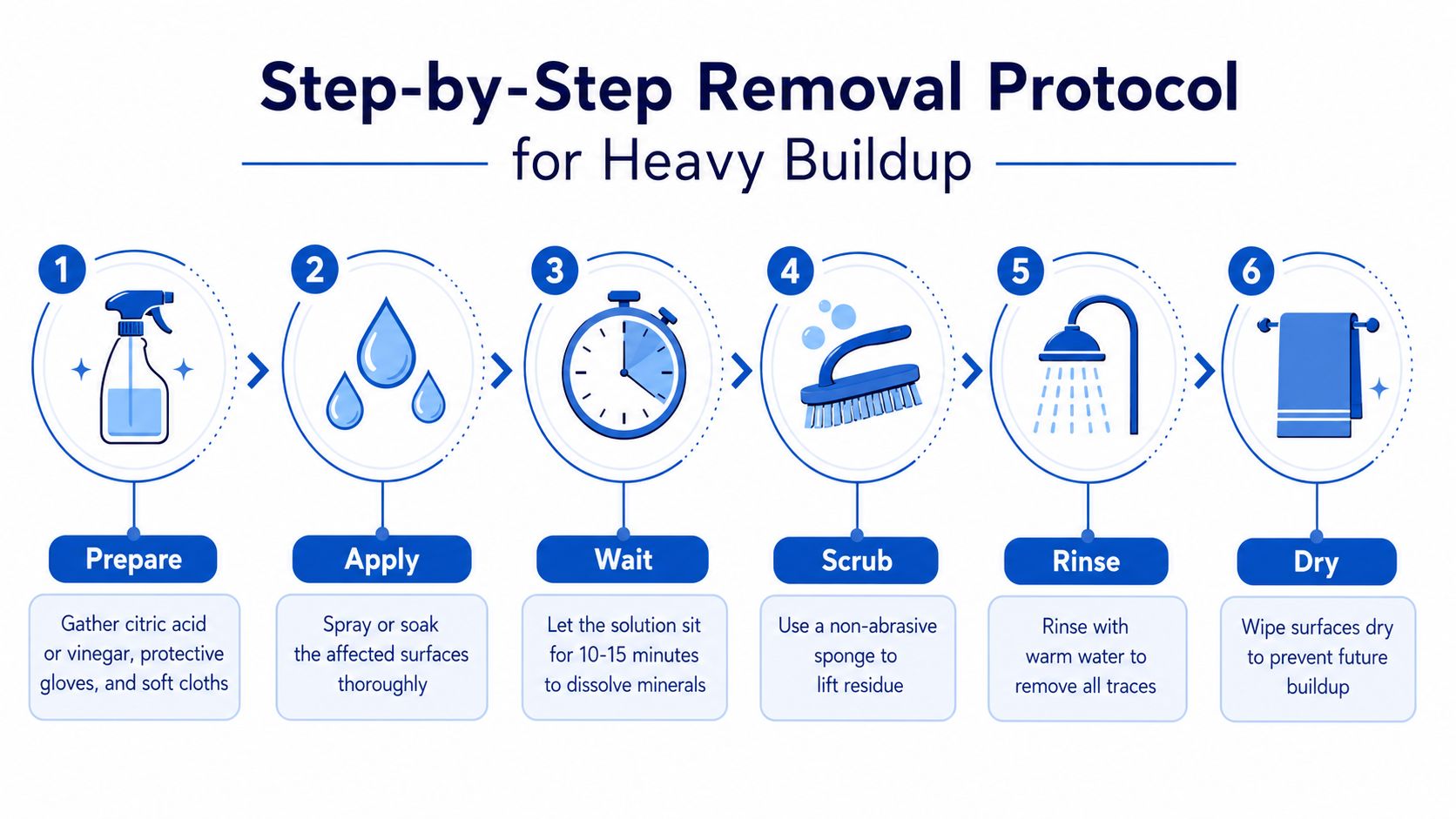
Step-by-Step Removal Protocol for Heavy Buildup
A shower covered in heavy film needs the same treatment I use on mineral scale. Start with citric acid or vinegar-based solutions, because acid-based cleaners loosen the calcium side of the residue first. Once that bond softens, gentle scrubbing can remove the rest. Acid-first cleaning guidance
Use the cleaner, then give it time
Wet the affected area first, or apply the cleaner directly to the film so it can stay in contact with the buildup. Let it sit long enough to work into the deposit, usually 5 to 10 minutes for heavy buildup, then scrub with a non-abrasive sponge or cloth. Dwell time matters because the cleaner needs time to break down the insoluble film before you start wiping it away.
Older deposits usually need more than one pass. Shower glass, corners, and textured tile often hold layered residue, and the first round only loosens the top film. If you want a broader view of product choice before you start, this shower cleaning guide helps explain which cleaners fit different surfaces.
- Prepare the surface. Rinse loose dirt away so the cleaner can contact the residue directly.
- Apply an acid-based cleaner. Use citric acid or vinegar on the buildup, and avoid acids on surfaces that should not receive them.
- Wait. Give it 5 to 10 minutes so the mineral film softens.
- Scrub gently. Use a soft pad, microfiber cloth, or non-abrasive sponge.
- Rinse thoroughly. Remove every trace of loosened residue.
- Dry the surface. Water left behind gives the next layer a place to form.
A single pass is often enough for fresh film, but not for a deposit that has been building for months.
What actually gets the residue off
Warm water helps, but the removal comes from the chemical reaction and the wiping action working together. A microfiber cloth is useful as a finishing tool because it lifts loosened residue instead of pushing it around, especially on glass and coated surfaces.
Surface choice changes the risk. Glazed tile and metal trim usually handle this process well, while grout, natural stone, and acrylic need more caution because the wrong cleaner can dull, etch, or scratch the finish. That is why the same cleaner can work on one shower wall and cause damage on another if you use it without checking the material first.
The mistake I see most often is scrubbing hard with the wrong tool. If the film is mineral-based, extra pressure does not fix the chemistry. It can scar the finish while the residue stays underneath.
Choosing Between DIY Cleaners and Store-Bought Options
DIY and store-bought products both have a place, but they solve different problems. Vinegar and citric acid are economical and useful for routine mineral removal, while commercial cleaners are often more convenient when the buildup is heavier or when you want a ready-to-use formula. The right choice depends on the surface, the severity of the film, and how cautious you need to be around finishes.
| Option | Cost | Effectiveness | Safety Notes |
|---|---|---|---|
| DIY vinegar or citric acid | Lower | Good for mineral-heavy buildup when used correctly | Must be matched to the right surface, since acids can damage sensitive materials |
| Store-bought soap scum cleaner | Higher | Convenient and often stronger on dense buildup | Read the label closely, especially on stone, coated glass, or specialty finishes |
| Microfiber plus warm water | Low | Best for maintenance and light film | Very gentle, but not enough for heavy mineral deposits |
DIY cleaners are appealing because they're simple and accessible. They're also the better fit when you're trying to avoid strong odors or keep the cleaning process straightforward. The trade-off is that older buildup usually needs more dwell time and more manual effort.
Store-bought products win on convenience. You open the bottle, apply it, and move faster through the job. The downside is that stronger formulas can be a poor match for delicate materials, so the label matters as much as the cleaning power.
For general shower cleaning methods and product selection, this guide to the best ways to clean showers can help you compare options without overbuying products you won't use.
Surface-Specific Techniques for Tile, Glass, Stone, and Acrylic
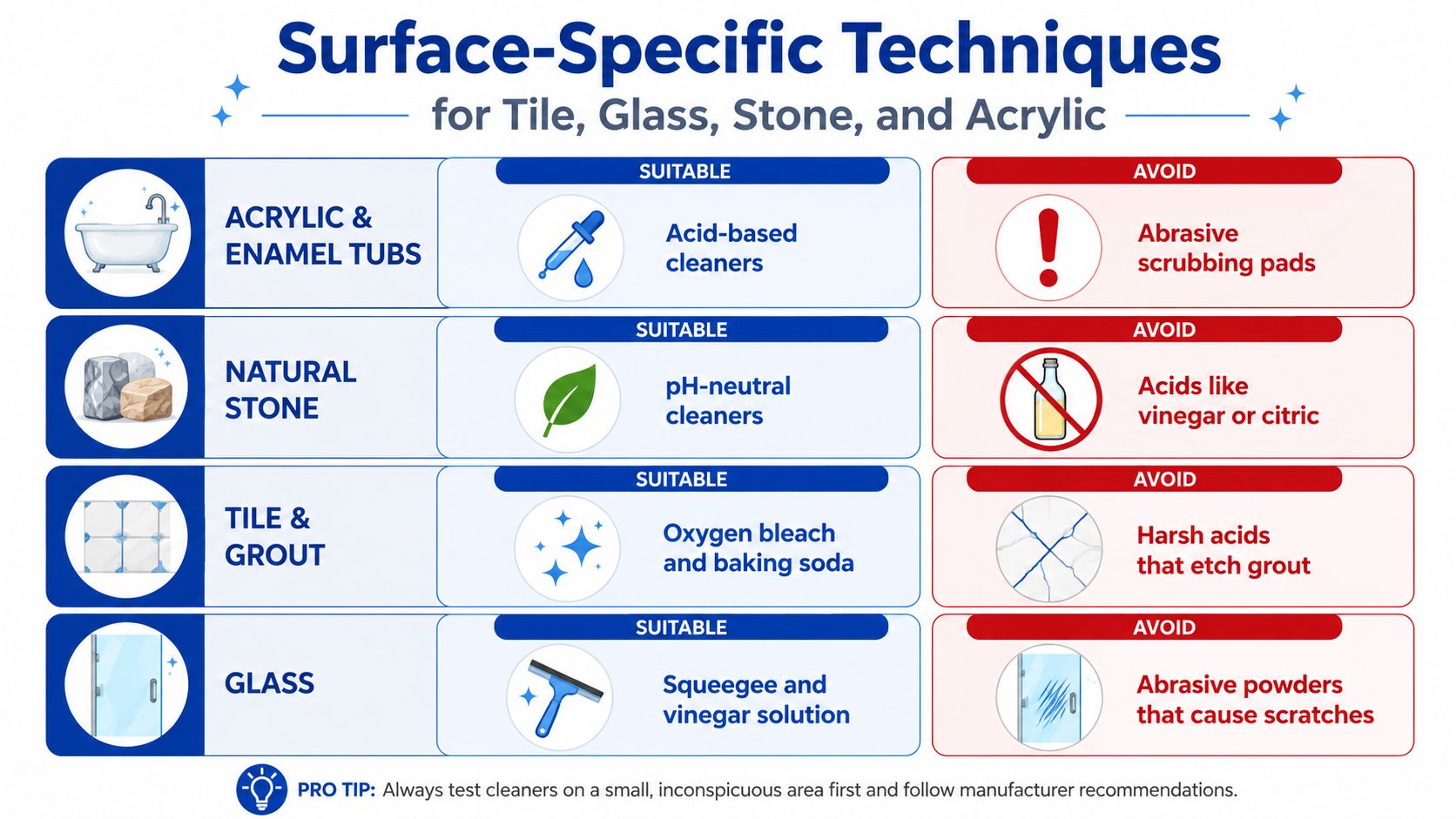
The biggest mistake people make is treating every shower surface like it's the same material. It isn't. Acid-based cleaners can work well on acrylic or enamel tubs, but those same products can etch natural stone. Porous tile and grout need a different touch because they trap residue, and coated glass can cloud if you attack it with harsh chemicals or abrasive powders. Surface-specific treatment overview
Match the cleaner to the finish
On acrylic and enamel, an acid-based cleaner is usually the practical choice for mineral residue, but don't pair it with abrasive pads. That combination can dull the finish fast.
On natural stone, skip vinegar and citric acid. Stone needs a gentler, pH-neutral approach, because acids can leave permanent damage. If you're working on marble, the cleaner choice matters more than elbow grease. Marble tile care guidance
On tile and grout, use a non-abrasive method and focus on lifting residue from the joints instead of grinding at them. Grout is porous, so it can hold onto film even after the surface tile looks clean. A soft brush and a mild cleaner are safer than a heavy hand.
On glass, especially coated shower glass, use a light touch. Squeegees and gentle vinegar solutions are common maintenance tools, but abrasive powders can leave scratches or haze that never really disappear.
Best practice: if you don't know the surface, test a small hidden area first. A cautious test is cheaper than replacing a damaged finish.
What not to use on each surface
- Acrylic and enamel tubs: avoid scouring pads and rough powders.
- Natural stone: avoid vinegar, citric acid, and other harsh acids.
- Tile and grout: avoid aggressive scrubbing that opens up the grout line.
- Glass: avoid abrasive powders that can scratch or cloud the finish.
The safest approach is always the one that removes the residue without changing the surface itself. That's the part many quick-fix articles leave out, and it's the reason some showers look worse after a DIY attempt than they did before.
Prevention Routines and Troubleshooting Stubborn Buildup
The most effective prevention routine is boring, and that's a good thing. Squeegee after showering, wipe surfaces dry, and improve ventilation so moisture doesn't sit long enough for minerals to harden. Those habits reduce the time water has to leave behind a film in the first place. Prevention habits and liquid soap guidance
Small daily habits that actually reduce recurrence
Switching from bar soap to liquid soap or body wash can help because those products are less likely to leave the same mineral-reactive residue. That doesn't mean bar soap is bad, it means the product choice changes how much residue you're fighting later.
A simple maintenance rhythm works better than occasional deep cleans:
- After every shower, run a squeegee over glass and smooth tile.
- Once the water is off, wipe corners and metal fixtures dry.
- Keep air moving, since ventilation helps moisture clear faster.
- Use lighter soap formats, especially if buildup returns quickly.
When the film keeps coming back
If the same haze returns quickly, the problem is usually harder than a cleaning habit. Hard water is the first thing to suspect, followed by slow drainage and areas that stay wet too long. A water softener can help when the mineral load is the driver, and targeted spot treatments are useful where the buildup is concentrated.
For broader shower care, including sealing and surface upkeep, this tile cleaning and sealing guide is useful if grout or porous finishes are part of the problem.
If soap scum keeps returning in the same spots, clean the cause, not just the symptom.
That's the key troubleshooting mindset. If the residue forms on glass edges, faucet bases, or grout corners first, the shower is telling you where moisture lingers longest.
When to Call a Professional Cleaner or Tile Specialist
Some showers are worth handing off to a pro before the cleanup turns into a repair. That's especially true with marble, granite, coated glass, or extensive buildup that's been left to harden for a long time. One wrong product on stone can etch the surface, and one aggressive scrub on grout can leave a permanent worn line.
Professional help makes sense when the shower has mixed materials or when the residue keeps returning after proper cleaning. A trained cleaner knows how to match the method to the surface, and a tile specialist can tell the difference between surface film, embedded residue, and finish damage.
For homeowners in Massachusetts, Sunny Day Pro Services is a practical local example of the kind of team that handles delicate surfaces and deep cleaning with care. Their work fits the situations where a bathroom needs more than a quick wipe, especially if the tile, stone, or fixtures need a careful reset rather than another round of trial and error.
If you're seeing cloudy glass, stained grout, or stone that's already been hit with the wrong cleaner, the cost of fixing a mistake usually beats the cost of hiring someone who knows the surface from the start. That's the cleanest decision when the material itself is part of the risk.
Frequently Asked Questions About Soap Scum Removal
| Surface | Best action | Avoid |
|---|---|---|
| Glass | Squeegee, gentle cleaner, dry after use | Abrasives that scratch |
| Tile and grout | Soft brush, non-abrasive cleaner, rinse well | Harsh scrubbing |
| Stone | pH-neutral cleaner | Vinegar and citric acid |
| Acrylic and enamel | Acid-based cleaner, soft cloth | Scouring pads |
Is soap scum harmful? It's mainly a cleaning and appearance problem, but it can trap dirt and oils and make the shower harder to maintain.
How often should I clean it? Light maintenance after showers helps most. Deep cleaning is usually needed when you see buildup returning, not on a fixed schedule.
Do I need a water softener? If hard water is driving the recurrence, a softener can help a lot. If the buildup is only on one surface, poor drying may be the bigger issue.
What's the best product for my shower? Match the cleaner to the material. Stone needs a different approach than glass, acrylic, or enamel.
If soap scum keeps coming back, the fix is usually better surface care, smarter product choices, and a method that matches your water. Sunny Day Pro Services helps Massachusetts homeowners with careful cleaning and tile-focused service when showers need more than another round of DIY scrubbing. Visit Sunny Day Pro Services to request help that's customized to your shower's surface, finish, and buildup level.

