
How to Get Rid of Red Ants Naturally: Safe & Effective Guide
Learn how to get rid of red ants naturally with proven methods, pet-safe baits, and expert tips to keep your Massachusetts home ant-free for good.
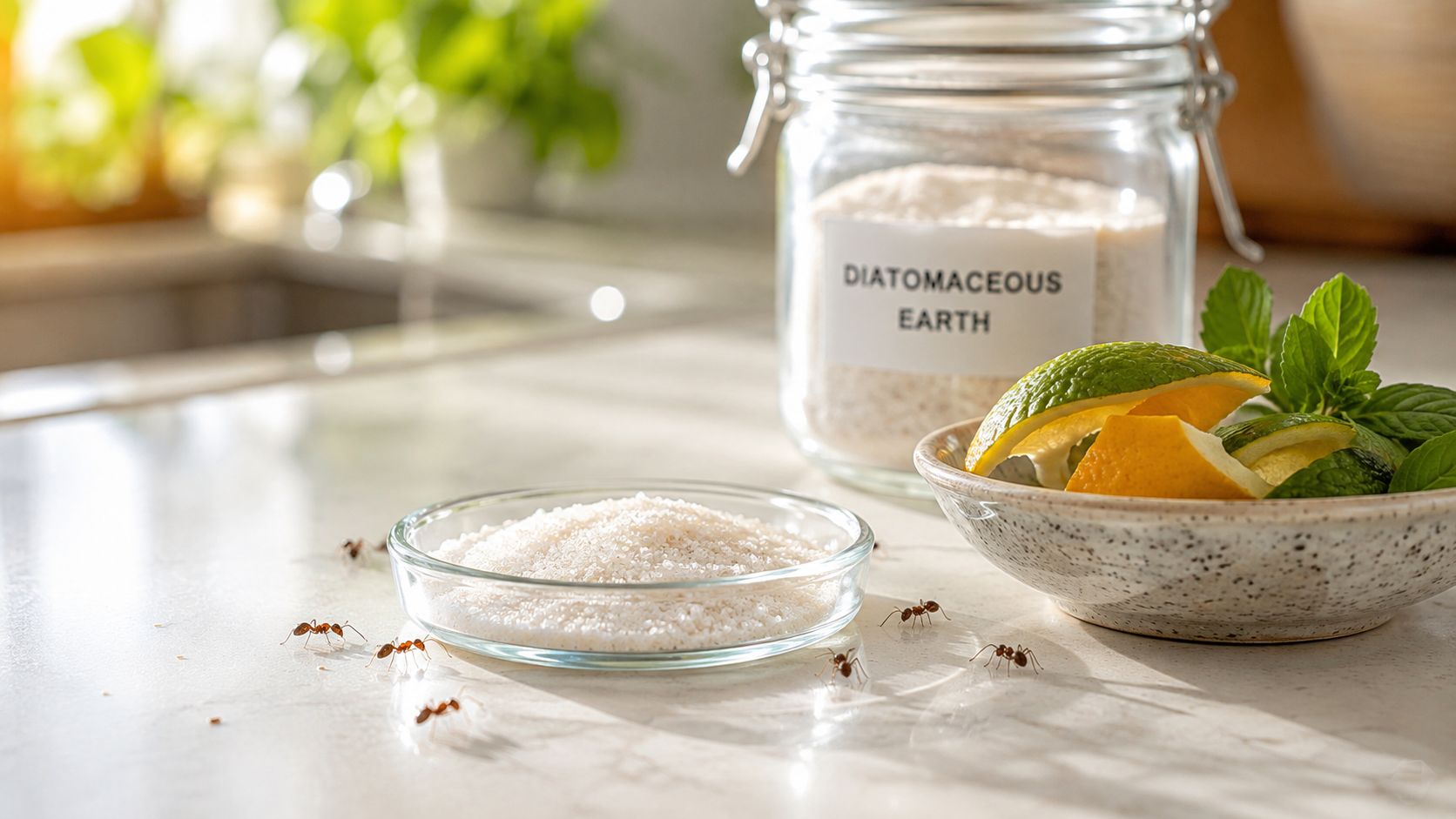
A trail of red ants across a Massachusetts kitchen floor has a way of turning a normal morning into a cleanup job. In Newton, Weston, and the rest of the suburbs west of Boston, the pattern is usually the same, one scout appears near the sink, then a line shows up around the toaster, pet bowl, or a crumb-hidden baseboard. The fastest way to beat them naturally isn't a single spray, it's a layered plan that breaks their trail system, removes what attracts them, and targets the colony without making the problem spread.
Table of Contents
- Compare the main barrier options
- Pair barriers with repellent zones
- Seal the openings that keep feeding the route
- Choose low-risk placement over broad spreading
- Match the remedy to the room
- Keep storage and timing tight
Why Red Ants Keep Coming Back to Your Home
A homeowner in Wellesley sees a few red ants by the coffee maker, wipes them up, and thinks the problem is handled. By afternoon, they're back, this time near a window trim and the dog's food bowl. That's typical ant behavior, because workers follow scent trails and return to reliable food and moisture sources rather than wandering randomly.
Scent trails are the real problem
Ants don't need to rediscover your kitchen every time. Once a scout finds crumbs, syrup residue, pet food, or even sticky cabinet film, the trail gets reinforced and other workers keep following it. That's why the visible ants are only the surface of the issue, and why smashing the few you see won't touch the colony.
Natural red ant control works best when it targets those trails. Texas A&M's imported fire ant guidance also shows why the colony side matters, since hot-water drench is a partial suppression tool, not a guaranteed wipeout, with mound elimination success at 20% to 60% according to the University of Florida IFAS Texas A&M guidance. That range is a good reminder that surface cleanup alone doesn't solve the nest.
Spring and early summer make the problem louder
Across New England, ant activity often becomes more obvious when homes open up to warmer weather and foraging picks up. In practical terms, that means more access points, more scent trails, and more chances for workers to keep returning to kitchens, mudrooms, and sunrooms. The earlier you interrupt the pattern, the less likely the colony is to settle into repeated indoor runs.
Practical rule: If you keep seeing ants in the same room, treat the trail and the entry point, not just the individual insects.
The natural approach starts with understanding what's drawing them in and where they're moving. Once that's clear, every bait, repellent, and barrier you use becomes more effective.
Identify Your Ant Problem Before You Treat It
Not every red ant problem calls for the same fix. In Massachusetts homes, I usually tell people to slow down for ten minutes and map the ants before they reach for anything. That one step saves time, avoids wasted product, and keeps you from treating the wrong room while the entry point stays open.
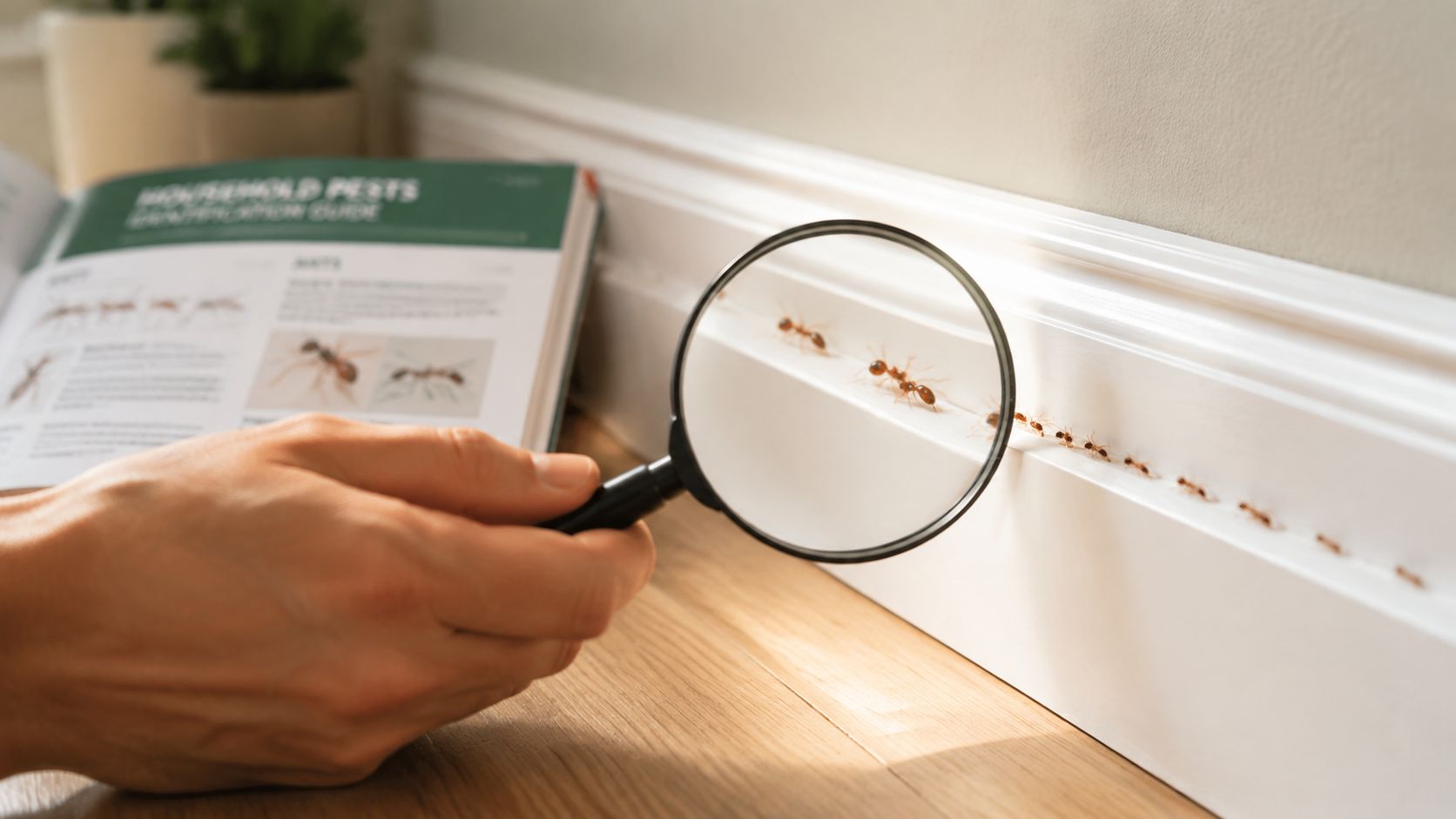
Trace the path before you disturb it
Start where the activity is strongest, usually a counter edge, sink cabinet, or baseboard. Watch where the ants enter, where they turn, and what they ignore. If they're moving in a line, they've already solved the route, and your job is to interrupt that route without scattering them.
Look for tiny gaps around trim, pipe penetrations, windowsills, and thresholds. In older Newton and Weston homes, I often find that the ants aren't coming from “the kitchen” at all, they're entering through a dry gap behind an appliance or a hairline crack near utility lines. A flashlight and a little patience beat random spraying every time.
Use the pattern to choose the treatment
If ants are feeding indoors, bait usually makes more sense than a repellent spray because the workers need to carry the attractant back to the colony. If they're mostly entering along a fixed edge, barrier methods become more valuable. If activity keeps appearing after cleanup, that usually means the source is still active or the entry point is still open.
A useful way to think about it is this:
- Single trail near food: Clean, bait, and monitor.
- Several entry points: Seal gaps and use perimeter repellents.
- Outdoor mound near the foundation: Combine baiting and mound treatment.
- Persistent indoor return: Check for nesting in wall voids or hidden moisture.
The peer-reviewed evidence on natural barriers also points in this direction. Plant extracts such as spearmint, peppermint, neem, and d-limonene can work as effective barriers against nesting-site colonization in Myrmica rubra, which supports the idea that exclusion matters as much as removal study on barriers.
Field note: If the ants disappear after you wipe them up but reappear in the same route later that day, you're dealing with a navigation problem, not a one-time spill.
Once you know where they're coming from, the right treatment is a lot easier to choose.
Create Effective Natural Baits That Eliminate Colonies
Sprays feel satisfying because they work fast. Baits work better because they reach the ants you can't see. For red ants and other household ants, that's the difference between temporary relief and a real drop in activity.
Choose the bait that fits the home
A borax-sugar bait is a classic option for indoor trails where you want the ants to carry material back to the nest. The sweet ingredient brings them in, and the slower ingredient is meant to work after ingestion. Use it sparingly, place it where children and pets can't reach it, and don't smear it across open surfaces.
For households that want to avoid borax, a baking soda and sugar mixture is a common alternative. Homes and Gardens describes this style of bait using equal parts baking soda and sugar, or similar sweet combinations, so the ants take the attractant back with the active ingredient baking soda bait guidance. The key is restraint, because too much product can make the area unattractive and push the ants elsewhere.
Place baits where foragers already travel
Put bait beside, not on top of, the trail. A bottle cap, index card corner, or shallow lid works well because it keeps the bait contained. Leave the surrounding area clean, since crumbs, syrup, and pet food will distract the ants and reduce bait uptake.
Patience matters here. Baits are designed to be carried, shared, and repeated through the colony. If you wipe them away after a few hours because you don't see immediate results, you're cutting off the process before it can work.
| Natural Bait Formulas for Red Ant Control | Ingredients | Best For | Expected Results Timeline | Pet Safety Note |
|---|---|---|---|---|
| Borax-sugar bait | Borax plus sugar | Indoor trails and entry zones | Several days, sometimes longer | Keep completely out of reach of pets and children |
| Baking soda-sugar bait | Baking soda plus sugar | Homes that want a non-borax option | Several days, sometimes longer | Store and place carefully, away from curious pets |
| Sweet-and-thick bait | Sugar with honey or syrup plus an active ingredient | Ants that prefer liquid or sticky food sources | Several days, sometimes longer | Use shallow containers and remove leftovers promptly |
Best practice: If you see ants clustering around the bait, leave it alone unless it becomes contaminated, because that usually means the formula is attractive enough to keep working.
For fire ant issues, timing matters even more. Texas A&M recommends waiting at least 3 days after baiting before applying a hot-water drench to active mounds, then re-treating or excavating anything that stays active Texas A&M fire ant guidance. That sequence matters because immediate flooding can miss the deeper brood chambers and queen.
Build Barriers with Natural Repellents and Exclusion
Once the colony is under pressure, the next job is keeping new workers from walking right back in. Natural repellents and physical exclusion do the heavy lifting. In a house with repeated ant pressure, I'd rather see a clean barrier and a sealed gap than a dozen different sprays competing for space.
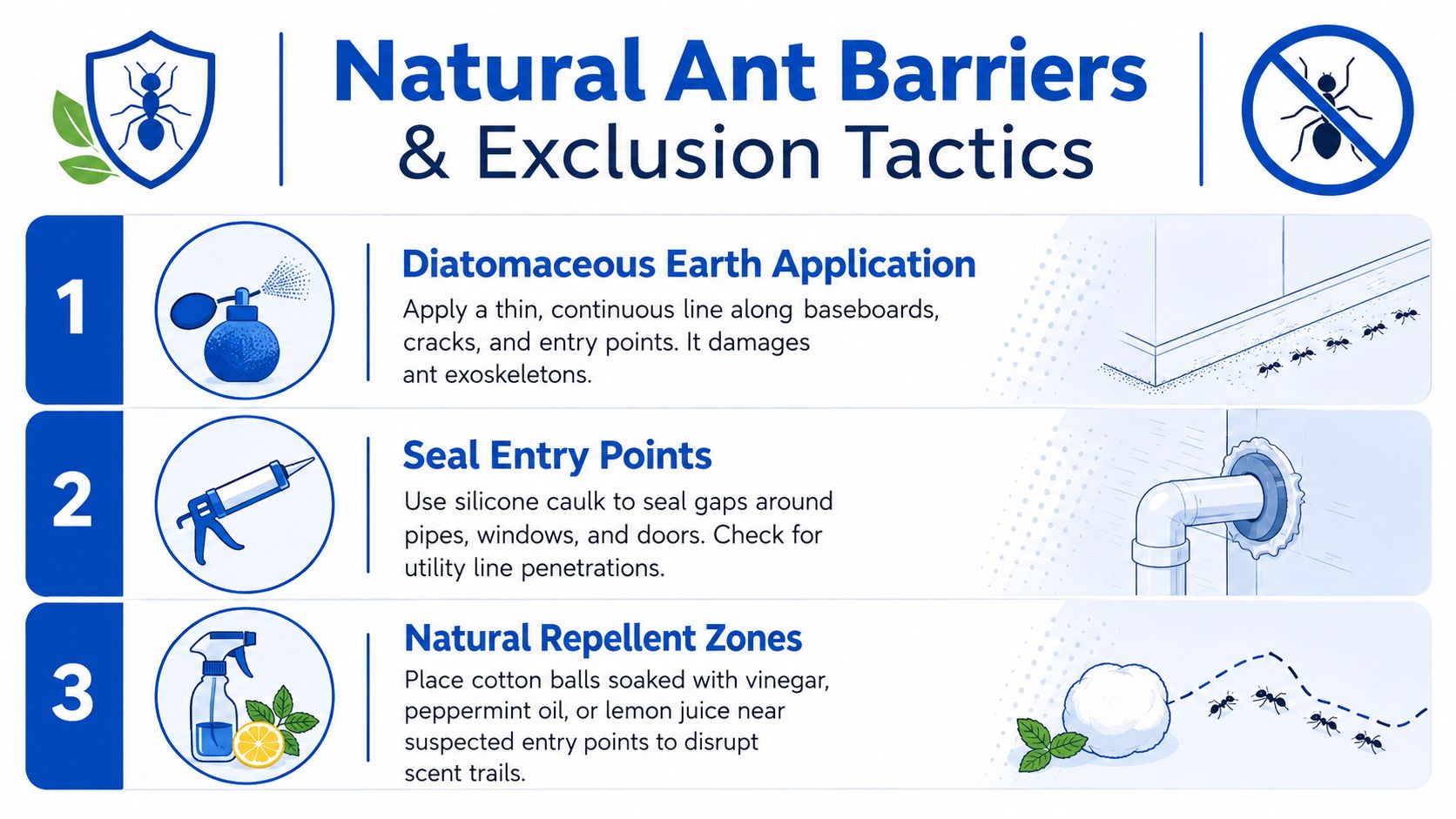
Compare the main barrier options
Food-grade diatomaceous earth is one of the most practical dry barriers. Applied in a thin line along baseboards, windowsills, foundation cracks, and trails, it works by desiccation rather than poison. The dust has to stay dry and undisturbed, which is why thick piles waste product and damp basements reduce performance.
That same dry-first rule is why DE can fail when people use it in bathrooms, leaky basement corners, or after a heavy cleaning. The most useful version is targeted and light, not spread everywhere like flour.
Pair barriers with repellent zones
Vinegar sprays and essential oils help disrupt scent trails at the edges of the problem. Housing.com recommends a 1:1 vinegar-and-water spray for direct application on ants and entry points, which is useful when you need to wipe out a trail and reduce re-entry vinegar spray guidance. A separate broad overview of trail disruption is also available in this practical cleaning guide on vinegar and baking soda cleaning.
Peppermint, citrus, and neem extracts can also help with exclusion. In a real home, I like using them at door thresholds, around window frames, and near the places ants keep testing. The goal isn't to perfume the room, it's to make the route unreliable.
- Diatomaceous Earth: Best for dry, steady edges where ants keep crossing.
- Essential Oil Spray: Best for entry points and fresh trail disruption.
- Caulk and Sealant: Best for cracks, trim gaps, and utility penetrations.
- Closed Storage: Best for reducing food cues that attract foragers.
Seal the openings that keep feeding the route
Caulk around small cracks, pipe gaps, and window trim. Keep dry goods in sealed containers. If pet food sits out all day, move it to a schedule or lift it when ants are active.
That kind of exclusion is boring, but it's what makes the barrier hold. The strongest natural approach uses repellents for movement control and caulk for structural control. One without the other usually leaves a door open.
Prevent Future Infestations Through Sanitation and Monitoring
The easiest ant problem to solve is the one that never gets a foothold. In kitchens, mudrooms, and pantry corners across Massachusetts, the homes that stay ant-free usually share the same habit, they stay a little more disciplined than the ants are patient. That's not glamorous, but it works.
Clean up the food map
Wipe counters after meal prep. Sweep crumb zones under appliances. Empty the trash before it becomes a scent source. If you have a pet, clean the bowl area like it's part of the kitchen, because ants treat it that way.
The simplest version is this: remove what ants can smell before they can recruit more workers. That's also why a cleaning routine matters even after baiting, since leftover residues can keep feeding the route.
Manage moisture and outdoor pressure
Ants don't only show up for sugar. Moisture, leaks, condensation, and damp soil around a foundation all help make a property more attractive. If you've got a leaky hose bib, a dripping AC line, or a damp basement edge, fix that first.
Outside, keep mulch, leaf litter, and plant debris from piling directly against the foundation. Trim back shrubs that touch the house, and check the same utility penetrations each season. That kind of maintenance matters in places like Needham and Wayland, where a shaded foundation can stay damp long enough to keep ants active.
A clean interior and a tidy exterior work together, which is why this keep-the-area-clean routine pairs so well with natural ant control.
Simple schedule: Inspect the same high-risk spots every week during active months, then after heavy rain or any major kitchen cleanup.
Monitor before the problem grows
Set a recurring check for baseboards, under sinks, around windows, and by pet feeding areas. If you see a new line, don't wait a day or two to “see if it goes away.” Early response keeps a small scout problem from turning into a full pantry route.
That approach fits Massachusetts homes well because seasonal shifts keep changing ant behavior. The home that stays dry, sealed, and clean gives foragers fewer reasons to return.
Troubleshoot Persistent Ant Problems and Know When to Call Help
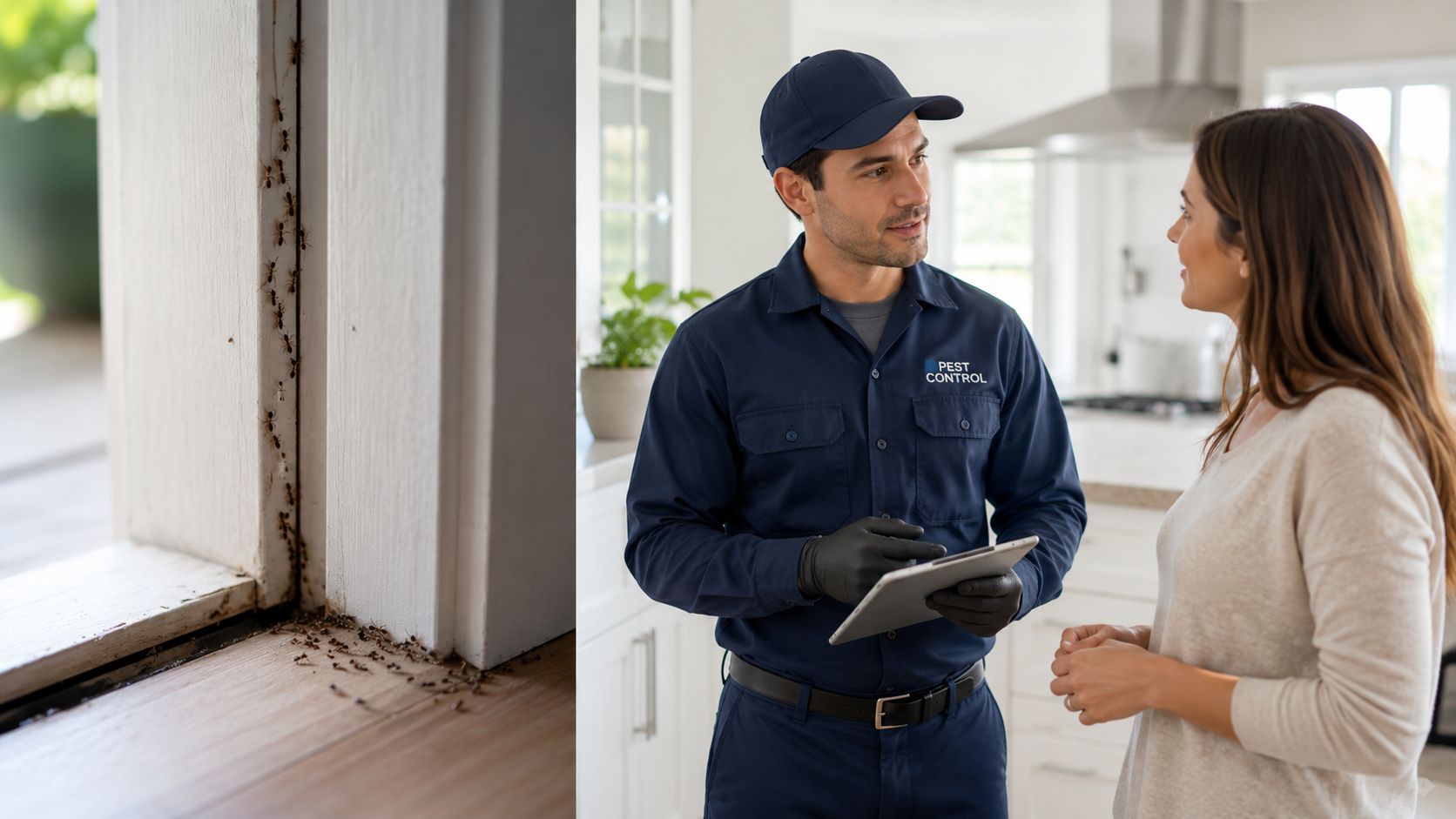
Sometimes the natural plan is right, but the infestation is deeper than it first looked. If the ants keep returning after careful baiting, barrier work, and sanitation, the issue may be hidden in a wall void, under a slab edge, or in a nest you can't see from the kitchen. That's where persistence starts to look less like a nuisance and more like a structural clue.
Signs the problem is bigger than a trail
If you're treating the same route again and again, but new ants keep appearing from a hidden gap, the colony is probably still active. Reinfestation after cleanup is another clue, especially if the activity changes rooms or shows up after rain. That's when the issue stops being a surface problem and starts looking like a nest-location problem.
Fire ants are a different category altogether. UF/IFAS emphasizes a combined approach for sustainable control, and Texas A&M's hot-water guidance shows why repeated treatment is often necessary rather than optional UF/IFAS sustainable control. If you're seeing mounds or aggressive outdoor activity, a single natural treatment usually won't finish the job.
Know when to bring in a professional
Call for help when ants keep returning after you've treated the trail, the entry point, and the sanitation issues. Also call sooner if you suspect nests in walls, multiple active mounds, or hard-to-reach voids under floors or siding. At that point, a professional inspection can save you from months of guessing.
A good service visit should start with identification, not a generic spray. The technician should track the pattern, inspect likely entry points, and explain what's being treated and why. That's the difference between a stopgap and an actual solution.
Safe Natural Ant Control for Homes with Pets and Children
The safest natural ant plan is the one that respects how homes work. Kids crawl, pets lick, and kitchens get used constantly, so any remedy that sits exposed on a counter or floor has to be chosen carefully. “Natural” doesn't automatically mean harmless, especially when the product is attractive, sticky, or dusty.
Choose low-risk placement over broad spreading
Baits are useful, but they belong in controlled placements, not open areas where a toddler or dog can reach them. The same goes for borax-based mixes, which Healthline flags as something to handle carefully around children and pets Healthline ant safety guidance. If a product can't be placed out of reach, it probably isn't the right choice for that room.
Diatomaceous earth also needs restraint. It works best as a narrow perimeter treatment in dry areas, not as a free-for-all dusting across the house. Keep it off food-prep surfaces and out of damp spots where it won't stay effective.
Match the remedy to the room
In kitchens, sanitation and bait placement usually make the most sense. On dry baseboards and exterior thresholds, DE and sealed gaps are often better. Around edible gardens or play areas, physical exclusion and careful cleaning beat broad spray coverage.
For homeowners who prefer a simpler, lower-toxicity routine, the best sequence is usually this:
- Clean first: Remove crumbs, sticky residue, and pet food.
- Treat second: Use a targeted bait or barrier where ants already travel.
- Seal third: Close cracks, gaps, and entry points.
- Monitor last: Recheck after rain, cleaning, or reappearance.
Keep storage and timing tight
Store all mixes, oils, and powders away from food, medicine, and pet supplies. Apply treatments when children and pets can be kept out of the area long enough to avoid contact. That's especially important in busy family homes where one open bottle or lid can become a problem by accident.
The overall timeline is usually measured in days for bait response and ongoing monitoring for prevention, not in a single afternoon. The strongest results come from repeating the small, practical steps that interrupt scent trails, reduce food access, and close the cracks ants use to get inside.
If red ants keep showing up in your Massachusetts home, Sunny Day Pro Services can help you get the space clean, manageable, and ready for a smarter control plan. Visit Sunny Day Pro Services to get help that fits real homes in Newton, Weston, Wayland, Needham, and nearby towns.

