
Keep the Area Clean: A Realistic Guide for Busy Homes in 2026
Discover how to keep the area clean with less stress. Our 2026 guide offers practical tips for busy homeowners to maintain a tidy home.
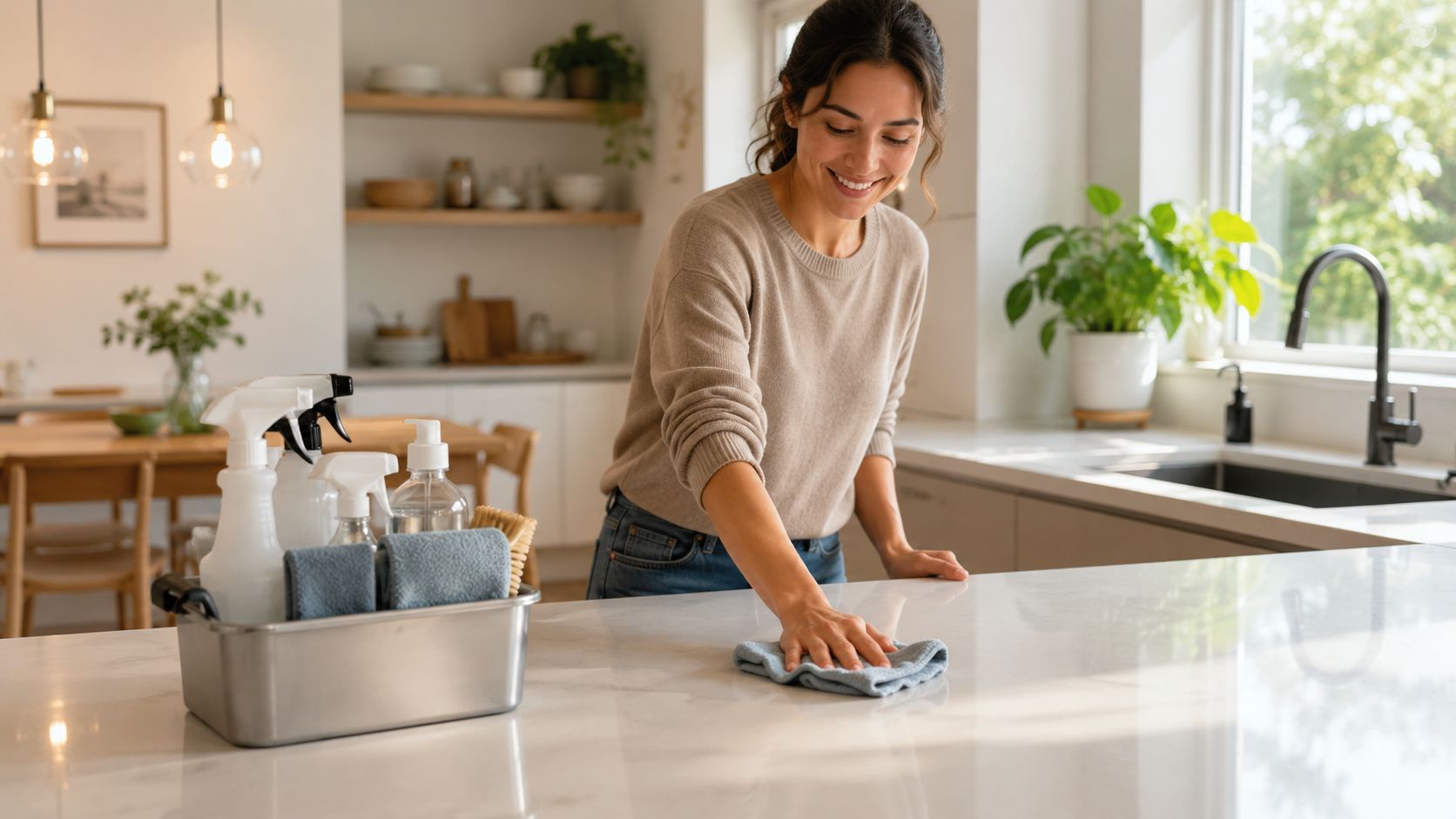
Keeping your home clean isn't about marathon scrubbing sessions—it's about building small, effective habits that prevent messes from piling up. Spending just a few minutes each day saves you hours of catch-up work later, protecting your valuable weekends and reducing stress. This guide will provide actionable strategies to help you keep the area clean with less effort.
Table of Contents
- The Daily Reset That Actually Works
- Create a Floor-Based Cleaning Caddy
- Sample Weekly Cleaning Schedule
- Practical Tips from Our Experience
- Measuring Success and Adjusting Your Plan
- Post-Renovation Clean-Up
- Routine Maintenance vs. Deep Cleans
- Signs You Need a Professional
- What to Expect from a Professional Service
- How often should I have my home professionally cleaned?
- What is the best way to keep newly installed tile floors clean?
- Are "green" cleaning products as effective as traditional ones?
- How can I reduce cleaning time without sacrificing results?
- What are the signs that I should call a professional?
- Quick Actionable Takeaways
Why Small, Consistent Habits Are More Effective
For anyone in a busy household, the weekend cleaning rollercoaster is a familiar struggle. You spend Saturday deep-scrubbing, only to watch the clutter creep back by Wednesday. That cycle is mentally exhausting. Switching to a low-effort daily routine gives you back control and peace of mind.
- Compound Effect: Daily small wins compound into a consistently tidy space.
- Reduced Mental Load: A set schedule removes the mental load of deciding when and what to clean.
- Proactive Maintenance: Focusing on high-impact zones stops visible mess before it spreads.
As an industry expert, a rule I constantly share with clients is: "Consistent micro-tasks beat sporadic deep cleans every time."
Think about a quick 10 or 15-minute evening reset. Clearing the counters, stashing shoes, and wiping down high-touch surfaces completely changes how the house looks and feels the next morning. Try assigning one or two specific zones to different weekdays—maybe bathrooms on Tuesdays and vacuuming on Thursdays. This approach keeps you out of the all-or-nothing trap.
Here’s how that looks in practice:
- After dinner, immediately clear and wipe the kitchen sink.
- Designate a single inbox for mail and school papers to sort through once a week.
- Place a basket by the front door to catch incoming clutter before it spreads.
This approach aligns with how people actually spend their time cleaning. On average, Americans devote 23 hours and 36 minutes per month to house cleaning. That breaks down to about 4.4 hours per week or a staggering 282 hours per year. Given these numbers, it’s understandable why many households opt for professional recurring cleaning services rather than playing catch-up on Saturdays. You can explore the specifics of these time-use findings in this research about cleaning time.
Quick Tips for Getting Started
- Write out a 15-minute evening reset checklist.
- Group similar chores together to reduce setup and transition time.
- Keep a portable supply caddy on each floor for easy access.

Building a Sustainable Weekly Cleaning Routine
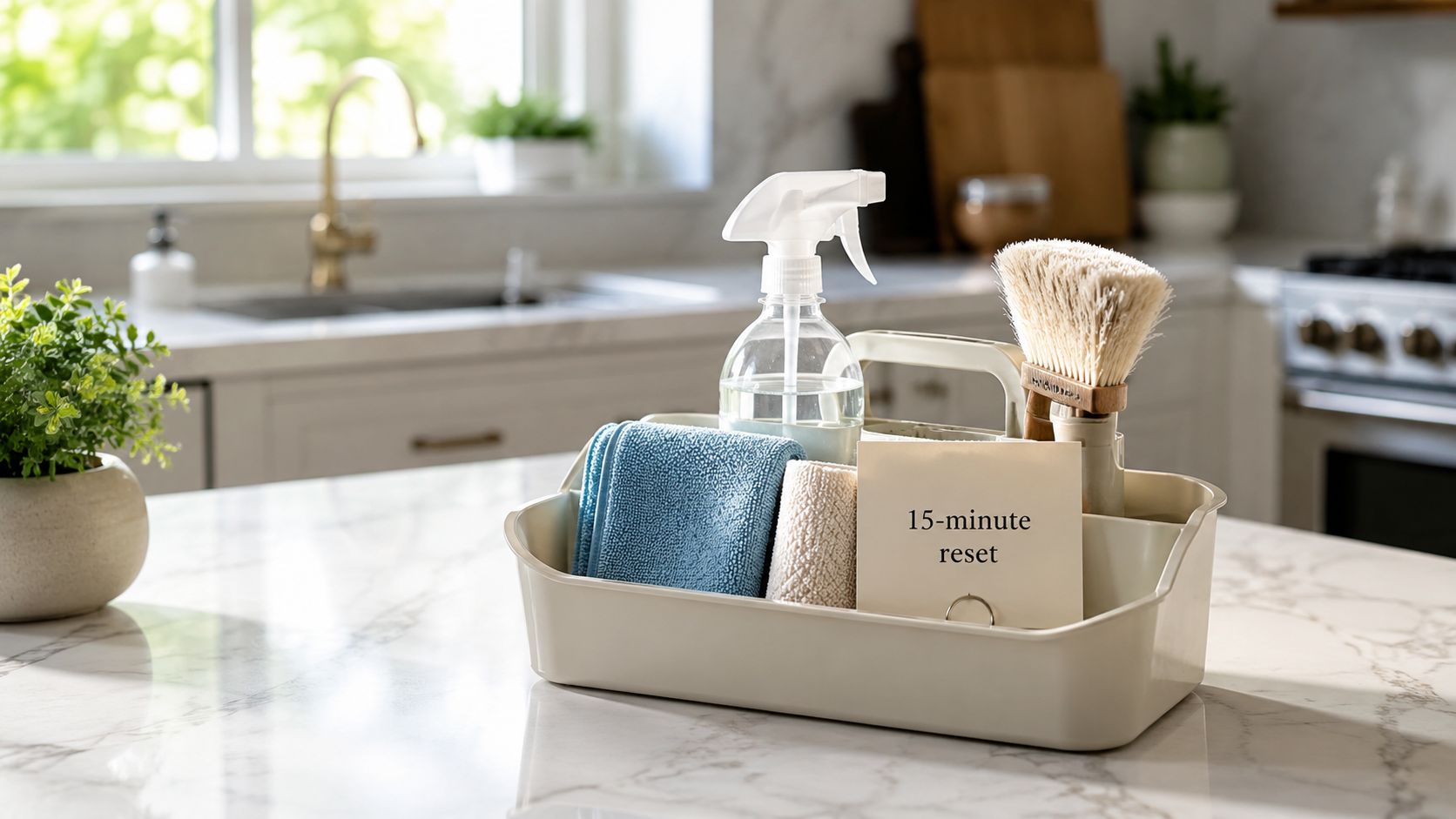
The secret to a consistently clean home isn't more effort—it's smarter task batching. When you group similar chores together, you avoid the mental gear-shifting that kills momentum. For example, wipe all surfaces at once, then tackle all floors, then switch to laundry. Each session is more efficient because you're already in the zone. This method helps you keep the area clean without dreading a weekend overhaul.
Pick two high-impact zones daily and cap your time at 15–20 minutes each. This tight window forces you to focus on what actually matters and prevents perfectionism from taking over. A simple rhythm like "bathrooms on Tuesdays" and "vacuuming on Thursdays" is effective because it's realistic and sustainable.
The Daily Reset That Actually Works
A 15-minute nightly reset is crucial for stopping small messes from snowballing into weekend projects. Focus on visible surfaces, do a quick disinfection of high-touch spots, and spend five minutes rounding up shoes or toys near the door. This simple routine keeps entryways and counters manageable and makes mornings feel less chaotic.
- Clear kitchen counters after dinner before crumbs harden and become difficult to remove.
- Wipe down door handles and light switches, which are hotspots for germs.
- Return stray items to their proper homes for instant visual relief.
From my professional experience, I can confidently say: "A tiny nightly routine keeps a house feeling clean all week."
Create a Floor-Based Cleaning Caddy
To make cleaning more convenient, stash a portable caddy on every floor of your home. This eliminates the need to hunt for supplies, making it easier to stick to your routine. Load it with a multipurpose cleaner, microfiber cloths, disposable gloves, a small scrub brush, and spare trash bags.
Why this works so well:
- Reduces Setup Time: Less setup means you're more likely to follow through with the task.
- Eliminates Excuses: With supplies within arm's reach, the "I'll do it later" excuse is less tempting.
- Stress-Free Maintenance: Unexpected guests or last-minute video calls become stress-free.
Sample Weekly Cleaning Schedule
Life is unpredictable, so your cleaning plan should be flexible. Swap days when needed, but try to keep the total daily cleaning time under 30 minutes. Here’s a flexible HTML template you can adapt to your needs:
| Day of the Week | High-Impact Task (15-20 mins) | Maintenance Task (5-10 mins) |
|---|---|---|
| Monday | Bathroom quick scrub (toilets, sinks) | Replace towels |
| Wednesday | Kitchen surface deep clean (counters, stovetop) | Empty sink completely |
| Friday | Vacuum and mop main living areas | Spot sweep entryway |
This rhythm prevents those massive, exhausting scrubs and helps maintain a steady, manageable momentum.
Practical Tips from Our Experience
- Set recurring calendar reminders labeled "Keep The Area Clean" to make the routine automatic.
- Delegate specific, bite-sized jobs to family members—one person handles trash, another empties the dishwasher.
- Let visual cues guide you: a bare paper towel roll or a full sink signals what needs immediate attention.
Pro Tip: Use a digital checklist app to tick off tasks each day. That small sense of accomplishment can be a powerful motivator to keep the habit alive.
For more detailed scheduling ideas, check out our comprehensive cleaning checklist guide.
Measuring Success and Adjusting Your Plan
Track your cleaning time for two weeks. If your weekly cleaning consistently takes more than 2–3 hours, it may be time to rebalance your task list or consider bringing in professional help on a recurring basis. Remember, small, steady efforts are far more effective than heroic weekend marathons for keeping your area clean long-term.
How to Tackle High-Traffic Zones Like a Pro

The kitchen and your floors quietly dictate whether a home feels under control or on the brink of chaos. The secret isn't a massive weekly overhaul; it's a quick, repeatable routine that keeps surfaces usable and makes it easier to keep the area clean without letting work pile up. Start with a mental checklist you can complete in five minutes after each meal.
As a cleaning expert, I always advise clients to clear counters of dishes and mail first. Then, spray surfaces with a quality multipurpose cleaner and wipe with a microfiber cloth—this makes a huge difference. Emptying or rinsing the sink prevents food residue from hardening and attracting pests. This "clear, clean, reset" loop is the backbone of how professional kitchens maintain sanitation, and it works just as well at home.
Floors require a different strategy depending on the material. Tile can handle more water and a neutral pH cleaner, while hardwood requires a more delicate approach. For hardwood, rely on dry methods like sweeping or vacuuming and use a damp mop with a manufacturer-approved cleaner. Pay special attention to entryways and hallways—these are dirt highways. Trapping grit at the door prevents scratches and worn-down paths.
Here are a few habits that deliver fast results:
- Keep a compact broom and dustpan near the main entry. You’ll be more likely to use it for instant spot sweeps.
- Layer absorbent mats both outside and inside doors. During muddy seasons, this simple step can cut tracked-in moisture and grime by up to 50%.
- Rotate your rugs every few months to ensure even wear and prevent permanent paths from forming in one spot.
An expert tip: "Small, consistent interventions around the door and in the kitchen prevent messes from becoming overwhelming projects."
Real-world examples demonstrate the effectiveness of these routines. I worked with a family in Weston, MA, who had just installed new tile. We established a daily sweeping routine with a weekly pH-neutral cleaner to protect the grout, and it has held up beautifully. For an older hardwood floor in a 1920s Wellesley home, we switched to vacuuming with a soft-brush attachment twice a week and mopping monthly. These small, material-specific tweaks save hours over the year and protect the surfaces—a core principle of professional cleaning.
Convenience is key. Store a lightweight caddy under the sink with wipes, an all-purpose cleaner, and two cloths—one for food zones and one for handles and fixtures. If possible, keep a cordless vacuum near the pantry or mudroom for quick crumb pickups. When the tools are readily available, you're more likely to use them.
For moments when the kitchen needs a full reset, here’s a 10-minute workflow:
- Remove all trash and dishes first.
- Wipe down counters and appliance fronts.
- Rinse the sink and dry the fixtures to prevent water spots.
- Spot-sweep the floor and flip or replace the entry mats.
To learn more about choosing resilient surfaces, read our guide on the best flooring for high-traffic areas.
Recent data from house cleaning statistics on rms-cleaning.com shows that kitchens are cleaned an average of 20 times per month, and Americans spend roughly 56 minutes per week just on floor maintenance. You can reclaim much of this time with an efficient system.
The Hidden Health and Mental Benefits of a Tidy Home

A clean home does more than just look nice—it actively supports your physical and mental well-being. By minimizing allergens and germ hotspots, routine cleaning and regular vacuuming can significantly reduce airborne dust and pet dander. For family members with allergies, this translates to easier breathing, fewer missed school days, and less reliance on medication.
Staying on top of cleanliness prevents minor issues from becoming major health concerns. For instance, wiping down door handles and light switches after someone gets sick can drastically lower the risk of spreading illness throughout the household. A quick nightly reset also prevents crumbs and food residue from attracting pests that can carry bacteria.
From a professional standpoint, clean spaces are a first line of defense for household health and comfort.
The right cleaning habits deliver measurable results. Use a microfiber cloth and a quality multipurpose spray to trap and lift particles instead of just pushing them around. Run a HEPA-filter vacuum on carpets twice a week in high-traffic areas. These small, consistent efforts steadily improve your indoor air quality.
Hygiene is also a critical public health issue. Poor sanitation is directly linked to diseases like cholera, dysentery, and typhoid. As such, property owners and managers have a responsibility to maintain hygienic spaces to mitigate biological risks. For more information, refer to the World Health Organization's sanitation guidance.
There's a strong mental health component as well. Clutter is known to increase stress levels and hinder focus, whereas a decluttered space promotes a sense of calm and productivity. Try setting a timer for a 15-minute evening reset to clear counters and put items back in their place. You'll likely notice a reduction in anxiety and an improvement in focus the very next morning.
Actionable Health & Safety Checklist
- Wipe high-touch points daily with a disinfectant.
- Run a HEPA vacuum over high-traffic rugs twice weekly.
- Launder bedding and towels weekly on a hot setting.
- Keep a stocked cleaning caddy on each floor to save time and encourage consistency.
When to Call the Professionals
If your schedule makes it difficult to keep up with these routines, hiring a professional for recurring cleaning can restore a healthy baseline and give you back valuable hours each month. Contact Sunny Day Pro Services for an estimate to keep your space clean without the added stress.
When Should You Call in a Professional Cleaning Service?
Life gets hectic, and recognizing when to bring in a professional can save you both time and stress. Whether you're preparing for a big dinner party or an open house, letting experts handle the heavy lifting allows you to enjoy your own event without the frantic last-minute scrubbing.
Post-Renovation Clean-Up
Post-renovation messes are a clear trigger for professional help. For instance, after a tile installation in Needham, MA, grout haze and fine dust inevitably settle into corners and air vents. A dedicated post-construction clean safely removes this debris and protects your HVAC system in a way that routine sweeping cannot.
Routine Maintenance vs. Deep Cleans
It’s also important to understand the difference between routine upkeep and a deep clean. Regular visits keep daily chaos in check by handling tasks like dusting, vacuuming, and wiping down bathrooms, preventing small issues from snowballing.
Deep cleans, on the other hand, tackle hidden buildup in areas like baseboards, oven interiors, and grout lines. These jobs are performed less frequently but require specialized equipment and expertise.
As an expert in the field, I can attest that professional teams not only speed up the process but also use techniques that help your surfaces last longer.
Signs You Need a Professional
Consider hiring help if you notice these practical signs:
- You consistently spend more than 2–3 hours a week cleaning, even with a set routine.
- A recent remodel has left visible dust or debris in vents and grout lines.
- You are facing a move-in or move-out clean to meet strict lease or sale standards.
- Allergies or health concerns require the thorough elimination of allergens.
What to Expect from a Professional Service
Here's what working with a reputable professional service typically looks like:
- An upfront assessment with a clear scope of work and transparent pricing.
- The use of commercial-grade equipment, including HEPA vacuums and professional-strength cleaners.
- Flexible options for eco-friendly products and solid satisfaction guarantees.
We saw the benefits of this firsthand with a homeowner in Weston, MA. After a tile installation, they scheduled a one-off deep clean and experienced a 90% reduction in visible dust, allowing them to get back to normal life much faster.
For a closer look at what these intensive visits involve, check out our guide on Deep Cleaning Services at Sunny Day Pro Services.
If your weekends are disappearing under a mountain of chores, reach out for a no-obligation estimate. Reclaim your free time and let a professional team handle the scrubbing.
Frequently Asked Questions (FAQ) About Home Cleaning
Here are answers to some of the most common questions our team receives from homeowners.
How often should I have my home professionally cleaned?
This really depends on your household's unique needs. Based on my experience working with families in Newton and Wellesley, MA, bi-weekly visits are a popular choice. This frequency keeps things from getting out of hand without feeling excessive. If you are diligent with daily tidying, a monthly deep clean may be sufficient. However, for situations like a move-in, post-renovation cleanup, or a home with kids and pets, we recommend starting with a one-time deep clean and then establishing a maintenance schedule that feels right for you.
What is the best way to keep newly installed tile floors clean?
Daily maintenance is key. Sweep or vacuum every day, as grit is the primary enemy of tile and can scratch the surface. When mopping, use a pH-neutral cleaner and a microfiber mop. Avoid bleach and ammonia, especially near grout, as they can cause it to break down over time. Wipe up spills immediately and use entry mats to minimize tracked-in dirt. These simple habits will make a big difference in the longevity and appearance of your floors.
Are "green" cleaning products as effective as traditional ones?
Absolutely. The eco-friendly formulas available in 2026 have advanced significantly. They are just as effective at cutting through grease and killing germs as conventional products, but without leaving behind harsh chemical residues. They are safe for use around children and pets and are suitable for most surfaces. If anyone in your household has sensitivities, ask your cleaning service about certified green options—you won't have to sacrifice performance.
How can I reduce cleaning time without sacrificing results?
Focus on high-impact areas and integrate short routines into your daily schedule. A 15-minute nightly reset—wiping counters, putting things away—can do wonders. Keep a portable, stocked caddy on each floor to eliminate time spent searching for supplies. Finally, get the entire household involved with small, repeatable tasks. These minor adjustments add up quickly and help keep your home looking put together.
What are the signs that I should call a professional?
If you're spending more than 2–3 hours a week on cleaning and still feel like you're falling behind, it's a clear sign. Other indicators include dealing with post-construction dust, preparing for a move, or needing a level of clean that is difficult to achieve on your own. Professionals bring specialized equipment like HEPA vacuums and grout tools, along with the efficiency that comes from daily experience.
Quick Actionable Takeaways
- Wipe high-touch surfaces daily to reduce germ spread.
- Vacuum high-traffic rugs twice weekly with a HEPA filter vacuum.
- Use pH-neutral solutions on tile and other sensitive flooring.
- Maintain a stocked cleaning caddy on each floor for convenience.
For homeowners in the greater Boston area who want dependable results and flexible scheduling, Sunny Day Pro Services offers free estimates and eco-friendly options to keep your home spotless.
Ready to stop spending your weekends cleaning? Request a free estimate from Sunny Day Pro Services by visiting our website at Sunny Day Pro Services.

