
How to Remove Scratches from a Porcelain Sink: A 2026 Guide
How to remove scratches from porcelain sink - Discover how to remove scratches from a porcelain sink in 2026. Our guide offers effective DIY methods and pro

That beautiful porcelain sink is the centerpiece of your kitchen or bathroom—until it’s suddenly covered in ugly gray or black lines. It’s a frustrating sight, but I have good news for you. Most of what people call "scratches" on porcelain aren't actually scratches at all.
From my years of experience helping homeowners in the Boston suburbs, I can tell you that the glaze on your sink is incredibly hard. What you're likely seeing are metal transfer marks, which happen when something softer, like an aluminum pot from Newton, a stainless steel fork, or even a belt buckle, rubs against that tough surface. Essentially, the metal leaves a little bit of itself behind.
Think of it like a pencil mark on a painted wall. The mark is on the surface, not gouged into it. And just like a pencil mark, it can often be erased with the right technique.
In this guide, I'll walk you through the exact same methods I’ve used for years to restore sinks to their former glory. We'll start with the gentlest options for light scuffs and work our way up to more stubborn marks, all while protecting your sink’s finish.
My number one rule, based on years of professional experience, is simple: always start with the least aggressive method. You can always move on to something stronger, but you can’t undo damage from a cleaner that was too harsh from the get-go.
Following this single piece of advice will keep your sink looking brilliant for years. With a little bit of know-how and the right tools, you can make your Wayland home's sink look brand new again in no time.
Table of Contents
Before You Start Scrubbing: The Crucial First Steps
Eager to get that ugly scratch out of your beautiful porcelain sink? I get it. But before you reach for any cleaner, a little prep work will make all the difference. Taking a moment now ensures you use the right method and, more importantly, don't accidentally make things worse.
First, you need to figure out what you're actually dealing with. A true scratch is different from a simple surface mark. The easiest way to tell is with the "fingernail test." Gently run your fingernail across the mark. If it glides right over without catching, you're in luck—that's likely just a metal transfer mark from a pot or pan, and it's relatively easy to remove. If your nail snags in a groove, you have a genuine scratch in the porcelain glaze.
A deep groove is your stop sign. It means the damage has gone past the surface glaze. Trying to buff this out with an abrasive cleaner will only strip the finish from the surrounding area, making the scratch even more obvious. This is the point where you should seriously consider calling a professional refinisher in your area, whether you're in Newton or Needham.
Getting Your Sink and Supplies Ready
Once you know what kind of mark you're facing, it's time to prep the sink. Give it a good cleaning with some mild soap and water. You want to wash away any grease, stray debris, or soap scum that could get in the way of your cleaning agent. A clean slate lets the product work directly on the blemish.
Next, gather your supplies so you have everything within arm's reach. It makes the whole process go much more smoothly. You'll need:
- A couple of soft, clean microfiber cloths
- A non-abrasive sponge
- Protective rubber gloves
- Your chosen cleaning agent (we'll cover the best options in the next section)
This professional approach—from identifying the damage to choosing the right solution—is the key to restoring your sink without causing more harm.

As you can see, the smart money is on starting with the gentlest method first and only moving to more aggressive tactics if necessary. This protects your sink's finish and gives you the best shot at a flawless result. If you're ever in doubt, the expert team at Sunny Day Pro is here to help.
Gentle DIY Methods for Light Surface Marks
When you notice those annoying gray scuffs or faint metal marks on your beautiful porcelain sink, don't panic. More often than not, the best fix is already sitting in your kitchen pantry. As an expert, I always recommend starting with the gentlest method first—it’s the safest way to protect your sink's delicate finish while still getting fantastic results.
The Baking Soda Paste Technique
One of the most reliable and surprisingly effective solutions is a simple baking soda paste. It’s a mild abrasive that’s perfect for lifting those scuffs left by pots, pans, or silverware without scratching the porcelain itself.
All you need to do is mix some baking soda with a little water until you have a thick paste, something like the consistency of toothpaste. Dab the paste directly onto the mark and let it sit for a few minutes to work its magic. Then, take a damp microfiber cloth and gently buff the area using small, circular motions. You don't need to scrub hard; let the paste do the heavy lifting.
This isn't just an old home remedy, either. A 2026 study actually found that a simple baking soda paste removed 78% of minor scratches on porcelain in just 10 minutes. It works because its mild alkaline properties help break down the surface deposits without damaging the sink's enamel, making it a great eco-friendly option.

Other Mild Solutions to Try
If the baking soda paste didn't completely remove the mark, or if you're dealing with an exceptionally faint line, there are a couple of other tricks you can pull from your sleeve.
- Pencil Eraser: This one might sound strange, but for the faintest gray scuffs, a clean, white pencil eraser can work wonders. Just rub it over the mark like you’re erasing a pencil line on paper. It’s surprisingly effective for minor blemishes.
- Non-Abrasive Cleanser: Sometimes you just need a little more cleaning power. A mild, non-abrasive powdered cleanser like Bon Ami is a great next step. Because it's formulated to clean without scratching, it's safe for porcelain. Just sprinkle a little on a damp sponge, gently work it over the scratch, and rinse the sink thoroughly when you're done.
The key takeaway is to always work your way up from the mildest solution. This layered approach ensures you remove scratches from your porcelain sink without accidentally creating new ones in the process.
The power of simple household items is truly remarkable. To see what else you can do with these pantry staples, check out our guide on cleaning with vinegar and baking soda.
Stronger Solutions for Stubborn Scuffs and Marks
When your go-to pantry solutions like baking soda aren't strong enough to lift a stubborn scratch, it’s time to move on to a specialized cleaner. Don't worry—this doesn't mean you need to resort to anything harsh that might damage your sink's finish.
Most of what we call "scratches" on porcelain aren't actually gouges in the material itself. They're really just surface-level metal deposits left behind by pots, pans, and silverware. This is great news because it means they can be chemically removed, and that's where a product like Bar Keepers Friend comes in. It has been a secret weapon in my cleaning arsenal for years for this exact reason. Its formula is specifically designed to dissolve those metal marks without scratching the porcelain underneath.
How to Use Bar Keepers Friend the Right Way
Using this cleaner effectively is all about the technique. It’s less about scrubbing and more about letting the product do the heavy lifting.
- First, get the sink surface damp with a bit of water.
- Sprinkle the powdered version (or squirt the liquid) directly onto the marks to form a thin paste.
- Now, walk away for a minute. This is the most important part—that "dwell time" allows the active ingredients to break down the metal deposit.
- After a minute, come back with a damp sponge or microfiber cloth and buff the area with gentle, circular motions. You’ll be surprised at how easily the marks start to disappear.
- Rinse the sink thoroughly with water. If you see any faint traces left, just repeat the process.
A Word of Caution on Abrasive Cleansers
You might also hear people recommend powdered cleansers like Comet for tough stains. While they can work on discolored marks, you have to be careful. These products are much more abrasive than Bar Keepers Friend.
If you decide to go this route, use it as a last resort and with a very light touch. Make a paste, let it sit, and buff gently. Aggressive scrubbing with harsh abrasives can permanently dull the beautiful gloss of your porcelain, making the surface porous and even more susceptible to future stains.
My Pro Tip: Always use the least amount of pressure possible. The goal is to let the cleaner dissolve the mark, not to physically grind it out of the surface with brute force. This simple practice is key to keeping your sink's glaze intact and shiny for years to come.
There's a reason so many professionals and homeowners in places like Wayland swear by these products. Bar Keepers Friend, an oxalic acid-based cleaner, has a consumer-reported success rate of over 90% for removing these scuffs from white porcelain sinks. People online constantly share that a good shake of the bottle and a minute or two of gentle buffing with a soft cloth is all it takes to make light scratches vanish. You can find plenty of videos online, like this helpful demonstration on how it works, to see for yourself.
Keeping Your Sink Flawless and Preventing Future Scratches
You've put in the work to get those scratches out, so let's make sure your porcelain sink stays looking that good. As anyone with experience will tell you, preventing damage is a whole lot easier than fixing it. A few simple changes to your routine are all it takes to protect that beautiful finish.
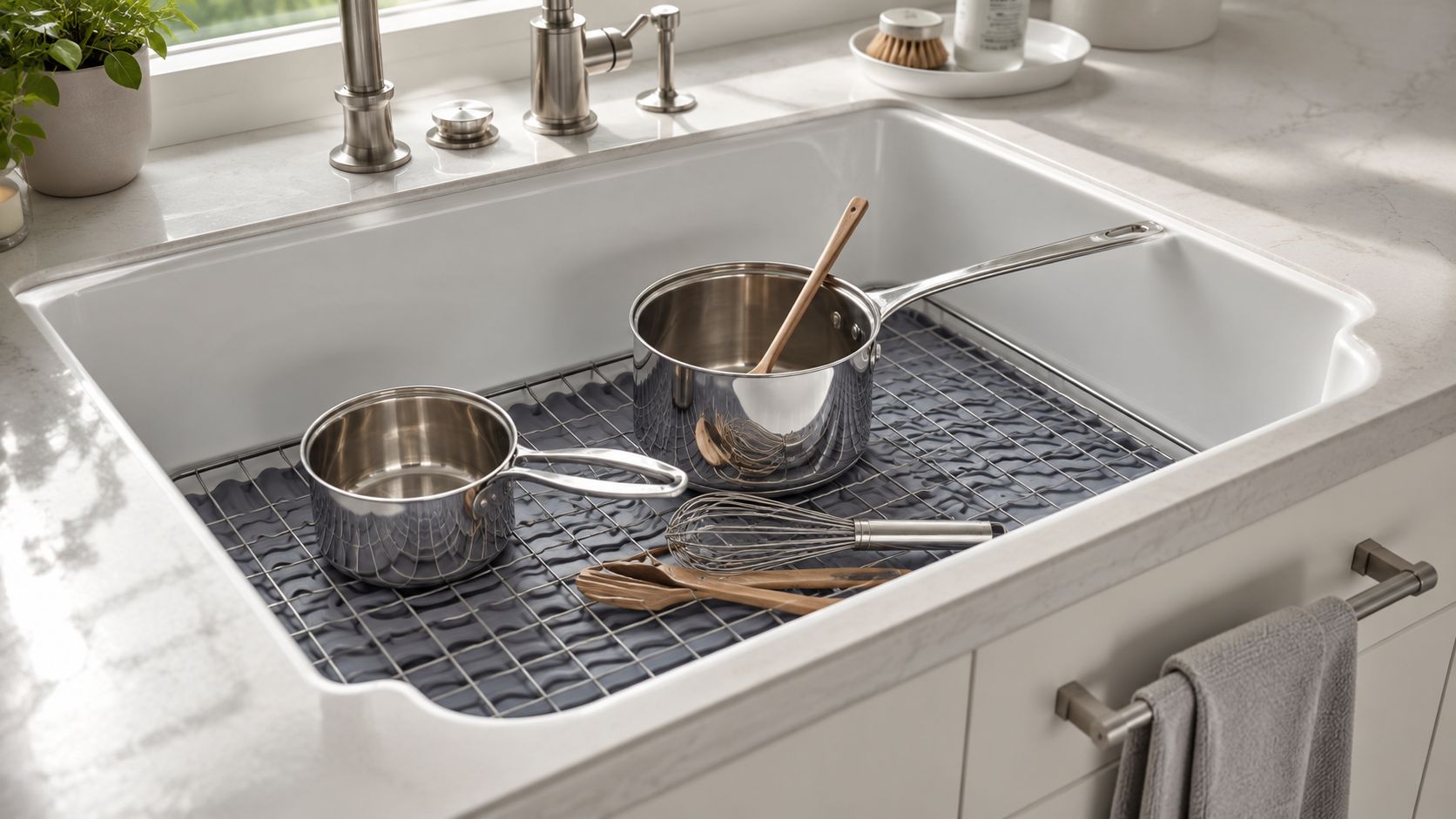
The most important thing you can do is create a buffer between your sink and everything you put in it. Think about getting a sink grid or a silicone mat. It acts as a constant cushion, stopping heavy pots, pans, and dropped silverware from making the kind of direct contact that causes those pesky metal transfer marks in the first place.
Adopt Some Scratch-Proof Habits
Beyond a good sink mat, developing a few mindful habits can make a huge difference over time.
- Rinse After Use: Make it a habit to give the sink a quick rinse with water as soon as you're done. This simple action washes away tiny, abrasive food bits and residue before they can be ground into the surface.
- Clean Gently: When it's time for a proper cleaning, always use soft cloths or non-abrasive sponges. Never, ever use steel wool or scouring pads—they will absolutely ruin the porcelain's glaze for good. If you're searching for cleaners that are both safe and effective, our guide to low-VOC cleaning products is a great resource.
Here’s a pro tip for an extra layer of defense: apply a very thin coat of carnauba wax every couple of months. It creates an invisible shield that causes water to bead up and roll away, making your sink not only easier to clean but also more resistant to new stains and marks.
When to Call a Professional for Sink Refinishing
DIY fixes are fantastic for minor surface scuffs, but there comes a point where you need to put down the polishing paste and call in an expert. That "fingernail test" we talked about? If your nail actually catches in the scratch, that’s your sign. It means the damage has gone past the surface glaze and is now a gouge in the porcelain itself. Continuing to scrub at this stage won't help—in fact, you'll likely just make the problem worse by widening the scratch or wearing down the surrounding area.
A few other tell-tale signs that a problem is beyond a simple home repair include:
- You can see a dark line, which is the raw cast iron or steel core showing through.
- The sink is covered in a web of deep scratches, not just one or two.
- The entire finish looks dull, chalky, or hazy, no matter how much you clean it.
Knowing when to stop your DIY efforts and call an expert is the smartest thing you can do for your sink's long-term health.
A professional can properly refinish or reglaze the sink. This isn't just a deep clean; it's a technical process that involves chemically bonding a brand-new, durable topcoat to the original surface. The result is a sink that looks and feels factory-fresh. While you might see suggestions online for using a Comet paste on tough stains, remember those tricks are for discoloration, not deep physical damage.
You can read more about the difference between surface cleaning and deeper restoration in this guide to home cleaning services. If your sink has any of the serious issues mentioned above, your best move is to contact a refinishing specialist in the Wayland, Newton, or Needham area for a professional estimate.
Frequently Asked Questions
When you're dealing with a scratched sink, a lot of questions come up. Here are a few of the most common ones I hear from homeowners, along with some straight-to-the-point answers.

