
Low VOC Cleaning Products: A Healthier Home Guide for 2026
Discover the best low VOC cleaning products for a healthier home in 2026. Learn about VOCs & find safe cleaners to protect your family's health.
When you see the term "low-VOC cleaning products," what does it really mean? Put simply, these are cleaners made with fewer Volatile Organic Compounds (VOCs)—chemicals that easily turn into invisible gases at room temperature. Choosing them is one of the most practical steps you can take to improve the air quality inside your home and protect your family’s health.
Table of Contents
- Are "plant-based" cleaners always low in VOCs?
- Can low-VOC products actually disinfect my home?
- Do low-VOC cleaners cost more?
- What is the easiest way to improve air quality while cleaning?
What Are VOCs and Why Do They Matter for Your Home?
Have you ever used an aerosol spray cleaner and noticed that lingering chemical smell? Think of it like setting off a tiny, invisible bomb in your home. The spray itself vanishes in a moment, but those microscopic particles—Volatile Organic Compounds (VOCs)—don't. They hang in the air, becoming part of the atmosphere you and your family breathe long after you've wiped the counter clean.
This isn't some minor detail. The Environmental Protection Agency (EPA) has consistently found that indoor air can be two to five times more polluted than the air outside. A huge reason for this is the everyday products we bring into our homes, and powerful cleaning agents are some of the biggest culprits.
The Immediate Health Connection
So what does this invisible pollution actually feel like? If you've ever gotten a headache while scrubbing the bathroom or felt a wave of dizziness after using a strong oven cleaner, you’ve experienced the direct impact of VOCs.
When these chemicals are released in a closed space, they can trigger a whole list of uncomfortable, short-term reactions:
- Headaches and lightheadedness
- Irritation in your nose, throat, and eyes
- Worsening symptoms for anyone with asthma or allergies
- Nausea and general fatigue
These are signs that your body is reacting to chemical irritants in the air. For the most vulnerable members of your household—like children, pets, or family members with respiratory issues—the effects can be even more immediate and severe. Plus, studies have linked consistent exposure to certain VOCs with more serious, long-term health problems.

The tricky part is that we often associate a strong fragrance with cleanliness. In reality, that sharp, chemical "clean" smell is usually a red flag for polluted air, not a hygienic home.
The Spike in Airborne Chemicals
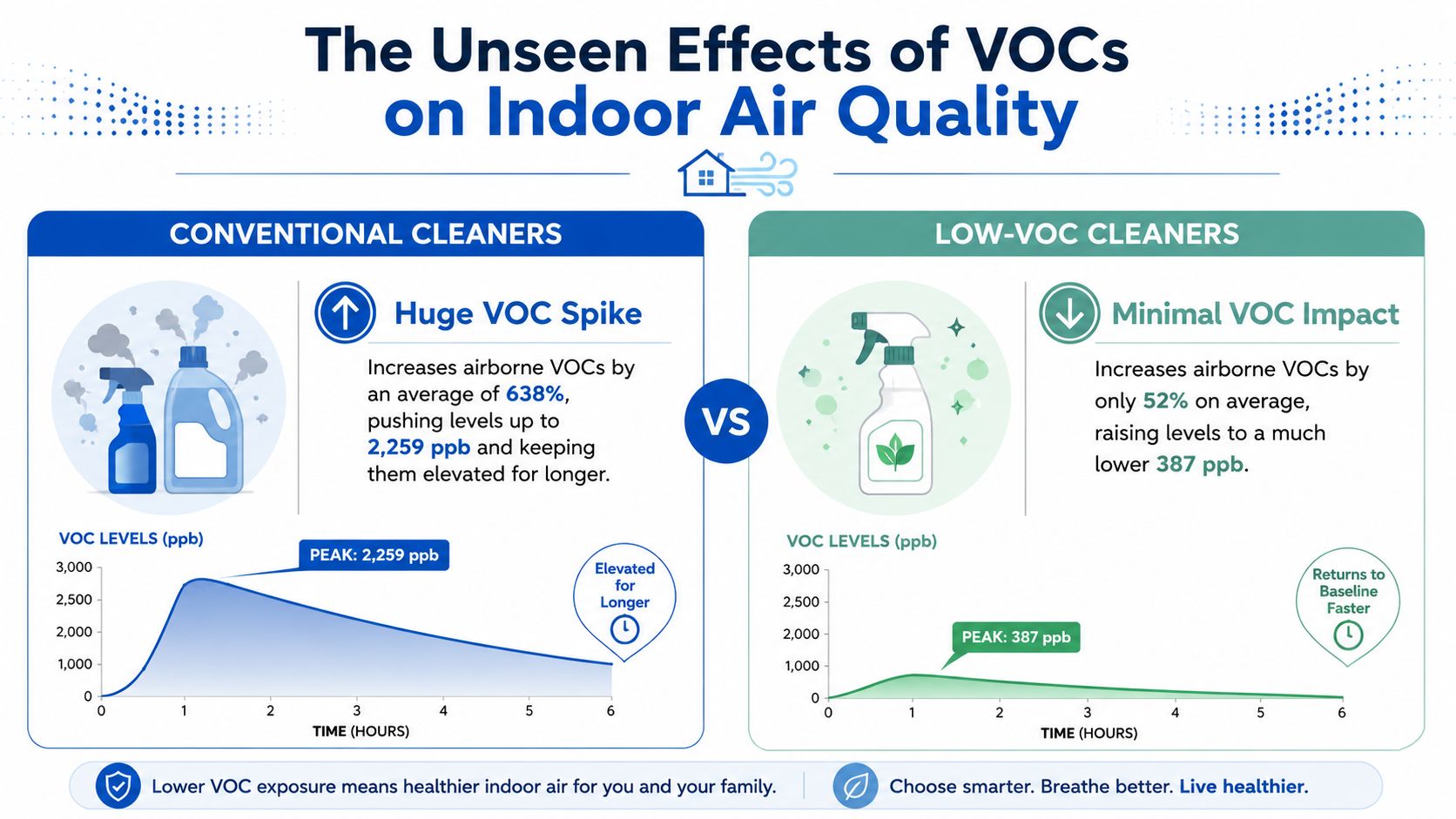
The difference between conventional and low-VOC cleaning products isn't just theoretical; you can see it in the data. Routine cleaning with standard products causes a dramatic and immediate spike in airborne chemicals.
A field test really brought this to light. When using non-green cleaners, the level of VOCs in the air shot up by an average of 638%, pushing the air quality into a range considered unhealthy. In stark contrast, green, low-VOC alternatives only caused a 52% increase. The study also found the chemical spike from conventional cleaners stuck around for much longer, meaning your air quality stays poor well after you’ve put the bottle away.
You can learn more about how your product choice impacts your home's air quality and see the data for yourself. It’s clear proof that the invisible threat is real, and making a simple switch in your cleaning supplies is one of the most powerful things you can do to protect the air inside your home.
How to Spot Genuinely Low-VOC Cleaning Products
Ready to become a smarter shopper? Walking down the cleaning aisle can feel overwhelming. Labels shout terms like "natural" and "eco-friendly," but what do they really mean? Unfortunately, not much. These words are often just marketing fluff, a practice known as "greenwashing," and they don't guarantee a product is actually low in harmful VOCs.
To find products that are truly healthier for your home, you need to look past the splashy front-of-bottle claims and become a label detective. The most reliable way to do this is to look for third-party certifications. Think of these seals as a background check for your cleaner. They're not just pretty logos; they are proof that an independent organization has rigorously tested the product's formula and verified it meets strict health and safety standards.
Decoding Cleaning Product Labels
Marketing language can be intentionally confusing. This table will help you separate the vague, unregulated claims from the signals you can actually trust.
| What You See (Marketing Term) | What It Often Means | What to Look for Instead (Trusted Signal) |
|---|---|---|
| "Natural" or "Plant-Based" | Ingredients might originate from nature but can still be heavily processed or be high-VOC irritants themselves. | A full, transparent ingredient list and a recognized certification like EPA Safer Choice. |
| "Eco-Friendly" or "Green" | This is a vague, unregulated term. It could refer to anything from a recyclable bottle to a company's unrelated environmental pledge. | Specifics like "biodegradable" or "septic-safe," ideally backed by a Green Seal or ECOLOGO certification. |
| "Chemical-Free" | This is pure marketing and scientifically impossible—everything, including water, is a chemical. | Clear statements like "fragrance-free," "dye-free," "no added phthalates," or "no chlorine bleach." |
Looking for those trusted signals is the surest way to bring a safer product into your home and avoid being misled by clever marketing.
Look for Trusted Certifications
The gold standard for identifying a genuinely low-VOC cleaning product is a handful of key certifications. When you're shopping, keep an eye out for these logos on the packaging:
- EPA Safer Choice: This seal from the U.S. Environmental Protection Agency confirms that every single ingredient has been reviewed for its effects on human health and the environment. It's a clear sign you're getting a safer alternative. You can learn more about the EPA Safer Choice program.
- Green Seal: As one of the original eco-labels, Green Seal certifies that products meet a high bar for performance, health, and sustainability, including strict limits on VOCs.
- ECOLOGO: This certification means a product has passed scientific testing to comply with stringent environmental performance standards. It’s another excellent indicator of a healthier choice.
The difference these products make for your indoor air is dramatic. Just look at how much conventional cleaners can pollute your home compared to their low-VOC counterparts.
Beyond certifications, it's always wise to scan the ingredients. Recent research found that conventional cleaners were responsible for a staggering 75% of the highest VOC emissions measured in homes. What's more, the study also revealed that even some products labeled "green" released a concerning amount of fragrance-related chemicals. This really drives home the point: the safest bet is a product that is not just marketed as natural, but is also certified, fragrance-free, and specifically formulated to be low in VOCs. You can read the full research on cleaner emissions to dig deeper into the science.
Ultimately, the best approach is to focus on what’s not in the bottle. A truly safe product won't contain unnecessary irritants and harsh chemicals, especially artificial fragrances, which are notorious sources of VOCs.
Choosing the Right Low-VOC Cleaner for Every Surface
Just because a cleaner is labeled "low-VOC" doesn't mean it's a one-size-fits-all solution for your home. We've seen firsthand how using the wrong product—even a natural one—can cause irreversible damage to beautiful, expensive finishes. It’s like using a hammer to turn a screw; you need the right tool for the job.
The real secret lies in understanding the cleaner's pH level. A highly acidic product, maybe one with vinegar or citrus oils, can be fantastic for cutting through hard water spots on glass. But use that same cleaner on natural stone like marble or travertine, and you’ll find it can etch and permanently dull the surface. Conversely, a highly alkaline cleaner might strip the protective finish right off your hardwood floors.
Matching Cleaners to Surfaces
Protecting your investment means choosing a low-VOC product that is both healthy for your family and safe for your home's materials. Here's a quick guide to help you make the right choice for common surfaces we see in homes all over the Boston area:
- For Granite and Marble Countertops: Always, always stick to pH-neutral cleaners. These gentle formulas are designed to clean effectively without compromising the sealant or the stone itself. Keep anything acidic far away.
- For Hardwood Floors: Look for a pH-neutral cleaner made specifically for sealed wood floors. This will lift dirt and grime without stripping the polyurethane finish that guards the wood.
- For Tile and Grout: A simple pH-neutral cleaner works perfectly for routine cleaning on ceramic and porcelain tile. When you need to tackle stubborn grout stains, a slightly alkaline product with hydrogen peroxide is an excellent low-VOC option.
Pro Tip: When in doubt, always test a new cleaner on a small, hidden spot first. A quick test in a discreet corner can save you from a very costly and heartbreaking mistake, especially on high-end kitchen or bathroom surfaces.
Beyond the Kitchen and Bath
This material-first mindset applies to your entire home. Your stainless steel appliances will look their best with a dedicated low-VOC stainless steel cleaner that won't leave streaks. Your glass and mirrors will shine with a simple, streak-free formula, often one made from plant-derived solvents.
Knowing which products work best takes experience, especially since many homes in areas like Wellesley and Newton feature a unique mix of modern and classic materials. If you’re curious about the specific tools professionals rely on, you might enjoy our guide on building a professional house cleaning supplies list. Ultimately, choosing the right low-VOC product isn't just about avoiding harsh chemicals; it’s about practicing smart, effective home care that preserves the beauty and value of every surface in your home.
Simple and Effective DIY Low-VOC Cleaning Recipes
Going the low-VOC cleaning products route doesn’t mean you’re stuck with store-bought options. If you like to get hands-on, making your own cleaners is a fantastic and budget-friendly way to know exactly what’s going into your formulas. You can get a truly spectacular clean with just a few powerhouse ingredients you probably already have in your pantry.
The best part? These recipes aren't magic; they're just simple chemistry. Understanding what each ingredient does helps you clean your home more effectively and, most importantly, safely.
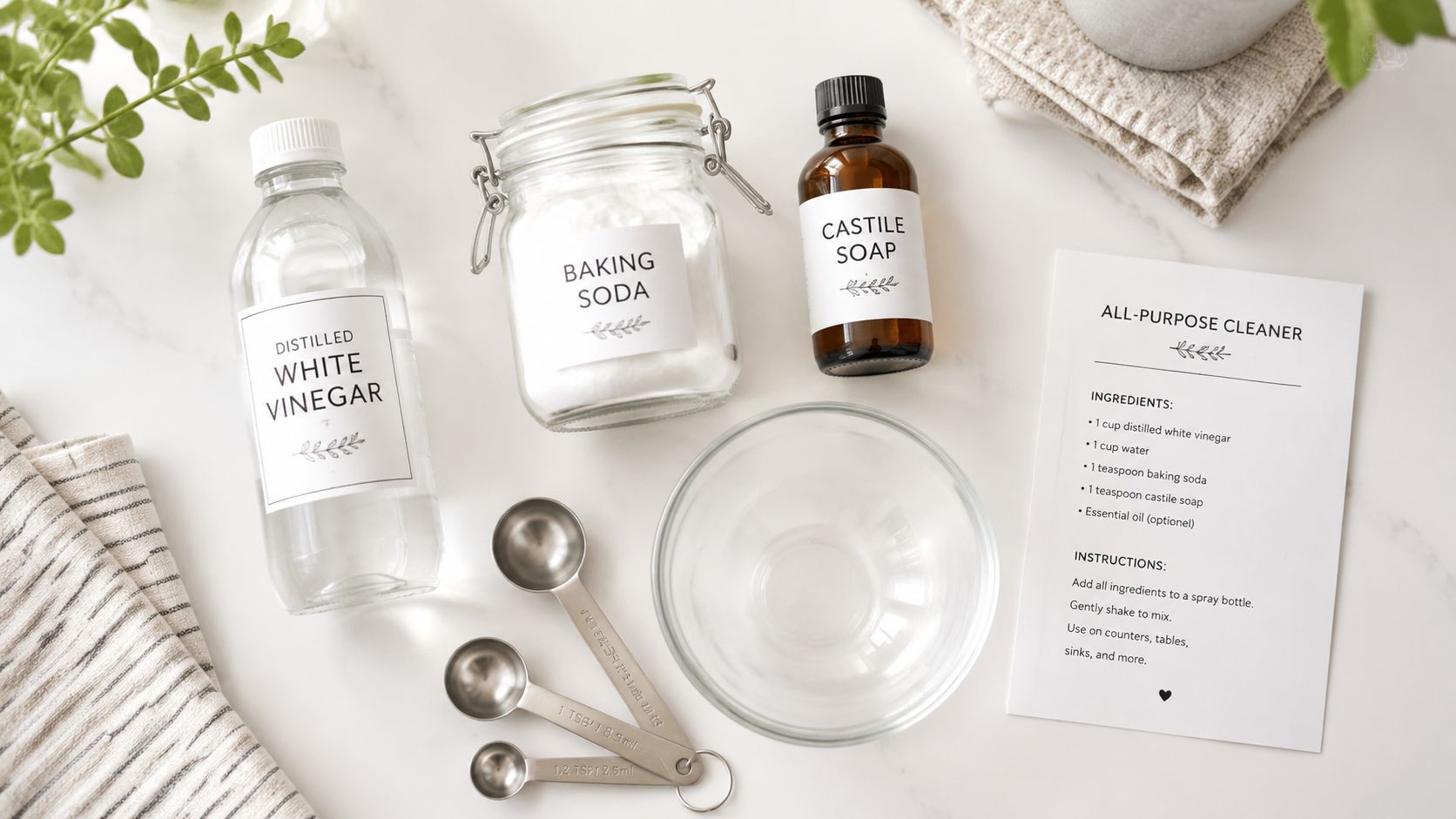
All-Purpose Vinegar Cleaner (Not for Stone!)
This is the absolute workhorse of DIY cleaning. It’s perfect for wiping down countertops (just not stone!), cleaning sinks, and tackling everyday messes. The magic is in the distilled white vinegar, which is a mild acid that cuts right through grime and dissolves hard water spots with ease.
- In a spray bottle, combine one part distilled white vinegar and one part water.
- Give it a gentle shake to mix everything together.
- If you want a nicer scent, toss in a few sprigs of rosemary or some lemon peels and let them infuse for a day or two before you start spraying.
Gentle Scouring Paste
For those tougher jobs, like a greasy stovetop or stubborn soap scum in the shower, this paste offers some scrubbing power without scratching your surfaces. Baking soda is a mild alkali, which makes it brilliant at dissolving greasy messes and absorbing odors.
- To make: Grab a small bowl and mix baking soda with just enough water or liquid castile soap to create a thick paste, like the consistency of frosting.
- To use: Spread the paste on the surface, let it sit for about 5-10 minutes to do its work, then scrub with a damp sponge and rinse it all away.
A critical safety note: Never mix vinegar and baking soda in a closed container. The chemical reaction creates carbon dioxide gas that can cause the container to burst. And please, never mix vinegar with bleach—this combination creates toxic chlorine gas.
If you find yourself enjoying the process of making your own cleaners, there's a whole world of green cleaning to explore. You can learn more about the principles behind these simple but powerful recipes in our guide to eco-friendly cleaning products.
How a Professional Cleaning Service Makes Your Home Healthier
It’s one thing to know that low-VOC cleaning products are better for your family, but it’s another thing entirely to find the time to research them all. For busy homeowners, sorting through dozens of options and trying to match the right cleaner to every surface can feel like a full-time job.
That’s where a professional service comes in. We don’t just clean your home—we make it a genuinely healthier place to live by being incredibly selective about the products we bring through your door. We exclusively use high-quality, eco-friendly cleaners proven to be effective and low in VOCs, so you can breathe easier.
Putting Expertise into Practice
Our entire approach is built on professional expertise. Every member of our team receives extensive training not just on how to clean, but on the science behind the products they use. They know that a delicate marble vanity requires a gentle, pH-neutral cleaner, while cutting through tough soap scum on bathroom tile calls for a different, yet equally safe, solution.
This knowledge takes the guesswork off your plate and protects your home from accidental damage. You won’t have to spend your time reading confusing labels or worrying if you’re using the right product on your new countertops. We handle every detail with care.
We believe a clean home should feel fresh and rejuvenating, not like a chemical fog. Our goal is to give you that sparkling clean feeling while actively improving your indoor air quality for true peace of mind.
This shift toward healthier cleaning isn't just our philosophy; it's a worldwide movement. The global market for household cleaners was valued at approximately $42 billion in 2023, with a significant and growing portion dedicated to safer, eco-friendly formulas. Research on Statista.com confirms this trend, showing that studies consistently find "green" and fragrance-free products emit far fewer hazardous VOCs than traditional cleaners.
When you work with a professional service, you're bringing in a team of experts dedicated to creating a healthier environment for your family. If you're looking for a top-to-bottom refresh, you might also want to learn about our professional deep cleaning services. Let us show you how clean and healthy your home can truly be.
Frequently Asked Questions About Low-VOC Cleaning Products
As you start making the switch to healthier cleaning, you’re bound to have some questions. That’s a good thing! Being informed is the best way to create a home that's truly safe and healthy. Here are some of the questions we hear most often about low-VOC cleaning products, with straightforward answers from our team.
Are "plant-based" cleaners always low in VOCs?
This is a fantastic question, and the answer surprises a lot of people: not necessarily. Marketing terms like "plant-based" or "natural" aren't regulated, so they don't guarantee a product is free of harsh chemicals.
In fact, some potent natural ingredients, especially essential oils like pine and citrus, are VOCs themselves. While they smell nice, they can be significant respiratory irritants for sensitive people, children, or pets. The real key is to look past the pretty packaging. Search for specific "low-VOC" or "zero-VOC" claims and, more importantly, look for trusted third-party certifications like the EPA Safer Choice program or Green Seal. They mean the product has been independently verified to meet strict health standards.
Can low-VOC products actually disinfect my home?
It’s easy to get "cleaning" and "disinfecting" mixed up, but they're two different jobs. Cleaning is about physically removing germs and dirt from a surface, which is what you need for most day-to-day messes. Many low-VOC products are phenomenal cleaners.
Disinfecting, on the other hand, uses chemicals to kill germs. For those times when you really need to bring out the big guns—like after someone's been sick or on a high-touch doorknob during flu season—you'll want a dedicated disinfectant. The good news is you don't have to resort to bleach. Look for products on the EPA's List N that use gentler active ingredients like hydrogen peroxide, citric acid, or thymol. For everything else, a great low-VOC cleaner is all you need.
Do low-VOC cleaners cost more?
While you can certainly find some pricey boutique brands out there, plenty of excellent low-VOC products are priced right alongside conventional cleaners. You don't have to break the bank to make a healthier choice. And if you want to be incredibly budget-friendly, you can't beat simple DIY recipes using household staples like white vinegar and baking soda.
When you hire a professional service that provides its own low-VOC products, it's helpful to see it not just as a cleaning fee, but as an investment in your family's health and the quality of the air you breathe every single day.
What is the easiest way to improve air quality while cleaning?
This is my favorite tip because it's so simple: ventilation is your best friend. Even when you're using the best low-VOC products on the market, just opening a window or flipping on an exhaust fan makes a huge difference. It gets fresh air circulating and helps clear out any lingering emissions fast.
Another easy trick is to choose pump sprays over aerosol cans. Aerosols blast a fine mist of particles into the air that can hang around for a long time and be easily inhaled. A simple pump spray directs the cleaner right where you need it, keeping your indoor air much clearer.
Ready to enjoy a home that’s both sparkling clean and genuinely healthy, without all the extra work? The experts at Sunny Day Pro Services use vetted, effective low-VOC products to deliver a beautiful result and protect your indoor air quality. Request your free estimate today and let us take care of the details.

