
Is Deep Cleaning Worth It? Costs, Benefits and Timing
Is deep cleaning worth it? See typical costs, time, health and resale benefits, and the situations where a deep clean pays off for busy homeowners.
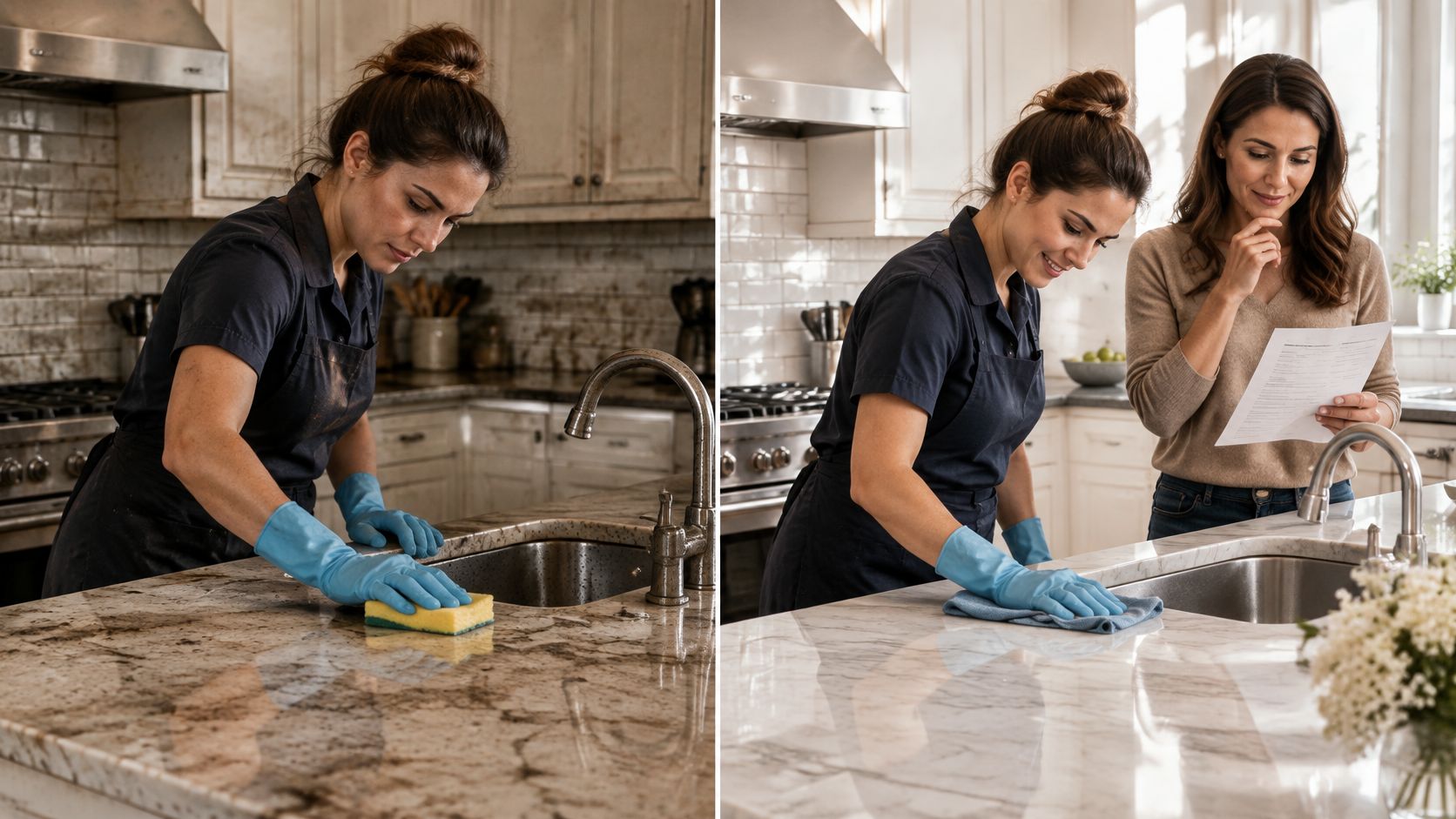
Yes, deep cleaning is worth it for a move-in, move-out, listing, post-construction cleanup, or rental turnover, and usually not as a substitute for regular maintenance in a tidy home with no deadline. That's the opposite of the popular advice to buy the longest checklist twice a year on autopilot.
A deep clean earns its cost when condition, timing, or a handoff is on the line. It doesn't earn its cost because a crew wiped more surfaces than last time. Judge it by what it resets, what deadline it protects, and whether you'll keep the result up afterward. If you're asking is deep cleaning worth it for a home you already clean every week, the honest answer is often no.
Table of Contents
- When Deep Cleaning Is Worth It and When It Isn't
- What a Deep Clean Covers Room by Room
- What Deep Cleaning Costs and How Long It Takes
- Health and Allergy Benefits, and Their Limits
- Resale, Rental and Move-Out Returns on a Deep Clean
- A Break-Even Check for Busy Homeowners and Landlords
- Frequently Asked Questions About Deep Cleaning
- Do I Need to Be Home During a Deep Clean?
- What Should I Clear or Secure Before the Cleaner Arrives?
- Is a Deep Clean Safe With Pets, Children, and People With Asthma?
- What Does a Deep Clean Not Include Unless Requested?
- How Far Ahead Should I Book Before a Listing or Move-In?
- What If Something Is Missed?
- Decide Between One Deep Clean and a Recurring Plan
When Deep Cleaning Is Worth It and When It Isn't
Start with the situation, not the service menu. A home changing hands, a home going to market, and a home covered in construction dust all have one thing in common. Routine cleaning wasn't designed to fix them.
| Situation | Worth it? | Why it pays off |
|---|---|---|
| Move-in or move-out | Yes | Clears what previous occupants left and resets condition |
| Listing or selling | Yes | Removes grime and odors that shape first impressions |
| After construction | Yes | Removes fine dust and residue that routine cleaning misses |
| Rental turnover | Yes | Resets condition between tenants and reduces disputes |
| Allergy or asthma flare | Often | Targets fabrics, carpets and dust reservoirs |
| Household recovering from illness | Often | Disinfects high-touch surfaces after soil is removed |
| Tidy home, no deadline | Usually not | Regular maintenance already keeps grime down |
Read Your Row Honestly
Move-in and move-out work pays because you're not maintaining your own habits. You're removing someone else's grease, hair, and bathroom buildup, then proving the condition at handoff. Listing work pays for a different reason. Buyers read dirty grout and a greasy range hood as neglect, even when the house is structurally sound.
Post-construction dust is its own problem. Fine particles settle on cabinet tops, vents, window tracks, and inside drawers after you think you've wiped them. A detail pass with proper filtration catches what a quick mop redistributes.
Allergy and illness cases are often, not always. The spend counts only when the scope targets the actual reservoirs or touchpoints involved. A shiny kitchen doesn't help a dust-mite problem hiding in mattresses and upholstery.
Practical rule: If no deadline, no handoff, and no neglected area is forcing the decision, spend the money on consistent maintenance instead.
A Two-Question Test
Ask how long grime, allergens, or previous occupants have been in place. Months of buildup in grout, vents, and appliance interiors points to a reset.
Then ask whether a date is fixed. A closing, showing, inspection, or tenant arrival turns hours into risk. If both answers are low, skip it. If either is high, get a scoped quote and test it against the numbers in the sections that follow.
What a Deep Clean Covers Room by Room
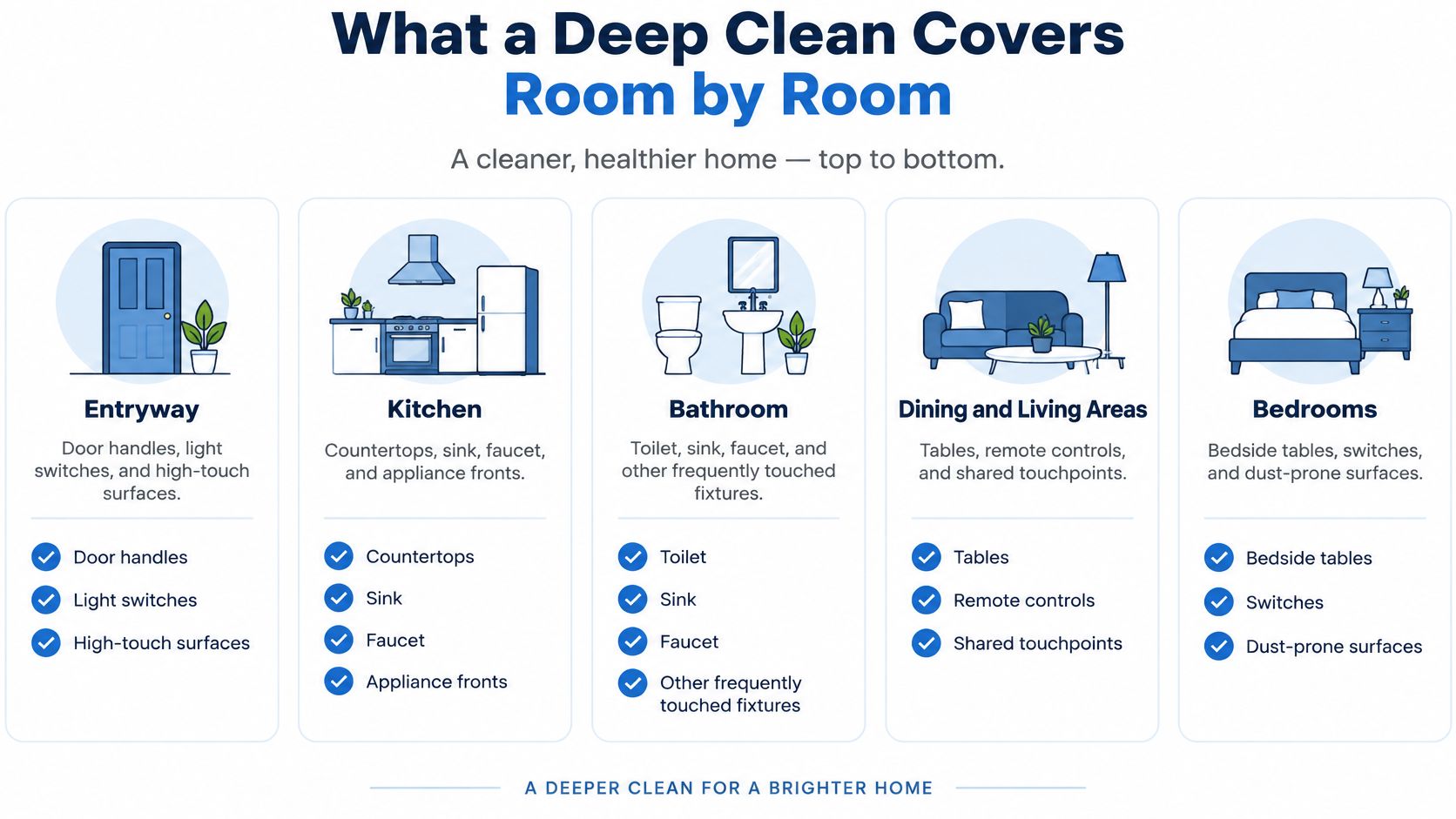
A worthwhile deep clean targets neglected surfaces and high-touch areas first. Start with door handles, light switches, faucets, sinks, toilets, countertops, tables, and shared devices. Clean with soap and water or detergent first, then disinfect only where risk justifies it, because soil left on a surface weakens disinfectant.
Frequency alone doesn't make that work effective. A 2022 review of household hygiene research reported weekly cleaning rates of 95.7% for toilet seats and 77.8% for door handles, yet routine passes still miss grease, allergens, and buildup in low-visibility places. That gap is what you're paying to close.
Kitchen and Bathrooms
- Kitchen detail: Inside the fridge, oven, and microwave, inside cabinets, under and behind appliances, and range hood grease.
- Bathroom detail: Full grout scrubbing, limescale removal, the exhaust fan, behind the toilet, and full tile detail.
- Fixtures and touchpoints: Faucet bases, handles, switches, and sink edges where residue builds unnoticed.
Use a grout brush and an alkaline cleaner on kitchen grease. Use a scale remover suited to the fixture finish in baths, and rinse well. Don't flood grout with bleach and call it restored. Mechanical scrubbing does the bulk of the work.
Bedrooms, Living Areas, and Floors
Bedrooms need under and behind furniture, inside closets, window tracks, ceiling fans, and wall sconces. Living areas need inside bookshelves, under cushions, baseboards, molding, blinds or shutters, and air vents. Ceiling corners, cabinet tops, and door frames finish the high dust line most routine visits skip.
Floors get a full vacuum with a HEPA-filter machine, including edges and under furniture, followed by a solution suited to the floor type. Damp-wipe baseboards and blinds instead of dry dusting, which mostly moves particles into the air.
Your Three-Question Self-Check
Which rooms have gone more than a year without detail work? Which surfaces get hands on them every day? Which areas are neglected, not merely dirty after a busy week?
If you can't name specific neglected areas, you probably don't need this scope. If you can name six, write them into the quote. A generic promise to deep clean everything is how corners get skipped.
What Deep Cleaning Costs and How Long It Takes
Labor drives the price. Detail work inside appliances, on grout, and along baseboards takes hands and time, not special square-footage math. ConsumerAffairs home maintenance cost coverage cites a published comparison estimating about 4.4 cleaner-hours for a standard clean versus roughly six cleaner-hours for a deep clean in a three-bedroom home.
| Measure | Standard clean | Deep clean |
|---|---|---|
| Cleaner-hours, three-bedroom home | About 4.4 | About 6 |
| Hours for a 2,000 to 3,000 sq ft home | About 2 to 4 hours | 3 to 6 hours |
| Typical frequency | Every one to two weeks | Once or twice a year |
| Scope | Visible surfaces, floors, bathrooms and kitchen | Adds appliance interiors, grout, baseboards, vents and ceiling corners |
Why Quotes Spread Out
Condition matters more than size alone. Extra bathrooms, pet hair, heavy limescale, appliance interiors, and listing prep all add cleaner-hours. Two homes with identical floor plans can legitimately price differently if one hasn't had detail work in three years.
Get two or three local quotes and compare each against a written scope. Our guide to reading a cleaning service quote shows what to check line by line. Don't compare a deep clean price against a standard rate. Compare it against the hours it saves and the deadline it protects.
A cheap deep clean that skips grout, vents, and appliance interiors is just a standard clean with a better name.
The same consumer coverage estimates American homeowners spend about $3,360 annually on indoor and outdoor home-maintenance chores, while deep-cleaning appliances alone averaged roughly one hour and about $60 in the cited survey. Use that as context, not a quote.
Doing it yourself costs a full weekend, plus the right tools for grout, vents, and upholstery. You'll likely finish the visible rooms and run out of steam on tracks, fans, and behind appliances. That's exactly where the value was supposed to be.
Health and Allergy Benefits, and Their Limits
More cleaning does not automatically mean better health. That's the assumption to drop first. The strongest case for a deep clean is narrower and more useful. It reduces allergen reservoirs that routine wiping never reaches.
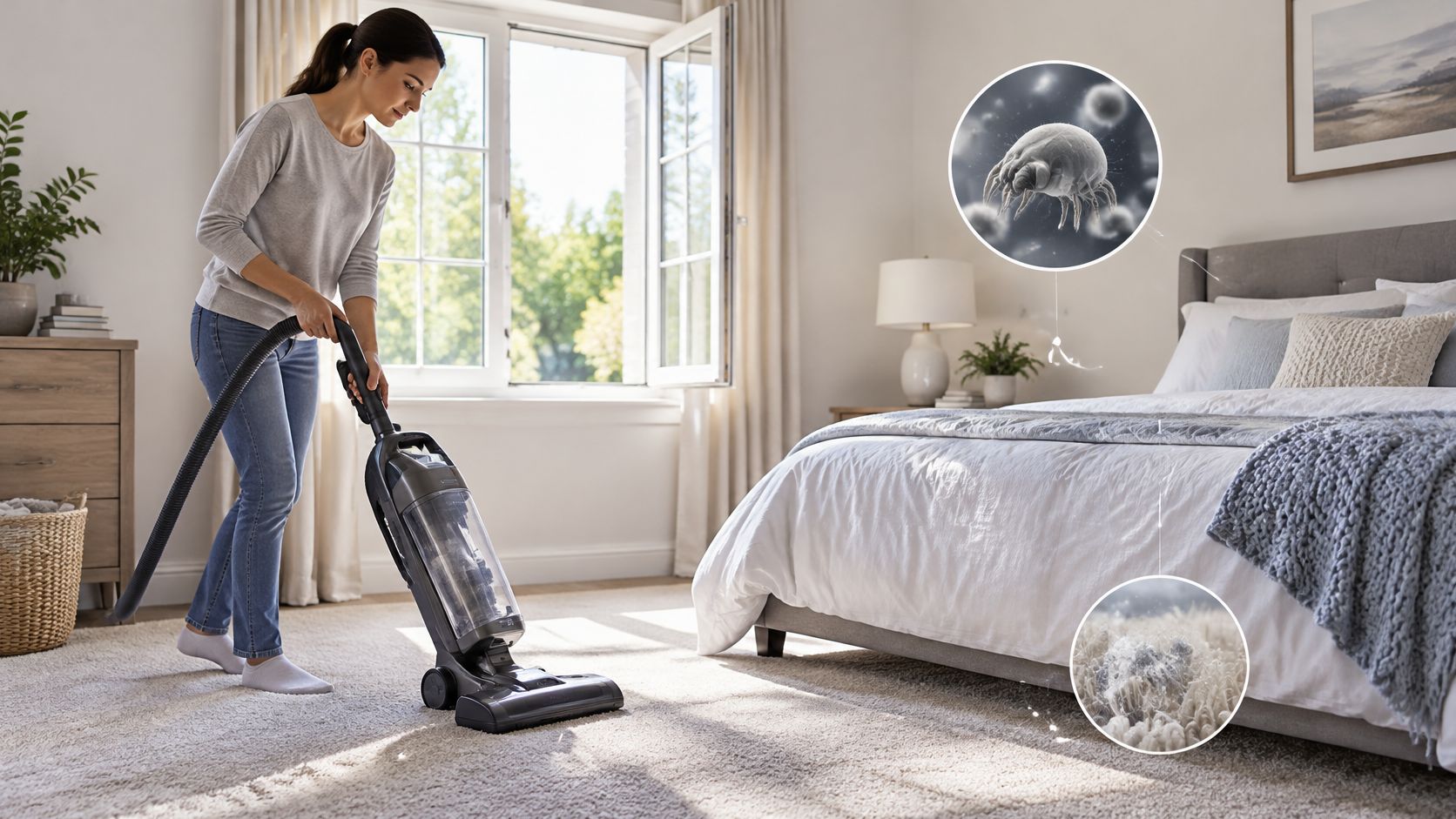
The American Lung Association dust mite guidance reports that roughly four out of five U.S. homes have detectable dust-mite allergen in at least one bed. Mite proteins accumulate in bedding, mattresses, upholstery, carpets, and curtains, then become airborne again when you sit, walk, or make the bed.
What Actually Reduces Exposure
- Wash bedding hot: Hot-wash bedding at a minimum of 120°F weekly.
- Control humidity: Maintain indoor humidity below 50% so mites struggle to thrive.
- Vacuum with filtration: Use a HEPA-filter vacuum on carpets, upholstery, and edges.
- Damp-clean reservoirs: Wipe floors, baseboards, blinds, and shelves with a damp cloth so dust is captured, not scattered.
Removing or containing those reservoirs reduces material available for resuspension and inhalation. It won't eliminate exposure entirely, and any company promising that is overselling. For asthma or dust-mite allergy, insist the scope includes mattresses, upholstery, carpets, and curtains. A bathroom-heavy checklist misses the point.
Where Cleaning Creates Its Own Risk
Vacuuming without good filtration can raise airborne dust during and right after the task. Fragranced sprays and unnecessary disinfectants add chemical exposure without adding benefit on low-risk surfaces. Ventilate rooms, dilute products as directed, and choose targeted products for the soil in front of you.
Don't try to sterilize a house. A normal home doesn't need every surface disinfected, and people with asthma often do worse around heavy spray use. Clean soil off first, disinfect high-touch points when illness is in the house, and respect the product's wet contact time.
Who benefits most? Households managing asthma or dust-mite allergy, and families coming out of a household illness. Everyone else should buy a deep clean for condition and timing, not for dramatic health promises no one can verify in your living room.
Resale, Rental and Move-Out Returns on a Deep Clean
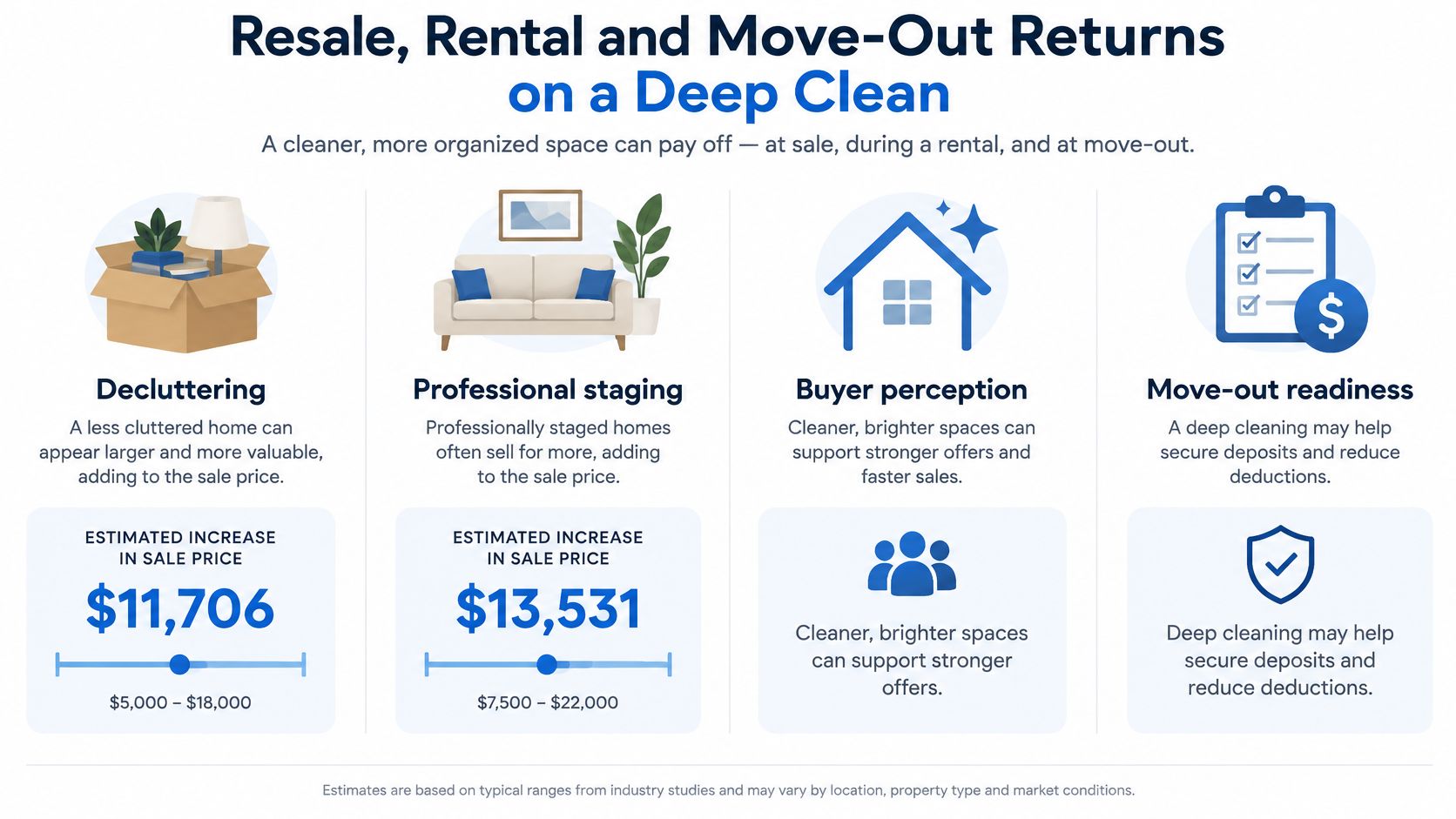
A deep clean can improve how a home presents, but it cannot guarantee a higher sale price. A 2025 HomeLight survey of real-estate agents estimated that decluttering could add about $11,706 to a sale price, while professional staging could add approximately $13,477, equivalent to 3.3% of a median-priced $405,300 home.
Timing may be another reason to prepare. In that survey, 34% of agents believed staged homes sold one to two weeks faster than unstaged homes, while 25% reported a potential advantage of three to four weeks. Those figures cover staging and decluttering, not deep cleaning alone.
What Those Figures Don't Prove
The survey does not isolate the effect of cleaning. Repairs, photography, pricing, and local conditions also shape a sale. Don't book a deep clean expecting a guaranteed price increase.
Book it to improve the home's presentation: cleaner listing photos, fewer visible signs of neglect, and a stronger first impression. A grimy window track or stale odor can distract buyers from the property itself.
What Buyers, Agents, and Tenants Notice First
- Appliance interiors: A dirty oven can suggest that routine upkeep has been missed.
- Grout and tile: Dark grout lines can look like permanent damage, even when they are cleanable.
- Baseboards and window tracks: Dust and grime in these edges make a room look unfinished.
- Odor at entry: A stale smell shapes a visitor's first impression.
For rentals, a clear record of condition at turnover can help document what changed between tenants. Landlords can use this guide to move-out cleaning costs to budget for a turnover. When moving into a previously occupied home, a move-in clean starts fresh, including inside appliances and cabinets and sanitizing surfaces previous owners touched.
A deep clean also makes sense before listing or selling, after a large event, for spring cleaning, and before starting a recurring plan. The dependable return is a cleaner, better-presented home. Any increase in sale price is uncertain.
A Break-Even Check for Busy Homeowners and Landlords
Run the math on time and deadline risk, not on how dirty the house feels. The U.S. Bureau of Labor Statistics American Time Use Survey reported that 81% of people engaged in household activities on an average day and spent about 2 hours on them. An intensive project doesn't fit neatly into that budget.
Five Steps, One Decision
- Write the hard deadline. Showing on Saturday, closing on Friday, tenant moving in Monday. No date means lower urgency.
- Estimate your own hours. Include setup, equipment, a second pass on grout and glass, and drying time. It's easy to undercount by half.
- Value those hours. Use what you'd bill, what overtime costs you, or what a lost weekend before a move is worth to your family.
- Add delay cost. Price one week of vacancy, one postponed listing weekend, or one failed move-out inspection and re-clean.
- Compare the quote to steps three and four combined. If the quote is lower, booking is the rational choice, not a luxury.
Worked example: Say a rental sits empty while you spend a weekend self-cleaning and still miss appliance interiors and tracks. One lost week of rent plus a paid touch-up clean usually outweighs the original professional quote.
Booking wins when the deadline is fixed and your hours are scarce. Property managers turning multiple units shouldn't be scrubbing ovens at all. Their time belongs in inspections, photos, and leasing.
Doing it yourself wins when the job is small, the home is already maintained, and no date punishes a slow finish. A single bathroom refresh on a free Saturday is sensible. A whole-house reset the week of a closing isn't.
One caution on skill. Wrong chemicals can etch stone, dull fixtures, and strip floor finish. If the home has marble, specialty tile, or heavy scale, factor potential damage into the DIY side of the ledger.
Frequently Asked Questions About Deep Cleaning
Do I Need to Be Home During a Deep Clean?
You do not have to stay. Share your entry arrangements and the best way to reach you during the visit. Be reachable for questions about fragile items, alarms, or rooms that should come first if time runs short.
What Should I Clear or Secure Before the Cleaner Arrives?
Put away personal papers, valuables, medications, and small breakables. Clear counters and floors where you can. Secure pets in a closed room or take them off site so doors can stay open. A team cannot detail a surface that is buried under mail and chargers.
Is a Deep Clean Safe With Pets, Children, and People With Asthma?
Tell us about asthma, pets, or sensitivities before booking so the scope can be planned. Who will be in the house that day changes what belongs on the visit. Raise a breathing issue or a pet that cannot be moved before the date is set, not when the team is already inside.
What Does a Deep Clean Not Include Unless Requested?
Confirm the exact scope in your written quote before the visit, not on arrival day. If a task is not on that quote, it is not part of the job. Add any extra in writing when you reserve the slot. Finding a missing room on listing morning is a timing failure, not a last-minute favor.
How Far Ahead Should I Book Before a Listing or Move-In?
Book backward from the deadline and leave a buffer day for touch-ups, photos, or inspection. Listing and closing weeks fill fast, so reserve the slot when you set the date. A thorough clean booked the morning of a showing still misses the open house.
What If Something Is Missed?
Ask before you book and get the policy in writing. If anything is missed in a deep clean, Sunny Day Pro Services comes back at no charge. Walk the home promptly and report specifics, room by room.
Decide Between One Deep Clean and a Recurring Plan
The decision rule is simple. Buy a deep clean to reset condition, and buy recurring cleaning to keep dust and grime from rebuilding. A longer checklist doesn't make one visit a maintenance strategy.
Frequency and targeting matter more than drama. A peer-reviewed study summarized in an NIH review on household cleaning and respiratory symptoms found cleaning a home fewer than twice weekly was associated with higher odds of cough, with an OR of 2.97 and 95% CI 1.36 to 6.75. A randomized trial in that review found daily vacuuming reduced dust weight and allergic-rhinitis symptoms among children sensitized to dust mites, although allergen concentration did not significantly fall.
That evidence points to a practical sequence for Massachusetts homeowners. Book a one-time or seasonal reset for moves, sales, and post-construction cleanup. Then hold the result with recurring visits focused on floors, baths, kitchens, and dust reservoirs.
Most of our clients get a deep clean once or twice a year, often in spring and fall. Many start with a deep clean and then switch to recurring bi-weekly maintenance visits. If you're unsure about cadence, our guide on how often you should deep clean your house walks through the schedule by household type.
Don't buy a second deep clean three months later to fix skipped maintenance. That's the expensive way to stay in the same place. Reset once, maintain consistently, and save the next deep clean for a real transition.
We serve Wayland, Newton, Needham, Wellesley, and Weston. Tell us your deadline, your neglected areas, and whether anyone in the home has asthma or allergies. We'll scope the work to those facts and quote it plainly.
Request a fast quote from Sunny Day Pro Services for a deep clean scheduled before your listing, closing, move-in, or tenant turnover, with appliance interiors, grout, baseboards, vents, and tracks written into the scope. Tell us your deadline and the areas that worry you most, and we'll confirm timing, products, and price before we arrive.

