
Best Flooring for High Traffic Areas: A 2026 Pro Guide
Discover the best flooring for high traffic areas. Our 2026 guide compares LVP, tile, and laminate for durability, cost, and maintenance in busy homes.
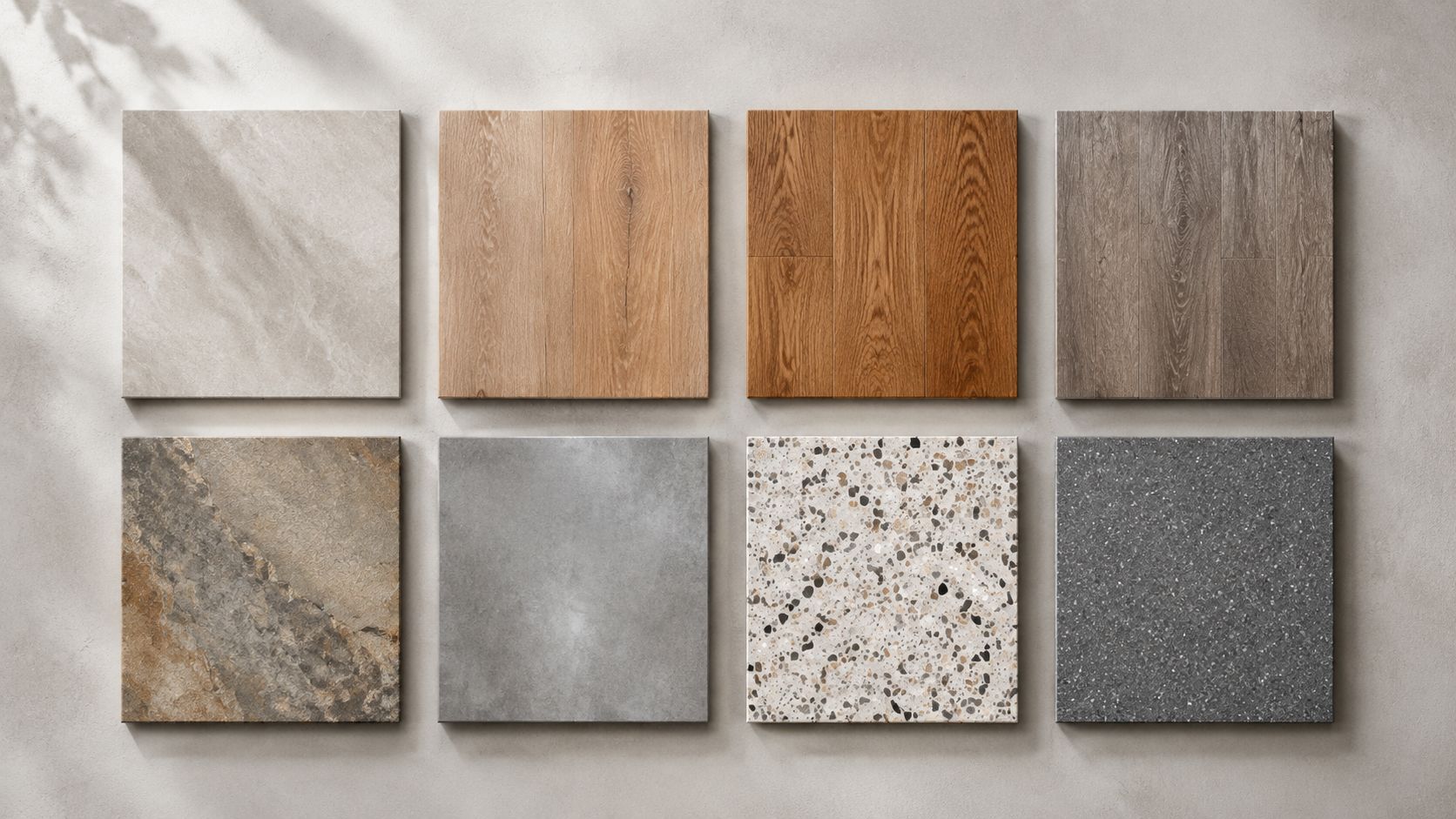
You're probably standing on the problem right now.
The front entry is catching wet boots, road salt, and fine grit from the driveway. The kitchen floor sees dropped pans, dog nails, snack spills, and chairs dragging in and out every day. The hallway gets used like a runway by kids, guests, and pets. In a busy Massachusetts home, a floor doesn't fail all at once. It starts with dull paths, chipped edges, swollen seams, scratched finish, and grout that suddenly looks older than the rest of the room.
Most flooring looks good in a showroom. That's not the ultimate test. The ultimate test is February slush in Needham, sandy shoes after a South Shore beach day, and humidity swings that expose weak materials fast. If you want the best flooring for high traffic areas, you need to think beyond color and style. You need to look at impact resistance, moisture behavior, cleaning burden, and how the floor ages after years of normal family use.
Table of Contents
- Choosing Flooring That Keeps Up with Your Busy Life
- Quick comparison table
- What the ratings mean in real life
- What's the best high traffic flooring for homes with large dogs
- Can durable flooring go over an existing floor
- Which durable floors work with radiant heat
- How do I know if laminate is good enough for a busy home
Choosing Flooring That Keeps Up with Your Busy Life
In this part of Massachusetts, a “high traffic area” usually means more than foot traffic. It means a front door that doubles as a mudroom, grocery bags dropped in the kitchen, a lab skidding around the corner, and kids walking in before anyone has time to say, “Shoes off.” The floor has to handle water, abrasion, impact, and constant cleaning without becoming a maintenance project.
Homeowners often start with appearance, which is understandable. You want the floor to look right with the cabinets, wall color, and trim. But if the material can't tolerate your actual routine, the look won't last. A glossy stone that etches, a wood floor that shows every scratch, or a bargain plank that dents from chair legs will cost more in frustration than it saves upfront.
The best flooring for high traffic areas usually comes down to a few practical questions:
- How much moisture hits the floor: Entryways, kitchens, basements, and mudrooms need materials that won't panic around slush, spills, or wet shoes.
- How much abrasion shows: Sand and grit act like sandpaper. Some floors hide it. Some wear right through.
- How much maintenance you'll tolerate: Sealing, special cleaners, and scratch touch-ups sound manageable until real life gets busy.
- How the floor feels underfoot: Hard surfaces win on durability, but comfort matters in rooms where you stand for long stretches.
The right floor isn't the one with the best showroom sample. It's the one that still looks respectable after winter, pets, guests, and a year of ordinary mess.
High Traffic Flooring Options at a Glance
If you want a short list before diving into the details, start here. Some materials are built for punishment. Others work well only if your household is relatively gentle with them.
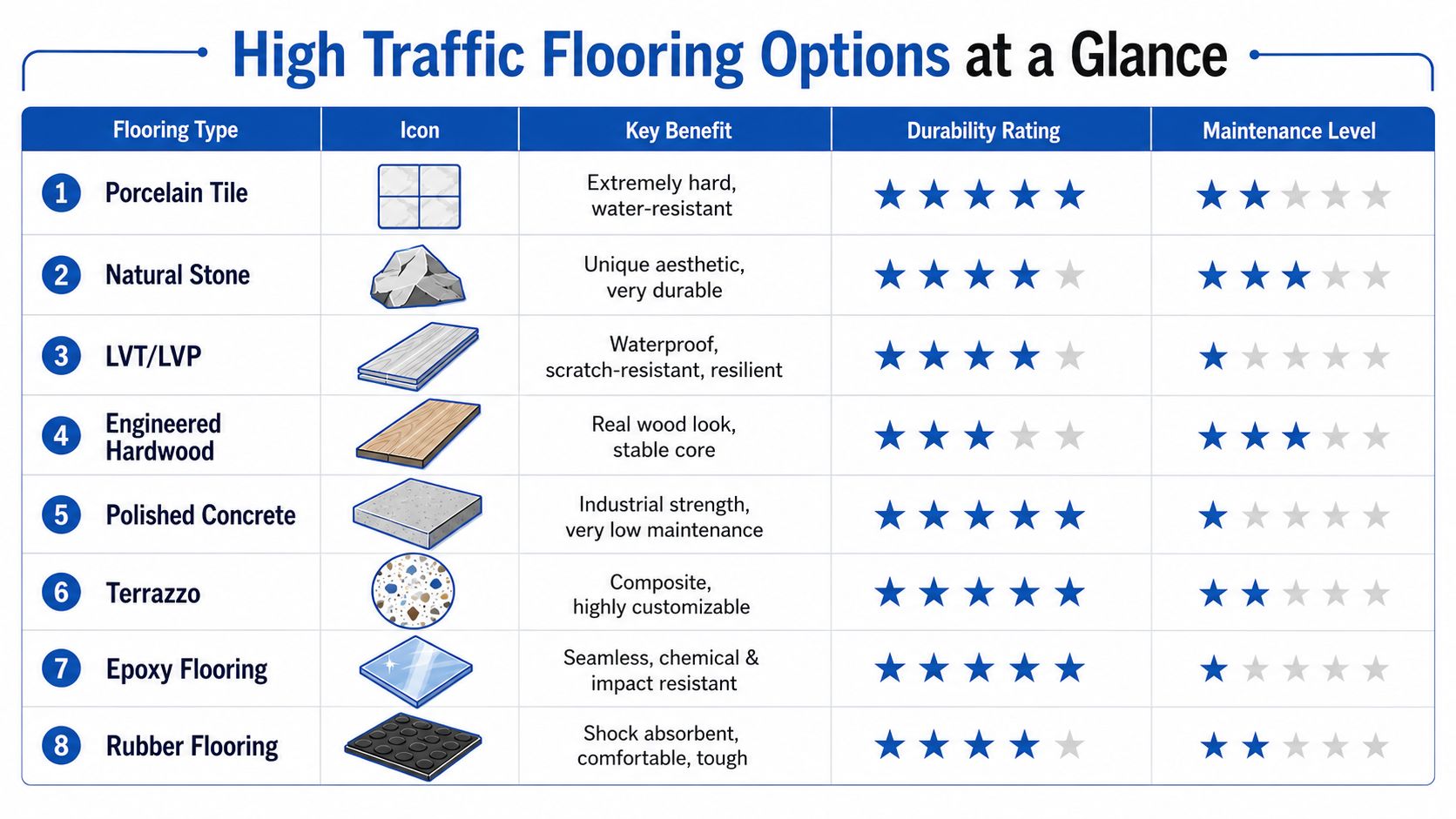
Quick comparison table
| Flooring Type | Durability Rating (1-5) | Avg. Cost / Sq. Ft. (Installed) | Water Resistance | Best For |
|---|---|---|---|---|
| Porcelain or Ceramic Tile | 5 | Varies by product and installation complexity | Excellent | Entryways, kitchens, mudrooms, bathrooms |
| LVP or LVT | 4 | Varies by wear layer and installation method | Excellent | Busy family rooms, kitchens, basements, hallways |
| Laminate | 4 | Usually more budget-friendly than tile or real wood | Moderate to good, depending on product | Hallways, living areas, budget-conscious upgrades |
| Engineered Hardwood | 3 | Typically higher than laminate or standard vinyl | Fair | Main living spaces where real wood matters most |
| Natural Stone | 4 | Usually premium | Varies by stone and sealing | Upscale foyers, kitchens, feature spaces |
| Polished Concrete | 5 | Varies based on slab condition and finish | Good | Basements, modern interiors, utility zones |
| Terrazzo | 5 | Premium | Good | Custom projects, statement floors, modern remodels |
| Commercial Vinyl | 4 | Varies | Excellent | Rental properties, utility-heavy household spaces |
What the ratings mean in real life
At the hard-wearing end, tile, concrete, and terrazzo tolerate heavy use with fewer visible scars. LVP and LVT sit just behind them, and they win points for comfort and moisture resistance. Laminate can also perform well in busy homes, but only if you buy the right grade.
For high-traffic laminate flooring, the industry standard recommends an AC4 or AC5 abrasion class rating, which indicates the material is built to resist damage from children's toys, frequent foot traffic, and heavy household use, making it a serious option for busy areas, according to Royal Floors Online's laminate guidance for high-traffic spaces.
A few practical takeaways matter more than marketing labels:
- Tile wins on hardness: It handles scratches, dents, and water well, but it's harder underfoot.
- Luxury vinyl is the easiest all-arounder: It balances resilience, comfort, and cleanup.
- Laminate is quality-sensitive: Good laminate performs well. Cheap laminate is where many regrets begin.
- Engineered wood is a style-first choice: It brings warmth and real wood character, but it asks for more care in active zones.
The Indestructibles A Deep Dive into Tile and Stone
When homeowners ask for the toughest floor available, the conversation usually starts with porcelain tile. That's for good reason.
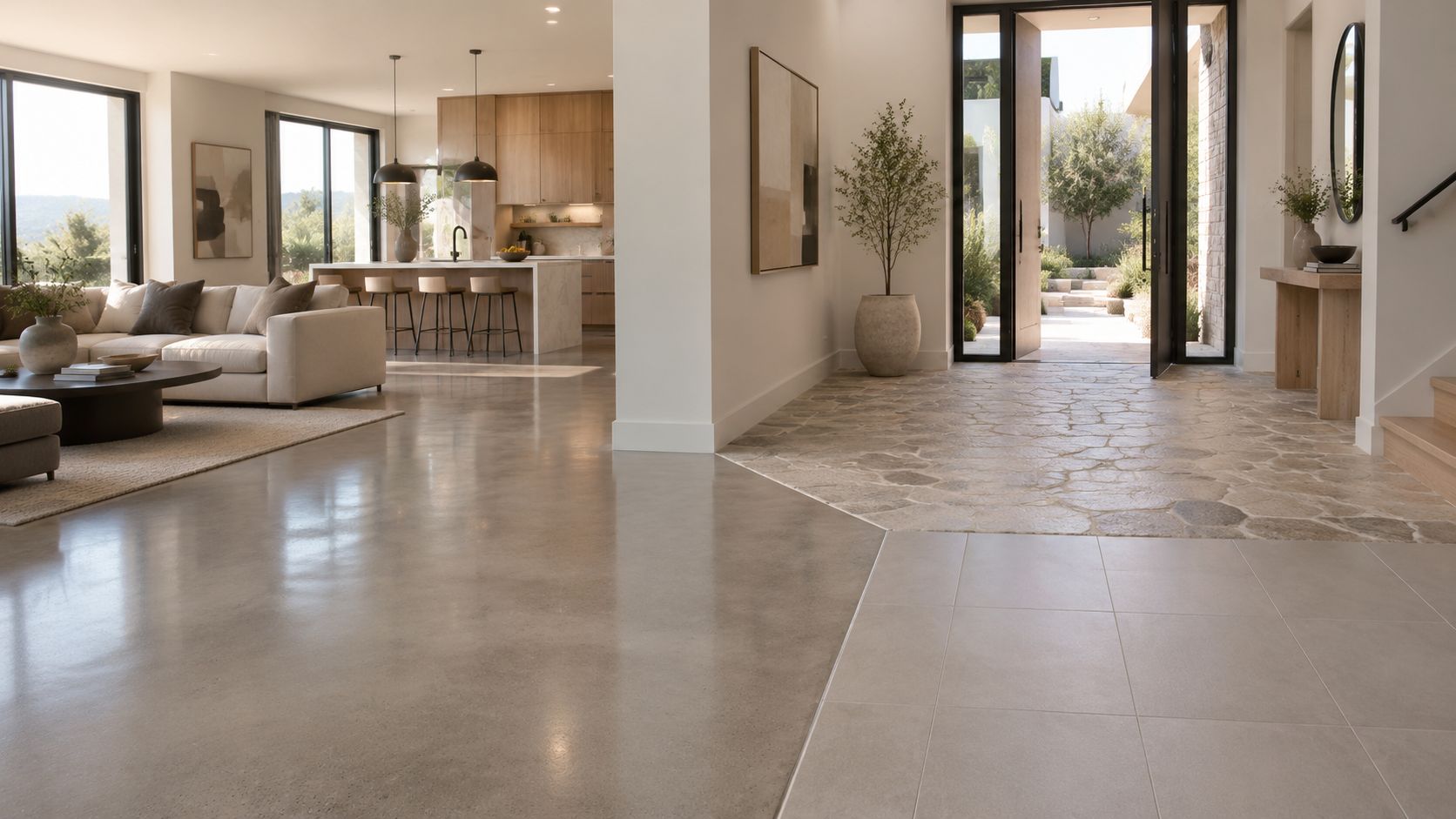
In Consumer Reports flooring durability testing, flooring panels went through hundreds of passes under an abrasive machine, and heavy objects were dropped on them. In that testing, laminate, porcelain tile, and vinyl were identified as the three most resilient flooring types for scratches and dents. That tracks with what installers see in real homes. Properly installed porcelain holds up exceptionally well in kitchens, mudrooms, and hallways that get hammered every day.
Porcelain and ceramic tile
Porcelain is the workhorse. It's dense, water-resistant, and available in everything from stone looks to wood-look planks to large-format modern styles. Ceramic tile can also be a good choice, but porcelain is often the safer pick when the room gets constant use, tracked-in moisture, or dirt.
What homeowners like most about tile is simple. It doesn't scare easily.
- Scratches aren't a constant worry: Pet nails, grit, and chair movement don't usually leave the same visible wear you'd see on wood.
- Water isn't the enemy: Wet boots, cooking spills, and umbrella drips are manageable.
- Cleaning stays straightforward: Routine sweeping and mopping do most of the work.
The weak point in a tile floor usually isn't the tile. It's the installation details. Grout selection matters. Subfloor preparation matters more. A beautiful tile installed over movement, dips, or an underbuilt surface won't perform like it should.
Practical rule: If the substrate moves, the tile system eventually tells on you. Cracks, loose grout, and hollow spots don't come from “bad luck.” They come from prep that got rushed.
Grout deserves honest attention too. Lighter grout can look great, but it shows more soil in active kitchens and entries. Textured tile can improve slip resistance, though heavily textured surfaces may hold onto grime a little more than a smoother matte finish. For many households, matte porcelain with a practical grout color is the sweet spot.
If tile is high on your list, this overview of high-traffic tile flooring options is worth reading before you commit to a style.
Natural stone, terrazzo, and polished concrete
Natural stone brings character that manufactured products still struggle to fully copy. Slate, granite, travertine, marble, and limestone all wear differently, and that difference matters. Some stones are excellent in busy areas. Some are more temperamental, especially if the household is hard on floors or inconsistent with sealing and maintenance.
Stone can absolutely last. But stone asks you to respect what it is: a natural material with pores, variation, and surface sensitivity depending on the type and finish. In a Massachusetts entry, winter salt and grit can be harder on some stones than homeowners expect.
Terrazzo and polished concrete sit in a different category. They're less common in traditional suburban remodels, but they can be outstanding where durability comes first. Polished concrete works especially well in finished basements, modern homes, and utility-minded spaces. Terrazzo is durable and highly customizable, though it's usually a more design-driven investment.
Here's where each tends to fit best:
- Natural stone: Best when you want authenticity, variation, and a premium look, and you're prepared for sealing and material-specific care.
- Polished concrete: Best for modern, low-maintenance spaces where comfort underfoot isn't the top priority.
- Terrazzo: Best for homeowners who want a statement floor with long-term toughness.
Stone is durable. That doesn't mean carefree. The difference matters.
Resilient Realism LVP Laminate and Engineered Wood
A lot of homeowners want the warm, lived-in look of wood but need a floor that behaves better around moisture, pets, and daily abuse. That's where the wood-look surface products come in.
Where LVP earns its reputation
Luxury Vinyl Plank and Luxury Vinyl Tile have become a go-to choice because they solve a lot of common household problems at once. LVP and LVT are identified as waterproof and highly durable, making them preferred options in busy homes where wet shoes, spills, and scratch protection are constant concerns, as noted in this overview of LVP and LVT for active households.
That makes LVP especially practical for:
- Kitchens: You don't need to panic over dropped ice, pet bowls, or routine spills.
- Basements: It handles damp conditions better than wood-based products.
- Hallways and family rooms: It has enough give to feel easier underfoot than tile.
LVP also hides everyday wear well when you choose the right finish. Matte and low-sheen visuals tend to be more forgiving than glossy surfaces. Wider variation in the printed pattern helps too. Repetitive, cheap-looking prints are one of the easiest ways a floor gives itself away.
Laminate and engineered wood trade-offs
Laminate deserves more credit than it sometimes gets. A good laminate floor can be tough, attractive, and cost-conscious. It tends to resist daily abrasion well, and it's often a smart fit for hallways and living spaces that don't get soaked regularly. The problem is inconsistency. There's a huge difference between a properly rated product and the bargain material that looks tired quickly.
Engineered hardwood is the opposite kind of compromise. It offers real wood on the surface, and that matters to homeowners who don't want a printed image of wood. In main living areas, it can be beautiful. But in hard-use zones, you're trading durability for appearance.
Here's the honest ranking for busy households:
- Best for moisture and all-around practicality: LVP
- Best budget option when you choose carefully: Laminate
- Best for authentic wood character: Engineered hardwood
If your entryway regularly sees wet shoes or your kitchen gets daily spills, engineered hardwood usually isn't the floor I'd put there first.
Flooring That Survives a Massachusetts Winter
Generic flooring advice skips the part that matters most in New England. The weather changes the job.
What winter actually does to floors
Road salt, de-icing residue, and fine sand get tracked in together. The sand grinds away at surface finishes. Salt residue can leave a film, and on some natural surfaces it can contribute to dulling or staining if it sits too long. Add repeated freeze-thaw moisture from boots and umbrellas, and weaker flooring starts to show edge wear, staining, or swelling.
Humidity swings matter too. Indoor air gets dry during heating season, then climbs in summer. Wood-based floors react more to those changes than tile or vinyl. That doesn't mean wood products always fail. It means they need the right environment, the right room, and realistic expectations.
For homeowners in Wellesley, Weston, Needham, Newton, and Wayland, the biggest problem spots are usually:
- Front entries
- Mudrooms
- Kitchen paths near exterior doors
- Back hallways leading to patios, garages, or yards
Best choices for entryways and mudrooms
In these spaces, non-porous and easy-to-clean surfaces usually win. Porcelain tile is one of the safest long-term choices because it handles moisture, abrasive grit, and repeated cleaning well. High-quality LVP is also a strong option if you want a warmer feel underfoot and less hardness than tile.
A few practical habits help any floor last longer:
- Use a real entry mat system: One mat outside, one inside. You want grit to stop before it starts grinding into the finish.
- Clean salt quickly: Don't let residue sit for days, especially on grout lines or natural materials.
- Skip highly polished surfaces near doors: They can show grime faster and may be slicker when wet.
- Choose forgiving colors and finishes: Mid-tone, matte, and lightly varied visuals hide winter mess better than dark high-gloss floors.
The best floor for a Massachusetts mudroom isn't the one that looks perfect on day one. It's the one that still looks good after slush season.
Your Room by Room Guide to the Perfect Floor
A busy Massachusetts house tests floors room by room. The front door brings in salt and sand. The kitchen sees spills and chair scrape. The family room gets daily foot traffic that wears on cheaper surfaces faster than homeowners expect.
Entryway and mudroom
Top choice: Porcelain tile
For the hardest-working spots in the house, porcelain tile is still the safest long-term pick. It stands up to wet boots, packed snow, dog nails, grit, and repeated cleaning better than almost any other finish floor. In homes where winter debris gets tracked in for months, tile usually looks the same years later with basic care.
The trade-off is comfort. Tile is harder underfoot and less forgiving if you drop a phone, mug, or glass.
Best value alternative: High-quality LVP
LVP works well if you want a warmer feel and a faster installation. In an entry or mudroom, product quality matters more than the sales pitch on the sample board. Look for a wear layer built for heavy residential use. Mats4U's guide to high-traffic LVP specifications notes that high-traffic products commonly start at 20 mil, with some commercial-grade options listed higher.
My practical caution is simple. LVP handles moisture well, but sharp grit can still dull the surface over time if the space never gets swept.
Kitchen, hallway, and family room
Kitchen top choice: Porcelain tile
Kitchens punish flooring in a different way. You get cooking spills, dragged chairs, dropped utensils, and traffic that follows the same path from sink to fridge to stove. Tile performs well here because it does not care much about water, and it cleans up without much fuss. The downside is hardness, especially for homeowners who spend a lot of time standing at the counter.
Hallway top choice: LVP or quality laminate
Hallways need a wear surface that can take constant abrasion. If the hallway connects to an exterior door, garage, or bath, LVP is usually the safer choice. If it stays dry and you want a firmer, more wood-like feel underfoot, quality laminate can be a smart value play.
Family room top choice: LVP
Family rooms are where comfort starts to matter more. LVP usually gives the best balance of durability, noise control, and easier maintenance for a space where people walk barefoot, sit on the floor, and move furniture around. Laminate can also work, but it is less forgiving if kids or pets regularly bring in moisture from outside.
If you're comparing lower-level spaces too, this guide to basement flooring options for Massachusetts homes covers the moisture and installation issues that matter downstairs.
The best room-by-room plan is rarely one material across the whole house. A smart install uses tougher surfaces where winter mess and abrasion hit hardest, then shifts to more comfortable options where people live day to day.
Frequently Asked Questions About Durable Flooring
What's the best high traffic flooring for homes with large dogs
For most dog owners, the practical short list is porcelain tile or a well-made LVP.
Large dogs put real stress on a floor. You see it around water bowls, back doors, and the path to the yard. Tile holds up best against nail wear, muddy paws, and repeated cleaning. LVP is easier on joints, quieter underfoot, and usually gives dogs better traction. In Massachusetts homes, that matters during winter, when pets track in salt, sand, and slush that can grind away at weaker surfaces and finishes.
Can durable flooring go over an existing floor
Sometimes, but I would never call that the default.
The existing floor has to be flat, solid, and dry. Door clearances, appliance height, stair nosings, and transitions into other rooms all have to be checked before the first plank or tile goes down. Floating floors can sometimes go over approved existing surfaces, but tile is much less forgiving. If the subfloor has movement or low spots, the new floor usually fails in the same places, just at a higher cost.
Which durable floors work with radiant heat
Tile is usually the safest pick because it transfers heat well and stays stable when the system is set up correctly.
Some LVP, laminate, and engineered wood products also work over radiant heat, but only if the manufacturer approves that exact use. Maximum temperature limits, underlayment rules, and acclimation requirements matter here. Skip those details, and you can end up with gapping, cupping, or warranty problems.
How do I know if laminate is good enough for a busy home
Start with the wear rating. In a busy house, AC4 or AC5 laminate is usually where the conversation should begin.
Then look beyond the label. Board density, edge sealing, lock strength, and the quality of the core all affect how the floor handles daily abuse. In a Massachusetts entry or mudroom-adjacent space, I would be careful with laminate unless the area stays fairly dry. Wet shoes, melting snow, and tracked-in grit are where the difference between a decent product and a durable one shows up fast.
LVP is still a strong choice for active households because it handles moisture well and tends to feel warmer and more forgiving underfoot than tile or stone. Word of Mouth Floors' guide to high-traffic flooring options makes a similar point, especially for homes with kids and pets.
If you choose tile, good maintenance habits matter just as much as material choice. This guide on the best way to clean tile floors covers a simple routine that helps the surface last without a lot of extra work.
Suggested schema markup: Article schema for the main post and FAQ schema for the questions above.
If your home needs flooring that can handle wet boots, pets, kids, and daily wear without becoming a maintenance headache, Sunny Day Pro Services can help. We serve Needham, Newton, Wellesley, Weston, Wayland, and nearby Massachusetts communities with expert tile and flooring installation built for real life. Reach out for a fast quote and get a floor that looks right, performs well, and lasts.

