
Marble Tile Installation Cost: A 2026 Homeowner's Guide
Planning a project? Our 2026 guide breaks down the marble tile installation cost per square foot, factors affecting price, and how to get a transparent quote.
Marble tile installation usually lands between $10 and $40 per square foot installed, with recent 2026 estimates clustering around $17.68 to $31.93 per square foot for a marble tile floor. In real projects, that number moves fast based on the stone itself, layout complexity, prep work, and whether the floor needs structural help before a single tile goes down.
You're probably here because you like the look of marble, then started pricing it and found numbers that were all over the map. That's normal. A basic straight-set marble floor in a clean, flat room is one thing. A bathroom with pattern work, moisture protection, heavy stone, and out-of-level floors is another job entirely.
In Massachusetts homes, especially in older houses around Newton, Wellesley, Weston, Needham, and Wayland, the difference often comes down to what's under the tile, not just what's in the box. Marble is one of those finishes that rewards careful planning and punishes shortcuts. The good news is that once you understand what drives the quote, the price starts to make sense.
Dreaming of Marble But Worried About the Cost
A homeowner in Newton picks a classic white marble for the primary bath, then sees three quotes that are nowhere near each other. That usually means the contractors are pricing three different jobs, not the same one with different profit margins.
Marble installation sits in the premium category for a reason. According to industry estimates, installed costs often fall somewhere in the $10 to $40 per square foot range, with many recent projects clustering in the high teens to low thirties. The wide spread is real, and it usually has less to do with the word marble on the box than with what the installer has to do to make that stone look right and stay right.
In Massachusetts, I see the same pattern over and over. A newer condo with a flat substrate and a simple straight lay can price reasonably for marble. An older home in Wellesley, Weston, or Needham with sloping floors, small room cuts, heat, waterproofing, and a fussy stone selection becomes a different level of project fast.
That is why cheap marble quotes deserve a hard look.
Online averages also blur together jobs that should never be compared side by side:
- Straightforward room layouts with minimal cutting
- Bathrooms and wet areas that need waterproofing, slope control, and tighter installation standards
- Patterned layouts or book-matched looks that require more layout time and more waste
- Older subfloors that need flattening, stiffening, or repair before setting stone
Practical rule: Compare marble against other premium finish work, not against entry-level tile pricing. The visible surface matters, but the real cost is in the prep, layout, handling, and protection that keep the installation from failing early.
At Sunny Day Pro Services, we quote marble by explaining what is driving the price, not by handing over one lump number and hoping it sticks. Homeowners make better decisions when they can see whether they are paying for better stone, more labor, more prep, or conditions in the house that need to be corrected first.
That is the part that determines lifecycle cost. A well-installed marble floor costs more upfront, but it usually avoids the expensive problems that come from rushed prep, poor lippage control, weak substrates, or skipped sealing and protection.
Breaking Down the Marble Tile Installation Cost Per Square Foot
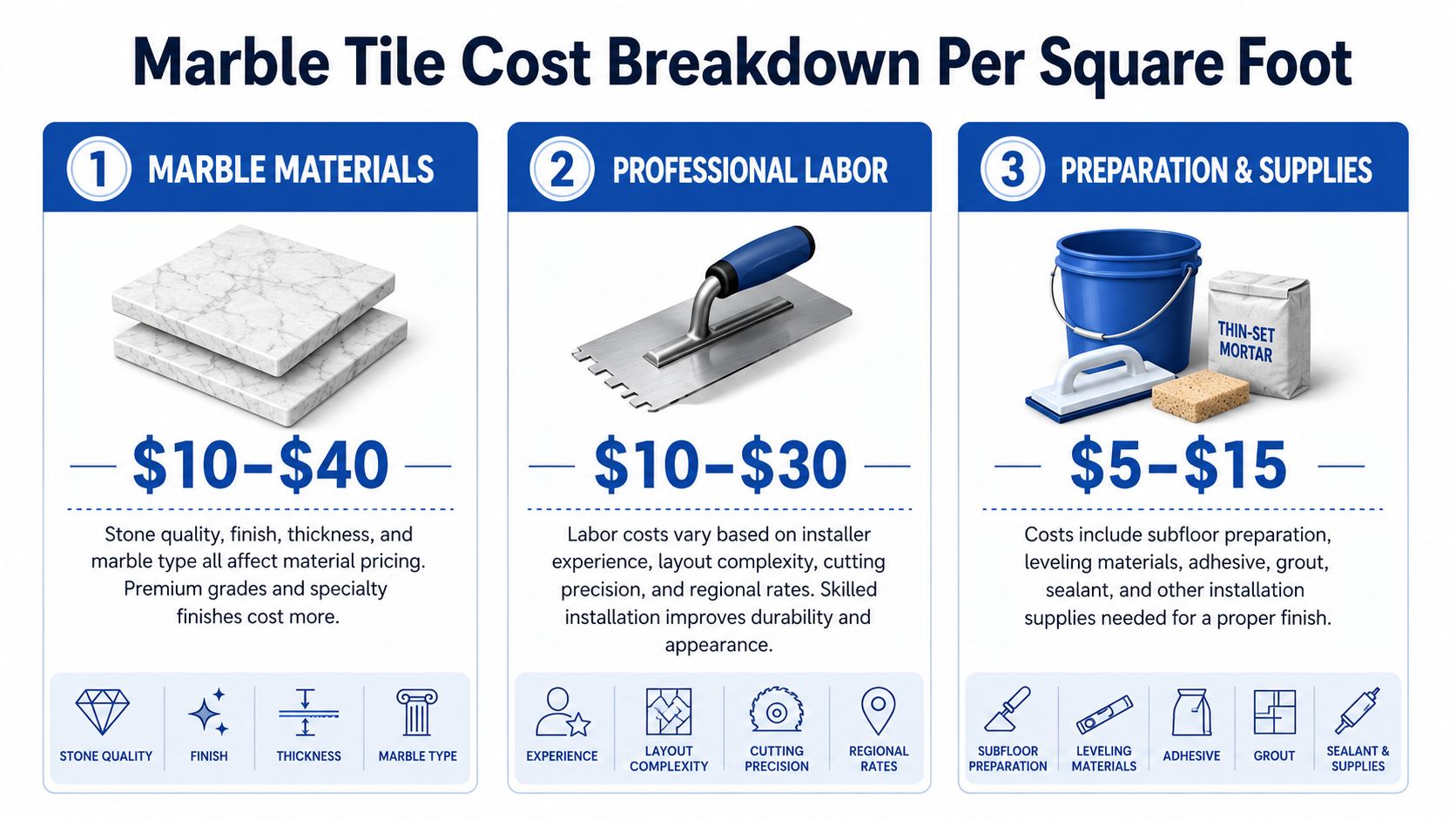
A marble floor can look simple on a quote and get expensive fast once the actual work starts. The square-foot price only makes sense when you separate the stone itself, the installation labor, and the materials and prep that support the installation for the long haul.
That is how we quote at Sunny Day Pro Services. Homeowners deserve to see what they are paying for and why one marble project lands near the lower end while another moves into premium territory.
Material cost
Marble material often falls between $5 and $25 per square foot. That spread usually comes from stone grade, finish, color consistency, veining, country of origin, and how selective the homeowner wants to be from one box to the next.
The tile price alone does not tell you much about the finished cost.
Lower-priced marble can require more sorting, more waste, and more caution during cutting if the edges chip easily or the lot has heavy variation. Better stone usually costs more upfront, but it often installs cleaner and gives a more consistent finished look. That can save labor hours and reduce disappointment after the floor is in.
For comparison, homeowners weighing stone against other premium surfaces often benefit from seeing how labor differs from a porcelain tile installation cost breakdown. Marble generally asks for slower handling and tighter finishing standards.
Labor cost
Labor often runs $5 to $15 per square foot on more straightforward jobs. On higher-end work, it can go beyond that once the installer has to slow down for visual layout, delicate cuts, and tighter lippage control.
Good marble labor includes more than setting tile in mortar. It includes:
- Dry layout and selection so the stone works together visually
- Careful cutting and edge handling to limit chipping
- Checking for flatness during setting so the floor feels finished, not wavy
- Clean detail work at thresholds, tubs, vanities, and heat registers
Cheap labor usually shows up later. Uneven edges, weak bond coverage, sloppy joints, and rushed finishing are the problems homeowners end up living with.
Prep and supply cost
This part gets buried in a lot of bids. Mortar rated for stone, grout, sealers, crack-isolation products, waterproofing in wet areas, and floor-patch or self-leveling materials all add to the true installed price.
Here is the practical breakdown:
| Cost component | Typical range |
|---|---|
| Marble material only | $5 to $25 per sq. ft. |
| Labor only | $5 to $15 per sq. ft. |
| Installed total on many projects | $10 to $40 per sq. ft. |
| Recent 2026 installed estimate | $17.68 to $31.93 per sq. ft. |
That table is a starting point, not a promise. A clean, open room with stable subfloor conditions prices very differently from a bathroom floor with waterproofing, tight fixture cuts, and premium stone selection.
A useful quote also spells out what sits outside the square-foot number. Demo, subfloor repair, moisture control, sealing, trim work, and furniture moving may be separate line items. If those details stay vague, the final invoice usually grows after the job starts.
The installed cost of marble is the combination of visible finish work and the less visible work underneath it. That is why two floors with the same square footage can end up in very different price ranges.
Key Factors That Drive Your Final Project Price
The biggest cost swings in marble work come from choices that look small on paper. Tile size. Pattern. Finish. The condition of the floor underneath. These are the details that move a project from straightforward to demanding.
Stone weight and structure
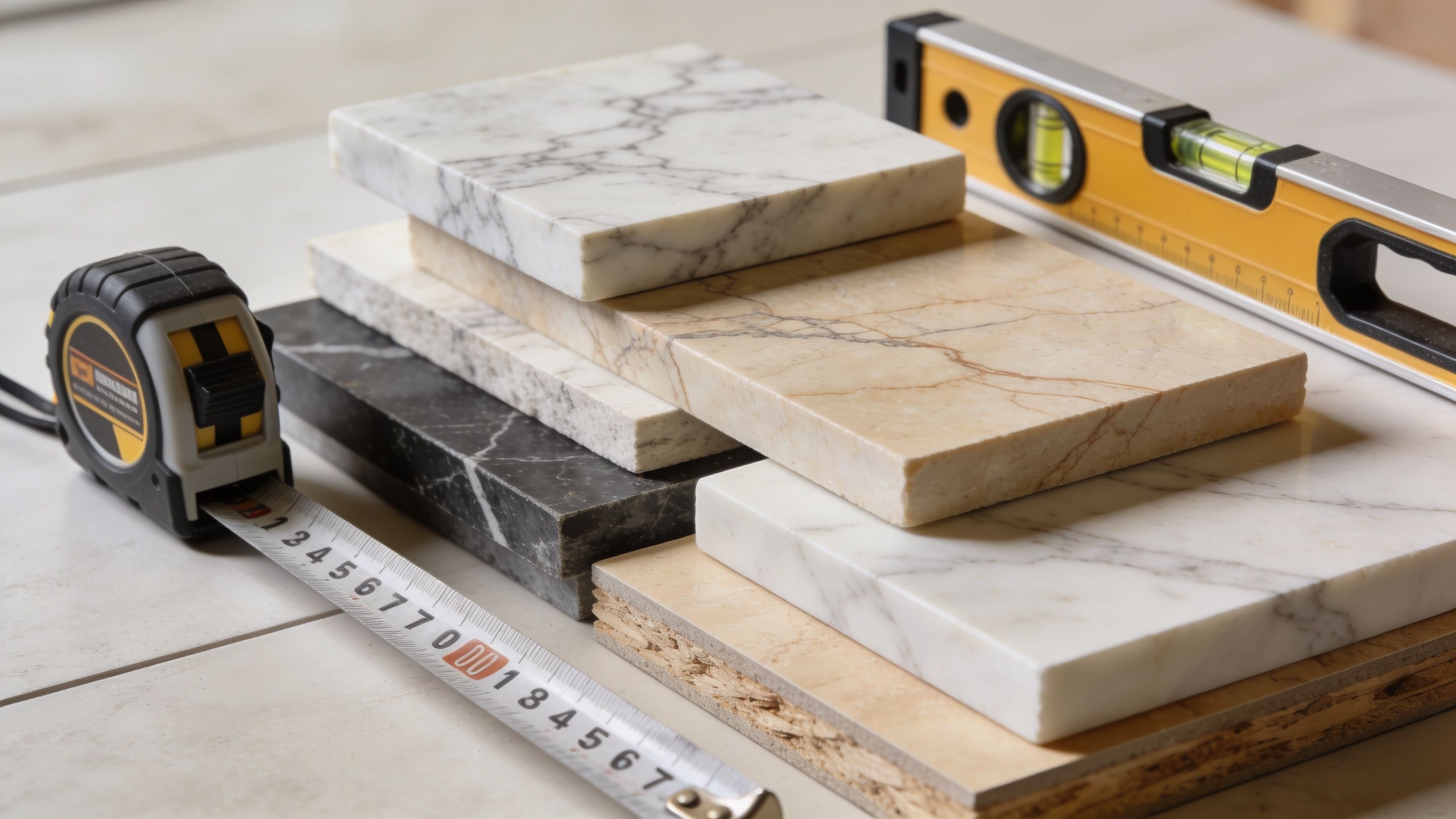
Marble is heavy. A 2026 technical guide notes that marble can weigh about 13 to 15 pounds per square foot, and floor reinforcement can add roughly $3 to $8 per square foot when the structure needs modification, according to this marble tile cost breakdown on substrate and reinforcement.
That matters in older Massachusetts homes. If the floor has bounce, uneven framing, or deflection, installing stone over it without correction is asking for trouble. Cracked grout, lippage, and tile failure usually don't start with the marble. They start with a floor system that wasn't ready for stone.
Layout and design choices
A straight-set floor is the most budget-friendly place to start. Once you move into diagonal layouts, borders, mosaics, or highly visible vein matching, labor time goes up because the installer has to slow down and make every cut count.
The same thing happens with larger pieces. Bigger marble can look clean and elegant, but it demands a flatter substrate and more careful handling.
If you're comparing options, porcelain tile installation tends to be more forgiving than marble. Marble doesn't tolerate sloppy substrate work the same way.
Finish and room conditions
Polished marble shows off beautifully, but it also shows lippage, edge inconsistency, and poor alignment faster than many other surfaces. Honed marble can be more forgiving visually, but it still needs careful prep and sealing.
Wet locations raise the bar further. Bathrooms, mudrooms, and lower-level spaces need better moisture management. The quote may rise because the work is more technical, not because anyone is padding the number.
Here are the questions that usually decide where your project lands:
- Is the subfloor flat enough for stone? Minor dips can become major visual problems with reflective marble.
- Does the room need waterproofing? In showers and wet bath floors, that's part of a proper assembly.
- How much cutting is involved? Toilets, vanities, heat registers, niches, and tight corners all add labor.
- Are you aiming for visual continuity? Vein matching and balanced tile selection take time before installation even begins.
Cheap marble installs usually fail in predictable places. At transitions, around cuts, over weak subfloors, and in wet areas where prep was rushed.
That's why the smartest homeowners don't judge the quote by square footage alone. They judge it by scope.
Sample Marble Installation Project Estimates
The best way to make pricing feel real is to look at common project types. These examples aren't universal quotes. They're planning ranges based on the installed pricing discussed earlier, with complexity as the deciding factor.
One source notes that basic installed marble tile can run $10 to $30 per square foot, while specialized work with complex patterns, large-format slabs, or intricate layouts can exceed $50 per square foot according to BuildDirect's marble cost discussion.
Three common project scenarios
A small powder room often looks simple, but it can still be fussy work. Tight spaces mean more cuts around the toilet flange, vanity, and doorway. The square footage is small, but the detail work is high.
A primary bathroom floor and shower project typically costs more per square foot than an open room because the installer has to deal with slope, waterproofing, transitions, and a lot of edge conditions.
A larger kitchen floor may benefit from scale if the layout is straight and the substrate is in good shape. But if the kitchen has islands, multiple doorways, or a patterned layout, labor climbs quickly.
Sample marble tile installation costs 2026 estimates
| Project | Size (sq. ft.) | Material Cost Est. | Labor & Prep Est. | Total Estimated Cost |
|---|---|---|---|---|
| Powder room floor, straight lay | 50 | $250 to $1,250 | $500 to $1,000 | $750 to $2,250 |
| Primary bathroom floor and shower areas, more detail | 150 | $750 to $3,750 | $1,500 to $4,500 | $2,250 to $8,250 |
| Kitchen floor, open layout | 300 | $1,500 to $7,500 | $3,000 to $9,000 | $4,500 to $16,500 |
These are planning numbers, not promises. The same 150-square-foot marble job can look ordinary in a spreadsheet and become premium in the field if the homeowner chooses a herringbone pattern, highly selective stone, or a floor that needs correction before setting begins.
A practical way to use a table like this is to identify your project's pressure points:
- Small room, high detail
- Wet room, higher prep
- Large room, simpler layout
- Custom design, premium labor
That's the difference between budgeting responsibly and chasing a low online average that doesn't match your house.
The Hidden Costs and Long-Term Value of Marble
A lot of pricing pages stop at installation day. That's where homeowners get surprised. Marble has a real lifecycle cost, and the first hidden item is sealing.
Marble is porous, so sealing is not optional. Professional sealing costs about $0.50 to $2.50 per square foot, and extra supplies such as premium mortar, grout, and waterproofing can add hundreds of dollars to a job, as noted in Angi's marble flooring cost guide.
Costs that show up after the tile is down
If marble isn't sealed and maintained correctly, the problem isn't usually dramatic failure overnight. It's gradual staining, etching, moisture issues in vulnerable areas, and a floor that starts looking tired much sooner than it should.
Homeowners should plan for:
- Initial sealing right after installation or as specified for the product and finish
- Ongoing resealing based on wear, room use, and how the surface performs
- Stone-safe cleaning products instead of harsh cleaners that can damage the finish
- Occasional spot repair or polishing if the surface gets etched or scratched
For bathroom planning, this is also where tile selection matters. If you're still weighing materials, choosing tile for a bathroom comes down to balancing appearance, maintenance, and how much daily upkeep you want.
Why good prep pays off later
The hidden cost nobody wants is repair caused by a rushed install. A marble floor that was set over a weak or uneven substrate may need selective replacement, grout correction, crack repair, or broader tear-out if the failure is systemic.
Paying less for marble installation can cost more later if the bid excluded the parts that keep stone stable and protected.
That's the trade-off homeowners need to see clearly. Marble isn't cheap. But properly installed marble has a kind of long-term value that bargain installations never deliver. It keeps its visual appeal, it ages with character, and it avoids the expensive cycle of “fixing” a floor that should have been done correctly the first time.
DIY Marble Installation vs Hiring a Professional
A homeowner in Massachusetts might look at a small marble floor and assume it is a manageable weekend project. Then the first few cuts chip, the pattern drifts off center, and the polished surface starts showing every height difference once daylight hits it. Marble has very little forgiveness, which is why the labor cost is higher and why failed DIY work often ends up costing more than hiring a pro from the start.
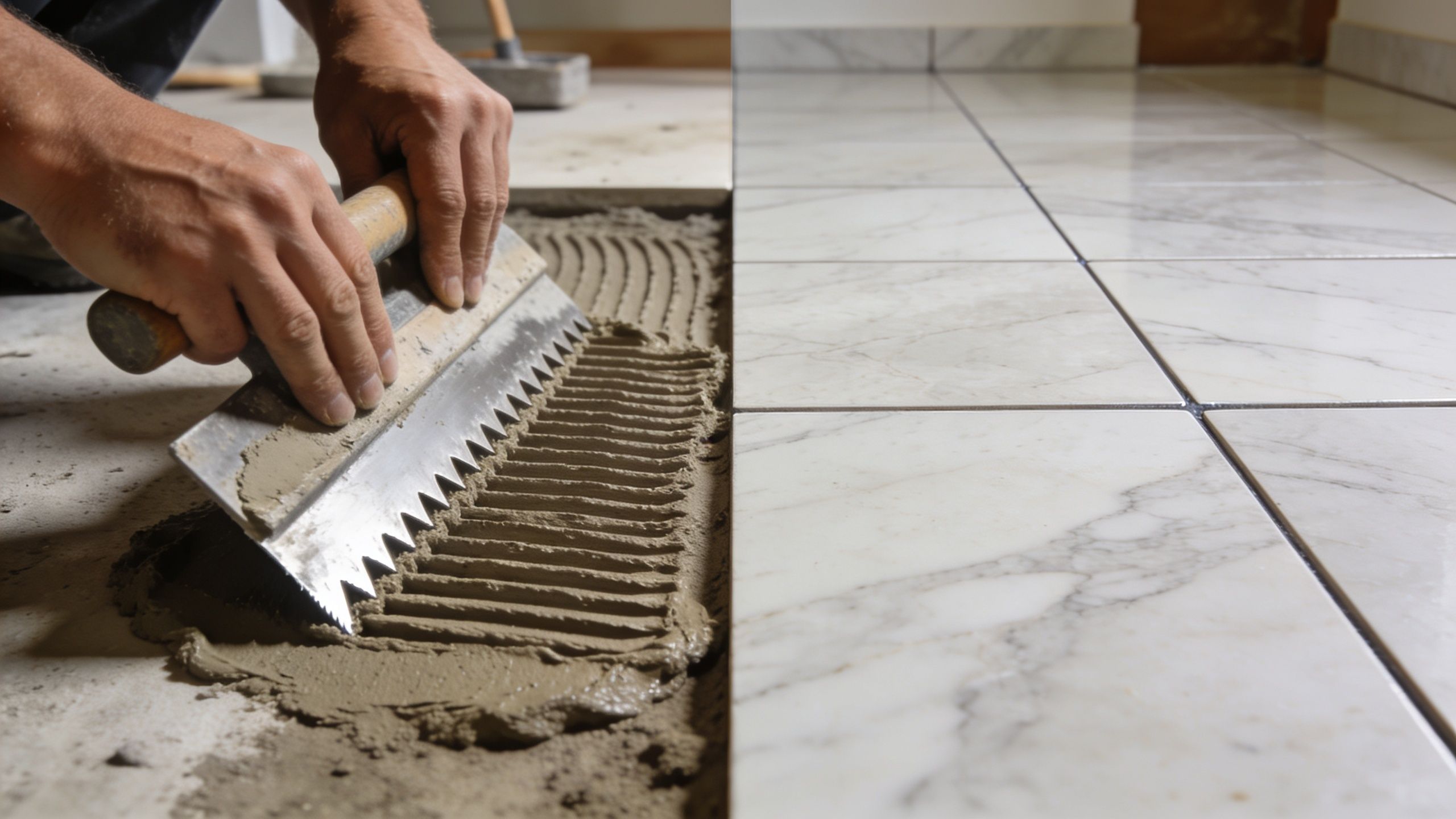
DIY success with ceramic or porcelain does not automatically carry over to stone. Marble needs a flatter surface, cleaner cuts, tighter layout control, and better judgment about which pieces go where. On a polished floor, small mistakes do not stay small.
Where DIY installations get expensive
Cutting is usually the first trouble spot. Marble can chip along the edge or break at a weak point if the blade is worn, the feed is uneven, or the tile is not supported well. Every bad cut wastes material, and with stone, wasted material adds up fast.
Layout is another one. Veining, shade variation, and room sightlines matter more with marble than with basic tile. A floor can be technically installed and still look wrong if the pattern feels scattered or the cuts pile up in the most visible areas.
Then there is the floor structure and surface prep. Natural stone demands more from the substrate than many homeowners realize. If the floor has movement, dips, or patchy prep, the finished job may develop lippage, cracked grout, loose corners, or hollow spots. At that point, the money saved on labor disappears into repair or replacement.
The value of professional installation
Professional labor covers more than setting tile. It covers judgment before the first tile goes down and discipline through the final detail work.
That usually includes:
- Checking the substrate and room conditions before installation starts
- Planning the layout so the pattern looks intentional from the main entry and sightlines
- Using the right cutting and edge-finishing tools for clean marble work
- Choosing stone-appropriate setting materials based on the room and tile type
- Controlling lippage and joint consistency across the full field
- Finishing transitions and exposed edges so the job looks complete, not improvised
This short video gives homeowners a useful sense of how methodical the process needs to be:
For homeowners pricing out professional marble tile installation in Massachusetts, the primary question is not just who has the lowest labor number. It is who is accounting for the parts of the job that keep marble looking right five years from now.
At Sunny Day Pro Services, that usually means being very plain about trade-offs. A simpler straight layout on a sound, flat floor costs less because it takes less time and less correction. A large-format marble install with pattern matching, premium edge work, uneven subfloor correction, or bathroom waterproofing moves into a different price tier because the failure risk is higher and the workmanship standard has to be tighter.
Marble should look calm and intentional when it is finished. If the installation is what catches your eye first, something went wrong.
DIY can still make sense on low-risk materials and forgiving spaces. Marble is a finish where precision shows, and mistakes stay visible.
Getting an Accurate and Trustworthy Quote in Massachusetts
In this area, the biggest quoting problem isn't always price. It's missing scope. Two marble bids can look similar at first glance and be covering very different work.
When you request a quote for marble tile installation services, ask for line-item clarity. You want to know what's included before the job starts, not after the floor is halfway in.
What a solid marble quote should include
Look for these items in writing:
- Demolition and disposal if an existing floor is coming out
- Subfloor evaluation with notes on leveling, deflection, or reinforcement if needed
- Waterproofing scope for bathrooms, entries, or other moisture-prone spaces
- Setting materials such as mortar, grout, membranes, and edge profiles
- Tile layout details including pattern, borders, and tricky cut areas
- Sealing and final protection so the finished stone isn't left vulnerable
Questions worth asking before you sign
Homeowners in Wayland, Newton, Wellesley, Needham, and nearby towns should ask direct questions:
- Is this quote assuming a flat existing floor, or does it include correction if needed?
- Are sealing and finish protection included?
- Does the labor rate change if I choose a diagonal or patterned layout?
- What happens if the floor structure needs work once the old flooring comes up?
The best quote isn't the shortest one. It's the one that makes the job understandable. Marble is expensive enough on its own. You shouldn't also have to budget for surprises caused by vague paperwork.
Frequently Asked Questions About Marble Installation Costs
Why do two marble quotes for the same room look so different
Usually because the scopes are different. One quote may include prep, waterproofing, sealing, and detailed layout work. Another may only cover basic setting labor and tile.
Is marble always more expensive than standard tile
In most cases, yes. Marble is a premium material, and the installation is more demanding. The price difference often comes from labor quality and prep requirements as much as the stone itself.
Should sealing be listed separately or included
Either can be fine, as long as it's clearly stated. What matters is that sealing is addressed in the quote and not left as an afterthought.
Does a small marble floor always cost less
Not necessarily. Small rooms often have more cuts, tighter working conditions, and a higher concentration of detail work, which can keep the price per square foot high.
If you're planning a marble floor or bathroom and want a quote that explains the full scope, contact Sunny Day Pro Services. We help Massachusetts homeowners understand what's driving the price, what shortcuts to avoid, and how to budget for a marble installation that holds up over time.

