
Mineral Oil Stainless Steel: How to Use It Right
Learn how mineral oil stainless steel care works: clean, restore, and protect sinks, appliances, and fixtures without streaks or residue.
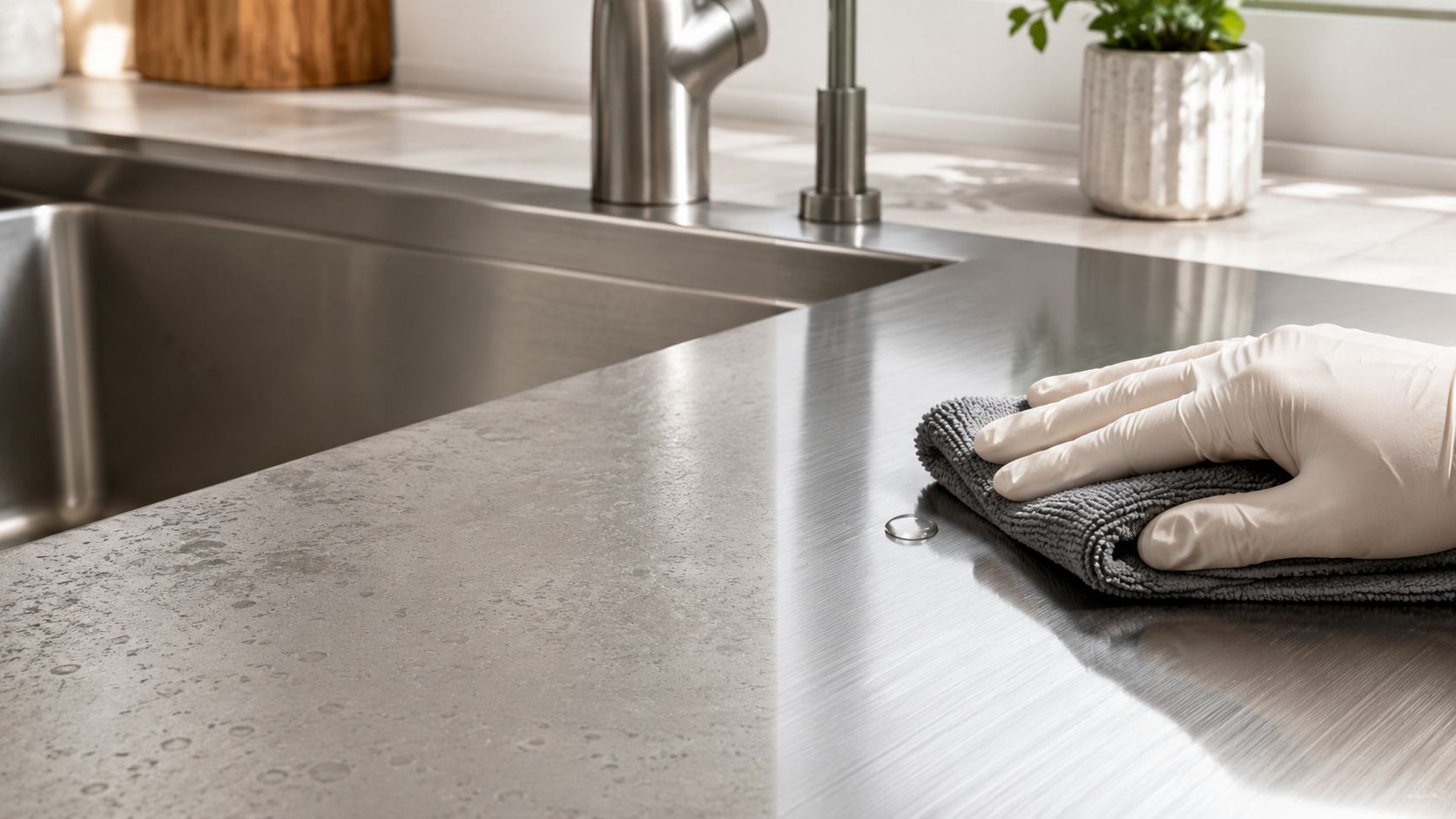
The fridge looks clean until the light hits it, then there they are again, fingerprints on the handle, haze on the door, and water spots clinging to the sink no matter how carefully you wipe. That's the point where mineral oil earns its place in a real kitchen, not as a miracle cleaner, but as the last thin layer that helps stainless steel stay calmer between cleanings.
Table of Contents
Why Mineral Oil Belongs on Your Stainless Steel
A smudged refrigerator door is usually what sends people looking for a better answer. They wipe, step back, and the surface still looks tired, especially near handles, dishwashers, and sink fronts where hands and water never really quit. Mineral oil belongs here because it changes the way the surface behaves after the cleaning is already done.
A finish, not a shortcut
Mineral oil is not the thing that removes the mess. It's the thing that sits on a clean, dry surface and helps the next mess wipe away more easily. Used that way, it can reduce fingerprints, help repel water, and keep the steel looking richer without introducing harsh chemistry into the kitchen.
That's why homeowners get the best results when they treat it like a final step, not a first response. If the door is greasy, the sink still has food film, or the steel is damp, the oil just traps the problem under a glossy film.
Practical rule: clean first, dry fully, then oil lightly. Anything else usually turns into streaks.
The basic promise is simple. Mineral oil stainless steel care gives you a softer-looking finish, fewer visible smudges, and faster wipe-downs between full cleanings. The limitation matters just as much, because it does not sanitize, it does not remove grease, and it can look messy if you put it on too heavily.
The best kitchens I've worked in don't chase perfection with more product. They use a thin, even film and stop there. That discipline is what keeps the steel looking cared for instead of coated.
What You Need Before You Start
The difference between a polished appliance and a greasy one usually comes down to setup. I've seen plenty of stainless steel ruined by the right bottle and the wrong cloth, or by trying to skip the cleaning step and letting the oil do work it can't do.
Build the right kit
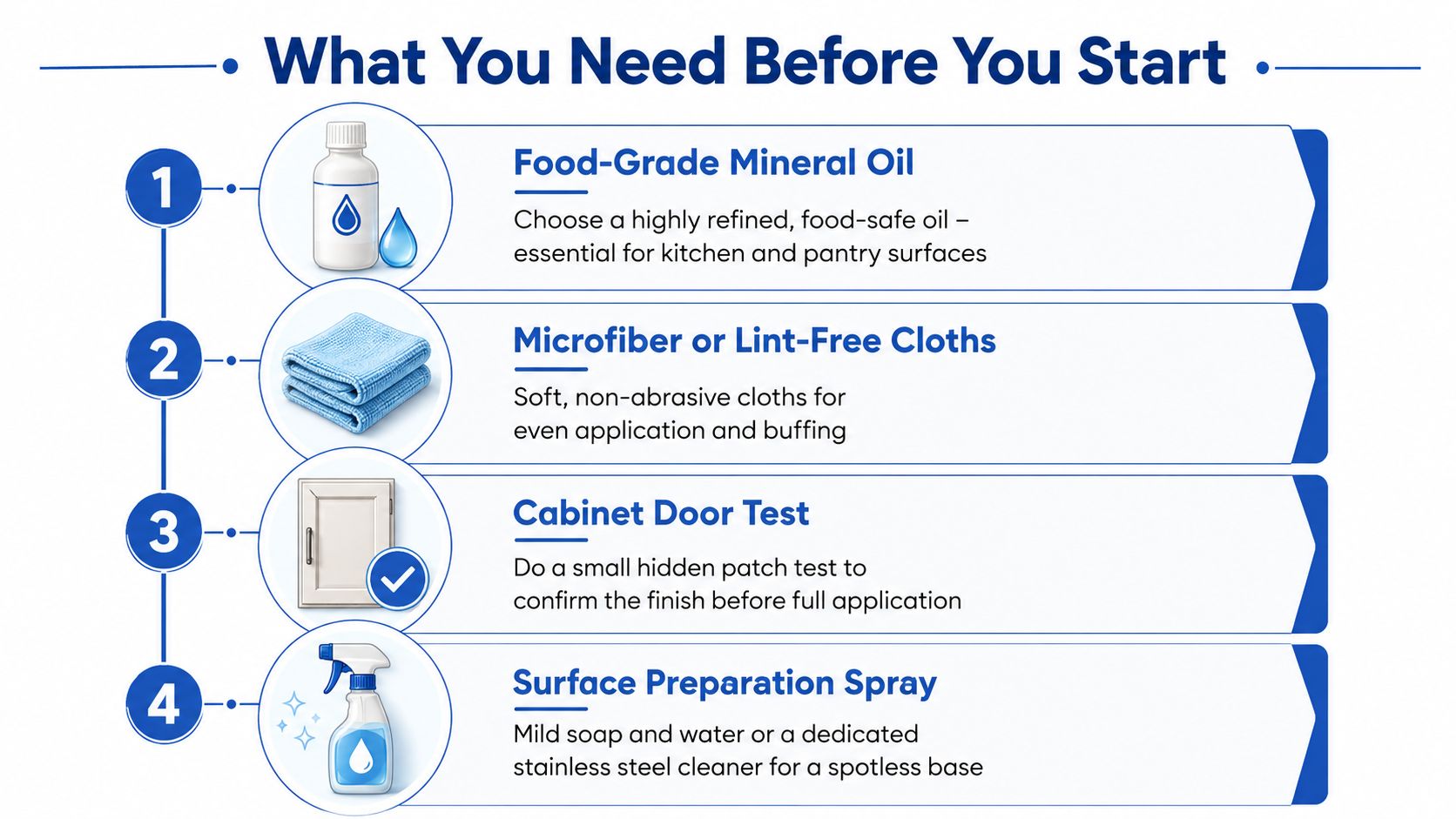
Start with food-grade mineral oil. That matters in kitchens and pantry areas because modern food-grade mineral oil is a purified petroleum-derived hydrocarbon blend, refined to remove unwanted compounds, so you're not bringing extra residue into a food-contact space. For a working kitchen, that's the version worth using, not a random household oil.
You'll also want two microfiber cloths, one for applying and one for buffing. A clean, lint-free microfiber cloth grabs residue instead of pushing it around, and a second dry cloth lets you finish the job without leaving a film behind. I keep a third towel nearby for the sink edge or any overspray from the cleaning stage.
Before the oil ever comes out, wash the steel with mild dish soap and warm water, then dry it completely. That prep matters because mineral oil is a polishing agent, not a cleaner. If you oil over fingerprints or grease, you seal in the problem and make the finish harder to recover later. For cloth care, this guide is useful if you're unsure how to keep microfiber performing well, how to wash microfiber cloths properly.
A small test in an out-of-the-way spot is smart on any unfamiliar finish. It doesn't take long, and it tells you whether the appliance behaves like standard stainless or something coated, textured, or fingerprint-resistant enough to reject the oil unevenly.
Skip the products that cause more trouble than they solve:
- Cooking oils can go stale and leave a sticky film.
- Aerosol polishes with silicone may build up and complicate later cleaning.
- Abrasive scrubbers can scuff the grain and make the steel look dull.
Use good light while you work. Residue is much easier to catch before it dries than after it attracts dust.
The Application Workflow That Actually Works
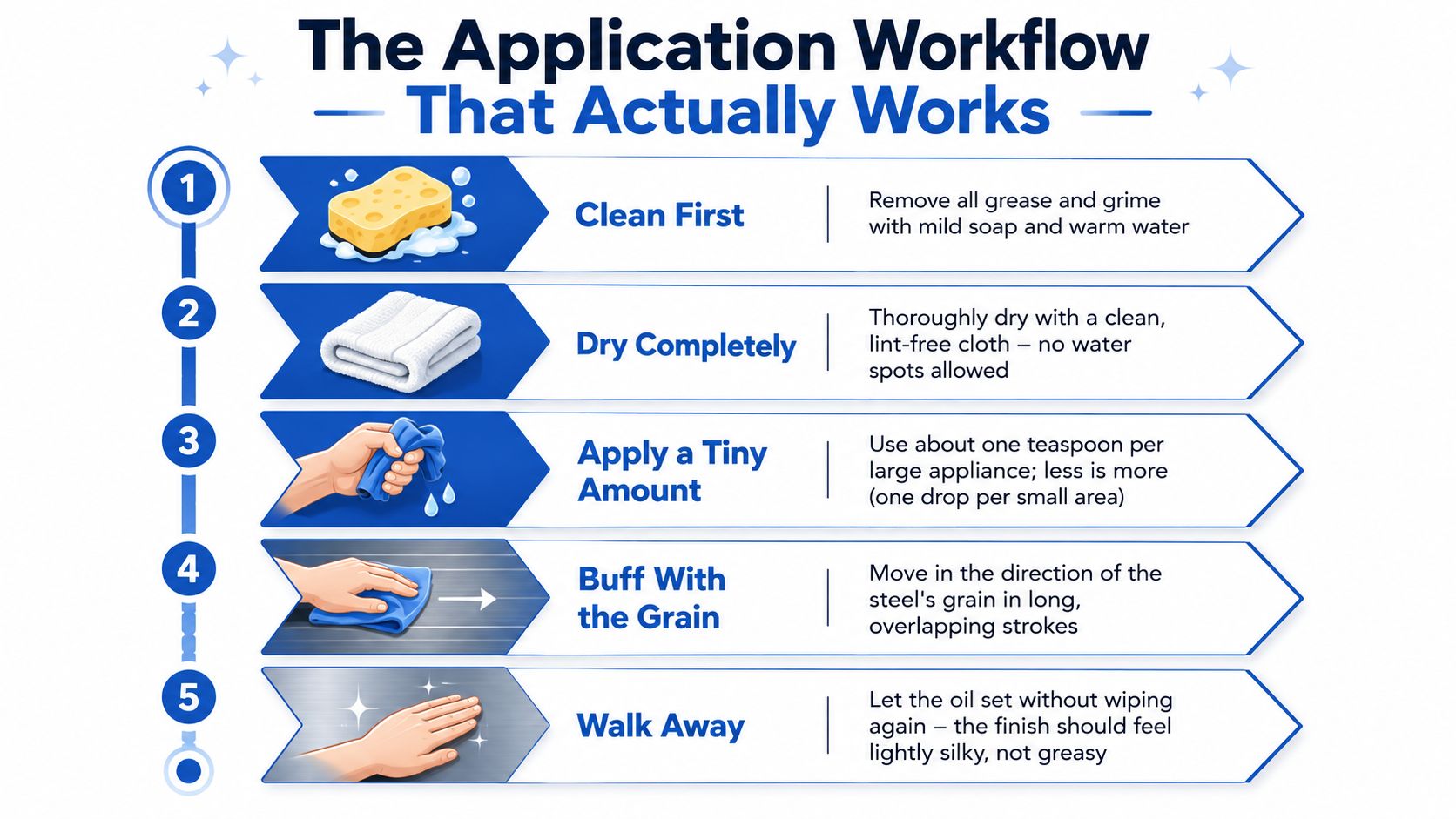
The cleanest finishes follow the same rhythm every time. The steel gets washed, dried, oiled lightly, buffed, and left alone. The moment people start re-wiping a half-dry surface or adding more oil because the first pass looked thin, the streaks show up.
Clean, dry, then barely oil
Work on a surface that's already free of grease and water marks. If you want the oil to spread evenly, the steel has to be dry all the way through, not just “mostly dry” around the edges. I've had the best results using one to two drops on a folded microfiber for a full refrigerator door, because more almost always creates a film you'll end up chasing around with the cloth.
Apply with the grain in long, overlapping strokes. The grain is the line pattern in the steel, and following it is the single easiest way to keep the finish looking deliberate instead of smeared. Cross-grain wiping leaves a haze that shows up the second the light changes.
Let the oil sit for thirty to sixty seconds so it can spread into a thin, even layer. Then switch to a separate dry microfiber cloth and buff until the surface feels slick, not wet. That wait time is short, but it helps the oil settle before you remove the excess.
After buffing, don't keep polishing the same spot. Walk away and check the reflection from a low angle under room light. Any leftover oil will show up as a soft smear before dust has the chance to collect on it.
A refrigerator door is a good test case because it shows every mistake. If the door looks cloudy, you used too much. If the finish looks patchy, the cloth was dirty or the grain wasn't followed cleanly.
Why Mineral Oil Works on Stainless Steel
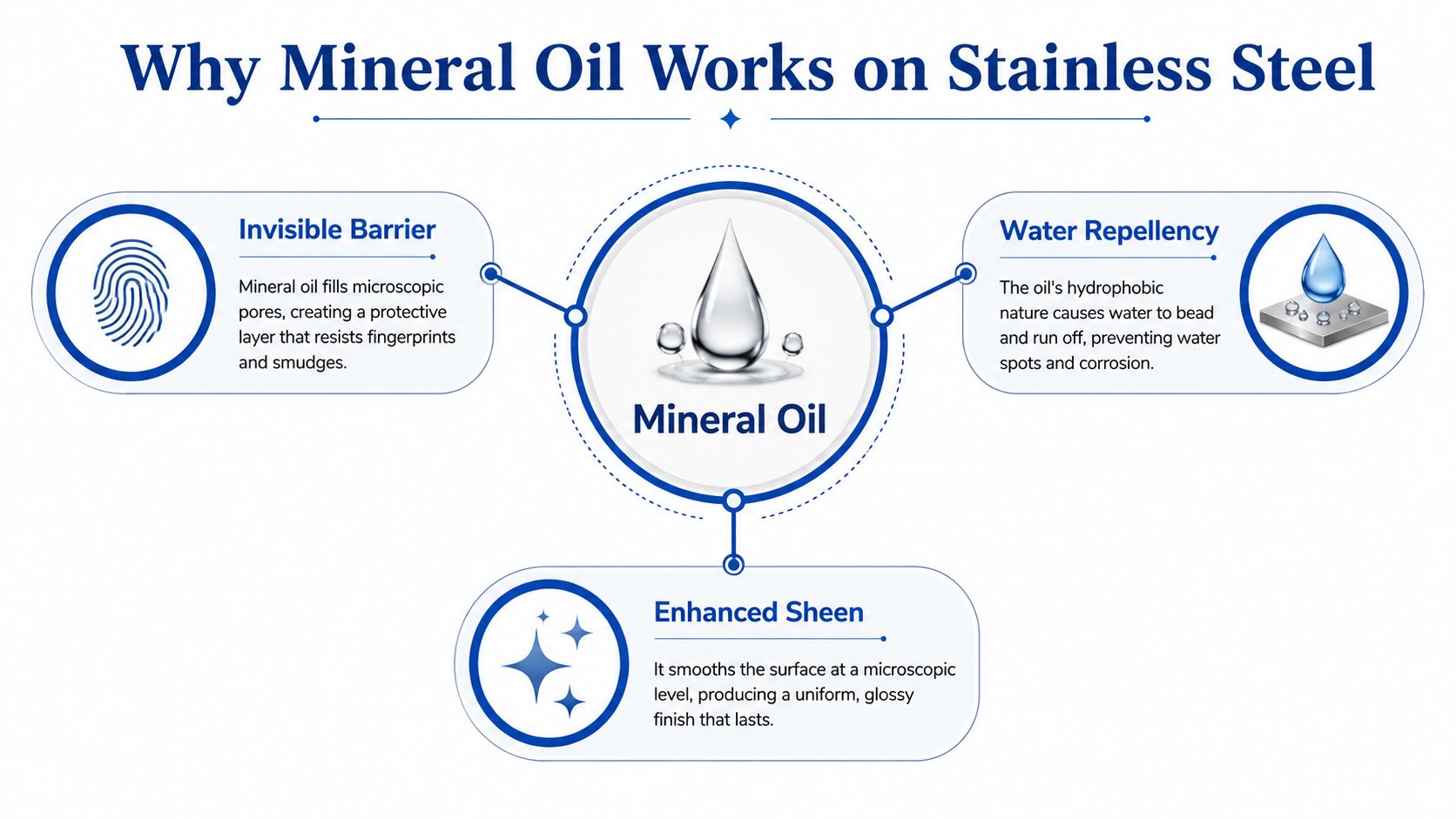
The chemistry is straightforward once you stop treating the oil like a cleaner. Mineral oil is a highly refined petroleum-derived hydrocarbon mixture, and its strength is inertness. It doesn't try to react with the steel, so it can sit as a protective film instead of attacking the surface.
The steel is already doing most of the work
Stainless steel 304 is widely used in kitchens, appliances, and food-contact equipment, and its chromium content is about 18%. That chromium helps form a passive oxide layer, which is the steel's built-in corrosion resistance. Mineral oil doesn't replace that layer, it sits on top of it as a thin hydrophobic barrier that helps keep water and oxygen away from the surface.
That barrier effect is why the oil can improve day-to-day appearance. It doesn't make the metal waterproof, but it does reduce the direct contact that creates spotting and makes fingerprints stand out. In a published chemical-resistance rating, SS 304 was graded “A” (excellent) for mineral oil at 20°C in the stainless steel mineral oil compatibility rating, which is a strong sign that the pairing is stable under normal room-temperature use.
The same logic explains why the oil is used as a protective polish on stainless surfaces. It can help reduce fingerprints, make smudges easier to wipe away, and preserve shine without introducing corrosive chemistry during ordinary kitchen care. In practical terms, the metal is doing the corrosion resistance and the oil is helping the surface stay visually calmer.
That's also why overuse backfires. The steel isn't meant to sit under a thick coating. It wants a whisper-thin film, not a wet layer.
Dos and Don'ts That Decide the Finish
The fastest way to get a greasy cabinet door is to ignore the small rules. These are the habits that separate a finish that lasts from one that keeps attracting dust and fingerprints.
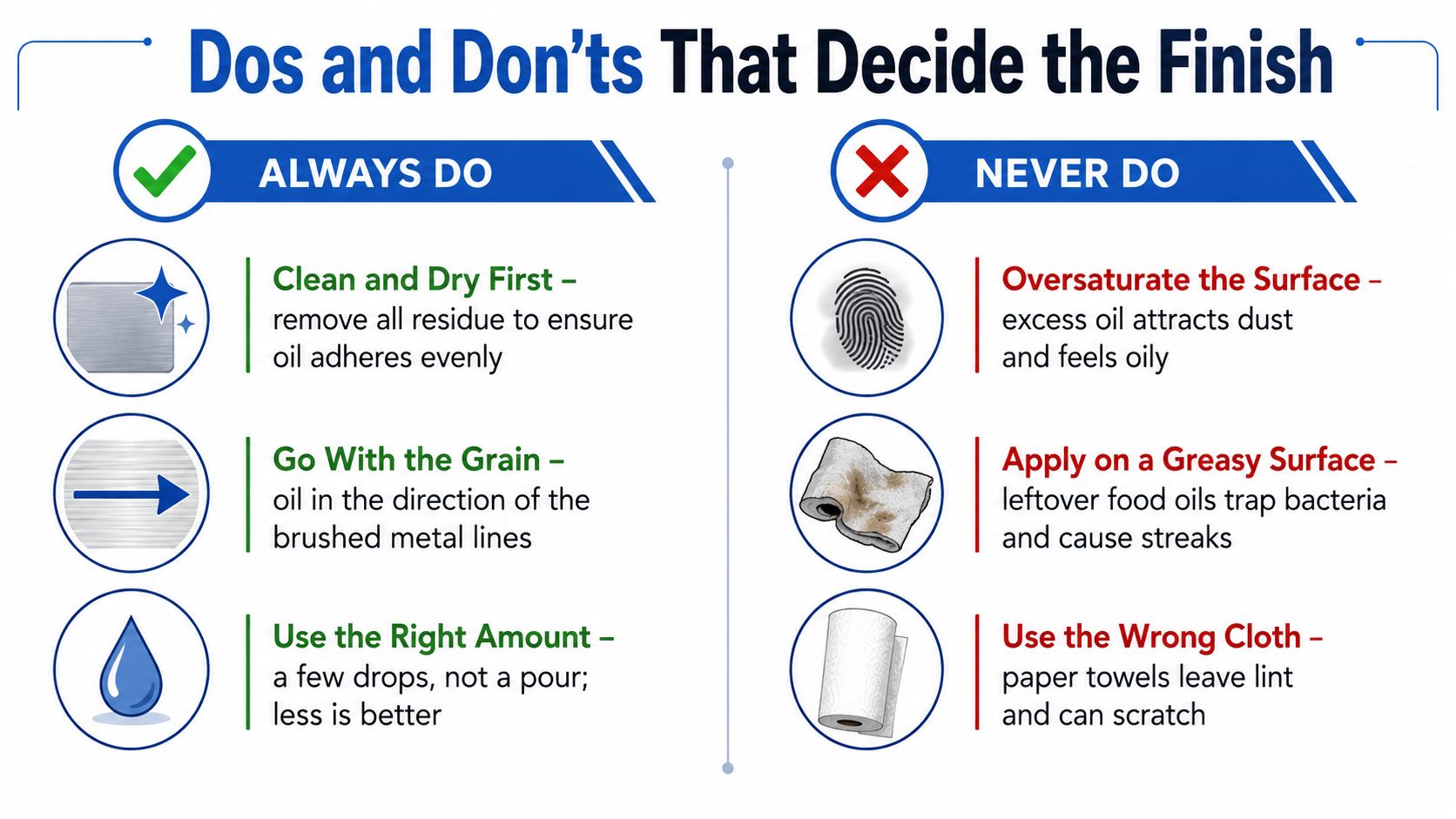
The habits that hold up
- Clean and dry first. Oil belongs on a residue-free surface, not on leftover cooking film.
- Go with the grain. Straight, overlapping passes keep brushed steel looking even.
- Use the right amount. A few drops, not a pour, is what gives you a satin finish instead of a shiny mess.
- Buff thoroughly. If the cloth still slides greasy, there's still too much on the surface.
- Handle oily cloths safely. Store them in a sealed bag or dispose of them properly, because oily rags can be a spontaneous combustion risk.
The mistakes that ruin the job
- Don't use cooking oils. They can turn sticky or rancid and make the appliance smell off.
- Don't oil over fingerprints or grease. That only preserves the smudge under a slicker layer.
- Don't mix with silicone polishes. Different products can leave the finish uneven and harder to maintain.
- Don't use it blindly on fingerprint-resistant finishes. Some coated surfaces don't accept oil evenly, so test first or skip it.
- Don't leave the surface looking wet. If it shines like a film, you used too much.
For households that want a broader chemical-free approach, this is a useful companion read, simple non-toxic cleaning product options. I still keep mineral oil in the rotation for standard stainless, but only after the surface is clean.
Maintenance rhythm: active kitchens do well with a monthly polish, while low-traffic appliances can usually wait longer. Spot-buffing between full treatments is fine when a handle picks up a fresh smudge.
Handling Real Stainless Steel Problems
Every stainless surface has its own bad habit. Sinks spot from hard water, fridge doors collect fingerprints around the handles, and older appliances show light scuffs that make the finish look dull even when the metal is clean.
Hard water, halos, and hairlines
On a sink with hard-water spots, mineral oil won't remove the mineral buildup by itself. The better move is a white-vinegar rinse, a complete dry-down, and then a thin oil coat so the spots are less likely to return quickly. For that kind of sink reset, a deeper stainless cleanup like how to clean a burnt stainless steel pan can be a useful reference when the metal needs more than a surface wipe.
Fingerprint halos on a refrigerator are different. They form when skin oils mix with bare steel and sit there until someone wipes them away. A mineral oil barrier changes how that residue lands, so the next cleaning pass is usually faster and less stubborn.
Light scuffs and hairlines are the one place people expect too much. Mineral oil will not remove deep scratches, but it can make shallow marks less obvious by evening out how the surface reflects light. That's useful on big panels where the eye catches contrast more than damage.
A fingerprint-resistant coating changes the equation. Those finishes can turn patchy when oil lands unevenly, so a small corner test is the safe move. If the spot doesn't take a uniform sheen, leave that surface alone and use a product meant for coated steel.
Mineral Oil vs Other Stainless Care Options
There's no shortage of products that promise a better shine. Most of the time, the right choice depends on whether you want short-term gloss, food-zone safety, easy maintenance, or a finish that matches a specific showroom look.
| Option | Approximate Cost | Food-Safe | Smell | Buildup Risk | Best Use Case |
|---|---|---|---|---|---|
| Mineral Oil | Low | Yes, when food-grade | Neutral | Low when applied thinly | Routine stainless care in kitchens and pantries |
| Olive Oil | Low | Yes | Noticeable food smell | Higher, can turn sticky | Quick short-term shine, not a steady maintenance choice |
| Coconut Oil | Low | Yes | Strong coconut scent | Higher, can leave residue | Occasional experiment, not a dependable appliance finish |
| Baby Oil | Low to moderate | Not ideal for food zones | Fragranced | Moderate | Non-food surfaces where scent is acceptable |
| Purpose-Built Stainless Polish | Moderate | Varies by formula | Usually mild | Moderate to higher, depending on formula | Showcase appliances and brand-matched finishes |
Mineral oil sits in the middle in the way that matters most for a homeowner. It's cheap, food-safe when you buy the right grade, and effective enough for a weekly wipe-and-buff habit without making the kitchen smell like a salad bar or a fragrance aisle. Olive oil and coconut oil can look fine for a minute, but they're the products I've had to clean off later when they turned tacky.
Purpose-built stainless polishes have their place, especially when a homeowner wants a specific finish on showpiece appliances. Those products often give a more customized result, and they're worth considering when appearance has to stay consistent across an entire kitchen. Still, for everyday use, mineral oil is the cleaner, simpler choice when you want a practical maintenance rhythm that won't fight you.
Sunny Day Pro Services includes a stainless steel polish package as part of its kitchen cleaning work, and that fits neatly into a broader deep-clean or move-in/move-out reset when the whole space needs to look sharp.
For most homes, the routine is simple enough to stick with. Wipe the steel weekly with a damp microfiber, polish monthly with a thin coat of mineral oil, and give water-spotted areas a quarterly vinegar rinse before drying and buffing. That's the whole game, really, a clean base, a thin film, and enough restraint to stop before the finish turns greasy.
If your stainless steel needs more than a quick touch-up, Sunny Day Pro Services can handle the deep clean, reset the shine, and leave the appliance surfaces ready for everyday use. Visit Sunny Day Pro Services to request a quote for a kitchen refresh, move-in/move-out cleaning, or a detailed polish that makes the stainless look cared for without the greasy finish.

