
Can I Wash Microfiber Cloths? Essential Care Tips 2026
Can i wash microfiber cloths - Wondering if you can wash microfiber cloths? Yes! Learn the right way to machine wash, hand wash, and dry them for lasting
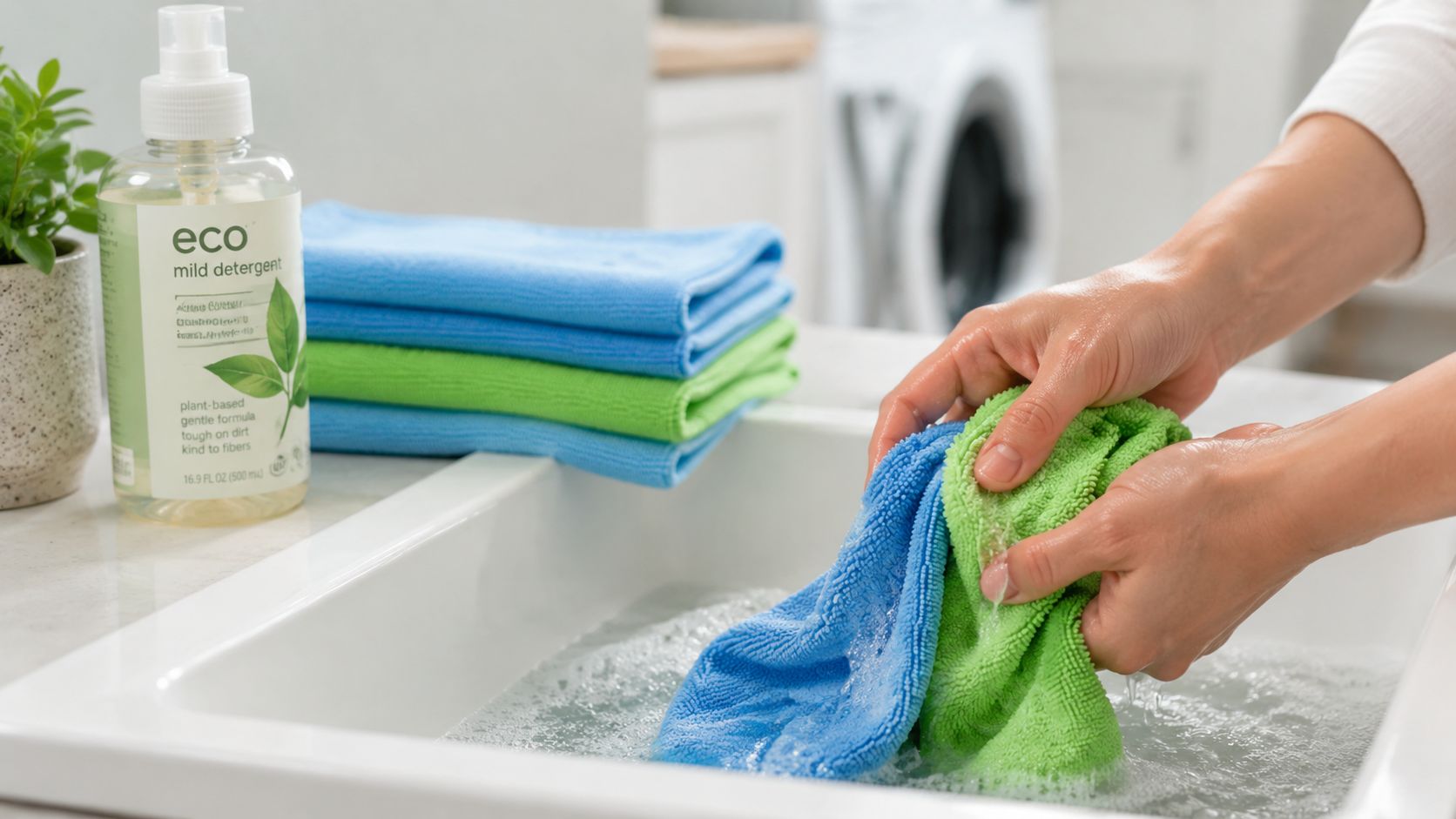
Yes, you can and absolutely should wash microfiber cloths. The key is how you wash them: cold to lukewarm water, no hotter than 140°F/60°C for best care, mild liquid detergent, and no fabric softener, bleach, or high heat, because those mistakes can cut performance hard and shorten the cloth's life.
A lot of people ask this standing in the laundry room with a pile of used cloths, wondering if one wrong cycle will ruin them. That concern is valid. Microfiber works differently than a basic rag, and the same habits that are fine for cotton towels can gradually wreck microfiber's grab, absorbency, and static-cleaning ability.
For homeowners dealing with kitchen messes, bathroom cleaning, move-out prep, or post-construction dust, microfiber is one of the best tools in the house. But it only stays that way if you care for it like a precision tool instead of tossing it in with bath towels and dryer sheets.
Table of Contents
- Can I wash microfiber cloths with regular towels
- Can I use hot water
- Do I need special detergent
- Can I put microfiber cloths in the dryer
- How do I sanitize microfiber cloths
- Why do my microfiber cloths stop absorbing
- How often should I wash microfiber cloths
- Can old microfiber still be useful
Yes You Can and Should Wash Microfiber Cloths
You finish wiping down a bathroom vanity or pulling fine dust off trim after a renovation, and the cloth that worked perfectly on the first pass is now gray, loaded, and dragging. That is not a throwaway moment. It is the point where microfiber needs proper care if you expect it to keep performing.
Yes, you can wash microfiber cloths. You should wash them. In professional cleaning, that is standard practice, because microfiber is built to be reused, not discarded after one messy job.
What makes microfiber different is the fiber structure. The split synthetic strands grab and hold dust, oils, and fine debris that ordinary cotton tends to push around. The U.S. Environmental Protection Agency notes that microfiber can be effective for removing dust, dirt, and microbes from surfaces with less chemical use when it is maintained and used correctly (EPA guidance on microfiber cleaning tools).
Why proper washing matters
A dirty microfiber cloth does not just look worn out. It stops releasing trapped soil, starts smearing residue, and loses the grab that makes it useful on glass, fixtures, counters, and post-construction dust.
I see this often in deep cleaning and post-construction work. Homeowners use a good cloth on heavy dust, wash it with regular towels, add softener out of habit, then wonder why it leaves lint and streaks the next day. The cloth was not bad. The care routine was.
Good washing keeps the fibers open, absorbent, and effective for repeat use. It also protects the investment in the rest of your kit. If you keep different cloths for glass, bathrooms, kitchens, and detail work, a solid professional house cleaning supplies list helps you treat each tool the way it is meant to be used.
Why homeowners should care
Microfiber rewards good habits and punishes careless ones.
Wash it right, and a quality cloth can stay useful through a long stretch of regular cleaning. Wash it like ordinary laundry, and performance drops fast, especially after greasy kitchen jobs, bathroom disinfecting, or the fine grit we deal with after remodeling.
That trade-off matters. Replacing cheapened cloths over and over costs more than taking a few extra minutes to care for them correctly.
The Golden Rules What to Avoid When Washing Microfiber
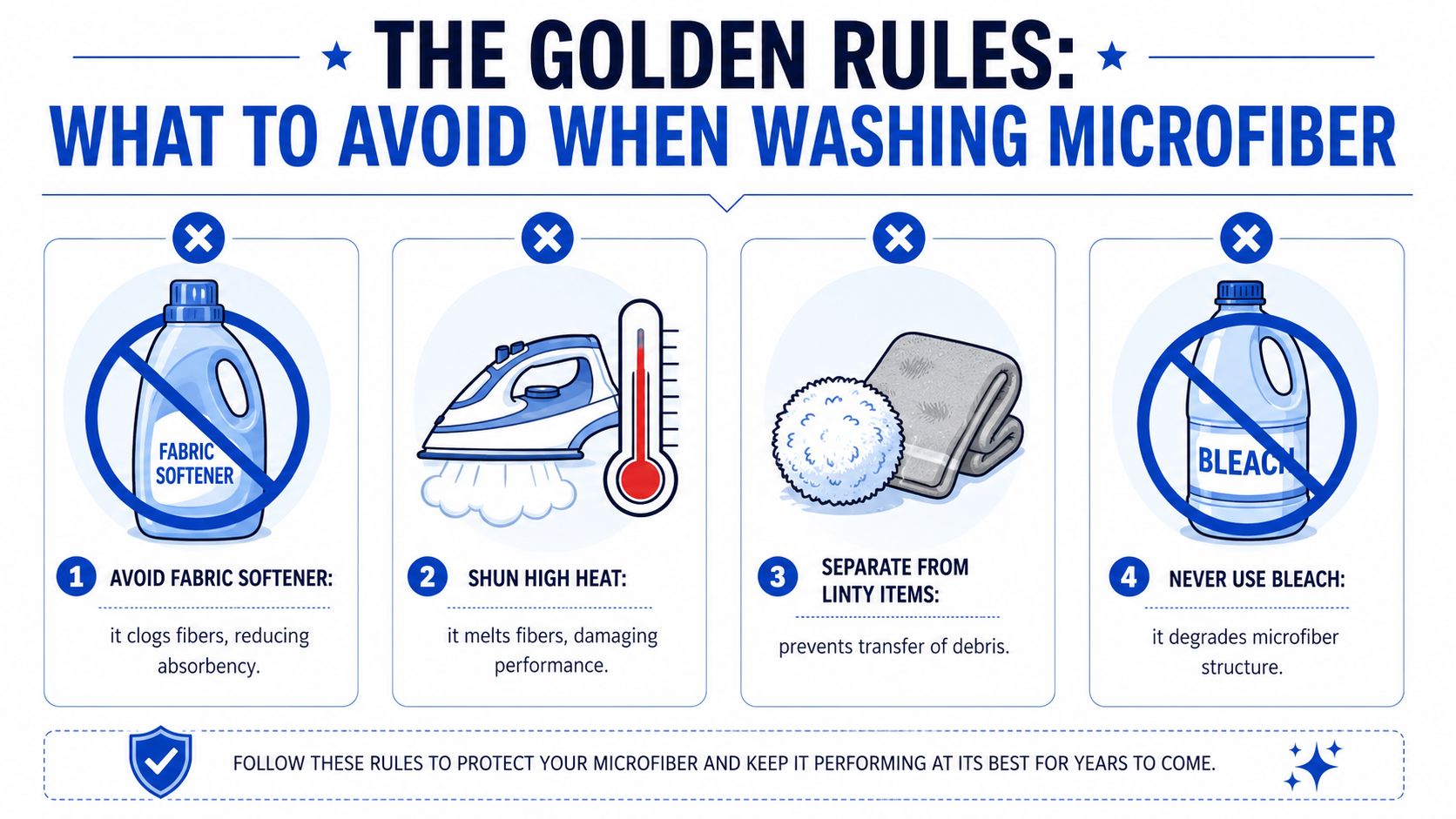
Most microfiber problems come from bad habits, not bad cloths. If your cloths feel slick, stiff, or weirdly useless after a few washes, the cause is usually in the washer or dryer.
What ruins microfiber fastest
Start with the essentials.
- Skip fabric softener completely. It coats the microscopic fibers and kills absorbency.
- Keep microfiber away from cotton and wool. Lint transfer is one of the fastest ways to make a cloth less effective.
- Don't use powder detergent. It can leave residue in the fibers.
- Avoid dryer sheets. They create the same residue problem as softener.
- Don't blast microfiber with heat. Heat damage doesn't always look dramatic, but performance drops fast.
A useful rule is to wash microfiber only with other microfiber, and ideally sort by task. A bathroom cloth shouldn't share a load with a kitchen polishing cloth if you care about sanitation and clean results.
If you want a broader look at the tools pros keep separate and why, this breakdown of a professional house cleaning supplies list is worth reading.
The bleach rule most home guides miss
Here, generic advice falls short.
A lot of home articles say “never use bleach on microfiber” and leave it there. That's safe for most households, but it misses an important professional exception. Commercial protocols allow bleach only if the cloth label explicitly confirms it is bleach-safe, which matters in higher-risk situations like move-out cleaning, bathroom sanitation, and post-construction cleanup where hygiene can't be left vague (commercial microfiber bleach guidance).
Practical rule: If the label does not clearly say bleach-safe, treat that cloth as bleach-unsafe.
That nuance matters. Some microfiber needs true disinfection after ugly jobs. But using bleach blindly is a fast way to ruin cloths that were never designed for it.
Here's the short version in a table.
| What to avoid | Why it causes trouble |
|---|---|
| Fabric softener | Coats fibers and reduces absorbency and grab |
| Dryer sheets | Leaves residue that blocks microfiber performance |
| High heat | Damages the synthetic fiber structure |
| Cotton towels in the same load | Transfers lint into microfiber |
| Bleach on unlabeled cloths | Can degrade the material and shorten usable life |
Machine Washing Microfiber Like a Pro
A microfiber cloth that worked beautifully on shower glass can come out of the wash streaky, stiff, and half-useless if the load is set up wrong. I see that after deep cleans and post-construction jobs all the time. The problem usually is not the cloth. It is lint, excess detergent, or washing heavily soiled pieces with lighter-use towels.
How to sort and load microfiber
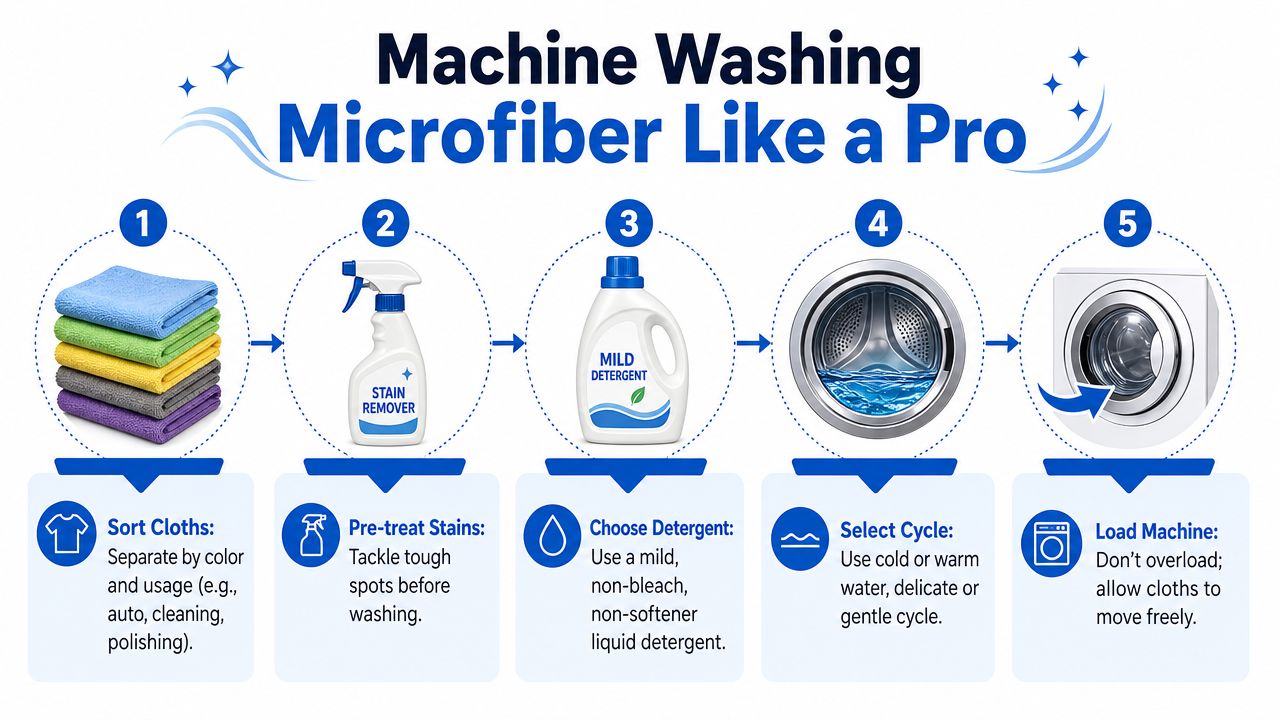
Sort microfiber by job type first, then by soil level. Glass and polishing cloths should stay together. Kitchen grease cloths belong in their own load. Bathroom cloths, especially anything used around toilets or baseboards, should be washed separately from general dusting towels.
That separation matters even more after post-construction or heavy deep-clean work. Fine drywall dust, grout haze, and gritty debris can spread through a mixed load and dull every cloth in the drum.
Color coding helps keep that system consistent. Many professional cleaners assign one color to bathrooms, one to kitchens, and one to lower-risk dusting or glass work because it reduces cross-contamination and guesswork.
Give the cloths room to move. Wash microfiber by itself, and do not cram the machine full. A loosely filled load rinses better and releases trapped soil more effectively than a packed drum.
Effective wash settings
Use cold or lukewarm water, a Normal or Permanent Press cycle, and a small amount of mild liquid detergent. Unscented and dye-free is the safest pick because it leaves behind less residue. More soap does not get microfiber cleaner. It usually just makes rinsing harder.
The extra rinse is the professional move that many home guides skip. If cloths still smell like detergent or feel slick after washing, residue is still sitting in the fibers. That residue cuts down absorbency and the cloth stops grabbing dust, grease, and polish the way it should.
For hard-use loads, I keep the routine simple:
- Separate by task and grime level. Keep glass, bathroom, kitchen, and heavy-duty cleanup cloths apart.
- Use liquid detergent sparingly. A little goes a long way with microfiber.
- Choose a standard cycle with moderate agitation. Stronger is not better for synthetic split fibers.
- Run an extra rinse. This helps flush out soap, loosened soil, and fine debris.
- Wash microfiber alone. Keep out cotton towels, socks, mop heads, and anything that sheds lint.
For cloths loaded with construction dust, greasy residue, or ground-in grime, pre-soak before machine washing instead of reaching for a harsher cycle. A short soak in lukewarm water with a small amount of mild detergent loosens debris so the washer can remove it without beating up the fibers.
That trade-off is worth understanding. A tougher cycle may look more aggressive, but repeated high-friction washing shortens cloth life. In professional cleaning, better sorting, lighter detergent use, and better rinsing usually outperform brute force.
Hand Washing for Small Batches and Delicate Cloths
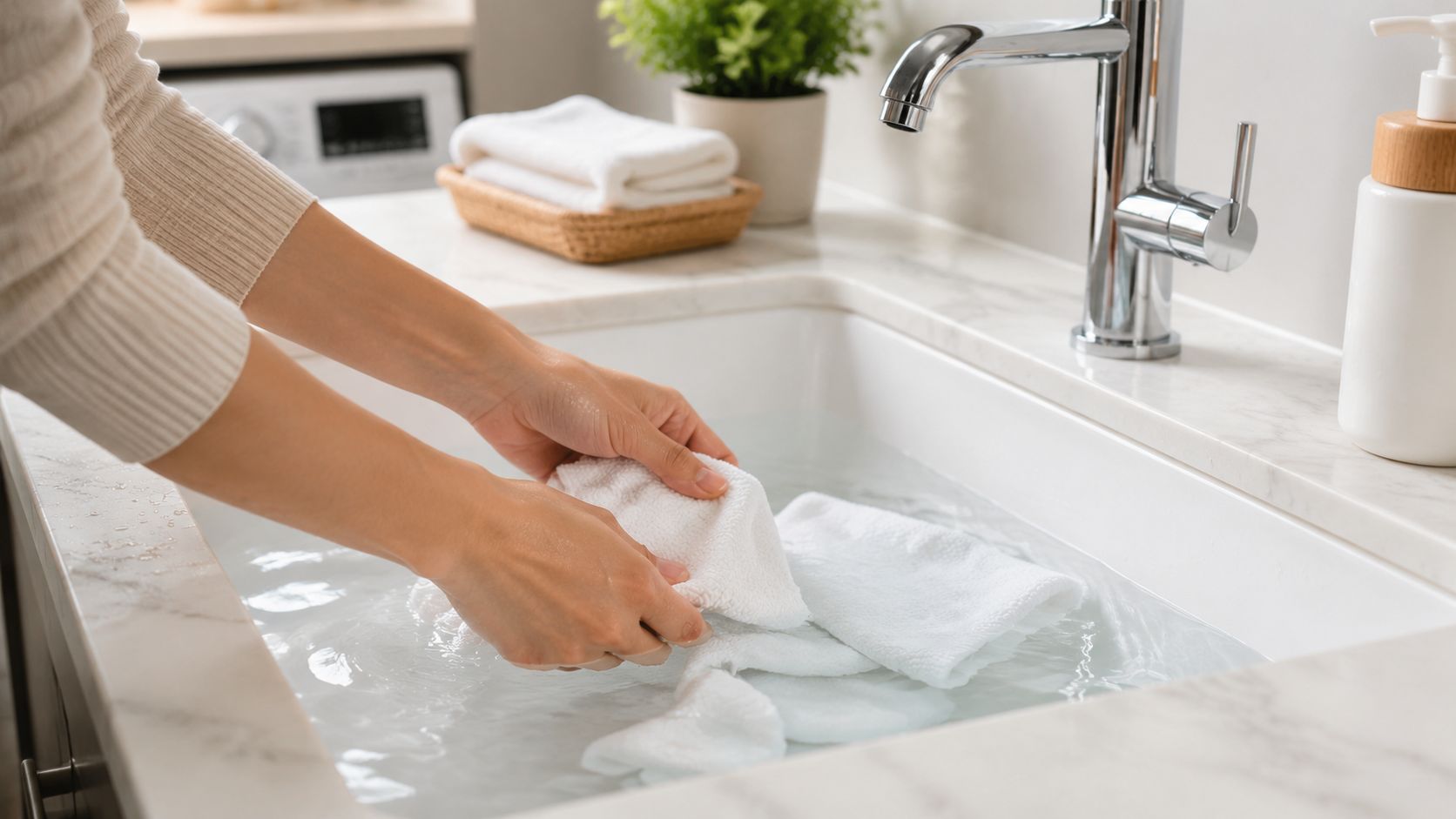
Hand washing is a smart choice when you only have a few cloths, when they're used on delicate finishes, or when you don't want to wait to build a full load.
When hand washing makes more sense
This works well for polishing cloths, quick kitchen reset cloths, or a favorite glass towel you want to keep in top shape. It's also useful if one cloth is dirty enough that you don't want it sitting around until laundry day.
Hand washing gives you more control. You can clean gently, rinse thoroughly, and avoid the friction and residue that come from a mixed machine load.
A safe hand-wash routine
Fill a clean basin or sink with lukewarm water, add 2 teaspoons of mild detergent, and agitate the cloths gently. Let them soak for 15 minutes, then rinse three times until the water runs clear.
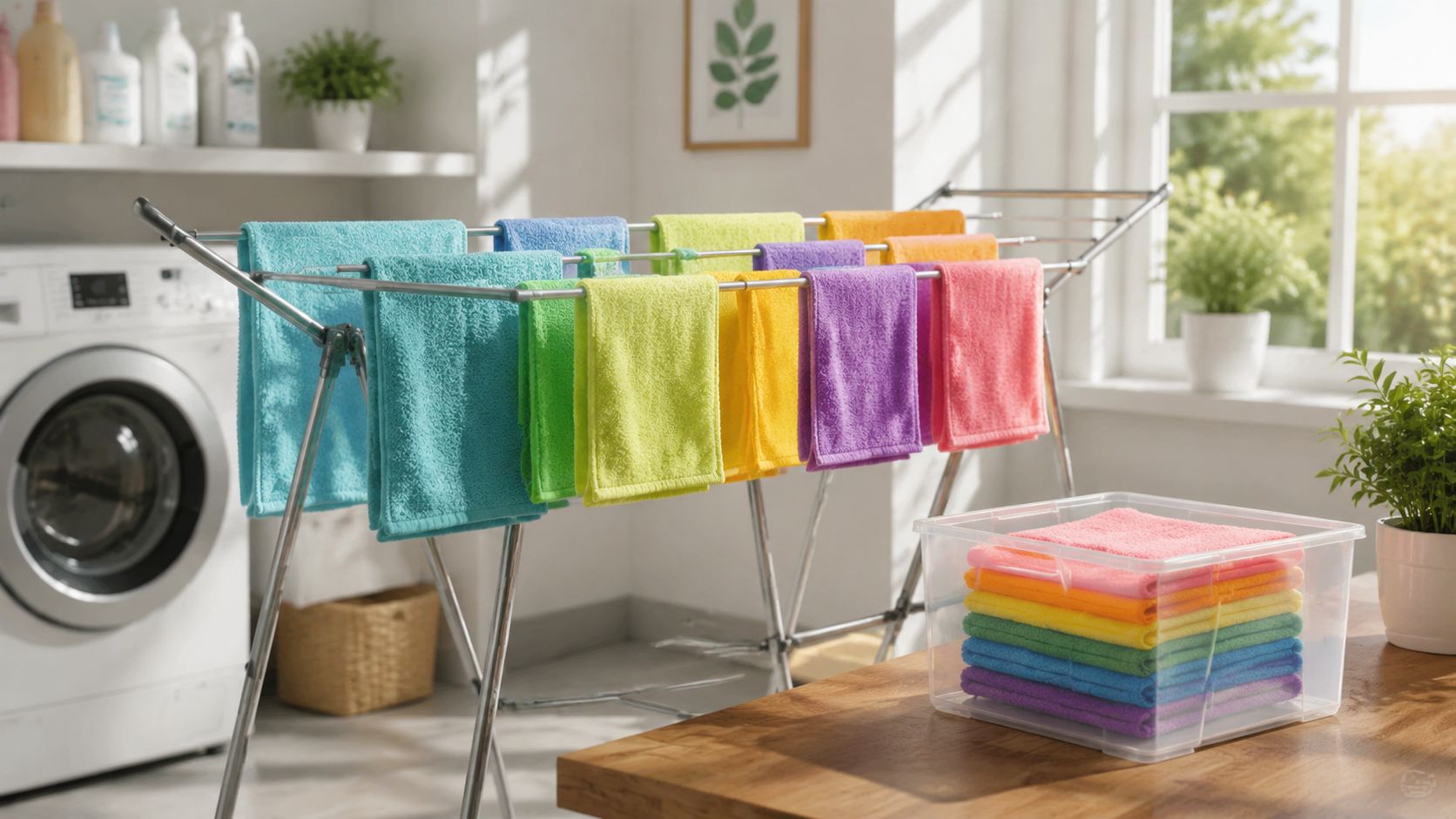
Don't wring or twist them. That can damage the split-fiber structure. Instead, gently squeeze out the water and hang the cloths indoors on a rack where they won't pick up lint.
A cloth that feels crunchy after drying usually wasn't rinsed well enough, not washed too little.
Hand washing takes a few extra minutes, but for small batches it's often the cleanest, safest method.
Drying and Storing Microfiber for Maximum Lifespan
A lot of microfiber damage happens after the wash. People do the laundering part correctly, then toss the cloths into a hot dryer with towels and wonder why they come out rough and less useful.
Why drying matters as much as washing
Microfiber cloths can be safely washed in warm water up to 160ºF (71ºC), but best practice is still cold or lukewarm water. Drying is where you need to be much stricter. Heat above 140ºF (60ºC) breaks down the polyester and polyamide fibers and can reduce the cloth's lifespan by up to 50% if exposure is consistent.
That's why air-drying is the gold standard. It protects the fiber structure and keeps cloths soft and absorbent without any heat stress.
If you need the dryer, use the lowest heat setting or an air-fluff setting. Plastic dryer balls can help knock loose debris without coating the cloths. If you want a broader guide to using heat safely, this article on sanitizing clothes in the dryer gives useful context on why temperature control matters.
How to store clean cloths properly
Once dry, keep microfiber in a clean, dry, separated space. A drawer, lidded bin, or dedicated shelf works well.
Avoid tossing clean microfiber into a laundry basket with mixed household textiles. That's how dust, pet hair, and lint undo your work before the cloths ever make it back to the cleaning caddy.
A simple storage system works best:
- Keep by task. Glass cloths, bathroom cloths, and kitchen cloths should stay separate.
- Store fully dry. Damp storage leads to odor and stale-feeling fabric.
- Use a clean container. Open shelves near linty laundry aren't ideal.
Advanced Care Tackling Tough Grime and Replacing Old Cloths
Some cloths aren't just dirty. They're loaded with grease, sealant, resin, paint dust, or renovation grime. That's where basic home laundry advice usually stops being useful.
When a deep soak can save a cloth
An emerging detailing practice uses a 24 to 48 hour pre-soak in dedicated detergent to loosen stubborn sealants and contamination, and that same approach can help with post-construction debris on microfiber used around paint, resin, or heavy grime (microfiber pre-soaking method). For some ugly cloths, a patient soak works better than washing them over and over.
That's also why mixing random DIY additives into the wash isn't always smart. If you're comparing old cleaning hacks with more controlled methods, this look at vinegar and baking soda cleaning is a useful reality check.
Signs it is time to retire a microfiber cloth
Not every cloth is worth saving. Replace it when:
- It feels stiff even after proper washing
- It no longer absorbs water well
- It pushes dust or cleaner around instead of picking it up
- The edges are frayed or the surface looks worn down
- It stays contaminated from a task you no longer trust it for
A tired microfiber cloth can still move down to dirtier jobs, but it shouldn't stay in rotation for glass, polished surfaces, or fine dusting.
Your Microfiber Washing Questions Answered
Can I wash microfiber cloths with regular towels
No. Cotton towels shed lint, and microfiber grabs that lint. Wash microfiber with microfiber only.
Can I use hot water
Best practice is cold to lukewarm water, even though microfiber can tolerate warmer washing up to a point. For routine care, lower heat is safer.
Do I need special detergent
You don't need anything fancy, but you do need the right type. Use a mild liquid detergent without softeners, dyes, or added fragrance. Powder detergent and heavy additives are where problems start.
Can I put microfiber cloths in the dryer
Yes, but only on low heat or no heat. Air-drying is better if you want maximum longevity.
How do I sanitize microfiber cloths
For thermal sanitizing, commercial hygiene guidance notes that 135ºF (57ºC) held for 60 minutes is sufficient to kill 99.9% of common germs without damaging the material. If chemical disinfection is needed, bleach should only be used when the cloth label says it is bleach-safe. Otherwise, use a sanitizer made for that purpose.
Why do my microfiber cloths stop absorbing
The usual culprits are residue, lint contamination, or heat damage. Fabric softener, too much detergent, cotton lint, and high dryer settings are the most common reasons.
How often should I wash microfiber cloths
Wash them after use, especially if they touched grease, bathroom surfaces, floors, or renovation dust. Dirty microfiber doesn't become more effective by sitting in a pile.
Can old microfiber still be useful
Yes. Move older cloths down to dirtier tasks. Keep your best cloths for glass, mirrors, polished fixtures, and final wipe-downs.
If you'd rather skip the trial and error, Sunny Day Pro Services helps homeowners in Wayland, Newton, Needham, Wellesley, Weston, and nearby communities with deep cleaning, move-in and move-out cleaning, and meticulous post-construction cleanup. Request a quote if you want a trained team to handle the mess and leave your home thoroughly clean.

