
Move-In House Cleaning: Your Complete Guide
Plan a flawless move-in house cleaning with our room-by-room guide, DIY vs pro comparison, 2026 pricing, eco-friendly tips, and Massachusetts service insights.

The moving truck is idling outside, cardboard boxes are stacked in the foyer, and the realtor's lockbox is still open by the door. You've got a narrow window between receiving the keys and unloading the first box. That window is when move-in house cleaning works best, because every cabinet, closet, floor edge, tub, and vent is still accessible.
A clean-looking home can still carry cooking residue, pet hair, contractor dust, hard-water scale, or months of vacancy dust. In Massachusetts, the cleaning window can also collide with a closing date, a renovation punch list, utility activation, a landlord's inspection, and the practical problem of keeping children and pets out of the way. The work is less about checking boxes than coordinating the handoff.
Move-in cleaning has become a mainstream turnover service within a large residential cleaning economy. Industry summaries estimate the global cleaning services market at about $482 billion in 2026, rising to roughly $859 billion by 2030 at a 7.5% annual growth rate, while about 25% of cleaning clients use move-in or move-out services. Jobber's cleaning industry overview places the service within a broad, established market rather than treating it as an occasional specialty.

Table of Contents
- Seven days before arrival
- Several days before cleaning
- The day before service
- Cleaning day
- After cleaning
- Moving day
- Who is responsible for paying?
- Does renovation dust require a separate service?
- How early should you book?
- What access does the crew need?
- What should you photograph?
Move-In Day Starts With a Clean Slate
The best move-in clean happens after the final walk-through and before the movers unload. Cleaning earlier can be counterproductive. Contractors may return, sellers may remove forgotten items, or a final repair can leave fresh dust on a surface you just paid to clean.
The empty-home advantage
Vacancy changes the job. A crew can open every cabinet, move accessible appliances, clean closet floors, reach baseboards, and work across the entire floor without lifting boxes or shifting furniture. A recurring house clean, by contrast, works around the belongings already in place. A one-off deep clean usually assumes a lived-in home and may not include the inside surfaces that matter during a property handoff.
The reset is especially valuable in kitchens and bathrooms. Residue left inside a drawer or along a grout line is easy to ignore once dishes, toiletries, and furniture arrive. After unpacking, reaching those areas becomes slower, more disruptive, and less likely to happen.
Practical rule: Protect the cleaning window as carefully as you protect the moving appointment. The home should be empty, utilities should work, and the person responsible for approving the result should have access.
Responsibility must be settled before the keys change hands
A buyer may assume the seller will leave the property clean. A tenant may assume the landlord will prepare it. A landlord may expect the previous tenant to meet a lease standard. None of those assumptions should replace written confirmation.
Responsibility varies by lease, purchase agreement, management agreement, and the condition promised at handoff. The Cleaning Authority's move-in and move-out guidance identifies responsibility as a practical issue that depends on the governing agreement, not a universal rule.
Before booking, confirm:
- Who pays: Seller, buyer, landlord, tenant, or property manager.
- Who grants access: Realtor, owner, tenant, superintendent, or lockbox.
- When cleaning can begin: After closing, after the final walk-through, or after renovation sign-off.
- What must be documented: Existing damage, unfinished work, stains, and items left behind.
A move-in clean isn't an optional flourish. It's the reset that determines whether the first year begins with clean surfaces or inherited residue.
What Move-In Cleaning Actually Is
Move-in house cleaning is a vacant-home turnover service. It takes place between occupants, when furniture, rugs, boxes, and personal items no longer block the surfaces that need attention. Buyers may book it after closing, landlords may use it before a new tenant arrives, and owners may need it for inherited properties or short-term rental resets.
The service has a different operating standard from a recurring clean. Routine cleaning maintains an occupied home by working around furniture and belongings. A one-off deep clean may reach further, but access can still be limited. Move-in cleaning uses the vacant property to inspect and clean surfaces that are normally hidden, then prepares the home for a clear handoff.
What makes the service different
A properly scoped crew should cover inside cabinets and drawers, appliance interiors, interior windows and tracks, baseboards, vents, light fixtures, door frames, and full bathroom detailing. Depending on the property and quote, the work may also include the inside of an oven, refrigerator, and dishwasher, plus closets, utility areas, and accessible spaces behind or beneath appliances.
Vacancy improves access, but it does not remove every limitation. Heavy renovation dust, paint residue, grout haze, damaged finishes, or appliances that cannot be moved may require separate labor or treatment. The quote should identify those boundaries before the crew arrives.
Move-in service typically carries a premium over standard cleaning because it combines vacant-home access with interior detailing. Detailed 2026 ranges are broken out in the pricing section below.
| Service Type | Home Condition | Accessibility | Typical Inclusions | Pricing Tier |
|---|---|---|---|---|
| Move-in clean | Vacant between occupants | Broad access to cabinets, closets, floors, and appliances | Turnover detail, appliance interiors, cabinet interiors, baseboards, bathrooms, floors | Premium |
| Deep clean | Usually occupied or partly furnished | Access depends on belongings and furniture | Detailed surface cleaning, kitchens, bathrooms, dusting, floors | Mid to premium |
| Standard clean | Occupied and maintained regularly | Works around furniture and personal items | Exposed surfaces, routine bathrooms, kitchen surfaces, floors | Routine |
Timing is part of the service
Schedule the clean after the final inspection or renovation release, rather than assuming the previous resident's departure means the property is ready. Keys, utilities, access instructions, and renovation sign-off all affect whether the crew can complete the work.
Remodeled homes may need more than ordinary move-in cleaning. Fine dust, grout haze, and construction residue can remain after visible work appears finished. DataIntelo's house cleaning market discussion identifies post-construction contamination and specialty treatments as distinctions from ordinary move-in work. The responsible party should approve any added scope before cleaning begins.
The Room-by-Room Move-In Checklist
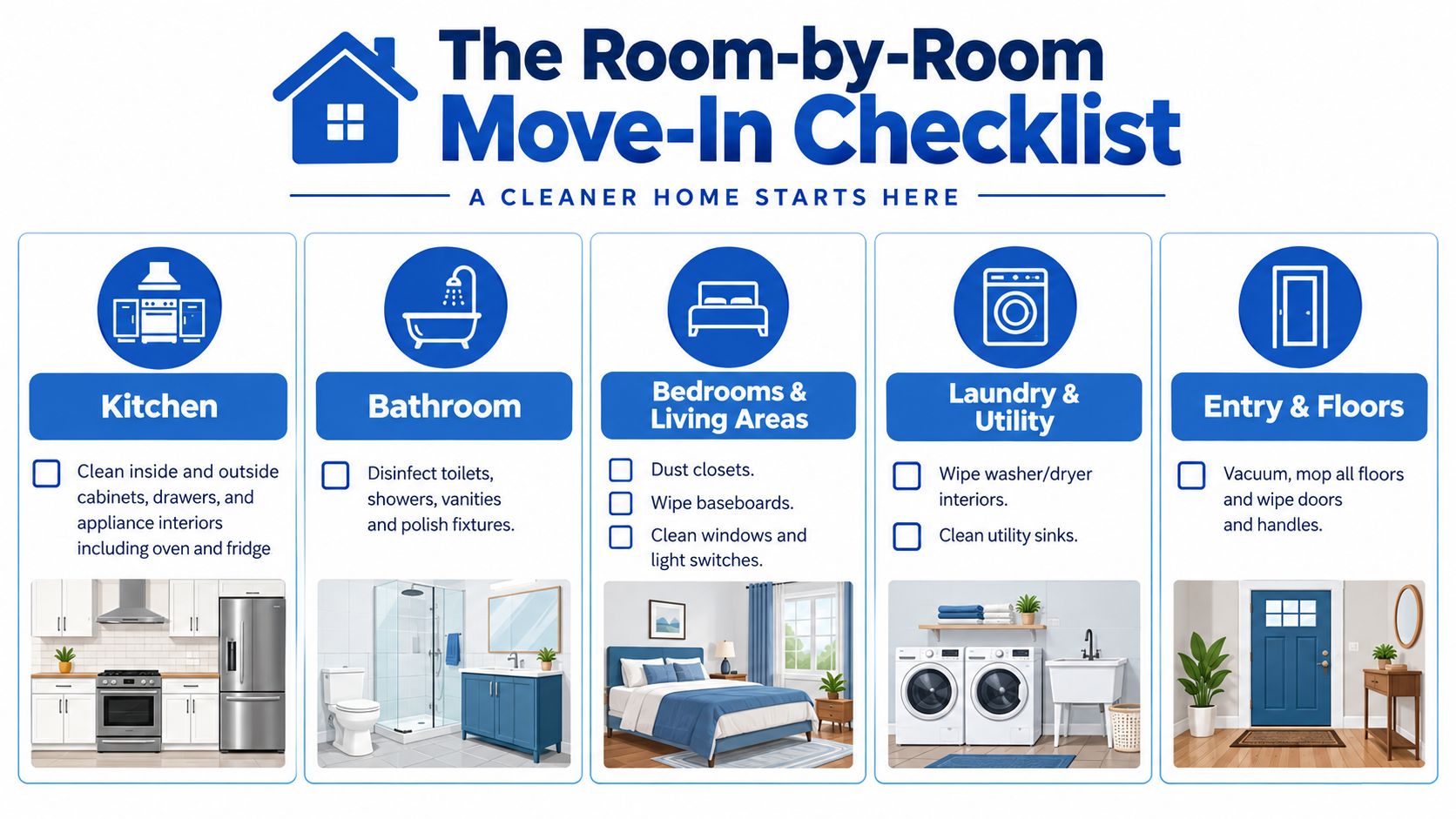
A reliable crew works from high surfaces downward and finishes with floors. That order prevents dust from falling onto areas that were already cleaned. It also makes quality control easier because each room has a defined completion point.
Kitchen
Start above the counters, then work inward and downward. A complete kitchen reset should include:
- Cabinets and drawers: Wipe the inside and outside, including corners, shelf edges, pulls, and drawer tracks.
- Appliances: Clean the interior and exterior of the oven, refrigerator, and dishwasher when included in the quote.
- Range hood: Degrease the hood surface and clean or replace the filter according to its condition.
- Backsplash: Remove grease from tile and grout without damaging the finish.
- Sink and faucet: Scrub the basin, clean the sink trap area, and descale the faucet where hard water has collected.
- Floors: Vacuum edges and toe-kicks before mopping with a surface-appropriate cleaner.
Don't assume a shiny countertop means the kitchen is ready. Cabinet shelves and appliance interiors are the surfaces that hold direct contact with food, dishes, and storage items.
Bathrooms
Bathrooms need both sanitation and mineral-scale removal. Clean the toilet bowl, seat, lid, exterior, base, and the area behind the tank. Detail the tub, shower walls, glass, grout, vanity, medicine cabinet interior, exhaust fan, faucets, towel bars, toilet-paper holder, switches, and door hardware.
Tile requires judgment. Ceramic and porcelain can tolerate methods that are unsafe for marble or other natural stone. A professional should identify the surface before choosing a descaler, abrasive, or steam method.
Bedrooms and living areas
Bedrooms should be cleaned from the ceiling down:
- Closets: Wipe shelving, rods, corners, walls, and floors.
- Windows: Clean sills, frames, and tracks, not just the glass.
- Trim: Wipe baseboards, door frames, outlet plates, and switch plates.
- Upper fixtures: Dust ceiling fans, light fixtures, crown molding, and ledges.
- Living spaces: Detail built-ins, fireplace surrounds, vents, hardwood or tile edges, and door frames.
Lowe's new-home cleaning checklist specifically calls out ceilings, crown molding, ceiling fans, light fixtures, air vents, return grates, walls, corners, and careful floor finishing. Interior windows, tracks, and baseboards are commonly missed by inexperienced crews, but they should be treated as standard move-in details in most homes rather than surprise upcharges.
Hidden areas
The utility room, laundry area, basement stairs, garage entry, and HVAC returns often reveal whether the work was systematic. Wipe the washer and dryer surfaces, clean the lint trap, inspect the dryer vent exterior, clean utility sinks, vacuum basement stair railings, and remove dust from HVAC return vents.
For renovation or turnover dust, use HEPA vacuuming followed by damp wiping. Dry sweeping can put fine particulate back into the air, while HEPA filtration captures smaller dust that ordinary vacuums may recirculate. Care.com's post-renovation cleaning checklist also recommends replacing HVAC filters after the work so settled dust isn't redistributed through the system.
DIY Versus Hiring a Professional Crew
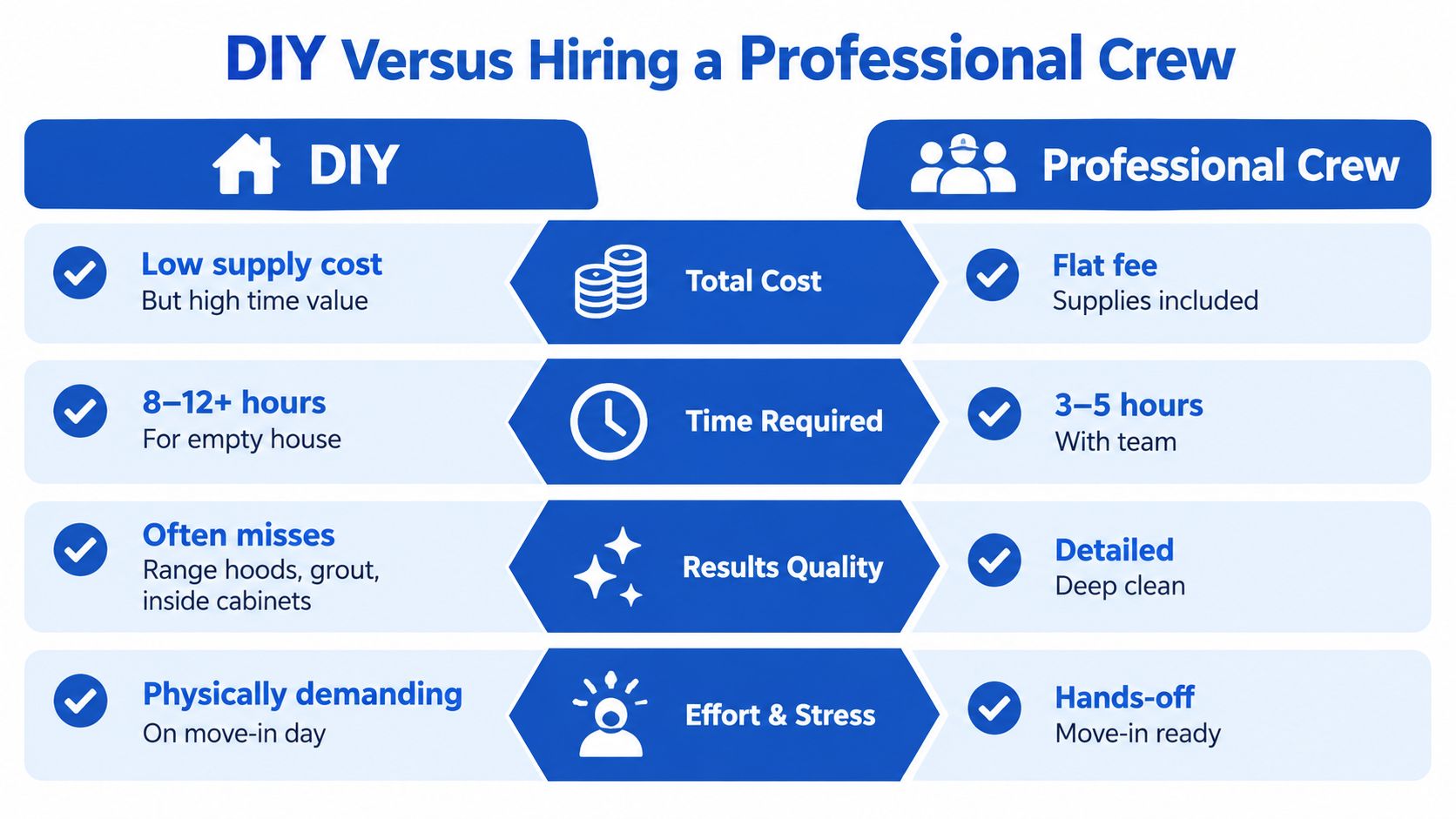
DIY move-in cleaning can work, but only under the right conditions. The home should be lightly used, the scope should be clear, and you should have a full weekend plus a helper. A solo owner cleaning between closing and a moving truck often underestimates how long ovens, window tracks, grout, cabinet interiors, and baseboards take.
The supply bill is only one part of the cost. Add ladders, microfiber cloths, degreaser, a floor-safe cleaner, scrub brushes, gloves, replacement HVAC filters, disposal time, and the value of your own labor. Professional pricing also includes equipment, labor coordination, insurance, and responsibility for completing a defined scope.
The honest trade-off
| Consideration | DIY | Professional crew |
|---|---|---|
| Total cost | Lower direct supply cost, but substantial time and physical effort | Quoted service cost with labor and supplies defined |
| Time | Can consume most of an available weekend in an empty home | Multiple workers can handle rooms in parallel |
| Results | Often strongest on visible surfaces, weaker on tracks, hoods, grout, and cabinet interiors | More consistent process for detailed turnover areas |
| Risk | Missed areas can affect a deposit, inspection, or closing expectation | Written scope creates clearer accountability |
A professional service earns its place when the home has post-renovation dust, pet or smoker residue, several bathrooms, or a narrow closing-day deadline. It also helps when you can't safely use ladders, move accessible appliances, or identify whether a floor cleaner is suitable for the surface.
A recommendation by situation
- Sellers: Hire a crew when the property must look market-ready for photos, showings, or handoff. A clean home lets buyers evaluate finishes instead of noticing residue.
- Buyers: DIY can make sense for a careful first sweep if the property is already in good condition. Hire help when you need the entire home reset before furniture arrives.
- Landlords: Use a defined turnover scope and document completion between tenants. Consistency matters more than improvising a new checklist for every unit.
For a broader discussion of timing and service selection, see cleaners for house move. The right choice depends less on pride and more on whether your available time matches the actual scope.
Pricing, Quotes, and Scheduling in 2026
A Massachusetts move-in quote depends on more than square footage. Bedroom count, condition, access, renovation dust, appliance interiors, and window work all change the labor plan. A vacant, lightly used condominium requires a different crew setup from a large single-family home after remodeling.
The ranges below offer a national reference, not a Massachusetts rate card. Local labor, travel distance, home condition, and add-ons can push the final estimate higher or lower.
| Home Size | Base Price Range | Common Add-Ons |
|---|---|---|
| Under 1,000 square feet | About $169 to $236 | Oven interior, refrigerator interior, interior windows, post-construction dust removal |
| 1,500 to 2,000 square feet | About $297 to $406 | Oven interior, refrigerator interior, interior windows, post-construction dust removal |
| Over 3,000 square feet | About $511 to $693 | Oven interior, refrigerator interior, interior windows, post-construction dust removal |
Clean Estimator's 2026 move-in cleaning cost analysis reports that move-in service costs about 88% to 105% more than regular house cleaning. The premium reflects the added labor for cabinet interiors, appliance interiors, and full floor access while the home is vacant. Post-renovation dust, heavy grease, pet odor, and smoker residue can require separate work.
What a useful quote should say
Request a written scope rather than a promise that the property will be “deep cleaned.” The estimate should identify:
- Property details: Size, bedrooms, bathrooms, floors, and condition.
- Included surfaces: Cabinets, drawers, appliances, windows, tracks, baseboards, vents, and floors.
- Special work: Post-construction dust, grout haze, heavy grease, pet odor, or smoker residue.
- Supplies and equipment: Products, HEPA equipment, ladders, and floor-safe tools supplied by the crew.
- Access and cancellation terms: Key handoff, occupancy requirements, arrival window, and rescheduling policy.
Use this cleaning service quote guide to prepare questions before comparing estimates. Schedule once the closing or possession timeline is reliable, especially during busy spring and summer moving periods. Cleaning usually requires an empty property, working water, electricity, and adequate lighting. If renovations are still active, set cleaning after the final dusty work, or the crew may need to return for a second pass.
Eco-Friendly Products and Tile-Floor Care
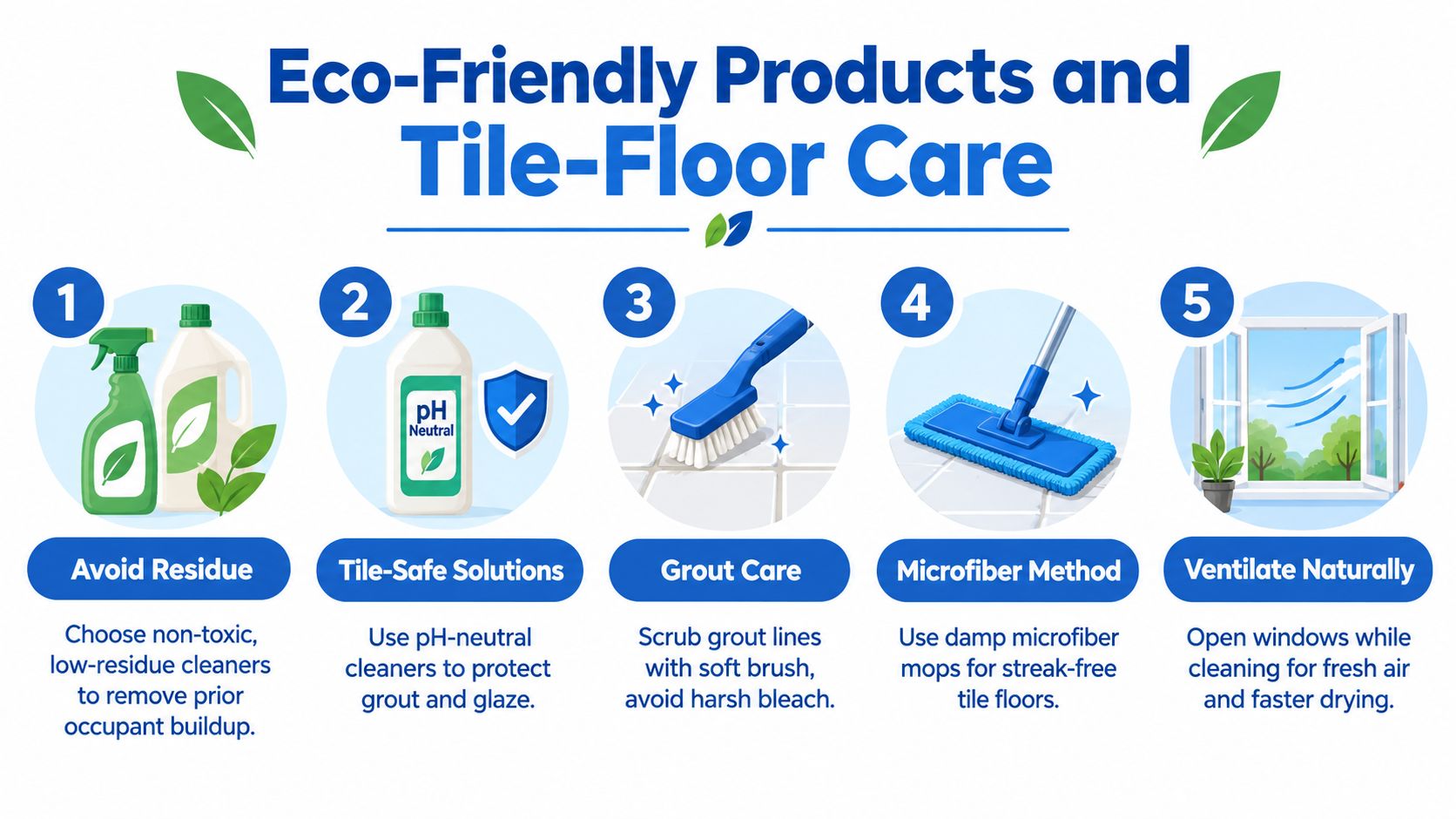
Move-in day is the wrong time to use an unknown product on an unfamiliar floor. Previous occupants and contractors may leave residue, but aggressive chemistry can create a different problem by dulling a finish, weakening a sealer, or leaving a film that attracts more soil.
For homes with infants, pets, or occupants with chemical sensitivities, ask about plant-based, non-toxic, low-residue products. “Green” is not a complete specification. You need to know what the cleaner uses on floors, stone, grout, glass, stainless steel, and high-touch surfaces.
Tile needs a surface-specific method
First identify whether the floor is ceramic, porcelain, marble, granite, or another natural stone. Porous grout may need sealing after it has been cleaned and fully dried. A pH-neutral cleaner is the safer starting point for glazed tile and sealed grout because it helps protect the finish.
Avoid acidic descalers on natural stone. Vinegar, lemon-based products, and strong bathroom acids can etch stone even when they remove mineral scale effectively from some ceramic surfaces. For stubborn bathroom tile, controlled steam may help, but the operator should confirm that the tile, grout, sealant, and surrounding materials can tolerate it.
Use damp microfiber rather than flooding the floor. Excess water can migrate into porous grout, damage vulnerable flooring, or leave a streaky film. Ventilation also matters, especially in a closed Massachusetts home that has been vacant.
Questions to ask before approving the scope
- Product choice: Which products will be used on tile, stone, hardwood, and painted surfaces?
- Filtration: Does the crew bring HEPA vacuums for renovation or fine dust?
- Green options: Are lower-toxicity or green-certified products available?
- Testing: Will the cleaner test an unfamiliar surface before applying a strong product?
- Floor protection: How will the crew control water, residue, and cross-contamination between rooms?
For product ideas and terminology, review eco-friendly cleaning products. Claims should be specific enough for you to verify, particularly when the first night in the home is approaching.
A Practical Plan for the Week of the Move
A seven-day plan keeps the clean from competing with the movers. The exact dates may shift around a closing, but the order should remain consistent.
Seven days before arrival
Confirm possession, cleaning access, utilities, and the written scope. Ask the seller, contractor, or property manager whether any work remains. Photograph every room during the handover walkthrough, including floors, walls, appliances, windows, and visible damage.
Several days before cleaning
Send the crew photos of problem areas. Identify renovation dust, grout haze, heavy grease, pet residue, abandoned items, or areas that may need an add-on. Confirm whether the home will be completely empty and who will open the door.
The day before service
Remove leftover belongings and loose debris. Make sure water, power, lighting, and HVAC access are available. Keep children and pets out of the work zone, and confirm the key or lockbox plan in writing.
Cleaning day
Let the crew work in the empty property. Don't schedule movers to arrive halfway through the service, because boxes quickly block cabinets, floors, and baseboards. The crew should move from high dusting and surfaces to bathrooms, kitchens, and floors.
After cleaning
Walk the property before furniture arrives. Use the written scope as a punch list and photograph completed rooms. Flag missed items while the crew is still there, rather than discovering them after beds, bookcases, and appliances are in place.
Moving day
Keep a small arrival kit separate from the truck:
- Clean entry path: Protect freshly cleaned floors with appropriate temporary covering.
- Utilities: Confirm water, electricity, heat, and lighting work.
- First-night supplies: Bring soap, paper towels, toilet paper, clean bedding, and basic floor-safe spot-cleaning supplies.
- Damage record: Keep the before-and-after photos with closing or lease documents.
The practical objective is simple. Cleaning finishes before unloading begins, and the handoff record shows what condition the home was in when you received it.
Move-In Cleaning Questions Homeowners Ask
Who is responsible for paying?
The answer depends on the lease, purchase agreement, management agreement, or written condition promised at handoff. A Massachusetts tenant shouldn't assume a landlord must provide a full move-in clean unless the agreement says so. A landlord should define the turnover standard rather than rely on a verbal expectation. Buyers and sellers should settle the issue before closing if cleanliness is part of the negotiated condition.
Does renovation dust require a separate service?
Often, yes. Standard move-in cleaning may cover ordinary vacancy dust, but post-construction work can leave fine particulate, grout haze, adhesive residue, paint traces, and dust inside ventilation paths. Ask for a post-construction assessment instead of assuming a routine checklist covers specialty debris removal.
How early should you book?
Book as soon as the possession date is credible, particularly during spring and summer moving periods. Keep the appointment after the final walk-through and after contractors finish. If the closing date changes, a clear cancellation and rescheduling policy prevents confusion.
What access does the crew need?
Provide working water, electricity, lights, and access to every room, cabinet, appliance, basement, laundry area, and garage entry included in the scope. If a realtor, property manager, or lockbox controls access, give the crew one named contact who can approve the work.
What should you photograph?
Photograph existing stains, scratches, chipped tile, damaged grout, wall marks, appliance condition, and items left behind before cleaning. For rental turnovers, Apartments.com's security-deposit guidance recommends documenting and cleaning areas such as appliances, cabinets, pantry shelves, sinks, countertops, range hoods, bathrooms, and floors. Before-and-after photos also help clarify closing conditions and warranty questions.
Sunny Day Pro Services provides Massachusetts move-in and move-out cleaning, deep cleaning, and post-construction cleanup with eco-friendly options and flexible scheduling. Visit Sunny Day Pro Services to request a quote for a vacant-home reset in Wayland, Newton, Needham, Wellesley, Weston, or a nearby community before the movers arrive.

