
New Construction Cleanup: Your 2026 Guide
Get your new space move-in ready with our 2026 guide to new construction cleanup: costs, checklists, and hiring a pro in Massachusetts.
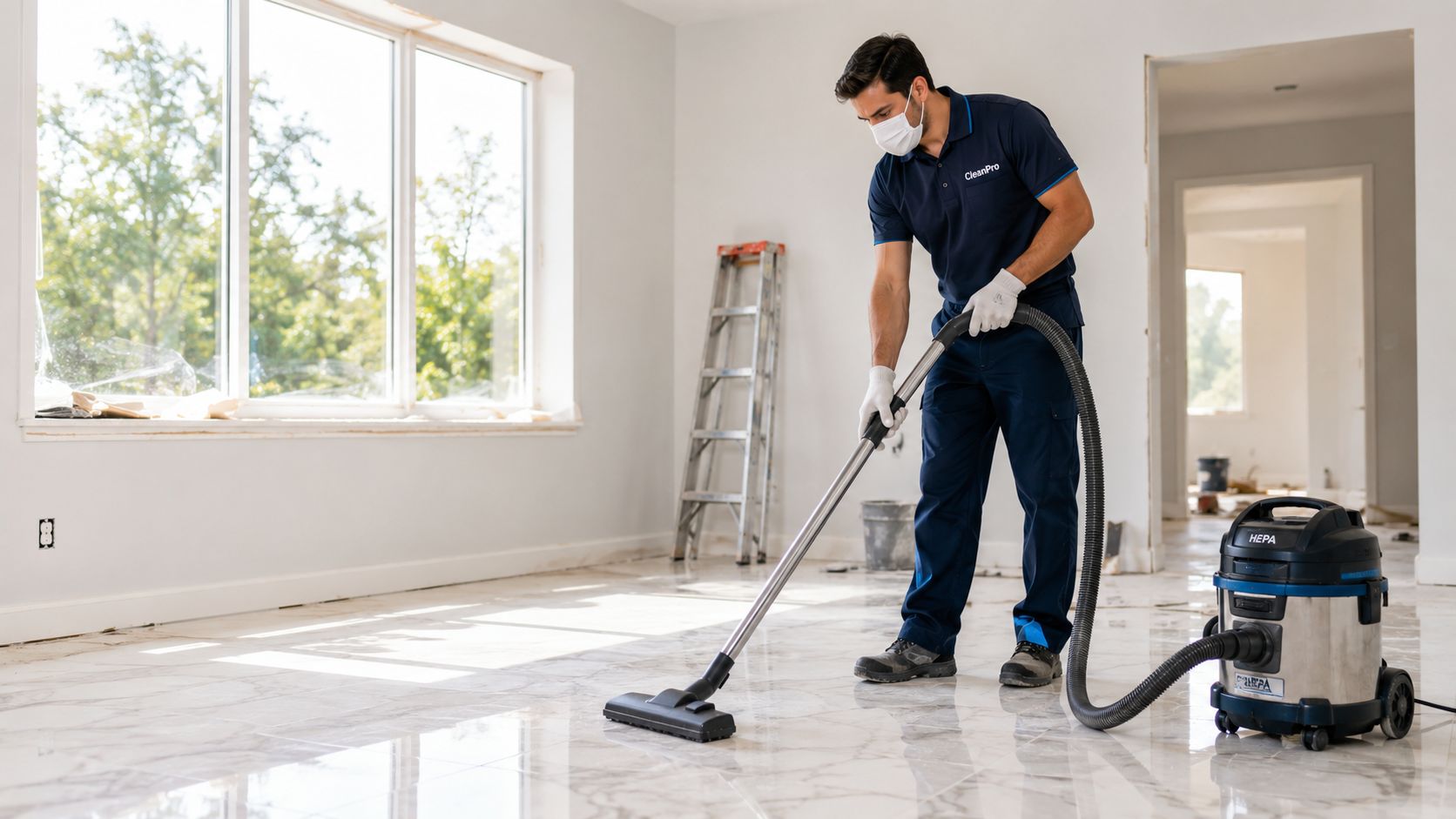
The renovation crew is gone. The cabinets are installed, the tile looks sharp, and the paint finally dried. Then the sunlight hits the room and shows what construction leaves behind. Fine dust on the trim. Haze on the new floor. Adhesive on glass. Grit in window tracks. Debris tucked under vanities and inside drawers.
That moment catches a lot of homeowners off guard.
New construction cleanup isn't regular house cleaning with a stronger vacuum. It's the last technical step between a jobsite and a livable home. If that step is rushed, the space can look finished while still holding drywall dust, sticker residue, grout haze, paint specks, and abrasive debris that can damage brand-new surfaces.
I've seen the same pattern on kitchen remodels, bathroom renovations, basement finishes, and full-home projects. The visible mess gets removed first, but the hidden mess stays behind. That's what creates callbacks, frustration, and in some cases avoidable wear on new tile, flooring, fixtures, and glass. A proper post-construction cleaning service deals with the debris you can see and the residue you usually don't notice until after move-in.
Table of Contents
- Rough cleaning gets the site under control
- Final cleaning handles the detail work
- Touch-up cleaning protects the handoff
- Is post-construction cleaning different from a standard deep clean
- When should I schedule new construction cleanup
- Do small remodels need professional cleanup too
- Will post-construction cleanup include adhesive and sticker removal
- Is construction dust in vents and registers a real concern
- Are eco-friendly cleaning options available
Your Renovation Is Done But What About the Dust
A finished renovation often looks clean from the doorway. Walk closer, and the detailed cleaning tasks become clear. Dust has settled on crown molding, inside cabinet boxes, on top of doors, and across every horizontal edge. Window labels are still attached. Caulk residue is stuck to fixtures. New floors may have a dull film that isn't damage, but leftover construction residue.
At this point, homeowners lose time.
They start with paper towels, a household vacuum, and a mop bucket. A few hours later, the room still looks cloudy because the order was wrong. If loose grit stays on the floor while someone scrubs, that grit can scratch the finish. If surfaces get wet before fine dust is captured, the dust turns into paste in corners, grout lines, and trim joints.
The hidden mess is what causes problems
The obvious trash is only part of the job. The harder part is removing the fine layer that settled after cutting, sanding, drilling, and foot traffic. That includes dust in HVAC registers, adhesive residue on glass and hardware, paint flecks on trim, and film on tile or stone.
Practical rule: If the space was built, sanded, cut, or tiled, assume the dust traveled farther than the room where the work happened.
A standard deep clean usually focuses on dirt from living in the space. Post-build cleanup deals with construction residue, delicate new finishes, and sequencing. That's why it has to be approached like finishing work, not routine housekeeping.
The Three Stages of a Professional Post-Construction Cleanup
Professional cleanup works best when it's broken into phases. That structure isn't about making the job sound bigger. It's how crews avoid cleaning the same area twice and how they protect finished materials.
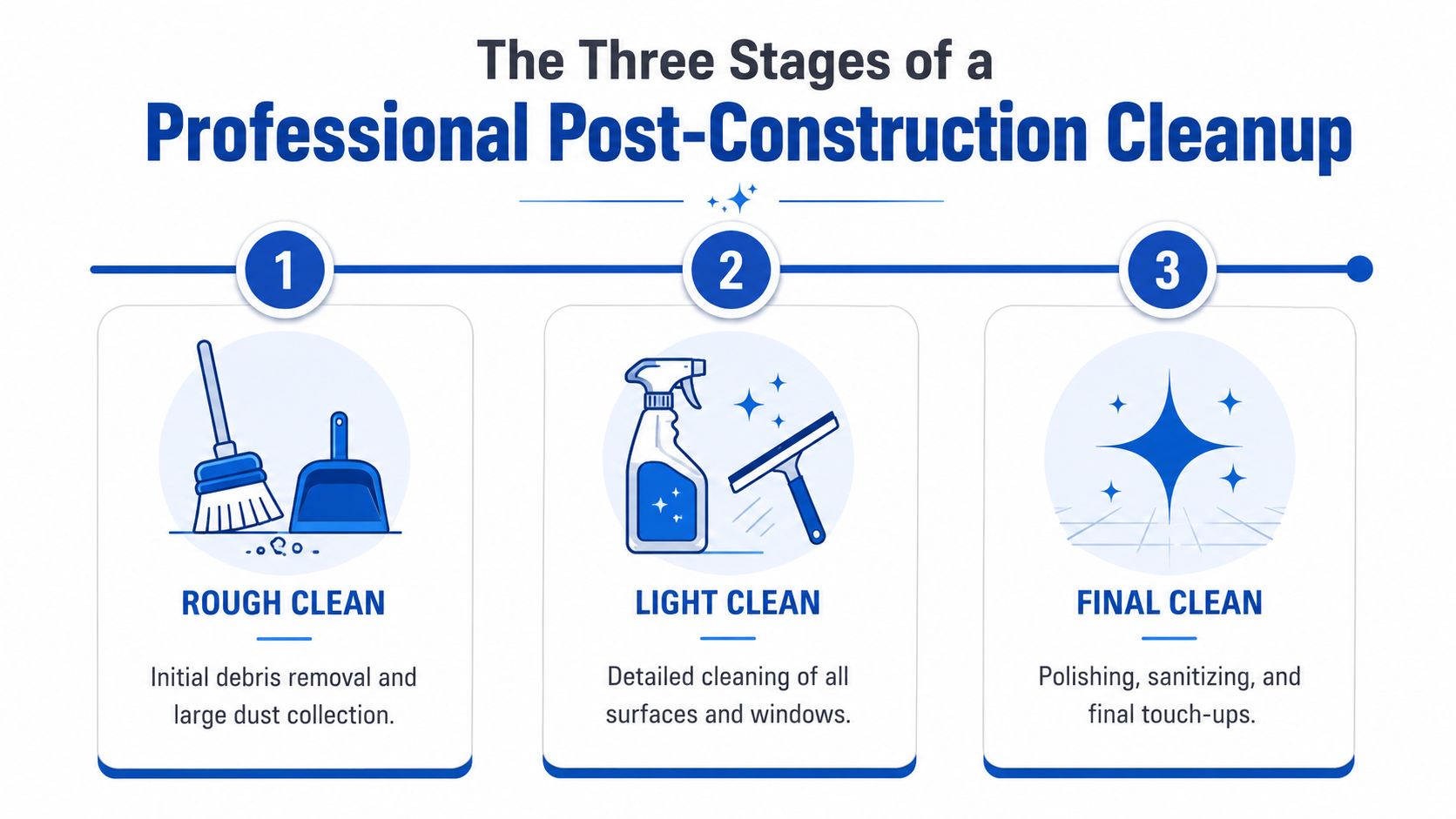
Industry guidance separates cleanup into rough, final, and touch-up cleaning. ServiceMaster Clean's post-construction cost overview says post-construction cleaning often runs $0.15 to $0.75 per square foot, while Ziva Cleaning places costs in a similar $0.15 to $0.80 per square foot range and breaks it down by stage: rough clean at $0.10 to $0.30, final clean at $0.30 to $0.75, and touch-up clean at $0.10 to $0.20 per square foot.
Rough cleaning gets the site under control
Rough cleaning happens before the polish work. This phase removes:
- Loose debris such as packaging, scraps, fasteners, and dust piles
- Large contaminants that could scratch surfaces if dragged around later
- Surface buildup on ledges, sills, and tops of cabinets before detail cleaning begins
This phase matters because dirt has to be reduced before anyone starts wiping, mopping, or polishing. If not, crews just smear debris around and risk damaging fresh finishes.
Final cleaning handles the detail work
This is the labor-heavy part often imagined when thinking of post-construction cleanup. It includes detailed cleaning of:
- Windows and glass with sticker and adhesive removal
- Cabinets and vanities inside and out
- Fixtures and hardware where fingerprints, caulk smears, and dust collect
- Floors and tile after upper surfaces have been cleared
- Baseboards, trim, outlets, switches, and vents that hold fine dust
The biggest mistake here is using the wrong method on new materials. Aggressive scrapers, abrasive pads, or dirty mop water can turn a cleanup job into a repair job.
Touch-up cleaning protects the handoff
Touch-up cleaning is short, but it isn't optional. Dust keeps settling after the main cleaning, especially when trades have just finished and air circulation starts again. This final pass catches the last visible issues before move-in, staging, or owner walkthrough.
The clean that looks good at 2 p.m. can look different the next morning once sunlight and airflow expose what resettled.
This stage usually focuses on fingerprints, smudges, minor dust return, and final floor presentation. On contractor jobs, it's often the difference between a smooth turnover and a punch-list complaint.
Your Ultimate Post-Construction Cleaning Checklist
A good checklist isn't just a list of chores. It follows the right sequence so you don't create more work. In post-build spaces, the safe order is top to bottom and dry to wet. Industry guidance notes that rough cleaning removes large debris, deep cleaning focuses on surfaces, and touch-up catches resettled dust. It also emphasizes that floors come last, after upper surfaces are dusted, and that the final clean should only be scheduled after all trades are complete, as outlined in BAP Janitorial's overview of the three cleaning phases.
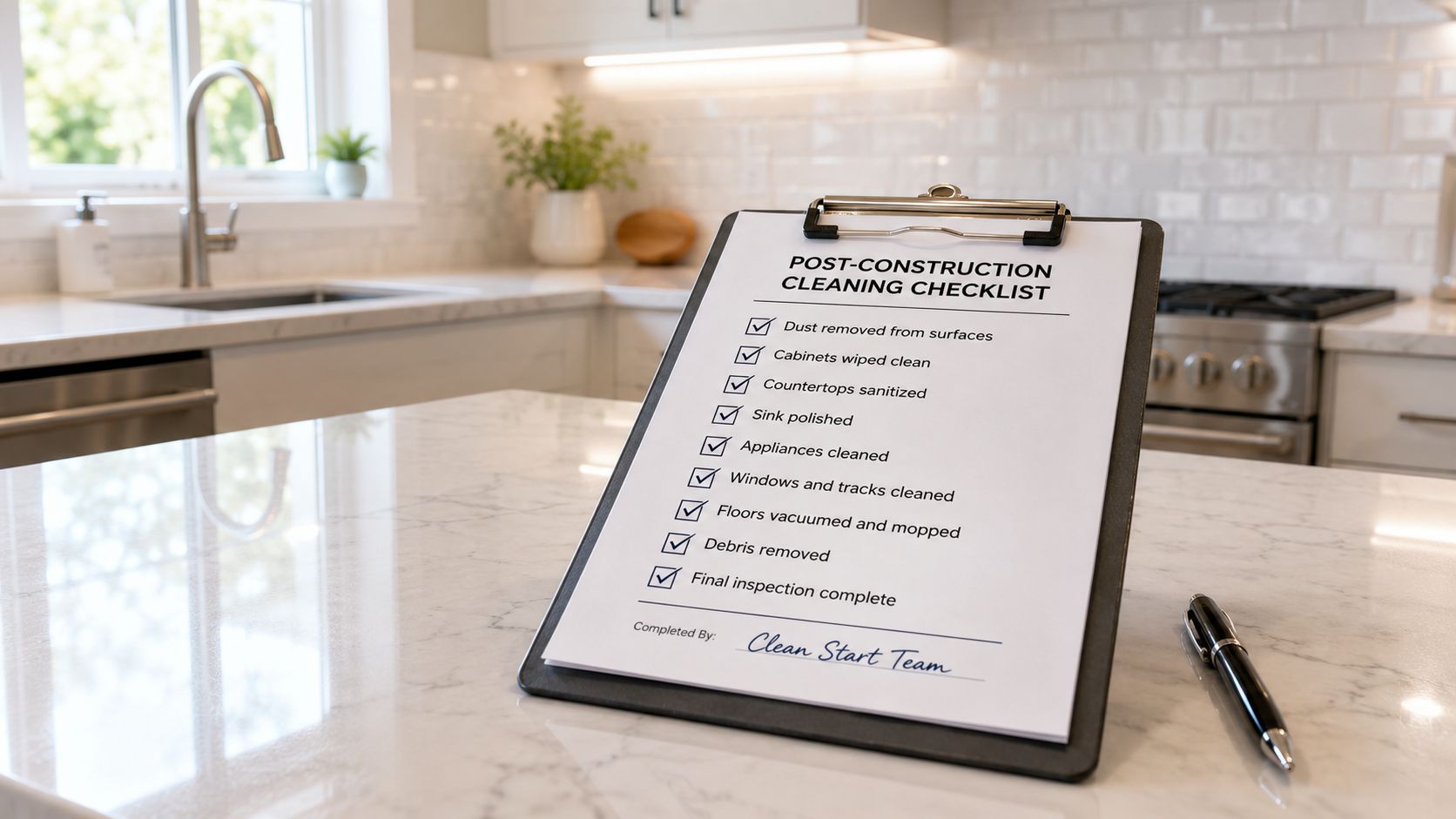
If you want a printable version for project planning, this post-construction cleaning checklist is a useful companion.
Kitchen
The kitchen usually carries the most mixed residue because multiple trades work there.
- Start high: Dust ceiling corners, light fixtures, vent covers, and the tops of cabinets.
- Open everything: Wipe inside cabinets, drawers, pull-outs, and pantry shelving.
- Check appliance surrounds: Remove film, labels, tape residue, and dust around handles, hinges, and toe kicks.
- Clean backsplash carefully: Remove splatter and haze without scratching tile, stone, or glass.
- Inspect countertops closely: Look for caulk residue, fine dust along seams, and debris trapped behind faucets.
- Finish the floor last: Vacuum first, then use the right cleaner for tile, vinyl, hardwood, or stone.
Bathrooms
Bathrooms hide residue in tight places, especially after tile and fixture installation.
- Look at grout lines: Remove haze and trapped dust from tile joints and corners.
- Clean fixture bases: Dust and residue build up around toilet bolts, vanity legs, and faucet plates.
- Polish glass and mirrors: Remove labels, adhesive, and hard-to-see film.
- Check exhaust covers and vents: They collect dust early and get missed often.
- Wipe inside vanity drawers and cabinets: Install crews often leave fine dust inside.
- Detail edges and trim: Caulk smears and paint specks usually show up around baseboards and door casings.
New tile can look dull when the problem isn't the tile at all. It's usually grout haze, dust film, or residue left during installation.
Living areas and bedrooms
These rooms look simpler, but they often hold the widest spread of airborne dust.
- Dust walls, trim, and doors: Pay attention to top edges, hinge sides, and casing profiles.
- Clean window frames and sills: Construction dust packs into tracks and corners.
- Wipe switches and outlet covers: Fine dust sticks to static-heavy plastic surfaces.
- Check closets: Shelves, rods, and upper corners usually need a separate pass.
- Inspect HVAC registers: Dust settles on covers and around openings.
- Vacuum upholstered items if they were exposed nearby: Dust travels farther than commonly anticipated.
Windows trim and overlooked details
As a result, budget cleans usually fall short.
- Remove stickers and protective film: Glass, appliances, tubs, and fixtures often still have them.
- Address adhesive residue correctly: The wrong solvent can damage finishes or leave smears.
- Clean tracks and channels: Windows and sliding doors trap grit that keeps redistributing.
- Wipe baseboards by hand: Mops don't reach profile edges well.
- Check behind doors and under cabinetry overhangs: Dust settles where sight lines are poor.
- Inspect floors in angled light: Haze, footprints, and sanding dust show up best near windows.
A final walkthrough should happen in natural light if possible. Artificial lighting hides film and streaking. Sunlight usually tells the truth fast.
DIY vs Hiring a Professional Cleanup Service
Some homeowners can handle a small cleanup themselves. Others start DIY and realize halfway through that the tools in the garage aren't built for post-construction dust.
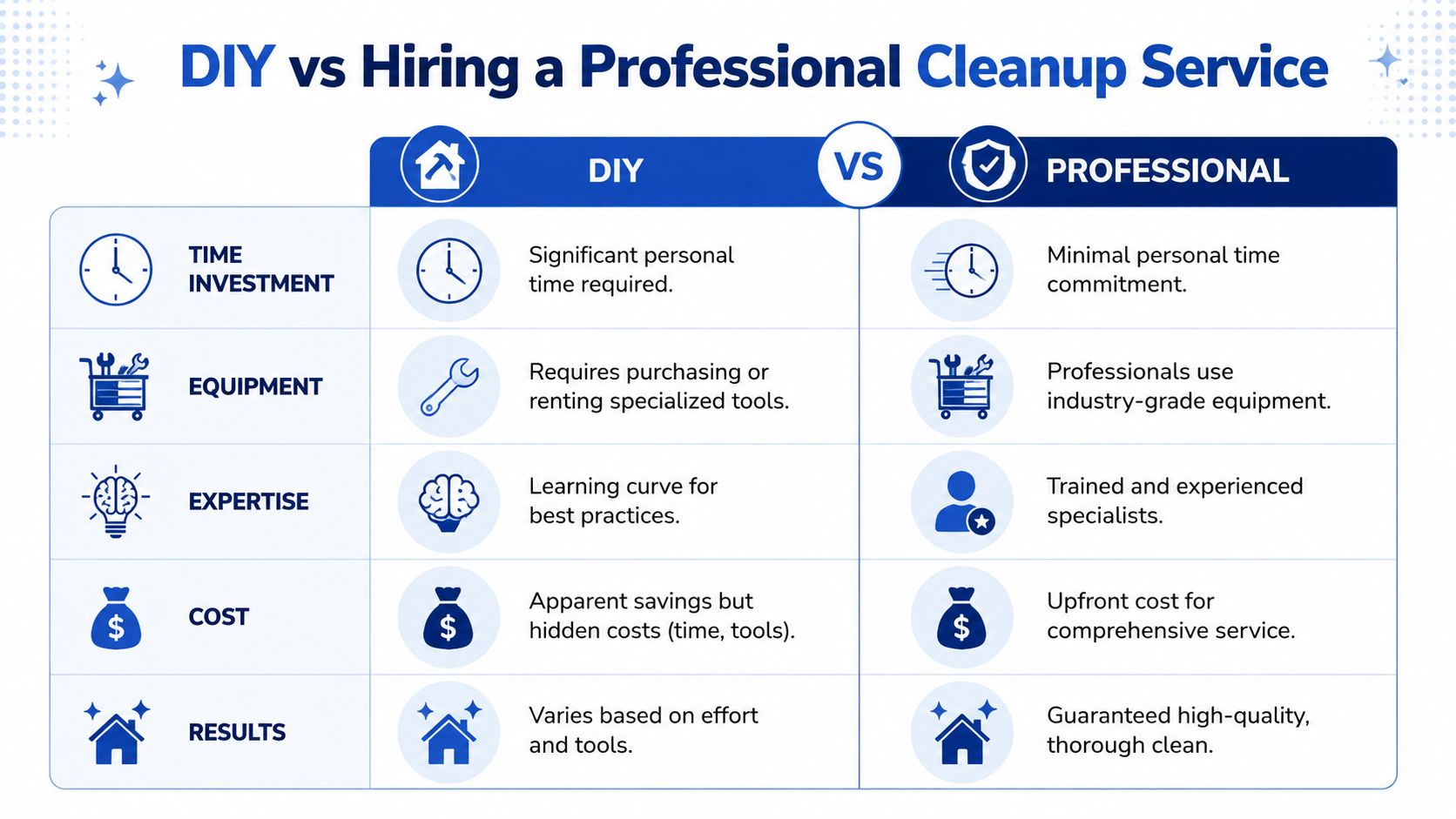
Professional post-construction cleanup requires equipment that goes beyond normal residential cleaning, including HEPA-capable vacuums, microfiber dusting systems, steam cleaners, and pressure washers, according to NCCER's guidance on properly cleaning a site after construction. That same guidance notes the right sequence: coarse debris first, then fine dust capture, then wet cleaning and polishing. That order helps reduce scratches on new finishes.
Where DIY can work
DIY can make sense when the project is limited and the homeowner has time, patience, and the right expectations.
It tends to work better for:
- A very small project where the mess stayed contained
- Simple surfaces that don't require specialty methods
- Flexible timing when no move-in deadline is forcing shortcuts
The problem isn't effort. It's hidden contamination and technique. Many DIY cleanups remove the visible dust but leave residue in tracks, vents, cabinet interiors, or grout lines.
Where professional crews earn their keep
Professional crews bring process, equipment, and material awareness. That's the gap that matters most on homes with new tile, natural stone, glass, finished wood, or luxury vinyl.
| Factor | DIY Approach | Professional Service (e.g., Sunny Day Pro Services) |
|---|---|---|
| Time | Usually spread across nights or weekends, often with repeat cleaning after dust resettles | Handled as a dedicated job with a defined sequence and final walkthrough |
| Equipment | Often limited to household vacuums, consumer sprays, mops, and paper towels | Uses HEPA-capable vacuuming, microfiber systems, and tools suited to post-construction residue |
| Surface protection | Higher risk of using abrasive pads, wrong chemicals, or dirty water on new finishes | More likely to match methods to tile, glass, fixtures, trim, and flooring type |
| Hidden residue | Easy to miss vents, tracks, cabinet interiors, grout haze, and adhesive film | Typically includes attention to those overlooked areas as part of the workflow |
| Result | Can be acceptable on light jobs, but quality varies with tools and experience | Usually more consistent for turnover, move-in, listing prep, or contractor handoff |
If the home has delicate new materials, the cleanup method matters as much as the cleanup effort.
Hiring a pro doesn't always mean luxury. Sometimes it means protecting the money already spent on flooring, tile, paint, and fixtures.
Understanding Costs and Timelines for Cleanup
Cleanup pricing surprises people because the work is detail-heavy. The broom-and-trash part goes quickly. The labor is in the dust removal, the hand wiping, the glass work, the edge work, and the second pass after dust settles.
What residential cleanup usually costs
Angi's post-construction cleaning cost guide reports a typical residential cost of $274 to $708, with a broader range from $144 to $1,300. It also says labor accounts for around 90% or more of the total, and that a common rate is about $0.25 per square foot.
That same source gives useful timing context. A single person may need about one hour to deep clean 100 to 200 square feet, while a full home can take 8 to 12 hours. For Massachusetts, Angi lists an average post-construction cleaning project cost of $360.
What changes the final price
The number on an estimate usually moves for practical reasons, not arbitrary ones.
- Project size: A small bathroom remodel and a whole-house renovation don't create the same dust load.
- Scope of finish work: Tile haze, adhesive removal, interior cabinet cleaning, and detailed glass work take time.
- Surface sensitivity: New floors and specialty finishes often need slower, safer methods.
- Job timing: A site cleaned before all trades are done may need return work.
- Debris condition: Heavy leftover material changes the first phase of labor.
For homeowners and contractors, the most useful way to budget is to think about labor hours and detail level, not just square footage. The closer the space is to true completion, the more efficient the cleanup tends to be.
How to Hire the Right Cleaning Pro in Massachusetts
A cheap cleanup bid can cost more if the crew misses dust in vents, scratches a floor, or leaves residue on brand-new tile. Hiring well starts with a few direct questions and a careful look at how the company talks about process.

Questions worth asking before you book
Ask the company how they handle post-construction dust specifically. If the answer sounds like ordinary house cleaning, keep looking.
A solid screening list includes:
- Insurance and worker coverage: Ask for proof, not verbal reassurance.
- Post-construction experience: Make sure they routinely clean after remodeling, tile work, and finish installation.
- Material familiarity: Ask how they handle glass, grout haze, adhesive residue, stone, and newly finished floors.
- Crew process: They should describe order of operations clearly, not vaguely.
- Final walkthrough: Ask what happens if dust resettles or details are missed.
What local homeowners and contractors should look for
In Massachusetts towns like Wayland, Newton, Needham, Wellesley, and Weston, homeowners often care about two things at once. They want the job done thoroughly, and they don't want headaches after a long renovation.
Look for a company that offers:
- Clear communication about what is and isn't included
- Background-checked and trained crews rather than casual labor
- Flexible scheduling near project completion
- Eco-friendly options if that matters for the household
- A stated re-clean or satisfaction process if something is missed
For local comparison shopping, this guide to finding house cleaning near you is a practical place to start because it helps frame the right vetting questions.
One more point matters here. Tile-heavy remodels need extra care. Adhesive residue, grout haze, and abrasive dust can all affect the final appearance if the cleaner treats the space like a standard weekly service. A crew should understand the difference.
Frequently Asked Questions About New Construction Cleanup
Is post-construction cleaning different from a standard deep clean
Yes. A standard deep clean focuses on built-up household dirt, kitchen grease, bathroom soil, and lived-in grime. Post-construction cleaning deals with drywall dust, sawdust, grout haze, adhesive residue, paint flecks, packaging debris, and sensitive new finishes that can be damaged by the wrong tools or sequence.
When should I schedule new construction cleanup
Schedule it after all trades are finished. If painters, electricians, flooring installers, or punch-list crews are still moving through the space, dust and smudges will keep returning. A short reinspection window before move-in or turnover is smart, especially when HVAC systems start running again.
Do small remodels need professional cleanup too
Often, yes. A single bathroom or kitchen renovation can still spread fine dust into nearby rooms, vents, closets, and window tracks. Smaller projects are also where homeowners are most likely to underestimate the labor because the footprint looks small while the detail work is not.
Will post-construction cleanup include adhesive and sticker removal
It should, but ask directly. Manufacturer labels, protective films, painter's tape residue, and adhesive smears on glass or fixtures are common after remodeling. They need careful removal so the finish isn't scratched or clouded.
Is construction dust in vents and registers a real concern
Yes. Even when the main work happened in one area, dust can settle on registers and around HVAC openings. That's one of the easiest places for a rushed cleanup to miss, and one of the first places homeowners notice after air starts moving again.
Are eco-friendly cleaning options available
Many professional cleaning companies offer them. If you want lower-odor or eco-conscious products, ask before booking so the team can confirm what works safely with your surfaces and the type of residue left behind.
If your renovation is finished and the house still feels like a jobsite, Sunny Day Pro Services provides post-construction cleaning in Massachusetts for homeowners and contractors who need a careful final cleanup before move-in, listing, or handoff.

