
Rental Property Cleaning Services: Prices and Checklists
Rental property cleaning services explained: turnover types, 2026 price ranges, a move-out checklist, and how to pick a reliable provider in Massachusetts.

Rental units turn over far more often than owner-occupied homes, and every empty week costs a landlord showings, rent, and scheduling slack. That pressure is why turnover work needs more than a quick wipe-down: each cleaning should leave the unit presentable and create a clear record of what was cleaned, what was damaged, and what needs repair.
The best rental property cleaning services match the work to the unit's condition and the next step in its schedule. A room-by-room checklist, dated photos, and written escalation notes give owners a neutral record of condition, help a property get ready for showings faster, and hold up when a deposit dispute reaches a head. Cleaning does not fix building defects, so the paperwork has to show where cleaning ends and repair begins.
Table of Contents
- How much does a turnover clean cost?
- How soon after move-out should cleaning be booked?
- Can a Massachusetts landlord deduct cleaning from a security deposit?
- Does cleaning remove mold or moisture damage?
- Is a written quote necessary?
- What should a final walkthrough include?
Types of Rental Cleaning and When to Book Each
| Service | Book When | What It Covers | Best For |
|---|---|---|---|
| Move-out or turnover clean | After all belongings have been moved out of the unit | Full interior, appliance and cabinet interiors, and every empty space | Landlords preparing a unit for inspection and re-leasing |
| Deep clean | Between occupancies or on a set schedule | Built-up grease, scale, dust in vents, and high places | Units with long tenancies or heavy soil |
| Post-construction clean | After contractor work is finished and the space is handed back, before furniture moves in | Construction dust, residue, and fixture cleanup | New builds and renovated units |
| Move-in clean | Once furniture and belongings are in place | A full detail clean that picks up where post-construction cleaning ends | Owners or tenants settling into a finished unit |
| Final or one-time clean | Before keys are handed back or after a short stay | Full reset to a rent-ready standard | Owners who need a single, bookable clean |
Rental vacancies are a constant in the U.S. housing market, and every gap between tenants creates the same cycle of cleaning, documenting, and re-leasing. A clean, documented unit moves through that cycle faster than one that needs a second pass before showings.
The important distinction is purpose. A deep clean targets soil accumulated during a tenancy, such as grease, soap scale, and dust in overlooked areas. A turnover clean is judged against the expectations of an incoming tenant, property manager, or inspector, so it needs a defined scope and a final check of empty spaces. For a closer look at how those service levels differ, see this guide to deep cleaning versus regular cleaning.
Each booking also produces a different record. A move-out clean should end with a room-by-room walkthrough, so anything missed gets fixed on the spot rather than becoming a deposit dispute later. Post-construction work should generate notes on leftover contractor residue. A recurring or deep clean needs a checklist tied to the unit's actual problem areas. Match the service to the paperwork the situation calls for, and the clean pays for itself in fewer arguments and faster re-leasing.
Booking check: Is the unit empty? Choose a move-out or turnover clean. Is contractor work finished? Book a post-construction clean before furniture arrives. Is the goal routine upkeep or a reset after a short stay? Choose a deep clean or a final one-time clean based on the soil and schedule.
Cleaning Costs by Home Size
Sunny Day Pro Services publishes starting prices per visit, so landlords and property managers can budget a turnover before requesting an estimate.
| Home Size | Deep Clean | Recurring Clean (Weekly) | Recurring Clean (Bi-Weekly) |
|---|---|---|---|
| Up to 1,000 sq ft | $279 | $135 | $149 |
| 2,000 to 2,999 sq ft | $449 | $209 | $235 |
| 5,000+ sq ft | $799+ | $379+ | $425+ |
These figures are floors for the listed service, not guaranteed invoices. A deep clean for a home between 2,000 and 2,999 square feet starts at $449. One-time final cleans start at $399 for homes up to 1,000 square feet and $1,499+ for homes of 5,000 square feet or more, and move-in/out cleaning in that largest bracket starts at $849+. Recurring visits cost less at higher frequencies, which matters if you clean shared areas or a furnished unit on a fixed schedule.
What changes the price
- Square footage and room count: A larger floor area means more surfaces, fixtures, and labor hours.
- Soil level: Grease, pet hair, heavy bathroom scale, and months of buildup take longer to remove than routine dust.
- Whether the unit is empty: A move-out clean is booked after all belongings have left the property, and an empty unit gives the crew access to every floor, baseboard, and corner.
- Appliance and cabinet scope: Confirm whether the estimate covers appliance interiors and cabinet interiors. A move-out clean aimed at passing landlord inspection puts heavy emphasis on those spaces.
- Scheduling: A rush request can cost more than a booking made with a flexible window.
- Construction residue: Fine dust, adhesive, and paint overspray call for a post-construction scope, which is scheduled and sequenced differently from a standard turnover clean.
A quote is only useful if it defines the job. Ask for the service type, included rooms and surfaces, appliance and cabinet work, labor and supplies, scheduling window, and final walkthrough. The cleaning service quote guide can help you compare what each estimate covers.
Set aside cleaning funds before advertising the unit, then get two or three estimates against the same written checklist and compare scope and documentation as well as price. A turnover clean that ends with a room-by-room walkthrough, with misses corrected on the spot, leaves you a record you can use in a deposit dispute. A cheaper quote that skips appliance interiors or provides no completion record can cost more than it saves.
Turnover Problems to Log Before Cleaning
Moisture is a building problem, not a cleaning problem. The U.S. Environmental Protection Agency recommends drying water-damaged areas and contents within 24–48 hours because delayed drying increases the likelihood of mold growth. It also recommends keeping indoor relative humidity below 60%, ideally between 30% and 50%, according to its guidance on mold and moisture.
| Finding | Likely Cause | Action Before Cleaning |
|---|---|---|
| Musty odor in closets or under sinks | Hidden moisture or a slow leak | Log the location, flag it to the manager, and dry the area before cleaning |
| Dark stains on ceilings or walls | Condensation or past water damage | Photograph the stain, check for active moisture, and escalate for repair |
| Soft or lifting flooring | Water damage under the surface | Stop work in the area, document it, and escalate; don't seal or mask it |
| Droppings in drawers or cabinets | Pest activity | Log the finding, notify the manager, and arrange treatment before cleaning |
| Greasy film in kitchen | Heavy use or a weak range hood | Degrease the surface, then note the hood for a ventilation check |
A musty smell can come from a leak hidden under a sink, damp stored materials, or condensation. The smell alone doesn't establish the cause, so record its exact location and report it instead of trying to cover it with fragrance. Dark ceiling marks and lifting floors also call for a moisture check before anyone scrubs or applies a coating.
Record, escalate, then clean
Take a dated photo of each issue, note the room and exact location, and send the observations to the property manager in writing. A cleaner can remove visible soil from hard, nonporous surfaces with detergent and water, then dry them completely. But if a pipe or exterior defect continues to supply moisture, surface cleaning won't stop the problem from returning.
Carpet, ceiling tile, and some upholstered materials are porous. If they can't be cleaned and dried thoroughly, they may need removal rather than a surface treatment that leaves damp material in place.
Escalation note: Record what was found, where it was found, when it was documented, and who was notified. Keep that note with the turnover checklist and photos.
Move-Out Cleaning Checklist for Tenant Turnovers
Book a move-out clean after all belongings have been moved out. Cleaning around boxes, furniture, or personal items limits access and can leave dirt behind the very items that will be gone during inspection.
Confirm the unit is empty and photograph each room before work starts. Capture floors, walls, fixtures, and any existing marks so the starting condition is clear. The common mistake is taking only a few wide shots that miss a stain or damaged surface.
Dust high areas first. Work from ceiling corners and vent covers to light fixtures and ceiling fans, using an extendable duster or microfiber cloth where appropriate. Dust falls downward, so washing floors before high surfaces means doing the floor twice.
Degrease the kitchen and clean appliance interiors. Wipe cabinet fronts and interiors, the range hood, oven, refrigerator drawers, and door seals; use a non-abrasive cleaner that suits the appliance finish. Inspectors often open cabinets, so cleaning only visible counters can leave an obvious gap in the work.
Clean the bathroom from top to bottom. Scrub the tub, tile grout, toilet base, exhaust fan cover, and the underside of the vanity, using separate cloths for the toilet and other surfaces. Don't overlook residue around hinges, edges, and the floor behind the toilet.
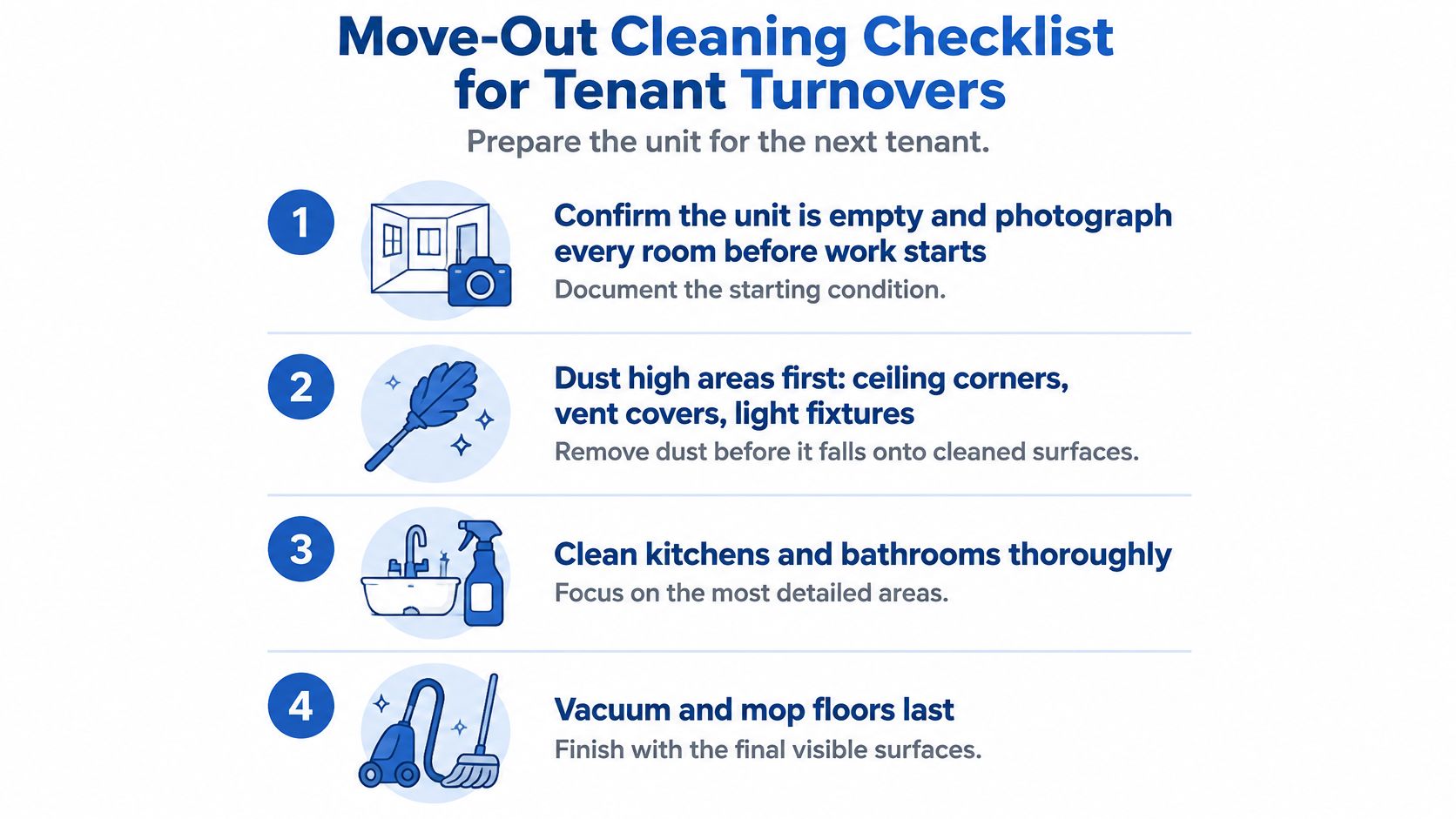
Wash floors after dusting, then spot-clean trim and touch points. Vacuum carpet and rugs, then mop hard floors; finish by checking baseboards, door frames, and switch plates. Mopping before dusting or wiping dusty trim sends debris onto surfaces that were already cleaned.
Clean first, then disinfect high-touch surfaces. Remove soil from door handles, light switches, faucet levers, and appliance handles before applying a compatible disinfectant. The CDC says a surface must remain visibly wet for the full contact time on the product label or Safety Data Sheet; spraying and wiping immediately can miss that requirement, as explained in its home cleaning and disinfection guidance. Use a timer when needed, and avoid products that can damage stone, metal finishes, sealants, or flooring.
Walk each room with the checklist before the team leaves. Check appliance interiors, cabinet shelves, fixtures, floors, and the areas behind doors. A move-in/move-out team should correct anything missed on site during its room-by-room final walkthrough.
- Move-in and move-out photos taken from the same angles, so the conditions can be compared.
- A room-by-room checklist with dates and signatures, including spaces that are easy to overlook.
- Itemized invoices that separate cleaning work from repairs and describe the labor performed.
- Pre-existing-condition notes that identify marks or damage recorded before the tenant moved in.
- Notes on tenant-caused damage that describe the condition and preserve supporting photographs.
- Book the move-out clean within two days of the last belongings leaving. That gives the team access to empty rooms and leaves time to address anything found during the inspection.
- Complete the checklist and moisture log before work begins. Record damage and building issues separately from the cleaning scope.
- Finish repairs, then photograph each completed room. The finished photos document the unit's condition after the work.
- Complete the deposit accounting promptly. Massachusetts landlords generally have 30 days after the tenancy ends to return the deposit and any required interest.
- Schedule the rent-ready clean one to three days before showings. This places the final surface check close enough to marketing that the unit is ready to present.
Finish with time-stamped photos of every room and a checklist signed by the property manager. The photos document the completed condition; the signed checklist confirms what the service covered.
Massachusetts Deposit Rules and Turnover Records
Massachusetts landlords generally must return a tenant's security deposit, plus any required interest, within 30 days after the tenancy ends. The Massachusetts Attorney General's landlord and tenant guide says deductions are limited to permitted items, including unpaid rent or a reasonable amount needed to repair damage beyond normal wear and tear. That deadline makes prompt inspection, cleaning, repairs, and accounting part of the turnover schedule, not something to postpone until a new tenant is ready.
Routine cleaning, carpet shampooing, or painting caused by ordinary wear generally can't be charged to the deposit, and pre-existing damage isn't a tenant's responsibility. A cleaning invoice shows that work was performed; it doesn't prove that a deduction is legally permitted. The condition and its cause need to be documented, and the owner must apply current state rules.
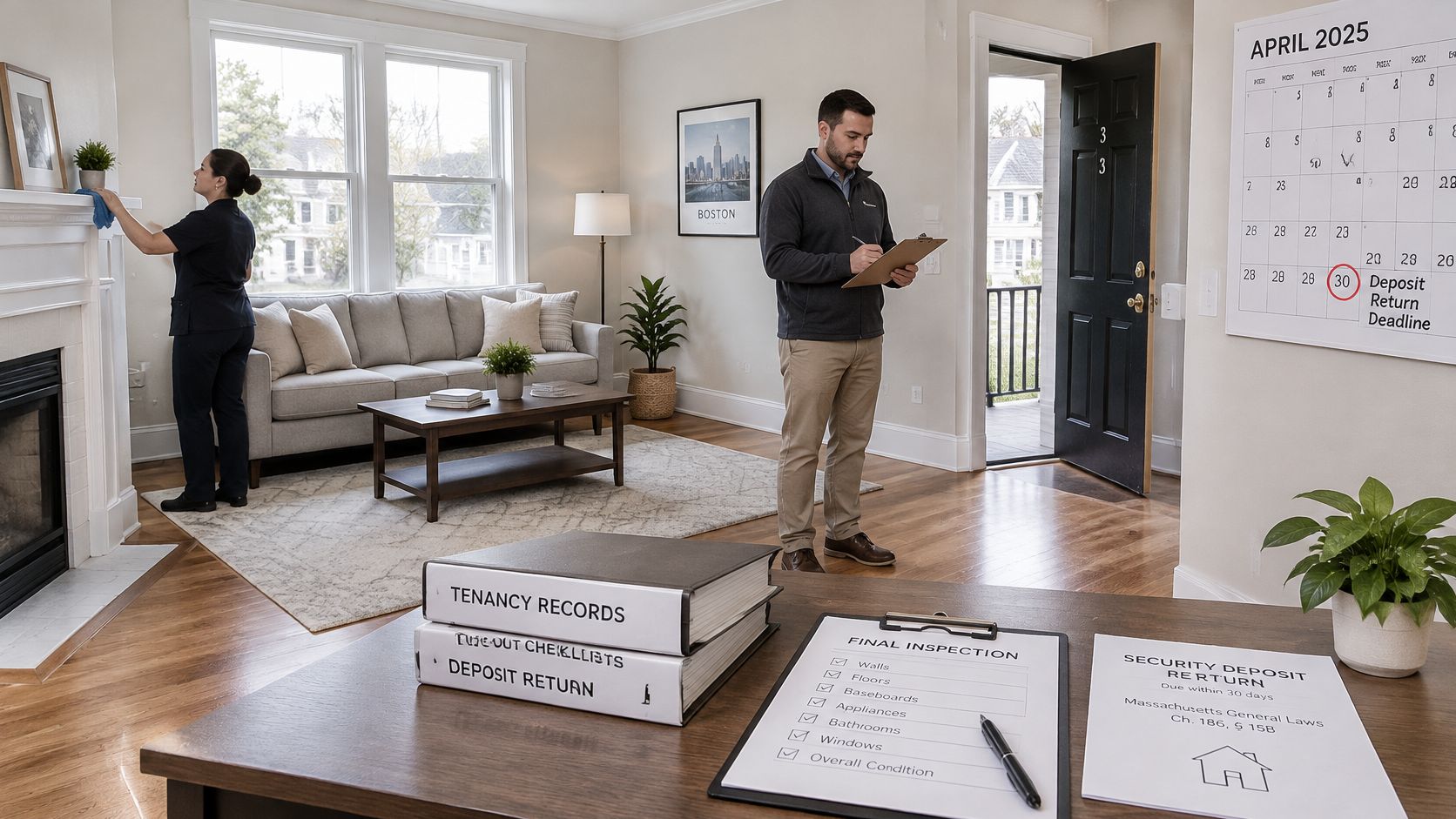
Build a neutral documentation package
Keep these records together for each tenancy:
Consider a Newton two-bedroom with a stained carpet. Photos from move-in and move-out, along with notes describing the stain, can help establish whether it was present beforehand, arose from ordinary use, or resulted from tenant-caused damage. The cleaner can document the condition and the work performed, but can't decide whether the owner may deduct the cost.
The service should be a deposit-ready record, not an argument for charging every cleaning expense to the tenant. A move-out clean can help prepare the full interior of appliances, cabinets, and empty spaces for inspection, while separate photos and repair notes show which issues go beyond cleaning. For a dispute or an unusual situation, check current Massachusetts guidance or consult a local attorney.
How to Choose a Reliable Local Cleaning Provider
Start with the safeguards that protect access to an occupied or vacant property. Confirm in writing that each cleaner entering the unit is background-checked, and request a liability insurance certificate and an explanation of the property-damage process before the first appointment. Then check whether the provider offers a written satisfaction guarantee, including its re-clean window and what the guarantee covers.
Next, verify that the team can handle the specific work. Turnover cleaning involves empty cabinets, appliance interiors, and inspection details; post-construction cleanup calls for experience with residue and fine dust, not just routine household cleaning. For recurring properties, a consistent crew can learn the layout and the owner's standards. A unit-specific checklist with photo documentation makes the result easier to review.
A complete quote should identify the property address, size, service type, included tasks, and target dates. For post-construction requests, provide the address, property size, and type of construction work so the scope can be assessed accurately. Sunny Day Pro Services serves Wayland, Newton, Needham, Wellesley, and Weston, describes its team as background-checked and trained, assigns dedicated crews to recurring clients, and offers a satisfaction guarantee. Confirm the guarantee's terms and every other service claim in writing.
For recurring cleaning, Sunny Day Pro Services assigns a dedicated team that learns the home, preferences, and standards. Its detail-trained team also works in post-construction environments. These are useful points to verify against the needs of a particular unit, rather than assume a provider's standard house-cleaning scope will cover a turnover. This guide to choosing a house cleaning service offers additional criteria to consider.
Red flags include no written scope, cash-only payment, no proof of insurance, or a price far below every other quote. If an estimate leaves out the final walkthrough or photos, ask to have those deliverables added before booking.
Book Your Turnover Clean Before the Next Showing
A clear timeline keeps cleaning, repair, and deposit records from competing for the same last-minute window.
When requesting an estimate, send the address, square footage, type of work, and target dates. Before confirming, ask for the checklist, insurance certificate, and photo delivery format. Owners with multiple units can arrange recurring turnovers with one provider, which helps keep documentation consistent. For an urgent Massachusetts turnover, call (508) 257-1007 rather than relying on an email to arrive in time.
Frequently Asked Questions About Rental Property Cleaning
How much does a turnover clean cost?
Prices depend on the service and property size, and the listed starting prices aren't a promise of the final invoice. See the cleaning costs by home size table and request a written quote for any category without a published starting price.
How soon after move-out should cleaning be booked?
Book within the same week after belongings are out, ideally within two days, so there's time to inspect and handle repairs before showings. The turnover timeline lays out the sequence.
Can a Massachusetts landlord deduct cleaning from a security deposit?
Routine cleaning isn't generally deductible as a deposit charge; deductions are limited to permitted items such as unpaid rent or qualifying damage beyond normal wear. The Massachusetts turnover records section explains what evidence to keep.
Does cleaning remove mold or moisture damage?
No. Cleaning can remove soil from suitable surfaces, but the moisture source must be addressed first; see the turnover findings table for common warning signs and next steps.
Is a written quote necessary?
Yes. Get the scope, insurance details, and satisfaction-guarantee terms in writing so you can compare the work and know what the provider has agreed to do.
What should a final walkthrough include?
Review each room against the checklist, take time-stamped photos, and have the property manager sign the completed checklist. That sign-off records the inspection and the service scope.
Sunny Day Pro Services offers move-in/move-out, deep, and post-construction cleaning for Massachusetts properties, with room-by-room walkthroughs for move-in/move-out jobs. Request a turnover quote through Sunny Day Pro Services and compare the first walkthrough against the checklist before the next showing.

