
Sanitizing Clothes Dryer: A Complete 2026 How-To Guide
Learn how sanitizing clothes dryer works. Our guide covers sanitize cycles, proper cleaning, and best practices for a truly hygienic laundry routine.
You want to know if your dryer can truly sanitize your laundry—think germ-free baby clothes, pristine bedding, and fresh workout gear. The short answer is yes, but it’s not as simple as just turning up the heat. True sanitization, the kind that eliminates nasty germs, hinges on a special ‘Sanitize’ cycle and a well-maintained machine.
Let’s dive into how to do it right, keeping your family healthy and your clothes in great shape.
Table of Contents
- Can I Sanitize Without a "Sanitize" Cycle?
- How Often Should I Clean My Dryer Vent?
- Are There Eco-Friendly Sanitizing Options?
Does High Heat in a Dryer Sanitize Clothes?
To get truly sanitized clothes, you need two things: germ-free fabrics and a clean machine to do the job. A standard drying cycle is great for removing moisture, but a dedicated Sanitize cycle is specifically engineered to kill 99.9% of common household bacteria. It achieves this by maintaining a very high temperature, usually 140°F (60°C) or more, for a sustained period.
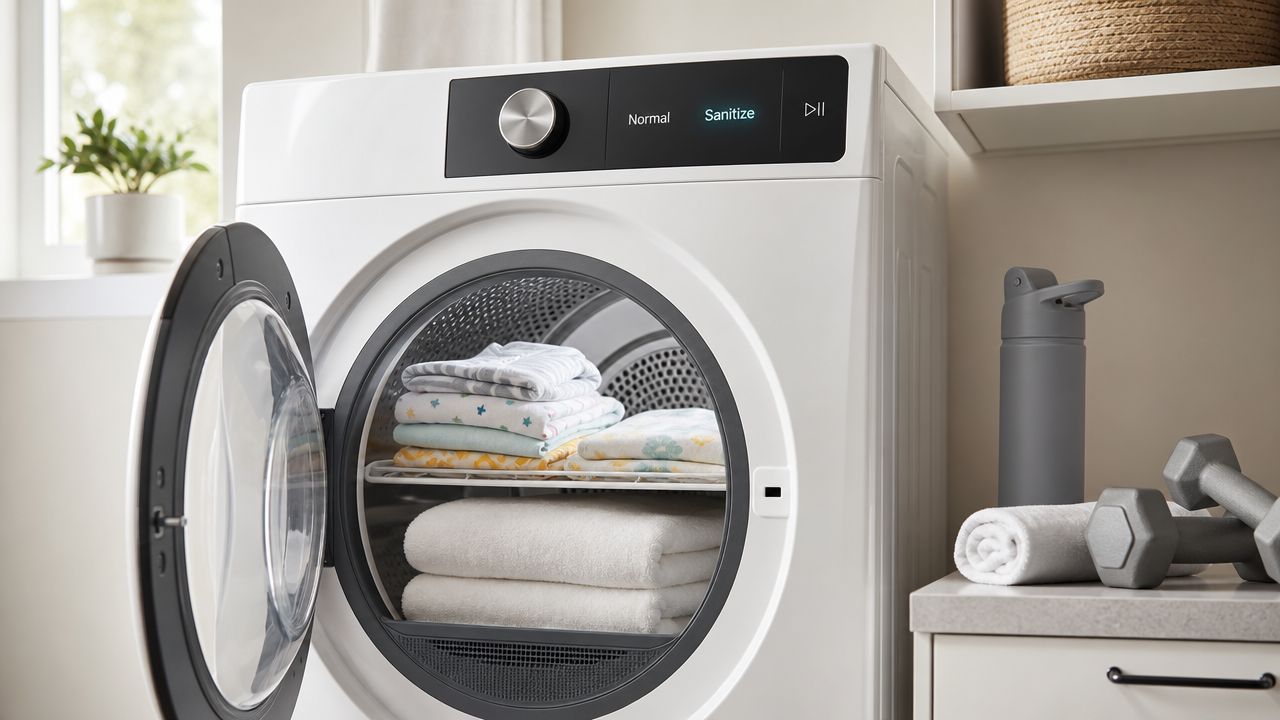
This is a critical distinction. Simply running a regular 'hot' cycle might not be long enough or hot enough to knock out stubborn allergens like dust mites or bacteria, especially if someone in the house has been sick. You need that powerful combination of intense, prolonged heat that only a certified Sanitize setting can deliver.
Comparing Dryer Cycles: Standard vs. Sanitize
The real difference between cycles boils down to temperature and time. Understanding what each setting does helps you make the right choice for every load, so you get everything clean without damaging your fabrics. This targeted approach is a key part of any deep clean for your home, ensuring your laundry routine is as hygienic as possible.
To break it down, here’s a quick look at how a standard dry cycle stacks up against a sanitize cycle.
Standard Dry vs. Sanitize Cycle At-a-Glance
This table gives you a clear comparison of what each cycle is designed to do.
| Feature | Standard Dry Cycle | Sanitize Cycle |
|---|---|---|
| Purpose | Removes moisture from clothes | Kills bacteria and allergens |
| Temperature | Varies (approx. 125-135°F) | Sustained high heat (140°F+) |
| Duration | Typically 30-60 minutes | Often longer (60-90+ minutes) |
| Ideal For | Everyday clothing, mixed fabrics | Bedding, towels, baby items, gym wear |
Choosing the right cycle ensures your everyday clothes are cared for properly while giving you the extra germ-killing power you need for those specific loads.
How Does a Dryer Sanitize Cycle Work?
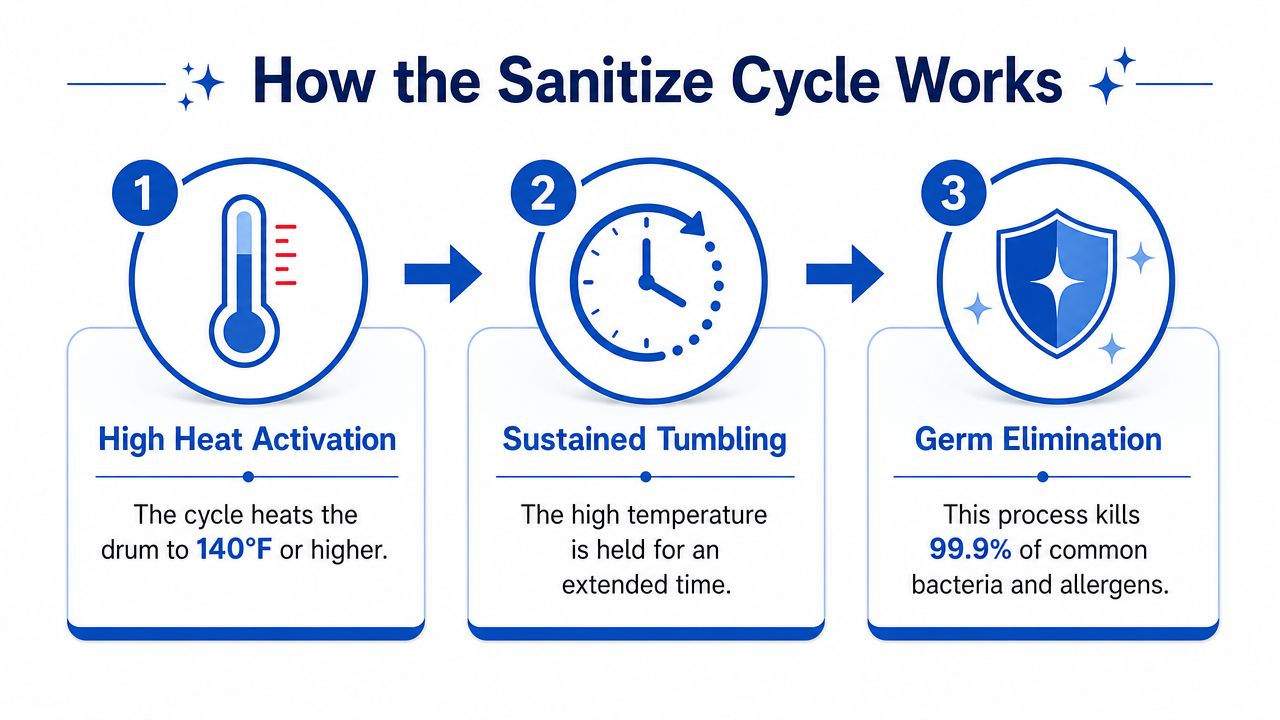
Ever wonder what that “Sanitize” button on your dryer actually does? It’s not just a marketing gimmick or a slightly hotter version of your regular cycle. It's a precisely engineered process that combines intense heat with extended tumbling time to create an environment where harmful germs simply can't survive.
Think of it as a targeted thermal assault on bacteria, viruses, and dust mites. The dryer drum heats up to temperatures well above normal, often pushing past 140°F (60°C). But the real secret is that it holds that high temperature for a long, sustained period. This ensures the heat penetrates every fiber of your laundry, leaving no place for microorganisms to hide.
The Science Behind the Heat
This process is based on a proven scientific principle: thermal disinfection. The combination of extreme heat and time works to break down the cellular walls of germs, effectively neutralizing them. It's why many modern dryers undergo rigorous testing to get certified for their hygiene claims.
A true Sanitize cycle is a trifecta of heat, time, and airflow working in concert. It's designed to push the drum temperature above 140°F and hold it there—sometimes getting as hot as 150°F—long enough to kill off common household pathogens. This is where certifications from organizations like the NSF come in. To earn the NSF seal for a residential dryer, the machine must prove it can eliminate 99.9% of microorganisms. That's a serious standard, and it’s why so many people trust this cycle for everything from baby clothes to bedding after a cold. You can learn more about these dryer sanitization standards on slagerappliances.com.
Key Takeaway: A true Sanitize cycle isn't just about drying clothes. It’s a scientifically validated feature that uses sustained high heat (140°F or higher) to actively kill germs.
How to Know if Your Dryer Has a True Sanitize Cycle
Not all high-heat settings are created equal. If you want to be sure your dryer has legitimate sanitizing power, here’s what to look for:
- An explicit “Sanitize” label. This is the most obvious sign. Look for a dedicated button or a specific setting on the main dial.
- Hygiene-related symbols. Some models use an icon, like a plus sign inside a shield or a steam cloud, to indicate a special hygiene function.
- NSF Certification. Check your owner’s manual. If it mentions being certified by the NSF (National Sanitation Foundation), you can trust that its germ-killing claims are verified.
A Practical Guide to Cleaning Your Dryer for Better Sanitization
You can't get truly sanitized clothes from a dirty dryer. It's a simple fact. Before you even think about hitting that high-heat sanitize cycle, you have to make sure the machine itself is clean. A well-maintained dryer doesn't just work better; it runs more safely and efficiently, which is a huge deal when you're using those energy-heavy settings.
Over time, your dryer accumulates lint, dampness, and sticky residue from fabric softeners and dryer sheets. This gunk creates a breeding ground for musty smells that can transfer right back onto your freshly washed laundry. A proper cleaning goes way beyond just swiping out the lint screen.
Beyond the Lint Screen: The Deep-Cleaning Essentials
That lint screen you empty after every load? That’s just the tip of the iceberg. The real grime—and fire hazards—are tucked away in places you don't always see.
First things first, unplug the dryer completely. Safety is non-negotiable. Now, grab a vacuum with a long, skinny crevice tool and get to work on the lint trap housing—the slot the screen slides into. You'll likely be shocked by how much lint is packed down in there. This isn't just gross; it's a serious fire risk that chokes off the airflow your dryer needs to reach and maintain sanitizing temperatures.
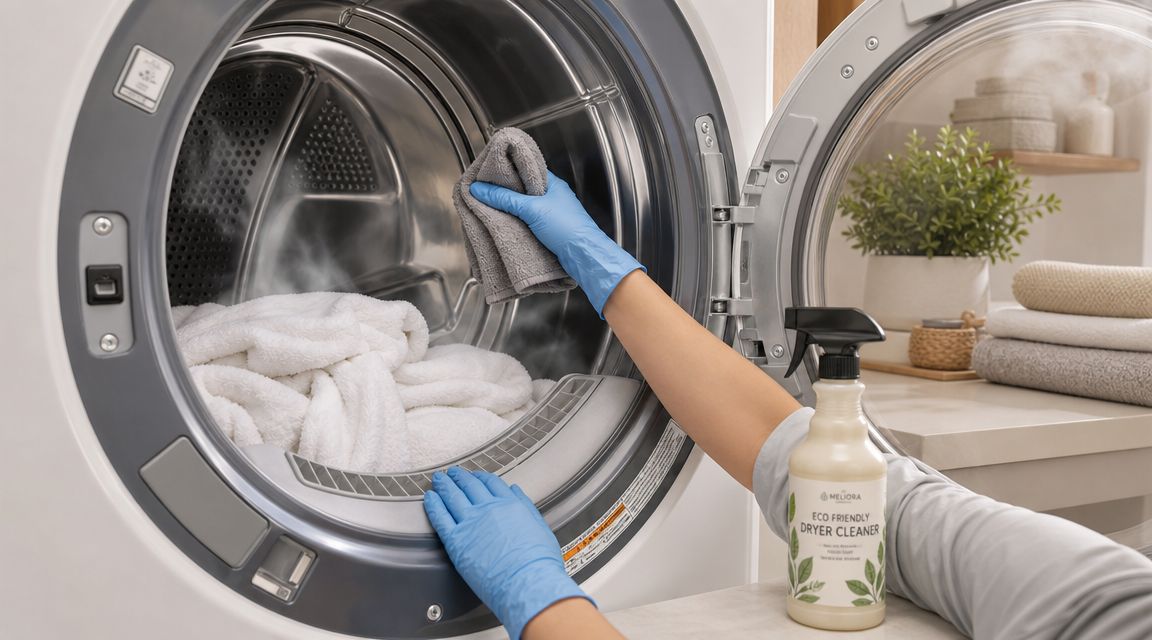
Next, let's tackle the drum. You don’t need harsh chemicals. A simple solution of equal parts white vinegar and water in a spray bottle works wonders. Give the inside of the drum a light misting and wipe it clean with a microfiber cloth. This will cut through any residue and zap lingering odors.
This process highlights why clear, unobstructed airflow is critical. If your machine is clogged, it can't maintain the high heat needed to actually kill germs.
Don't Forget the Seals and Vents
The last few steps are crucial for both hygiene and preventing a household disaster.
- Wipe Down the Door Seals: That rubber gasket around the dryer door is a magnet for moisture, which can quickly lead to mildew. Use your vinegar spray to carefully wipe it down, making sure to get into all the folds.
- Clear the Exterior Vent: Now, head outside to find where your dryer vents. Check that the vent flap isn't stuck and is clear of any lint, leaves, or other debris. A blockage here traps hot, damp air inside your system, killing its efficiency and creating a major fire hazard.
A clean dryer is a safe dryer. The U.S. Fire Administration points to failure to clean as a leading factor in the thousands of clothes dryer fires reported each year.
Keeping up with this maintenance is the foundation for effectively sanitizing clothes in a dryer. For those in areas like Weston or Wellesley dealing with a machine that needs more than just a surface clean, professional deep cleaning services can be a lifesaver. When your machine is truly pristine, you can trust that every sanitize cycle is giving you the hygienic results you expect.
Safely Sanitizing Different Types of Fabric
Your dryer’s sanitize cycle is a powerful tool for a deep, hygienic clean, but it's not a one-size-fits-all solution. High heat is the key to killing germs, but that same heat can be a total disaster for the wrong fabrics.
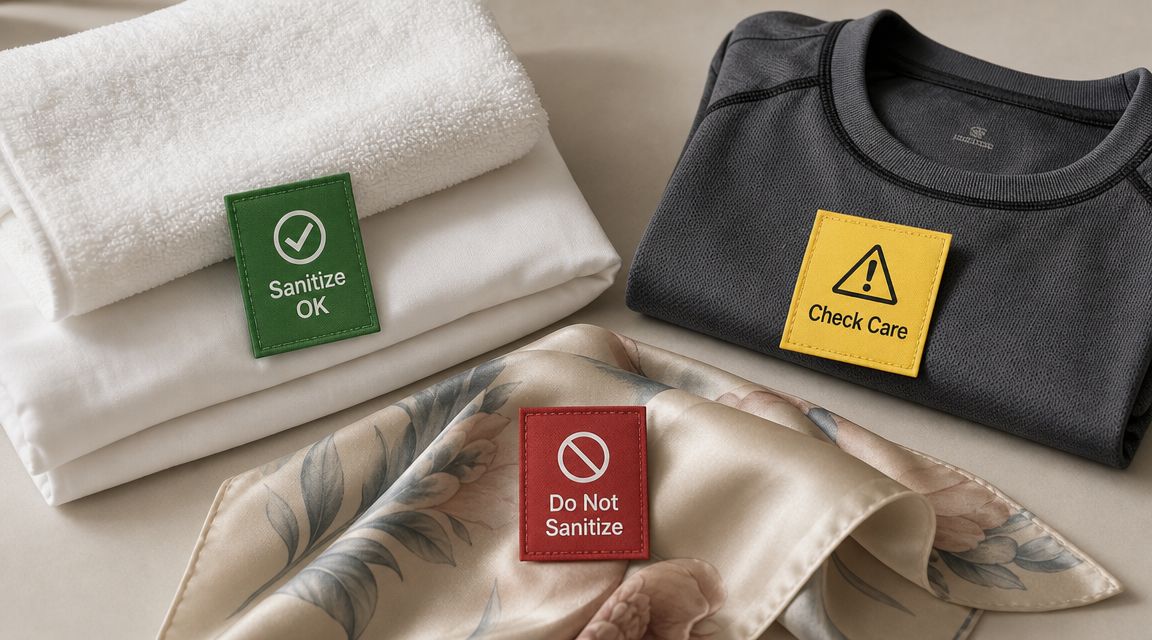
Before you sanitize any load, always check the care label. I can't stress this enough. That little tag is your best guide to preventing a shrunken sweater or a melted workout shirt.
Generally, durable and natural fibers are the best candidates for a high-heat sanitizing session. These are the workhorses of your laundry basket.
- Cotton Towels and Bedding: These are perfect for the sanitize cycle. The high heat is incredibly effective at killing the dust mites and bacteria that love to hide in them.
- Sturdy Cottons: Think about your everyday socks, kids' play clothes, and durable work shirts. These items can almost always handle sustained high temperatures without a problem.
Fabrics That Need a Gentler Touch
Now for the items you should never put on a sanitize cycle. Intense heat will absolutely ruin them by shrinking, melting, or warping the fibers.
- Delicates: This is a hard no for silk, wool, lace, and anything with spandex or elastic. The heat literally breaks down the fibers that give them their shape and stretch.
- Athletic Wear: Most high-performance, moisture-wicking gear is made from synthetics that simply can't take the heat.
- Items with Embellishments: Anything with screen printing, sequins, or even plastic buttons should stay far away from the sanitize setting. The heat can cause them to melt or peel right off.
The secret to sanitizing clothes in a dryer comes down to temperature. Research shows that most bacteria begin to die off around 149°F (65°C). In fact, many appliance brands like Whirlpool design their sanitize cycles to reach at least 140°F to properly disinfect your laundry. This is why a dedicated sanitize cycle is so much more effective than a standard "high heat" setting, as you can learn from this guide on laundry sanitization on beko.ie.
Pro Tip: What about those delicates that still need to be sanitized? Don't risk the dryer. Your best bet is to use a laundry sanitizing additive during the wash cycle. Many are formulated to work in cold water, so you get germ-killing power without damaging your favorite clothes. You can find great options in our guide to eco-friendly cleaning products in our article.
High Heat, High Stakes: Why Dryer Maintenance Is Key for Sanitization
Cranking up the heat to sanitize your laundry is a great way to kill germs, but it directly impacts both your home’s safety and your monthly energy bill. A sanitize cycle naturally uses more power, but if your dryer isn't properly maintained, it's not just wasting energy—it's creating a serious fire hazard.
This is exactly why cleaning out your entire dryer vent system isn't just a suggestion; it's a necessity, especially if you regularly use high-heat cycles. Lint is incredibly flammable. When it builds up and clogs the vent, hot, moist air has nowhere to go. This blockage forces the dryer to run harder and longer, which drives up your energy costs and can cause the appliance to dangerously overheat.
Airflow: The Secret to a Safe and Sanitary Dryer
When it comes to your dryer, proper airflow is everything. It’s the key to both safety and performance. When the vent pathway is clear, your dryer can quickly get up to temperature and maintain the intense heat needed for sanitizing clothes.
A clogged system, on the other hand, struggles to get hot enough, putting a massive strain on the machine while failing to deliver a truly hygienic clean.
Your dryer's ability to sanitize is only as good as its airflow. Without a clear vent and a clean filter, you're not just risking a fire—you're not even getting the germ-killing results you want.
According to the U.S. National Park Service, dryers can account for roughly 6% of a home's total energy consumption. They recommend cleaning the lint screen after every single load and inspecting the vent system regularly to prevent blockages. As noted in their laundry guide on nps.gov, these simple habits directly reduce fire hazards and improve efficiency. For homeowners everywhere, from Newton to Nashville, making sure your dryer runs safely is just as important as its cleaning power.
FAQs About Sanitizing in a Clothes Dryer
Getting clear answers is the best way to save time, avoid ruining your favorite shirt, and make sure your laundry routine is actually effective. Let's walk through some of the most common questions.
Can I Sanitize Without a "Sanitize" Cycle?
It's a common problem: your dryer works great but lacks that specific "Sanitize" button. While a certified sanitize cycle is the only way to guarantee you're hitting the precise temperatures needed to kill 99.9% of bacteria, you can get close. Your best bet is to run the load on the highest heat setting for an extended time—at least 45 to 60 minutes. This sustained heat will go a long way in reducing germs. Just be careful and always double-check fabric care labels first, as that prolonged heat can damage delicate fabrics.
The key takeaway is this: sustained high heat does the work. A quick 30-minute tumble, even on high, won't pack the same germ-killing punch as a longer, hotter cycle designed to penetrate every fiber.
How Often Should I Clean My Dryer Vent?
This is a critical safety question. The answer has two parts:
- The Lint Trap: Clean it out after every single load. No exceptions. It's the most important thing you can do to maintain proper airflow and prevent a fire.
- The Full Vent System: The entire duct that runs from your dryer to the outside of your house needs a deep cleaning at least once a year. If you have a large family, pets, or run multiple loads a day, consider a professional cleaning every six months.
Are There Eco-Friendly Sanitizing Options?
Absolutely! High heat isn't your only option for a hygienic clean.
- Laundry Sanitizing Additives: Look for liquid laundry sanitizers to add to your wash cycle. Many modern formulas work effectively even in cold water.
- Sunlight: Don't underestimate the original disinfectant! The sun's UV rays are fantastic at killing bacteria. Hanging white sheets, towels, and cottons on a line to dry is a free, natural, and powerful sanitizing method.
- Vinegar Spray: When cleaning the dryer drum itself, skip the harsh chemicals. A spray bottle with equal parts white vinegar and water works wonders as a non-toxic disinfectant.
Keeping your dryer clean and running safely is a cornerstone of a healthy home. When you need a clean that goes beyond what you can do yourself, the team at Sunny Day Pro Services offers professional cleaning throughout the Needham and Wellesley areas. Request a free estimate online today!

