
10 Spring House Cleaning Tips for Massachusetts Homes
Ready for a refresh? Get our top spring house cleaning tips for MA homes. Our room-by-room guide covers everything from grout to gutters.
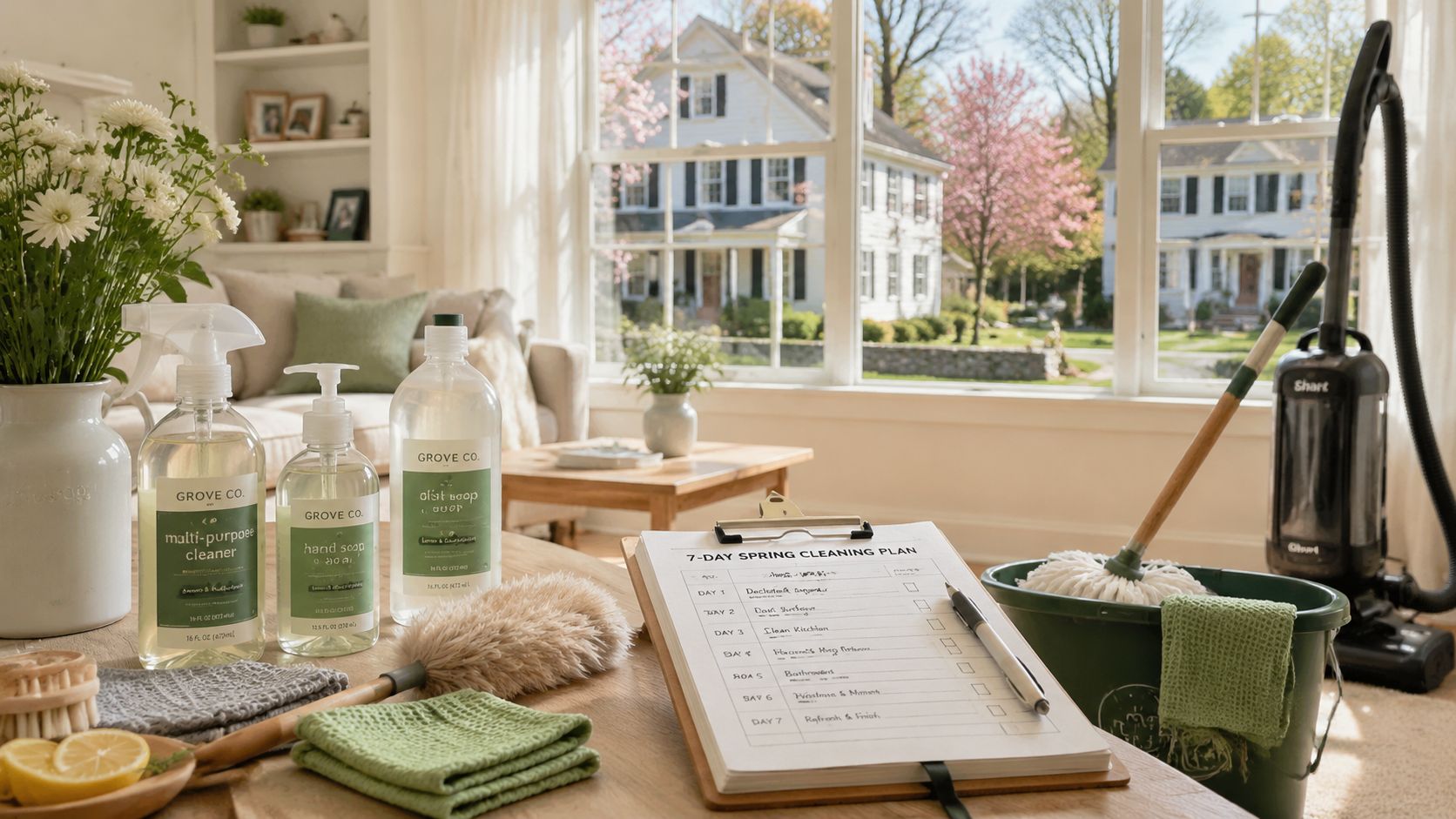
Your Massachusetts Spring Cleaning Battle Plan for 2026
It's early April in Massachusetts. The snowbanks are finally gone, the windows show every streak, the mudroom is still carrying winter, and fine dust has settled into baseboards, vents, and upholstery. That's usually the point when homeowners realize this job needs more than good intentions and a free Saturday.
The cleanest homes I see each spring are handled with sequence, not speed. Busy households in Newton, Needham, Wayland, Wellesley, and Weston do better with a room-by-room plan that matches how New England homes take a beating through winter. Salt, sand, closed-window dust, wet boots, and forced-air heat all leave their mark.
This guide is built for that reality. It gives you a 4-day schedule, practical spring house cleaning tips, eco-friendly swaps that hold up, and clear advice on what to do yourself versus what to hand off. For bigger tasks like stubborn bathroom tile, grout buildup, and hard-to-reach exterior glass, professional help is often the faster and cheaper call once you factor in time, tools, and the risk of doing damage.
If you want a clearer sense of what separates routine tidying from a true deep cleaning service for the whole house, start there. It helps to know which jobs are cosmetic, which improve indoor air and hygiene, and which are best saved for a trained crew.
To keep the work manageable, break it into four focused days:
- Day 1: Declutter storage spaces, closets, and bedrooms
- Day 2: Tackle kitchen, bathrooms, and high-touch surfaces
- Day 3: Clean windows, ceiling fixtures, upholstery, and textiles
- Day 4: Handle HVAC refresh, exterior entryways, and any pro-level jobs
Table of Contents
1. Deep Clean Windows and Window Treatments
Winter leaves a Massachusetts film on glass. Road salt, furnace dust, condensation marks, and early pollen all stack up fast, especially on front-facing windows and sliders near decks or mudrooms. Once you clean them properly, rooms feel brighter right away.
Newton homeowners often notice this first in living rooms and kitchen bump-outs. After a full window clean, the yard looks sharper, natural light improves, and the whole space feels less tired. In Wellesley, this is also one of the fastest ways to improve the look of a home before photos or showings.

Start early and work top to bottom
Clean windows on an overcast day if you can. Direct sun heats the glass and makes solution dry too fast, which leads to streaks. Inside, use a microfiber cloth for the first pass and a squeegee for the finish. Outside, start on upper floors and work down so you don't splash debris onto glass you've already cleaned.
Don't stop at the panes. Tracks, sills, screens, and curtain hems hold a lot of winter dust.
- Wash the screens: Rinse them gently, then let them dry fully before reinstalling.
- Vacuum the tracks: A crevice attachment gets out grit that causes sticking and frame wear.
- Launder or dust window treatments: Fabric panels trap dust, while blinds usually need a wipe-down slat by slat.
Practical rule: First-floor windows are usually a solid DIY job. Second-story windows, storm windows, and anything over landscaping are better left to a professional for safety alone.
If the house has had renovation work, treat the windows as a separate deep-cleaning project. Paint specks, drywall dust, and adhesive residue need a more careful approach than everyday glass cleaning. If you're unsure what counts as a full reset, this guide on what deep cleaning includes gives a useful baseline.
2. Declutter and Organize Storage Spaces
Decluttering isn't the glamorous part of spring cleaning, but it makes every other job easier. You can't vacuum a closet floor, wipe pantry shelves, or clean a basement corner well if everything is still packed in place.
This matters even more in Massachusetts homes where storage space gets used hard through winter. Mudrooms fill with boots and salt buckets. Basements collect holiday bins, storm gear, and sports equipment. By spring, the mess isn't just visual. It's in the way.
Make the space easier to keep clean
Start small so you build momentum. One hall closet, one pantry wall, one basement shelf. Use four categories: keep, donate, discard, and relocate. If you haven't used something in a year and it's not seasonal or sentimental, it usually doesn't need to stay.
Lowe's noted in its 2026 spring cleaning guidance that decluttering closets before cleaning can reduce dust accumulation in storage areas because tightly packed items trap particulates that get released during deep cleaning (Lowe's spring cleaning checklist).
That tracks with what we see in local homes. Packed shelves hold dust. So do overstuffed coat closets and basement racks.
- Use clear bins: You can see contents quickly and avoid tearing apart a shelf later.
- Label by season or use: "Beach gear," "tax files," and "pet supplies" beat vague labels every time.
- Move donations out fast: Put bags in the car or schedule a pickup the same week.
Wayland families often get the best payoff by fixing the mudroom first. Hooks at kid height, one bin per person, and a simple shoe zone prevent spring sports gear from taking over the house. In Needham move-in and move-out situations, a pre-clean declutter also speeds up professional service because crews can reach the surfaces that need attention.
3. Clean and Refresh HVAC Systems and Air Filters
If you do only one health-focused task before a deeper spring clean, make it this one. Start with the HVAC system, then clean the rooms. Otherwise, dust and debris can keep circulating while you're trying to remove them.
A useful overlooked angle comes from environmental illness guidance that points out how many people react badly during spring cleaning when harsh products and hidden allergen reservoirs aren't addressed first. The recommendation is a clean-air-first approach that prioritizes filter replacement, vent cleaning, and lower-toxicity products before the rest of the house gets scrubbed (Invisible Disabilities Association spring cleaning guidance).
Clean air first, then clean the house
Swap the filter first. Then vacuum return grilles, wipe supply vents, and clear debris around the outdoor condenser if you have central air. If anyone in the home deals with allergies, asthma, or chemical sensitivity, this step is worth doing before you stir up bedrooms, rugs, and upholstery.
For Weston and Wellesley households with tighter homes and long heating seasons, the difference can be noticeable. The air feels less stale, and dust doesn't seem to reappear as fast after cleaning.
A few practical habits make this easier to maintain:
- Check filters regularly: During spring and summer, a quick monthly inspection keeps you from forgetting.
- Clean the vent covers when the filter gets changed: Dust builds there faster than most homeowners expect.
- Book HVAC service early: It's easier to get a seasonal appointment before the first hot stretch hits Massachusetts.
Replace the filter before you dust the house, not after. Otherwise the system can pull old debris right back into the rooms you just cleaned.
DIY is fine for filters, registers, and accessible vent covers. Full duct issues, mechanical inspections, and anything involving the air handler or condenser should go to an HVAC technician.
4. Wash and Vacuum Upholstered Furniture
By the time spring arrives in Massachusetts, upholstered furniture has usually taken a beating. Winter keeps everyone indoors longer, pets claim their spots, and closed windows trap dust and stale odors in the fabric. A careful reset here changes how the whole room feels.
In living rooms around Newton and Wayland, I usually see the same problem. Homeowners vacuum the rug, wipe the tables, and skip the sofa because it looks fine from a distance. Then you pull the cushions and find grit in the seams, dust along the frame, and body oil on the armrests.
Start with a dry clean only. Use the upholstery attachment and work slowly over every cushion, seam, and edge. Pull cushions off if you can, and vacuum the deck underneath, the sides, the back, and the fabric near the base where crumbs and pet hair collect.
Then check the cleaning code on the tag. Water-safe fabric can handle light spot cleaning with a mild upholstery solution, but delicate blends, older furniture, and deep-set stains are another story. The trade-off is simple. A quick DIY spot treatment can freshen a well-kept couch, but too much moisture can leave water rings, flatten cushions, and create a mildew smell that takes days to clear.
A few rules keep this job under control:
- Vacuum before using any cleaner: Dry soil turns muddy once it gets wet.
- Blot stains with a clean cloth: Rubbing pushes the stain deeper and roughs up the fibers.
- Test any product in a hidden area first: Fabric color and texture can shift more than expected.
- Give cushions full drying time: Open windows if weather allows, or run fans to move air.
Some jobs are better left alone. Velvet, wool blends, vintage upholstery, and furniture with heavy staining often need professional extraction and fabric-specific treatment. For busy households working through a 4-day spring cleaning plan, this is one of those spots where calling in help can save time and prevent an expensive mistake. Sunny Day Pro Services is often the smarter choice when the goal is a true refresh, not just a surface cleanup.
Done right, this step makes the room look brighter, smell cleaner, and feel ready for the season.
5. Sanitize High-Touch Surfaces and Baseboards
Many spring cleaning lists often become too casual. People wipe counters, maybe spray a bathroom, and call it done. But the grime you notice least is often sitting on switch plates, door edges, stair rails, cabinet pulls, and baseboards.
For busy households in Needham and Wayland, these areas get hammered through winter. Everyone's indoors more, shoes track in grit, and hands are constantly on the same surfaces.
Hit the spots people forget
Make one pass for dust and one pass for sanitizing. If a surface is visibly dirty, clean it first. Disinfectants work better on a clean surface than on a dusty or greasy one.
Kitchen and bathroom zones deserve extra attention, but don't ignore the transition areas. Mudroom trim, pantry handles, fridge pulls, remote controls, and the wall around light switches usually need more than a quick swipe.
- Use microfiber first: It lifts dust off baseboards and trim without smearing it around.
- Follow product directions: Contact time matters, especially on hard nonporous surfaces.
- Use gentler methods on electronics: Spray the cloth, not the device.
Organized Interiors highlighted that many people connect spring cleaning with feeling better at home. In its survey summary, 92% said they felt more relaxed in a clean home, and 67% said they saw their home as healthier after spring cleaning (Organized Interiors on the benefits of spring cleaning).
That makes sense in real life. Baseboards don't just affect appearance. They hold dust and pet hair in the exact places air currents tend to move it. Cleaning them is fussy work, but it changes how finished the house feels.
6. Deep Clean Kitchen Appliances and Grease Buildup
Open a few kitchen cabinets after a Massachusetts winter, and you can usually feel the problem before you see it. The room looks fine at a glance, but the cabinet faces are tacky, the hood filter is loaded, and the backsplash near the range has that dull film a regular wipe-down never removes.
Kitchens climb to the top of spring cleaning lists for good reason. They collect cooking residue in layers, especially during colder months when windows stay shut and weeknight meals happen fast. A tidy counter does not fix built-up grease on appliances, trim, and tile.
Start with the spots that spread grime to everything else. In my experience, homeowners get better results when they tackle heat and ventilation areas first, then work outward across the room.
A practical reset looks like this:
- Steam the microwave first: Heat a bowl of water with lemon for a few minutes, then wipe while the residue is still soft.
- Wash the range hood filter: Warm water, dish soap, and patience beat aggressive scrubbing that bends the mesh.
- Clean cabinet fronts top to bottom: Upper doors and handles usually hold the heaviest cooking film.
- Wipe the wall and backsplash beside the stove: This narrow strip often holds more grease than the cooktop itself.
- Detail the refrigerator gasket: Crumbs, moisture, and sticky residue collect there fast.
Trade-offs matter here. Vinegar and dish soap can handle light grease, and they are a good eco-friendly option for painted cabinets, laminate, and routine appliance cleaning. Heavy buildup around hood vents, grout lines, or textured tile usually needs a stronger degreaser and more rinse work. Use the gentlest product that removes the film. If you keep wiping and the surface still feels sticky, step up the method instead of wasting another hour.
For homes in Wellesley, Newton, and similar older suburbs, kitchen tile often reflects the full picture. Grout grabs grease and dust, especially near ranges and under cabinets. Once that buildup settles in, DIY cleaning can improve the surface without fully restoring the color. That is usually the point where professional tile and grout care makes financial sense. You avoid over-scrubbing, protect the finish, and get the job done in one visit instead of one weekend. If you want a stronger room-by-room process before deciding, this deep kitchen cleaning guide lays out the steps clearly.
A kitchen can look organized and still need real degreasing. If cabinet faces feel tacky, focus on residue removal, not more tidying.
7. Dust and Clean Ceiling Fans, Light Fixtures, and Crown Molding
Most homeowners notice floor dust long before they look up. But after a New England winter, ceiling fans, pendant lights, crown molding, and high ledges can be loaded with dust and cobwebs. Once spring air starts moving through open windows and fans start running again, that dust doesn't stay put.
In Weston homes with taller ceilings or two-story foyers, this job can change the look of a room fast. Clean light fixtures throw better light, and cleaned fan blades stop scattering dust every time they're turned on.
Do the high dust before the floors
This job belongs early in the cleaning sequence. Do it before you vacuum rugs or mop hard floors. Use a stable step stool for low fixtures and a telescoping duster or vacuum attachment for reachable upper trim.
Turn off fans first, then clean each blade thoroughly. For glass shades or delicate pendants, remove and wash only if the fixture design allows it safely. If it doesn't, a careful wipe with the right cloth is better than forcing it.
Useful rules for this part of the house:
- Use microfiber instead of feather dusters: It captures debris better instead of floating it around.
- Cover the floor below: Falling dust is part of the job.
- Call a pro for high or awkward fixtures: Cathedral ceilings and stairwell chandeliers aren't worth the fall risk.
Households often underestimate how much dust is sitting above eye level. That's one reason the air can still feel dusty after a big cleanup if fans, vents, and molding were skipped. In Needham family rooms, this is especially obvious around ceiling returns and recessed lighting trims.
8. Refresh Bedding, Mattresses, and Bedroom Textiles
A bedroom reset pays off fast. After a Massachusetts winter, fabrics hold dust, dry air, and that closed-up smell that lingers even in a tidy room.
Start by stripping the bed completely and gathering every washable textile in one pass. Sheets, pillowcases, duvet covers, blankets, bed skirts, throw blankets, and washable curtains should all go first. If you're working through a 4-day spring cleaning plan, this fits well on the same day as bedrooms and bathrooms because laundry can run while you handle detail work elsewhere.
The mattress deserves more than fresh sheets. Vacuum the surface with an upholstery attachment, slow and steady, with extra attention on seams, piping, and edges where dust collects. Rotate the mattress if the tag or manufacturer instructions allow it. Not every mattress should be flipped or turned, and forcing it can shorten its life.
A practical bedroom reset usually includes:
- Wash bedding on the hottest fabric-safe setting: Check labels before you start.
- Vacuum under the bed: That area collects dust, pet hair, and storage-bin debris all winter.
- Clean fabric headboards, benches, and curtains: These hold more dust than homeowners expect.
- Check pillows and mattress protectors: Replace anything flat, musty, or no longer washing well.
For busy households in places like Wayland and Needham, under-bed space often turns into overflow storage by February. Spring is the right time to clear it out, vacuum the floor, and decide what should stay in the bedroom at all. Cleaner air flow around the bed helps the whole room feel less stale.
Stick with low-residue products here. Fragranced sprays can make a room smell clean for an hour, but they do not remove buildup, and some leave fabrics feeling tacky. A light fabric-safe refresh, open windows on a dry day, and a thorough wash usually get better results.
If you're already tackling moisture-prone areas during the same cleaning block, pair the bedroom reset with a deep bathroom cleaning checklist for tile, grout, and high-use surfaces so the private rooms of the house get finished together.
Some jobs are still better left to a pro. Large drapes, delicate textiles, stained mattresses, and high bedroom windows can turn into a half-day project with mixed results. For routine care, DIY works well. For heavy buildup or specialty fabric cleaning, calling in Sunny Day Pro Services is usually the faster and smarter move.
9. Clean and Organize Bathrooms with Tile and Grout Focus
Bathrooms always need spring attention, but in Massachusetts they really show winter wear. Less ventilation, more hot showers, and months of closed windows can leave grout dingy, caulk stained, mirrors hazy, and exhaust covers dusty.
Tile and grout are where homeowners either save the room or waste a lot of time. A standard spray-and-wipe routine is fine for maintenance. It won't do much for embedded buildup, soap film, or grout discoloration.
Moisture control matters as much as scrubbing
Start with dry removal. Vacuum corners, vent covers, and base edges before adding any moisture. Then clean tile, glass, fixtures, and the vanity in sections so products don't dry before you can rinse or wipe them away.
A few bathroom rules are worth sticking to:
- Match cleaner to the surface: Natural stone, porcelain, ceramic, and glass don't all want the same chemistry.
- Check caulk lines closely: Small failures around tubs and showers turn into bigger water issues.
- Use the fan after cleaning and after showers: Drying the room is part of keeping it clean.
TrueHomes also pointed to a useful maintenance idea that many spring cleaning guides miss. Some moisture-prone bathroom and kitchen areas can redevelop mold or bacteria within a matter of weeks, which is why one big spring clean works better when it's followed by regular upkeep instead of complete neglect (TrueHomes spring cleaning checklist and maintenance angle).
For Needham and Weston bathrooms with older grout, DIY cleaning can only go so far. If the tile still looks tired after proper cleaning, grout sealing, restoration, or even tile updates may be the better long-term move. For a practical bathroom-specific reset, this guide on how to deep clean a bathroom is a useful reference.
10. Pressure Wash Exterior Surfaces and Entryways
Spring cleaning shouldn't stop at the front door. In Massachusetts, winter leaves behind salt residue, algae, grime, and dark staining on steps, walkways, patios, and siding near grade. Entryways take the worst of it because they're hit by foot traffic, melting snow, and splashback.
Wellesley and Newton homeowners usually see this first on front steps, stone walks, and the apron near the garage. A good exterior wash makes the whole property feel maintained before anyone even comes inside.
Use the right pressure or skip DIY
Pressure washing is one of those jobs that looks easy until a nozzle gets too close to the wrong surface. Concrete can handle more force than painted trim. Stone, pavers, and older wood need a gentler approach. Windows, outlets, and soft siding details need even more caution.
Professional help is usually smarter when the home has mixed materials or decorative surfaces. That includes tile patios, masonry stairs, painted porch ceilings, and older siding.
A few common-sense rules go a long way:
- Sweep and clear debris first: Dirt, leaves, and pebbles turn into mess when water hits them.
- Start low pressure: You can always increase it. You can't undo etched wood or damaged paint.
- Watch drainage: Dirty runoff shouldn't be pushed back toward the foundation or garage.
The seasonal cleaning economy around this work is real. Statistics Canada noted that the household cleaning market includes specialty categories and seasonal patterns, and it also reported 1,506 Canadian carpet and upholstery cleaning businesses as part of the wider service market tied to household cleaning demand (Statistics Canada on spring cleaning by the numbers).
Around Wayland and Weston, exterior cleaning also helps spot maintenance issues early. If mildew returns in the same spot every year, or one walkway always stays slick, the cleaning pattern may be telling you something about drainage, shade, or surface wear.
10-Point Spring House Cleaning Comparison
| Task | Implementation Complexity | Resource Requirements | Expected Outcomes | Ideal Use Cases | Key Advantages |
|---|---|---|---|---|---|
| Deep Clean Windows and Window Treatments | Medium–High; exterior/upper-story increases complexity | Squeegees, ladders/scaffolding, cleaning solutions, microfiber, time; pros often recommended | Brighter interiors, improved views, reduced allergens, identified window issues | After winter and before pollen season; pre-sale showings; multi-story homes | Dramatic visual impact; better natural light; energy efficiency gains |
| Declutter and Organize Storage Spaces | Medium; time- and decision-intensive | Boxes, labels, storage solutions, donation/disposal logistics, time | More usable space, reduced stress, easier ongoing cleaning | Seasonal reset, move-in/move-out, families needing better flow | Long-term organization; increased safety; faster maintenance |
| Clean and Refresh HVAC Systems and Air Filters | Medium–High; technical tasks may need pros | Replacement filters, basic tools, professional inspection/duct service | Improved indoor air quality, lower energy use, extended equipment life | Pre-cooling season, allergy households, rental property prep | Prevents costly breakdowns; reduces allergens; lowers bills |
| Wash and Vacuum Upholstered Furniture | Medium; varies by fabric and condition | Vacuum extractor, stain treatments, steam/dry-cleaning or pro service | Restored appearance, odor removal, reduced embedded allergens | Pet owners, pre-entertaining, seasonal refresh | Extends furniture life; improves comfort and air quality |
| Sanitize High-Touch Surfaces and Baseboards | Low–Medium; systematic but straightforward | Disinfectants, microfiber cloths, checklist, time | Reduced pathogen transmission, cleaner appearance, fewer allergens | Homes with children/elderly, pre-showings, post-illness cleanup | Immediate hygiene improvement; targeted, efficient results |
| Deep Clean Kitchen Appliances and Grease Buildup | High; interiors and electronics require care | Degreasers, specialty tools, brand-specific methods, pro services | Safer food surfaces, improved appliance efficiency, odor reduction | Heavy cooking households, rental turnovers, spring refresh | Extends appliance life; reduces pests and energy costs |
| Dust and Clean Ceiling Fans, Light Fixtures, and Crown Molding | Medium–High; requires safe access to elevated areas | Ladders or lifts, extension poles, microfiber, protective gear | Better lighting, fewer airborne allergens, refreshed room appearance | Homes with high ceilings, allergy sufferers, before entertaining | Restores light output; prevents dust redistribution |
| Refresh Bedding, Mattresses, and Bedroom Textiles | Medium; large items and drying time required | Washing machine or pro mattress cleaning, vacuum, protectors | Improved sleep quality, reduced dust mites/allergens, odor removal | Allergy-prone households, seasonal bedding change, mattress care | Health and comfort benefits; prolongs textile lifespan |
| Clean and Organize Bathrooms with Tile and Grout Focus | High; mold and grout need specialized treatment | Grout cleaners, scrubbing tools, caulk supplies, ventilation improvements, pros | Mold/mildew reduction, sanitized surfaces, improved appearance | Bathrooms with staining/mold, pre-sale prep, post-renovation care | Prevents water damage; enhances hygiene and resale appeal |
| Pressure Wash Exterior Surfaces and Entryways | High; risk of surface damage if misapplied | Pressure washer, nozzles, protective gear, professional operator recommended | Restored curb appeal, removed algae/mold, safer walkways | After winter grime, before entertaining/selling, patios/decks prep | Rapid exterior renewal; prevents long-term deterioration |
Enjoy a Sparkling Home Without the Stress
A good spring clean changes more than appearance. Rooms feel lighter, the air feels fresher, and the house starts working better for everyday life. That's especially true in Massachusetts homes coming off a long winter, where dust, salt residue, moisture, and closed-window living all build up in different ways.
The easiest mistake is trying to do everything at once. A room-by-room plan works better. A 4-day schedule works better. So does knowing which jobs deserve your time and which ones are better handed off.
Some tasks are straightforward DIY work. Decluttering a closet, washing bedding, replacing an HVAC filter, and wiping down high-touch surfaces are all manageable for most homeowners. They take effort, but they don't usually require specialized tools or unusual risk.
Other jobs are where homeowners lose an entire weekend and still don't love the result. High windows, stubborn kitchen grease, grout restoration, post-construction dust, heavy-duty bathroom buildup, and awkward ceiling fixtures all fall into that category. Exterior pressure washing can too, especially when the home has older surfaces, delicate trim, or mixed materials.
There's also the eco-friendly side of spring cleaning. More homeowners now care about what they're using in the house, not just whether it smells clean. Market data cited by WiseGuy Reports says 81% of U.S. consumers want transparent ingredient labeling in home cleaning products, reflecting strong demand for clearer product information and greener cleaning choices (WiseGuy Reports green cleaning services market summary). In practical terms, that means simple swaps matter. Choose fragrance-light or low-residue products when possible. Use microfiber cloths instead of disposable wipes where it makes sense. Pick one effective multi-surface cleaner instead of stacking a dozen half-used bottles under the sink.
That said, eco-friendly doesn't mean weak, and strong doesn't have to mean harsh. The best cleaning routine is the one that gets results without making your home harder to live in. If a product leaves behind fumes, sticky residue, or a headache, it's not doing the job well enough.
For homeowners preparing to sell, moving in, managing rental turnover, or getting ready for a kitchen or bathroom refresh, spring is also the right time to think beyond cleaning alone. Sometimes a professional deep clean reveals what needs repair, sealing, or replacement. Tile and grout are a good example. A proper cleaning can bring a bathroom or backsplash back to life, but it can also show you where restoration or new installation would make the bigger difference.
If you're in Wayland, Newton, Needham, Wellesley, Weston, or nearby communities, you don't have to spend every spring weekend chasing the same backlog. Tackle the easy wins yourself. Bring in a local professional for the jobs that require ladders, restoration work, specialized equipment, or just more hours than you have. That's how you get a cleaner home without turning spring into another exhausting project.
If you want a cleaner home without giving up your weekend, Sunny Day Pro Services can help with deep cleaning, move-in and move-out service, post-construction cleanup, high-detail bathroom and kitchen cleaning, and expert tile-focused work across Wayland, Newton, Needham, Wellesley, Weston, and nearby Massachusetts communities. Request a fast, no-obligation estimate and get the kind of result that's worth coming home to.

