
Tile Flooring Cost Guide for Massachusetts Homeowners
Get tile flooring cost insights for Massachusetts homeowners with material vs labor breakdowns, local estimates, budgeting tips, and care advice.
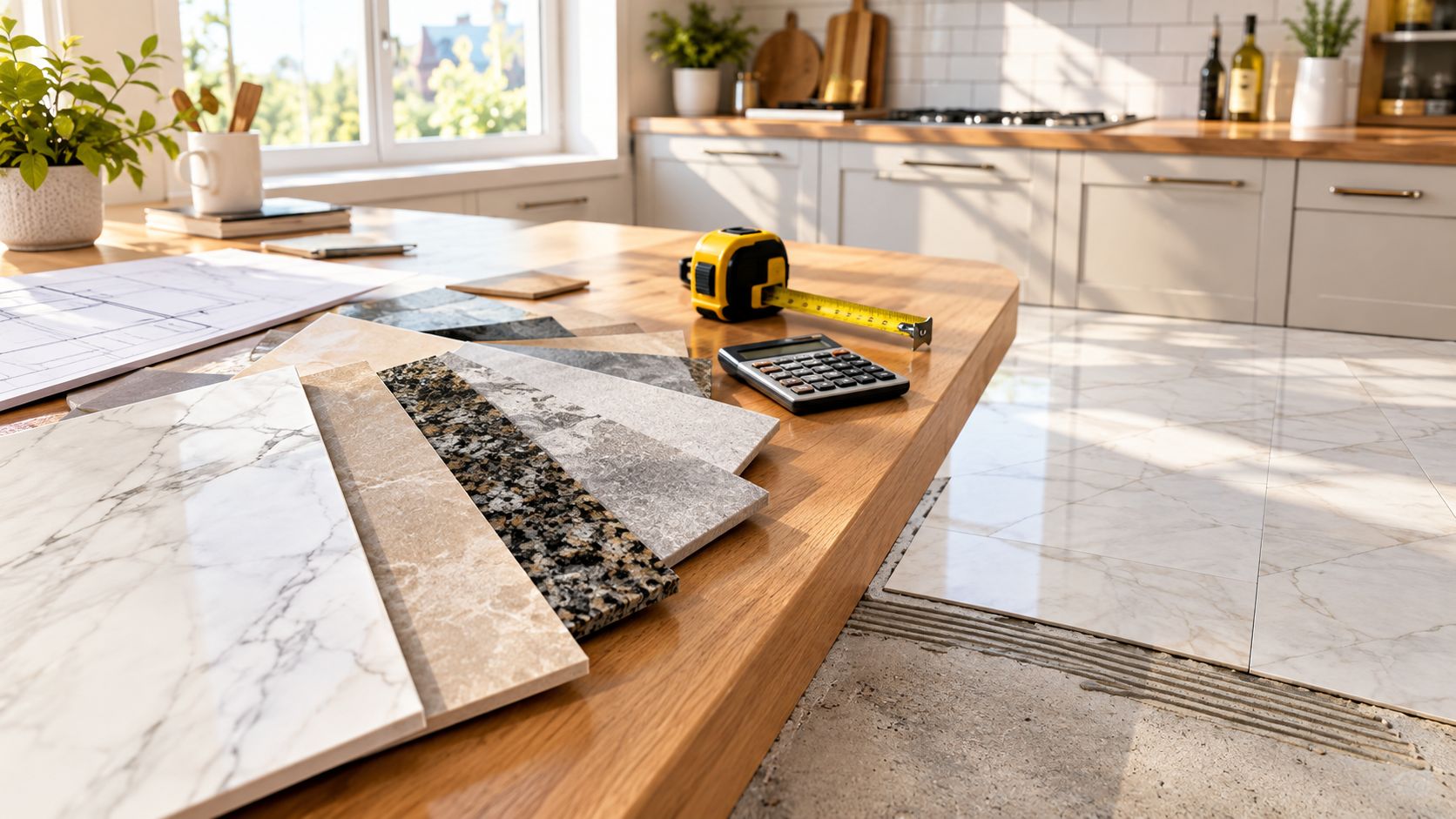
A kitchen remodel can look straightforward until the flooring quote arrives. A homeowner in Newton may have chosen a tile they like, measured the room, and calculated the box price, only to discover that demolition, leveling, underlayment, grout, and installation change the total substantially. The right question isn't, “How much does the tile cost?” It's, “What will it cost to prepare, install, finish, and maintain this floor?”
That distinction matters throughout Massachusetts, where older homes can bring uneven substrates, complicated room transitions, and moisture concerns. A useful comparison of flooring options for busy rooms is available in this guide to the best flooring for high-traffic areas. The sections below break down tile flooring cost by material, installation demands, local examples, maintenance, and quote preparation.
Table of Contents
- What happens if the installer finds a damaged subfloor?
- Is tile a better long-term choice than another flooring material?
- How should payment be structured?
Introduction to Tile Flooring Cost
A Massachusetts homeowner can choose attractive tile, measure the room, and still receive a quote far above the box price. Tile is the visible finish, while removal, substrate repairs, underlayment, setting materials, grout, edges, and transitions form the working parts beneath and around it.
For a 200-square-foot room, installed tile flooring commonly falls around $2,400 to $7,500, depending on the material and complexity, according to 2026 installed tile pricing data. A simple ceramic layout may stay near the lower end. Premium stone, detailed patterns, tight cuts, or difficult access can push the project higher.
Practical rule: Budget from the floor upward. The tile is the visible finish, but the subfloor and installation system determine whether that finish performs well.
The property itself can change the estimate. A Newton kitchen with a flat, sound subfloor may need straightforward installation. An older home in another Massachusetts town may require demolition, leveling, repairs, or careful fitting around cabinets and doorways. Pattern complexity adds another layer because diagonal layouts, borders, and small pieces take more layout time and create more cuts.
For maintenance considerations in busy rooms, compare tile with flooring options for high-traffic areas. Reviewing these conditions before signing helps prevent a low starting quote from becoming an expensive change order.
Understanding Price Ranges by Tile Type and Installation
A tile quote becomes easier to read once you separate material-only cost from installed cost. Material-only pricing covers the tile itself. Installed pricing usually combines labor with setting materials, grout, underlayment, preparation, and finishing details, though contractors may define those items differently.
For Massachusetts homeowners comparing bids, the material is only one layer of the price. Ceramic, porcelain, and stone each bring different handling and installation demands, as reflected in these current tile flooring cost ranges.
| Tile Type | Material Cost ($/sq ft) | Installed Cost ($/sq ft) |
|---|---|---|
| Ceramic | $1 to $4 for basic material | $12 to $25 |
| Porcelain | $3 to $6 or more for standard grades | $15 to $50 |
| Marble | Premium natural-stone pricing | Often within the natural-stone premium range |
| Granite | Premium natural-stone pricing | Often within the natural-stone premium range |
| Natural stone | $2 to $35 across broad material-only market ranges | $20 to $60 or more |
The table shows why two quotes can look unrelated. A material-only estimate may be around $2 to $35 per square foot, while an installed project may reach $9 to $28 per square foot or higher after labor, grout, and underlayment are included, according to this tile flooring installation cost reference. The figures are comparison points, not a promise of what a contractor will charge in a particular Massachusetts town.
Ceramic tile
Ceramic is often the practical starting point for a straightforward floor. Basic material can cost about $1 to $4 per square foot, and installed pricing commonly falls around $12 to $25 per square foot in the cited ranges. It can work well in kitchens, bathrooms, mudrooms, and other residential spaces when the product suits the room.
Porcelain tile
Porcelain usually costs more. Standard material often runs $3 to $6 or more per square foot, while installed pricing commonly ranges from $15 to $50 per square foot. Its density can make cutting and handling more demanding, especially with large-format pieces, diagonal layouts, borders, or repeated pattern alignment.
Marble and granite tile
Marble and granite fit within the premium natural-stone category. Natural stone commonly starts around $20 per square foot installed and can exceed $60, depending on the stone, finish, layout, preparation, and sealing requirements. Marble also needs care that is not identical to routine ceramic or porcelain maintenance.
Installation labor explains why a tile box price does not predict the finished floor. One industry guide estimates labor at about 40% to 60% of total project cost, averaging approximately $5 to $15 per square foot, as summarized in the tile project cost breakdown. For a 200-square-foot ceramic floor priced near $13 per square foot installed, the project would total roughly $2,600 before major remediation or premium finish upgrades, based on this installation pricing benchmark. A simple rectangular room may stay near that example, while a room with many corners, transitions, or pattern cuts can require more labor.
Installation Prep and Cost Drivers
A tile quote can look reasonable until the installer lifts the existing flooring and finds movement, moisture, or an uneven subfloor. The visible tile is only the final layer. Like a roof over a house, it performs well only when the structure beneath it is prepared for the job.
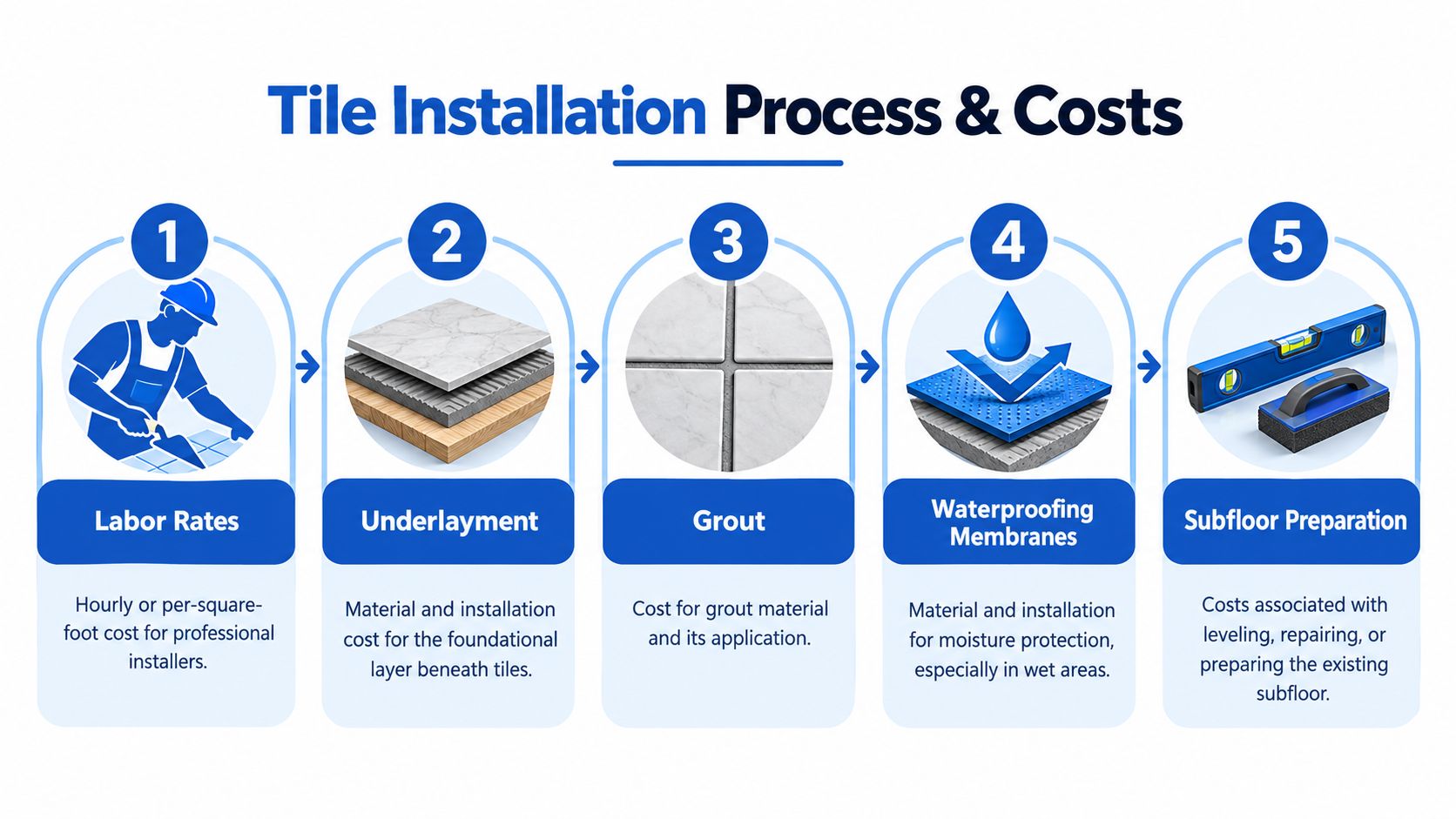
The cost usually develops as a chain:
- Demolition and removal: The existing floor may need removal, and debris disposal may be priced separately.
- Subfloor preparation: The installer checks for movement, damage, height differences, and uneven areas.
- Underlayment: Backer board or an uncoupling layer provides a more reliable setting surface.
- Waterproofing: Bathrooms, showers, and other wet areas may need a waterproofing membrane.
- Layout and setting: The plan accounts for starting points, cuts, transitions, and pattern alignment.
- Grouting and finishing: Grout, trim, sealants, thresholds, and cleanup complete the installation.
Labor and substrate condition
Labor may be quoted by the square foot or included in a broader project price. A straight layout on an accessible surface is easier to estimate than a room with many corners, narrow passages, built-in cabinetry, or several transitions.
The substrate can change the labor requirement even when the measured area stays the same. An uneven floor may require leveling or repair. A bathroom may need moisture protection beneath the tile assembly. The tile backer board installation guide explains why this layer affects durability, floor height, fastening, and transitions.
Underlayment, grout, and waterproofing
Underlayment supports the finished system, even though it remains out of sight. The installer may choose cement backer board or another approved layer based on the substrate and room conditions. That choice affects material handling, fastening, finished height, and the connection to adjacent floors.
Grout should appear clearly in the estimate. Ask which type and color will be used, how it will be applied, and whether sealing is included. In wet areas, a waterproofing membrane adds both material and labor because moisture protection must be completed before the tile is set.
Pattern and geometry
Room shape can matter more than floor area. Herringbone and diagonal layouts require additional cuts and slower placement. Complex patterns can raise labor costs by 15% to 25%, according to this tile installation cost benchmark.
Large-format tile may also require a flatter, more carefully controlled substrate and more deliberate handling. As a result, a visually simple floor can cost more than a smaller standard-tile project when each piece demands tighter alignment. Mosaics, borders, niches, curved edges, and detailed transitions create similar pressure on labor time.
A site inspection gives both parties a clearer starting point. The homeowner gets a more realistic proposal, while the installer can identify problems before materials arrive.
Ask the contractor to document the existing floor, expected preparation, tile orientation, grout lines, transitions, disposal, and assumptions about hidden conditions. A quote that says only “install tile” leaves too many differences between bids unexplained.
Local Cost Examples in Massachusetts
Massachusetts homeowners often want a local reference point rather than a national average. The following examples use the specified room sizes, towns, tile choices, and complexity ranges to illustrate how project totals can differ even among nearby communities.
A 150-square-foot bathroom in Wayland might range from $1,500 to $2,500 for basic ceramic tile, while a complex mosaic could run $3,000 to $5,000. The difference reflects more than the tile itself. Mosaic work requires more individual placement and cutting, and a bathroom may also involve wet-area preparation.
In Newton, a 250-square-foot kitchen with standard porcelain tile may fall between $2,500 and $4,000. A premium natural-stone selection could reach $5,000 to $8,000, particularly when the installation involves more demanding preparation or finishing.
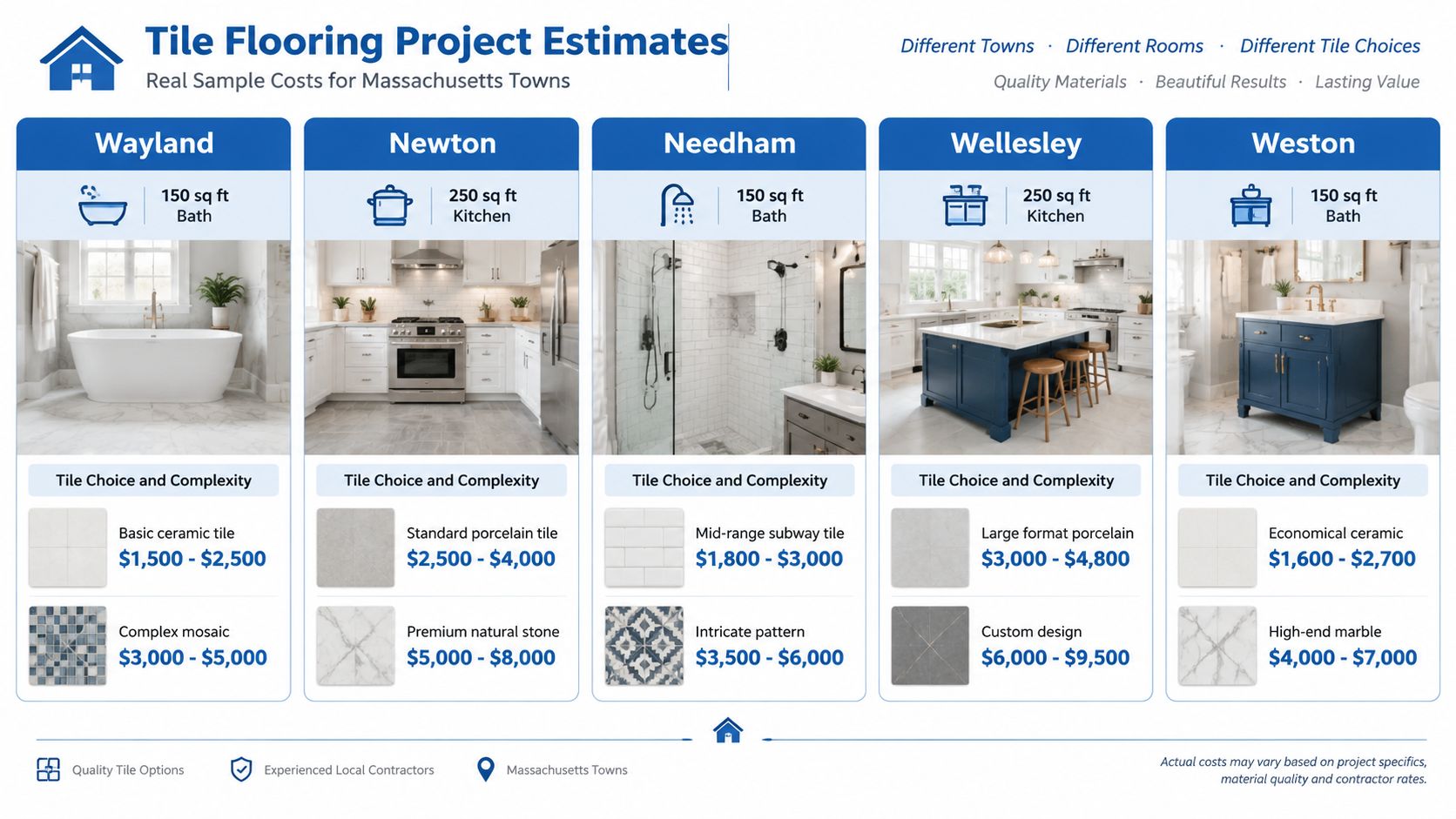
| Town and Room | Tile Choice and Complexity | Estimated Cost |
|---|---|---|
| Wayland, 150 sq ft bath | Basic ceramic tile | $1,500 to $2,500 |
| Wayland, 150 sq ft bath | Complex mosaic | $3,000 to $5,000 |
| Newton, 250 sq ft kitchen | Standard porcelain tile | $2,500 to $4,000 |
| Newton, 250 sq ft kitchen | Premium natural stone | $5,000 to $8,000 |
| Needham, 150 sq ft bath | Mid-range subway tile | $1,800 to $3,000 |
| Needham, 150 sq ft bath | Intricate pattern | $3,500 to $6,000 |
| Wellesley, 250 sq ft kitchen | Large-format porcelain | $3,000 to $4,800 |
| Wellesley, 250 sq ft kitchen | Custom design | $6,000 to $9,500 |
| Weston, 150 sq ft bath | Economical ceramic | $1,600 to $2,700 |
| Weston, 150 sq ft bath | High-end marble | $4,000 to $7,000 |
Needham's bathroom example moves from $1,800 to $3,000 with mid-range subway tile to $3,500 to $6,000 for an intricate pattern. Wellesley shows a similar design effect in a larger kitchen, with large-format porcelain at $3,000 to $4,800 and a custom design at $6,000 to $9,500. Weston ranges from $1,600 to $2,700 for economical ceramic to $4,000 to $7,000 for high-end marble.
These aren't substitute quotes. They're planning benchmarks that show how tile choice and complexity can move the budget within the same general room size.
Planning for Maintenance and Long-Term Expenses
The purchase price is only one part of owning a tiled floor. Routine cleaning is usually simple, but grout and natural stone need care that homeowners should include in their long-term planning. A neglected grout joint can collect soil, while unsealed stone can be more vulnerable to staining.
A practical care routine
Use a soft broom, dust mop, or vacuum suitable for hard floors to remove grit. Fine debris can act like an abrasive under shoes, especially in entryways and kitchens. Follow with a mild, tile-compatible cleaner and avoid products that leave a heavy film.
For grout, inspect visible joints during routine cleaning. Discoloration, persistent soil, or a change in texture can indicate that the joints need deeper cleaning or renewed protection. The grout cleaning and sealing guide offers a focused reference for that part of floor care.
Natural stone needs a more careful product selection. Marble and granite shouldn't automatically be treated like glazed ceramic. Use a cleaner labeled for the specific stone, avoid harsh acidic products unless a qualified professional confirms compatibility, and ask the installer what sealer suits the finish.
Build a five-year maintenance budget
A simple planning template can keep upkeep from becoming an afterthought:
- Everyday care: Keep a broom, dust mop, hard-floor vacuum, microfiber mop, and compatible cleaner available.
- Regular inspection: Look for cracked grout, loose tiles, chipped edges, and movement near transitions.
- Periodic grout care: Clean joints thoroughly when routine mopping no longer restores their appearance, then ask whether sealing is appropriate.
- Stone-specific care: Track the condition of marble or granite and schedule resealing based on the product and installer's guidance.
- Repair reserve: Keep spare tile from the original installation when possible, especially for discontinued colors or patterned products.
Maintenance cost depends on the tile, grout, room use, cleaning habits, and whether the homeowner handles routine work or hires help. A five-year plan doesn't need to predict an exact total. It should identify recurring cleaning supplies, professional grout service when needed, stone sealing where applicable, and repairs that may arise from impact or substrate movement.
The installation quality still matters after the crew leaves. Correct preparation, appropriate grout, proper transitions, and accurate sealing reduce the chance that routine care turns into a larger repair project.
Budgeting and Requesting Accurate Quotes
A Massachusetts homeowner can measure a room accurately and still receive an unreliable tile flooring cost estimate. Record the usable floor area, existing surface, nearby floor heights, door swings, cabinets, appliances, and wet-area boundaries. Note whether the room is square or includes alcoves, angles, or other cuts. Then select the intended material, such as ceramic, porcelain, marble, granite, or another natural stone, before comparing bids.
A useful quote works like a recipe. It should show every ingredient and the amount of work behind the final price:
- Tile material: Identify the product, size, finish, pattern, and whether the allowance covers the planned layout and expected waste.
- Removal and disposal: Ask whether old flooring removal, hauling, and debris handling are included.
- Subfloor work: Require a written description of leveling, repairs, backer board, membranes, or other preparation.
- Setting materials: Confirm thinset or mortar, underlayment, grout, sealers, trim, and transitions.
- Labor: Ask whether installation is priced by area, task, or as one complete package.
- Protection and cleanup: Clarify protection for cabinets, walls, appliances, and adjoining rooms, plus final cleanup.
- Warranty terms: Ask what the labor warranty covers, how long it lasts, and which exclusions apply.
- Possible extras: Discuss delivery, disposal, permits when the scope exceeds a simple replacement, and concealed conditions.
Material-only pricing may be far below the installed total. Labor, grout, underlayment, preparation, and layout complexity can change the comparison, so two bids with the same tile allowance may still have very different totals. A straight installation with few cuts is priced differently from a Massachusetts entryway with thresholds, cabinets, multiple angles, or an intricate pattern.

Request an itemized proposal from each contractor and compare the scope, not only the bottom line. If one estimate includes floor leveling while another assumes a ready-to-tile surface, the lower figure does not represent the same work. Ask Sunny Day Pro Services what its proposal includes, how unexpected substrate conditions are handled, and which material, pattern, or preparation decisions must be settled before installation begins.
Conclusion and Frequently Asked Questions
For Massachusetts homeowners, tile flooring cost depends on more than the tile itself. Material, labor, subfloor preparation, room geometry, pattern complexity, and finish level all affect the installed total. A simple ceramic room may cost far less than a stone, mosaic, or custom-pattern project. Local town examples are useful because an entryway with thresholds, cabinets, and angled cuts can require more labor than an open, rectangular room.
What happens if the installer finds a damaged subfloor?
Ask the contractor to pause before covering the problem. Request a written explanation of the repair, added cost, and schedule impact. Confirm whether the work involves leveling, structural repair, moisture protection, or a change in finished floor height before approving it.
Is tile a better long-term choice than another flooring material?
Tile suits kitchens, bathrooms, mudrooms, and busy areas because it handles moisture and repeated cleaning. Its value depends on proper installation, the chosen material, household needs, and how long you plan to stay in the home. A lower initial price may not be the better fit if the surface cannot handle the room's conditions.
How should payment be structured?
Use a written agreement tied to clear milestones, including approved materials, completed preparation, tile installation, and final inspection. Keep the scope, warranty, change-order process, and cleanup requirements in writing. That record helps resolve disagreements before they become expensive.
Final check: A trustworthy quote explains what happens beneath the tile, not only how the finished surface will look.
Sunny Day Pro Services provides tile and flooring installation for porcelain, ceramic, marble, granite, custom backsplashes, and full-room remodels in Newton, Wayland, Needham, Wellesley, Weston, and nearby Massachusetts communities. Visit Sunny Day Pro Services to request a quote and discuss tile flooring cost, preparation needs, and installation scope.

