
What Is Move Out Cleaning: Your 2026 Guide for a Full
Learn what is move out cleaning with our 2026 guide. Find checklists, costs, and landlord rules to ensure your full security deposit return in MA!
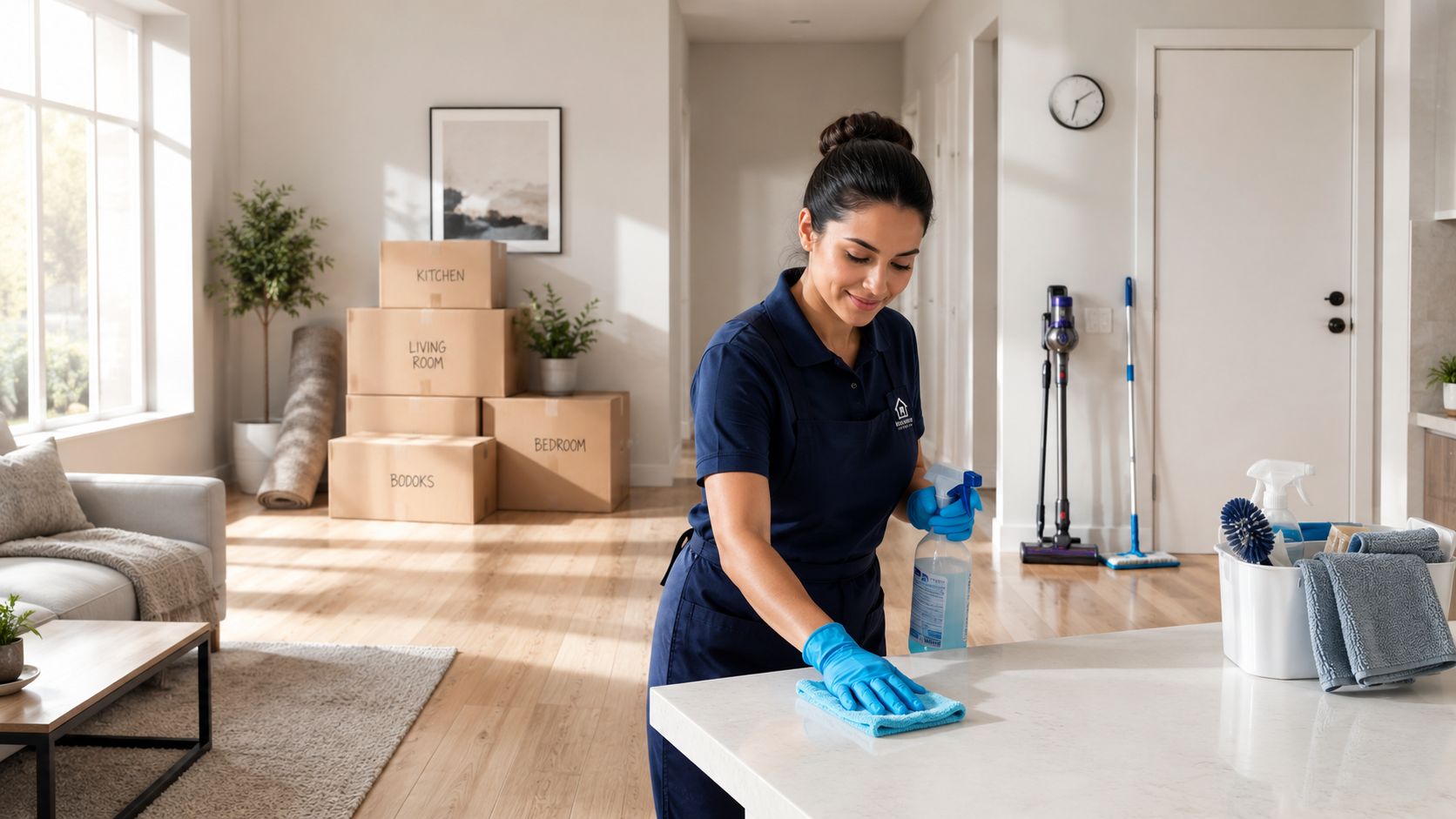
Move-out cleaning is a top-to-bottom deep cleaning of an empty home done to meet lease expectations, and in current U.S. market data it commonly costs $300 to $400 per visit for a typical 2 to 3 bedroom home, with a two-person team taking about 4 to 6 hours. It's not routine housekeeping. It's the final reset that helps protect your security deposit and avoids last-minute problems at the walkthrough.
If you're reading this with boxes stacked in the hallway, cleaning supplies spread across the kitchen counter, and a lease end date getting uncomfortably close, you're in the exact situation where move-out cleaning matters most. The pressure usually isn't just about making the place look nice. It's about handing over the keys without giving a landlord or property manager an easy reason to hold back part of your deposit.
That's the practical answer to what is move out cleaning. It's a detailed, empty-home cleaning service built around lease compliance, inspection readiness, and a smooth handoff to the next occupant. In Massachusetts, that matters even more because deposit deductions for cleaning have legal limits, but tenants still run into trouble when “broom clean” and “good condition” are left open to interpretation.
Table of Contents
- Kitchen checklist
- Bathroom checklist
- Bedrooms living areas and general tasks
- What's often an add-on instead of a standard inclusion
- How far in advance should I book move-out cleaning
- Do I need to be there during the cleaning
- Should I clean before the cleaners arrive
- What if the landlord says something was missed
- Are cleaning supplies usually included
- Is move-out cleaning the same as deep cleaning
The Stress-Free Move Starts with a Plan
Most move-outs go sideways in the final stretch. The truck is booked, the furniture is gone, and then someone opens the oven, checks the window tracks, or runs a finger along the baseboards. Suddenly a place that looked “basically clean” doesn't feel clean enough.
That's why smart move-outs start with the end in mind. You're not cleaning for your own comfort. You're cleaning for a lease handoff, a walkthrough, and a deposit decision.
The real goal isn't just cleanliness
A successful move-out clean does three things at once:
- Protects your deposit: It reduces the chance that grime, grease, soap residue, or missed interiors get treated as a chargeable issue.
- Reduces stress on moving day: Once the home is empty, the cleaning can follow a real sequence instead of working around beds, boxes, and closet clutter.
- Prepares the unit for the next person: Landlords and property managers want the fastest possible turnover with fewer complaints and less back-and-forth.
Independent industry data cited by Trafft's house cleaning statistics overview notes that 34% of people reported anxiety about whether they cleaned enough, and 31% worried they were not cleaning correctly. That anxiety makes sense. Many individuals know the obvious tasks. Fewer know the inspection points that create problems.
Practical rule: If a surface was hidden by furniture, rarely touched during normal living, or hard to reach while the home was occupied, it deserves extra attention before key handoff.
A move-out clean is part of the move itself
Treat it like a scheduled step, not a last-minute errand. Movers clear the unit. Cleaning happens after that. Walkthrough comes after cleaning. When that order gets reversed, people miss cabinet interiors, appliance cavities, wall marks behind furniture, and floor edges that suddenly become visible in an empty room.
That planning mindset is what makes a move feel controlled instead of chaotic.
What Move Out Cleaning Actually Means for Your Lease
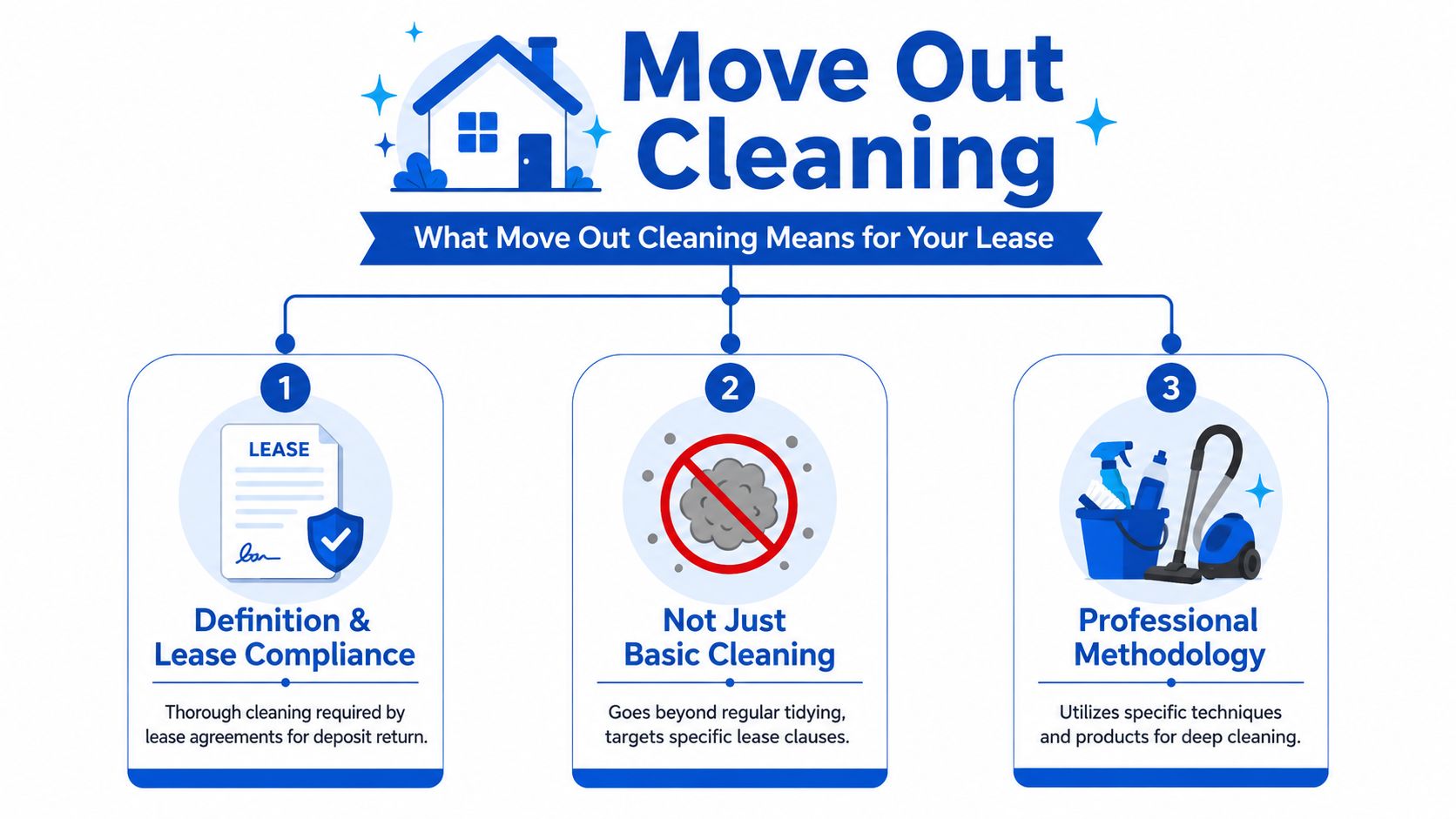
Move-out cleaning is not the same as recurring house cleaning, and it isn't just a slightly heavier version of spring cleaning. It's a vacancy-ready reset of an empty property, performed to bring the home back to a clean baseline for inspection and turnover.
Why an empty home changes the whole job
When a unit is empty, cleaners can reach places that routine cleaning skips. That includes cabinet interiors, appliance cavities, behind toilets, under sink pipes, closet corners, and the perimeter edges where dust and grit settle.
According to PODS' move-out cleaning checklist guide, move-out cleaning is a vacancy-critical, top-to-bottom reset protocol. Because the unit is empty, cleaners can access and decontaminate cabinet interiors, appliance cavities, and behind fixtures. That access also allows the use of dwell-time-dependent chemistries, such as alkaline degreasers in kitchens and acidic descalers in bathrooms, which are left in place for 5 to 10 minutes to break down baked-on grease and limescale before scrubbing and rinsing.
That's the first big difference from routine housekeeping. Maintenance cleaning often focuses on visible, reachable surfaces. Move-out cleaning targets the hidden buildup that tends to fail inspections.
How professionals clean for inspection standards
The method matters as much as the checklist. Experienced cleaners usually work from the top down so dust and debris fall onto surfaces that haven't been finished yet.
A proper sequence usually looks like this:
- Start high: Ceiling fans, light fixtures, vents, upper shelves, and tops of trim.
- Move to vertical surfaces: Doors, frames, walls that need spot cleaning, switches, and baseboards.
- Clean storage and fixtures: Cabinet interiors, drawers, vanities, mirrors, sinks, and built-ins.
- Handle appliances: Refrigerator shelves, oven interior, stovetop, microwave, and dishwasher edges.
- Finish with floors: Vacuuming, detail edging, and mopping come last so nothing gets re-soiled.
Cleaning an occupied home is about maintenance. Cleaning an empty home is about access, sequence, and proof that no obvious area was skipped.
For lease compliance, that distinction matters. A landlord usually won't care that you fluffed cushions or made the room smell nice. They'll care whether the oven, tub, cabinets, and floor edges meet turnover standards.
The Ultimate Move Out Cleaning Checklist
A strong move-out checklist should help you in two ways. If you're cleaning yourself, it shows what to do. If you're hiring help, it shows what should be included before you approve the scope.
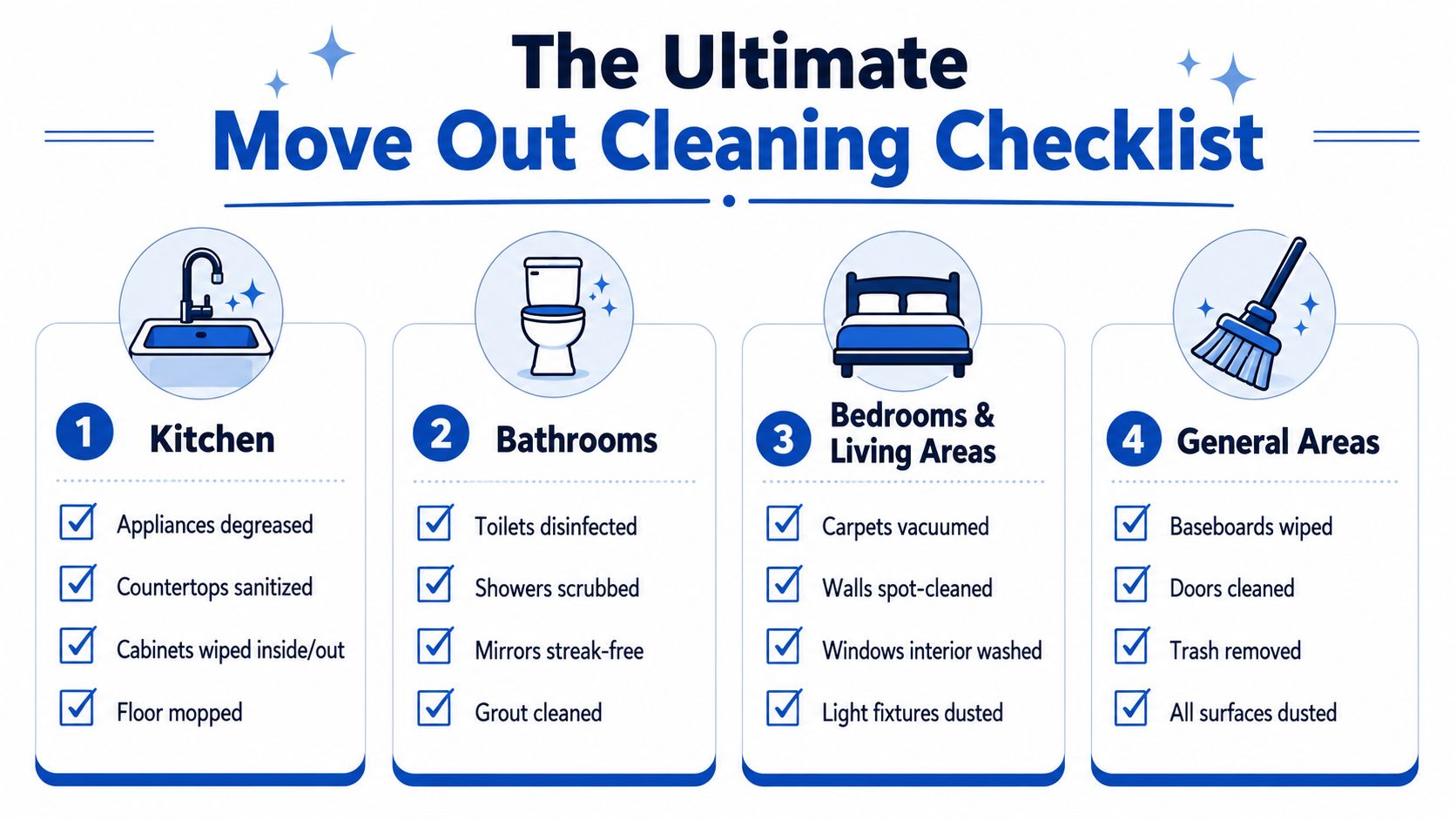
Professional services typically follow a top-to-bottom workflow. AspenClean's move-out cleaning checklist describes a structured sequence that starts with ceiling fans and light fixtures, then moves through walls, doors, baseboards, and window tracks before finishing with appliances, fixtures, vacuuming, and mopping.
Kitchen checklist
The kitchen is where a lot of deposit trouble starts because grease and food residue linger in places people stop noticing.
- Oven and stovetop: Clean the oven interior, racks, door glass, stovetop surface, and splash zone behind burners.
- Refrigerator: Remove all food, wipe shelves and drawers, clean door bins, and dry interior surfaces.
- Microwave and dishwasher: Wipe the inside and outside, including seals, handles, and edges.
- Cabinets and drawers: Empty them fully, then wipe interiors, fronts, pulls, and shelf corners.
- Sink and faucet: Scrub the basin, polish the faucet, and clear residue around the drain and base.
- Counters and backsplash: Remove grease film, crumbs, and any sticky buildup near cooking areas.
- Floor finishing: Vacuum corners and mop under the cabinet toe-kicks where debris collects.
Zillow's checklist notes that move-out cleaning often includes very specific tasks such as removing, washing, and drying removable fridge shelves and drawers, applying degreasing agents to stovetops and backsplashes, and cleaning sink basins and faucets until they shine, as outlined in Zillow's moving-out cleaning checklist.
Bathroom checklist
Bathrooms usually fail on buildup, not clutter.
- Toilet detail: Clean inside and outside, around the base, under the seat, and under the rim.
- Shower and tub: Remove soap residue, body oil film, and water scale from walls, doors, and fixtures.
- Sink and vanity: Clean faucet bases, basin edges, vanity shelves, and drawer fronts.
- Mirrors and glass: Remove streaks and product haze.
- Cabinets: Wipe out interiors so they're empty, dry, and free of dust or spills.
- Floor edges: Clean around the toilet base and corners where hair and dust gather.
Bedrooms living areas and general tasks
These spaces look simple, but they create lots of “small” deductions when details are missed.
- High dusting first: Ceiling fan blades, vents, curtain rods, and light fixtures.
- Walls and trim: Spot-clean obvious marks where possible, then wipe doors, frames, and baseboards.
- Closets: Vacuum corners, wipe shelves, and clean rods and door tracks.
- Windows and tracks: Dust and wipe interior sills and tracks.
- Switches and handles: Remove fingerprints and grime from high-touch points.
- Floors: Vacuum carpet carefully and mop hard floors only after all upper work is done.
- Final empty-home check: Remove trash, loose hardware, and anything left in drawers or cabinets.
What's often an add-on instead of a standard inclusion
Clients often get surprised. Move-out cleaning is detailed, but it still has boundaries.
- Carpet extraction: Often quoted separately when carpet needs deeper treatment than standard vacuuming.
- Tile and grout restoration: Different equipment and methods may be required if discoloration is beyond surface cleaning.
- Wall repair or repainting: Cleaners can remove many scuffs, but they don't usually handle patching and paint matching.
- Mold remediation: Surface wiping is one thing. True remediation is a separate specialty.
- Interior window washing beyond standard reach: Some companies separate glass detailing from the base package.
Industry benchmarks summarized in the verified data show that adding services such as deep carpet cleaning or tile-and-grout work can increase total move-out cleaning cost by roughly 30% to 50% because those jobs use separate equipment and different technical standards.
How Much Does Move Out Cleaning Cost in 2026
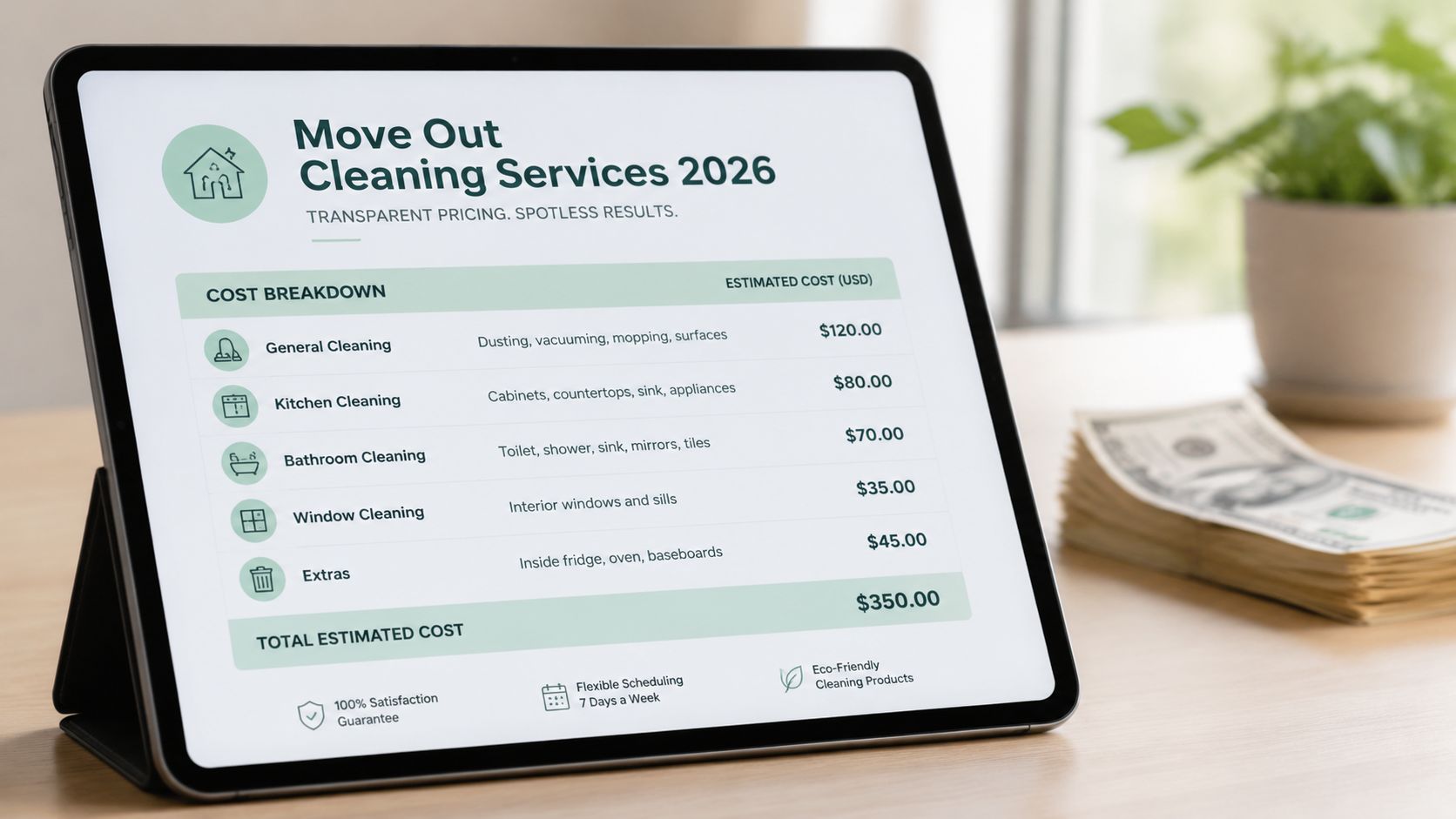
Move-out cleaning is usually priced as a project, not a routine visit. Landlords inspect the home differently at move-out, so the work has to cover the details that affect deductions, such as appliance interiors, cabinet shelves, trim, bathroom buildup, and floor edges.
What the typical price looks like
In practice, many standard move-out jobs for an empty 2 to 3 bedroom home land in the few-hundred-dollar range, while larger homes or properties with buildup run higher. Earlier industry data cited in this article placed many jobs around the $300 to $400 range, and that remains a reasonable planning number for 2026 if the home is empty and in average condition.
That number is only a starting point.
A strong quote reflects scope, condition, and inspection risk. If you want a broader benchmark for how companies price recurring service, deep cleaning, and one-time work, this guide to professional house cleaning cost gives useful context.
What changes the final quote
The biggest price driver is condition. A vacant apartment that has been maintained every month cleans much faster than a unit with grease inside the oven, soap scale on shower walls, pet hair packed into corners, and dust on every baseboard.
Size matters too, but square footage alone does not tell the full story. Two homes with the same footprint can price very differently if one has extra bathrooms, more cabinetry, or older surfaces that need slower hand work.
Add-ons also change the number quickly:
- Carpet extraction or stain treatment
- Inside window detailing beyond standard reach
- Heavy wall washing
- Refrigerator, oven, or other appliance buildup that needs extra time
- Specialty floor care
In Massachusetts, the cheapest quote can cost more later if it skips the areas a landlord is likely to document during the final walkthrough. I tell clients to compare scope before price. Ask whether the service includes inside cabinets, appliance interiors, baseboards, bathroom fixtures, and a final empty-home check. If those items are missing, the lower number may leave you exposed to deposit deductions.
Timing affects cost as well. An empty home is faster to clean properly. If boxes, loose items, or leftover trash are still in the unit, the crew has to work around them, and that usually means more labor or a less reliable result.
DIY Cleaning vs Hiring a Professional Service
There's no universal right answer here. Some people have the time, tools, and patience to do a careful move-out clean themselves. Others are balancing work, movers, children, pets, and closing dates, and they need the job off their plate.
When DIY makes sense
DIY can work well if the home is already in good condition and you're disciplined about details. It also helps if you can clean after everything is removed, not while you're still packing.
DIY is usually the better fit when:
- You have time to do it in full: Rushed cleaning misses interiors and edges.
- You're comfortable with heavy-detail work: Ovens, soap scale, and baseboards take persistence.
- Your lease standard is modest: Some move-outs need less correction than others.
When hiring a pro is the better move
Professional service makes the most sense when the deposit matters, the schedule is tight, or the property has enough buildup that the work needs a proper system.
It's also useful when you want the result documented and the scope clearly defined. For many renters, the primary value isn't just labor. It's reducing decision fatigue during a stressful week.
If you're comparing this with a non-move-related reset, it also helps to understand what deep cleaning includes, because move-out work overlaps with deep cleaning but is more inspection-focused.
| Factor | DIY Approach | Hiring a Professional |
|---|---|---|
| Cost | Usually lower out-of-pocket if you already have supplies, but your time investment is high. | Higher direct cost, but the scope is clearer and easier to schedule around the move. |
| Time Investment | You handle setup, scrubbing, drying time, and final touch-ups yourself. | The crew handles the labor while you focus on the move, paperwork, and handoff. |
| Equipment and Supplies | You need vacuums, microfiber cloths, degreasers, descalers, scrub tools, and floor-safe products. | Most professional teams arrive with the products and tools needed for turnover cleaning. |
| Stress Level | Higher if the lease is strict or you're cleaning under a deadline. | Usually lower because the work is assigned, scheduled, and easier to verify. |
| Likelihood of Full Deposit Return | Depends heavily on how thorough you are with hidden areas and final documentation. | Often stronger when the scope matches inspection points and the cleaning is professionally completed. |
If you do it yourself, clean like an inspector. Open every door, crouch to floor level, and check the home from the corners inward.
Securing Your Security Deposit in Massachusetts
Massachusetts renters often run into the same problem. The lease uses broad language. The walkthrough uses a more specific standard. That gap is where disputes start.
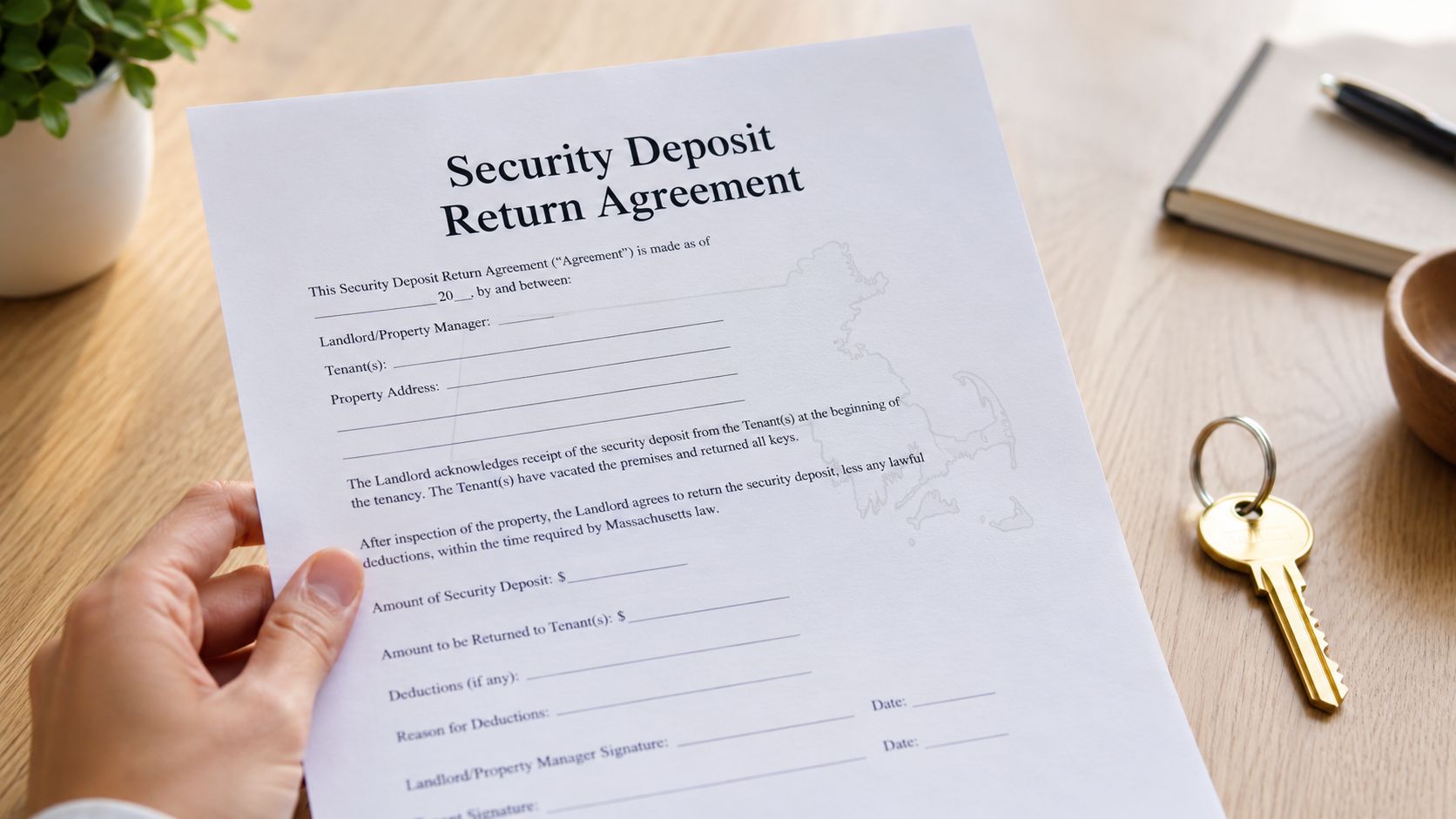
Why Massachusetts renters need to read the lease carefully
Verified guidance summarized in Move Solutions' discussion of move-out cleaning services notes that in markets like Massachusetts, security deposit laws limit how much landlords can deduct for cleaning, but many guides still fail to translate those legal standards into room-by-room benchmarks. That leaves tenants unsure whether “broom clean” means a basic tidy-up or something closer to a full turnover clean.
That uncertainty is common in communities like Newton, Wellesley, Weston, Needham, and Wayland, where rental homes and higher-expectation properties often receive more detailed inspections. A tenant may believe the place is clean because the counters are clear and the floors are vacuumed. A property manager may focus instead on oven residue, wall marks, cabinet interiors, and bathroom scale.
What reduces friction at move-out
The best protection is a combination of thorough cleaning, clear documentation, and realistic expectations about what cleaning can and can't fix.
The verified data also states that a professional clean can reduce deposit-withhold disputes by up to 30% to 40% when it provides a documented, high-standard result. That's why many renters and owners treat move-out cleaning as risk management, not just housekeeping.
A few practical habits help:
- Match the clean to the lease: If the agreement mentions condition, appliances, or professional standards, take that language seriously.
- Clean after the unit is empty: Inspection-grade work is harder when movers are still active.
- Document the result: Take clear photos of kitchens, bathrooms, floors, cabinets, and appliance interiors.
- Separate cleaning from repair issues: If there's damage, staining, or deterioration beyond surface cleaning, identify it early.
For homeowners, landlords, and renters preparing for a handoff, this local guide to cleaners for house move is a useful companion when planning the timing and scope of service.
Frequently Asked Questions About Move Out Cleaning
How far in advance should I book move-out cleaning
Book as soon as your move date is firm, especially if your lease ends near the end of the month. The important part is scheduling the cleaning after the home is emptied and before the final walkthrough or key return.
Do I need to be there during the cleaning
Usually, no. What matters most is access. The property should be empty, utilities should still be on, and any specific problem areas should be communicated in advance.
Should I clean before the cleaners arrive
A light prep helps. Remove all belongings, clear cabinets if interior cleaning is included, and take out anything you don't want mistaken for trash. There's no reason to pre-scrub surfaces if you've hired a true move-out service.
What if the landlord says something was missed
Address it quickly and specifically. Ask which area is in question, compare it to your photos, and review the original scope of work. Most post-clean concerns come down to one overlooked detail, not the whole property.
Are cleaning supplies usually included
Professional move-out cleaning usually includes standard supplies and tools needed for the agreed scope. Specialty restoration-level work, if needed, may be treated separately.
Is move-out cleaning the same as deep cleaning
Not exactly. Deep cleaning improves the condition of a lived-in home. Move-out cleaning is done in an empty home and is focused on turnover, inspection points, and lease compliance.
If you want a reliable move-out clean without the last-minute scramble, Sunny Day Pro Services helps busy Massachusetts homeowners, renters, and property managers leave homes inspection-ready. Serving communities including Wayland, Newton, Needham, Wellesley, and Weston, the team handles detailed house cleaning with the kind of communication and follow-through that makes moving easier. Request a quote, lock in your date, and hand over the keys with more confidence.

