
Bathroom Remodel Near Me: 2026 Guide
Searching for a bathroom remodel near me? Get budgeting tips, hiring advice, and design ideas for your 2026 renovation.
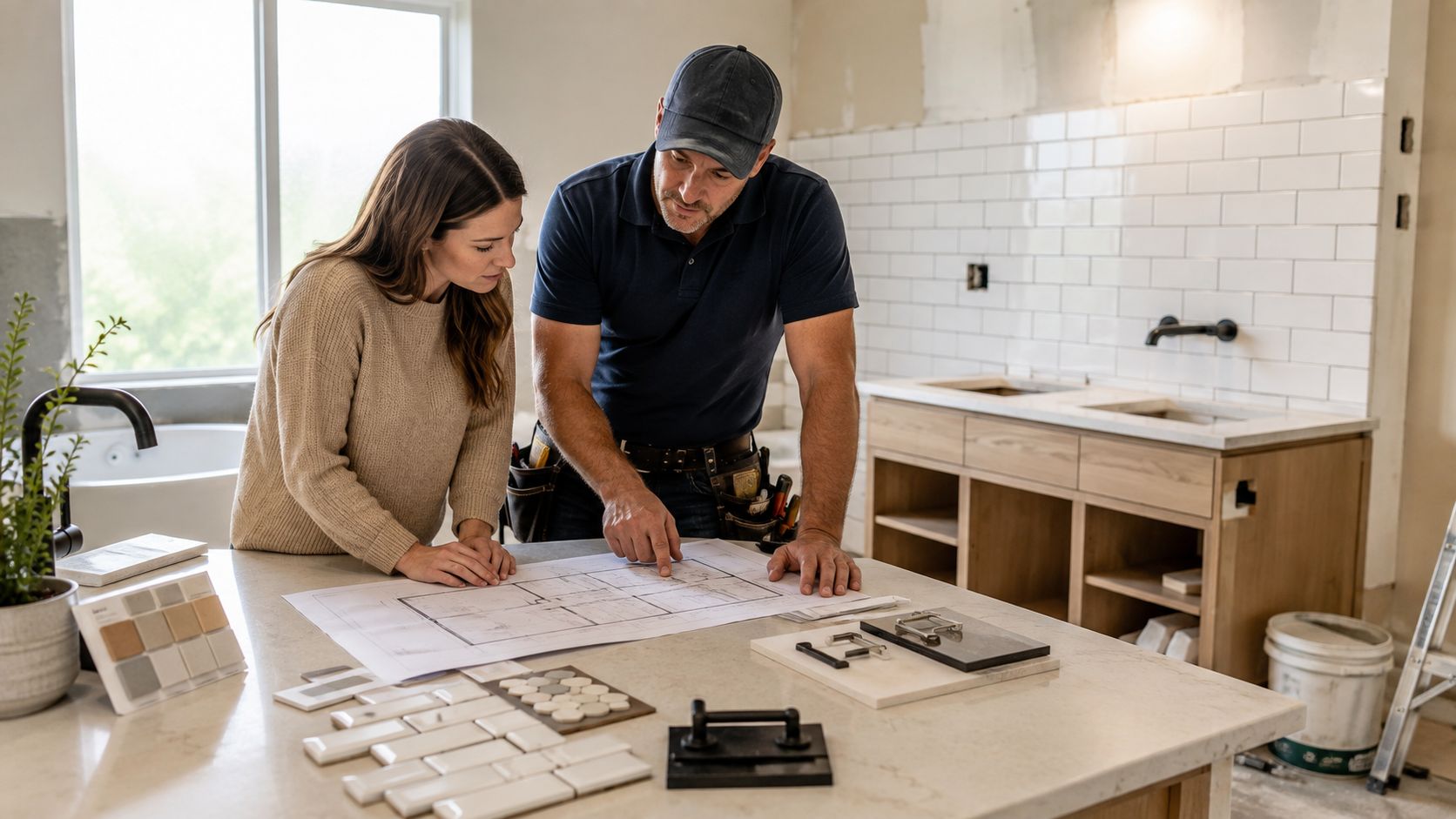
You typed bathroom remodel near me because you're trying to do something practical, not dreamy. You want a bathroom that works, a contractor who shows up, and a project that doesn't turn your home upside down for months.
In Massachusetts, the problem usually isn't finding a remodeler. It's sorting out who can handle the permits, the sequence of work, the material timing, and the cleanup without leaving you with a half-finished mess. Use local search to narrow the field, but don't let a glossy listing make the decision for you.
Table of Contents
Defining Your Remodel Scope and Budget
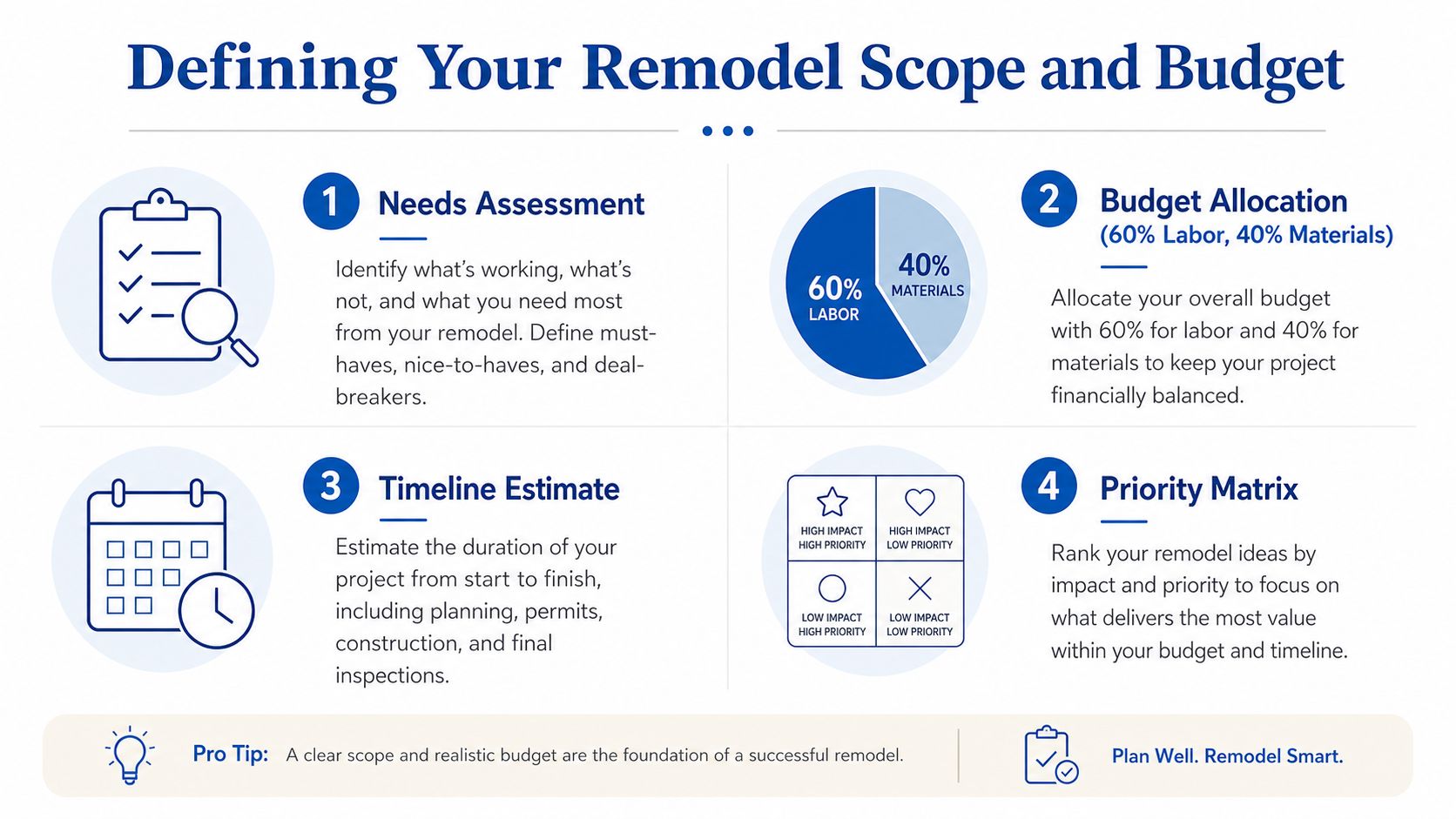
You can spend an afternoon clicking through bathroom remodel near me listings and still end up with the wrong project in mind. Start with the scope first. A cosmetic refresh, a layout change, and a full gut renovation are different jobs, and each one brings a different level of disruption, permit pressure, and schedule risk.
Start with the job, not the quote
A homeowner who says, “I want new tile, a better vanity, and maybe a bigger shower” is still planning, and that is the right stage to be in. At that point, decide whether you are keeping the plumbing where it is or opening walls and changing the layout. Once fixtures move, the job gets more complex fast, and the budget has to match that reality.
The 2025 U.S. Houzz Bathroom Trends Study found that the national median spend on all bathroom renovations fell to $13,000 in 2024 from $15,000 in 2023, while major bathroom remodels rose from $21,000 to $22,000 and larger bathrooms of 100+ square feet held a median spend of $25,000 (Houzz study). That spread says exactly what local homeowners run into on site. Size and scope drive the number more than optimism does.
Practical rule: write the project brief before you ask for bids. If you cannot state whether you are replacing finishes or reworking the layout, contractors will price assumptions, not reality.
A clean project brief should cover:
- What stays: plumbing locations, tub or shower position, window placement, door swing.
- What changes: tile, vanity, toilet, lighting, flooring, ventilation, storage.
- What matters most: durability, speed, resale, accessibility, or a higher-end finish.
- What's off-limits: no structural changes, no wall moves, no budget creep.
That brief makes bids comparable. Without it, one contractor prices a surface update and another prices a full reconstruction, and the lower number looks attractive only because it is missing scope.
Build in contingency before you call anyone
Experienced remodelers keep a 15 to 20 percent contingency budget for hidden conditions and changes that show up after demolition (planning guide). Older bathrooms often hide water damage, subfloor problems, or outdated wiring behind tile and drywall. Treat that reserve as part of the budget from day one, because once demolition starts, surprises are the rule.
If you are in Wayland, Newton, Wellesley, or anywhere in greater Boston, be stricter about scope before bidding. Labor is too expensive to let the project wander. Define the job clearly, keep the contingency intact, and do not let anyone talk you into “we'll figure it out as we go.”
For tile pricing, use a local benchmark such as this bathroom tile installation price guide so you are not guessing at finish costs.
Understanding Real Bathroom Remodel Costs
A bathroom remodel can be modest or brutally expensive, and local quotes look inconsistent because contractors are not always pricing the same scope. Square footage, finish level, labor intensity, permit work, and market conditions all move the number. If you want to judge a proposal correctly, compare it with the right benchmark, not a random national average.
Use size and scope together
HomeGuide's square-foot pricing gives a useful starting point, with bathroom remodels ranging from $100 to $500 per square foot (HomeGuide). A separate pricing guide for installed work puts the range at $70 to $250+ per square foot installed, depending on whether the job is basic, mid-range, or high-end (installed pricing guide). The point is the same from both angles, cost rises when labor complexity and finish quality rise.
| Bathroom Type | Typical Size | Average Cost Range |
|---|---|---|
| Half bath | 18 sq. ft. | $5,809 to $9,604 |
| Full bath | 40 sq. ft. | $9,809 to $18,640 |
| Master bath | 100 sq. ft. | $19,974 to $59,433 |
Those size-based tiers come from Thumbtack and are useful because they match how homeowners usually describe the room (Thumbtack pricing tiers). A full bath and a master bath are not the same project, even if both show up under “bathroom remodel” in search results.
Compare national pricing before you judge a local bid
Recent estimates sit in a wide band, and that is the core of the matter. USA Cabinet Store places the national average at about $16,500, with most homeowners spending $8,000 to $45,000 (USA Cabinet Store). This Old House reports an average of $15,586 and a typical range of $6,456 to $24,715 or more (This Old House). Use those numbers as reference points, not promises.
In expensive coastal markets, quotes rise fast because labor is tighter and finish expectations are higher. BathEstimates reports a 2026 national average cost for a mid-range bathroom remodel of about $26,000 to $28,000, with budget jobs starting around $2,600 and premium gut remodels reaching $40,000 to $120,000 depending on location (BathEstimates). TheFatBook's 2026 index puts the average at $16,217 across its U.S. metro sample, with Miami at $14,277 and New York at $21,336 (TheFatBook). That spread is why a Boston-area quote can look nothing like a national blog estimate.
For budgeting, the National Kitchen and Bath Association guidance quoted by HomeLight says homeowners should expect to spend 5% to 10% of their home's value on a bathroom remodel (HomeLight). That is a hard reality check. If the house value is high, the bathroom budget usually has room for better materials and tighter execution.
If tile is a major part of your scope, use a focused pricing source like bathroom tile installation pricing to separate tile labor from the rest of the remodel. That keeps the quote breakdown honest.
Sequencing Demolition Through Final Finishes
Bathroom remodels fall apart when the schedule is wrong. Crews start in the wrong order, trades step on each other, and a job that should move cleanly drags on because somebody tried to save a day and created a week of rework. Busy Massachusetts homeowners need to treat this as a logistics issue. The room only moves forward when each phase is finished, inspected, and ready for the next crew.
Follow the order, or pay for rework
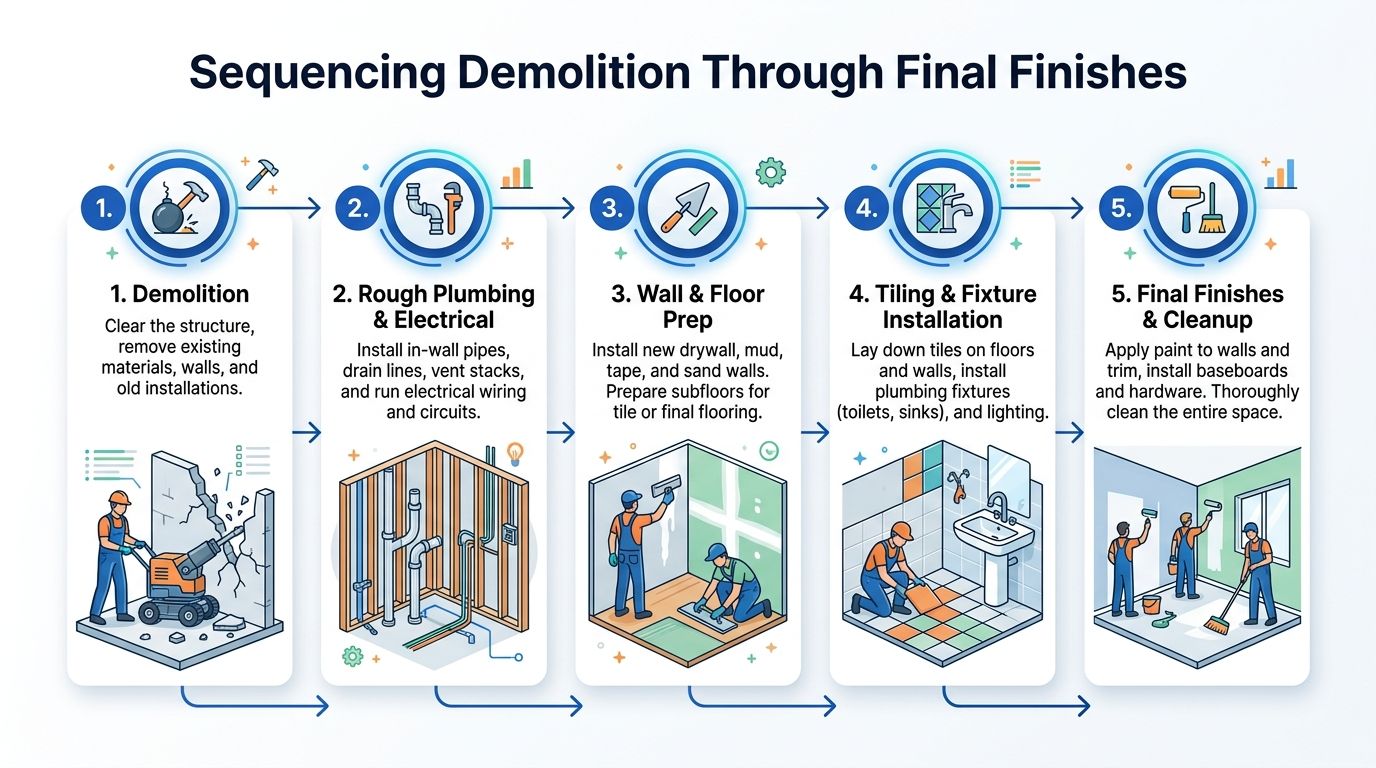
Start by shutting off and draining the water, then pull fixtures, then demolish the room. Rough-in plumbing and electrical work come next, and they need to be complete before the walls are closed. After rough-in inspections pass, the sequence moves to insulation, drywall, waterproofing membrane, tile, vanity, toilet, and final trim, as outlined in the Home Depot remodeling guide.
That order protects the job. If tile goes in before plumbing is approved, a hidden mistake can force finished work back out. If walls are closed before inspection, code problems show up late and demolition gets more expensive. Good contractors are strict about sequencing because they know rework burns both margin and schedule.
Walls do not get closed on hope. They get closed after the rough-in passes inspection.
Older Massachusetts homes need extra caution during demo. A local bathroom remodel checklist and planning guide recommends asbestos testing in pre-1980 homes and lead paint testing in pre-1978 homes, because old materials often surface once the first layer comes off. Skip those checks and the project can stop the moment the crew opens a wall and finds a condition nobody planned for.
Build a timeline around real-world delays
People searching for a bathroom remodel near me usually want one answer, how long the bathroom will be out of service. The honest answer depends on scope, permit review, inspection timing, and material lead times. Homeowners should ask who pulls permits, how surprise conditions get handled, and how the payment schedule is tied to progress, because those details decide whether the job stays on track, as noted in Thumbtack contractor guidance.
The scheduling reality in busy towns like Wayland and Newton is blunt. If the contractor does not pre-order specialty items, confirm inspection windows, and line up subcontractors in the right order, the bathroom sits idle between phases. Homeowners should recognize that as a logistics problem.
Choosing Tile and Fixtures That Last
A lot of bathrooms look great on day one and become annoying by month three. The reason is usually the same, the homeowner chose finishes for the showroom, not for the way the room gets used. Bathrooms need materials that can handle water, cleaning, and constant contact without turning into a maintenance project.
Match the material to the room's abuse level
For tile, porcelain, ceramic, marble, and granite all have a place, but they behave differently in real homes. Porcelain is the workhorse for wet areas because it's durable and handles heavy use well. Ceramic can be a smart value play for walls and lower-traffic spaces. Marble looks elegant but demands more care. Granite is durable, but the installation and maintenance should be planned carefully.
Tile choice affects the schedule too. Bigger formats, specialty patterns, and natural stone usually take more prep and more precise setting work than standard ceramic. If you want a design-driven result, pair it with the right installer and don't pretend every tile behaves the same.
Maintenance rule: if you don't want to seal it, scrub it, or baby it, don't install it in a high-use family bath.
For a deeper product-level breakdown, use this bathroom tile selection guide before you commit to the final order. That's the easiest way to avoid buying a beautiful tile that becomes a regret six months later.
Spend where performance matters
Fixtures deserve the same discipline. I'd rather see a homeowner spend more on valves, shower components, and faucets that will hold up than waste the budget on decorative extras nobody touches. Cheap hardware can look fine in photos and still feel flimsy every time you use it.
Tile drenching is one of the design directions homeowners are asking about for 2026, and it can create a clean, continuous look. Just remember that the visual effect is only worth it if the installer understands substrate prep, waterproofing, and grout execution. If you're hiring a contractor for the tile work, one option is Sunny Day Pro Services, which offers tile installation and remodeling for bathrooms and other spaces. Keep that kind of service choice focused on scope, not hype.
Questions to Ask Before Hiring a Local Contractor
The contractor conversation decides most of the outcome. Not the tile sample. Not the Pinterest board. The questions you ask before signing decide whether the remodel stays controlled or turns into a string of delays, surprise costs, and half-finished work.
Ask about the process, not just the price
A local bathroom remodel only looks simple from the outside. Permits slow things down, inspections can stall the schedule, and material lead times can force crews to reshuffle the order of work. If a contractor cannot explain how they handle those realities, keep looking.
Get three to five written bids. That is required. Compare them line by line, not just by total price. A low number that leaves out permits, cleanup, or change orders is a trap.
Ask these questions:
- Who pulls the permit? If the answer is vague, expect delays.
- What happens if hidden water damage appears? You need a clear pricing process before demo starts.
- How are change orders approved? Verbal changes create disputes.
- Who manages the subcontractors? One point of contact matters.
- What's the payment schedule? Tie payments to actual progress, not promises.
Read the proposal like a project manager
A solid proposal tells you what is included, what is excluded, and how the contractor handles scope changes. A weak one hides behind a lump sum and assumes you will not ask follow-up questions. That is how homeowners get stuck paying more for work they thought was already covered.
Red flag: if the contractor will not put sequencing, cleanup, or responsibility for inspections in writing, the bid is not complete.
The best local contractors stay calm when you ask hard questions. They do not overpromise, they do not dodge details, and they do not get irritated when you ask who handles the permit and when the crew shows up. That is the standard.
Managing the Job and Post-Construction Cleanup
A bathroom remodel doesn't end when the last tile goes up. It ends when the room is clean, the punch list is closed, and the warranty paperwork is organized enough that you can find it later. Homeowners who skip active oversight usually discover problems too late.
Stay involved during the build
During construction, set a simple communication rhythm. You need to know what was done today, what happens next, and whether anything changed that affects cost or timing. If something unexpected appears, get it documented before the crew moves on.
Do milestone checks before the next phase begins. Verify rough-in work before walls close. Check tile lines, grout joints, and fixture placement before final approval. Once finishes are complete, correcting small errors gets expensive fast.
Professional cleanup matters too. Bathroom demo and tile work create dust that regular household cleaning won't handle well. Post-construction cleanup should include fine dust removal, debris hauling, and a final wipe-down of surfaces, because leftover grit can scratch new finishes and make a finished project feel unfinished. A structured post-construction cleaning checklist is the right tool for that job.
Finish with documentation, not guesswork
Before you sign off, walk the room slowly. Open drawers, run water, test the fan, check caulk lines, and look at corners under real light. If the grout looks uneven or the fixture alignment is off, say it now.
Then file everything together:
- Warranty paperwork
- Final invoice
- Product model numbers
- Paint and tile details
- Notes from the final walkthrough
That documentation saves time later if a valve leaks or a grout joint needs attention. It also makes maintenance easier because you're not guessing what was installed.
Keep the bathroom simple after that. Wipe water off tile, watch grout lines, and stay ahead of small issues before they become repairs. A well-run remodel should leave you with less stress, not a new list of problems.
If you're planning a bathroom remodel in Wayland, Newton, Needham, Wellesley, Weston, or a nearby Massachusetts town, Sunny Day Pro Services can help with tile installation, post-construction cleanup, and the finishing details that keep a project on schedule. Visit Sunny Day Pro Services to request a quote and get a local team that handles the work without turning your house into a mess.

