
Bathroom Tile Installation Price: A 2026 MA Guide
Get a clear 2026 breakdown of your bathroom tile installation price in Massachusetts. Learn about labor costs, materials, and what to expect from your quote.

National benchmarks for bathroom tile installation usually land around $15 to $45 per square foot installed, and a bathroom floor benchmark from Homewyse sits at $16.58 to $20.60 per square foot. In Massachusetts suburbs, many homeowners should budget closer to $20 to $65 per square foot all-in once local labor rates, prep work, and older-home conditions enter the picture.
If you're standing in a tile showroom with a few porcelain samples in one hand and a remodeling budget in the other, that gap between the national range and what contractors quote in places like Newton, Wayland, Wellesley, and Weston can feel confusing fast. The reason is simple. Bathroom tile installation price isn't just about tile.
A bathroom is one of the most labor-sensitive rooms in the house. Tight footprints, plumbing penetrations, wet-area waterproofing, out-of-level floors, and finish details all affect the final number. In older Massachusetts homes, those issues show up often enough that generic online calculators usually come in low.
What follows is the pricing conversation I wish more homeowners got at the start: what a realistic bathroom tile budget looks like, where the money is spent, which line items are essential, and how to compare quotes without getting misled by a low number.
Planning Your Bathroom Remodel Budget
Most homeowners start with the visible surface. They pick a tile they like, estimate the square footage, and assume the math will be straightforward. Bathroom tile pricing rarely works that way.
A useful national benchmark comes from Homewyse's bathroom floor tile estimate, which places installation at $16.58 to $20.60 per square foot for a standard bathroom floor. The same verified data set also notes that Angi reports typical ceramic tile projects from $1,300 to $7,500, with an average of $4,800, which better reflects how quickly scope expands beyond a simple floor.

Start with the room, not the tile
A smart budget starts by defining where tile is going:
- Floor only: Usually the simplest scope and the easiest place to use national benchmarks.
- Tub surround or shower walls: Higher labor, more cuts, and much stricter prep.
- Full bathroom package: Floor, walls, niches, transitions, trim pieces, and waterproofing all stack up.
If you're still deciding on material, it's worth reviewing how to choose tile for a bathroom before you request quotes. The tile you choose affects both purchase price and installation time.
Build your budget in layers
Instead of asking, "What does bathroom tile cost?" ask these three questions:
- What is the tile itself going to cost?
- What does a qualified installer charge for this exact scope?
- What prep work is required before a single tile goes on the wall or floor?
Practical rule: If a quote seems low, check whether it includes demolition, substrate correction, waterproofing, grout, trim, and cleanup. That's where many pricing surprises live.
For Massachusetts homeowners, the safest approach is to treat the visible tile as only one part of the investment. The room underneath matters just as much, and often more.
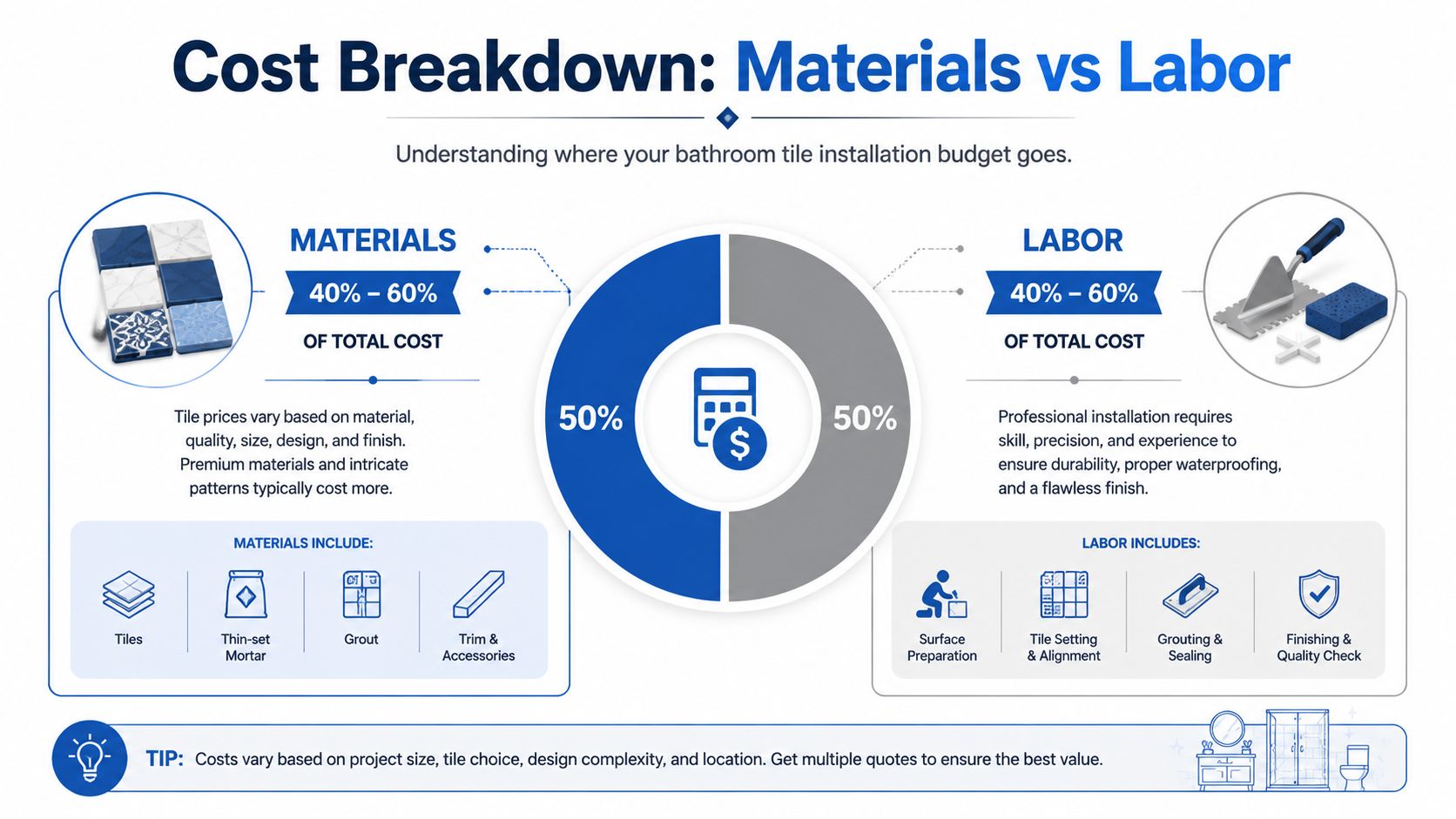
Cost Breakdown Materials vs Labor
In a Massachusetts bathroom, labor is often the larger number, especially once the job moves beyond a basic floor. Homeowners in places like Newton, Wayland, and Wellesley usually shop tile first because the boxes have clear prices. The harder part to price is the work needed to make that tile look right and hold up in a wet room.
According to RUBI's 2026 tile floor cost analysis, tile installation labor typically ranges from $5 to $22 per square foot. The same source lists broad material ranges, including ceramic at $1 to $8 per square foot, porcelain at $4 to $14, natural stone at $7 to $25, and glass at $12 to $35.
What different tile types do to your budget
The tile price on the shelf is only part of the story. Some products are inexpensive to buy and expensive to install well. Others carry a higher material cost but go in faster if the room is square and the layout is simple.
| Tile Type | Material Cost / Sq. Ft. | Labor Cost / Sq. Ft. | Estimated Total Installed Cost / Sq. Ft. |
|---|---|---|---|
| Ceramic | $1 to $8 | $5 to $22 | $6 to $30 |
| Porcelain | $4 to $14 | $5 to $22 | $9 to $36 |
| Natural stone | $7 to $25 | $5 to $22 | $12 to $47 |
| Glass | $12 to $35 | $5 to $22 | $17 to $57 |
Those ranges help with early budgeting, but bathroom quotes in the suburbs west of Boston often climb for reasons that have little to do with the tile category alone. A large-format porcelain wall tile may need flattening work on older plaster or patched drywall. A mosaic floor may use less expensive material than stone, yet still take longer because of sheet alignment, drain cuts, and grout cleanup.
Why labor often carries the budget
Labor covers the hours homeowners do not see in the finished room. It includes layout, cut planning, surface correction, setting materials, trim installation, grouting, and cleanup. In bathrooms, it also includes the patience to work around tight footprints, out-of-square corners, plumbing penetrations, and fixtures that were never installed with tile layout in mind.
That is why two bathrooms with the same square footage can price very differently.
A straight-set ceramic floor in a newer home is usually near the low end of labor. A shower in an older Massachusetts home with porcelain walls, a recessed niche, outside corners, and a pattern that has to die cleanly into a tub or vanity is a different level of work. The installer spends more time measuring, cutting, checking lines, and adjusting for walls or floors that are not perfectly true.
Material choices that raise labor
Some selections add labor immediately, even before prep enters the picture:
- Large-format tile: Fewer grout joints, but flatter surfaces and more careful lippage control
- Mosaics: More sheets to place, more alignment checks, and slower grouting
- Natural stone: Heavier pieces, more handling, and added care with edge chipping and sealing requirements
- Glass tile: Slower cutting and stricter setting methods to avoid visible trowel lines or bond issues
- Patterns and borders: Herringbone, diagonal layouts, insets, and feature bands add measuring and waste
In higher-cost suburbs, labor rates also reflect local overhead, travel time, permit coordination on larger remodels, and the fact that skilled bathroom tile setters are booked out. The homeowner is not just paying for square footage. They are paying for judgment, accuracy, and a finished layout that does not look improvised.
Tile is the visible finish. Labor is what makes the lines straight, the cuts clean, and the installation durable.
For budgeting, the safest approach is to assume labor can equal or exceed the tile cost in a bathroom, particularly on walls and in showers. That is common in Massachusetts remodels, where many homes have older framing, settled floors, and tighter room layouts that slow the job before the first piece is set.
The Hidden Costs of Tile Installation
The most misleading bathroom tile quote is the one that only prices tile setting. A tile assembly is only as good as the surface underneath it, especially in a bathroom.

According to Block Renovation's bathroom tile pricing guide, prep work such as removing old tile, leveling surfaces, and applying waterproofing membranes can add about $1 to $5 per square foot to the project total. Homeowners sometimes think of these as add-ons. In a well-built bathroom, they are part of the job.
Prep is where durable work starts
Three line items deserve close attention when you review a quote:
- Demolition and disposal: Old tile removal can be dusty, slow, and physically demanding, especially over mortar beds or stubborn underlayment.
- Substrate correction: If the floor dips, the walls are out of plumb, or the previous install left damage behind, the surface has to be corrected before new tile goes down.
- Waterproofing: In showers and wet walls, this is not optional. Membranes, seams, penetrations, corners, and transitions all matter.
A low bid often hides one of two problems. Either the contractor assumes the room is ready when it isn't, or they plan to skip part of the system.
What homeowners should ask to see in writing
Ask for the quote to spell out these items clearly:
- Scope of demolition: What's being removed, and who hauls it away?
- Prep assumptions: Is floor leveling included if needed?
- Waterproofing method: What system is being used in the shower or tub surround?
- Finish details: Are trim pieces, edge profiles, and sealant work included?
This short video gives a good visual sense of why prep and method matter before the finish tile ever goes in:
A bathroom tile failure usually starts below the tile, not on top of it.
In Massachusetts homes, especially older ones, prep is where projects frequently change from simple to involved. That's frustrating when it appears mid-project, but it is still cheaper than covering over a bad substrate and paying twice later.
Why Bathroom Tile Prices Vary in Massachusetts
National pricing guides are useful, but they don't fully capture what happens in towns with older housing stock, tighter job access, and higher labor costs. That's why the bathroom tile installation price in Massachusetts often lands above the generic online range.
Older homes change the math
In suburbs like Newton, Needham, Wellesley, and Weston, many bathrooms sit inside houses that weren't built with modern tile assemblies in mind. Floors may be out of level. Wall framing may not be straight. Past remodels may have layered materials instead of fully rebuilding the substrate.
Those conditions don't always make the project dramatic, but they do make it slower. Slow work costs more because a skilled installer spends more time correcting the base before setting the finish tile.
Small bathrooms can cost more per square foot
This catches homeowners off guard all the time. A tiny bathroom feels like it should be cheap because there's less area. In reality, a small room can produce a surprisingly high per-square-foot quote.
HomeGuide's bathroom tile cost discussion specifically points to small-bathroom complexity in high-cost markets like Massachusetts, noting that labor minimums and intensive prep in tight spaces can drive the per-square-foot cost much higher than in a larger, simpler room.
Why that happens:
- Tight working space: Less room to move tools, mix material, and make cuts efficiently
- More obstacles per square foot: Toilets, vanities, door casings, heat registers, and plumbing all create interruptions
- Contractor minimums: A small project still takes setup time, travel time, protection, and cleanup
- Finish visibility: In a compact room, bad cuts and poor layout show immediately
A powder room can be small in size and still be fussy in labor.
Massachusetts homeowners also tend to choose higher-finish results. That often means large-format porcelain, tighter grout lines, tile base returns, custom niches, or more refined trim details. If you're considering porcelain specifically, this porcelain tile installation guide gives a good sense of why the material performs well but demands careful handling.
Access and logistics matter more than people expect
Suburban bathroom jobs often involve narrow stairways, occupied homes, strict work-hour expectations, and careful dust control. None of those are glamorous line items, but they affect production time. In a bathroom, even small delays ripple through the schedule because tile work has sequences that can't be rushed.
That local reality is why Massachusetts pricing should be viewed through a project-complexity lens, not just a square-foot lens.
Example Bathroom Tile Project Estimates
A homeowner in Newton might call about a "small bathroom tile job" and expect a simple number. Then the details come out. Second-floor access, an older uneven floor, a tight alcove tub, and a request for large-format porcelain with clean trim lines. The budget changes fast.
Powder room floor
A powder room floor often looks like the budget-friendly option. Sometimes it is. In Wayland, Wellesley, and similar suburbs, it can still price higher than homeowners expect because the room is small enough that every cut, fixture edge, and doorway detail takes a bigger share of the labor.
If the existing floor is flat, the tile is a straightforward size, and demolition is minimal, this type of project usually stays toward the lower end of a bathroom tile budget. If the installer has to remove old flooring, correct a dip in the subfloor, or work around a pedestal sink and tight casing lines, the cost per square foot rises quickly.
That is why small bathroom estimates should be judged by scope, not just area.
Full bathroom floor and walls
This is the project type where pricing starts to separate sharply between a basic install and a well-built one. A hall bath in a Massachusetts suburb may include a floor, tub surround or shower walls, outside corners, transition details, and waterproofing work that is not visible after the job is done.
The biggest price drivers are usually:
- Wall prep before tile goes up
- Waterproofing at the tub or shower
- Clean cuts at valves, spouts, and supply lines
- Trim details at exposed edges and corners
- Layout work when floor tile and wall tile need to align
On paper, two bathrooms can look similar. In practice, the one with wavy walls, multiple fixture penetrations, and sharper finish expectations will cost more to tile.
Luxury walk-in shower
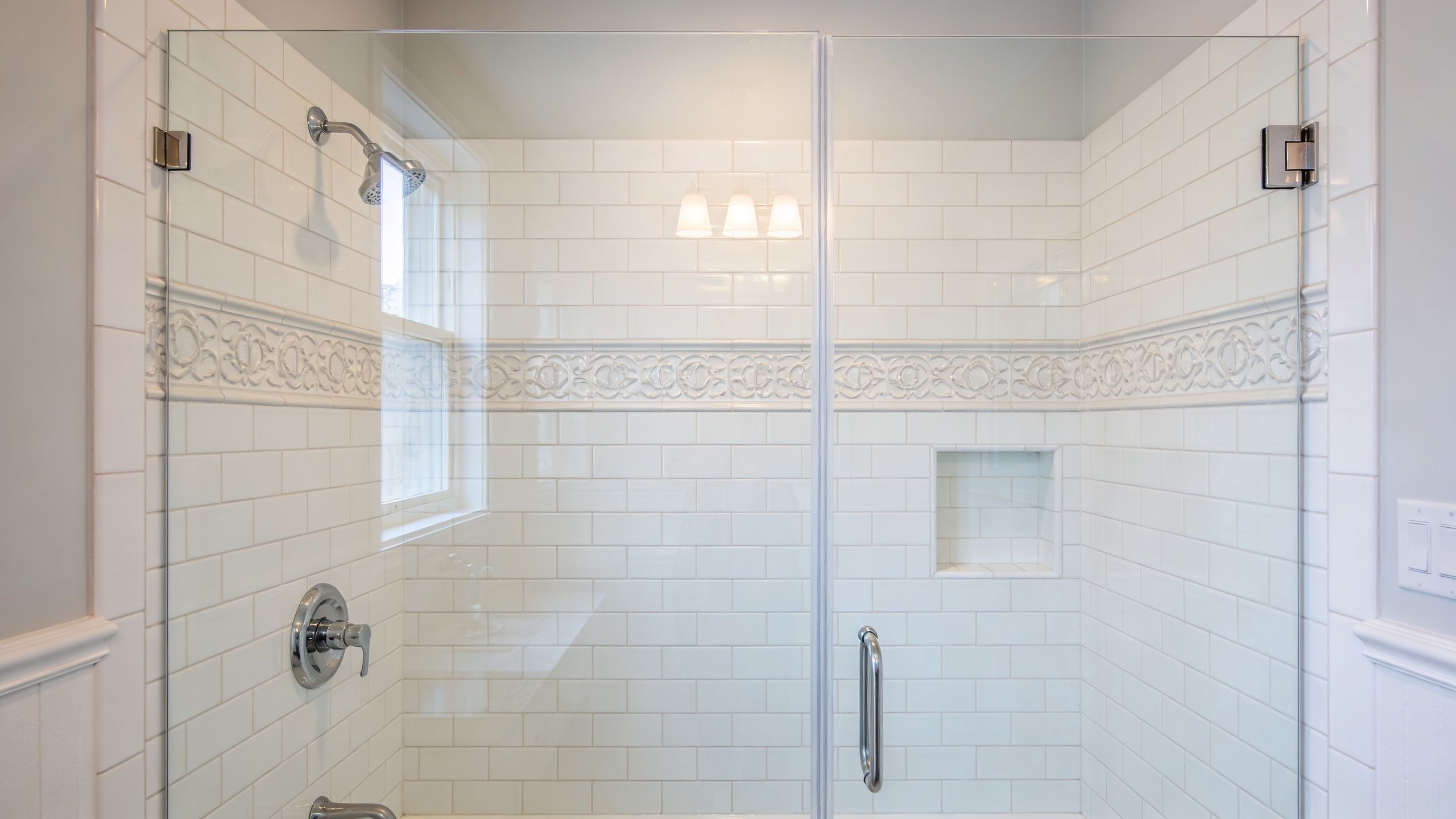
Custom showers carry the widest price range. In towns like Needham or Concord, this is often where homeowners choose the materials and details that push labor well past a standard bathroom install. Benches, recessed niches, curbless entries, oversized porcelain, bookmatched stone looks, and polished trim all slow production and raise the risk of expensive mistakes if the prep is not exact.
Material choice matters here too. Natural stone usually adds handling, sealing, and more selective installation work. If you're comparing stone to porcelain, this marble tile installation cost guide gives useful context before you finalize the shower finish.
A high-end shower quote also includes more than the tile you see. Slope correction, waterproofing layers, drain integration, flood testing, and careful sequencing all take time. That is why a custom shower in Massachusetts can price like a specialty build, not a simple square-foot install.
Compare bathroom tile estimates by the full assembly and finish level, not by tile area alone.
Getting an Accurate Quote and Saving Money
A homeowner in Newton gets three tile quotes for the same bathroom, and the prices are nowhere close. That usually does not mean one contractor found a secret way to do the job cheaper. It usually means the scope is different, the prep work is undefined, or one bid is leaving out work that will come back later as change orders.
In older Massachusetts suburbs, that risk goes up. Bathrooms in Wayland, Wellesley, and similar homes often hide uneven floors, patched walls, outdated plumbing openings, or moisture damage around tubs and showers. A quote that looks cheap at the start can turn expensive once the room is opened up.
What to ask every contractor
A useful quote should spell out the work clearly enough that you can compare it line by line.
- Prep work: Ask if demolition, disposal, floor flattening, wall correction, backer board, and waterproofing are included.
- Exact tile areas: Floor, shower walls, wainscot, niche interior, curb, base, and transitions should be listed.
- Installation materials: Thinset, grout, membrane, sealant, edge trim, and movement joints should be part of the written scope.
- Hidden damage policy: Ask how rot, weak subflooring, or damaged wall framing will be handled if found after demolition.
- Tile purchasing responsibility: Confirm who orders the tile, trim, and setting materials, and who covers shortages, damaged boxes, or shade mismatch.
One more point matters. Ask who is doing the tile work. In higher-cost towns, I often see a polished sales process up front and a vague answer about who will be in the house once the job starts.
Where homeowners can save money wisely
The best savings usually come from simplifying the install, not stripping out the parts that keep water where it belongs.
- Choose a straightforward layout: Straight-set tile costs less to install than diagonal patterns, herringbone, or layouts with a lot of centering cuts.
- Use accent tile in small areas: A niche back, vanity wall, or one feature band can give the room character without carrying premium tile across every surface.
- Pick tile sizes that fit the room: Very large tile can look great, but in small suburban bathrooms it often means more cuts and more wall prep. Tiny mosaics can also raise labor because there are more joints to set and grout.
- Protect the prep budget: A reliable substrate and proper waterproofing matter more than upgrading from a good porcelain to a more expensive finish.
That trade-off is simple. Homeowners remember the tile they chose, but the assembly behind it decides whether the bathroom still looks good a few years later.
A fair quote is specific
If one quote is much lower, read the exclusions before you read the total. I have seen bids that cover tile setting only, while another contractor included demolition, waterproofing, trim installation, debris removal, and return trips for grout and sealant. Those are not equal quotes.
Good pricing is detailed pricing. It should tell you what is included, what is allowed for, and what will trigger added cost. That is how you avoid budget surprises and choose a contractor based on real value instead of a low number that will not hold.
Bathroom Tiling FAQs
How long does bathroom tile installation take
It depends on scope, access, and how much prep the room needs. A simple floor can move fairly quickly, while a full bathroom or custom shower takes longer because tile work happens in stages and some materials need cure time before the next step.
Can I buy my own tile to save money
You can, and some homeowners prefer to. The trade-off is responsibility. If the wrong quantity arrives, a dye lot changes, or several pieces show damage, the delay lands on you. When a contractor supplies the tile, coordination is usually simpler.
What is the best tile for a bathroom
For most bathrooms, porcelain is the safest all-around choice. It handles moisture well, works on floors and walls, and comes in a wide range of looks. Ceramic is a practical budget option, especially on walls. Natural stone can look beautiful, but it usually requires more maintenance and more care during installation.
Why are shower walls more expensive than bathroom floors
Shower walls involve waterproofing, vertical installation, more cuts around plumbing, and tighter finish tolerances. They also tend to include niches, corners, edge trim, and layout considerations that don't show up on an open floor.
Should I be worried about a very low tile quote
Yes. A very low quote often means something important has been left out, especially prep work or waterproofing. Ask for the scope in writing and compare line by line.
If you're planning a bathroom remodel in Wayland, Newton, Needham, Wellesley, Weston, or nearby Massachusetts communities, Sunny Day Pro Services can help you review scope, understand what your quote should include, and price the tile work clearly before the project begins. Request an estimate if you'd like a straightforward look at your bathroom tile installation price based on your actual room, not a generic calculator.

