
10 Bathroom Tile Decorating Ideas for 2026: Styles to Try
Explore 10 bathroom tile decorating ideas for 2026, from tile drenching and zellige to herringbone floors and mosaic niches, with styling tips and care advice.
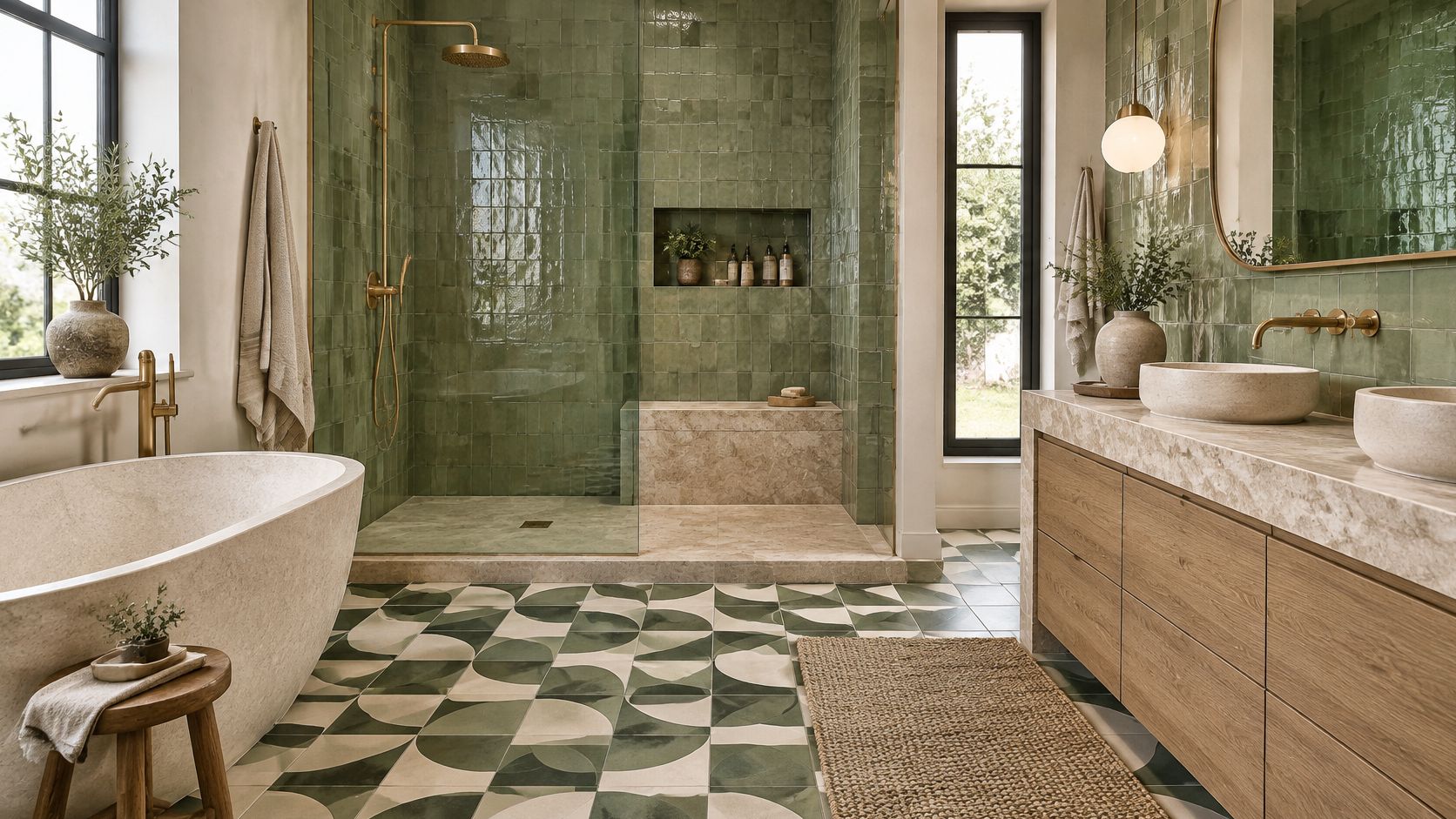
You're standing in a gutted bathroom in Wellesley, holding a stack of tile samples against exposed framing. One sample promises a bold patterned floor; another suggests a calm room where the walls, shower, and floor share the same soft color. Both look good on the sample board. Neither tells you how the finished bathroom will feel on a dark winter morning or how much cleaning it'll need.
Tile is usually the bathroom's most visible permanent finish, and it's among the hardest decisions to reverse. You can replace a mirror or repaint a cabinet without disturbing the room. Changing shower tile means dealing with demolition, waterproofing, plumbing fixtures, and installation all over again.
The best bathroom tile decorating ideas balance appearance with the room you really have. In a New England home, that means checking older subfloors, managing shower humidity, and considering whether your water leaves mineral deposits behind.
- For a quieter room, consider tile drenching, large-format porcelain, or vertically stacked subway tile.
- For character, look at herringbone, handmade zellige, patterned cement, or a carefully placed mosaic.
- For stronger contrast, try terrazzo-look porcelain, half-wall color blocking, or a dark palette.
These ten looks shaping Massachusetts bathrooms each have a place. The difference between an attractive sample and a successful installation comes down to layout, surface preparation, and knowing the maintenance commitment before you order.
Table of Contents
1. Tile Drenching
Tile drenching carries the same color, or closely related tones, across walls, floors, trim, and sometimes the ceiling. The National Association of Realtors' coverage of tile drenching identifies it as a notable 2026 design direction, but the useful idea isn't novelty. It's reducing competing surfaces.
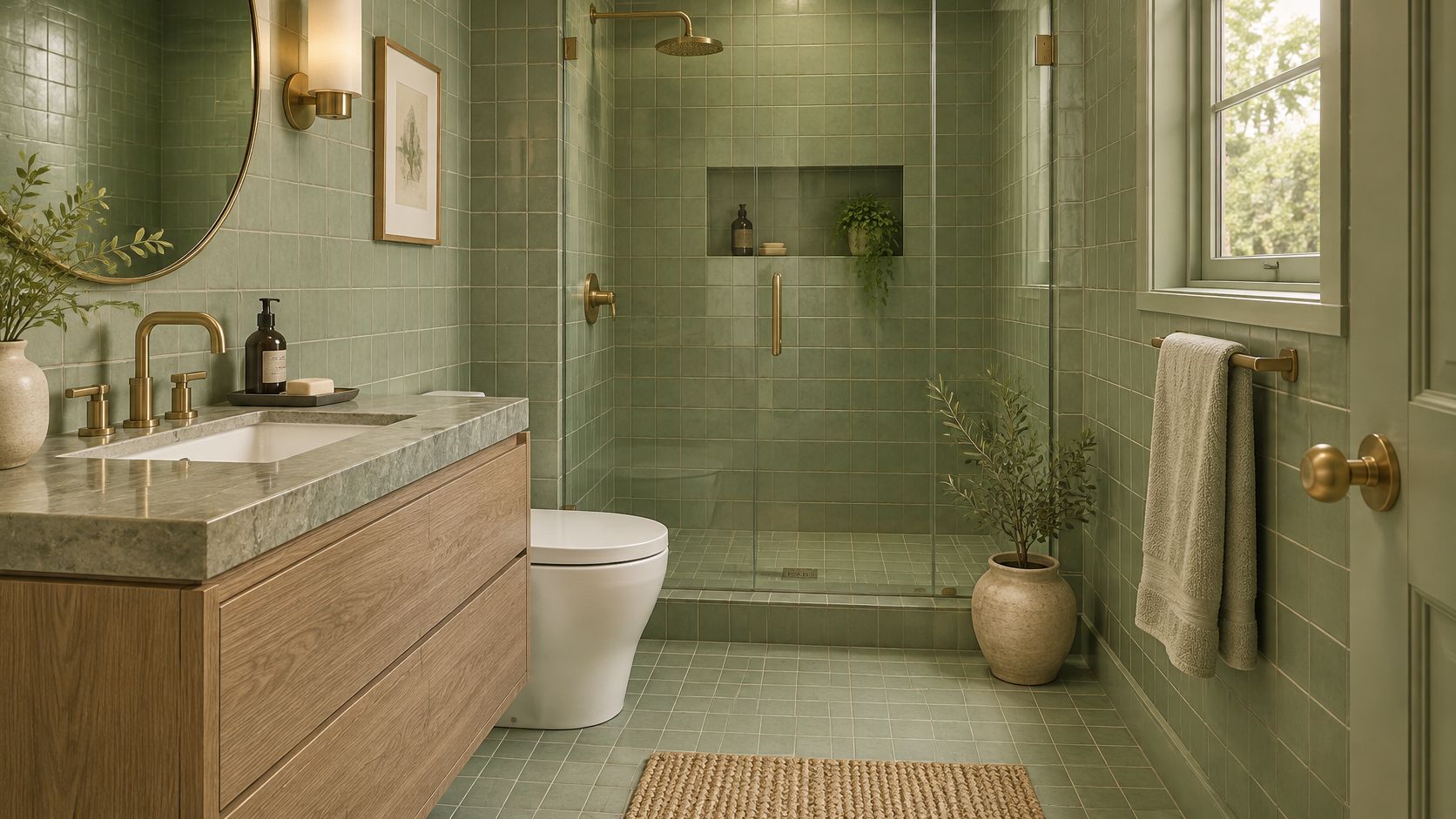
For a small Wayland hall bath, consider pale blue walls with a coordinating matte floor. In a Wellesley primary bathroom, warm beige stone-look porcelain can continue into the shower niche without adding another accent material.
Keep the Color Consistent, Not Every Specification
The floor still needs appropriate traction, and the shower floor still needs drainage. Don't use glossy wall tile underfoot just because it matches.
- Styling tip: Pair satin or glossy walls with a matte floor in the same color family. Test matching grout after it cures rather than judging wet grout.
- Ordering tip: Request consistent shade lots within each product, and approve intended variation before installation.
- Maintenance note: A continuous palette doesn't eliminate grout, movement joints, or soap residue. Choose accessible surfaces you can wipe down without awkward reaching.
Warm lighting and a wood vanity keep an enveloping scheme from feeling clinical. Sunny Day Pro Services can plan full-room tile installations across Wayland, Newton, Needham, and Wellesley, including layout and material quantities before ordering.
2. Large-Format Porcelain Tile
Large-format porcelain works when you want the room to feel quieter, not busier. Broad surfaces and fewer visible joints suit marble-look shower walls, understated concrete effects, and wood-look bathroom floors.
A Newton primary bath might pair matte porcelain flooring with floor-to-ceiling stone-look shower tile. Keep the shower floor separate unless the selected format, drain arrangement, and slope work together.
The RCB bathroom specification guide emphasizes that large-format tile requires a flat substrate. That matters in an older Massachusetts house, where covering the existing floor without checking it can leave raised edges and awkward transitions.
Installation reality: Large tile won't flatten an uneven floor. The installer has to correct the surface before setting tile.
Plan the Layout Before Ordering
Use a straightedge to identify dips and high spots, then assess the framing and subfloor stiffness. Back-butter large tiles as needed, comb mortar consistently, and lift tiles during installation to verify contact rather than assuming the mortar has transferred.
- Styling tip: Continue the dominant veining or grain direction deliberately, especially around shower corners.
- Maintenance note: Fewer grout joints simplify routine wiping, but textured porcelain can hold residue. Test a sample with your usual cleaner and a soft brush.
Review Sunny Day Pro Services' large-format tile installation guide before requesting a quote and installation timeline.
3. Herringbone Tile Pattern
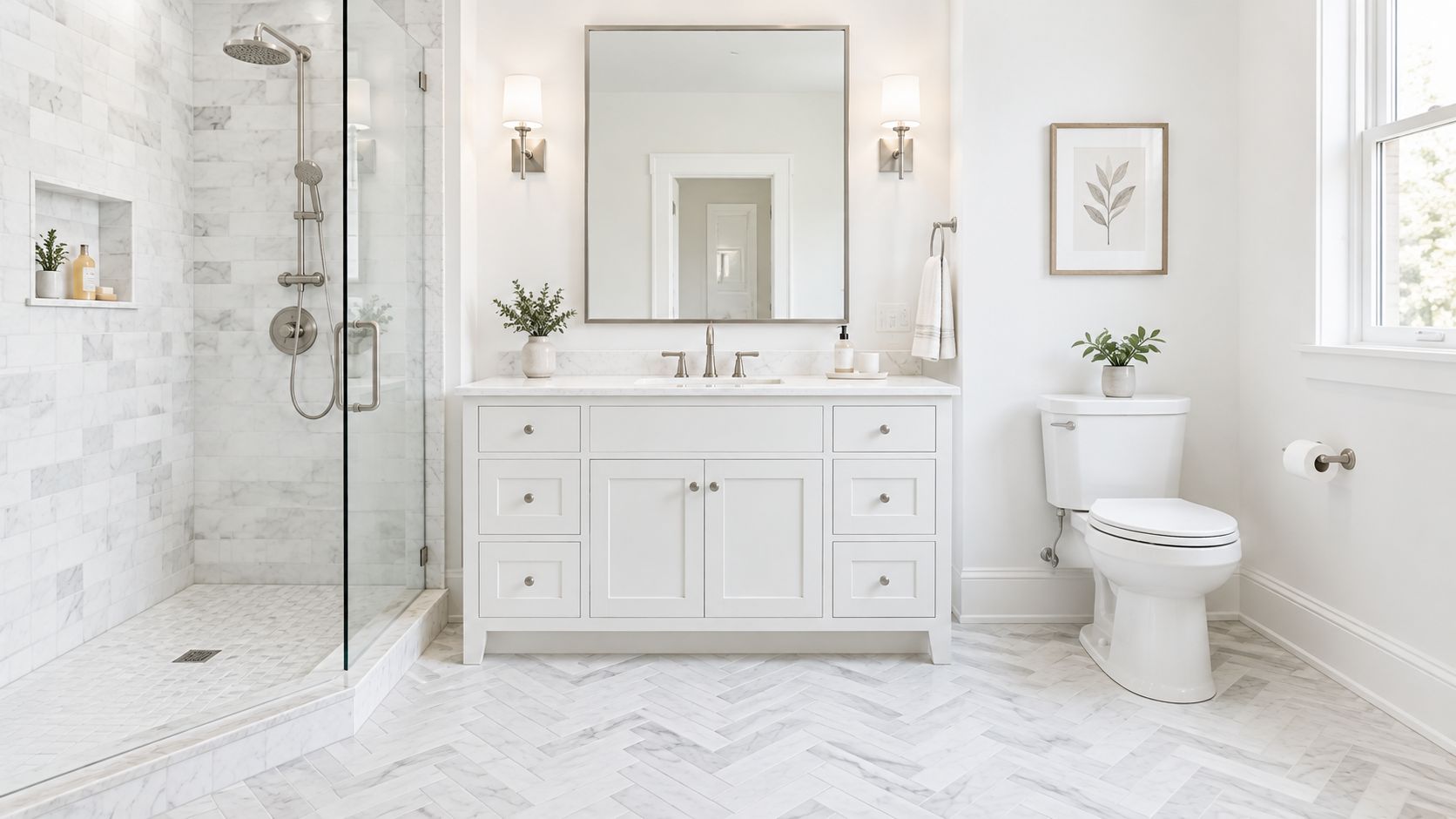
A white marble herringbone floor beneath a simple vanity can give a Needham bathroom character without introducing another color. Gray porcelain herringbone offers a similar sense of movement with less stone-specific maintenance.
Herringbone uses rectangular tiles meeting at right angles. Its success depends on the layout: a pattern that looks centered at the doorway can still leave distracting slivers beside the tub.
Center the Pattern on What You See
Establish the main sightline from the doorway, then dry-lay enough tile to check the perimeter cuts. Use a laser and chalk lines to keep the pattern aligned; don't use an old bathroom wall as your only reference.
- Styling tip: Let herringbone be the main pattern. Pair it with plain shower walls and grout that doesn't compete with every tile edge.
- Maintenance note: Natural marble needs stone-safe cleaning and an appropriate sealing plan. Sealer helps resist staining, but it doesn't prevent acid etching.
- Material alternative: Choose marble-look porcelain if you don't want to manage natural stone around toothpaste, cosmetics, and bathroom cleaners.
Small-format herringbone creates many joints, so include grout cleaning in the decision. Sunny Day Pro Services' tile installation patterns guide can help you compare layouts before requesting a custom installation estimate.
4. Zellige Handmade Tile
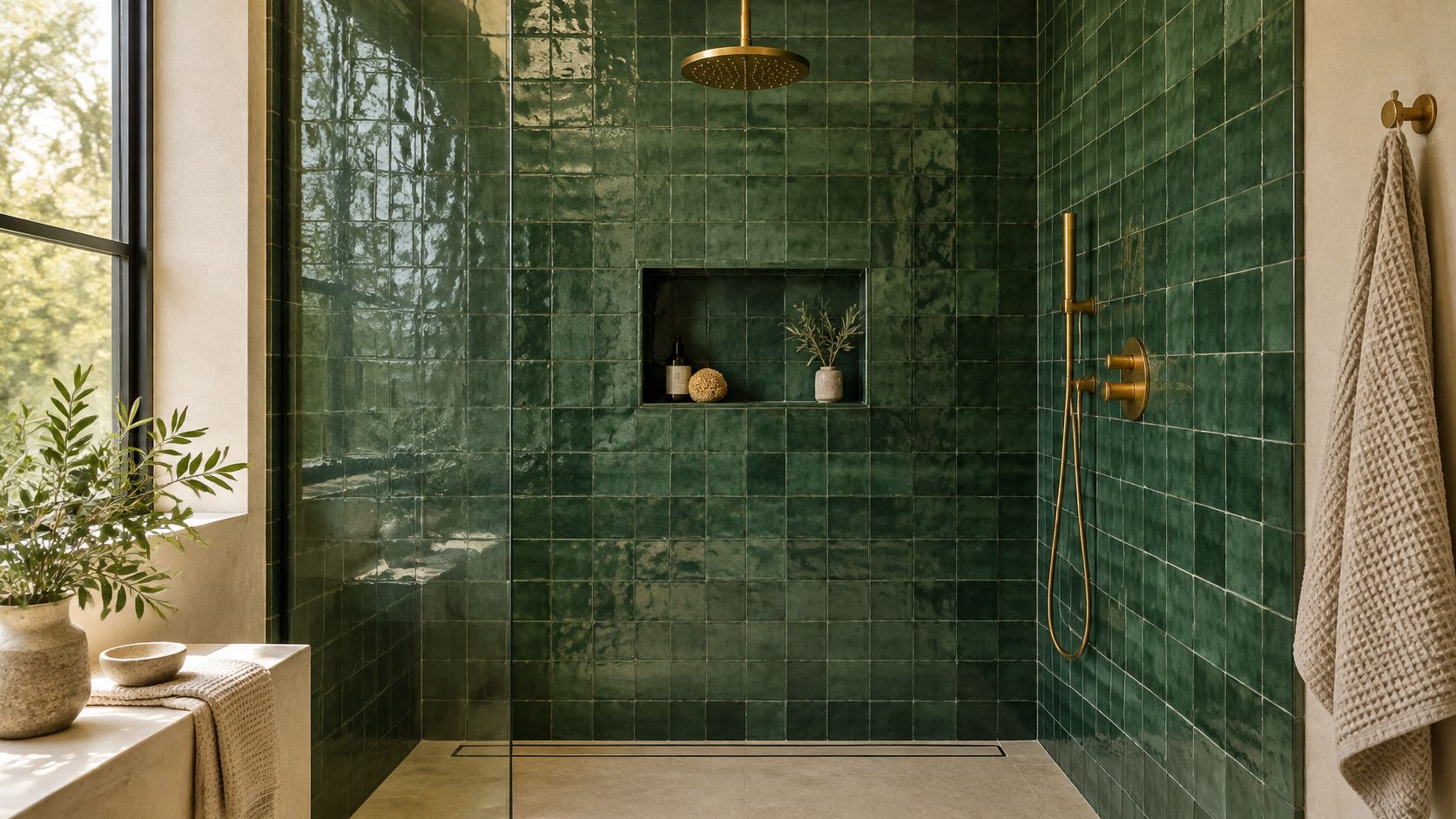
Choose zellige because you appreciate variation, not because you want perfectly uniform walls. Traditional Moroccan clay tile has differences in glaze, thickness, edges, and surface texture that become especially visible under side lighting.
For a Wayland shower, deep green zellige with cream grout can bring warmth to an otherwise simple room. If you're unsure about covering every wall, try blue handmade tile inside a Newton bath's niche or behind the vanity.
Approve the Variation Before Installation
Lay tiles from several boxes together before setting them. That lets the installer distribute light and dark pieces rather than accidentally creating patches.
Order extra material for sorting, cuts, and breakage, with the allowance based on the product and layout. Joint spacing, wet-area suitability, and sealing requirements should come from the actual manufacturer, because handmade products aren't interchangeable.
- Styling tip: Keep the surrounding vanity and floor restrained so the glaze variation remains the focal point.
- Maintenance note: Uneven surfaces and recessed edges take more effort to wipe than flat porcelain. Where water leaves mineral deposits, frequent gentle cleaning is easier than removing heavy buildup.
- Installation caution: Don't assume a decorative handmade tile is suitable for shower floors or submerged use.
Sunny Day Pro Services can review specialty tile requirements when preparing an estimate. Bring a representative group of samples, not just the most uniform piece.
5. Vertical Stacked Subway Tile
Vertical stacked subway tile makes familiar material feel more architectural. Continuous upright joints emphasize height, which can help a compact Weston bathroom feel less squat.
Try glossy white shower walls with a matching vanity backsplash, or sage green tile behind a floating vanity in a Needham guest bath. Black tile with white grout creates a sharper graphic effect, but it also exposes every alignment error.
The 2024 U.S. Houzz Bathroom Trends Study found that 82% of renovating homeowners selected rectangular tiles for upgraded shower walls. A vertical stack changes the arrangement without requiring an unusual tile shape.
High-contrast grout is a design decision and an inspection light. It makes crooked joints much easier to notice.
Get the Grid Right
Check walls for plumb and flatness before marking the layout. Balance cuts around the shower's focal wall or vanity rather than starting with a full tile in whichever corner is easiest.
- Styling tip: Use close-matching grout for a softer wall or clear contrast for a deliberate grid. Test the choice on a sample board.
- Maintenance note: Pale grout can show discoloration, while dark tile can reveal soap and mineral residue. Neither combination is maintenance-free.
A horizontal trim line can work, but don't add one automatically. Sunny Day Pro Services can help align a shower wall, backsplash, and finished edges as part of the installation plan.
6. Terrazzo-Look Porcelain
Terrazzo-look porcelain suits homeowners who want pattern without a repeating floral or geometric motif. Its printed chips can introduce cream, gray, terracotta, or green while keeping the floor visually connected.
In a Newton primary bath, use a light terrazzo-look floor with plain shower walls. For a small powder room, a more colorful speckle can supply the personality while the vanity and paint stay simple.
Porcelain replicas and traditional terrazzo aren't the same material. Evaluate the specific tile's finish, intended use, and cleaning instructions rather than assuming every terrazzo-looking product performs alike.
Use the Chips as Your Color Palette
Pull a quiet wall color from a smaller chip rather than matching every fixture to the background. Brass can pick up warm flecks; brushed nickel works with cooler gray chips.
- Layout check: Spread pieces from several boxes across the floor to spot obvious printed repeats before installation.
- Styling tip: Test grout against both the background and the dominant chips. The quieter choice usually keeps joints from cutting the pattern into squares.
- Maintenance note: Speckles can disguise everyday dust, but they don't prevent soap film. A heavily textured finish may need brushing rather than just mopping.
Avoid choosing large terrazzo-look pieces for a shower floor on appearance alone. A sloped floor with a point drain may need smaller pieces or carefully planned cuts, even when the same porcelain works beautifully on the walls.
7. Patterned Cement Tile
A black-and-white cement tile floor can carry an entire Wayland powder room. Add a plain white vanity and let the pattern remain the strongest element.
Cement tile uses a pigmented face layer over a cement body. It's often marketed as encaustic cement tile, but it isn't the same as kiln-fired encaustic clay tile, and the decorative layer doesn't necessarily extend through its full thickness.
Choose the Patina Before the Pattern
Real cement tile is a commitment to a material that can change with use. If you want a consistently uniform surface with simpler upkeep, compare it with patterned porcelain before ordering.
- Styling tip: Use a patterned border around a plain field in a Needham bath, or confine a strong motif to the floor.
- Maintenance note: Apply the specified penetrating sealer before grouting when the manufacturer requires it, and follow its resealing guidance. Use a pH-neutral cleaner rather than acidic descalers.
- Subfloor check: Correct movement and unevenness before tiling. Underlayment or leveling compound isn't a substitute for repairing weak framing or damaged subflooring.
Material choice: If your cleaning routine depends on strong acidic products, real cement tile is a poor match.
For wet locations, confirm explicit product suitability and the complete installation system. Sunny Day Pro Services can help plan specialty tile layouts and assess preparation needs before providing an estimate.
8. Mosaic Accents and Shower Niches
A mosaic niche can add personality without turning the entire shower into a feature wall. In a Weston bathroom, glass mosaic inside a niche can sit comfortably beside larger white tile; in Wellesley, a charcoal penny-round floor can supply contrast.
Small pieces can also help accommodate shower-floor slopes. They aren't automatically slip-safe, though, and extra grout joints mean extra cleaning.
The 2025 U.S. Houzz Bathroom Trends Study found that 68% of surveyed renovating homeowners considered special needs during their bathroom project. Floor selection deserves the same attention as color, especially when planning for children, guests, or aging in place.
Separate Decoration From Floor Performance
An industry explanation of ANSI A137.1 identifies a minimum wet dynamic coefficient of friction of 0.42 for level interior tile intended to be walked on when wet. That isn't a universal shower-floor approval, so verify the manufacturer's suitability for the actual location.
- Styling tip: Put the accent where it's visible, and use blending grout if the mosaic already has strong color variation.
- Maintenance note: Niche corners and mosaic joints collect residue. Slope the niche shelf toward the shower and avoid unnecessary ledges.
Plan framing and waterproofing before tile begins. Sunny Day Pro Services' mosaic tile installation guide explains considerations for integrating these smaller details into a full bathroom project.
9. Half-Wall Tile and Color Blocking
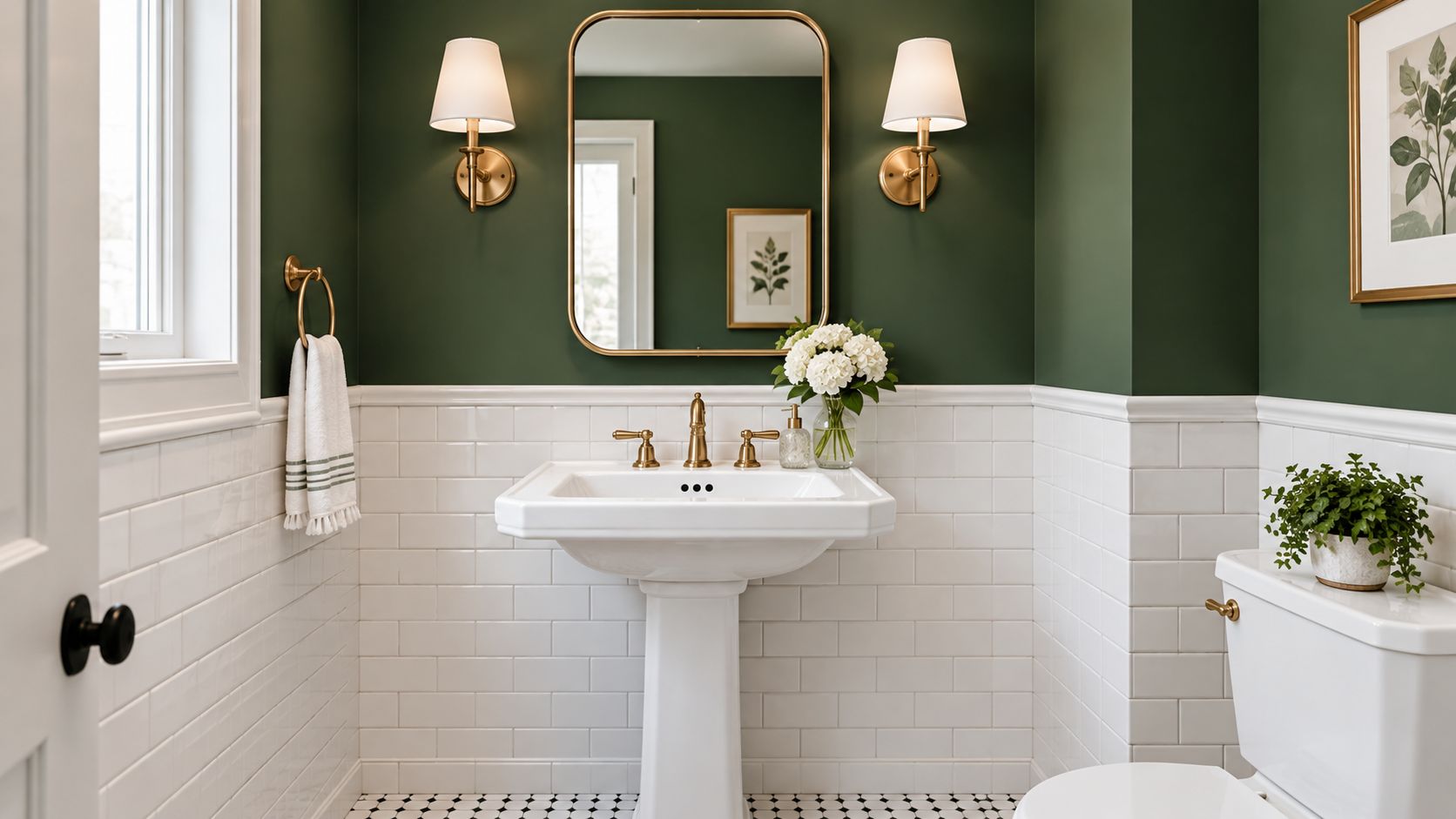
Half-wall tile works especially well when you want a bathroom to feel connected to an older New England home rather than completely rebuilt in a different style. White subway wainscoting beneath deep green paint is a strong choice for a Needham powder room.
A Wayland guest bath could use beadboard-style tile with a finished cap. In Newton, handmade tile below painted walls can provide texture without the cost or cleaning commitment of a fully tiled room.
Set the Transition Against the Fixtures
Mark the proposed height on every wall before installation. Check how it meets the vanity, mirror, toilet, window trim, and shower enclosure so the line doesn't create awkward collisions.
- Styling tip: Finish the top with bullnose, a compatible cap, or a deliberate profile. Repeat the tile color elsewhere to connect the room.
- Maintenance note: The cap creates a dust-catching ledge, and painted walls still need moisture control. Use washable bathroom-appropriate paint outside direct wet zones.
- Waterproofing caution: Decorative wainscoting doesn't replace the required waterproof assembly around a shower or tub.
The EPA's mold guidance recommends indoor relative humidity between 30% and 60%. Exhaust moisture outdoors and keep ventilation in the renovation plan, whether the walls are half tiled or fully covered.
10. Dark and Moody Tile Palettes
Dark tile can make a bathroom feel calm and enclosed in a good way. Charcoal porcelain, deep navy, forest green, and matte black pair well with wood vanities and warm metal finishes.
For a Wellesley primary bath, balance black shower walls with a pale marble-look floor. In a Newton powder room, navy walls and warm sconces can create atmosphere without requiring every surface to be dark.
Dark doesn't mean low maintenance. Pale mineral deposits can be especially noticeable on dark tile when the water dries.
Test the Finish Under Real Lighting
Stand samples upright and flat in the actual room. Gloss reflects light but reveals streaks; matte surfaces reduce glare, yet some textures hold residue more stubbornly.
- Styling tip: Combine ceiling lighting with mirror or wall lighting so faces and corners aren't left in shadow.
- Grout decision: Matching grout creates a quieter surface. White grout produces crisp definition but makes joint consistency and cleaning more noticeable.
- Maintenance note: Squeegee shower walls and dry vulnerable areas after use. Choose a cleaner compatible with both the tile and grout, especially when removing mineral buildup.
Don't assume honed natural stone and matte porcelain can use the same cleaner. Sunny Day Pro Services can discuss installation details and appropriate care routines before you commit to a dark-toned bathroom.
How the 10 bathroom tile decorating ideas compare on fit, size, upkeep, and cost
| Item | Best For | Typical Size or Format | Maintenance Level | Relative Cost |
|---|---|---|---|---|
| Tile Drenching | A cohesive, spa-like look; visually opening small bathrooms | Consistent tile across walls and floors; sometimes the ceiling | Moderate; grout and water spots need attention | High; covers much of the room |
| Large-Format Porcelain Tile | Sleek surfaces with fewer grout lines, especially in wet areas | Commonly 12×24, 24×48, or 32×64 inches | Low | Moderate to high; handling and installation can add labor |
| Herringbone Tile Pattern | Adding movement and a custom focal point | Rectangular tiles, commonly 3×8 or 2×8 inches, in a zigzag | Moderate; visible grout lines need regular cleaning | High; precise layout and extra cuts increase labor |
| Zellige Handmade Tile | Warm, artisan character and textured walls | Handmade small-format tile, often 4×4 or 5×5 inches | High; uneven surfaces and grout need extra care | High; specialty material and skilled installation |
| Vertical Stacked Subway Tile | Making ceilings feel taller and narrow rooms feel more open | Rectangular tile, often 3×6 or 4×12 inches, stacked vertically | Low to moderate; grout color affects upkeep | Low to moderate |
| Terrazzo-Look Porcelain | A speckled, durable look with relatively easy care | Often large-format porcelain | Low | Moderate |
| Patterned Cement Tile | Bold floors or accent walls in powder rooms and small baths | Typically 8×8 inches; patterned cement | High; porous tile requires regular sealing | High |
| Mosaic Accents and Shower Niches | Adding detail to niches, borders, and small areas | Small tiles on mesh sheets, including penny rounds, hexagons, or squares | Moderate to high; many grout lines need cleaning | Low to moderate for accents |
| Half-Wall Tile and Color Blocking | Protecting splash-prone walls while creating a design break | Tile wainscoting, typically 36–48 inches high | Moderate; tile grout and the upper-wall finish need care | Low to moderate; uses less tile than full-height coverage |
| Dark and Moody Tile Palettes | Creating a dramatic, spa-like bathroom | Dark tile in matte, textured, or glossy finishes | Moderate to high; soap residue and hard-water spots may show | Moderate to high; full-wall coverage and premium stone or large-format porcelain raise the cost |
Use the size and upkeep columns to check whether a look suits the room, not just the sample board. In older New England bathrooms, large-format tile can mean fewer grout joints, but its installation requires careful handling and adds labor. Smaller patterns create movement, though their extra joints take more cleaning and precise layout.
Humidity and hard water also affect the upkeep choices. Textured or handmade surfaces and porous cement need more attention than porcelain, while visible grout and water spots can change how often a finish needs cleaning. In a bathroom with an older subfloor, account for preparation before choosing a format or pattern, since the table's cost ratings reflect the relative demands of the tile and its coverage.
Choose One Anchor Look and Build the Rest Around It
Back in that gutted Wellesley bathroom, the sample boards become easier to judge once you stop asking every surface to be the feature. Choose one anchor look: a patterned floor, an enveloping color, a herringbone layout, or a single mosaic niche.
Then make the other decisions support it. A bold floor usually benefits from quieter walls, while richly varied zellige rarely needs a competing decorative border.
Match the Design to Your Routine
Be honest about what you'll maintain. If you won't dry shower walls, dark tile in a home with mineral-heavy water may become frustrating; if you prefer strong bathroom cleaners, marble and cement require a change in routine.
The same applies to grout. More joints can support an intricate pattern or help smaller pieces follow a shower slope, but they also create more surface to scrub.
- For simpler daily care: Favor accessible surfaces, compatible cleaners, and fewer unnecessary ledges.
- For a statement finish: Decide where you're willing to accept additional cleaning or material variation.
- For an older home: Allow for inspection and preparation rather than assuming the existing floor can receive new tile.
- For safer use: Confirm floor suitability separately from wall suitability, even when the products share a collection name.
A successful tile plan also includes the details that rarely appear on sample boards: doorway transitions, trim profiles, movement joints, niche shelves, drain placement, and ventilation. Resolve those before ordering materials, not while the installer is waiting to begin.
Turn the Samples Into an Installation Plan
Gather three to five samples and test them under your bathroom's actual lighting. Compare them beside the vanity finish, hardware, paint, and a cured grout sample rather than evaluating each material alone.
Before demolition begins, have the existing floor assessed as far as access allows, and plan for a full subfloor inspection once it's exposed. Confirm flatness, appropriate level conditions outside intentionally sloped areas, and structural soundness; a floor can be level and still have dips that cause tile problems.
Finally, request a quote from Sunny Day Pro Services to map the layout, tile quantities, preparation work, and timeline. Keep the chosen anchor look clear, identify acceptable alternatives, and settle the care requirements before placing the order.
Sunny Day Pro Services provides bathroom tile and flooring installation for homeowners in Wayland, Newton, Needham, Wellesley, Weston, and surrounding Massachusetts communities. Visit Sunny Day Pro Services to request a quote and discuss your tile samples, layout, surface preparation, and installation schedule.

