
Choosing High Traffic Tile Flooring: A 2026 Guide
Find the best high traffic tile flooring for your home. Our 2026 guide reviews porcelain, ceramic, and stone options for kitchens, entries, and mudrooms.

When you've got a busy house, the right floor isn't just a design choice—it's a survival tactic. For those high-traffic battlegrounds like your kitchen, entryway, or mudroom, nothing stands up to the daily grind quite like tile. Specifically, we're talking about porcelain tile with a PEI rating of 4 or 5, which is engineered to handle constant foot traffic, scratches, and spills without showing its age.
Table of Contents
- Porcelain: The Unyielding Champion
- Ceramic: The Versatile Contender
- Natural Stone: The Timeless Beauty
- Tile Material Comparison for Busy Homes
- What Is the Most Durable Tile for a Home with Large Dogs?
- Is Dark or Light Grout Better for a Mudroom?
- Can I Install New Tile Directly Over My Old Floor?
- How Can I Make My Tile Floor Less Cold?
Why Choose Tile for Your Home's Busiest Areas?
Think about the main arteries of your home. Muddy boots tromping through the entryway, grocery bags dropping on the kitchen floor, and pets skidding around corners. These are the places that take a beating day in and day out. While other materials like carpet or softer vinyl quickly show wear and tear, this is where tile truly shines.
Tile's strength comes from its incredibly hard, dense surface. It's built to resist the kind of abuse that would send other flooring types to an early grave, acting as a shield against scratches, dents, and stains.
The Real-World Benefits of Tile
So what makes tile the undisputed champion for your home’s toughest spots? It really boils down to a few practical advantages we see on the job all the time.
- Incredible Durability: Tile is fired at scorching temperatures, making it exceptionally hard. This means it can shrug off damage from heavy foot traffic, dragged furniture, and your dog's claws far better than almost any other option.
- Simple, Sanity-Saving Maintenance: Dirt, spills, and grime have nowhere to hide. Because they can't soak in, a quick sweep and a damp mop are usually all you need to make your floors look brand new again. It’s a game-changer for a busy family.
- A Smart, Long-Term Investment: Some floors need to be replaced every 5 to 10 years. A professionally installed tile floor, on the other hand, can easily last for decades. It's one of the few home improvements that adds lasting value.
Choosing the right tile is like picking a reliable workhorse for your home. It’s not just about what looks good today; it's about investing in a surface that shows up for work every single day, saving you a ton of headaches and money down the road.
For homeowners here in Massachusetts towns like Wellesley or Newton, where winter means tracking in slush and road salt, tile’s easy-to-clean surface is a lifesaver. At Sunny Day Pro Services, we’ve seen countless times how a quality tile installation can completely transform a home’s functionality. This guide is all about giving you the practical advice you need to pick the perfect high-traffic tile flooring that will stand up to your real life, year after year.
Comparing the Best Tile Materials for Durability
When you're tiling a floor that’s going to see a lot of action, not just any tile will do. The material you choose is the single biggest factor in how well your floor will hold up over years of muddy boots, dropped grocery bags, and daily foot traffic. Let's walk through the top three choices—porcelain, ceramic, and natural stone—and see how they stack up in the real world.
Porcelain: The Unyielding Champion
If you're looking for the toughest tile on the market, look no further than porcelain. Think of it as ceramic's more refined, stronger sibling. It's made from finer clays and fired at extremely high temperatures, resulting in a tile that's incredibly dense, hard, and resistant to just about everything.
Because it’s so dense, porcelain has a water absorption rate of less than 0.5%. This makes it practically waterproof and a perfect match for mudrooms, busy kitchens, and entryways where snow, rain, and spills are a daily reality. That density also gives it exceptional strength against scratches and chips, which is why we at Sunny Day Pro Services often recommend it for both demanding homes and commercial spaces.
This quick comparison shows just how much stronger tile is compared to softer flooring options in busy areas.
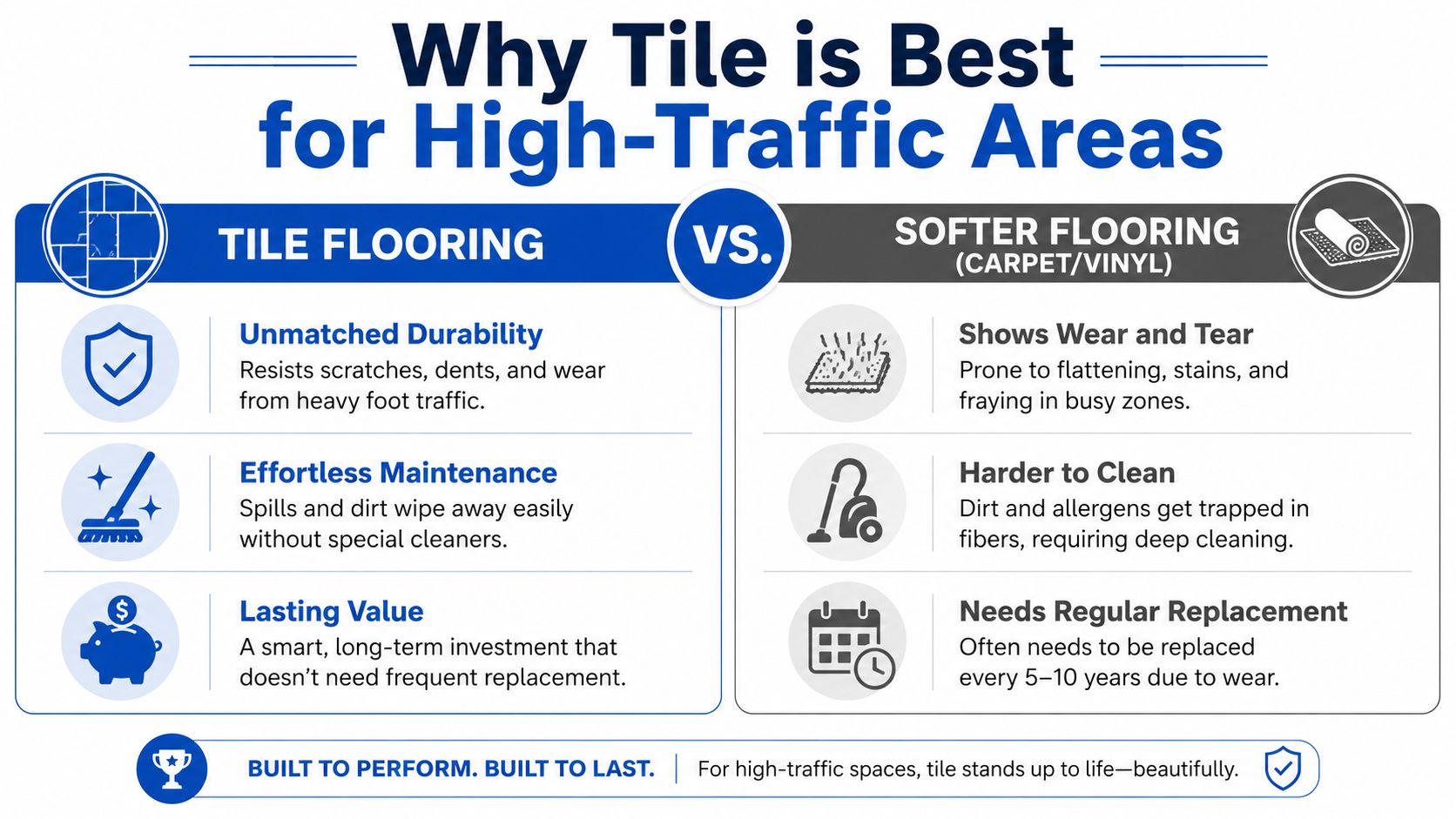
As you can see, the core strengths of tile—its durability and low-maintenance nature—are exactly what you need to avoid the wear and tear that plagues less resilient materials.
Ceramic: The Versatile Contender
Ceramic tile is a classic for a reason. It's made from more common clays and fired at lower temperatures than porcelain, making it a bit more porous and not quite as tough. Even so, a good quality ceramic tile is a fantastic and often more budget-friendly option for many homes.
The key with ceramic is the glaze. This protective top layer is what gives the tile its color and finish, but more importantly, it's the shield that guards against stains and moisture. A properly rated ceramic tile will hold up beautifully in a hallway or family kitchen. Just know that if it does chip, the underlying clay color might show through, unlike a "through-body" porcelain where the color is consistent all the way through the tile.
Natural Stone: The Timeless Beauty
There's something special about natural stone. Materials like granite, slate, travertine, and marble offer an organic, one-of-a-kind beauty that manufactured tiles can't quite replicate. For floors that see a lot of use, granite and slate are excellent choices due to their natural hardness and durability.
The trade-off for this unique look is a bit more upkeep. Most natural stones are porous and need to be sealed periodically to prevent stains and water damage. Softer stones like marble can also be more prone to scratches or etching from acids (like a spilled glass of orange juice). Choosing natural stone is often a balance between loving its unique aesthetic and being prepared for a more involved care routine.
To help you weigh your options, here’s a quick breakdown of how these materials compare for the busiest spots in your home.
Tile Material Comparison for Busy Homes
| Material | Durability & Hardness | Best For | Maintenance Level | Typical Cost |
|---|---|---|---|---|
| Porcelain | Highest | Kitchens, entryways, mudrooms, bathrooms, commercial spaces | Low | $8 - $35+ per sq. ft. |
| Ceramic | High | Kitchens, hallways, bathrooms, moderate-traffic areas | Low | $5 - $25 per sq. ft. |
| Natural Stone | Varies (High to Medium) | Entryways, kitchens (granite/slate); luxury spaces | High (Requires sealing) | $10 - $50+ per sq. ft. |
Ultimately, the right material depends on your lifestyle, budget, and the specific demands of the space. While natural stone has its undeniable appeal, tile remains a dominant force for its winning combination of toughness and ease of care. Floors in high-traffic areas are a major segment of the U.S. flooring market, holding about 12.5% of total industry sales in 2026 and representing approximately $2.984 billion of a $23.955 billion market.
For us here in Massachusetts, where we deal with slush, salt, and sand, tile's resilience is a lifesaver. While choosing the right material for your floor is critical, these same principles apply to other projects, too. If you're tackling a bathroom remodel, be sure to check out our complete guide on how to choose tile for a bathroom for more specific advice.
Understanding Tile Durability Ratings Like a Pro
When you start shopping for tile, you’ll quickly run into some technical-sounding terms like "PEI" and "MOHS." It’s easy to gloss over them, but as pros, we can tell you these ratings are your single best tool for choosing genuine high-traffic tile flooring. They cut right through the marketing fluff and give you the hard facts on a tile’s toughness.
Think about it like this: you wouldn't buy a family car just because you like the color. You’d check the safety data and engine specs. These ratings are the tile equivalent, letting you look under the hood to make sure you’re getting a floor that will actually last in the busy parts of your home.
Cracking the Code of the PEI Rating
For any area that gets a lot of foot traffic, the first thing to look for is the PEI (Porcelain Enamel Institute) rating. This scale tells you one crucial thing: how well the tile’s glaze resists wear and tear from walking on it. It’s a simple scale from 1 to 5—the higher the number, the tougher the tile.
For a busy entryway or kitchen, a low PEI rating just won't cut it.
- PEI 1-2: These are best saved for walls or floors that see almost no foot traffic, like a rarely-used guest bathroom. Don't even consider them for main living areas.
- PEI 3: This is a solid choice for most residential spots with moderate traffic, like bedrooms or a formal living room.
- PEI 4: Here’s the sweet spot for a bustling home. A PEI 4 tile is designed for heavy residential foot traffic and can even handle light commercial use. It’s exactly what we at Sunny Day Pro Services recommend for kitchens, entryways, mudrooms, and hallways.
- PEI 5: This is the heavyweight champion. PEI 5 tiles are built for the demands of airports and shopping malls, so they are more than strong enough to handle anything your family can throw at them.
For a floor that will look great for years—not just months—in your home's main arteries, a PEI rating of 4 or 5 is non-negotiable. It's the best guarantee you can get.
Don't Forget Scratch Resistance: The MOHS Scale
While the PEI rating is all about wear from foot traffic, the MOHS scale tackles a different enemy: scratches. This scale, originally developed by a geologist, ranks a material's hardness from 1 (soft as talc) to 10 (hard as a diamond). It tells you how well a tile can resist getting scratched by other materials.
Why does this matter for your floor? Because the biggest culprits for scratches are the tiny, gritty bits of dirt and sand tracked in on shoes. Add in pet claws and scooting furniture, and you have a recipe for a scratched-up floor.
For high-traffic tile flooring, look for a MOHS rating of 7 or above. This means the tile is harder than the common minerals found in sand and dirt, giving you another layer of confidence that your beautiful new floor will stay that way.
How Tile Finish Impacts Safety and Maintenance
It’s easy to fall in love with a tile for its color or pattern, but the finish—that top surface layer—plays a massive role in how your floor performs day-to-day. This is especially true for high-traffic tile flooring in busy, moisture-prone spots. A glossy, polished tile might look spectacular, but its mirror-like shine can become a serious slip hazard the second it gets wet.
This is where a key safety rating called the DCOF (Dynamic Coefficient of Friction) comes in. It’s a technical-sounding term for a simple concept: grip. The DCOF score tells you how much traction a tile has when wet. The higher the number, the less slippery the surface.
Finding the Right Balance of Grip and Cleanliness
For any area that might see water—think a kitchen with occasional spills or an entryway on a rainy day—you’ll want to look for a tile with a wet DCOF of 0.42 or higher. This is the industry benchmark for safe walking surfaces and choosing a tile that meets this standard significantly reduces the risk of accidents.
This is why you'll see different finishes recommended for different parts of the house:
- Polished Finish: Delivers that luxurious, reflective look that can make a room feel brighter and more elegant. Because of its low DCOF, it gets very slippery when wet and is best reserved for low-traffic, dry areas like a formal dining room or bedroom.
- Matte Finish: This non-reflective surface has a modern, subtle appeal and offers much better traction than its polished counterpart. It’s a fantastic all-arounder for most high-traffic residential spaces.
- Textured Finish: With a slightly rough or structured surface, this finish provides the best possible slip resistance. It's the go-to choice for mudrooms, foyers, laundry rooms, and even outdoor patios where safety is the top priority.
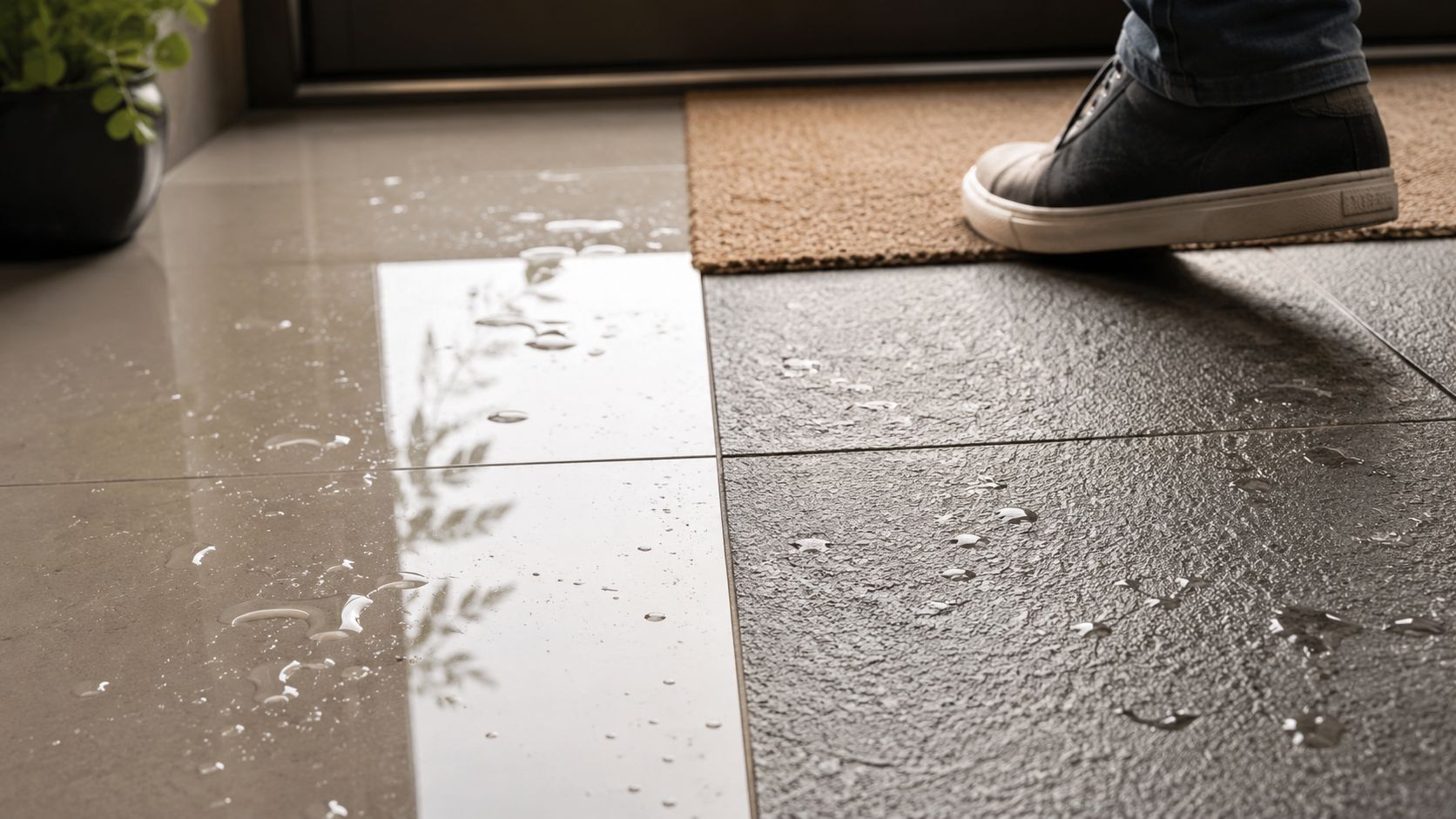
Of course, there's always a trade-off, and here it's about maintenance. A super smooth, polished tile is a breeze to wipe clean. A highly textured tile, on the other hand, has more nooks and crannies that can trap dirt, meaning it might need a little extra elbow grease. For most homes, a matte finish hits that sweet spot, offering great safety without adding a ton of cleaning time to your schedule.
A tile's finish isn't just a design detail; it's a functional choice. The right finish ensures your floor is safe for your family while still being easy to maintain, even in the busiest parts of your home.
The smartest approach is to pair a tile’s durability rating with the right finish. For example, we often guide clients to choose a tile with a PEI rating of 4 or 5 and a wet DCOF of at least 0.42 for entryways where tracked-in snow or rain is common. This combination of toughness and grip makes porcelain an excellent, practical investment for high-traffic projects. You can find more expert recommendations for heavy-traffic areas on ToupinConstruction.com.
Protecting Your Investment with Proper Installation
You can spend a fortune on the most beautiful, highest-rated tile on the market, but here’s the hard truth: if the installation is shoddy, it simply won't last. This is a critical point for high-traffic tile flooring, where every footstep puts stress on the floor. A small weakness in the installation will quickly snowball into cracked tiles, crumbling grout, and repairs you weren’t planning on.
Think of professional installation less as a cost and more as an insurance policy. It's the only way to guarantee your floor can handle the daily chaos of a busy home or business for years to come.
The Foundation of a Lasting Floor
A rock-solid tile floor is built from the ground up, and the work starts long before the first tile is even unboxed. It all comes down to what’s underneath.
- Subfloor Preparation: The subfloor is the unsung hero of a durable tile job. It needs to be perfectly flat, level, and completely rigid. A professional installer will take the time to grind down high spots, use leveling compounds to fill in dips, and make sure there's zero flex or movement. In our experience, skipping this step is the number one reason tile installations fail.
- Using the Right Materials: An expert knows it’s not just about the tile. The right adhesive (thin-set mortar) and grout are just as important. They’ll choose a mortar that bonds correctly with your specific tile—porcelain needs something different than natural stone—and a grout that can stand up to stains and foot traffic.
- Flawless Execution: Technique is everything. From creating perfectly even spacing for clean grout lines to achieving full mortar coverage on the back of every single tile, a pro’s precision work prevents hollow spots that lead to cracks. This meticulous approach is what transforms individual tiles into one solid, bulletproof surface.
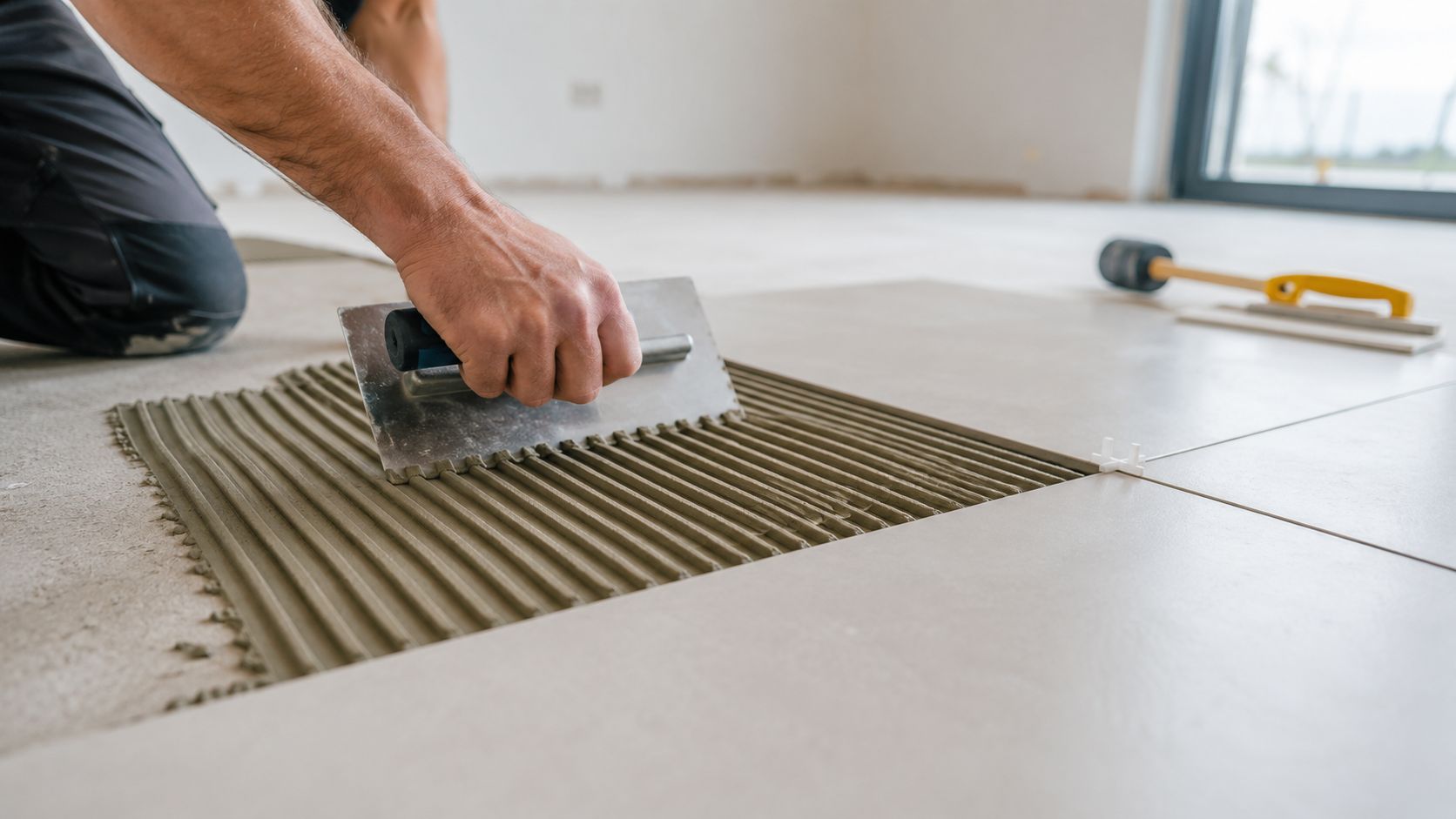
This obsessive attention to detail is something we live by at Sunny Day Pro Services, serving homeowners in communities like Needham and Weston. We’ve seen firsthand what a difference it makes. To see how we put these principles into practice, take a look at our guide on expert porcelain tile installation.
Long-Term Care for High-Traffic Tile
The great news? When your floor is installed correctly, keeping it looking brand new is surprisingly easy. A solid foundation makes all the difference in maintenance.
A great tile installation isn't just about how the floor looks the day it's finished. It's about how it performs five, ten, and even twenty years from now.
To get the most out of your investment, a simple cleaning routine is all you need.
- Sweep or vacuum regularly. This gets rid of the dirt and grit that can act like sandpaper, scratching and dulling your tile’s finish over time.
- Mop with the right cleaner. Stick to a pH-neutral cleaner made specifically for tile. Harsh chemicals like bleach or ammonia can eat away at your grout and damage the tile’s protective sealant.
- Reseal your grout. Unless you opted for epoxy grout, it's a good idea to reseal your grout lines every few years. This quick job keeps it waterproof and stain-resistant, preserving the integrity and beauty of your floors for the long haul.
Putting Together a Realistic Tile Budget
It’s easy to get swept up in the showroom, but before you commit to that perfect tile, it’s smart to map out the entire cost. Your total investment is more than just the price on the box; it's a mix of the tile itself, all the necessary installation materials, and the expert labor to put it all together.
Let’s break down where your money goes when planning for high-traffic tile flooring.
Breaking Down the Costs
The Tile Itself: This is where your budget will see the most variation. You can find quality ceramic tile starting around $5 per square foot, while high-end porcelain or natural stone can easily climb to $35 per square foot or more.
Installation Materials: Don't forget the unsung heroes that make a floor last. This includes everything from backer board and thin-set mortar to the right grout and sealant. These foundational supplies are crucial for a durable result.
Professional Labor: The cost of labor depends on your location and the complexity of your project, but it’s an expense you don’t want to skimp on.
A lot of homeowners think about going the DIY route to save a few dollars, but we’ve seen it lead to costly mistakes time and time again. A simple error in subfloor prep, especially in a busy entryway, can lead to cracked tiles and crumbling grout in just a matter of months.
Hiring a professional installer, particularly for busy homes in areas like Wellesley or Needham, is really an investment in your floor’s future. A pro ensures every step, from the subfloor up, is done correctly, so your beautiful new tile will stand up to daily life for years to come. You can get a better sense of how these factors add up by reading our guide on bathroom tile installation prices, which covers similar considerations.
Answering Your Top High-Traffic Tile Questions
Even after you've done your homework on high-traffic tile flooring, a few final questions are bound to pop up. It’s completely normal. Let's walk through some of the most common ones we hear from homeowners, helping you iron out those last few details before you commit.
What Is the Most Durable Tile for a Home with Large Dogs?
For a home with big dogs, I always point clients toward a color-body porcelain tile with a PEI rating of 4 or 5. Think of it as armor for your floor. The dense porcelain is incredibly tough and resists scratches from even the most active paws and claws.
The secret is the "color-body" part. This means the color goes all the way through the tile, so on the off chance a deep scratch does happen, it’s nearly impossible to spot. Also, make sure to choose a matte or lightly textured finish—it gives your furry friends the grip they need to play safely without slipping and sliding.
Is Dark or Light Grout Better for a Mudroom?
This is an easy one: for a mudroom or any entryway that sees a lot of action, a medium-to-dark grout is the only way to go. It's a lifesaver when it comes to hiding the inevitable dirt, slush, and grime that gets tracked in daily.
You can seal light-colored grout, but darker shades like charcoal or a deep gray will look cleaner with far less effort. If you want the ultimate in durability, ask your installer about using a high-performance epoxy or urethane grout. It’s a game-changer for stain and water resistance.
Think of your grout color as a strategic choice for your future cleaning schedule. A darker, high-performance grout in a busy entryway is one of the smartest low-maintenance decisions you can make.
Can I Install New Tile Directly Over My Old Floor?
While some sources might say this is okay, we strongly advise against it in high-traffic areas. It's a shortcut that almost always leads to trouble. Tiling over an old floor is like building a house on a shaky foundation—you're just covering up potential problems like hidden moisture, uneven spots, or structural weakness.
Those underlying issues are the number one cause of cracked tiles and crumbling grout lines. For a floor that's going to last for decades, the only right way to do it is to tear out the old flooring and properly prepare the subfloor. It’s the only way to guarantee the solid, stable base your new high-traffic tile flooring deserves.
How Can I Make My Tile Floor Less Cold?
Tile floors definitely have a reputation for being chilly, especially during those New England winters, but you have great options. The gold standard is an electric radiant floor heating system installed right under the tile. It provides a consistent, luxurious warmth you can control with a simple thermostat.
If that’s not in the budget, don't worry. A much simpler fix is using well-placed area rugs with high-quality pads. Adding that layer of softness and insulation in key walkways or under a kitchen island makes a huge difference in comfort.
Ready to transform your home with flooring that’s as tough as it is beautiful? The experts at Sunny Day Pro Services are here to help you select and install the perfect high-traffic tile solution. Request your free, no-obligation estimate today!

