
Best Porcelain Tile for Bathroom Floor: 2026 Buyer's Guide
Find the best porcelain tile for bathroom floor with expert comparisons on slip resistance, water absorption, PEI ratings, and finishes for every bathroom type.
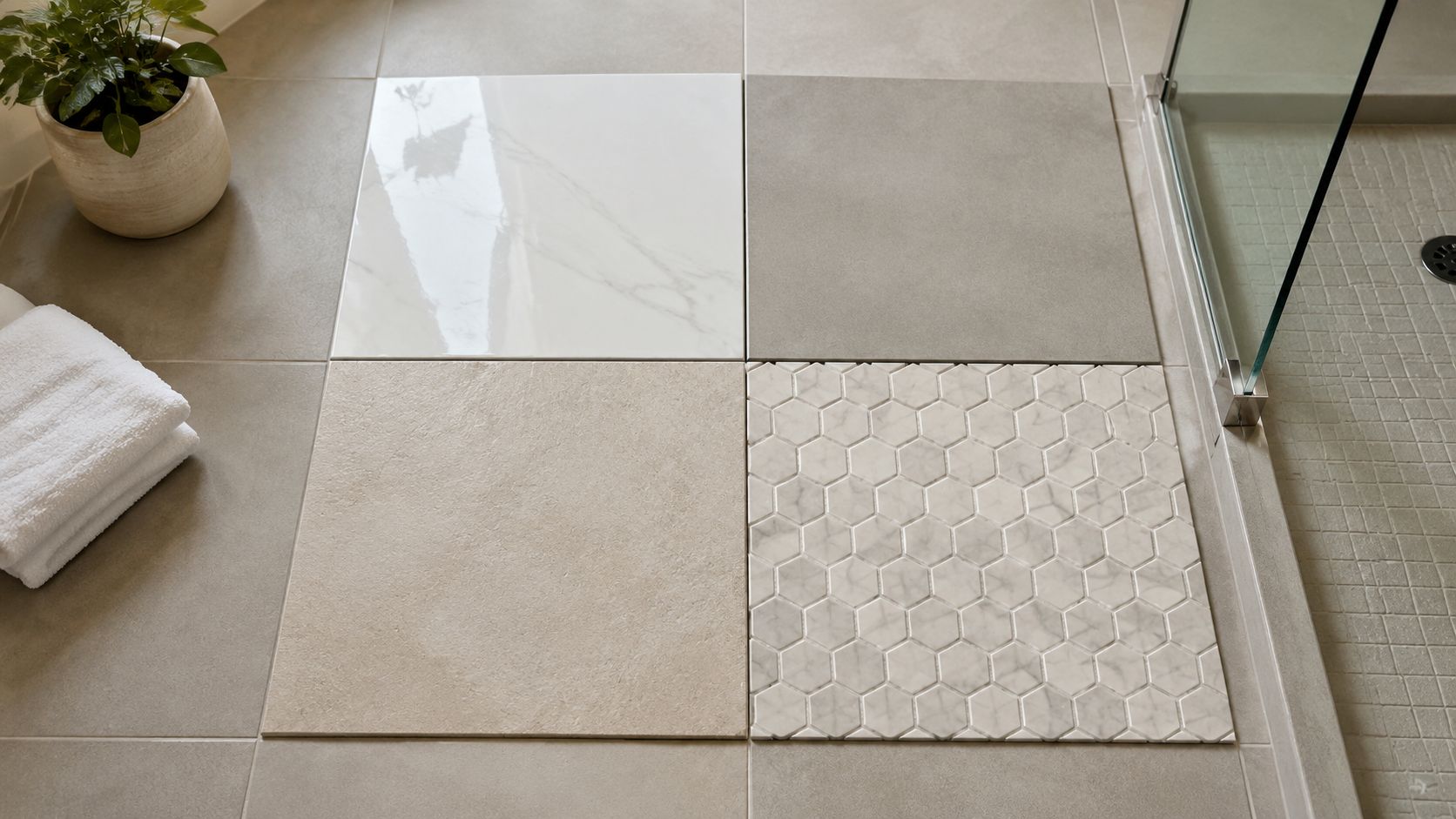
The most popular advice is also the least useful: choose porcelain because it's “waterproof,” then pick the color you like. Porcelain is a strong bathroom-floor material, but porcelain alone doesn't make a floor safe. A polished tile can meet the water-absorption standard and still become unpleasantly slick under wet, bare feet.
For a Massachusetts bathroom, where tracked-in grit, winter moisture, and frequent cleaning all test a floor, I'd read the specification sheet before looking at the display wall. The best porcelain tile for a bathroom floor combines an impervious body, verified wet traction, suitable wear resistance, and an installation plan that controls lippage and drainage.
Table of Contents
- Water absorption and BIa classification
- Wet DCOF
- PEI wear rating
- Thickness, calibration, and edge quality
- Are large-format porcelain tiles safe in a small bathroom?
- Is rectified porcelain better for a wet bathroom?
- Can polished porcelain go on a bathroom floor?
- Why does ceramic absorb more water than porcelain?
- Why can a tile labeled “floor tile” fail in a wet bathroom?
- Does radiant heat change the tile choice?
- Should I request a DCOF certificate?
Why Most Porcelain Tile Advice Gets Bathroom Floors Wrong
The usual advice starts with color and ends with the word “porcelain.” That approach misses the specification that determines whether a bathroom floor feels secure under wet, bare feet. Porcelain limits water absorption, but it does not guarantee slip resistance. For a Massachusetts bathroom, winter moisture, tracked-in grit, and repeated cleaning make the surface finish and test data more important than a showroom label.
Industry guidance classifies porcelain as impervious at water absorption of 0.5% or less, measured under ASTM C373. Low absorption helps limit moisture uptake, staining, swelling, and deterioration compared with more porous materials. Daltile's porcelain tile guidance explains why dense porcelain suits bathrooms, kitchens, and other moisture-prone rooms.
That number describes the tile body only. It does not show how the surface performs when wet. A polished porcelain tile can look refined and still become a poor choice beside a shower, where water and bare feet meet. Texture, grout spacing, floor slope, and drainage all affect traction after bathing.
Water resistance is not slip resistance
European standards place impervious porcelain in Group BIa with water absorption E ≤ 0.5%. Wet-floor guidance commonly uses a Dynamic Coefficient of Friction, or DCOF, of at least 0.42 for surfaces walked on while wet. Boise Bath's porcelain and ceramic comparison distinguishes these benchmarks clearly. They measure different performance traits and cannot substitute for each other.
“Porcelain,” “marble look,” and “floor tile” are marketing or product descriptions, not complete safety data. Ask for the absorption classification and wet DCOF test information. If the manufacturer supplies only lifestyle photos and general durability language, the key evidence is missing.
Installer's rule: Approve a bathroom floor only after checking wet traction, absorption classification, surface finish, and intended application. A sample board cannot answer those questions.
Format creates another trade-off. Large tiles reduce grout joints and can make a small bathroom look calmer, but grout lines also add contact points underfoot. Guidance on non-slip bathroom flooring notes that small-format mosaics can improve grip because more grout lines add traction in wet areas. This format comparison from Boise Bath supports a practical conclusion: choose the format around water collection, household users, and surface texture, not appearance alone.
The Four Technical Specs That Matter Most
A bathroom tile can look perfect in a showroom and still be a poor floor choice. Read the technical sheet first. Check water absorption, wet traction, glaze wear, and dimensional consistency before judging color or pattern.
| Specification | Minimum Rating | Ideal Bathroom Rating | What It Controls |
|---|---|---|---|
| Water absorption | ≤ 0.5% | BIa or impervious | Moisture uptake and resistance to staining or deterioration |
| Wet DCOF | ≥ 0.42 | 0.50 or higher in demanding wet zones | Traction when the surface is wet |
| PEI wear rating | PEI 1 or PEI 2 for light residential use | Select according to traffic and grit exposure | Glazed-surface abrasion resistance |
| Thickness and calibration | Consistent body and documented dimensions | Rectified, consistently gauged tile where layout demands it | Lippage, grout alignment, and doorway transitions |
Water absorption and BIa classification
True porcelain has water absorption at or below 0.5% by weight. Under ISO 13006 and EN 14411, that places it in Group BIa. BuildMat Insight's bathroom-floor durability guidance explains why this dense body suits wet rooms, curbless showers, and areas around tubs.
Look for “BIa,” “impervious,” or a stated absorption result on the technical sheet. “Water-resistant” is marketing language unless the manufacturer provides a documented classification.
Wet DCOF
For an interior floor that will get wet, require wet DCOF of at least 0.42. In showers, beside tubs, and in rooms used by children or older adults, choose a stronger margin, commonly 0.50 or higher, when the manufacturer documents it. Crossville's explanation of wet DCOF also explains why polished porcelain can become slippery when wet.
DCOF is a measured wet-condition friction value. Matte, textured, and “non-slip” labels do not replace test information.
PEI wear rating
PEI measures glazed-surface abrasion resistance on a 0-to-5 scale. Light residential bathrooms commonly fall around PEI 1 or PEI 2, while PEI 5 is associated with heavy commercial or institutional traffic. National Tile Authority's PEI explanation outlines the scale and its intended applications.
Choose a higher rating for busy households, especially where outdoor grit reaches the bathroom through a mudroom or adjacent entry. PEI and absorption measure different properties. This explanation of PEI versus water absorption shows why abrasion resistance does not prove that the tile has a low-absorption body.
Thickness, calibration, and edge quality
Thickness affects doorway transitions and handling. Calibration affects how consistently pieces fit together. Rectified edges can create narrow, orderly grout joints, but they require a flatter substrate and more disciplined installation. Ask the installer how lippage will be controlled, especially with long planks or large-format pieces.
A technically strong tile can still look poor over an uneven floor. For guidance on tile selection in demanding areas, review this guide to high-traffic tile flooring.
Comparing Porcelain Tile Finishes and Formats
Finish controls the daily experience more than the showroom sample suggests. A polished surface reflects light and can make a small powder room feel refined, but that visual benefit comes with a wet-traction trade-off. Matte and textured surfaces usually provide a more reliable barefoot experience, though deeper texture can collect soap residue and require more deliberate cleaning.
| Finish / Format | Wet Slip Resistance | Cleaning Effort | Best Bathroom Application |
|---|---|---|---|
| Polished | Often a poor choice when wet unless test data supports it | Low surface friction can make residue visible | Powder rooms and walls |
| Honed | Better than polished, but verify wet DCOF | Moderate | Low-moisture bathrooms and refined floor designs |
| Matte | Generally more practical for wet floors | Moderate | Family bathrooms and primary bathrooms |
| Textured or structured | Strongest option when the wet rating is documented | Higher if texture is pronounced | Shower-adjacent floors and accessibility-focused rooms |
| Small mosaic | Grout joints add useful contact points | More grout to maintain | Wet rooms and shower floors |
| Large format | Depends heavily on surface texture and layout | Fewer grout joints to scrub | Open floor areas with a flat substrate |
Format changes the safety equation
Large-format porcelain can deliver clean sightlines and fewer grout joints. That's attractive in a small bathroom, but a big tile doesn't automatically make the room feel safer or perform better. It also leaves less tolerance for an uneven subfloor and can complicate slopes around drains.
Small mosaics, including square pieces and hexagons, create more joints. Those joints can help your foot find purchase, especially near a shower entrance. The cost is maintenance. More grout means more lines to clean and inspect.
Wood-look planks need layout discipline
Wood-look porcelain planks add warmth without using natural wood in a wet room. Their linear shape can make a narrow bathroom appear longer when the layout runs along the room's visual axis, but the installer must plan cuts, transitions, and drainage carefully.
Long planks also make lippage easier to notice. A slightly uneven substrate or an aggressive offset can create toe-catching edges and uneven visual lines. Use the manufacturer's layout guidance and have the installer verify the floor before setting tile.
Texture is useful only when it's paired with a documented wet rating. A tile can feel rough in your hand and still lack the published performance information you need.
Matching Tile to Your Bathroom Type and Lifestyle
The household should determine the tile, not the other way around. A quiet powder room and a busy family bathroom may share the same design language, but they don't face the same water, traffic, or safety demands.
| Bathroom Type | Recommended DCOF | Best Finish | Ideal Format | Key Priority |
|---|---|---|---|---|
| High-traffic family bathroom | 0.50 or higher preferred | Matte or textured | Medium-format tile or practical mosaic zones | Grip, cleanability, and durability |
| Low-traffic powder room | Verify rating, with less wet exposure | Honed or polished can work | Large format | Appearance and visual spaciousness |
| Wet room or curbless shower | At least 0.42, stronger margin preferred | Textured or structured | Small mosaic near drainage | Wet traction and slope control |
Family bathrooms need margin
Children track water beyond the tub. Adults step out of showers with wet feet. Older family members may have less tolerance for a slick surface. In that setting, I'd choose a matte or textured porcelain with wet DCOF of 0.50 or higher, when documented, rather than chasing a polished marble appearance. Use medium-format pieces for easier handling and reserve smaller mosaics for wettest zones.
A through-body porcelain can also make sense in a busy home because chips are less visually disruptive when the color extends through the tile body. Check the manufacturer's construction details instead of assuming every porcelain product has the same composition.
Powder rooms allow more design freedom
A powder room has less standing water and fewer wet barefoot transitions. That doesn't make any tile acceptable, but it gives you more room to prioritize a large-format polished or honed surface if the room's use supports it. Keep the tile away from the assumption that “floor tile” means safe in every condition.
Radiant heating is compatible with many tile systems, but the installer still needs to verify the tile, mortar, membrane, and movement-joint system as a complete assembly. Thickness affects heat response and doorway transitions, so make that decision before ordering material.
For a practical look at traction-focused choices, compare these slip-resistant bathroom tile options.
Installation and Maintenance Considerations
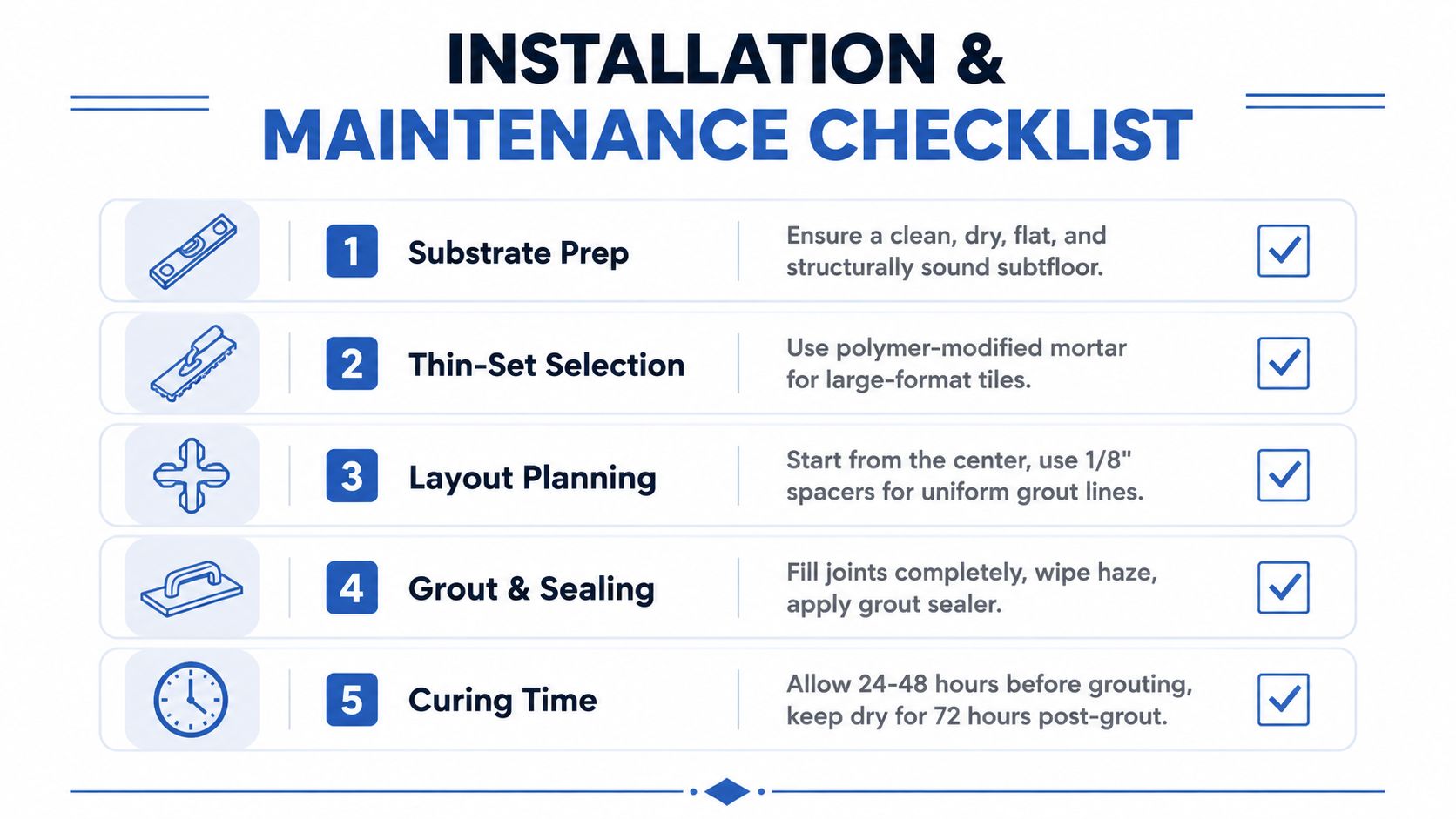
A good tile can't rescue a poor installation. Bathroom flooring needs a clean, dry, flat, structurally sound substrate, along with a compatible waterproofing or uncoupling system. Cement backer board or a waterproof uncoupling membrane such as Schluter-DITRA may be appropriate depending on the assembly, but the installer must follow the system manufacturer's instructions.
Prepare the floor before setting tile
Porcelain has low absorption, so mortar selection matters. Use a polymer-modified thin-set where the tile and installation system call for it, and use an appropriate trowel notch for the tile size. Large-format pieces need careful coverage to reduce hollow spots and lippage.
Rectified tile and long planks deserve particular attention. For tiles over 12 inches, a one-third offset is generally safer than a 50% brick pattern because many long tiles have some warpage. The exact layout still depends on the product instructions and the floor's conditions.
Choose grout for the room's reality
Epoxy grout offers strong stain resistance in wet areas, while high-performance cementitious grout can be a sensible choice when the budget and maintenance plan favor it. Grout color affects how quickly residue and discoloration become visible. A medium neutral often offers a more forgiving balance than stark white or very dark grout.
Clean porcelain with a pH-neutral product that won't attack grout or associated sealers. Steam mops can stress grout and surrounding installation materials over time, so I wouldn't make one part of a routine bathroom-care plan.
Porcelain generally doesn't need the same sealing routine as porous natural stone. Grout joints may still need protection, depending on the grout type and manufacturer's guidance. Discuss coverage, curing, movement joints, and cleaning products with the installer, and review professional porcelain tile installation practices before work begins.
Situational Recommendations for Every Bathroom
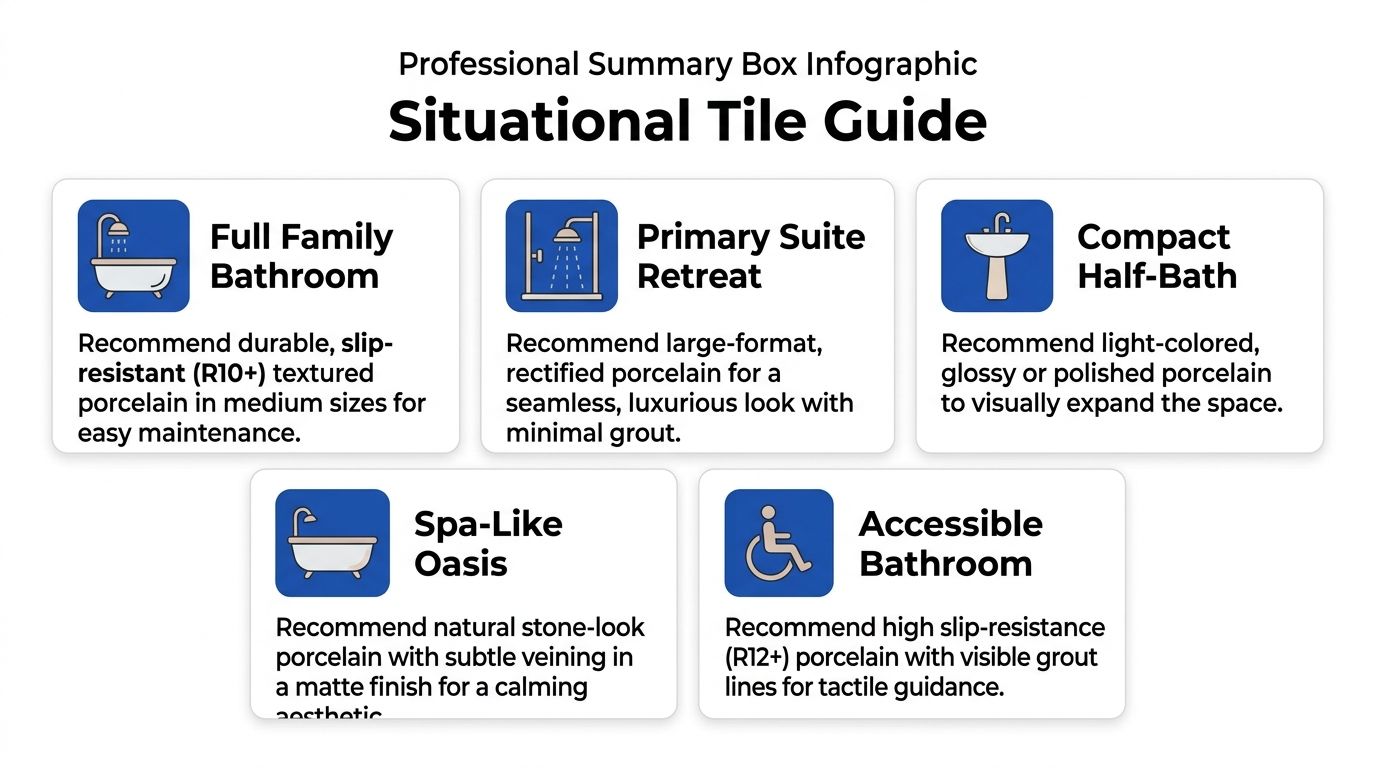
The right tile profile changes with the room and the people using it. I'd make these choices for common Massachusetts remodeling situations, then verify the specific product sheet before ordering.
| Situation | Recommended DCOF | PEI | Finish and Format | What to Avoid |
|---|---|---|---|---|
| Full family bathroom | 0.50 or higher preferred | PEI 2 or higher as traffic requires | Matte 24x24 or medium-format textured porcelain | Polished floor tile near the tub |
| Luxury primary ensuite with heated floors | At least 0.42, stronger margin in wet zones | Residential rating suited to household use | Rectified matte stone-look porcelain, larger format outside shower | Ignoring substrate flatness and transition height |
| Small powder room | Verify the product's wet rating | Light residential rating may suit low traffic | Large-format honed or polished porcelain | Using the same finish in a regularly soaked room |
| Aging-in-place bathroom | 0.50 or higher preferred | Choose for household traffic | Textured porcelain with smaller formats near wet areas | Large-format polished tile |
| Rental bathroom | At least 0.42, with practical margin preferred | Durable residential selection | Matte, forgiving medium-format tile | Fragile finishes and high-maintenance grout colors |
Practical picks by scenario
For a mid-range family remodel, a matte 24x24 porcelain with documented wet DCOF around 0.55 is a sensible target when that product is available. It offers a balanced visual scale, fewer joints than a mosaic, and more grip than a polished finish. Use a smaller, textured format where water consistently gathers.
A luxury primary ensuite can use large-format rectified porcelain over heated floors, but the installer must coordinate the heating assembly, mortar coverage, flatness, and transitions. I'd choose a stone-look matte surface rather than a high-gloss floor, especially outside the direct shower area where wet feet still travel.
For a small powder room, polished 12x24 porcelain can be acceptable if water exposure is limited and the manufacturer's information supports the application. Aesthetics can lead here, because the room doesn't function like a curbless wet room.
An aging-in-place bathroom deserves the clearest safety bias. Choose textured porcelain, visible grout joints, controlled drainage, and a documented wet DCOF of 0.50 or higher when possible. Don't use a large polished field tile just because it makes the room look expansive.
A rental property needs a forgiving surface, practical grout, and a product that tolerates routine cleaning. Mid-format matte porcelain with an impervious body is usually easier to live with than an elaborate polished layout. I'd avoid very dark grout if maintenance visibility and turnover cleaning are concerns.
Frequently Asked Questions
Are large-format porcelain tiles safe in a small bathroom?
They can be, but size doesn't establish safety. Verify wet DCOF, choose a surface with appropriate texture, and make sure the installer can create correct slopes and a flat setting bed. Smaller mosaics may offer more traction through additional grout joints.
Is rectified porcelain better for a wet bathroom?
Rectified edges create precise, machine-finished sides and can produce uniform joints. They don't make the tile more slip-resistant or more waterproof. Rectified products need careful layout and substrate preparation because unevenness becomes more visible.
Can polished porcelain go on a bathroom floor?
It can work in a low-moisture powder room, but sealing doesn't solve a polished surface's wet-traction problem. In a bathroom used for showers or tubs, I'd choose matte or textured porcelain unless the manufacturer provides suitable wet-performance data.
Why does ceramic absorb more water than porcelain?
Porcelain is classified as impervious at 0.5% absorption or less, while ceramic tiles are commonly cited in the approximate 0.5% to 7% range. Daltile's comparison explains why the denser porcelain body is favored for moisture-prone floors.
Why can a tile labeled “floor tile” fail in a wet bathroom?
“Floor tile” describes an intended use category, not necessarily a suitable wet DCOF. Check absorption, wet traction, finish, and installation requirements separately.
Does radiant heat change the tile choice?
It can affect thickness, mortar selection, movement planning, and transition heights. Confirm compatibility across the complete heating and tile system before installation.
Should I request a DCOF certificate?
Yes, especially for a shower-adjacent floor, curbless bathroom, or accessibility-focused remodel. A showroom description isn't a substitute for documented wet testing.
Sunny Day Pro Services installs porcelain, ceramic, marble, and granite tile for bathroom floors and complete remodels across Wayland, Newton, Needham, Wellesley, Weston, and nearby Massachusetts communities. For help comparing tile specifications, preparing the substrate, and installing a floor built for wet-foot traffic, visit Sunny Day Pro Services to request a quote and schedule your project.

