
The Definitive Guide to Slip-Resistant Bathroom Tile in 2026
Choose the perfect slip resistant bathroom tile for your remodel. Our guide covers safety ratings, materials, and installation for a safe and stylish home.
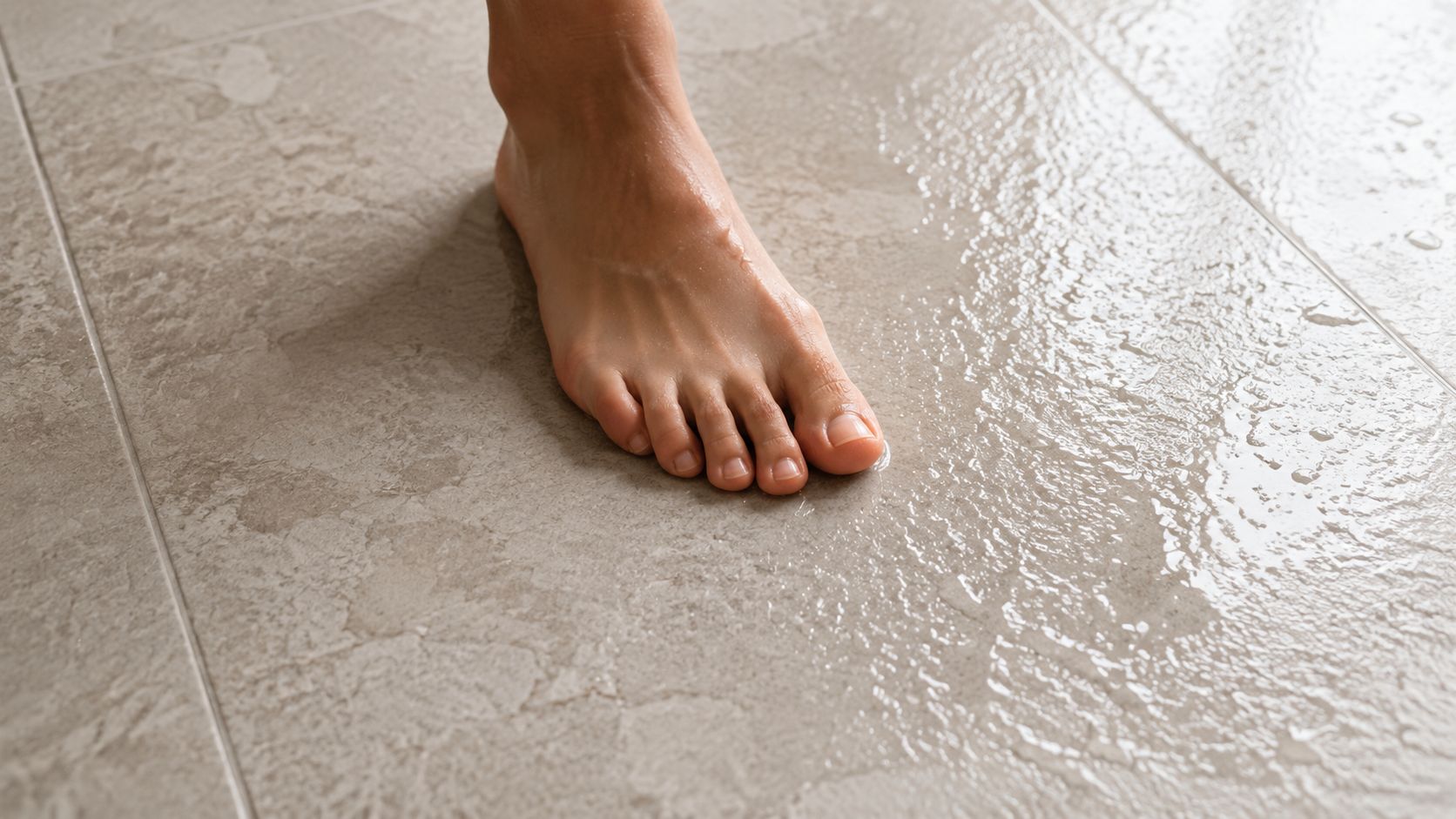
When you’re planning a bathroom remodel, it's easy to get lost in the beautiful finishes and dream designs. But for so many Massachusetts homeowners, the real challenge is finding that perfect balance between style and genuine safety. Let's talk about what slip-resistant bathroom tile actually means and how to choose one that protects your family in one of the most accident-prone rooms in the house.
This guide will break down the technical ratings, compare the best materials, and explain why professional installation is the final, crucial step to ensuring long-term peace of mind. We'll give you the confidence to choose a floor that's not just beautiful, but fundamentally safe.
Table of Contents
- Why Porcelain Is the King of Bathroom Tile
- The Critical Role of Finish and Texture
- Comparing Slip-Resistant Tile Materials and Finishes
- Don't Forget About Grout Lines
- Is any textured tile automatically slip-resistant?
- Can I make my existing bathroom tile slip-resistant?
- Are smaller tiles safer than large-format tiles?
- How much more does slip-resistant tile cost?
Why Bathroom Tile Safety Is More Than Surface Deep
A stunning bathroom is a wonderful thing, but a safe one is non-negotiable. The statistics are sobering: the CDC reports that falls are a leading cause of injury, and the bathroom is one of the highest-risk areas in any home. For those of us in communities like Wellesley, Newton, or Weston, where we invest so much into our homes and family well-being, choosing the right flooring is one of the most important decisions in a remodel.
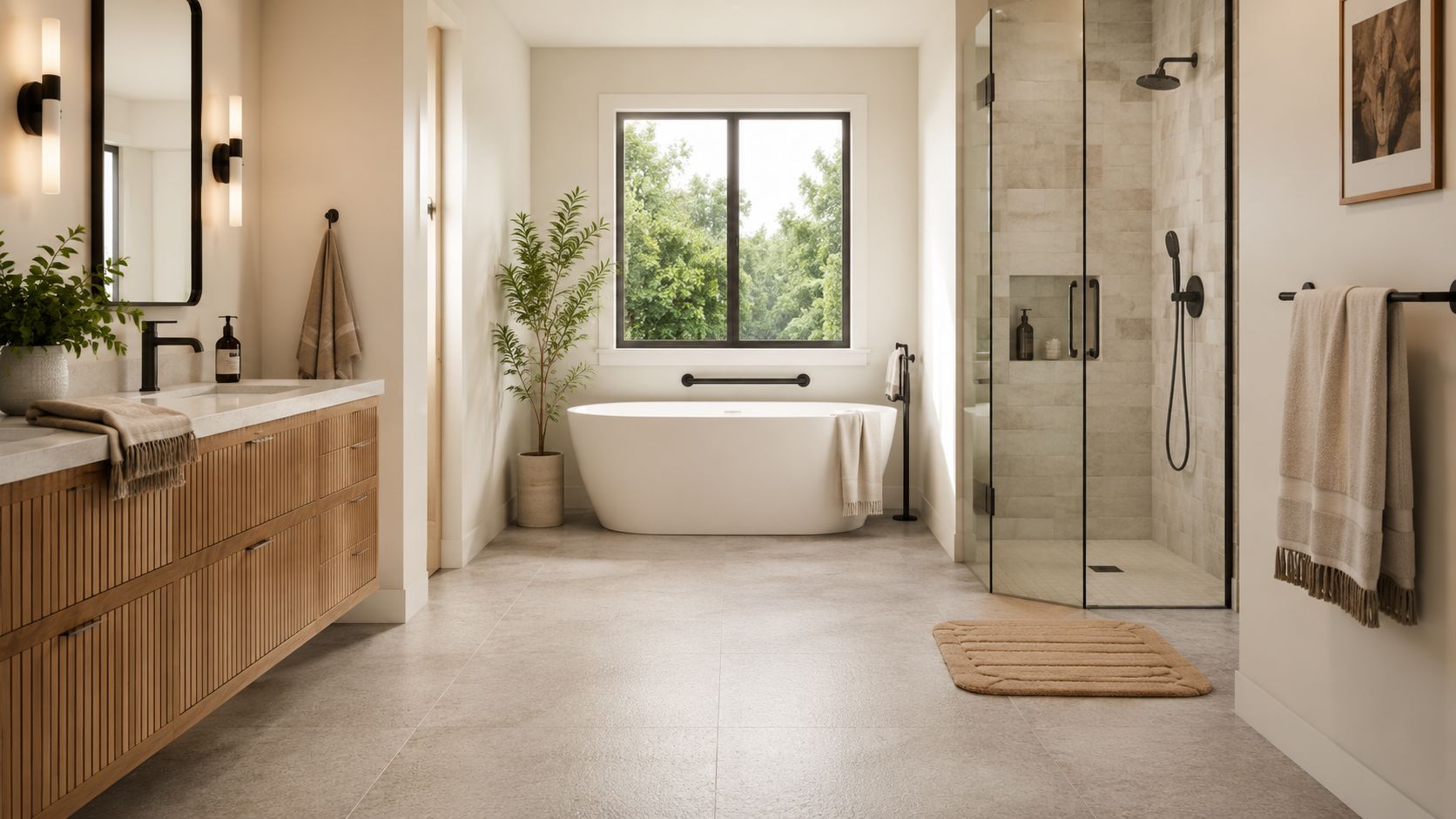
As a professional with years of hands-on experience, my goal is to cut through the confusing industry jargon and give you practical, straightforward advice. It's time to move past generic tips and build the confidence you need to select a floor that’s every bit as safe as it is beautiful.
From Style to Security: Creating a Safer Space
Choosing a slip-resistant tile isn't just about preventing a fall; it's about creating a space that feels secure for everyone, from toddlers splashing in the tub to older parents visiting for the weekend. A tile’s texture, material, and finish all work together to create grip, especially when the floor is wet and soapy.
Think of it this way: The goal isn't to find a "non-slip" floor—a true impossibility. The goal is to find one that is reliably slip-resistant, meaning the tile's surface maintains a high degree of friction even when wet.
Grasping this concept is the first step. It shifts the focus from simply picking a tile that looks like it has texture to finding one that has been tested and rated for safety.
Here’s what you need to focus on:
- Understanding Safety Ratings: We’ll decode the official numbers and acronyms (like DCOF) that prove a tile can perform when wet.
- Choosing the Right Material: You'll discover why some materials, like porcelain, are consistently a top choice for bathrooms and showers.
- The Role of Professional Installation: We’ll look at how the right subfloor prep and grout work are essential for locking in the safety of your new floor for years to come.
With this knowledge, you'll be ready to select and install a bathroom floor that not only enhances your home’s value but, more importantly, protects the people living in it.
Decoding the Numbers That Keep Your Bathroom Safe
What actually makes a tile "slip resistant"? It's not just a marketing term. It’s all about friction. Think about the tires on your car—good tread helps them grip a wet road. A slip-resistant bathroom tile works on the same principle, using its surface texture to create friction and provide grip, even when it’s wet and soapy.
But how do you know if a tile has enough grip? You don't have to guess. The industry uses a specific, scientific test to measure this. For homeowners, the most important rating to understand is the Dynamic Coefficient of Friction (DCOF).
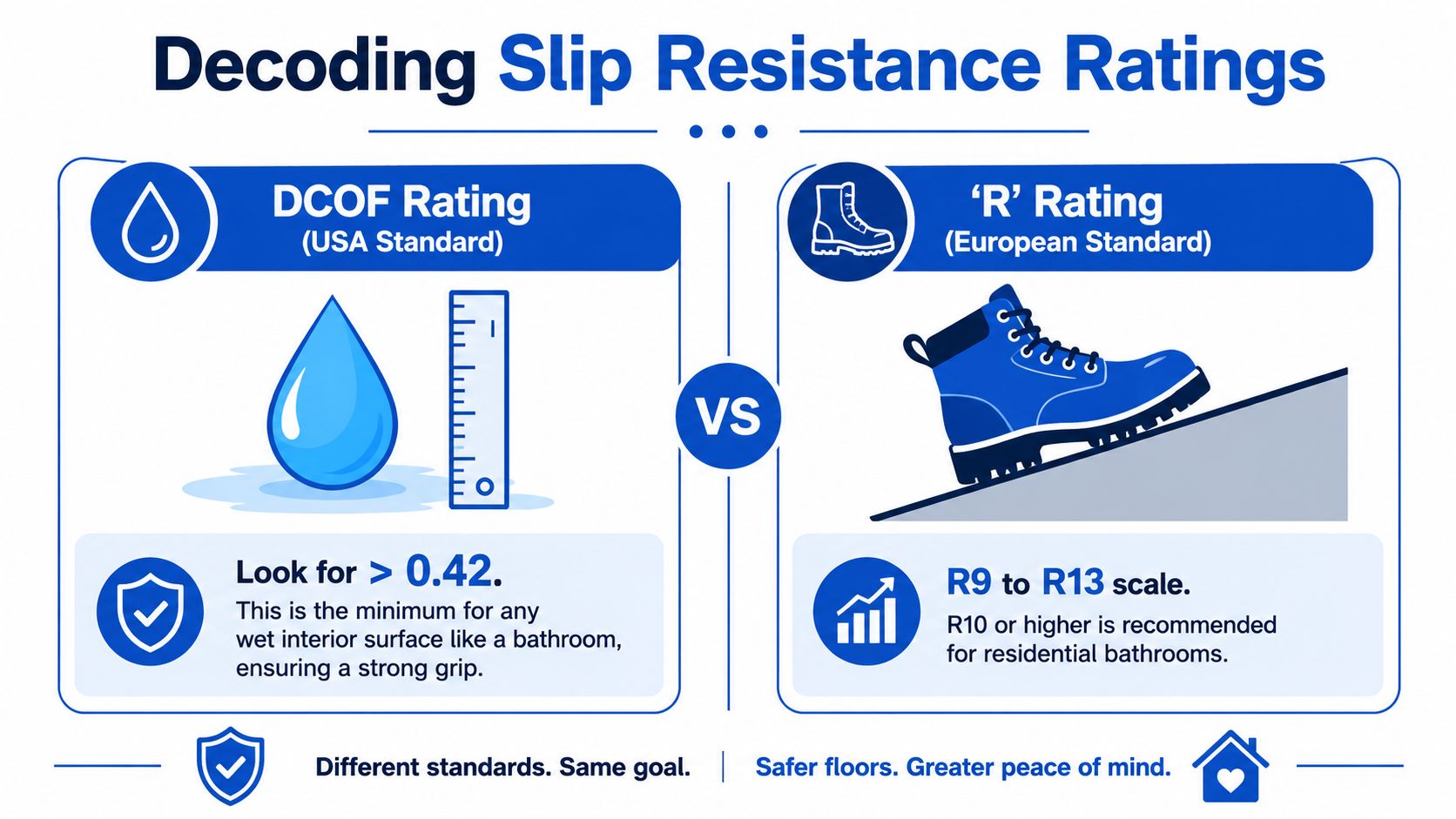
The Magic Number for Bathroom Safety: DCOF ≥ 0.42
The DCOF test is designed to mimic real-world conditions. It measures a tile's grip while an object is moving across its wet surface, simulating what happens when you walk across a damp bathroom floor. It's the most reliable indicator we have for preventing slips.
When it comes to safety, the number you need to look for is 0.42. This is the official industry standard, not just a friendly suggestion.
According to the American National Standards Institute (ANSI) A326.3 standard, any tile installed on an interior surface that gets wet, like a bathroom floor, must have a DCOF rating of 0.42 or greater. This test is even done with a slightly soapy solution, so it truly reflects the conditions you'll find in your own home.
When you're shopping for tile, just look at the product's spec sheet. If you see "DCOF > 0.42," you can be confident it meets the modern safety benchmark for your bathroom.
What About the European 'R' Rating?
While DCOF is the gold standard here in the U.S., you might also come across the European 'R' rating, especially with imported tile. This system tests slip resistance using a ramp set at different angles, with ratings from R9 to R13. For a residential bathroom, a tile with an R10 or R11 rating provides excellent, reliable traction and great peace of mind.
Getting familiar with both the DCOF and 'R' ratings puts you in the driver's seat. You’ll be able to read a technical spec sheet and know for certain that you're choosing a floor that looks great and, more importantly, helps keep your family safe. For a deeper dive into what makes a tile installation truly secure, check out our guide on other factors that contribute to a truly slip-resistant tile installation.
Choosing the Best Materials for a Non-Slip Bathroom Floor
When it comes to creating a safe, non-slip bathroom floor, the material you choose is everything. It’s easy to get caught up in looks, but how a tile performs when wet is what truly matters.
Why Porcelain Is the King of Bathroom Tile
If there's one all-star material for bathroom floors, it’s porcelain. Its magic comes from being incredibly dense. Porcelain is fired at much higher temperatures than regular ceramic, which makes it far less porous and gives it a water absorption rate of less than 0.5%.
What does that mean for your bathroom? It means water sits on the surface instead of seeping in, which is why porcelain is the go-to choice for busy, wet spaces like a family bathroom. For homeowners here in Massachusetts, where we deal with everything from summer humidity to winter slush, porcelain's durability is a huge plus.
The Critical Role of Finish and Texture
But the material is only half the battle. The tile’s surface finish is just as crucial for preventing slips.
A high-gloss, polished finish might look stunning in a showroom, but on a wet bathroom floor, it’s a recipe for disaster. For true peace of mind, you should always choose a matte or textured finish over a polished one.
Matte finishes have a naturally rougher, non-reflective surface that provides friction right out of the box. Textured tiles take that a step further, with three-dimensional patterns that mimic wood grain or stone. These textures do more than just look good—they actively channel water away from under your feet and improve your grip. Many manufacturers have even developed special surfaces that bake a high-traction texture directly into the tile for permanent slip resistance.
Comparing Slip-Resistant Tile Materials and Finishes
Don't Forget About Grout Lines
Finally, don't underestimate the power of tile size. It might seem like a small detail, but it makes a big difference.
Smaller tiles—like the two-inch mosaics you often see on shower floors—mean more grout lines. Think of these lines as a built-in traction system. Each line provides an extra edge for your feet to grip while also helping water drain away more efficiently. While a large-format tile can be perfectly safe if it has a high slip-resistance rating, using smaller tiles is an easy and effective way to boost safety, especially in the shower.
To see what the experts say about tile safety, you can learn more about the critical safety factors for porcelain tile and feel confident in your choice.
How Professional Installation Guarantees Lasting Safety
So, you’ve done your homework. You’ve picked out the perfect slip-resistant bathroom tile, you know its DCOF rating, and you’ve landed on a finish that offers fantastic grip. That's a great start, but picking the right tile is only half the battle. Even the highest-rated tile can fail if it isn't installed correctly, which is why hiring a professional isn't a splurge—it's essential for your family's safety.
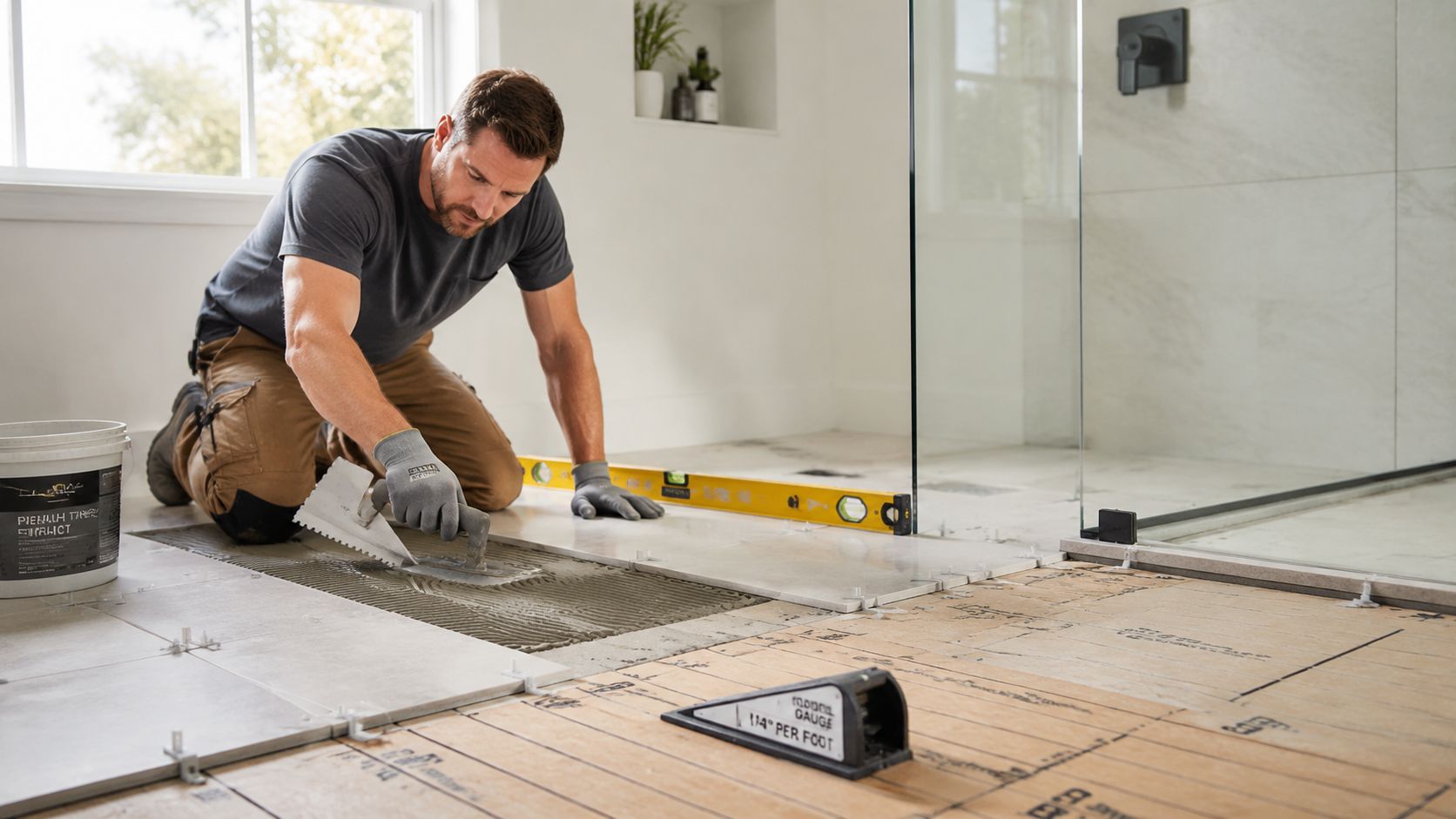
Think of it this way: your tile provides the grip, but the installation is what makes the entire floor a single, solid, and watertight system. A pro ensures every component, from the subfloor you can't see to the grout lines you can, works together to create a surface that’s built to last. This is what truly protects your investment and your family.
The Foundation of a Safe Floor: Subfloor Prep
The most important part of any tile job happens before a single tile is set. A professional installer's work begins with preparing the subfloor, which is the absolute bedrock of a safe and durable bathroom floor.
A crucial step here is creating the proper slope. Any area near a shower or tub needs a subtle, precisely calculated grade to direct water toward the drain. If the floor is perfectly flat, water will pool, creating a slick hazard that completely defeats the purpose of your slip-resistant tile.
A professional installer understands that a successful bathroom floor is a complete system. It’s not just about setting tiles; it’s about managing water, ensuring structural integrity, and creating a surface built to last.
This is where experience is non-negotiable. A seasoned pro knows exactly how to level an uneven subfloor and establish the perfect grade, creating an ideal canvas for your tile.
The Details That Make the Difference
Beyond a solid subfloor, a number of technical details are critical for ensuring the safety and longevity of your new bathroom floor. A minimum slope is non-negotiable near drains to keep water moving. Grout lines should be consistent and filled with a high-quality, water-repellent grout to block moisture from seeping underneath and compromising the adhesive. You can learn more about how these specifics contribute to a safer surface by reading up on tile slip resistance ratings.
Here are a few things a professional gets right every single time:
- The Right Adhesives: A pro doesn't just grab any mortar. They choose a specific thin-set based on your tile material and subfloor to create a permanent, unyielding bond.
- Expert Grouting: They use premium, mold-resistant grout and apply it meticulously, creating a watertight seal that locks out moisture and prevents tile failure down the road.
- Proper Curing Time: Rushing the curing process is a classic DIY mistake. Professionals know that the tile, grout, and any sealers need adequate time to harden and fully solidify the entire installation.
By handling each of these steps with practiced precision, an installer transforms a simple box of tiles into an integrated, long-lasting flooring system. For busy homeowners in the greater Boston area, investing in professional work is the surest path to a beautiful and genuinely safe bathroom. To see what this process involves, check out our guide on professional bathroom tile installation.
Long-Term Safety: How to Maintain Your Slip-Resistant Tile
You've made a great choice by installing slip-resistant tile in your bathroom—it's a huge step toward a safer home. But the work isn't quite done. To keep that tile safe for the long haul, you have to maintain it properly.
Think of it this way: your tile’s texture is like the tread on a good set of tires. If it gets clogged with mud—or in this case, soap scum, body oils, and hard water deposits—it can't grip the road. Over time, this buildup creates a deceptively smooth and dangerous film, completely covering the grippy surface you paid for.
The good news is, keeping that grip doesn't require harsh chemicals or hours of scrubbing. A simple, consistent routine is all you need.
The Right Cleaning Routine to Preserve Grip
The secret to maintaining slip resistance is cleaning regularly with the right products. Many people reach for abrasive powders or steel wool, but those will just scratch and damage the tile's surface. On the other hand, some common acidic cleaners can slowly eat away at your grout.
Your goal is to lift dirt and soap scum off the surface without leaving anything behind. A film left by the wrong cleaner can be just as slippery as the grime you were trying to remove.
For weekly cleaning, stick with a pH-neutral cleaner and warm water. It’s strong enough to dissolve the gunk without being corrosive. Just apply the solution, give the floor a gentle scrub with a soft-bristle brush (never metal!), and pay special attention to the grout lines. Then, rinse everything thoroughly with clean water to wash it all away.
What to Avoid to Keep Your Floor Safe
Knowing what not to use is just as important as knowing what to use. Certain cleaning products will absolutely ruin the safety features of your floor, leaving behind an invisible hazard.
Steer clear of these major offenders:
- Wax-Based Cleaners: Any product that promises a "brilliant shine" is a red flag. These cleaners often contain waxes or acrylics that fill in the microscopic textures your feet rely on for grip, making the floor incredibly slick.
- Oil Soaps: Great for wood, terrible for tile. Oil-based soaps leave a greasy residue that not only makes the floor slippery but also attracts even more dirt.
- Harsh Abrasives: Scouring pads and powdered cleansers might seem like a good idea for tough grime, but they will permanently sand down and smooth out your tile's textured finish, reducing its friction for good.
By sticking to a simple cleaning schedule and avoiding these problem products, you'll ensure your slip-resistant bathroom tile keeps your family safe for years. For an in-depth guide, check out our post on the best way to clean tile floors without compromising their performance.
Ready to Start Your Safe and Stylish Bathroom Remodel?
Choosing the right slip-resistant bathroom tile is about more than just looks—it’s about creating a secure foundation for one of the most-used rooms in your home. You’re now armed with the right information, from decoding DCOF ratings to understanding why materials like porcelain are a top choice for durability.
By focusing on a tile’s texture, finish, and professional installation, you’re not just designing a beautiful bathroom. You're making a smart investment in your family's safety and your home's long-term value.
The right tile is the bedrock of a great bathroom. It’s what allows you to truly relax, knowing every detail was chosen with both care and expertise.
For our fellow homeowners here in Massachusetts, taking that next step is easy. At Sunny Day Pro Services, we bring years of hands-on experience and craftsmanship to communities like Wellesley, Newton, and Weston. We've seen firsthand how the right installation can make all the difference.
Our team handles everything, from helping you select the perfect tile to ensuring a flawless, watertight finish. We manage the details so you don't have to worry.
Your Next Step to a Safer Bathroom
Your dream bathroom should be a place of comfort, not a source of worry. Let's work together to find that perfect balance of high-end style and everyday safety.
Ready to transform your space with confidence? Contact us for a no-hassle quote today. We’re here to help you build the beautiful, secure bathroom your family deserves.
Frequently Asked Questions About Slip-Resistant Bathroom Tile
Even after you've done your homework, a few last-minute questions always seem to pop up right before you pull the trigger on a tile choice. We get it. To help clear up any lingering doubts for our fellow Massachusetts homeowners, here are the answers to the questions we hear most often.
Is any textured tile automatically slip-resistant?
It’s a common and logical assumption—if a tile feels rough, it must be safe. But looks can be deceiving. While a good texture certainly helps with grip, it's not the official seal of approval for safety.
True slip resistance is a quality that’s scientifically tested and certified. The only way to know for sure is to check the tile's product specifications for its Dynamic Coefficient of Friction (DCOF) rating. For a bathroom floor, you need to see a DCOF of 0.42 or higher. That number is the real proof; a textured finish without it is just a design choice.
Can I make my existing bathroom tile slip-resistant?
What if you're not remodeling, but just want to make your current bathroom safer? You're in luck—it is possible. Professionals can apply special anti-slip treatments, etches, or coatings that create microscopic texture on a tile's surface, dramatically improving its grip when wet.
That said, these treatments aren't all created equal, and their longevity can vary. For a new project, your best bet is always to start with a tile that was manufactured to be slip-resistant. If you're working with an existing floor, bring in a pro to evaluate the tile and apply a durable, high-quality treatment that will last.
Are smaller tiles safer than large-format tiles?
In many cases, yes. It's a simple trick of the trade that works remarkably well, especially on shower floors. Think about those classic two-by-two-inch mosaic tiles you see in so many showers—the reason they're so popular is built-in safety.
Installing smaller tiles means you have far more grout lines crisscrossing the floor. Every single one of those lines acts as a tiny trench, helping channel water away while giving your feet extra edges to grip. While a large-format tile with a high DCOF is perfectly safe, using smaller tiles is a great way to add another natural layer of traction.
How much more does slip-resistant tile cost?
This is the best part: the cost difference is usually negligible, if there's any at all. Safety isn't a premium "add-on" feature anymore; it's an industry standard that manufacturers have integrated into their production lines.
What really drives the price of a tile is the material (like porcelain versus a rare natural stone), the brand's reputation, where it was made, and the intricacy of the design. Choosing a tile with a proper DCOF rating is one of the smallest financial decisions you'll make in your project, but it delivers one of the biggest returns: peace of mind for your family's safety.
At Sunny Day Pro Services, we believe a beautiful bathroom should also be a safe one. If you’re ready to start your project with a team that prioritizes both expert craftsmanship and your family’s well-being, we’re here to help.

