
Cleaning Products for Tile Floors That Actually Work
Find the best cleaning products for tile floors, from pH-neutral daily sprays to grout-safe deep cleaners. Practical picks for ceramic, porcelain, and stone.
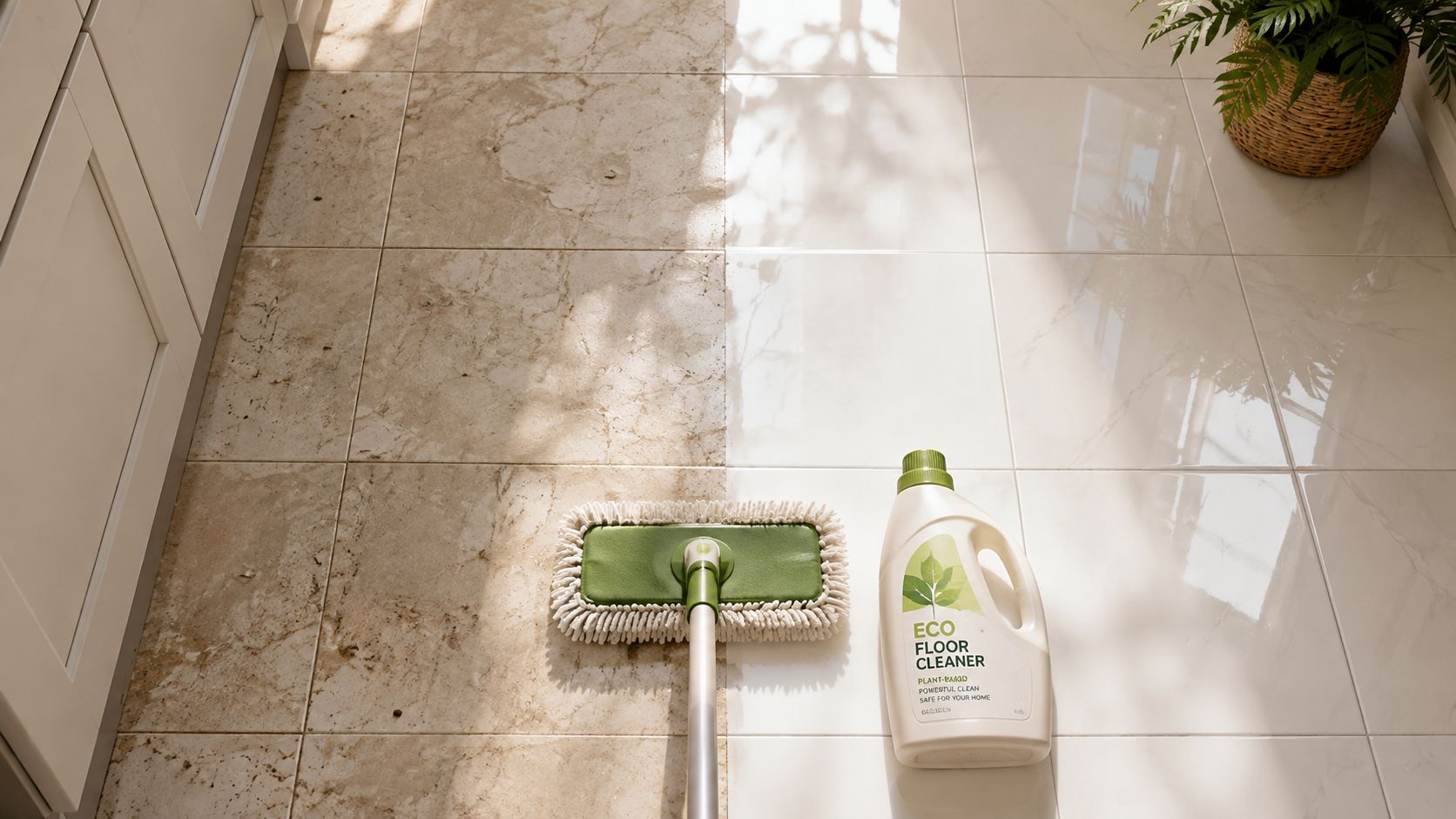
You're standing in a Massachusetts kitchen with a cloudy film across the porcelain, a bathroom grout line that keeps darkening, or a marble entryway that suddenly looks dull. The bottle under the sink says “powerful,” but that label doesn't tell you whether the product is safe for your tile, grout, or sealer.
Cleaning products for tile floors are a chemistry decision, not a brand preference. The right choice depends on the tile material, the grout, the soil, the product's pH, and its active ingredients. For routine care, a pH-neutral cleaner around 6.5 to 8.5 is the safest daily driver for ceramic, porcelain, sealed grout, and most natural stone. It lifts ordinary soil without aggressively reacting with the surface or stripping protective sealers.
The cost imbalance is real. A 32-cent homemade mix can become an expensive mistake if it etches a stone floor, while a $12 gallon of neutral cleaner may prevent a restoration call. The guide below sorts tile floors into four main surface families, then matches neutral, alkaline, acidic, and oxygen-based products to the three soil families homeowners fight most often.
Table of Contents
- Why the Wrong Tile Floor Cleaner Is Such an Expensive Mistake
- Tile Type vs Cleaner Family at a Glance
- Are robot vacuum-mops safe for tile and grout?
- What makes a cleaner dog-safe?
- How long does sealed grout stay clean?
- Can you use a steam mop on natural stone?
- When is vinegar acceptable?
Why the Wrong Tile Floor Cleaner Is Such an Expensive Mistake
A cleaner can remove dirt and still damage the floor. I've seen homeowners scrub harder after a product leaves haze, not realizing that the residue or chemical reaction is causing the cloudy appearance. On polished marble, vinegar may appear harmless because it's inexpensive and familiar, yet acidic contact can etch calcium-based stone and permanently change the finish.
The first question shouldn't be, “Which brand has the strongest reviews?” Ask instead:
- What is the tile made of?
- What is the soil made of?
- What pH and active ingredients can remove that soil without attacking the surface?
Routine ceramic and porcelain care generally belongs in the neutral range. Guidance for daily-use cleaners places ceramic and porcelain formulas roughly around pH 6 to 8 or 7 to 9, because stronger alkalinity can affect glazed porcelain over time, while stronger acids can attack grout and dull polished finishes. Porcelain floor-care guidance supports neutral cleaning as the default rather than reaching for aggressive chemistry during every mopping session.
Practical rule: If you can't identify the tile, grout, and soil, start with a pH-neutral, nonabrasive cleaner and low moisture.
The mistake becomes more serious when one bottle gets used across a mixed floor. A kitchen may have glazed porcelain, cementitious grout, metal transitions, and a stone threshold. Those materials don't share the same tolerance. The formula that cuts grease may be unnecessary for tracked-in dust and too harsh for an adjacent marble border.
The tile-cleaning market reflects how common this decision has become. The global floor cleaner market was estimated at USD 5.49 billion in 2024 and is projected to reach USD 9.41 billion by 2033, while multisurface cleaners held over 35% of market revenue in 2024. Grand View Research market data shows why shoppers see so many “works everywhere” products, but broad market demand doesn't make every formula suitable for every floor.
The safer approach is simple: identify the surface, identify the soil, choose the mildest product that can do the job, and rinse when the label or soil load calls for it.
Matching the Cleaner to Your Tile Type
Tile floors often look uniform from across the room, but their surfaces respond differently to chemistry. Glazed ceramic and porcelain are usually forgiving. Marble and travertine are not. Grout creates another problem because it's porous, recessed, and often less resistant than the tile surrounding it.
A tile cleaner guide from Sunny Day Pro Services on porcelain tile floor cleaning is useful for routine porcelain maintenance, but the product still needs to match the specific floor and soil.
Tile Type vs Cleaner Family at a Glance
| Tile Type | Daily Cleaner | Deep Cleaner | Avoid | Sealing Needed |
|---|---|---|---|---|
| Glazed ceramic | pH-neutral spray or dilute cleaner | Mild alkaline cleaner for grease | Abrasive powders and unnecessary strong acids | Tile usually no, grout may need it |
| Porcelain | pH-neutral, low-residue cleaner | Mild alkaline cleaner for organic soil | Harsh acids, residue-heavy formulas, aggressive scrubbing | Usually no, grout may need it |
| Marble and calcite-based stone | Stone-safe pH-neutral cleaner | Stone-safe neutral cleaner and professional treatment | Vinegar, acidic descalers, bleach, ammonia, abrasives | Often, depending on finish and use |
| Granite and silicate-based stone | pH-neutral stone cleaner | Neutral cleaner with controlled agitation | Bleach, ammonia, abrasive products, sealer-stripping formulas | Often, depending on porosity and use |
| Cementitious grout | Neutral cleaner with light moisture | Alkaline degreaser or oxygen-bleach treatment | Routine acid use and abrasive over-scrubbing | Frequently, especially in wet or busy areas |
Glazed ceramic and porcelain can tolerate neutral and mildly alkaline products. Their hard faces generally handle everyday soil well, but grout joints still collect grease, soap, and grit. The tile may look clean while the grout remains gray because the porous joint absorbs what the glazed face rejects.
Marble, travertine, and limestone contain calcium-based minerals. Acid reacts with that surface instead of only dissolving the dirt. Even a short exposure can dull polish, leave etch marks, or create uneven patches that normal mopping won't remove.
Granite and other silicate-based stones are more acid-resistant than calcite-based stone, but that doesn't make bleach or ammonia suitable daily cleaners. Those products can affect sealers, leave residues, or create a dull appearance after repeated use.
Cementitious grout needs its own plan. For oily kitchen soil, an alkaline degreaser can perform better than a neutral spray. For embedded discoloration, an oxygen-based treatment may help without the sharp reaction associated with acid.
The default map is straightforward:
- Daily tile cleaning: pH-neutral spray or concentrate.
- Kitchen grease: mild alkaline degreaser.
- Grout stains: oxygen-bleach treatment when appropriate.
- Marble and other sensitive stone: stone-safe neutral concentrate only.
Understanding pH and the Active Ingredients That Matter
The pH scale runs from 0 to 14. Lower numbers indicate acidity, higher numbers indicate alkalinity, and the middle range is closest to neutral. You don't need to become a chemist, but you do need to understand why a bathroom descaler and a daily floor cleaner shouldn't be interchangeable.
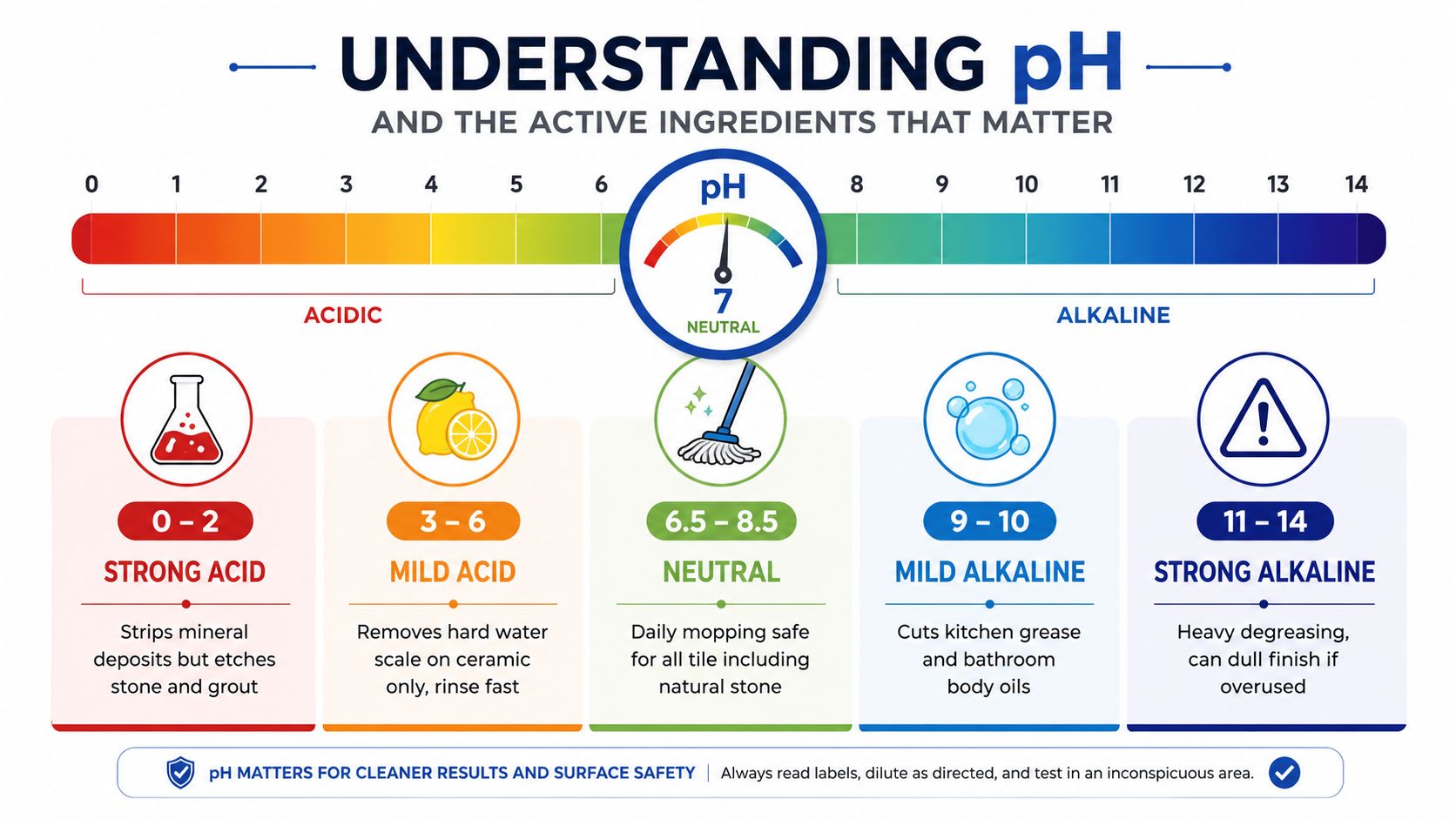
For routine mopping, neutral cleaners around pH 6.5 to 8.5 are the practical starting point. Mild alkaline formulas around pH 9 to 10 help with kitchen grease and body oils. Stronger alkaline products around pH 11 to 12 are reserved for heavier degreasing. Mild acids around pH 4 to 6 can address mineral deposits and grout haze, while products below pH 4 should be treated as specialized descalers for suitable ceramic or porcelain surfaces, never as general floor cleaners.
Tile-care chemistry guidance separates neutral formulas for general soil, alkaline products in the pH 9 to 12 range for grease and oils, and acidic products in the pH 1 to 4 range for mineral deposits and hard-water scale. That distinction matters because the same product that removes scale can damage calcium-based stone or colored grout.
What the ingredients actually do
- Nonionic and amphoteric surfactants loosen ordinary soil and help suspend it in the cleaning solution.
- Sodium carbonate and sodium metasilicate contribute alkaline cleaning power against grease and oily films.
- Citric and sulfamic acid can dissolve certain mineral deposits, but they still require surface testing and careful rinsing.
- Hydrogen peroxide and sodium percarbonate provide oxygen-based stain treatment for appropriate grout applications.
- Isopropyl alcohol evaporates quickly and can help with small spot-cleaning jobs when the surface and product label permit it.
Stone deserves a separate warning. Avoid hydrochloric acid, phosphoric acid, bleach, ammonia, and vinegar on sensitive stone surfaces. Depending on the product and surface, these ingredients can etch calcite, affect sealers, or leave a finish that looks dull rather than clean.
Dilution also changes the value of a product. Concentrates may be sold at ratios from 1:10 to 1:64, so the shelf price alone doesn't tell you what the ready-to-use gallon costs. Tile-cleaning product guidance reinforces the importance of using a suitable neutral product for routine porcelain care rather than compensating for poor technique with stronger chemistry.
Choosing the Right Cleaner for the Soil You're Fighting
The right question is not “What cleaner works on tile?” It's “What kind of soil am I trying to remove?” A neutral product is excellent for tracked-in dust and everyday residue, but it may struggle with cooking oils. An acidic product may dissolve mineral scale quickly, but it has no place on marble, travertine, or limestone.
Use this decision table before opening a bottle.
Cleaner Choice by Soil Type
| Soil Type | Recommended Cleaner | pH Range | Safe On |
|---|---|---|---|
| Dust, grit, tracked-in dirt | pH-neutral cleaner with microfiber mop | 6.5 to 8.5 | Ceramic, porcelain, sealed grout, suitable natural stone |
| Kitchen grease and cooking film | Mild alkaline degreaser | 9 to 11 | Ceramic and porcelain, after checking grout and adjacent surfaces |
| Body oils and bathroom residue | Alkaline cleaner, diluted as directed | 9 to 10 | Ceramic and porcelain, with thorough rinsing |
| Hard-water spots and mineral deposits | Targeted acidic cleaner | 3 to 5 | Suitable ceramic or porcelain only, never calcite-based stone |
| Grout haze after installation | Manufacturer-approved haze remover | Product-specific | Compatible tile and grout only, with a test area first |
| Grout discoloration | Oxygen-based treatment or suitable alkaline cleaner | Product-specific | Compatible cementitious grout after testing |
Organic and oily soils need alkalinity because alkaline ingredients help break apart fats and body oils. That's why a diluted dish soap solution can outperform a neutral floor spray on a greasy kitchen film, even though it isn't the right answer for every floor or every finish.
Mineral soil is different. Hard-water scale, rust, soap scum, and cement haze respond to acid, but the acid must stay off calcium-based stone and must not dwell on vulnerable grout. Professional porcelain stain guidance describes neutral cleaners for daily care, acids for inorganic buildup, and alkaline products for organic stains such as grease, oil, wine, and coffee.
The working rule: Identify the soil first, choose the mildest matching chemistry, then rinse thoroughly enough to remove suspended soil and cleaner residue.
If a floor looks cloudy after cleaning, don't automatically escalate to a stronger product. The haze may be residue, excess solution, dirty mop water, or installation material. Post-installation cement remover and epoxy cleaner belong to specialized cleanup categories, not ordinary weekly maintenance.
DIY Versus Commercial Cleaners and the Best Mopping Method
A simple homemade cleaner can handle routine ceramic and porcelain maintenance when the floor isn't heavily greasy and the ingredients are measured carefully. One practical mix uses 1 gallon of warm water plus 2 tablespoons of clear, unscented dish soap, costing about 32 cents per batch according to the specified household formula.
That mix isn't a universal stone cleaner. For stone, the plan calls for replacing the soap with 1 cup of rubbing alcohol plus 1 tablespoon of castile soap per gallon to keep the solution mild, or using a labeled pH-neutral stone cleaner. Always test a hidden area first, especially on polished or recently sealed surfaces.
Commercial neutral concentrates cost more per ounce, but they offer consistent dilution, controlled fragrance, and surfactants formulated for hard-water conditions. The value is less about a magic ingredient and more about repeatability. A professional neutral product can also make it easier to avoid over-soaping the floor.
A low-residue mopping process
- Remove dry grit first. Dust-mop or vacuum with a hard-floor setting. Grit under a damp mop can create fine scratches and spreads soil across the room.
- Prepare two buckets. Keep one for the cleaning solution and one for rinsing. This prevents the mop from returning the same dirty water to the floor.
- Use limited moisture. A flat microfiber mop should be damp, not dripping. Guidance from a microfiber tile-floor cleaning method recommends working in 1 to 2 square meter sections, changing the pad when it turns gray, and making a final dry pass.
- Follow an S-pattern. Work backward across the room so you don't walk over freshly cleaned areas. A two-bucket method is especially useful in kitchens and entryways where the solution clouds quickly.
- Dry the surface. Let the floor air-dry when ventilation is good, or buff with a clean, dry microfiber pad to reduce water spots and residue pickup.
For a longer step-by-step reference, use Sunny Day Pro Services' guide to the best way to clean tile floors. The important point is restraint. More water and more product rarely produce a cleaner floor.
Eco-Friendly Products Versus Bleach and Acid
“Green” and “strong” are both incomplete descriptions. A plant-based surfactant can be a sensible daily option for ceramic and porcelain, while an eco-labeled acidic product can still etch marble. Bleach can whiten some grout stains, yet it doesn't replace soil removal and can create ventilation and discoloration concerns.
The EPA Safer Choice program recognizes tub and tile cleaners and provides an official product database for identifying options made with ingredients reviewed under its program. EPA Safer Choice product information gives homeowners a more useful starting point than relying on packaging language alone.
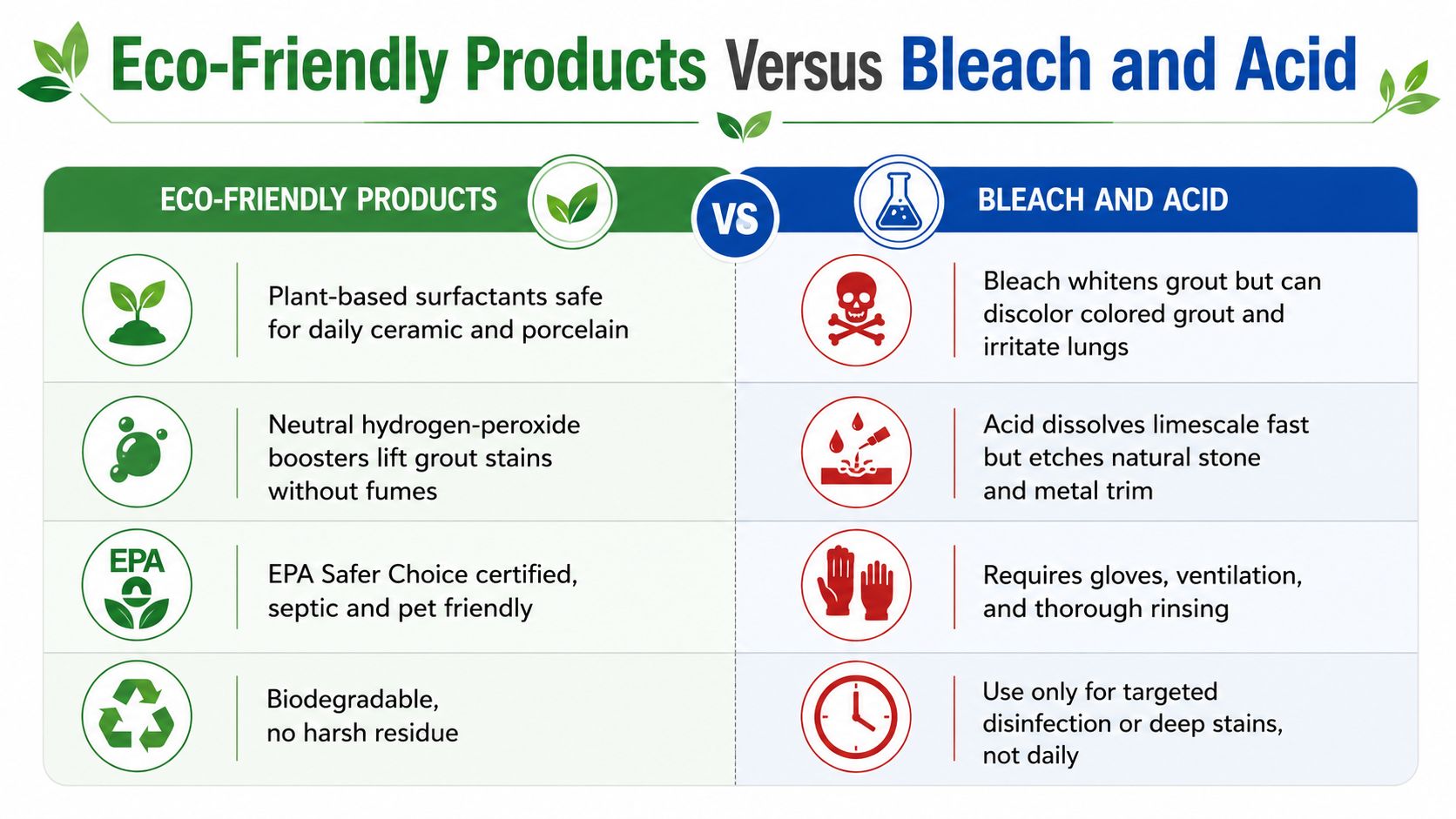
For everyday ceramic and porcelain floors, a neutral formula with plant-based surfactants can offer good cleaning with less harsh residue. Neutral hydrogen-peroxide boosters may help lift certain grout stains without chlorine fumes, although every product still needs compatibility testing.
Bleach has a narrow role for mold on appropriate grout in a well-ventilated bathroom. The specified approach uses dilution at 1:10 with water, followed by rinsing. Never combine bleach with ammonia or acids, and don't treat bleach as a routine floor detergent.
Acidic products, including vinegar and citric formulations, can dissolve mineral buildup quickly on suitable ceramic or porcelain. They don't belong on marble, travertine, or limestone, where even short contact may etch a polished surface. They can also affect metal trim and vulnerable grout.
Use eco-friendly cleaning product guidance from Sunny Day Pro Services when comparing lower-toxicity options, but read the label and safety data sheet rather than assuming “natural” means surface-safe. Surface compatibility, ventilation, dilution, and rinsing matter more than the marketing category.
How Often to Clean and When to Call a Professional
A tile floor doesn't need the same treatment every day. Dry grit is a mechanical problem, kitchen film is a chemistry problem, and neglected grout is often a moisture and sealing problem. Separating those tasks keeps homeowners from using a heavy cleaner when a vacuum would have solved the issue.
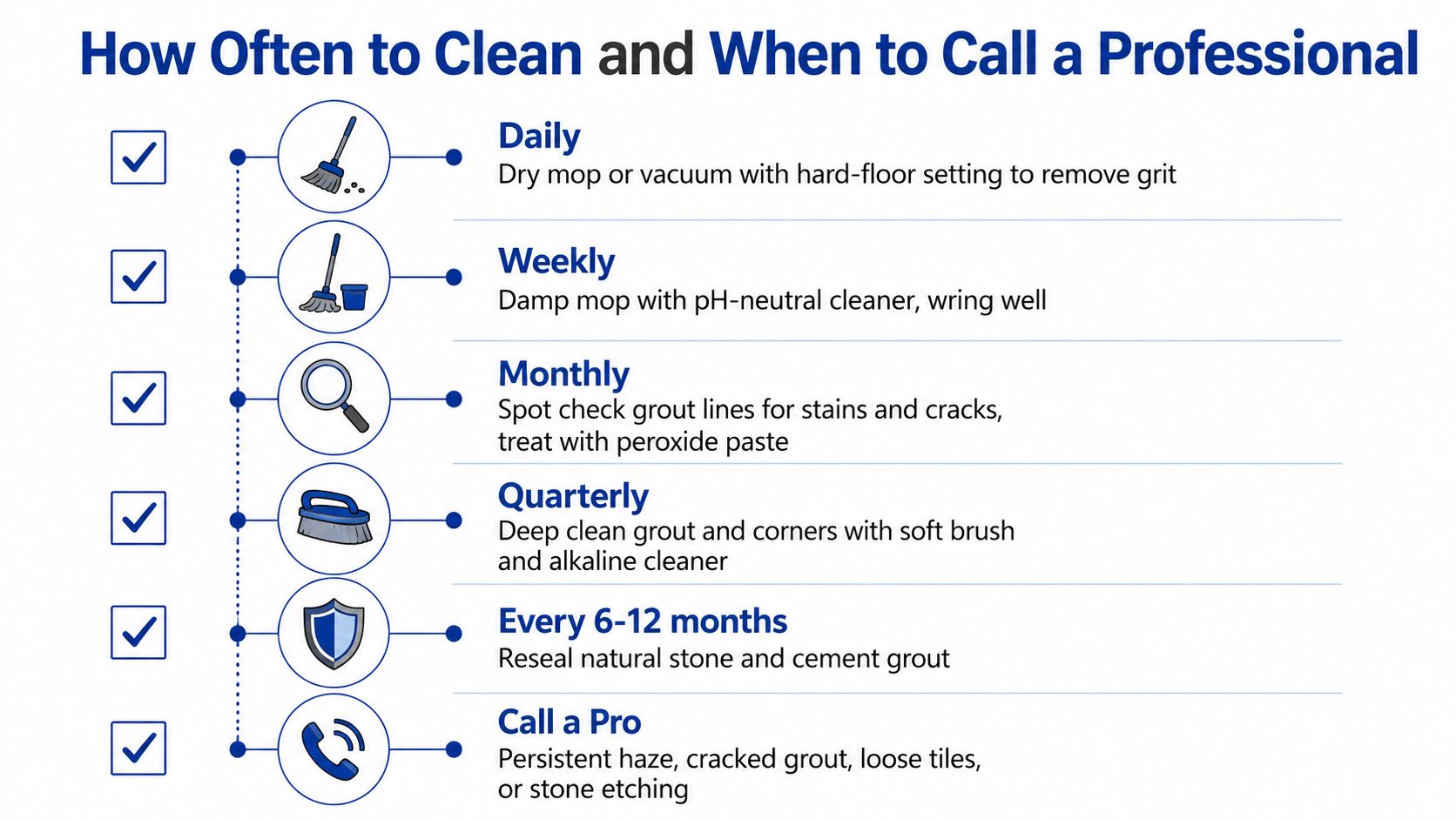
A practical maintenance rhythm
- Daily: Dry mop or vacuum using a hard-floor setting, especially around Massachusetts entryways where sand and grit track in.
- Weekly: Damp mop with a pH-neutral cleaner, wringing the mop well so the floor isn't soaked.
- Monthly: Inspect grout lines for stains, cracks, and darkening. Treat isolated discoloration rather than applying strong chemistry everywhere.
- Quarterly: Deep-clean grout, corners, and textured tile with a soft brush and a suitable alkaline cleaner when organic buildup is present.
- Every 12 to 24 months: Evaluate natural-stone sealing and reseal when the surface no longer repels moisture. Tile-cleaner market guidance also reflects how tile represents a major floor-care use case, not a niche cleaning task.
The timing changes with traffic, pets, cooking, and bathroom humidity. A busy foyer may need frequent dry removal but less wet cleaning than a kitchen. Sealed grout generally resists absorption better than unsealed grout, but the sealer still wears through use and repeated exposure to unsuitable products.
A simple water-bead check can help. Place a small amount of water on a clean grout joint, wait briefly, and observe whether it beads or darkens quickly. If the grout absorbs water readily, stop applying more sealer blindly and identify the existing grout and sealer condition first.
Where DIY stops making financial sense
Call a professional when marble is etched, haze covers a large area, grout has failed across large-format tile, or acid has contacted natural stone. Persistent stains may also indicate failed sealing, moisture intrusion, or installation residue rather than ordinary dirt.
A professional tile-and-grout cleaning service may cost $300 to $600, while replacement can reach $2,000, depending on the room, material, preparation, and scope. Those ranges are the specified comparison for deciding whether restoration is more sensible than repeated trial-and-error. If the floor is structurally sound, correcting the chemistry and restoring the finish can be the less disruptive path.
Frequently Asked Questions About Tile Floor Cleaning Products
Are robot vacuum-mops safe for tile and grout?
They're generally suitable for sealed tile and sealed grout when used with low moisture and a compatible solution. They're riskier on unsealed grout because repeated moisture can keep the joints damp and contribute to deterioration. Use a dry vacuum mode regularly, and don't let the machine substitute for occasional grout inspection.
What makes a cleaner dog-safe?
Look for a product listed through the EPA Safer Choice program and avoid phenols, bleach, and concentrated essential-oil formulas. Keep pets away until the floor is dry, regardless of the label. “Pet-safe” should describe the whole use pattern, including dilution, ventilation, storage, and drying.
How long does sealed grout stay clean?
Sealed grout may stay clean for 1 to 3 years, depending on traffic and cleaner chemistry. Tile-care guidance recommends warm water and a nonabrasive sponge or mop for daily ceramic and porcelain maintenance, while avoiding acidic, alkaline, bleach, abrasive, and ammoniated products for routine care because they can degrade grout sealer or leave residue.
Can you use a steam mop on natural stone?
Avoid steam mops on natural stone unless the stone and manufacturer explicitly approve the method. Heat and force can move moisture into pores, affect sealers, and cloud a polished finish. A controlled, damp microfiber method is safer for routine care.
When is vinegar acceptable?
Vinegar may be used for a narrow grout-haze or mineral-deposit situation on compatible ceramic or porcelain, with fast contact, testing, and thorough rinsing. It should never be used on marble, travertine, limestone, or other calcium-based stone. Old advice persists because vinegar can dissolve mineral buildup, but that benefit doesn't override the risk to sensitive surfaces.
For immediate action, choose a low-residue pH-neutral cleaner, use minimal moisture, and reserve alkaline or acidic products for the specific soil they're designed to remove.
Sunny Day Pro Services offers recurring house cleaning, deep cleaning, grout cleaning and sealing, post-construction cleanup, and tile installation for homeowners in Wayland, Newton, Needham, Wellesley, Weston, and nearby Massachusetts communities. If your floor has persistent haze, stained grout, stone etching, or a maintenance problem that products haven't solved, visit Sunny Day Pro Services to request a quote and choose a service schedule.

