
Deep Cleaning Floors the Right Way for Every Surface
Deep Cleaning Floors. Learn how to deep clean floors the right way for tile, hardwood, laminate, and stone with proven methods, safe products, and pro tips that
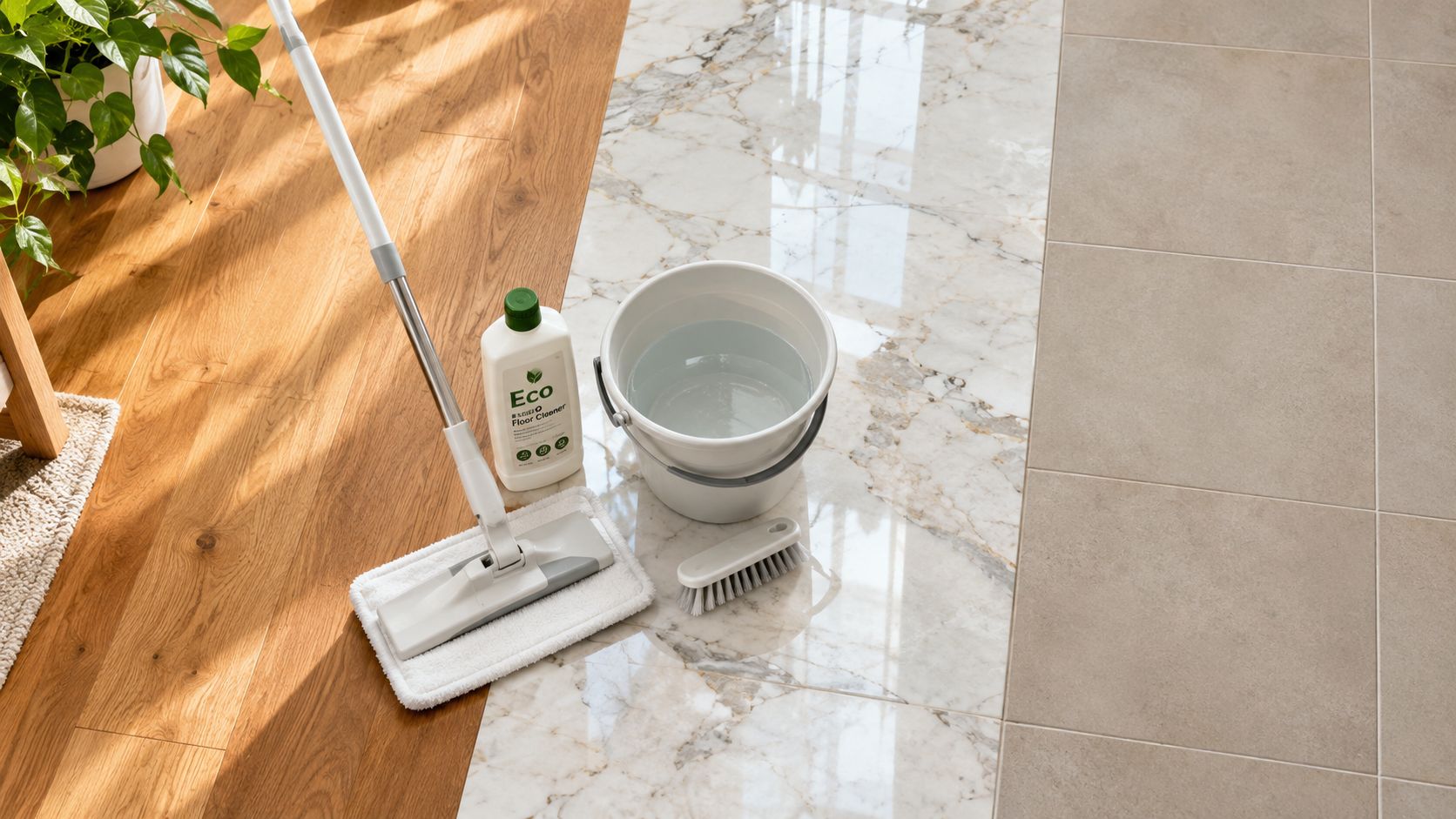
A sticky spill in a Massachusetts kitchen can turn a quick mop job into a frustrating smear. You scrub harder, add more cleaner, and still feel grit or tackiness under your shoes. That usually isn't a failure of effort. It means the floor, the soil, the solution, and the tool don't match.
Deep cleaning floors is restorative work, not repeating a daily mopping routine for longer. The right process removes dry grit before it scratches, dissolves the specific residue holding soil in place, agitates without damaging the finish, and removes the dirty solution instead of spreading it across the room. The best method changes between porcelain, grout, marble, sealed hardwood, and laminate, especially in busy homes around Wayland, Newton, Needham, Wellesley, and Weston.
Table of Contents
- Identify the material and finish
- Diagnose the soil
- Choose chemistry carefully
- Match agitation to the surface
What Deep Cleaning Floors Actually Involves
A successful floor restoration starts before the mop touches the surface. Four decisions determine whether the job lifts embedded soil or leaves behind haze.
Identify the material and finish
Tile, porcelain, natural stone, hardwood, and laminate respond differently to moisture and chemistry. A glazed porcelain surface can tolerate more mechanical work than a polished marble floor. A sealed hardwood floor needs controlled moisture, while laminate seams can swell when liquid sits in the joints. If you don't know the finish, test any product in a hidden area and use the least aggressive method first.
Diagnose the soil
Dust and loose grit need dry removal. Grease needs a cleaner that can break up oily residue. Hard-water film needs a compatible mineral deposit remover. Pet accidents and food stains may involve biological or organic material. A neutral cleaner is often the safest starting point, but it won't solve every type of buildup by itself.
Choose chemistry carefully
Neutral-pH products reduce the risk of attacking sealers and finishes. The TileLetter guidance on suitable tile and grout cleaners defines neutral cleaner as typically ranging from pH 6.5 to 7.5 and describes neutral to slightly alkaline solutions, roughly pH 7 to 10, as generally suitable for routine tile and grout cleaning. Repeated use of very acidic or very alkaline products can weaken protective sealers over time.
Match agitation to the surface
A soft nylon brush can work grout lines without gouging them. A microfiber flat mop captures soil across smooth flooring. Aggressive pads, steel wool, and metal brushes can scratch or etch surfaces that look durable but aren't repairable with ordinary cleaning.
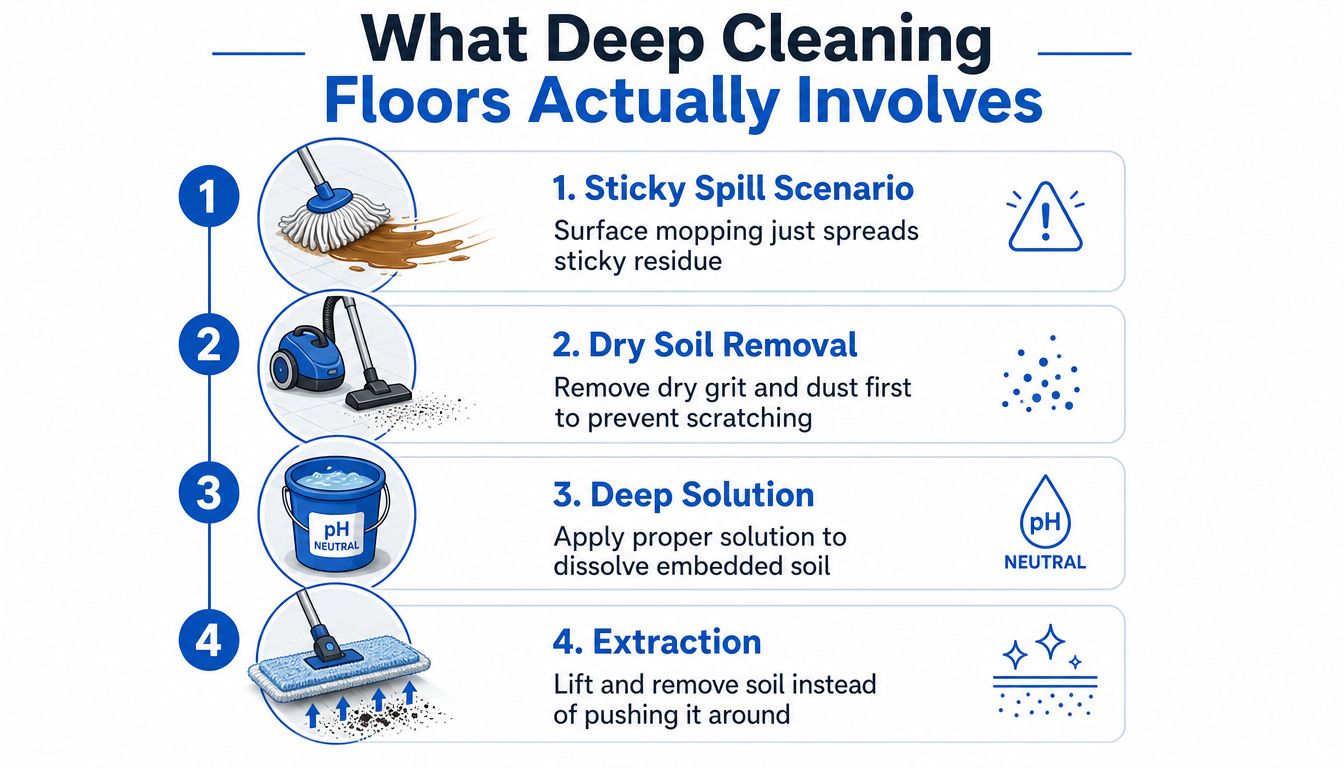
The cleaning method materially changes the result. A 2009 floor-cleaning study found that cleaning reduced organic material to 5% to 36% of pre-cleaning levels, depending on the method, and lowered bacterial counts from about 60 to 100 CFU per 20 cm² to 30 to 60 CFU per 20 cm². Wet and moist mopping performed best overall, while spray mopping was less effective for bacterial reduction.
Deep cleaning belongs on a schedule shaped by traffic, pets, cooking, and residue buildup. It shouldn't replace low-impact daily care, and it shouldn't become an aggressive chemical event every time the floor looks dull.
Tools, Mops, and Products Worth Your Money
The most useful floor-cleaning setup isn't the one with the strongest bottle. It's the one that removes soil while leaving the finish intact.
A microfiber flat mop is usually the most versatile choice for smooth tile, porcelain, sealed hardwood, and many commercial surfaces. It applies controlled moisture and lets you change pads before a dirty section contaminates a clean one. Cotton string mops can hold more liquid, but that same capacity makes them easy to over-wet and harder to manage in kitchens, along cabinet bases, and near wood transitions.
A controlled steam mop has a narrower use case. It may help on compatible sealed hard surfaces, but steam can drive moisture into laminate joints, unfinished wood, failed grout, or vulnerable flooring assemblies. A rotary brush can make grout rescue work faster, provided the brush is soft enough and the machine runs at a controlled speed. It isn't a substitute for identifying the surface first.
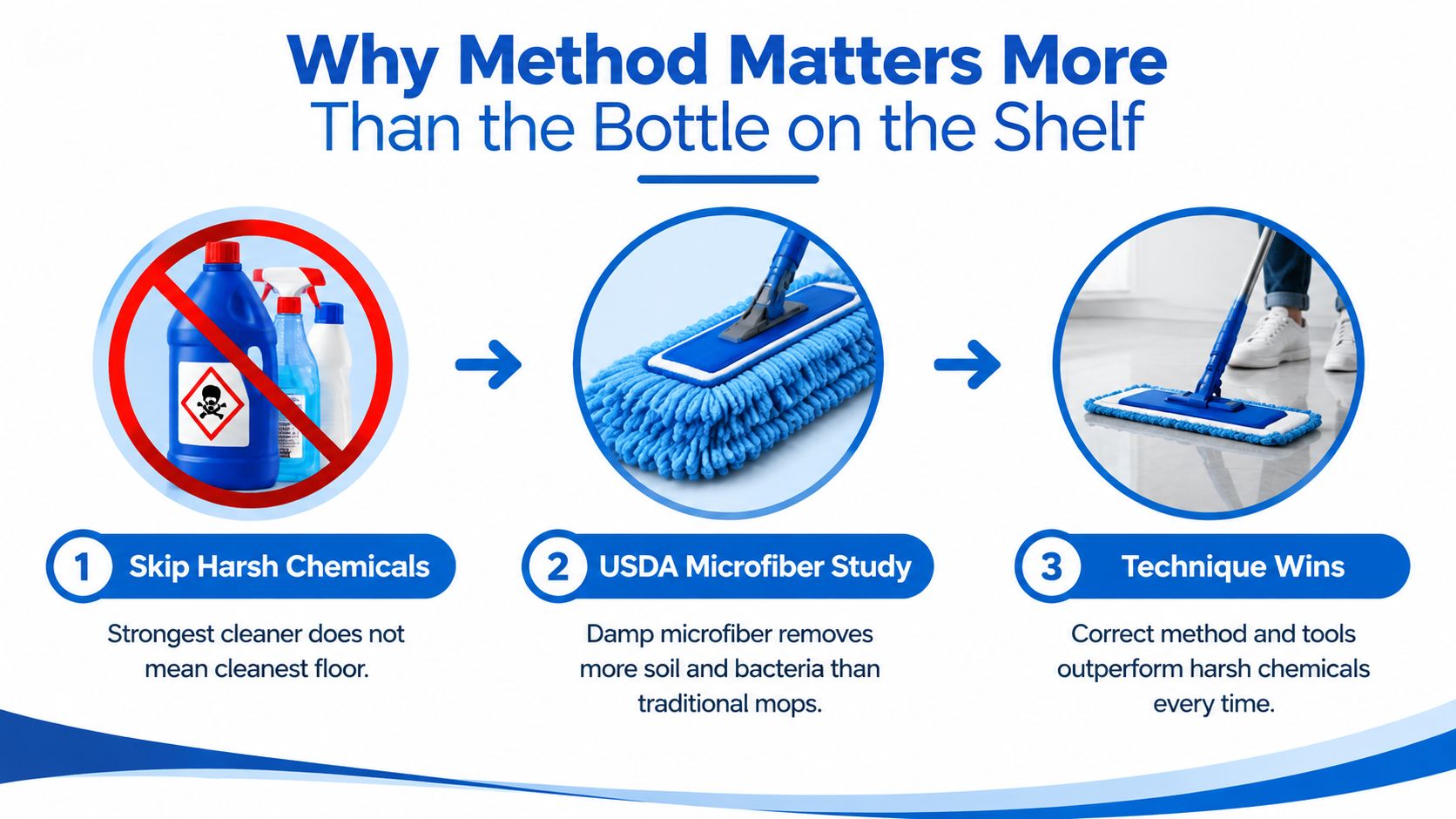
The strongest evidence favors method over chemical intensity. In a hospital study, a microfiber floor-mopping system used with detergent achieved 95% effectiveness, compared with 68% for conventional cotton string mops. Adding disinfectant left the microfiber result at 95%, while it brought the cotton system up to 95%. The microfiber mop evaluation supports a practical conclusion: more disinfectant didn't improve the already strong microfiber workflow.
| Tool or Product | Best Floor Match | Caution |
|---|---|---|
| Microfiber flat mop | Porcelain, ceramic, sealed hardwood, laminate with minimal moisture | Change or wash pads before they become visibly soiled |
| Cotton string mop | Large resilient areas where controlled rinsing is possible | Can spread soil and leave excess water |
| Soft nylon grout brush | Ceramic tile and grout lines | Avoid metal bristles and excessive pressure |
| Neutral-pH cleaner | Routine cleaning on tile, porcelain, and compatible sealed floors | Follow the flooring and product label |
| Hydrogen peroxide cleaner | Selected organic soil and compatible hard surfaces | Test first, especially around colored grout and finishes |
| Enzyme cleaner | Pet or food-related organic residue | Keep away from incompatible stone and waxed finishes |
| Citric acid descaler | Limited mineral deposits on acid-compatible tile | Never assume it is safe for natural stone |
| Vinegar or bleach | Rarely appropriate as a general floor solution | Can damage finishes, stone, grout, or create hazardous combinations |
The separating dirty water mop guide is useful when a floor needs repeated rinsing without returning the same soil to the surface. Clean water, clean pads, and moderate moisture usually matter more than buying a harsher chemical.
A separate clinical-facility study found that reused cotton string mop heads with quaternary ammonium compounds increased contamination, while hydrogen peroxide remained effective through 3 reuses. Single-use microfiber worked with either disinfectant option but wasn't more effective than cotton overall in that setting. The floor-cleaning research on mop-head reuse reinforces the need for strict reuse and laundering practices.
How to Deep Clean Tile, Porcelain, and Grout
Tile and porcelain are forgiving on the face, but grout lines collect cooking grease, tracked soil, soap residue, and pet contamination. The safest deep clean removes that load in stages rather than attacking the entire floor with acid.
Start dry
Vacuum slowly, including edges, corners, and the gap beneath movable furniture. A microfiber dust mop works well on smooth tile. Dry grit acts like an abrasive when a wet mop drags it across the glaze, so skipping this pass can create scratches and distribute soil into the grout.
Mix a neutral-pH tile cleaner according to its label. Apply it to a small working area instead of flooding the whole room. Let the solution remain wet long enough to soften the soil, then agitate grout with a soft nylon brush or a low-speed rotary tool fitted with a suitable brush.
Treat grout separately
Routine grime may respond to a compatible alkaline degreaser. Organic discoloration can sometimes respond to an oxygen-bleach treatment or a carefully tested hydrogen peroxide product. Work the solution into the grout, lift the suspension with microfiber, and rinse with clean water. Change pads frequently, because a loaded pad pushes soil into the next section.
A practical tile-floor cleaning guide can help with regular care, but neglected grout often needs more controlled agitation than an ordinary weekly mop provides.
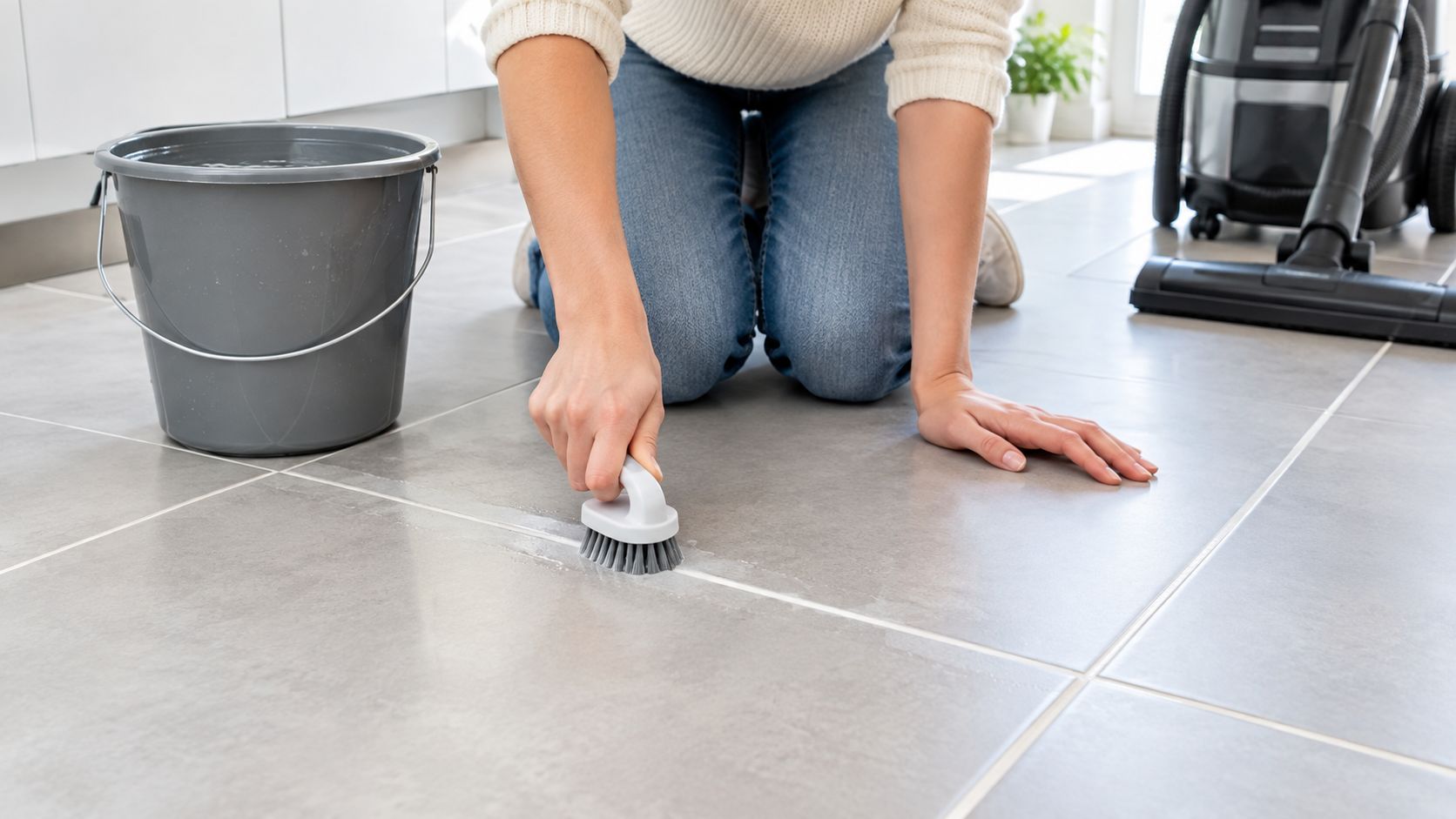
Acid safety rule: Acid cleaning is a last resort. The International Masonry Institute tile-cleaning bulletin says grout should have cured for 28 days before acid cleaning, and the acid must be neutralized afterward with an alkaline rinse. Water alone dilutes acid, but it doesn't neutralize it.
Don't use vinegar, muriatic acid, or harsh descalers on natural stone. Even on tile, acid can affect cementitious grout, metals, sealers, and nearby surfaces. Never use steel wool or a metal brush on glazed tile or grout. Rinse until the floor no longer feels slick, then dry the surface and inspect it under normal light.
Sealed grout still needs cleaning. Sealer reduces absorption, but it doesn't prevent soil from accumulating on the surface or entering worn areas. If grout remains dark after proper cleaning, the issue may be permanent discoloration, failed sealer, or contamination below the cleanable surface.
How to Deep Clean Stone, Hardwood, and Laminate
These floors punish shortcuts quickly. Natural stone can etch, hardwood can lose finish or swell, and laminate can fail at the seams when moisture remains too long.
Stone needs restraint
Begin with a microfiber dust mop or a vacuum designed for hard floors. For marble and granite, use a neutral-pH stone cleaner with a well-wrung flat mop. The IICRC tile, stone, and grout tip sheet recommends neutral-pH, no-rinse products for porcelain and suggests replacing a reusable microfiber mop head every 100 to 200 square feet to reduce soil transfer.
Don't use vinegar, citrus, or products below pH 7 on calcareous stone. Etched areas look dull or cloudy and won't be corrected by adding polish. Stop if the surface develops a new haze, loses reflectivity, or shows a roughened spot.
Sealed hardwood needs minimal moisture
Vacuum with a hard-floor setting, then use a well-wrung microfiber mop and a cleaner approved for the wood finish. Test first, keep the solution controlled, and dry any remaining moisture promptly. For a light scuff on sealed wood, a pencil eraser can be tested gently; a small baking soda paste test may help with certain marks, but stop immediately if the finish changes.
Waxed or oil-finished wood requires a product made for that finish. Water, bleach, ammonia, and general-purpose degreasers can strip protection or leave staining.
Laminate can't absorb a soaking routine
Use a dry pass, a laminate-compatible cleaner, and a nearly dry microfiber mop. Follow with a dry microfiber cloth if liquid remains. Don't use steam, wax, oil soap, abrasive scrubbers, or a wet standard mop. Swelling at seams, lifted edges, and persistent discoloration indicate that cleaning won't reverse the damage.
| Floor Type | Safe to Use | Avoid at All Costs |
|---|---|---|
| Marble and granite | Stone-safe neutral cleaner, damp microfiber | Vinegar, citrus, abrasive pads, unapproved acids |
| Sealed hardwood | Finish-approved cleaner, well-wrung microfiber | Pooling water, bleach, ammonia, soaking |
| Waxed or oil-finished wood | Finish-specific soap or refresher | Generic degreasers and water-heavy cleaning |
| Laminate | Manufacturer-approved cleaner, minimal moisture | Steam, standing water, wax, sanding |
| Porcelain | Neutral-pH no-rinse cleaner, microfiber | Steel wool and uncontrolled acid use |
Water pooling at cabinet bases and door thresholds causes a disproportionate amount of damage. Keep those areas nearly dry, and consult the home floor polishers and buffers guide before putting a machine on any finish you haven't identified.
Why Method Matters More Than the Bottle on the Shelf
A stronger chemical can't compensate for a dirty mop, a skipped dry pass, or a solution left sitting on the floor. It may create more risk while doing less useful work.
The hospital comparison shows why. Microfiber with detergent reached 95% effectiveness, while cotton string mops reached 68% in the same research. Disinfectant improved cotton performance to 95%, but it didn't improve the microfiber result. The peer-reviewed mop comparison points to the tool and technique as major parts of the outcome.
Three levers control the result
Dwell time gives the solution time to soften soil. It doesn't mean allowing the floor to dry with chemical residue on it.
Mechanical action breaks the bond between soil and surface. The right brush or mop creates useful agitation without scratching.
Removal carries the loosened material away. Rinsing, changing pads, and extracting dirty solution prevent redepositing the same contamination.
Common habits undermine all three levers:
- Dirty mop water: A bucket that looks gray is already carrying removed soil back onto the floor.
- Reused solution: Once a solution becomes loaded with grease and grit, it can leave a film instead of lifting one.
- Skipped dry pre-clean: Wetting dust and sand turns loose debris into a grinding paste under the mop.
- Excess chemical: Too much product can leave tacky residue, attract soil, or damage a finish.
- Over-wet passes: Water migrates into seams, thresholds, cabinets, and unsealed grout.
If the floor hasn't been dry-vacuumed first, no product will save it.
Treating Stains, Heavy Soil, and Grout Rescue Jobs
A homeowner once showed me a grout line that appeared permanently black beside a kitchen range. The first instinct was to reach for a stronger acid. The better diagnosis was cooking grease mixed with tracked dust, so the treatment needed alkaline cleaning, dwell time, and mechanical agitation rather than a more corrosive bottle.
Identify before treating
Organic stains such as coffee, wine, and pet residue may respond to a carefully tested hydrogen peroxide or enzyme cleaner. Oil-based soil needs a degreasing surfactant. Rust may respond to oxalic acid on compatible tile, but not on natural stone unless the manufacturer or restoration professional confirms compatibility. Hard-water deposits require a mineral-deposit approach, not a random disinfectant.
Use a small test area and keep the product away from transitions, metal trim, wood, and stone until you know how the surface reacts.
| Stain Type | Recommended Treatment | Safe Surfaces | Call a Pro When |
|---|---|---|---|
| Coffee, wine, or pet residue | Tested hydrogen peroxide or enzyme cleaner | Compatible tile and grout | Color remains after controlled treatment |
| Cooking oil | Alkaline degreaser with agitation | Glazed tile and compatible grout | Oil has penetrated porous grout deeply |
| Rust | Carefully tested oxalic-acid product | Compatible tile only | The area includes stone, metal, or unknown material |
| Hard-water film | Compatible mineral-deposit remover | Acid-safe tile only | The deposit is on marble, limestone, or polished stone |
| General dark grout soil | Alkaline soak, nylon brushing, neutral rinse | Ceramic tile and porcelain grout | Mildew or discoloration remains embedded |
Rescue neglected grout in stages
Apply an alkaline cleaner to a small section and allow it to work without drying. Agitate with a stiff nylon brush, then lift the slurry with microfiber or extraction. For set-in organic discoloration, an oxygen-bleach poultice may help on compatible grout. Rinse with a neutral solution or clean water, remove all residue, and allow the joint to dry before considering resealing.
Stop when the problem isn't surface soil. Deep-set oil in porous grout, etched marble, and urine damage that has darkened subfloor plywood need restoration judgment. Repeated scrubbing can widen grout damage, and stronger chemicals won't rebuild a failed finish or contaminated subfloor. Replacement may be the honest answer when the substrate or flooring assembly has deteriorated.
Maintenance Rhythm and When to Hire a Pro
A floor stays easier to restore when routine care removes grit before it becomes bonded soil. The schedule should reflect traffic, cooking, children, pets, entryway conditions, and the floor's ability to tolerate moisture.
The CDC advises that floors in general inpatient and outpatient areas be cleaned at least daily, cleaned last after other environmental surfaces, and treated without routine disinfectant under normal circumstances. That guidance is written for healthcare environments, but its practical lesson carries into homes: clean methodically, remove soil, and don't reach for disinfectant automatically.
A workable home rhythm
- Daily: Make a quick dry pass in entries, kitchens, pet areas, and other traffic lanes.
- Weekly: Mop with a floor-compatible neutral cleaner and controlled moisture.
- Monthly: Detail edges, cabinet bases, thresholds, and high-traffic lanes.
- Quarterly: Inspect grout, remove localized buildup, and check stone or wood finishes.
- Annually: Consider professional deep restoration when soil load, finish wear, or household demands justify it.
The CDC's environmental cleaning procedures also support cleaning floors after other environmental surfaces, which prevents settled dust and debris from being pushed back onto a freshly cleaned floor.
Hire a professional when: The floor has natural-stone etching, hardwood finish failure, deeply contaminated mildew in grout, or conditions that make scrubbing unsafe for the homeowner.
Ask what the service includes. For tile, that should mean edge vacuuming, compatible pre-treatment, grout agitation, controlled rinsing, and residue removal. For stone, ask whether the crew can distinguish cleaning from honing or polishing. For hardwood, confirm that the process matches the finish. For laminate, insist on minimal moisture and no steam.
A professional deep-cleaning service should also explain what it won't fix. Cleaning can't reverse swelling, etching, delamination, structural moisture damage, or a finish that has failed. Clear limits are a sign of competent workmanship.
Consistent, low-impact maintenance beats occasional aggressive cleaning. When your Massachusetts home needs more than a mop can safely handle, Sunny Day Pro Services offers deep cleaning that includes floor-type-appropriate solutions, full vacuuming around edges and under furniture, and floor care suited to the surface. Request a quote for your home, move-in or move-out cleaning, or post-construction cleanup and describe the floor material and problem areas so the service can be matched correctly.

