
Eco Friendly Cleaning Sponges: Which Ones Are Truly Green
Eco Friendly Cleaning Sponges compared by material, plastic content, surface safety, hygiene, and composting, plus a practical buying and use guide for homes.
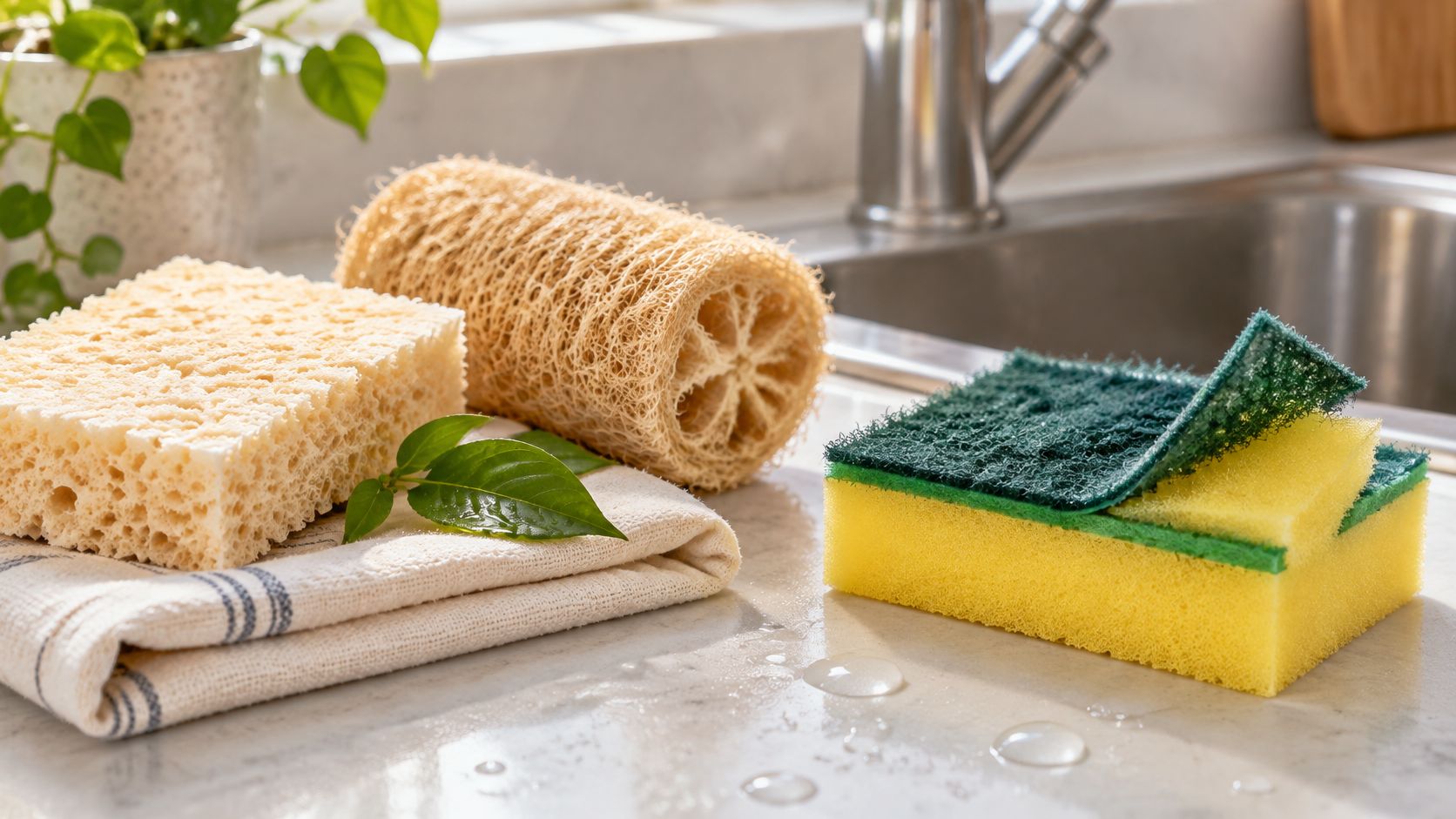
Buy any sponge with a leaf on the pack and you're cleaning green. That's the popular advice, and it's wrong often enough to cost you money, dull your stone, and still send plastic down the drain.
The better test is less tidy. Judge the whole sponge and the whole task, including every layer, how long it stays hygienic, what surface it touches, how much water you use, and where it goes when it's worn out. Eco friendly cleaning sponges can be a smart switch, but only when those five checks line up.
Table of Contents
- Is Replacing a Synthetic Sponge Enough to Make Cleaning Greener
- Are Cellulose Sponges Sanitary
- Can I Microwave an Eco Sponge to Sanitize It
- Is Melamine an Eco Friendly Choice
- Can Compostable Sponges Go in a Home Compost Bin
- Which Sponge Is Safe for Granite
Which Materials Count as Eco Friendly Sponges
Many sponges sold as natural still contain substantial plastic, so the material name on the front isn't a reliable guide. A plant based body can sit under a synthetic scour pad, which changes both shedding and disposal.
The Six Materials You'll Actually Meet
Cellulose is a plant fiber block, often wood pulp based, and it's the workhorse for dishes and sealed counters. Loofah is dried gourd fiber that scrubs pots and tubs well, but it holds moisture and quality shifts from batch to batch. Cotton and hemp cloths wipe well and launder easily, while recycled content scrubbers cut virgin plastic without being plastic free.
Melamine and polyurethane sit at the other end. Melamine removes marks without detergent, but it's a synthetic polymer. Standard polyurethane is the petroleum based baseline most kitchens already know.
| Material | What It Is | Typical Plastic Content | Best Use | Main Drawback |
|---|---|---|---|---|
| Cellulose | Plant-fiber block, often wood-pulp based | Low, but check for a synthetic scrub layer | Routine wiping of dishes and sealed counters | Breaks down quickly when left wet; limited scrubbing power |
| Loofah | Dried gourd fiber | Very low if unbleached and unlaminated | Pots, bathtubs, light scrubbing | Holds moisture; quality varies by batch |
| Cotton or hemp cloth | Woven plant fibers | Low | Wiping, floors, dishes | Needs frequent laundering to stay hygienic |
| Recycled-content scrubber | Recycled PET blended with cellulose or foam | Moderate; recycled does not mean plastic-free | Heavy scrubbing of cookware | Still sheds plastic fibers |
| Melamine foam | Synthetic polymer foam | High | Removing marks without chemical cleaners | Abrasive and synthetic; sheds microfibers |
| Standard polyurethane | Petroleum-based foam | High | Conventional baseline | Not compostable; long-lasting synthetic waste |
Read the table by plastic content first, then by job. A low plastic cellulose block that's wrong for baked on pans will tear early and get replaced twice as often, which erases part of its advantage.
Practical rule: Lower plastic content and a plant based body are the two signals that matter first.
Why a Green Label Does Not Prove a Sponge Is Green
Two sponges sold under the same green promise can be built very differently. In laboratory testing for the 2026 life cycle assessment and laboratory study, one sponge marketed as organic contained 15.9% plastic by weight, while another tested sponge contained 59.3% plastic. The lower-plastic sponge also produced the least microplastic release and the lowest measured ecosystem damage among the products evaluated.
Per-person impact swings just as wide. A 2026 University of Bonn life cycle assessment put emissions between 0.682 ± 0.566 grams and 4.212 ± 3.039 grams of microplastics per person per year across sponge types. That spread shows normal abrasion during dishwashing drives the release, so the sponge you buy sets the floor on what you shed every time you clean a pan.
Where the Plastic Hides
A sponge isn't one material. It's a layered product, and plastic usually hides in the parts you don't squeeze.
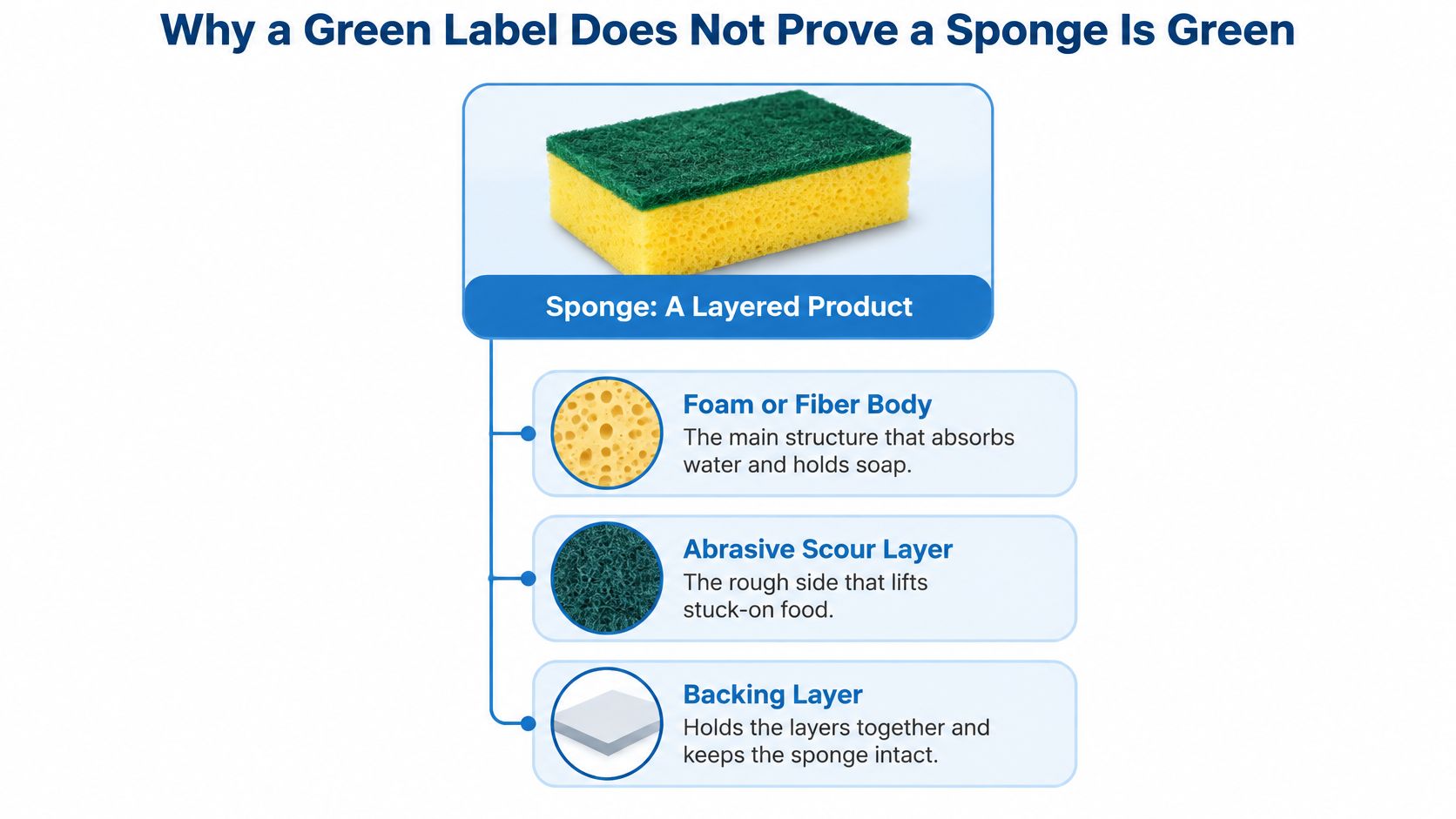
- Foam or fiber body: This absorbs water and holds soap, and it's the part brands advertise most.
- Abrasive scour layer: This rough side lifts stuck food and is often polyester, nylon, or another plastic even on a cellulose body.
- Backing, adhesive, and coatings: These hold layers together and can add plastic that never appears in the headline claim.
A cellulose block bonded to a polyester scour pad is part plant fiber and part persistent plastic, whatever the front of the pack says. Read composition the way you'd check any other guide to eco friendly cleaning products, layer by layer. Ask what the body is made of, what the scrub side is made of, whether that pad separates for disposal, and whether the maker discloses a plastic percentage or a compostability certification.
If a brand won't name the scour material, I wouldn't call it plastic free. A label tells you what the maker wants credit for. The layer list tells you what you actually bought.
Where Eco Friendly Sponges Win and Where They Lose
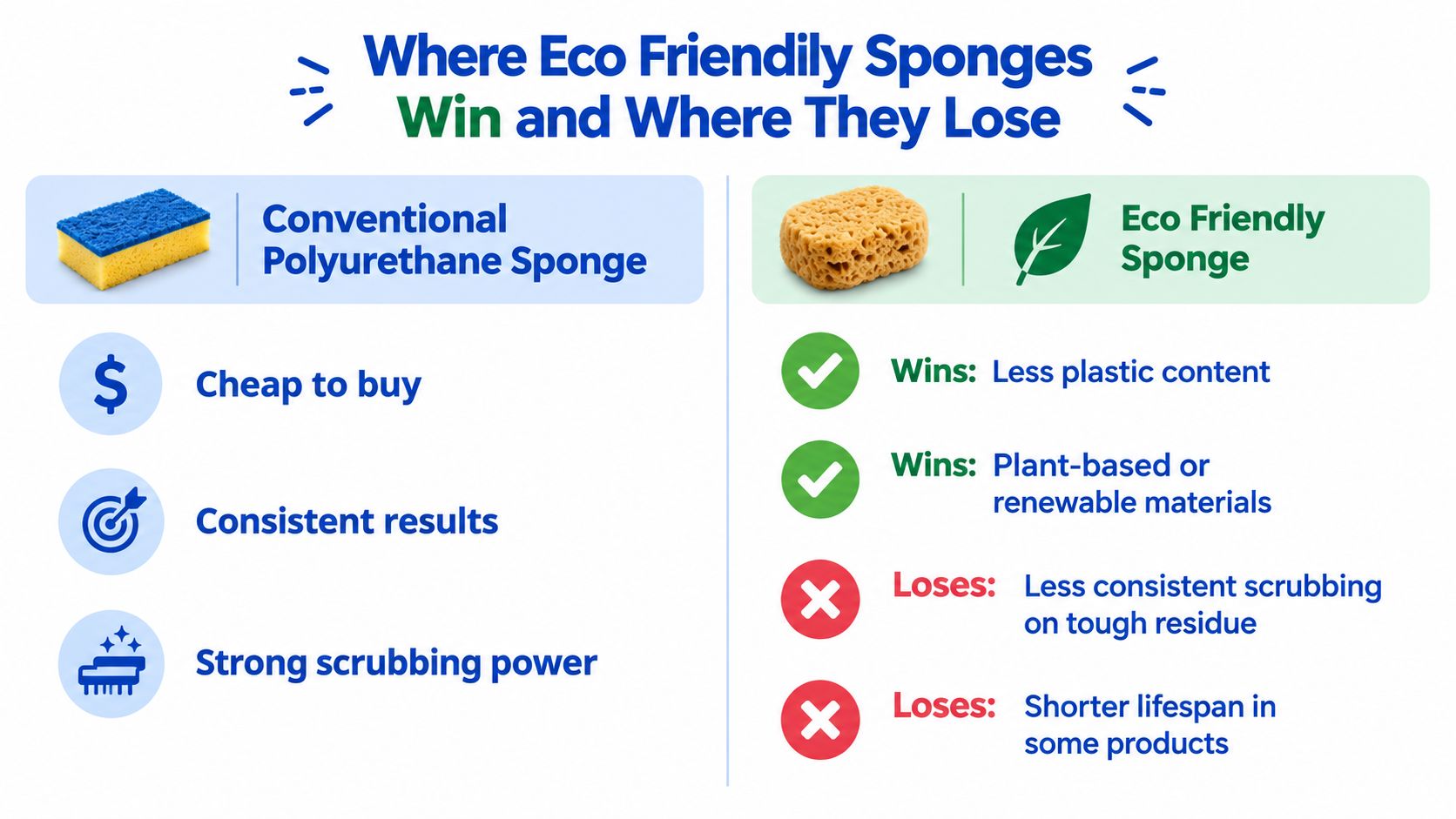
Conventional polyurethane deserves a fair baseline. It's cheap, consistent from pack to pack, and strong on scrubbing, which is why it dominates kitchens. Eco friendly cleaning sponges don't beat it on every count, and pretending they do leads to early replacements and frustrated scrubbing.
Wins and Losses in Pairs
Win on shedding, lose on soak time. Lower plastic cellulose and loofah shed less synthetic fiber, but cellulose softens and breaks apart after long soaks in a sink.
Win on end of life, lose on consistency. Plant based bodies can offer compost routes that polyurethane can't, but loofah density varies and plant sponges often wear faster. That means cost per week of use matters more than cost per pack.
Win on material source, lose on heavy residue. Avoiding petroleum based foam is a real gain for routine wiping. It doesn't help when you're grinding at burnt lasagna with a sponge that has no bite.
To compare cost fairly, divide the pack price by the number of weeks one sponge really lasts in your home. A cheap sponge replaced weekly can cost more than a pricier one that holds up for three weeks of normal wiping.
Melamine Is the Cautionary Case
Melamine is sold as a chemical free eraser, but its foam is synthetic. Research published by the American Chemical Society in 2024 found approximately 6.5 million fibers could be released for every gram of sponge material worn away, and estimated approximately 1.55 trillion fibers monthly using Amazon sales data from August 2023. Reducing detergent use doesn't make a synthetic, shedding foam eco friendly by material.
Use eco friendly sponges for routine wiping and light scrubbing. Keep one tougher, well chosen scrubber for stubborn grime instead of destroying soft sponges on jobs they weren't built for.
Matching Eco Friendly Sponges to Each Surface
Abrasiveness matters more than green credentials once a sponge touches a finish. Soft cellulose suits glossy and sealed surfaces, while abrasive melamine can dull polished stone, scratch acrylic, and wear grout. The cleaner matters too, because acid will etch marble and limestone even through a gentle sponge.
Use the table as a quick check before you scrub, not after you see a dull patch. When in doubt, test in a corner and rinse grit out first.
| Surface | Suitable Eco Sponge | Avoid | Reason |
|---|---|---|---|
| Sealed porcelain or ceramic tile | Cellulose, damp | Steel wool or abrasive melamine | Scratches the glaze and dulls the finish |
| Grout lines | Stiff nylon or natural-bristle brush, not a sponge | Melamine foam used repeatedly | Sponges cannot reach grout and abrasion wears it down |
| Sealed granite | Cellulose or loofah, damp | Acidic cleaners, abrasive melamine | Acids and grit dull the sealer and polish |
| Marble and limestone | Cellulose, damp | Vinegar, lemon, or acidic cleaners | Acid etches calcium-based stone |
| Stainless steel | Loofah or low-plastic scrubber | Steel wool, abrasive pads | Leaves visible scratches along the grain |
| Nonstick cookware | Soft cellulose | Abrasive melamine or scrubbing pads | Damages the coating |
| Glass and mirrors | Cellulose, wrung well | Dirty or soapy sponges | Leaves streaks and residue |
| Acrylic tubs and shower walls | Cellulose | Melamine or gritty scrubbers | Causes fine scratches that trap soap scum |
| Sealed hardwood or laminate | Cellulose wrung until barely damp | Soaking or dripping sponges | Excess water swells seams and edges |
How to Work Each Surface
For tile, wipe with damp cellulose and rinse the sponge often so trapped sand doesn't become sandpaper. For grout, switch to a stiff brush, because a flat sponge rides over the line and repeated melamine passes wear the joint.
For granite, use damp cellulose or loofah with a mild, non acidic cleaner and dry the surface after. For marble and limestone, keep vinegar and lemon cleaners off the counter entirely, since the etching happens fast and doesn't polish out with more wiping. For stainless steel, move with the grain using loofah or a low plastic scrubber, never across it with steel wool.
Nonstick pans need soft cellulose only, and glass needs a clean, well wrung sponge or you'll chase streaks. Acrylic tubs scratch easily, so skip gritty pads. On wood and laminate, wring cellulose until barely damp and don't let water pool at seams.
A sponge is only as safe as the grit it carries, so rinse out sand or debris before using it on any finish.
Keeping Sponges Hygienic and Knowing When to Replace Them
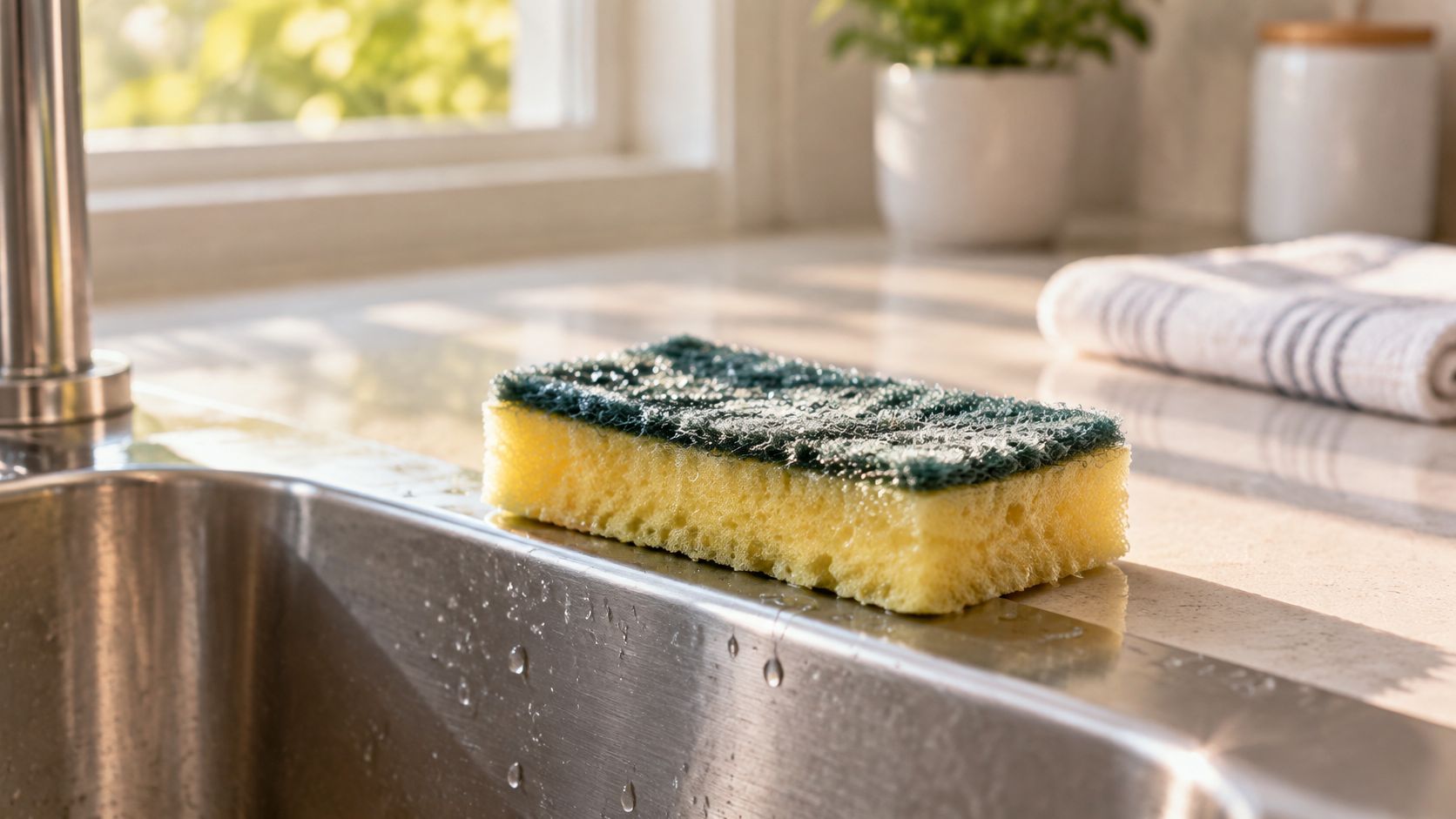
A damp sponge is a warm, nutrient rich habitat. Green fibers change nothing about that. Hygienic life comes from how you use, dry, and retire the sponge rather than the material it started as.
The UK government guidance on why cleaning is important advises washing or changing sponges regularly, washing and drying reusable items before reuse, and assigning separate cloths or sponges to different tasks. Comparative research has also found that cellulose sponges tend to harbor more bacteria than polyurethane sponges as they age, so plant based materials call for a tighter routine, not a relaxed one.
Cellulose still earns its place in the kitchen. It asks for a shorter replacement schedule and complete drying between uses, and it rewards anyone who already plans to compost a worn sponge and start fresh.
A Daily Routine That Works
Task separation matters more than any sanitizing trick. A sponge that stays on one job can only carry that job's germs, which is why the routine below starts with assignment rather than chemicals.
- Separate by task: Keep color coded sponges for dishes, counters, bathrooms, and floors, and never move a bathroom or floor sponge to food areas.
- Rinse and wring: Flush food away after each use and wring out excess water hard, since a sponge left sitting in a puddle stays damp for hours.
- Dry in open air: Stand it where air circulates so it dries completely before the next use.
- Wash reusables properly: Launder cloths hot where the material allows, and check care basics like whether you can wash microfiber cloths before mixing them into the same load.
The Microwave Question
Microwaving can sharply cut bacteria in some polyurethane sponges, and it is a reasonable tool where it applies. Only a fully wet, nonmetallic, microwave safe sponge should ever go in, and manufacturer instructions come first. Plant fibers, coatings, and scrub layers can scorch or ignite, so I would not microwave an eco sponge unless the maker explicitly allows it.
| Warning Sign | What It Means | What to Do |
|---|---|---|
| Persistent odor after rinsing and drying | Bacteria or residue are established inside the sponge | Replace it; sanitizing rarely removes the smell fully |
| Slimy or filmy feel | Biofilm is forming on the surface | Replace it and dry the next one completely |
| Tearing, crumbling, or shedding | Structure has broken down and fragments can spread | Replace immediately and avoid using it on delicate finishes |
| Permanent discoloration | Stains or pigment have moved into the body | Replace it, especially if used on food areas |
| Used on raw meat, eggs, or bathroom waste | High contamination risk | Discard; do not microwave or reuse |
| Cannot be wrung dry or holds water for hours | Poor drying slows recovery and encourages growth | Replace or move it to a task with less moisture |
Judge by condition rather than a fixed schedule. A sponge that smells clean but is crumbling is done, and a fresh looking sponge used on raw meat juice is done too.
Composting and Disposing of Worn Sponges
The whole sponge decides the disposal route. A plant fiber sponge without coatings or a synthetic scrubber can often enter a compost system, while the same body with a plastic layer belongs in the trash.
Certification language matters here. Home compostable means the product is designed to break down in a backyard system. Industrial only means it needs a commercial facility with sustained heat, so don't toss it in a cold home bin and expect it to disappear.
If You Compost
Cut the sponge into small pieces so microbes get more surface area. Remove any plastic backing or scrubbing pad first, then add the pieces to a hot, active pile rather than a cold, neglected bin. If you can't separate the layers cleanly, trash is the honest route.
| Material | Home Compost | Right Disposal Route | Key Note |
|---|---|---|---|
| Pure cellulose, uncoated | Yes, in an active pile | Compost, or trash if it has a plastic layer | Cut into small pieces and remove any scrubbing pad first |
| Unbleached loofah | Yes | Compost | Avoid composting if it has resin or laminated layers |
| Cotton or hemp cloth | Yes, if untreated | Compost or textile recycling where accepted | Check whether your town accepts textiles |
| Recycled-content scrubber | No | Trash | Recycled content still sheds plastic; do not compost |
| Melamine foam | No | Trash | Never rinse down the drain; it sheds fibers |
| Standard polyurethane | No | Trash | Not compostable; choose a lower-plastic replacement |
Check your town's trash, recycling, and yard waste rules before you assume a route is accepted. Programs differ across Massachusetts communities such as Wayland, Newton, and Needham, and textile programs may accept some cotton cloths if you confirm first.
Using Eco Friendly Sponges to Cut Real Waste
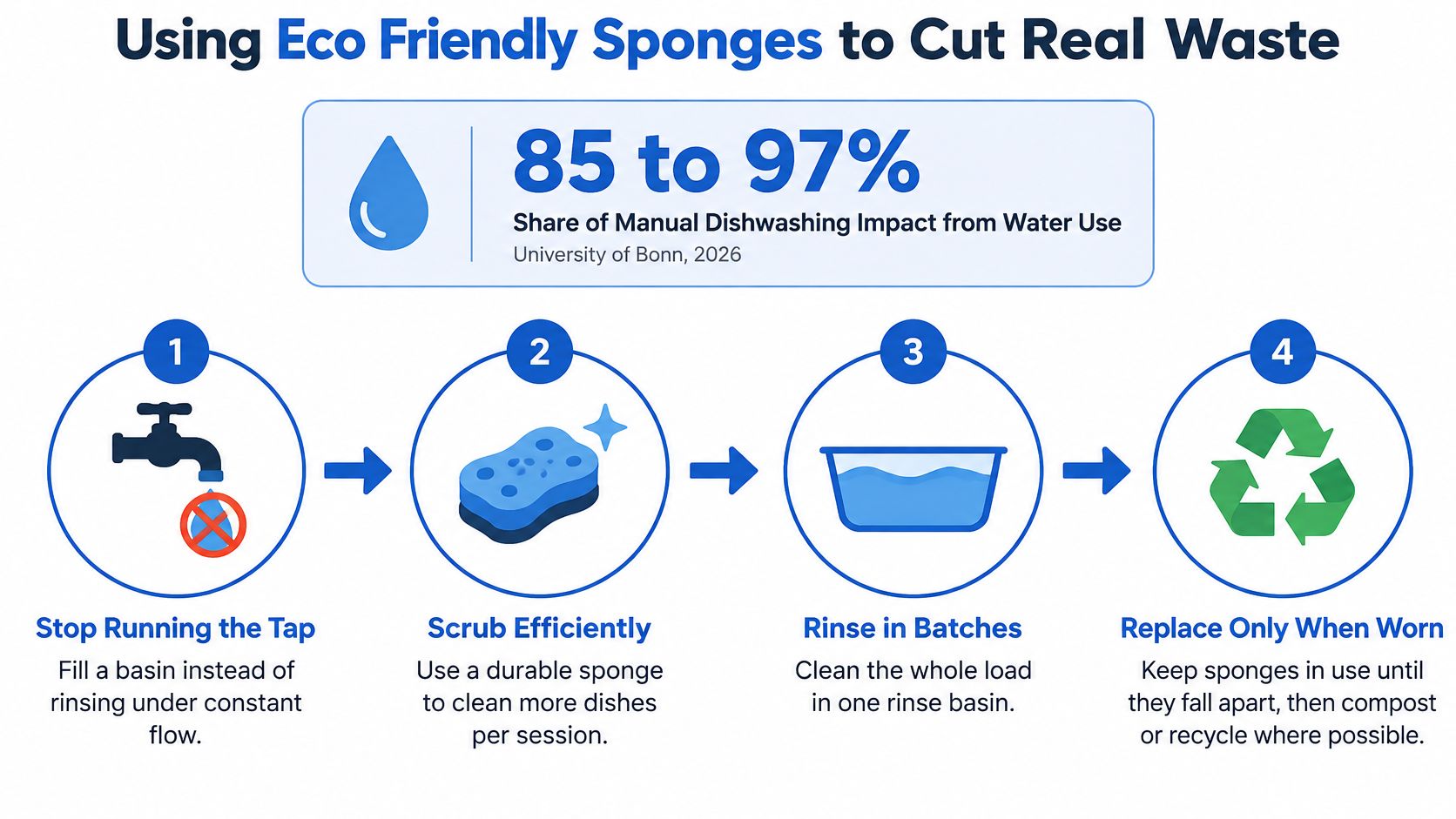
Swapping the sponge helps, but it is not the biggest lever at the sink. A 2026 University of Bonn assessment found water consumption accounted for approximately 85–97% of the overall environmental impact of manual dishwashing. Lower plastic sponges still earn their place, since they shed less microplastic than high plastic ones as they wear. The ranking is clear, though: pick a good sponge once, then spend your effort on water habits, where the larger gains sit.
A Whole Task Routine
- Sort by task: Keep color coded eco friendly cleaning sponges for dishes, counters, bathrooms, and floors so you don't wear out a good sponge on a high risk job.
- Fill a basin: Wash in a basin instead of running water continuously while you scrub each item.
- Wipe debris first: Scrape loose food into the bin, then scrub once with a low plastic sponge matched to the surface.
- Rinse in batches: Rinse in the basin or in a short batch rinse rather than under a constantly running tap.
- Dry and rotate: Wring each sponge, air dry it upright, and rotate stock so every sponge dries fully between uses.
For a Massachusetts household that hand washes daily, the basin habit alone usually outweighs a small difference between two low plastic brands. Pick a good sponge, then fix the water.
Two Tests Before You Stock Up
Durability test: Wet and wring one new sponge ten times, then squeeze and twist it the way you would after a heavy wash. Watch the edges and any glued layers. A sponge that shreds or separates in this test becomes fast waste no matter what its label claims.
Packaging test: Prefer sponges sold without extra plastic wrap or individual sleeves. Packaging never appears in a material claim, but it still leaves your house as waste.
Hold off on the bulk pack until one sponge passes both tests in your sink. A large pack of a fast wearing sponge costs more and creates more waste than a smaller pack of a durable one.
Judge material, durability, cleaning performance, water use, and disposal together, because a compostable label alone doesn't guarantee the smallest footprint.
Frequently Asked Questions About Eco Friendly Sponges
Is Replacing a Synthetic Sponge Enough to Make Cleaning Greener
It helps, but water use often matters more. Use a basin, avoid continuous running water, and match the sponge to the job so it lasts.
Are Cellulose Sponges Sanitary
They can be, with a shorter replacement schedule than polyurethane. Rinse, wring, air dry, keep tasks separate, and replace on odor, slime, or tearing.
Can I Microwave an Eco Sponge to Sanitize It
Only if it's fully wet, nonmetallic, microwave safe, and the maker allows it. Plant fibers, coatings, and scrubbers can scorch or ignite, so don't treat microwaving as a universal method.
Is Melamine an Eco Friendly Choice
Not by material. It's a synthetic foam that sheds microfibers as it wears, even though it can remove marks without detergent.
Can Compostable Sponges Go in a Home Compost Bin
Only when they're plant based, uncoated, and free of plastic scrubbing pads. Check for home compostable certification and your town's rules first.
Which Sponge Is Safe for Granite
I would use a damp cellulose or loofah sponge with a mild, non acidic cleaner. Keep acidic cleaners and abrasive melamine off sealed granite.
Set Up Your Eco Friendly Sponge System This Week
Start with two materials, not a drawer full of experiments. Pick plant fiber cellulose or a cotton cloth for routine wiping, plus one low plastic scrubber for pots and stubborn grime. That pair covers most kitchens and bathrooms in Wayland, Newton, Needham, Wellesley, and Weston without forcing a soft sponge into heavy duty work.
Buy a color coded set and assign each color a task and a hook or small bin. Write your replacement triggers on the bin, including odor, slime, tearing, and any use on raw meat or bathroom waste, so everyone in the house swaps on the same rules.
Run a weekly two minute check. Smell each sponge, feel for slime, look for crumbling edges, and retire anything that fails. Pair that habit with the broader routine in this eco friendly house cleaning guide so sponges, cloths, and cleaners work as one system.
Keep the surface limits in mind as you set up. Cellulose is safe for routine tile and stone care, but grout, deep stains, and sealer questions need a brush or professional assessment, not harder scrubbing.
If your tile, grout, or stone needs more than a better sponge system, Sunny Day Pro Services offers eco friendly cleaning options, deep cleaning, and post remodel cleanup for busy Massachusetts homeowners. Visit the site to request a fast quote and schedule a visit that fits your week.

