
Exterior Fly Control That Actually Works for Homeowners
Exterior fly control made simple for homeowners. Identify fly types, remove breeding sites, block entry points, and pick the right traps and treatments.
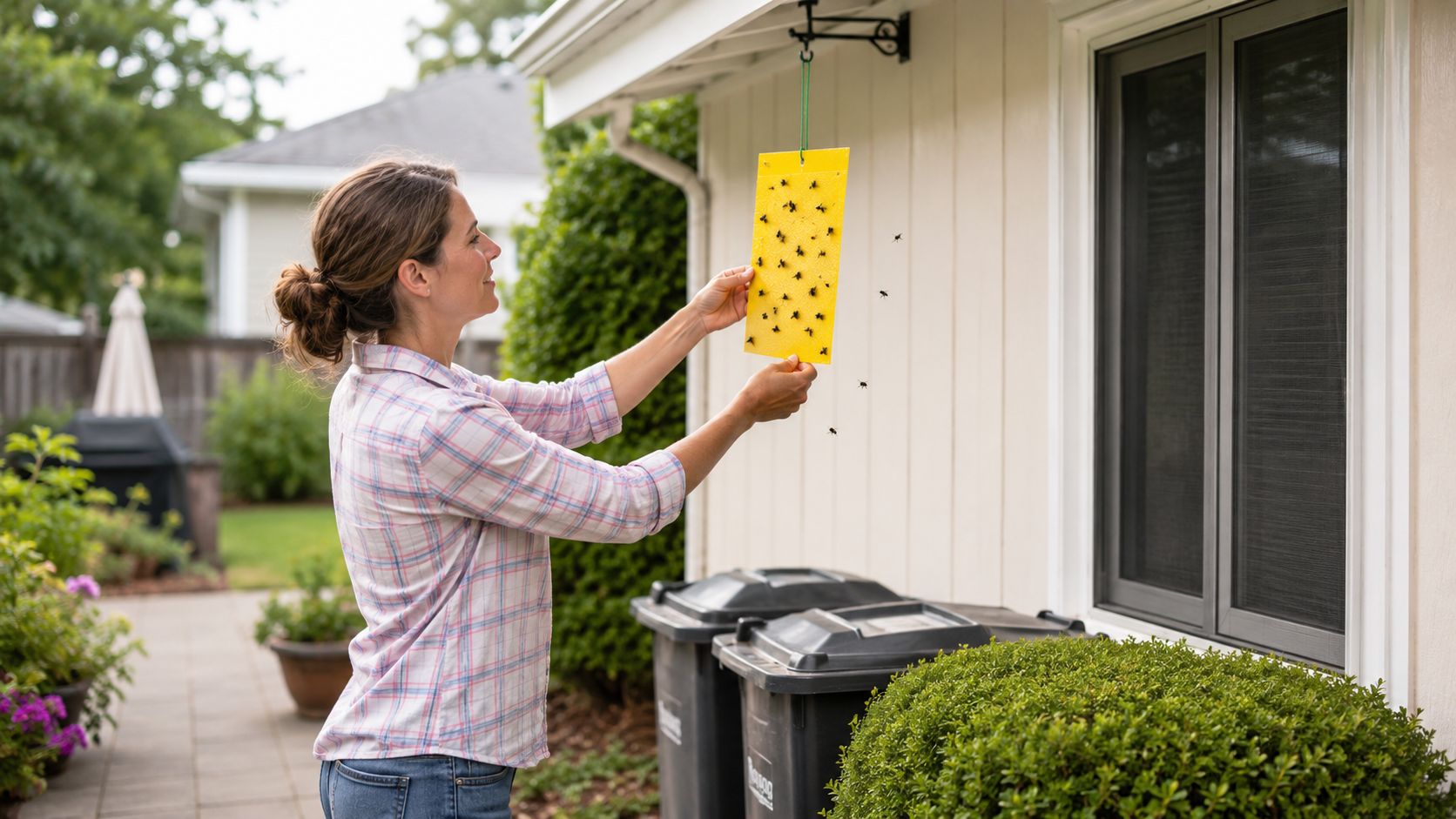
You can clean the patio, pull the bins in tight, and still spend the evening swatting flies off the drinks. That's the part most homeowners in places like Wayland, Wellesley, and Newton run into. The yard looks fine, but the flies keep showing up because the problem usually starts outside the visible cleanup zone, at the dumpster, under the eaves, around a garage door, or in a damp pocket of yard debris that never seems important until it starts breeding.
Exterior fly control works best as an outside-in system. Remove what attracts flies, block the ways they get in, manage airflow at the doors, then use targeted treatment only where it helps. That sequence matters because a tidy yard can still produce pressure if the building envelope is weak or the air pressure at the entry is pulling flies inside.
Table of Contents
- Why Your Clean Yard Still Has Flies
- House flies and blow flies
- Cluster flies and smaller outdoor nuisance flies
- What the fly type tells you
Why Your Clean Yard Still Has Flies
A homeowner can clean the patio on Saturday afternoon, host dinner outside, and still get buzzed once the sun drops. I've seen that pattern over and over on New England properties. The yard looks neat, the grill area is wiped down, and the trash is out of sight, but flies keep landing near the back door like they own the place.
The core issue is pressure. Flies are being fed, bred, or sheltered near the home even when the yard looks tidy. Illinois public-health guidance puts sanitation at the center of the problem, saying that eliminating breeding sites is usually enough to prevent infestations and recommending sealed trash, prompt removal of manure and decaying organic matter, and screening and sealing entry points as core measures (Illinois house fly guidance).
A clean-looking yard can still fail if the pressure is coming from the wrong places. Breeding material may be close by, entry points may be weak, air movement at the door may be pulling flies inward, and sheltered spots under eaves or in garages may be giving them a place to rest before they get back inside. That's why exterior fly control starts with the property itself. You have to look at what is attracting flies, what is letting them in, and what is helping them stay active around the home.
Practical rule: if flies are showing up at the patio, don't start with the can of spray. Start by asking what's attracting them, where they're resting, and how they're getting back inside.
For a homeowner in Massachusetts, that often means looking past the obvious. A tidy lawn in Needham can still sit next to a can of garage trash, a wet compost area, or a breezeway that never fully closes. Once you see how the yard, the doors, and the air movement around the house work together, the fix gets a lot more practical, and a lot less frustrating.
Know Which Flies You're Dealing With Outside
The flies you notice around a house usually point to a specific outdoor condition. House flies, cluster flies, blow flies, and the smaller drain or fruit flies all tend to reveal where the pressure is coming from if you know what to look for. The goal is not to identify every insect down to the last detail, it is to make a smarter call before you waste time treating the wrong area.
House flies and blow flies
House flies are the classic kitchen-and-trash fly, usually the one homeowners describe as constantly circling the grill, the bins, or the back door. Blow flies are the shinier, heavier-looking flies that often show up when garbage, pet waste, or other decaying organic material has sat too long. Their presence usually points toward nearby food waste or rot, and that clue matters more than the insect itself.
Cluster flies and smaller outdoor nuisance flies
Cluster flies behave differently. They are the ones that seem to collect on sunny siding, under trim, or around rooflines, then show up inside later when the weather changes. The smaller drain or fruit flies are often tied to outdoor kitchen residue, compost, or damp organic buildup near a bar area or patio sink. They may be tiny, but the source behind them can still be significant.
What the fly type tells you
A quick field read is often enough. If flies are hanging around the can, think garbage and waste handling. If they're concentrated around a wall or soffit, think resting sites and overwintering behavior. If they spike near a patio sink, compost bin, or spilled fruit, think damp organic material.
The fly points you toward the source, treat it as a diagnostic signal.
That mindset keeps you from treating the symptom and missing the source. Once you know which fly is most active outside, the next step is to walk the property like a technician would and strip out the conditions that let those flies build pressure in the first place. A clean yard still needs the right setup, and the same logic applies when you keep the area clean.
Sanitation and Source Reduction Around the Property
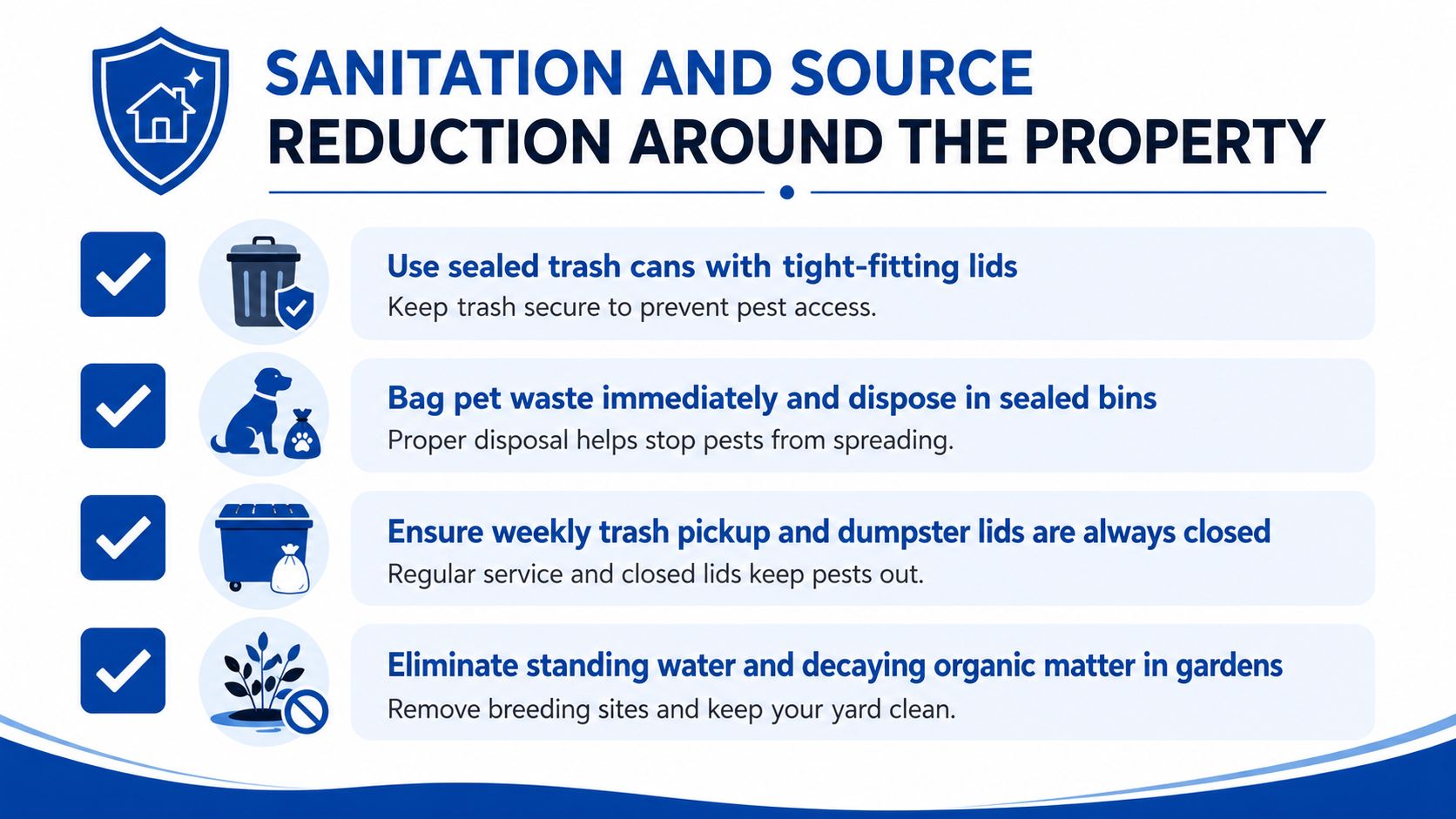
This is the part that moves the needle when a yard keeps producing flies. The goal is simple, remove what they need to feed and breed, then keep it removed long enough that pressure drops. University of Minnesota Extension gives a concrete threshold that's easy to remember, garbage cans should be set out for pickup at least once each week, even if they aren't full, because garbage that sits longer than one week is likely to produce adult blow flies (University of Minnesota Extension).
Start with the trash and waste routine
Sealed trash cans, tight lids, and bagged pet waste are essential. Keep dumpsters closed, washed down, and as far from entry doors as possible. If a can has been sitting hot and damp in the sun, assume it's part of the problem until it's cleaned.
A short property walk usually finds the rest.
- Check trash storage: Make sure cans are sealed, lined, and not overflowing.
- Bag pet waste immediately: Don't leave it exposed on the side yard or by the deck.
- Move attractants away from doors: Trash, compost, and recycling should not sit next to a main entry.
- Inspect after cooking: Clean grill grease, dropped food, and sticky residue before dusk.
Don't miss the less obvious sources
Outdoor flies don't care if the problem looks small to you. Pet food left on a porch, fallen fruit under ornamental trees, a dirty grill tray, or a clogged drain can all keep pressure going long after the obvious cleanup is done. Animal carcasses and decaying vegetation need immediate removal, not a wait-and-see approach.
The big mistake is treating before the property stops producing flies. If the source is still active, sprays and traps are working uphill. That's why sanitation comes first, every time.
If you want a deeper cleaning checklist for the surrounding property, this practical keep-the-area-clean guide fits well with the same mindset. Sanitation isn't glamorous, but it's the part that keeps the rest of the work from being wasted.
Exclusion and Entry-Point Hardening
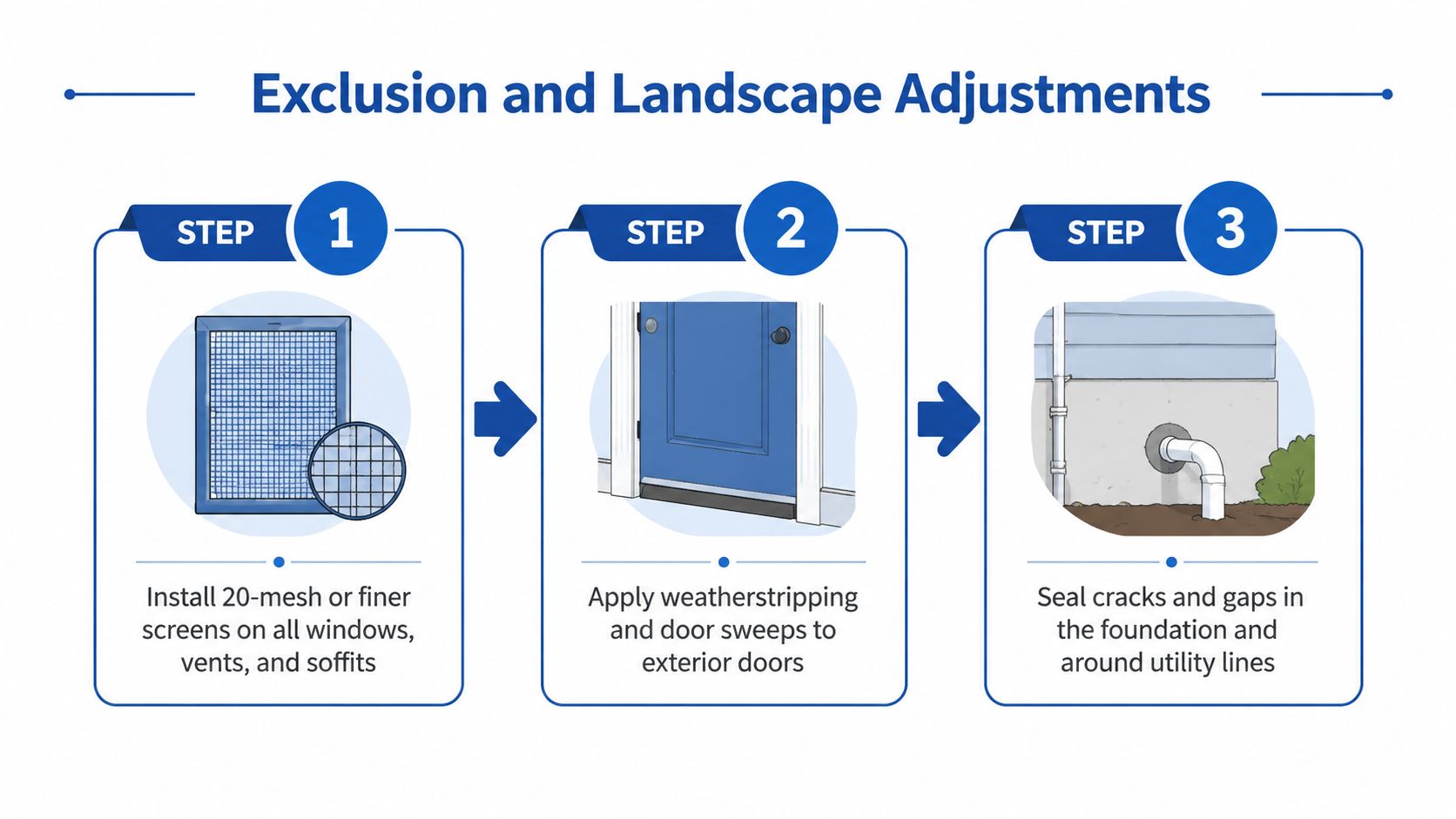
Once the attractants are under control, the building itself has to stop giving flies a way in. Screens, door hardware, seams, and pressure balance matter more than many homeowners expect. A house can look tight from the driveway and still leak flies through a torn screen, a loose sweep, or a gap around a utility line.
Harden the entry points
Use 20-mesh screens or finer on windows, vents, and soffit openings, then check the frame edges, not just the mesh. Add door sweeps, weatherstripping, self-closing doors, and vestibules where traffic is constant. In high-use entryways, air curtains can be surprisingly effective, and field guidance has shown that air curtains on both sides of a 91-cm doorway prevented 98–100% of house fly entry at mean air velocities as low as 4 m/s (Ecolab field guidance).
Clean up the yard structure around the house
The area around the house matters because flies rest in protected, moist, shaded spots before they move back toward the building. Keep grass and weeds trimmed, clear clutter, and drain standing water. Pull vegetation back from the siding so the wall does not become a sheltered corridor.
Practical rule: if a place stays damp, shaded, and still, expect flies to use it.
Airflow belongs in the exterior plan too. HVAC balancing and sealed utility penetrations help keep pressure from pulling flies inward at doors and small gaps, even when the yard itself looks clean.
If you want a deeper cleaning checklist for nearby problem spots, this practical gnat spray guide fits the same outside-in approach. Exterior control works best when the entry points are hardened first, then the rest of the property gets adjusted around them.
Trap and Treatment Options That Work Outside
A clean yard can still push flies toward the house if the exterior setup gives them rest, shade, or easy access points. Traps and sprays have a place, but only when they match the job. A trap can monitor activity, pull flies away from people, or reduce pressure near a problem spot. A spray can knock down resting flies on exterior surfaces. Neither one solves a garbage routine, a broken screen, or a door that leaks air.
Compare the tools before you buy them
| Tool | Best Placement | Primary Use | Residual Life | Main Trade-off |
|---|---|---|---|---|
| Sticky trap | Near problem edges, not in seating areas | Monitoring and light capture | Limited | Can look messy and fills quickly |
| Jar trap | Away from patios and doors | Lure and capture | Limited | Needs regular emptying and rebaiting |
| Bag trap | Perimeter zones away from people | Knockdown of outdoor pressure | Limited | Only helps if placed correctly |
| Electric UV trap | Near doorways or outdoor seating edges, but not where people gather | Capture of active adults | Depends on unit and upkeep | Better as a support tool than a complete fix |
| Residual perimeter spray | Resting sites such as porches, garages, breezeways, doghouses, trash cans | Reduce harborages | Longer than quick-kill sprays | Must be applied precisely and usually needs repeat treatment |
Purdue Extension notes that exterior spraying under eaves, roof gables, and around windows is beneficial in early fall, and that a second treatment usually is necessary when residual sprays like permethrin are used (Purdue Extension). The same guidance also makes a useful distinction, pyrethrins give fast knockdown but have little or no residual action, so they work better as a temporary space treatment than as a stand-alone outdoor strategy.
Use treatment where flies rest, not everywhere
I've seen homeowners over-wet every surface and still get lousy results. The spray has to hit resting sites to matter, and it works better when sanitation and exclusion are already in place. Applied to the right exterior surfaces, a residual perimeter treatment can help, but it should never be the only tool in the box.
Start by defining the problem before selecting a product. If you need a practical comparison of quick-kill options, this overview of getting rid of gnats spray approaches is useful for thinking through where a spray makes sense and where it won't pull its weight. The same logic applies outdoors with flies, the right tool depends on the target, the resting sites, and the pressure points around the building.
A Seasonal Maintenance Plan for Massachusetts Homes
Fly pressure tracks with the seasons in Massachusetts, so the best results come from matching the work to the weather and the way flies behave around the house. Spring, summer, early fall, and late fall each call for a different move. Timing matters here. Hit the property before flies get a foothold, and you spend less time chasing the problem later.
Spring and summer
Spring is for cleanup after snowmelt, old yard debris, and any organic material that sat all winter. Summer is when the trash routine matters most, along with grill cleanup, pet waste handling, and keeping patio attractants under control. A lot of the recurring complaints I hear in Newton and Wellesley start in summer because people are hosting more, cooking outside more, and leaving attractants near the house longer than they realize.
If you want a practical way to organize that first pass, a spring house cleaning checklist helps translate the work into a repeatable routine. For fly control, the point is to clear the sources that feed the pressure around the house, not just make the yard look tidy.
Early fall and late fall
Early fall is the window for residual treatment under eaves, roof gables, and around windows, especially if flies are clustering on the exterior. As noted earlier, residual products need to be placed where flies rest, and the coverage often needs a follow-up treatment rather than a one-and-done pass. Late fall and winter shift the focus back to sealing, screening, and closing the gaps that let cluster flies overwinter in wall voids and attics.
A seasonal checklist keeps the work from drifting. In practice, it helps you line up cleanup, sealing, screening, and treatment before the house starts collecting fly pressure again.
When to Call a Pro and What to Expect
Some jobs are worth doing yourself. Others are worth handing off because the source is hidden, the structure is leaking, or the fly pressure keeps returning no matter how thorough the cleanup is. A professional visit makes sense when you've already done the sanitation pass and the flies are still showing up, when the problem seems tied to attic or wall voids, or when a property sits near dumpsters, food service, or other high-pressure sources.
Signs the issue has moved past simple DIY
Recurring indoor flies that seem to start from one exterior side of the house are a clue that the entry point or resting site is being missed. Overwintering cluster fly issues usually need a more technical inspection because the insects can hide where a homeowner won't easily reach. If the property borders a busy dumpster area or a restaurant load zone, the surrounding pressure can keep reintroducing flies faster than standard consumer products can suppress them.
A good exterior fly service should include a property inspection, identification of breeding and resting sites, a sanitation review, an exclusion review, targeted residual treatment on the right surfaces, and a follow-up plan. That's the difference between a quick spray and a real service relationship.
What homeowners still own after the visit
The property doesn't stop needing upkeep after a pro treatment. Weekly trash handling, screened openings, and basic yard sanitation still matter because flies respond fast to neglect. A technician can reduce pressure, but they can't maintain the bins, clean the grill, or keep the doors sealed every day.
Practical rule: if the source comes back, the flies come back.
The best results usually come from combining homeowner maintenance with targeted service when the pressure is beyond routine control. You don't need a full-time program for every house, but you do need a plan that respects what drives flies around the home. The sequence stays the same, remove attractants, harden entry points, manage airflow, then treat.
If you want a local team that can handle the cleaning side of a tough exterior fly problem while keeping the work practical and straightforward, Sunny Day Pro Services is a smart place to start. Visit Sunny Day Pro Services to request help that supports a cleaner property and a better result around the home.

