
How to Remove Hard Water Stains on Sink in 2026
Remove hard water stains on sink fast. Step-by-step removal methods by material, DIY cleaners, prevention tips, and when to call a pro. Massachusetts homeowners
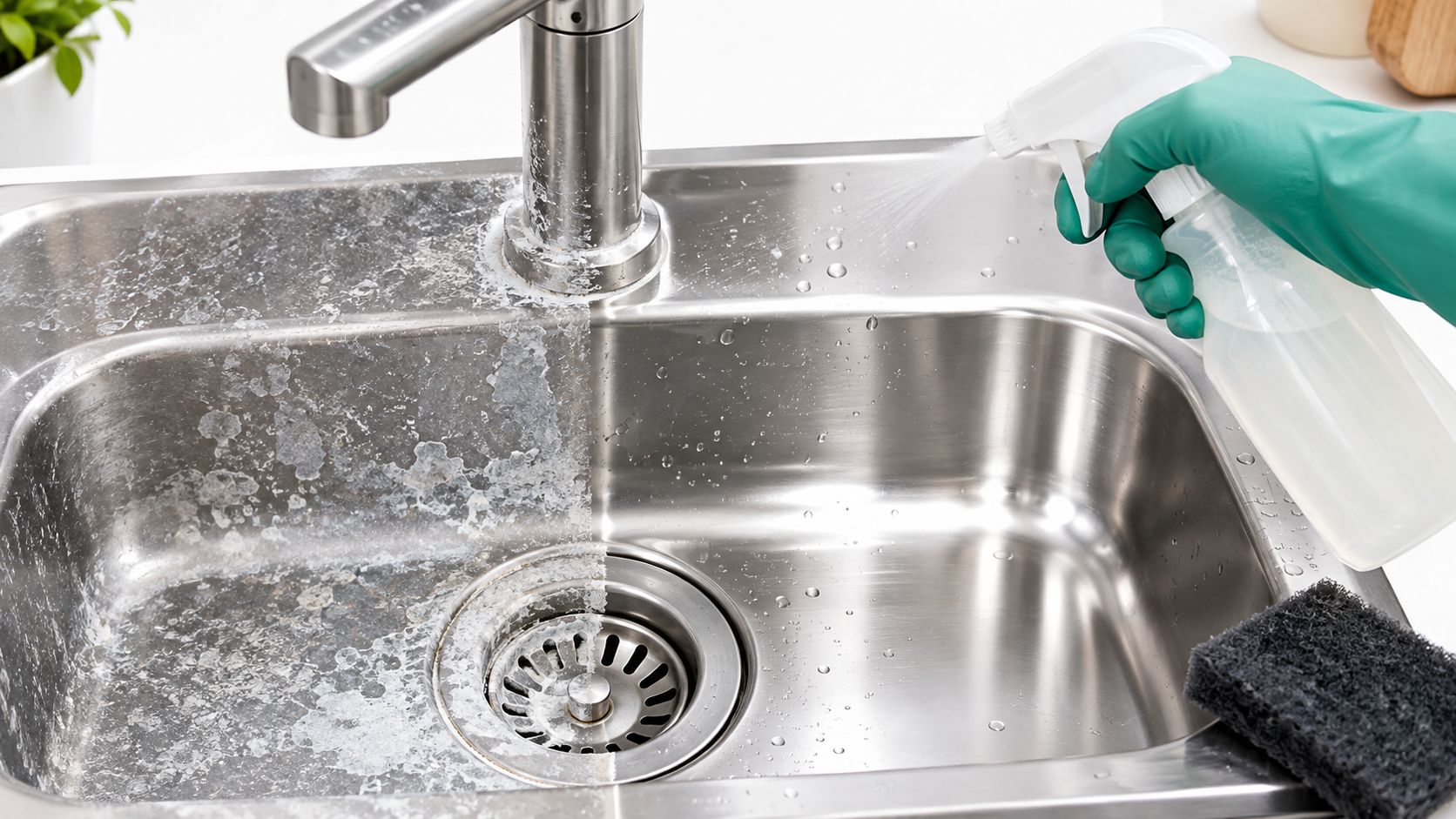
You've wiped the bathroom sink twice, yet a cloudy ring is still sitting around the faucet and drain. In many Massachusetts homes, that white or gray film isn't ordinary dirt. It's hard-water scale, and scrubbing harder can make the situation worse if the sink surface has already been etched.
The safest way to remove hard water stains on a sink is to diagnose the deposit first. A raised, chalky crust may respond to controlled descaling. A dull patch, rough area, or permanent haze may be surface damage that no cleaner can safely scrub away. The sink material determines which side of that line you're on.
Table of Contents
Why Hard Water Stains Keep Coming Back on Your Sink
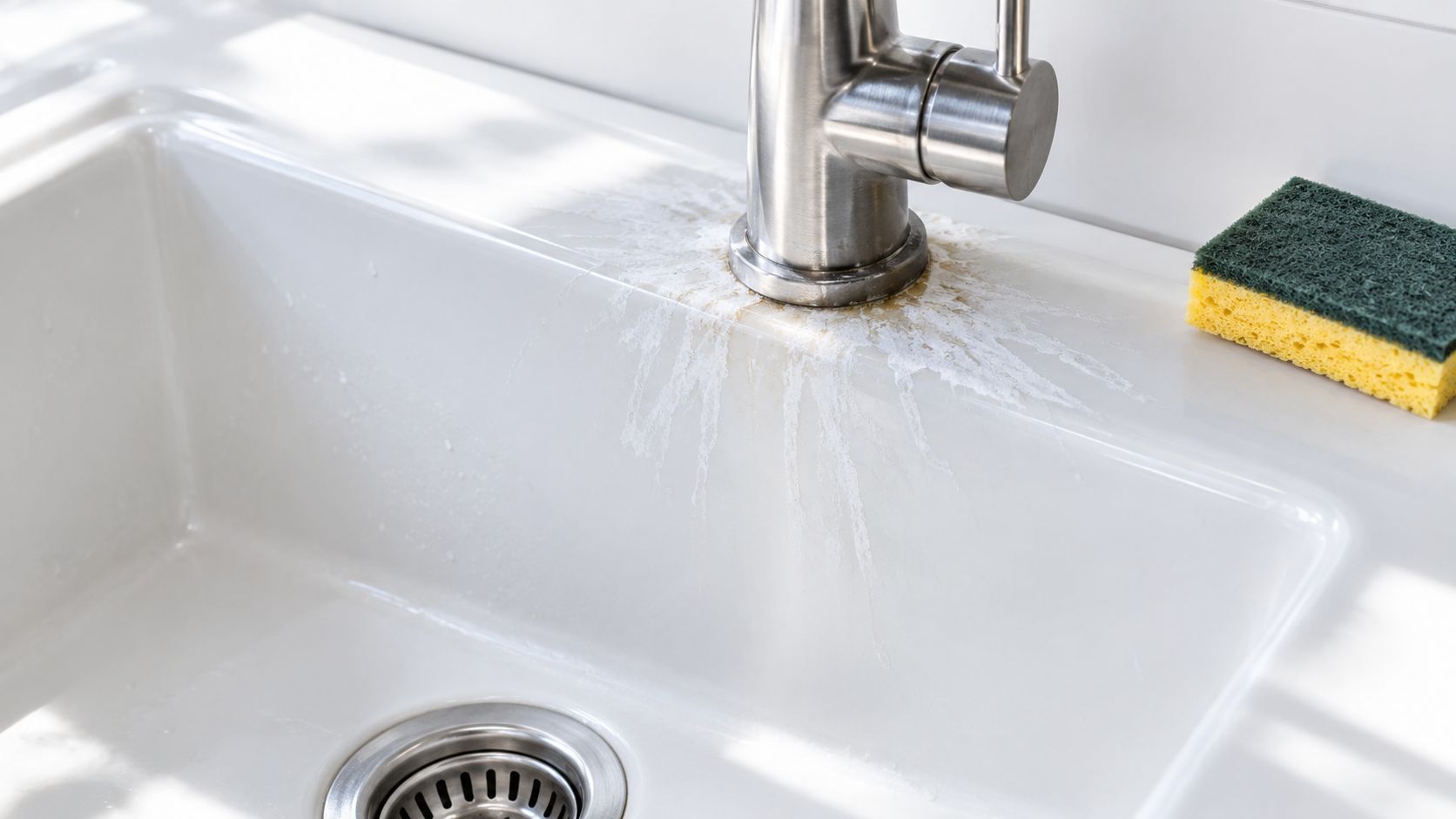
A kitchen or bathroom sink can look clean at breakfast and show a pale ring by evening. Water collects around the faucet base, sits along the basin edge, and dries near the drain. Each droplet leaves behind part of what was dissolved in it.
Hard-water stains are primarily mineral deposits left when water evaporates. The U.S. Geological Survey's explanation of groundwater quality describes hard water as water containing substantial dissolved calcium and magnesium. Hardness is reported as milligrams per liter of calcium carbonate equivalent.
The USGS classification puts water into four useful categories:
- Soft: 0–60 mg/L
- Moderately hard: 61–120 mg/L
- Hard: 121–180 mg/L
- Very hard: above 180 mg/L
As water dries on a faucet, basin, or drain rim, dissolved minerals remain behind. Over time, they can form cloudy white, gray, or chalky scale. A sink that keeps staining may reflect the water supply, not poor housekeeping.
Why location and temperature matter
Two neighboring homes can have noticeably different staining. Water chemistry changes with geology and source, so a home supplied by mineral-rich groundwater may develop scale faster than one supplied by softer water.
Calcium carbonate also becomes more likely to precipitate when water is heated. That's why deposits often appear around hot-water faucets, kettle-fill areas, and spots where warm droplets repeatedly evaporate. The same mineral process can create buildup inside plumbing fixtures and water heaters, not just on visible porcelain or metal.
Practical rule: If the mark is raised and chalky, diagnose it as possible scale first. If the surface itself looks dull or rough, stop treating it like dirt.
Before reaching for vinegar, identify the sink material. Acid that helps on glazed ceramic can permanently damage marble, limestone, or travertine.
Identify Your Sink Material Before Cleaning
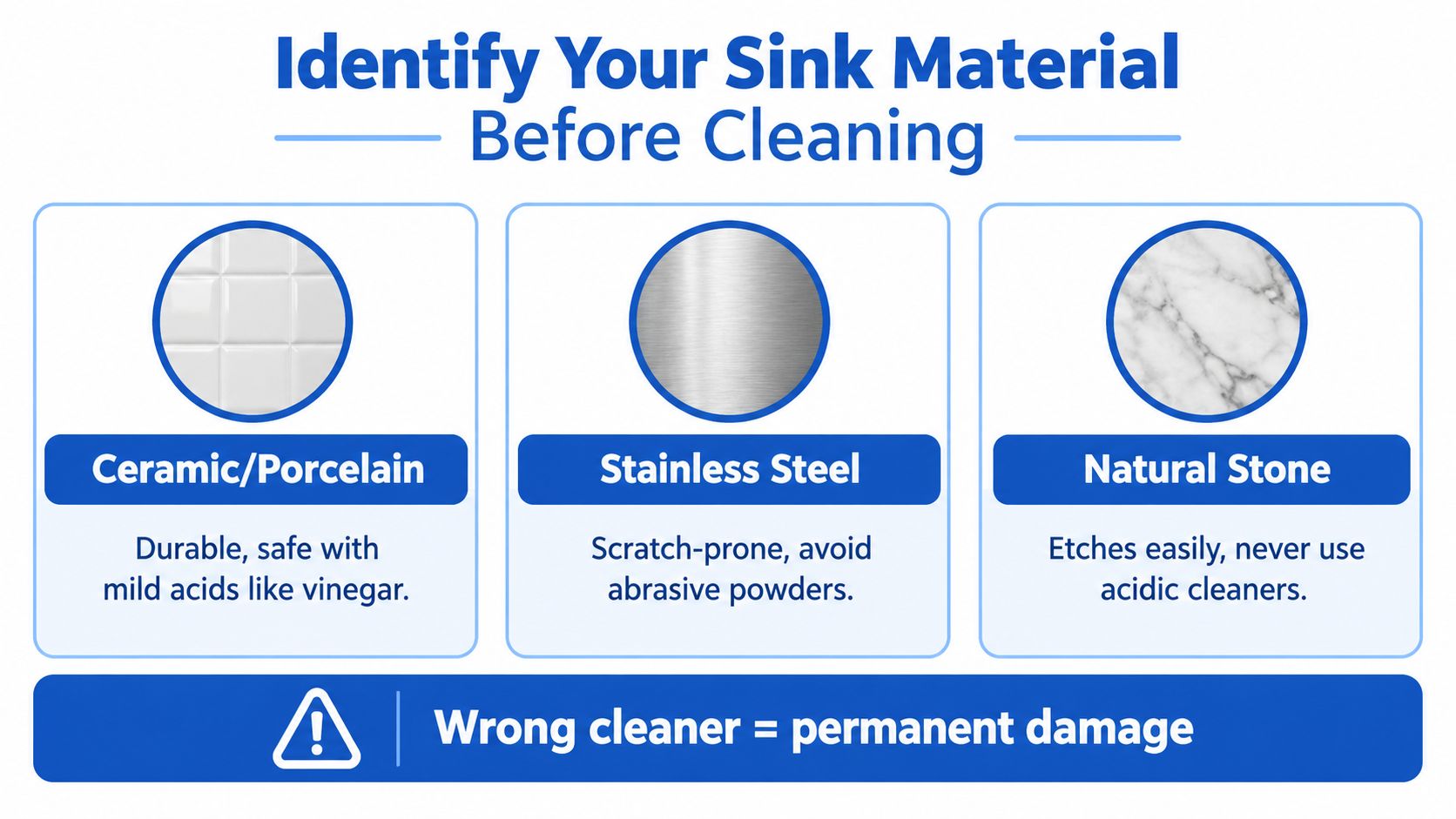
The most expensive sink-cleaning mistake I see is choosing a cleaner before identifying the surface. A mineral deposit may be removable, but the finish underneath it may not tolerate acid, abrasion, or prolonged moisture.
Marble, limestone, and travertine are calcium-carbonate stones. Vinegar, lemon juice, citric-acid cleaners, and many commercial descalers can dissolve those materials, leaving dull etched spots instead of removing only the stain. For natural stone, use a pH-neutral stone cleaner, a soft cloth, thorough rinsing, and immediate towel-drying, as explained in this natural-stone sink care guidance.
Glazed ceramic, porcelain, and glass generally tolerate carefully controlled mild-acid treatment better, provided the glaze or finish is intact. Stainless steel is also commonly compatible with a mild descaling approach, but it scratches easily, especially when someone uses abrasive powder or scrubs across the grain.
Use a cautious spot test
If you're unsure whether the sink is porcelain enamel, composite, coated metal, or stone, don't guess. Test the proposed cleaner in a hidden area first.
- Apply a small amount to an inconspicuous spot.
- Follow the intended contact time.
- Rinse thoroughly.
- Dry the area completely.
- Check for haze, color change, roughness, loss of sheen, or a new dull patch.
A sink's success benchmark is surface preservation, not just the disappearance of a white mark. If the deposit lifts but the finish turns cloudy, the cleaning method failed.
Avoid razor scraping, steel wool, abrasive powders, and aggressive mechanical pressure. These tools can scratch metal, remove protective finishes, and leave natural stone permanently uneven. Stainless-steel owners can also review how to care for stainless steel with mineral oil, but oil should never substitute for removing scale or identifying the surface first.
Porosity matters. Natural stone can hold residues below the immediate surface, so prevention and prompt drying are safer than repeated acid treatments. If a stone sink already shows etching, ordinary cleaning won't restore its original polish. Light damage may need a compatible polishing powder, while deeper damage generally calls for professional honing.
Safe DIY Cleaning Steps for Common Sink Materials
For a fresh or moderate deposit on glazed ceramic, glass, or appropriately finished stainless steel, use controlled contact rather than a long, aggressive soak. The objective is to soften the mineral layer while limiting exposure to the sink finish.
A controlled vinegar method
Ordinary white vinegar, typically 5% acetic acid, is a mild descaler. The New Mexico State University guidance on vinegar as a cleaner describes the relevant reaction: calcium carbonate plus acetic acid produces calcium acetate, water, and carbon dioxide.
Follow this sequence:
- Rinse first. Remove loose grit and surface debris with water. Grit trapped under a cloth or pad can scratch the finish.
- Wet the deposit. Saturate a cloth or paper towel with white vinegar and place it over the scale.
- Keep it continuously wet. Allow about 30–60 minutes of contact. The source guidance supports this range for fresh-to-moderate deposits.
- Agitate gently. Use a non-scratch nylon pad or soft brush. A soft toothbrush can help around faucet bases and drain rims.
- Rinse thoroughly. Remove both loosened minerals and acidic residue.
- Dry immediately. Use a clean microfiber cloth so new droplets don't recreate the same ring.
Bubbling can occur as the acid reacts with carbonate scale. That bubbling shows active dissolution, but it doesn't tell you whether the deposit is fully removed. Thick, calcified scale is better handled through repeated short cycles than by leaving vinegar unattended overnight.
What vinegar won't do
Vinegar is primarily a mild descaler. It doesn't replace a product designed for disinfection, and it doesn't reliably remove greasy soil or soap residue. Clean those contaminants with a material-compatible cleaner rather than increasing the acid exposure.
Ventilate the room, wear gloves and eye protection, and never mix vinegar with bleach or another cleaner. If the sink changes color, develops haze, feels rough, or loses its sheen, stop immediately and rinse the surface.
If you're considering combining household ingredients, review the safety issues in this guide to vinegar and baking soda cleaning. Mixing products can create activity that looks impressive without making the treatment safer or more effective.
Eco-Friendly and Commercial Descaler Options Compared
Vinegar is not automatically the safest choice, and a commercial descaler isn't automatically the strongest choice for every sink. The right option depends on the material, the deposit thickness, and how much finish risk you're willing to accept.
A pH-neutral stone cleaner is the sensible choice for marble, limestone, and travertine. It may not dissolve a heavy mineral crust quickly, but it protects the surface from the damage caused by acid. On non-calcareous materials, a mild citric- or lactic-acid product may be appropriate if the label permits that surface and a spot test produces no change.
Commercial descalers can work faster on stubborn buildup, but stronger chemistry increases the consequences of an incorrect dwell time, concentration, or material choice. Read warnings before applying the product, especially around polished metal, enamel, composite sinks, coatings, and natural stone.
The eco-friendly cleaning product guidance from Sunny Day Pro Services can help homeowners compare gentler approaches, but “eco-friendly” still doesn't mean universally safe. Material compatibility remains the deciding factor.
| Option | Best For | Risk Level | Key Limitation |
|---|---|---|---|
| White vinegar | Fresh-to-moderate scale on compatible glazed ceramic, glass, or stainless steel | Low to moderate when controlled | Unsafe for calcium-carbonate stone and ineffective as a general degreaser |
| pH-neutral stone cleaner | Marble, limestone, travertine, and other acid-sensitive surfaces | Low | May not remove thick calcified scale quickly |
| Mild citric- or lactic-acid product | Tested non-calcareous surfaces | Moderate | Label restrictions and dwell time matter |
| Commercial heavy-duty descaler | Stubborn deposits on specifically approved materials | Moderate to high | Can etch or dull a finish if misapplied |
| Abrasive powder or steel wool | Not recommended for hard-water scale | High | Can scratch surfaces and remove protective finishes |
The best cleaner is the one that removes the deposit without changing the sink. A slower, gentler product is often the better trade-off when the finish is valuable or difficult to replace.
Prevention Habits That Reduce Hard Water Stains
Removal solves the visible problem. Drying changes how quickly it returns.
Water associated with granite or siliceous sands may contain less than 10 parts per million of calcium, while water contacting limestone or dolomite commonly contains about 30–100 parts per million. Groundwater influenced by gypsum deposits can contain several hundred parts per million, according to this USGS report on groundwater hardness and geology.
That geological variation explains why ordinary municipal water can behave very differently from one Massachusetts home to another. Your neighbor's sink may stay clear while yours develops a mineral ring because the water source and mineral content aren't the same.
Build the routine around drying
- Rinse after use: Clear away toothpaste, soap, and loose residue before it dries.
- Wipe the faucet base: Mineral deposits concentrate where water pools around fittings.
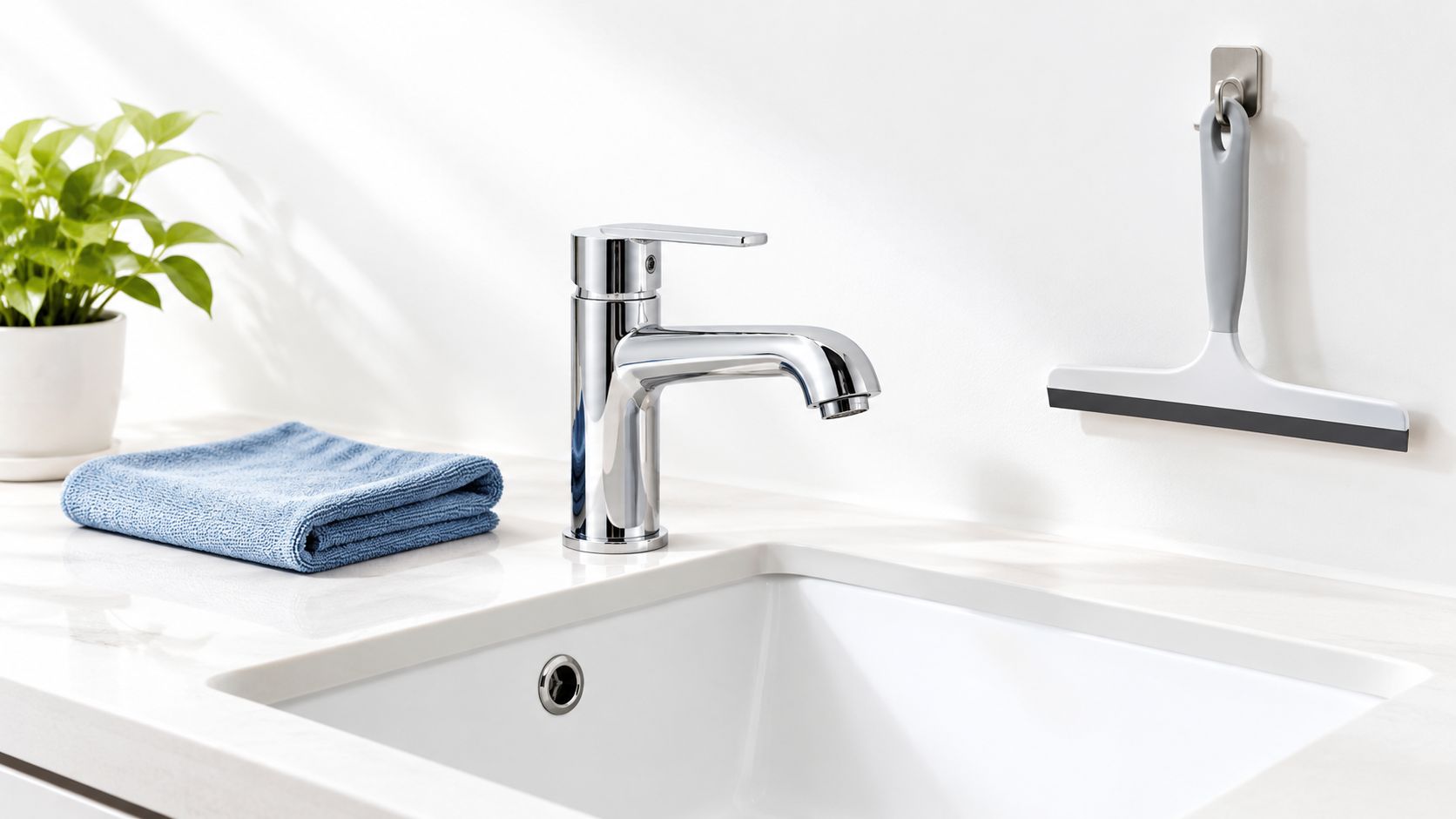
- Dry the basin edge: A quick pass with a microfiber cloth removes the droplets that become scale.
- Clean soap residue promptly: Soap film can trap minerals and create a duller, stickier deposit.
- Check the water source: Review your local water report or use a basic hardness test if staining is persistent.
A squeegee or dedicated sink cloth can make the routine easier for busy households. The goal isn't a large cleaning project. It's removing standing water before evaporation leaves the minerals behind.
Troubleshooting When Stains Do Not Come Out
A chalky, raised deposit is more consistent with removable scale. A dull patch that remains after the mineral layer is gone suggests a different problem.
The EPA water-softener product guidance supports the need to distinguish mineral buildup from surface condition. A white mark may be residue, but it may also be etching, discoloration, haze, or a finish change caused by an incompatible cleaner.
Read the surface after rinsing
Use the following clues:
- Raised and crusty: Likely mineral scale that may respond to a compatible descaler.
- Dull but smooth: Possible etching or loss of polish.
- Rough to the touch: Possible surface attack, abrasion, or coating damage.
- Colored or yellowed: Could be residue, metal reaction, or staining unrelated to calcium scale.
- Hazy after cleaning: May indicate cleaner film, etched glass, damaged enamel, or a compromised finish.
Don't keep adding acid because the first treatment didn't restore the shine. Don't switch to a harsher powder because the deposit feels stubborn. Natural stone, polished metal, enamel, and composite surfaces can all become worse under repeated acid exposure or aggressive pressure.
Rinse and dry the area, then compare it with an unaffected part of the same sink. If the texture or sheen differs, the cleaning problem may have become a restoration problem. Professional assessment is appropriate when you can't identify the material, the stain covers a large area, or the finish changes during treatment.
When to Call a Professional Cleaning or Tile Care Service
DIY descaling makes sense when the sink material is known, the deposit is limited, and the surface passes a spot test. It becomes a poor choice when the scale is heavy, the finish is delicate, or every attempt leaves the sink looking worse.
Call a trained cleaning or tile-care professional when:
- The scale is thick or widespread: Repeated deposits around faucets, drains, tile edges, and grout may need a coordinated cleaning approach.
- Natural stone is etched: Acid cannot be scrubbed away after it has altered the stone surface.
- The finish is unfamiliar: Composite, coated metal, enamel, and specialty surfaces can react unpredictably.
- The sink has persistent haze or roughness: Those symptoms may indicate damage rather than remaining mineral residue.
- The issue extends beyond the sink: Hot-water fixtures, plumbing components, and water heaters can also develop scale when calcium precipitates as water heats.
- Soap residue is part of the problem: Hard water can consume more soap and contribute to insoluble soap curd, leaving a dull, sticky film alongside mineral deposits.
The North Dakota State University guidance on water hardness notes that heating makes calcium more likely to precipitate and form scale. Persistent deposits at higher hardness levels may justify investigating whole-home water treatment, while drying and regular compatible descaling reduce what remains on the sink.
For homeowners in Wayland, Newton, Needham, Wellesley, Weston, and surrounding Massachusetts communities, prepare for a service visit by photographing the affected area, identifying any cleaners already used, and noting whether the stain is raised, dull, rough, or discolored. Ask whether the technician will test the material first, what method is planned, and whether the service addresses cleaning only or also surface restoration.
Sunny Day Pro Services provides recurring, deep, move-in/move-out, and post-construction cleaning that includes sinks in kitchens and bathrooms, along with tile and surface care for Massachusetts homes. Visit Sunny Day Pro Services to request a quote and discuss hard-water buildup, delicate finishes, or a broader cleaning project with a local team.

