
How Much Does Tile Cost? 2026 Price Guide
Our 2026 guide answers: How much does tile cost in Massachusetts? Get detailed material, labor & project cost breakdowns for your bathroom or kitchen.
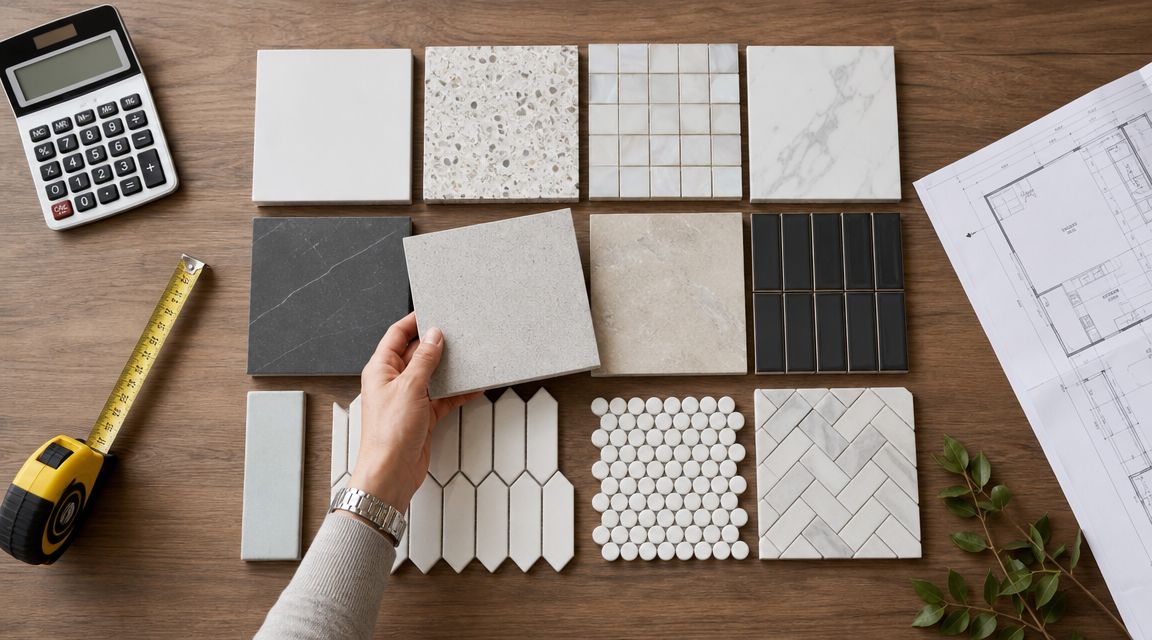
Most homeowners should budget about $15 to $75 per square foot installed, including both tile materials and professional labor, for a full tile project. Tile by itself can cost far less or far more than that, which is why the actual answer depends on what you're installing, where it's going, and how much prep the space needs.
If you're in Weston, Wellesley, Needham, Newton, or Wayland, you've probably already seen how confusing tile pricing gets online. One page talks about cheap ceramic. Another shows luxury marble. Then a showroom tag tells you one thing, while an installer quote tells you something completely different.
That confusion usually comes from comparing tile price to project price.
A homeowner might look at a tile that seems affordable per square foot and assume the whole job will land near that number. Then the estimate arrives with demolition, floor prep, waterproofing, layout work, cuts around jambs and plumbing, trim pieces, grout, and labor. That gap isn't padding. It's the actual work required to make tile look right and last.
In Massachusetts, that matters even more because older homes, uneven floors, tighter bathrooms, and finish expectations often push labor and prep higher than people expect. If you want a realistic budget, you need to look at the whole project, not just what the tile costs on a shelf.
Table of Contents
- Your Tile Project Budget A First Look
- The installed range homeowners actually need
- Why labor changes the number so fast
- When DIY can make sense
- When hiring a pro is usually the cheaper decision
- What homeowners often miss in the cost comparison
- What hidden costs should I expect in a tile project
- Does more expensive tile always last longer
- How much does maintenance add over time
- Is tile a good choice for busy Massachusetts homes
Your Tile Project Budget A First Look
A lot of homeowners start in the same place. They're planning a kitchen refresh in Newton, redoing a bathroom in Wellesley, or trying to update an older mudroom floor before listing the house. They search how much does tile cost, and the answers seem all over the map.
The best starting point is the installed number, not the tile-only number. According to RUBI's 2026 tile floor installation guide, most homeowners nationally see total project costs between $1,200 and $6,500, with an average budget of about $15 to $75 per square foot for a complete project including materials and professional labor.
That range is wide for a reason. A straightforward floor in a clean, open room is one kind of job. A primary bath with tight corners, plumbing penetrations, waterproofing details, and a patterned layout is another.
Practical rule: If you're building a tile budget from the showroom sample price alone, you're probably underestimating the project.
In older Massachusetts homes, I see the same budget mistakes again and again:
- Tile-only budgeting: Homeowners price the tile but forget the work needed underneath it.
- Ignoring prep: An uneven subfloor or out-of-plumb shower wall can change the labor side fast.
- Assuming all rooms install the same: A kitchen floor, backsplash, and shower surround do not price the same way.
- Skipping finish details: Edges, transitions, trim pieces, and grout color choices all affect the final scope.
A realistic budget starts with the installed range, then gets narrowed by your room, tile choice, and complexity. That's the only way to avoid the shock that happens when a low product price turns into a much higher project quote.
The Two Sides of Your Tile Bill Materials vs Labor
A tile invoice has two big pieces. Materials are the tile itself. Labor is everything required to install it correctly.
Drawing a parallel to buying a car, the tile is the vehicle. Labor is the delivery, setup, adjustments, and all the work that makes it road-ready. Homeowners often focus on the visible part and underestimate the skilled work behind it.
The installed range homeowners actually need
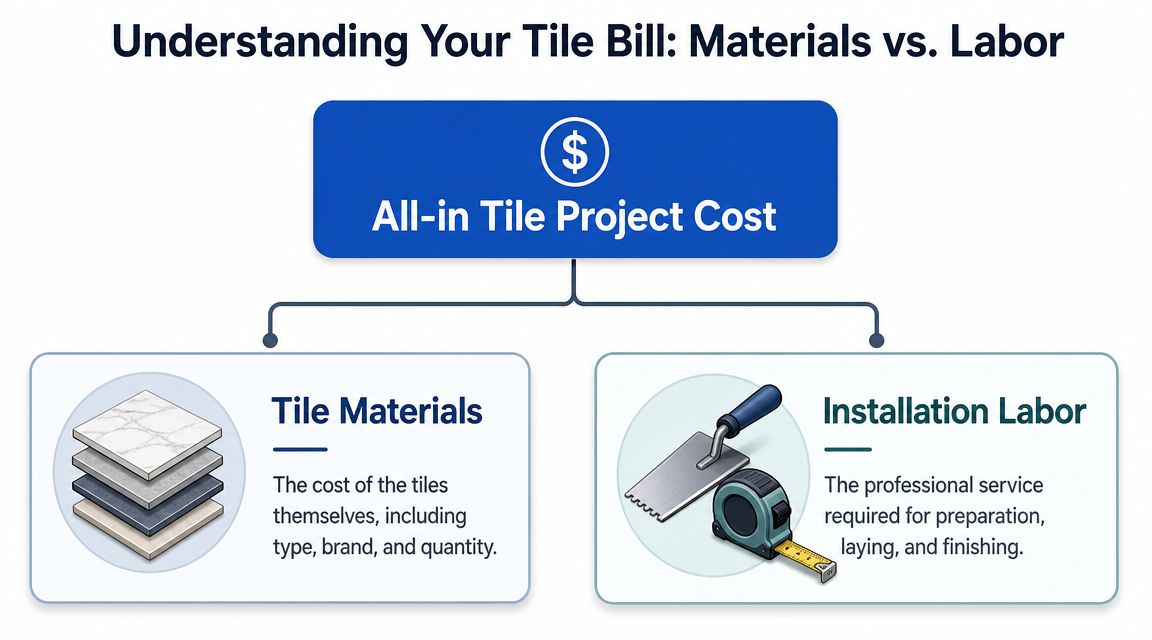
According to HomeAdvisor's tile cost guide, materials alone can range from about $2 to $350 per square foot, with most tile falling in the $5 to $20 per square foot range. The same source notes that professional installation typically adds $5 to $15 per square foot, and labor can also be billed at $40 to $150 per hour.
Those numbers explain why two projects of the same size can have very different totals. A basic ceramic floor in a simple room and a marble shower with specialty cuts are not remotely the same job.
Why labor changes the number so fast
Labor isn't just laying tile into mortar. A proper installation often includes:
- Surface prep: Flattening, patching, cleaning, or correcting the substrate before a single tile goes down.
- Layout work: Dry-laying rows, balancing cuts, and making sure the room doesn't end with awkward slivers at the walls.
- Cutting and fitting: Working around toilets, vanities, corners, vents, thresholds, and fixtures.
- Setting and spacing: Keeping the plane flat, the joints consistent, and the finish aligned.
- Grouting and finishing: Cleaning haze, polishing edges, sealing where appropriate, and making transitions look intentional.
Good tile work is mostly invisible when it's done right. You don't notice the cuts, the slope, the symmetry, or the flatness because nothing looks off.
This is why the cheapest labor number on paper often turns into the most expensive choice later. If the substrate isn't corrected, large-format tile can show lippage. If a wet area isn't handled properly, the failure doesn't stay cosmetic. If the layout is rushed, the room never looks settled.
For homeowners asking how much does tile cost, the practical answer is this: the shelf price tells you what the product costs. The labor tells you whether that product will still look good years from now.
Tile Cost by Material A Detailed Breakdown
Once you separate material from labor, shopping gets much easier. The tile itself still matters a lot because the product you choose affects both upfront cost and how forgiving the installation will be.
Budget materials can look great in the right room. Premium materials can be worth it in a focal space. The mistake is choosing strictly by appearance without understanding how the material behaves.
HTML table of common tile materials
Below is a simple material guide built from the verified price ranges available.
| Tile Material | Average Cost per Sq. Ft. | Best For |
|---|---|---|
| Ceramic | $1 to $30 | Budget-friendly floors, walls, backsplashes |
| Porcelain | $1 to $30 | High-traffic floors, baths, mudrooms, kitchens |
| Travertine | $1 to $30 | Natural stone looks in dry or carefully maintained spaces |
| Glass | Up to $100 | Backsplashes, accents, decorative wall areas |
| Granite | Up to $200 | Premium stone applications and statement surfaces |
| Marble | Up to $350 | Luxury bathrooms, feature walls, high-end floors |
How each material behaves in a real home
Ceramic is often the entry point for homeowners on a tighter budget. It's a practical choice for many walls and lighter-duty floors, and it works well when you want clean looks without chasing a luxury material price.
Porcelain is the material I recommend most often for Massachusetts homes. It works especially well in kitchens, baths, entries, and mudrooms because it handles daily wear well and gives you a huge design range. If you're comparing options, this guide to porcelain versus marble tile costs and considerations for stone-look projects can help frame the decision.
Travertine gives you a softer, natural look. It can be beautiful, but it asks more from the homeowner. Natural variation is part of the appeal, yet that same variation means the finished surface won't feel as uniform as porcelain.
If you want the look of a luxury stone without the extra sensitivity that comes with real stone, porcelain is often the smarter buy.
Glass usually belongs in backsplashes and accent areas, not large floors. It catches light well and creates a polished focal point, but it's a style-driven product more than a whole-house workhorse.
Granite and marble sit at the premium end. They can be stunning, especially in a primary bath or formal entry, but they make sense only when the homeowner wants the look enough to accept the higher material cost and the added care that often comes with natural stone.
For most families, the best value isn't the cheapest tile on the rack or the most expensive slab-inspired stone. It's the material that fits the room, the traffic, and the maintenance you're willing to keep up with.
What Drives Your Installation and Labor Costs
Labor is where most homeowners either get a realistic quote or a misleading one. Two rooms can measure similarly and still install very differently because tile work depends on conditions, not just square footage.
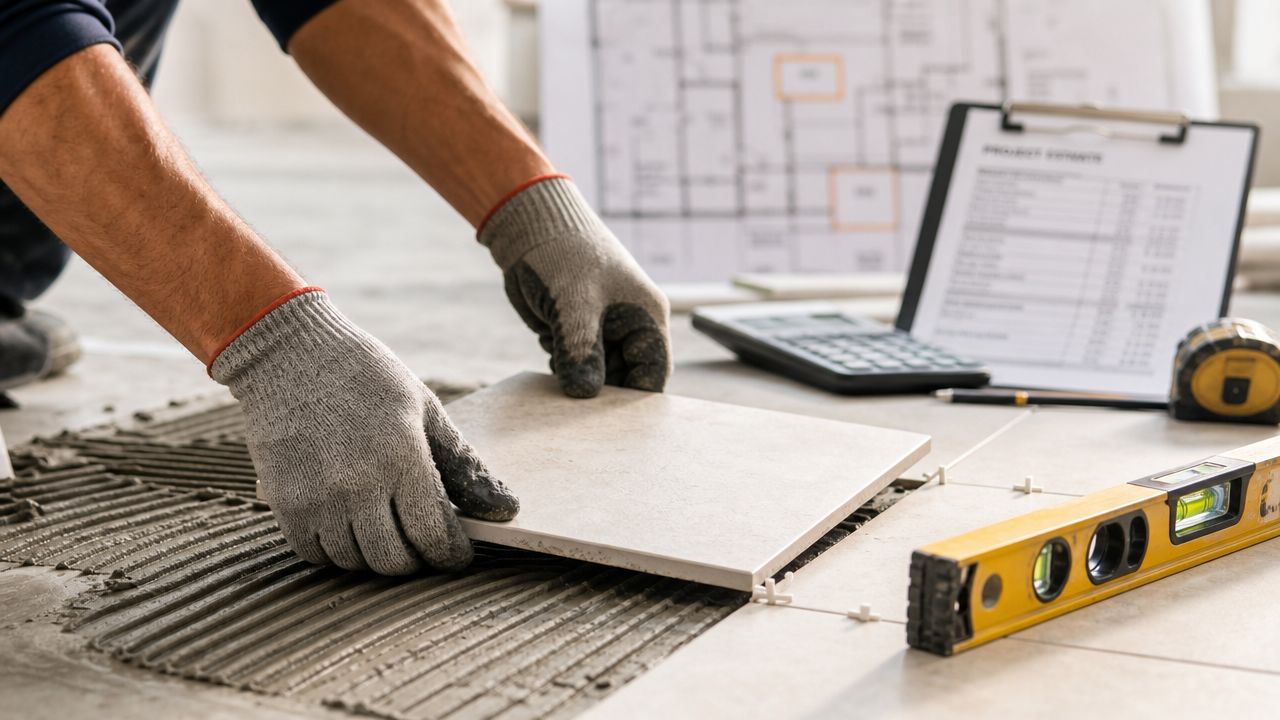
The room itself affects labor
A simple square room is usually the cleanest install. Fewer cuts, fewer interruptions, easier layout. A small bathroom often costs more per square foot to install because almost every row needs special attention.
Here are the labor drivers that matter most:
- Demolition and removal: Taking out old flooring, hauling debris, and cleaning the surface can add time before the new tile work even starts.
- Subfloor or wall prep: If the base isn't flat, solid, and ready, the installer has to fix that first.
- Tile size and pattern: Straight-set tile installs faster than herringbone, diagonal work, borders, or mosaics.
- Number of cuts: Toilets, tubs, niches, stair noses, heat vents, and door casings all create more cutting and fitting.
- Wet-area detailing: Showers, tub surrounds, and bathroom floors need more care than a dry living area.
A homeowner looking at a basic per-square-foot labor number won't see those variables unless the quote is detailed. That's why one estimate can look low until change orders begin.
Massachusetts conditions that change the quote
In towns like Weston, Wellesley, Needham, and older parts of Newton, houses often bring extra variables. Floors may slope. Walls may not be plumb. Existing finishes may have been layered over time. In entryways and mudrooms, winter traffic means homeowners usually want a floor that can take moisture, grit, and heavy use without looking tired.
That doesn't automatically mean the project will be expensive. It does mean the installer needs to inspect the space, not guess from a photo.
If you're choosing porcelain for a floor, shower, or backsplash, this overview of porcelain tile installation details and common project considerations is a useful next read.
A trustworthy quote doesn't hide labor. It shows where the labor is going.
One practical note for local homeowners: Massachusetts finish expectations tend to be high, especially in homes where the tile sits next to custom cabinetry, painted millwork, or stone countertops. Tight lines and clean transitions matter more in those spaces. That's skilled labor, and it's part of the price.
Sample Tile Project Budgets for Massachusetts Homes
Homeowners usually don't want theory. They want to know what a real project might look like in their own house. The examples below are practical budgeting templates, not fixed bids, because actual quotes depend on site conditions, tile selection, and layout complexity.
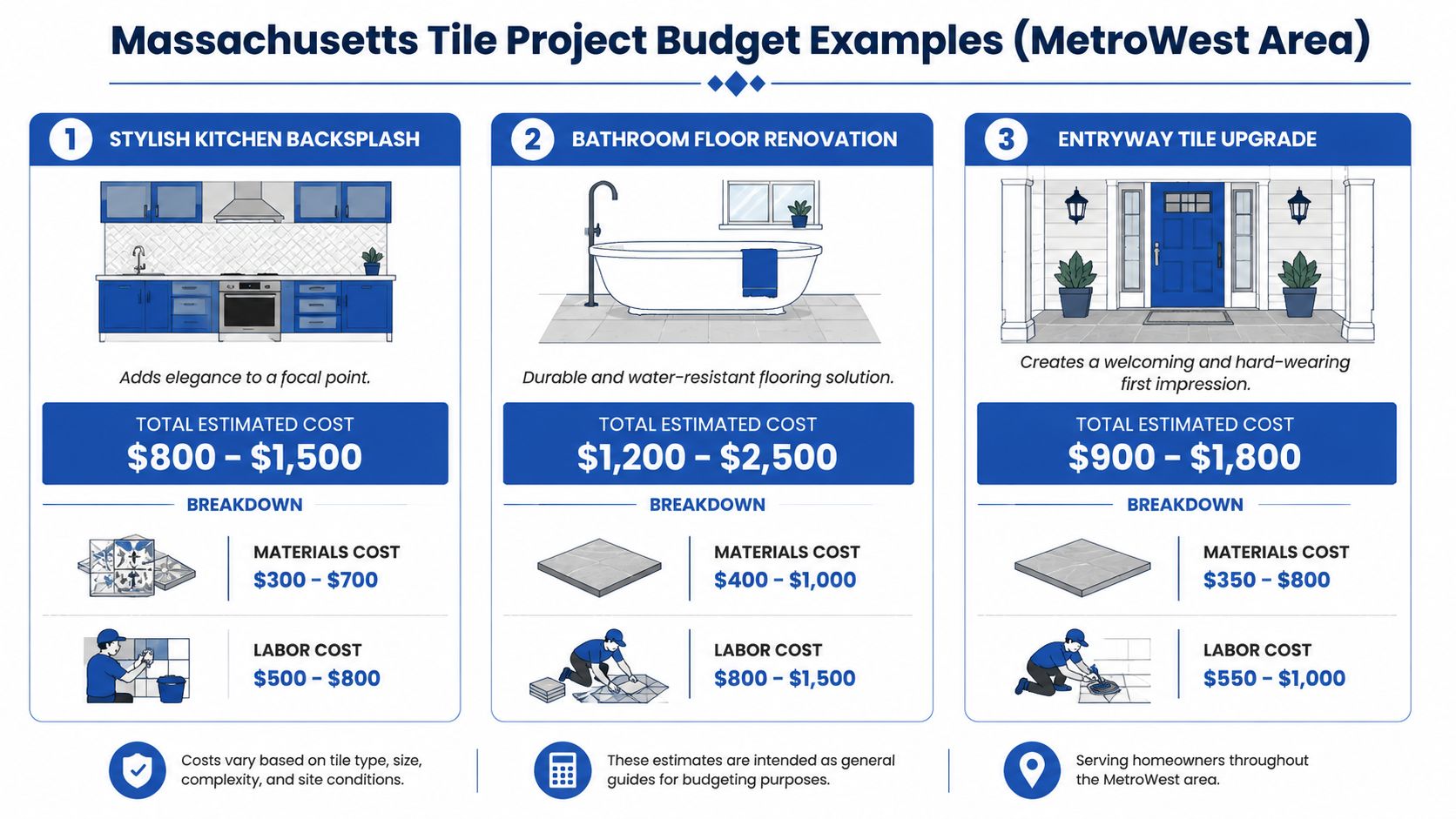
Backsplash in a MetroWest kitchen
A backsplash often looks small on paper, but it can be detail-heavy. Outlets, cabinet lines, under-cabinet lighting, window returns, and patterned tile all make the job more exacting.
A budget-minded backsplash might use ceramic in a simple running-bond or stacked layout. That keeps material selection straightforward and installation efficient.
A mid-range backsplash often uses porcelain or a more design-focused wall tile with tighter alignment requirements. Homeowners in Wellesley and Needham often choose this tier because it balances appearance and practicality.
A high-end backsplash usually moves into glass, premium finishes, or more intricate layouts. The square footage stays modest, but labor can rise quickly because the work is visible at eye level and mistakes stand out immediately.
Bathroom floor and shower package
Tile costs can swing the most in this setting. A bathroom combines visible finish work with moisture management, edge details, plumbing cuts, and often tighter working conditions.
A lower-range bathroom package usually sticks with ceramic or straightforward porcelain and a simple layout. That's often the most cost-conscious way to get a clean, durable result.
A mid-range bath might add better porcelain, larger-format field tile, a niche, upgraded trim, or a more refined shower layout. This is common in Weston and Newton remodels where homeowners want something enhanced but not overly delicate.
A high-end bathroom usually includes stone, feature walls, custom shower details, or layout-driven design choices that require much more fitting and finishing. In such projects, a premium look depends heavily on installer skill.
In bathrooms, the expensive mistake isn't usually the tile. It's poor prep behind the tile.
Mudroom or entry tile floor
For Massachusetts houses, a mudroom or front entry does hard work. It handles wet boots, sand, salt, and constant traffic. That's why this is one of the smartest places to spend carefully.
A budget mudroom floor often uses ceramic in a clean, square layout. It can work well if the substrate is in good shape and the room is simple.
A mid-range version commonly uses porcelain, especially in homes where families come in through the same entry every day. This is the tier I usually point homeowners toward because it delivers strong performance without crossing into luxury pricing.
A higher-end entry floor might use stone, a patterned layout, or oversized tile that requires more prep and more careful handling. It looks fantastic when done right, but this isn't the place to chase a showroom look without planning for the installation detail that comes with it.
These budget templates are useful because they show what most online calculators don't. The room type matters just as much as the product choice.
DIY vs Hiring a Pro: The Trade-Offs
A lot of Massachusetts homeowners start in the same place. The tile itself looks manageable, the labor line on the quote looks high, and a DIY plan starts to feel like the obvious way to save. Then the project runs into an uneven floor, a shower wall that is out of plumb, or a layout mistake that shows up in every row.
That is where the budget difference shows up. DIY changes more than labor cost. It changes your exposure to delays, wasted material, tool purchases, waterproofing mistakes, and the chance of paying for the job twice.
When DIY can make sense
DIY is usually most reasonable on a small job with low risk and simple cuts. A straightforward backsplash, a laundry room wall, or a basic hearth surround gives you more margin for error than a shower or an entry floor in an older house.
It tends to go better when you have:
- A simple tile pattern: Straight-set installs are easier to keep consistent than herringbone, offsets, or mosaics.
- Time for prep and layout: Good tile work starts before the first piece is set.
- A space that can be out of service: If the room can sit for extra days, delays hurt less.
- Confidence with surface prep and tools: Flat substrate, clean cuts, and proper thinset use matter as much as the tile itself.
For homeowners planning a bath project, this guide to bathroom tile installation planning and project decisions helps show where first-time installers usually underestimate the work.
When hiring a pro is usually the cheaper decision
A pro often costs more up front and less by the end.
That is especially true in showers, steam areas, mudrooms, and large-format floors. In Weston, Wellesley, Newton, and similar towns, many homes have framing movement, older subfloors, patched walls, or out-of-level transitions from previous remodels. Tile does not hide those conditions. It highlights them.
A skilled installer is pricing more than setting tile. The quote usually covers layout planning, substrate correction, waterproofing, movement joints, trim details, and the judgment to catch problems before they get buried. Those steps are where a lot of project cost comes from, and they are also where expensive failures start if they are skipped.
What homeowners often miss in the cost comparison
The side-by-side comparison is rarely just DIY materials versus contractor labor.
DIY budgets often leave out:
- Tool purchases or rentals
- Extra tile for breakage and bad cuts
- Underlayment, waterproofing, and prep materials
- Disposal and cleanup
- Time off, room downtime, and rework if something goes wrong
On a simple backsplash, those costs may still be acceptable. On a bathroom floor or shower, they can erase the savings fast.
DIY saves money only when the installation holds up, looks right, and does not need to be redone.
If the project involves water management, premium tile, heated floors, or highly visible layout lines, hire it out. If the job is small, dry, and forgiving, DIY can be a reasonable choice. The smart decision is not about pride. It is about choosing the level of risk that fits the room and the budget.
How to Save Money and Get an Accurate Quote
The cheapest tile project isn't the one with the lowest starting number. It's the one that avoids waste, surprises, and rework.
A few cost-control moves usually work well:
- Choose porcelain over premium stone looks: You can get a refined appearance without stepping into the highest material bracket.
- Keep the layout simple: Straight-set patterns usually cost less to install than layouts that require more cuts and more time.
- Use statement tile selectively: Put the expensive tile on a feature wall or backsplash, then keep the field tile practical.
- Handle prep only if you know what you're doing: Light demo can save money, but sloppy removal can create new substrate problems.
- Make decisions before the quote is finalized: Changing tile size, pattern, or trim after ordering often creates avoidable cost.
The most important savings move is asking for an itemized quote. You want to see what is included for prep, setting, grout, trim, demolition, and finish details. If a quote feels vague, it probably is.
Ask these questions before signing:
- What's included in surface prep
- How are edge details and transitions handled
- What assumptions are being made about the existing floor or wall
- What could change the final price after work begins
If you want an accurate tile budget in Wayland, Weston, Wellesley, Newton, or nearby towns, get the space looked at in person. That one step prevents most pricing surprises.
Frequently Asked Questions About Tile Costs
What hidden costs should I expect in a tile project
Homeowners often focus on tile and labor, then get surprised by the finishing pieces around the job. Common extra-cost areas include demolition, disposal, trim pieces, transitions to adjacent flooring, grout selection, edge finishing, and repairs to the surface underneath the old floor or wall covering.
In bathrooms and kitchens, fixture removal and reset can also affect scope. None of these are unusual. They just need to be listed clearly.
Does more expensive tile always last longer
No. Higher price often buys appearance, rarity, or a natural material rather than simple durability. Some of the best-performing family-home floors use practical porcelain, not the most expensive tile in the showroom.
The better question is whether the tile fits the room. A durable, well-installed product in the right location usually outperforms a luxury material chosen only for looks.
How much does maintenance add over time
That depends more on the material than the project size. Porcelain is usually low-fuss. Natural stone often asks for more attention, especially if the homeowner wants it to keep the same finish and appearance over time.
Maintenance costs are usually manageable when you choose a material that matches your lifestyle. They become frustrating when the tile needs more care than the household can realistically give it.
Is tile a good choice for busy Massachusetts homes
Yes, especially in kitchens, bathrooms, mudrooms, and entries. Tile is a strong fit for spaces that deal with wet shoes, daily traffic, pets, and regular cleanup.
The key is choosing the right product and installing it on a properly prepared surface. In New England homes, that's what separates a floor that stays sharp from one that starts showing problems early.
If you're planning a tile project and want a clear, itemized estimate without guessing from showroom tags, contact Sunny Day Pro Services. They provide tile installation services across Wayland, Newton, Needham, Wellesley, Weston, and nearby Massachusetts communities, and an on-site quote can help you budget the actual project cost before work begins.

