
How Much Does Tile Installation Cost in MA 2026?
Get a 2026 breakdown: how much does tile installation cost in Massachusetts? See prices per sq ft for labor, materials, & projects.
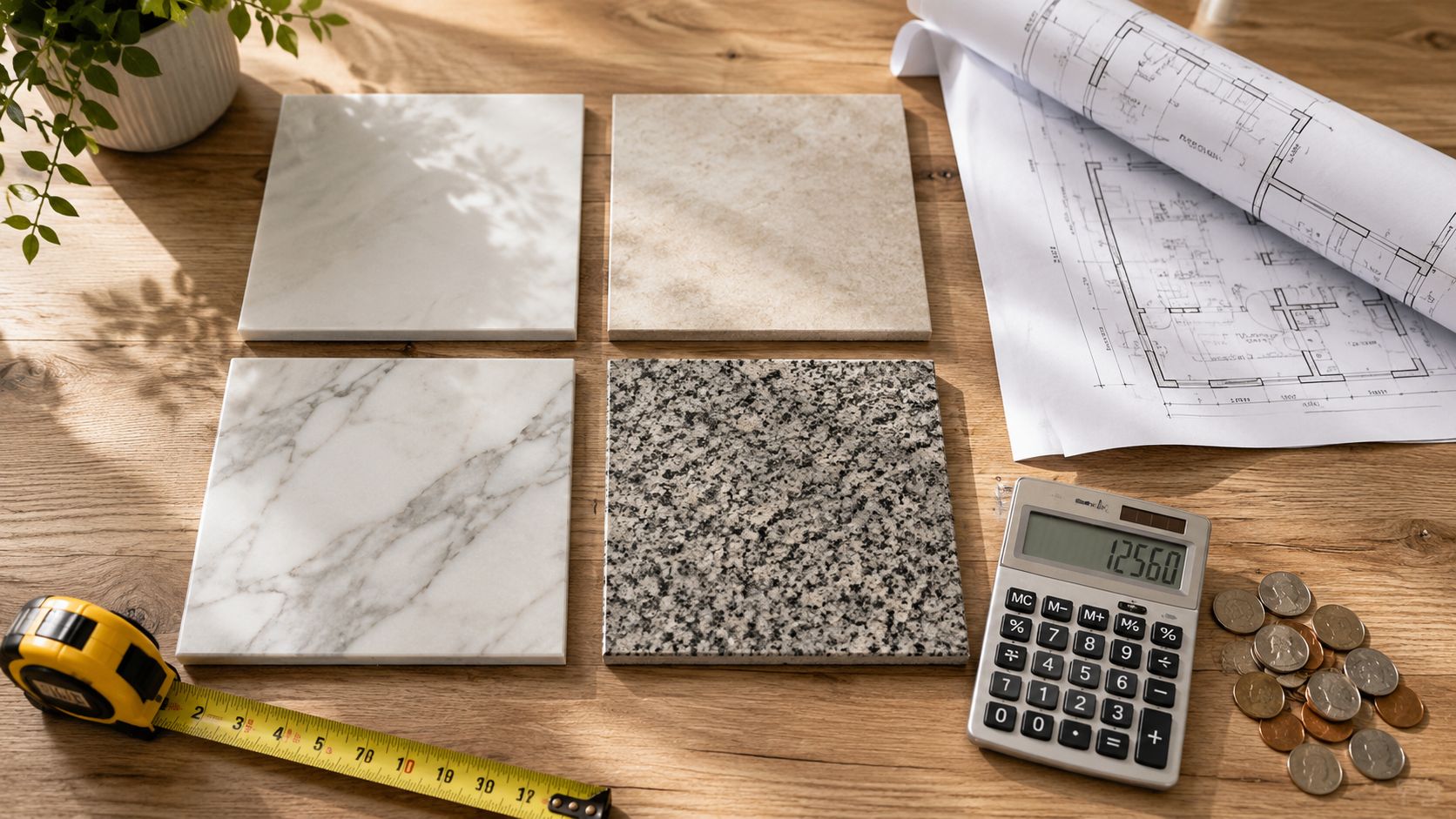
Tile installation usually starts around $16 to $21 per square foot for labor and materials combined. That's a useful baseline, but it's only a starting point, because the actual price for a Massachusetts home often changes once tile type, layout, wall vs. floor work, and subfloor prep enter the picture.
If you're planning a kitchen, bathroom, mudroom, or entryway project in Newton, Needham, Wellesley, Weston, or nearby communities, you're probably trying to answer a simple question before you commit: how much does tile installation cost, and what will appear on the estimate?
That's where many homeowners get tripped up. The first number they see is often a square-foot price for the tile itself or a basic install rate. The final invoice reflects the room, the condition of the substrate, the pattern, the cuts, the trim details, and whether the installer is working on a flat floor or a vertical wet area. In older Massachusetts homes, especially, the biggest budget surprises usually happen below the tile, not on top of it.
Table of Contents
- Pattern and layout complexity
- Why walls cost more than floors
- Edge details, trim, and finish work
- Small-room pricing and minimum job charges
- Is tile labor or tile material the bigger cost?
- Why is a small tile job sometimes expensive?
- Should I buy my own tile?
- How do I know if a quote is missing something important?
- Is DIY tile installation worth it?
Your Tile Installation Cost Starting Point
The broad national benchmark is clear. In May 2026, the estimated national average cost to install a tile floor ranges from $16.38 to $20.21 per square foot for labor and materials combined, and Boston labor runs about $83 per hour, which shows how quickly local pricing can move above a generic national average according to Homewyse tile floor installation cost data.
For homeowners in Newton and surrounding Boston suburbs, that matters immediately. A quote built around national averages may look reasonable on paper, but local labor conditions, parking logistics, older home construction, and finish expectations can push a real project in a different direction. Homes in towns like Wellesley and Weston also tend to have more custom finish work, more transitions, and more renovation-related prep than a simple open-box estimate assumes.
Why a national average only gets you so far
A tile project price changes fast when any of these conditions show up:
- Older subfloors: Many Massachusetts homes need leveling, reinforcement, or a moisture-management layer before tile goes in.
- Tighter layouts: Powder rooms, laundry spaces, and older kitchens often require more cuts around door jambs, radiators, cabinets, and uneven walls.
- Finish expectations: Homeowners in higher-end markets usually want tighter lines, cleaner transitions, and better trim details.
- Small job economics: A small backsplash or hearth can still carry a minimum project charge, even when the square footage is modest.
Practical rule: Use the national number to set expectations, not to approve a contractor.
What homeowners in Newton should assume
A realistic tile budget starts with the room, not with the tile box price. Floor work in a newer, flat, open room is one thing. A bathroom in an older home with uneven framing, previous water exposure, and wall tile transitions is another.
That's why the right first question isn't just “How much does tile installation cost?” It's “What condition is the surface in, what tile am I choosing, and how complex is this layout?” Once those answers are clear, the estimate gets much more accurate.
Breaking Down Costs Labor vs Materials
Most tile quotes come down to two major buckets: labor and materials. If you don't separate those two, it's hard to tell whether a quote is fair, whether the tile choice is driving the budget, or whether the installer is building in extra time for cuts, layout, and prep.
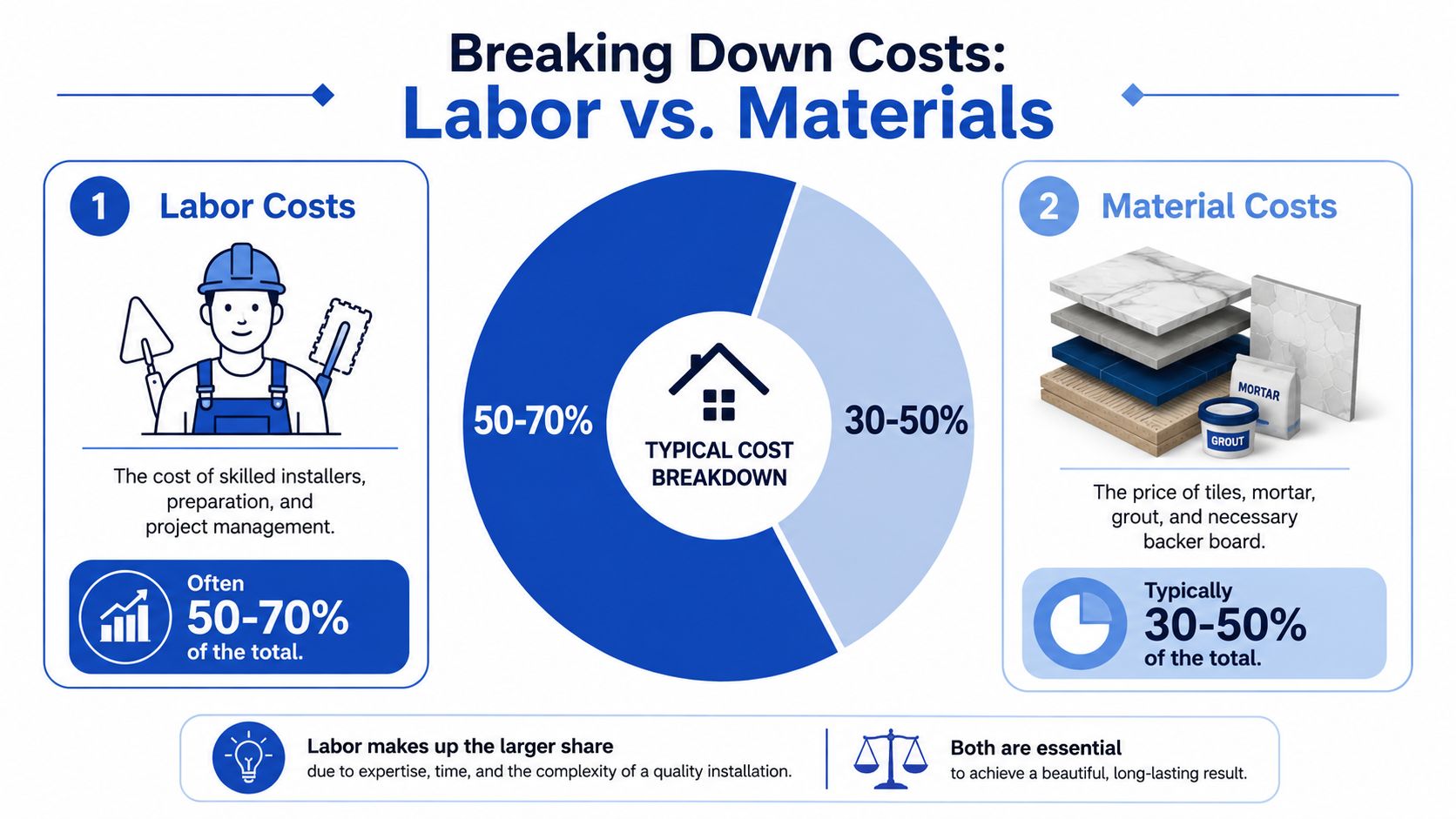
TaskRabbit's 2026 installer data reports that standard indoor floor labor averages $5 to $10 per square foot, while total installed pricing varies by tile type. Their current guide places ceramic tile at $8 to $15 per square foot, porcelain at $10 to $20, and natural stone like marble at $20 to $30+, with those estimates typically including labor. See the full breakdown in TaskRabbit's tile installation cost guide.
What labor usually covers
Labor isn't just setting tile. On a properly managed job, labor usually includes:
- Layout work: Establishing lines so the room doesn't end with awkward slivers at the perimeter.
- Cutting and fitting: Using a wet saw, snap cutter, grinder, or hole saw to fit around corners, jambs, vents, and fixtures.
- Setting materials: Spreading mortar correctly, keeping consistent coverage, and managing lippage.
- Grouting and finishing: Filling joints, cleaning haze, and detailing edges and transitions.
That's why labor can account for a large share of the project. A cheap labor line often means somebody is skipping part of the process, rushing layout, or assuming the substrate is already ready for tile.
How tile choice changes the budget
Tile selection affects both the material line and the labor line. Basic ceramic is often easier on the budget. Porcelain is a common upgrade because it's durable and versatile, but it can be denser and harder to cut. Natural stone raises cost because the tile itself is pricier and the installation demands more care.
If you're comparing porcelain options, this guide on porcelain tile installation helps explain why the material performs well in kitchens, baths, and high-traffic areas.
Here's a simple comparison you can use when reading quotes.
| Tile Type | Material Cost / Sq. Ft. | Labor Cost / Sq. Ft. | Estimated Total Cost / Sq. Ft. |
|---|---|---|---|
| Ceramic | Included within total estimate range | $5 to $10 | $8 to $15 |
| Porcelain | Included within total estimate range | $5 to $10 | $10 to $20 |
| Natural stone | Included within total estimate range | $5 to $10 for standard indoor floors, often higher with complexity | $20 to $30+ |
A quote that shows only one lump-sum number is harder to evaluate. A better quote separates tile, labor, prep, and finishing items so you can see what's actually driving cost.
The Hidden Costs Many Homeowners Forget
The square-foot install rate is where the budgeting process often begins. It's rarely where the full budget ends.
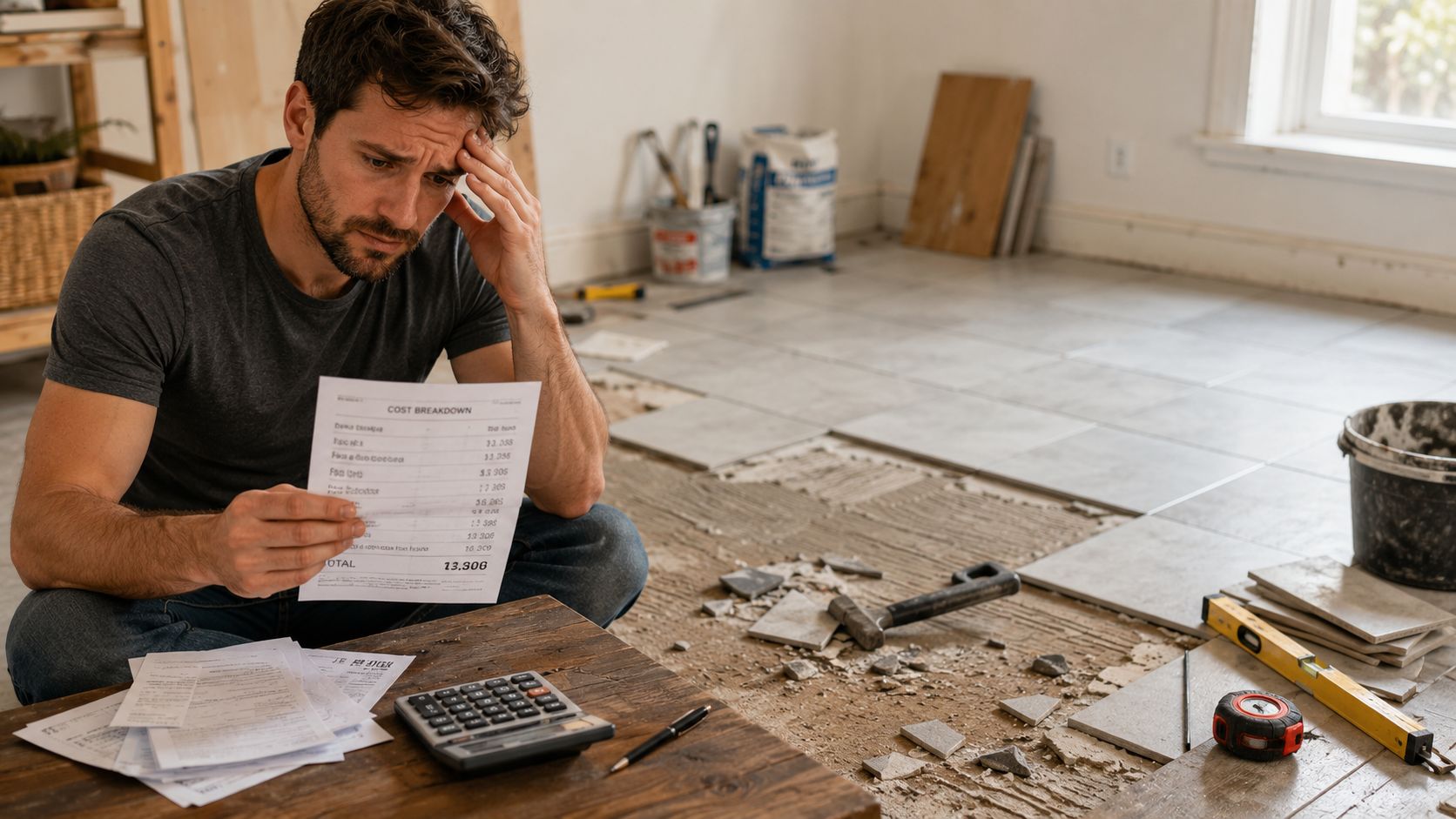
The biggest miss in many first-round budgets is prep. According to the verified pricing discussed in this homeowner tile labor discussion, subfloor preparation and underlayment materials can add $3.75 to $10 per square foot, and those costs can raise a total project budget by 20 to 30%, especially in older homes that need membrane upgrades.
What base quotes often leave out
A base tile quote may not include the parts of the job that make the installation last. That often includes:
- Cement backer board
- Uncoupling membrane
- Subfloor leveling
- Moisture-related upgrades
- Repairs after old flooring is removed
These aren't luxury add-ons. They're often the difference between a floor that stays solid and one that cracks, loosens, or telegraphs movement through the grout lines.
If you want a clearer sense of what sits under the tile, this overview of tile backer board installation is worth reviewing before you compare estimates.
Why prep work isn't optional
In Newton-area homes, prep work matters even more because the housing stock varies so much. An older bathroom may have layered flooring, minor framing movement, or moisture exposure around tubs and toilets. A kitchen renovation may uncover patchwork plywood, dips in the subfloor, or height issues at adjacent rooms.
Installers can't fix those conditions by spreading more thinset. That doesn't work. Proper prep takes time, material, and judgment.
If the existing floor is out of plane, loose, or water-damaged, the tile won't “hide” it. The finished surface will reflect it.
Homeowners often ask why one contractor is far cheaper than another. In many cases, the lower number assumes a perfect substrate. The higher number assumes the installer will verify it, correct it, and build a surface that can support tile properly.
Additional Charges That Shape Your Final Price
Two rooms can have the same square footage and still price very differently. In Newton, I see that happen most often when the layout looks simple on paper but creates slower, more exacting work in the field.
Pattern and layout complexity
Tile pattern has a direct effect on labor hours. A straight lay in a mostly open room is usually the most efficient option. A diagonal layout, running bond with tight offsets, herringbone, hex tile, or mixed-size pattern takes more time to lay out, cut, check, and keep visually consistent across the room.
The added cost usually comes from labor, waste, or both.
A decorative pattern also tends to create more off-cuts, especially around doorways, cabinets, floor vents, and out-of-square walls. That matters in older Massachusetts homes, where rooms are often less uniform than homeowners expect. More waste means you may need to order extra material beyond the standard allowance, and specialty tile can be expensive to reorder if the first batch comes up short.
For homeowners trying to control cost without flattening the design, a few choices usually help:
- Straight grid or brick patterns keep installation time more predictable.
- Larger-format field tile can give the room a cleaner, higher-end look with fewer grout joints.
- Accent areas or borders let you use a premium pattern in one focal area instead of across the whole room.
Why walls cost more than floors
Wall tile usually costs more per square foot than floor tile because it installs slower and shows mistakes faster. Lines need to stay consistent at eye level. Cuts are more exposed. On backsplash and shower work, the installer also has to work around outlets, fixtures, niches, corners, and trim details that a basic floor often does not have.
Verified pricing in Bob Vila's tile installation cost guide places standard floor labor at $5 to $15 per square foot, while backsplashes, shower walls, and other vertical tile installations can reach $20 to $35 per square foot. The same source lists a kitchen backsplash at $600 to $1,300 total.
That tracks with real quoting. A backsplash may only cover a small area, but the work is detail-heavy, and small areas rarely benefit from the same production speed as an open floor.
Edge details, trim, and finish work
Homeowners often budget for the tile surface and forget the finish details around it. Those details shape the final appearance and they affect labor.
Common add-ons include:
- Bullnose or finished-edge tile
- Metal edge profiles
- Niches, benches, and corner detailing
- Thresholds and transitions to wood or vinyl
- Base tile or shoe molding adjustments
These items do not always add much square footage, but they do add handling time and finishing work. A clean transition at a bathroom doorway or a crisp metal profile on a backsplash can be the difference between a polished job and one that looks unfinished.
Field note: The more visible the tile edge, the more the finish work matters. That is where cheaper bids often leave things vague.
Small-room pricing and minimum job charges
Small projects can have a higher effective price per square foot. The crew still has to mobilize, protect the work area, set up saws, mix materials, and return for grout and finish work, even if the tile area is limited.
That is why a powder room, mudroom, or backsplash may feel expensive relative to its size. The room is small. The fixed labor steps are not.
If you are comparing estimates, check whether one contractor is pricing strictly by square footage and another is applying a minimum labor charge. That difference alone can explain why quotes for smaller jobs vary more than homeowners expect.
Sample Tile Project Budgets for MA Homes
Many homeowners don't need another abstract pricing range. They need a budgeting framework that feels close to a real project.
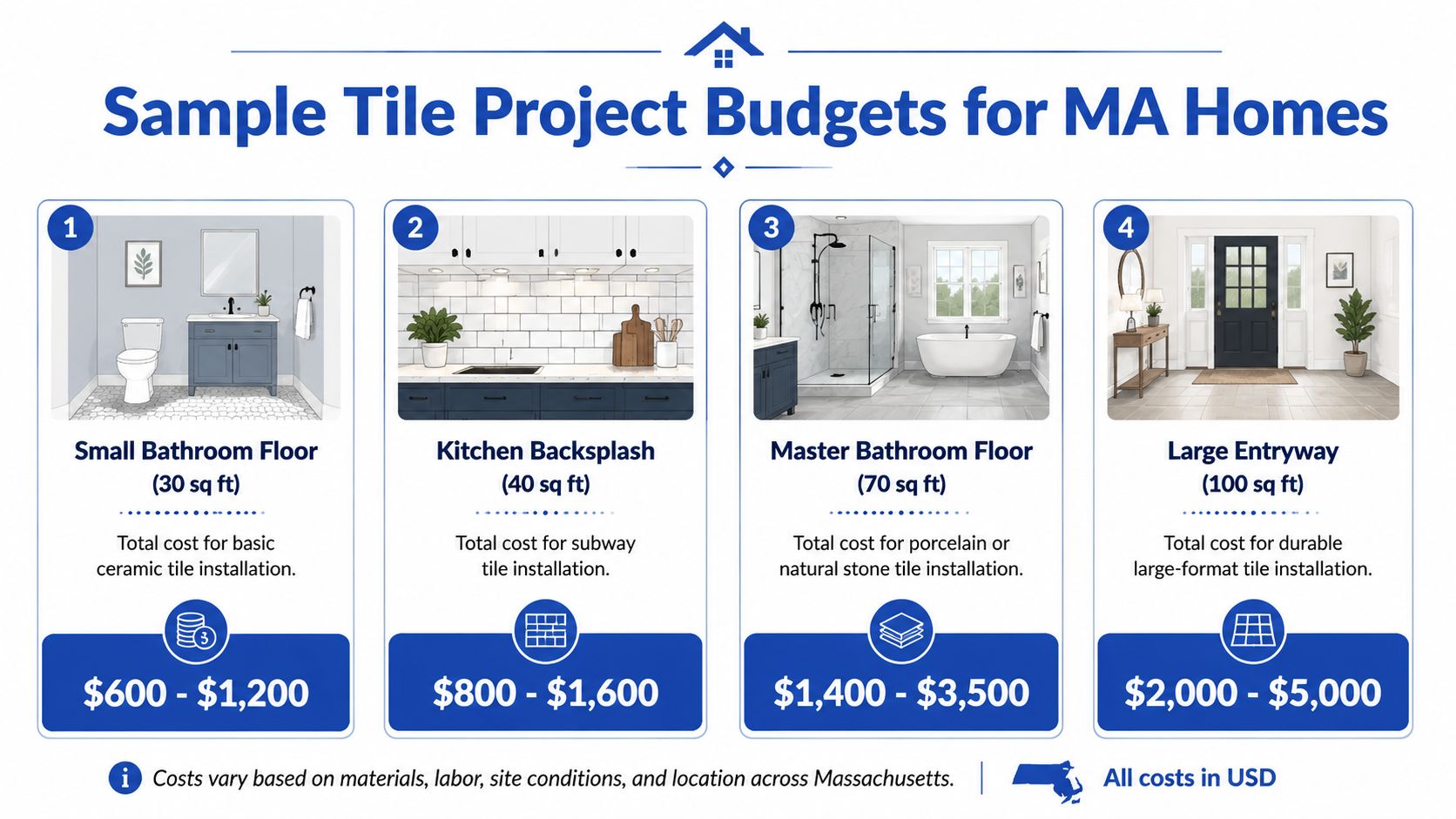
A useful all-in benchmark comes from Go Flooring's tile flooring cost guide, which places complete tile projects with mid-range materials and labor at $15 to $75 per square foot. That same verified source notes that porcelain averages $5 to $22 total per square foot, but actual project pricing can swing significantly based on job complexity and prep.
A practical budgeting framework
For a Massachusetts home, I'd break budgeting into three bands rather than pretending one flat number covers every room:
- Straightforward install: Open floor area, standard tile, limited cutting, sound substrate.
- Mid-complexity remodel: Normal residential room with perimeter cuts, transitions, and minor prep.
- Higher-complexity work: Older subfloor, waterproofing needs, decorative pattern, wall tile, or premium finish expectations.
That approach works better than chasing a single “average” because homes in Newton, Needham, and Weston rarely present the exact same job conditions.
What this means for Massachusetts homes
Here's how to think about common projects without pretending every house is identical:
Small bathroom or mudroom floor
This kind of project often feels affordable because the footprint is small. In practice, it can still cost more per square foot than a large room because there are many cuts, fixture obstacles, and not much room to work. If prep is minor and the layout is simple, the project usually stays closer to the lower end of a full installed range. If the floor needs reinforcement or moisture protection, the price climbs quickly.
Kitchen backsplash
A backsplash often looks simple from across the room. At installation level, it's detailed work. Outlets, under-cabinet sightlines, termination points, and grout line alignment all matter. Even when the tile itself is modest, the labor intensity can make the finished price feel disproportionate to the square footage.
Kitchen, dining, or entry floor
Larger floor areas can be more efficient per square foot if the layout is open and the substrate is in good condition. But if the tile runs through multiple spaces with transitions, islands, vents, and uneven adjoining surfaces, labor becomes more involved. Therefore, careful layout planning pays off, as bad sightlines are hard to ignore once the room is furnished.
A more realistic way to budget is to decide which room matters most, where you want the premium look, and where a simpler material or layout can keep the overall investment under control.
Getting an Accurate Quote and Maximizing Your Budget
Good tile projects are usually decided before the first tile is set. They're decided when the estimate is written clearly, the substrate is evaluated properly, and the homeowner understands where to spend and where to stay simple.

What a detailed tile estimate should include
A strong quote should spell out the work in plain language. If it doesn't, ask for a revision before approving anything.
Look for these items:
- Scope of demolition: Does the estimate say whether old flooring or wall material is being removed?
- Surface preparation: Is leveling, backer board, or membrane included, excluded, or marked as an allowance?
- Tile installation area: Does it define exactly what's being tiled and where the installation stops?
- Pattern and tile size: A quote should reflect whether the install is straight lay, staggered, mosaic, or another layout.
- Grout and finishing details: Ask what grout type is included and how transitions or exposed edges will be handled.
- Material responsibility: Clarify who is supplying tile, trim, thinset, grout, and setting materials.
For homeowners who want to understand the workflow behind a professional job, this overview of tile installation steps helps make estimate line items easier to evaluate.
The best estimate isn't the shortest one. It's the one that leaves the fewest assumptions.
How to control cost without creating problems later
There are smart ways to save, and there are expensive ways to “save.”
What usually works:
- Choose a simpler layout: Straight-set tile generally installs faster than highly decorative patterns.
- Use premium tile selectively: Put the more expensive material in a focal area and keep secondary areas simpler.
- Keep the footprint contained: Extending tile into every adjacent area can create extra transition and leveling work.
- Make decisions early: Last-minute design changes often trigger more cuts, waste, and labor disruption.
What usually doesn't work:
- Skipping prep
- Buying tile before confirming room conditions
- Choosing difficult tile solely by appearance
- Comparing quotes that don't include the same scope
In practice, the cheapest quote often becomes the most expensive job if it leaves out prep, finishing details, or realistic labor for the layout you selected. A better approach is to ask each contractor to price the same scope and identify any allowances clearly.
Frequently Asked Questions About Tiling Costs
Is tile labor or tile material the bigger cost?
In Newton-area homes, labor often drives the total more than homeowners expect. The tile is visible, so it gets the attention. The hours behind the tile are usually what change the bill.
A straightforward ceramic floor in a square room can keep material and labor fairly balanced. Change that to large-format porcelain, natural stone, a herringbone layout, or a bathroom with out-of-level floors, and labor climbs fast because the installer has to correct conditions, manage lippage, and make more precise cuts. On older Massachusetts homes, prep work often decides whether labor becomes the biggest line item.
Why is a small tile job sometimes expensive?
Small does not always mean simple.
A 35-square-foot bathroom floor can cost more per square foot than a much larger open area because the crew still has to mobilize, protect the home, set up saws, handle demolition or prep, and finish edges cleanly. Tight rooms also create more handwork around toilets, vanities, door jambs, and heat lines.
What raises the price on a small job:
- lots of cuts
- uneven subfloor
- mosaic tile sheets that need careful alignment
- waterproofing in a wet area
- limited access, parking, or material staging
What helps keep it in range:
- straight-set layout
- homeowner-selected tile that is in stock
- clear scope before the first day of work
- sound existing substrate that does not need correction
Should I buy my own tile?
Sometimes yes, but only if the product is confirmed before the job is scheduled.
I have seen homeowners save money on tile, then lose those savings because the boxes arrived with shade variation, warped pieces, or trim that did not match the field tile. Another common problem is ordering the exact room square footage and forgetting waste for cuts, attic-stock extras, and breakage. If you want to supply tile yourself, ask the installer to review the spec first, including tile size, thickness, finish, trim availability, and recommended setting materials.
How do I know if a quote is missing something important?
Read the estimate like a scope checklist, not just a price.
If a quote is thin, these are the areas I would question first:
- subfloor repair or leveling
- cement board, uncoupling membrane, or other underlayment
- waterproofing, if the area needs it
- demolition debris removal
- transition strips and edge trim
- moving or resetting toilets, appliances, or vanities
- grout type and caulk at change-of-plane joints
- pattern surcharge for diagonal, herringbone, basketweave, or mosaics
In Massachusetts, hidden cost problems usually start before the first tile is set. A quote can look competitive because it assumes the floor underneath is ready when it is not.
Is DIY tile installation worth it?
For a simple laundry area or a very small backsplash, some homeowners can get acceptable results. Floors, tub surrounds, and older bathroom remodels are different. Those projects punish small mistakes.
A floor that is not flat enough can leave tile edges uneven. A shower with weak waterproofing can fail long before the grout looks bad. The expensive part is not just redoing the tile. It is opening up finished work, replacing damaged substrate, and paying for the same room twice.
If you want a clear, local tile estimate for your home in Newton, Wayland, Needham, Wellesley, Weston, or nearby communities, Sunny Day Pro Services can help. Their team handles tile and flooring installation with the kind of detailed quoting homeowners need: clear scope, realistic prep expectations, dependable scheduling, and workmanship that holds up in busy Massachusetts homes.

