
Hypoallergenic Cleaning Products: A Complete Guide for 2026
Discover the best hypoallergenic cleaning products for sensitive homes in 2026. Shop safe, effective solutions to reduce allergens and protect your family.
Fragrance is the most common trigger, but many products marketed as hypoallergenic still contain hidden allergens, so true safety requires checking certifications and ingredient lists, not just marketing claims. In one analysis, only 13.1% of 107 cleaners were free of the tested allergenic compounds, while 46.7% contained alkyl glucosides.
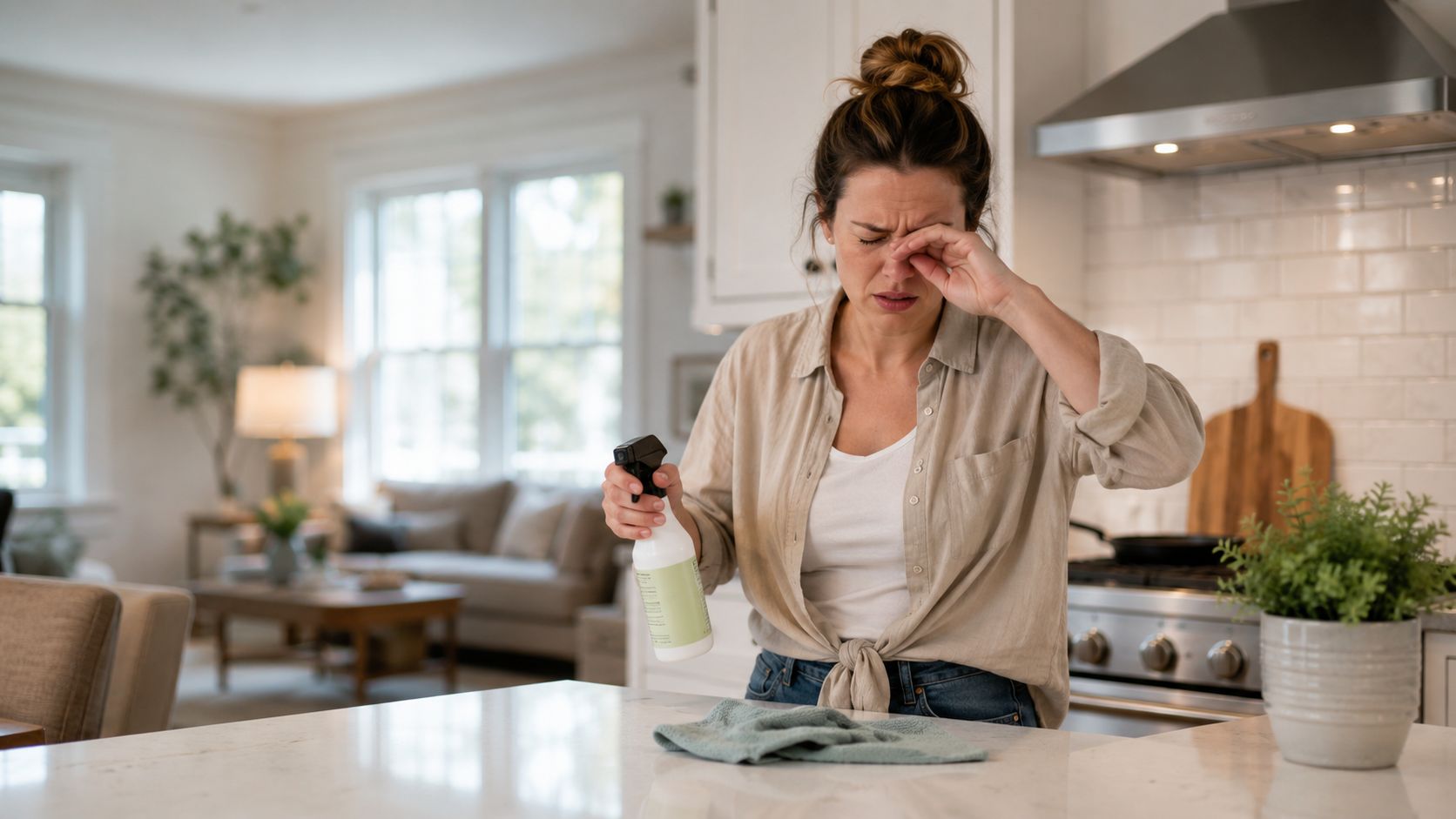
You may recognize the pattern. A homeowner in Newton sprays a “natural” countertop cleaner before guests arrive, wipes until the kitchen shines, then starts sneezing while rubbing irritated eyes. In Wayland, someone switches laundry detergent after a family member develops a rash, only to discover that the replacement still contains fragrance-related ingredients.
For sensitive households, choosing hypoallergenic cleaning products isn't about making cleaning feel luxurious. It's about reducing avoidable exposure while keeping surfaces, floors, fabrics, and bathrooms properly maintained. The challenge is that hypoallergenic isn't a regulated guarantee. A bottle can use that word without proving that the formula is free from every ingredient capable of causing irritation or allergy.
Fragrance-free and hypoallergenic also mean different things. Fragrance-free usually indicates that no fragrance has been added, but it doesn't automatically rule out preservatives, surfactants, botanical extracts, or other potential sensitizers. Hypoallergenic suggests a lower likelihood of causing a reaction, yet the label alone doesn't tell you which ingredients were screened or what testing supported the claim.
The safest approach combines three habits: reduce added fragrance, read the full ingredient list, and prefer a credible external certification when one is available. That process is more dependable than choosing a product because its packaging is green, its name includes “pure,” or its scent seems mild.
Table of Contents
Introduction to Hypoallergenic Cleaning
A reaction after cleaning doesn't always mean a person has a true allergy. Irritation can develop when the skin, eyes, or airways encounter a chemical that feels harsh, while allergic contact dermatitis involves an immune response to a sensitizing ingredient. Asthma symptoms can also worsen after inhaling fragrance or cleaning-product emissions, even when the person has no confirmed contact allergy.
That distinction matters because people often blame the strongest-smelling product first, then assume an unscented replacement must be safe. Removing fragrance is a sensible first step, but fragrance-free doesn't mean allergen-free. Preservatives, surfactants, and plant-derived additives can still cause trouble for someone who is already sensitized.
Practical rule: Treat “hypoallergenic,” “natural,” and “clean” as claims to investigate, not as proof of suitability.
For a family in a suburban Massachusetts home, a lower-trigger cleaning routine can begin with simple changes:
- Choose low-odor formulas: Avoid added fragrance when headaches, asthma symptoms, sneezing, or skin reactions follow cleaning.
- Change the application method: Apply liquid to a cloth instead of spraying it into the room.
- Use less product: More cleaner doesn't necessarily mean a cleaner surface, and excess residue can remain behind.
- Track patterns: Note the product, room, task, and timing of symptoms so you can identify repeat triggers.
The label deserves as much attention as the cleaning performance. A product that removes soil effectively but leaves a strong airborne scent may be a poor fit for a child with asthma. A botanical cleaner may smell pleasant but still contain naturally occurring fragrance allergens.
People with recurring wheezing, significant rashes, or breathing difficulty should speak with a qualified healthcare professional. Cleaning-product choices can reduce exposure, but they shouldn't replace medical evaluation, prescribed treatment, or an emergency plan.
Understanding Fragrance and Allergic Reactions
A cleaner can leave a room smelling mild while still exposing sensitive occupants to problematic ingredients. The hidden trap is the broad term “fragrance.” It may represent multiple scent materials, and those materials can affect the eyes, skin, or airways even when the finished product has little noticeable odor.
A multi-country fragrance exposure study found that 99.1% of people were exposed to fragranced products at least once a week, including 86.2% through cleaning supplies. The study also reported that 32.2% of adults, on average, experienced adverse health effects from fragranced consumer products, and 9.0% had lost workdays or a job during the previous year because of workplace exposure. Among participants with asthma, 57.8% reported adverse effects, as did 75.8% of autistic individuals. These results do not mean every scented cleaner will trigger symptoms. They do show why screening ingredients matters, even when a product looks clean, gentle, or environmentally responsible.
Allergy risk versus irritation
Allergy and irritation are related but different responses. A 2014 review concluded that household cleaning products pose a low risk of inducing fragrance contact allergy, while recognizing that fragrance sensitization occurs (PubMed-indexed review of fragrance allergy in household cleaners). An official European scientific summary estimates that 1% to 3% of the population is allergic to some fragrance ingredients. A later review found 4.5% prevalence of fragrance contact allergy in general European populations during 2008–2011 patch-testing studies (European fragrance allergen summary).
Irritation also affects people without a diagnosed allergy. 30.5% of the general population reported that scented products on other people were irritating, 19% reported adverse health effects from air fresheners, and 10.9% reported irritation from scented laundry products vented outdoors, according to the same European summary.
If fragrance seems connected to symptoms at home, compare fragrance-free formulas with low-VOC cleaning products. Lower VOC emissions may reduce airborne exposure, but the label still requires careful ingredient review.
The Truth About Green and Natural Labels
A Massachusetts family may choose a plant-based cleaner for a child's bedroom, then notice itching or throat discomfort after use. The green bottle suggests a safer choice, but “plant-based,” “eco-friendly,” and “natural” usually describe sourcing, packaging, or brand positioning. They do not automatically describe how the formula affects sensitive skin or airways.
The hidden trap is that “clean” branding can coexist with potential allergens. An analysis of 1,470 clean personal-care products found that 93.8% contained at least one potential allergen, with fragrances and botanicals appearing most often. Frequently listed ingredients included phenoxyethanol, propylene glycol, alkyl glucosides, and benzyl alcohol. Personal-care products are not identical to household cleaners, but the finding shows why a reassuring front label cannot replace ingredient screening.
A separate 2024 analysis of 107 cleaners found that only 13.1% were free of the tested allergenic compounds, while alkyl glucosides appeared in 46.7% of products (analysis of allergens in clean personal-care products). Alkyl glucosides are surfactants that help water lift and remove soil. Their plant-derived reputation does not guarantee that every sensitive person will tolerate them.
Why “natural” can still irritate
Natural fragrance materials may still act as fragrance allergens. Essential oils and botanical extracts can add scent without the word “synthetic” appearing on the front label. The body responds to their constituent chemicals, not to the marketing category printed on the bottle.
Preservatives create another blind spot. Water-based products need protection against microbial growth, and some users tolerate those ingredients while others do not. A short ingredient list can still contain one person's trigger.
A simpler label is easier to evaluate, but simplicity alone does not prove low-allergen risk.
Ask three practical questions: What ingredients are present, what does the certification review, and how will I apply the product? A guide to eco-friendly cleaning products can clarify environmental considerations, while allergy-conscious shoppers should separately inspect fragrance, preservatives, surfactants, and botanical additives.
Someone who reacts to one “clean” product may not need to avoid every eco-brand. A better response is disciplined screening, a fragrance-free formula when appropriate, less aerosolized application, and a small-area trial before using the cleaner throughout the home.
How to Evaluate Labels and Certifications
Start with the front label, but don't stop there. Packaging helps you identify claims quickly. The ingredient list and certification details tell you whether those claims have meaningful support.
A practical label-reading sequence
First, find fragrance language. Look for “fragrance,” “parfum,” “essential oil blend,” and named oils such as citrus, lavender, eucalyptus, or pine. A fragrance-free product may be a better starting point for a sensitive household, but continue reading because fragrance isn't the only potential trigger.
Next, scan for familiar sensitizer categories. Pay attention to preservatives, surfactants, solvents, and botanical extracts. If someone in the home has a known allergy, compare the full list with guidance from their clinician or allergist rather than relying on a broad “gentle” claim.
Then, examine the certification. The U.S. EPA's Safer Choice product finder includes products that meet the program's criteria for fragrance-free products. Safer Choice reviews every chemical in a certified product against its formal standard, and the standard excludes direct-release ingredients with aquatic toxicity values below 10 mg/L (Safer Choice and asthma-conscious cleaning guidance). This gives buyers a more concrete filter than an unsupported “non-toxic” slogan.
Finally, read use instructions. A formula's risk depends partly on whether you spray, wipe, dilute, rinse, or leave it on a surface. Follow the label's dilution, contact-time, ventilation, and storage directions.
What disclosure thresholds mean
European fragrance-allergen rules require individual disclosure when allergen concentrations exceed 0.001% in leave-on products and 0.01% in rinse-off products (EU fragrance-allergen labeling rules). These thresholds help explain why an ingredient might appear on one label but not another. They don't establish that a product below the threshold is harmless for every person.
Also remember that hypoallergenic does not mean allergen-free. A 2015 case report described contact allergy to a product marketed as hypoallergenic. Patch testing identified sodium lauroyl sarcosinate, isostearamidopropyl morpholine lactate, and disodium lauroamphodiacetate as the surfactant allergens (case report involving a hypoallergenic product).
If a product repeatedly causes symptoms, stop using it and keep the container or ingredient label available for a healthcare professional. That information can make later patch testing and product selection more precise.
Product Formats and Exposure Pathways
The same formula can create different exposure depending on how you use it. A spray disperses liquid into the breathing zone, while a wipe places the product directly on a cloth or surface. A concentrate reduces packaging but requires careful dilution, and a liquid poured onto a cloth can limit airborne mist.
Sprays deserve extra caution in homes where someone has asthma. Evidence links sprays, disinfectants, and fragranced cleaners with asthma risk or poorer asthma control. A 10-country study found that weekly spray-cleaner use was associated with a 30% to 50% higher asthma risk (review of cleaning products and asthma).
Comparing common formats
| Format | Main exposure pathway | Lower-exposure practice |
|---|---|---|
| Spray bottle | Airborne droplets and vapors | Spray onto a cloth, not toward the face |
| Aerosol | Fine airborne particles and propellant-related emissions | Use only when necessary, with ventilation |
| Wipe | Direct contact with the wipe and treated surface | Wear suitable gloves if skin reacts |
| Concentrate | Splashing during dilution and later surface use | Measure carefully and label the diluted bottle |
| Liquid cleaner | Skin contact, vapors, and residue | Use a damp cloth and rinse where directions require |
“Green” also doesn't mean VOC-free. A study of 30 cleaning products detected 530 unique VOCs, including 193 hazardous VOCs. Products labeled green emitted about half as many VOCs on average as conventional cleaners, but lower emissions still aren't the same as zero emissions (study of VOC emissions from cleaning products).
Ventilate during and after cleaning, avoid combining products, and let treated surfaces dry according to the label. If a task can be completed with a damp microfiber cloth and a measured amount of fragrance-free liquid, that may be preferable to filling the room with spray mist.
DIY Alternatives and Safe Home Practices
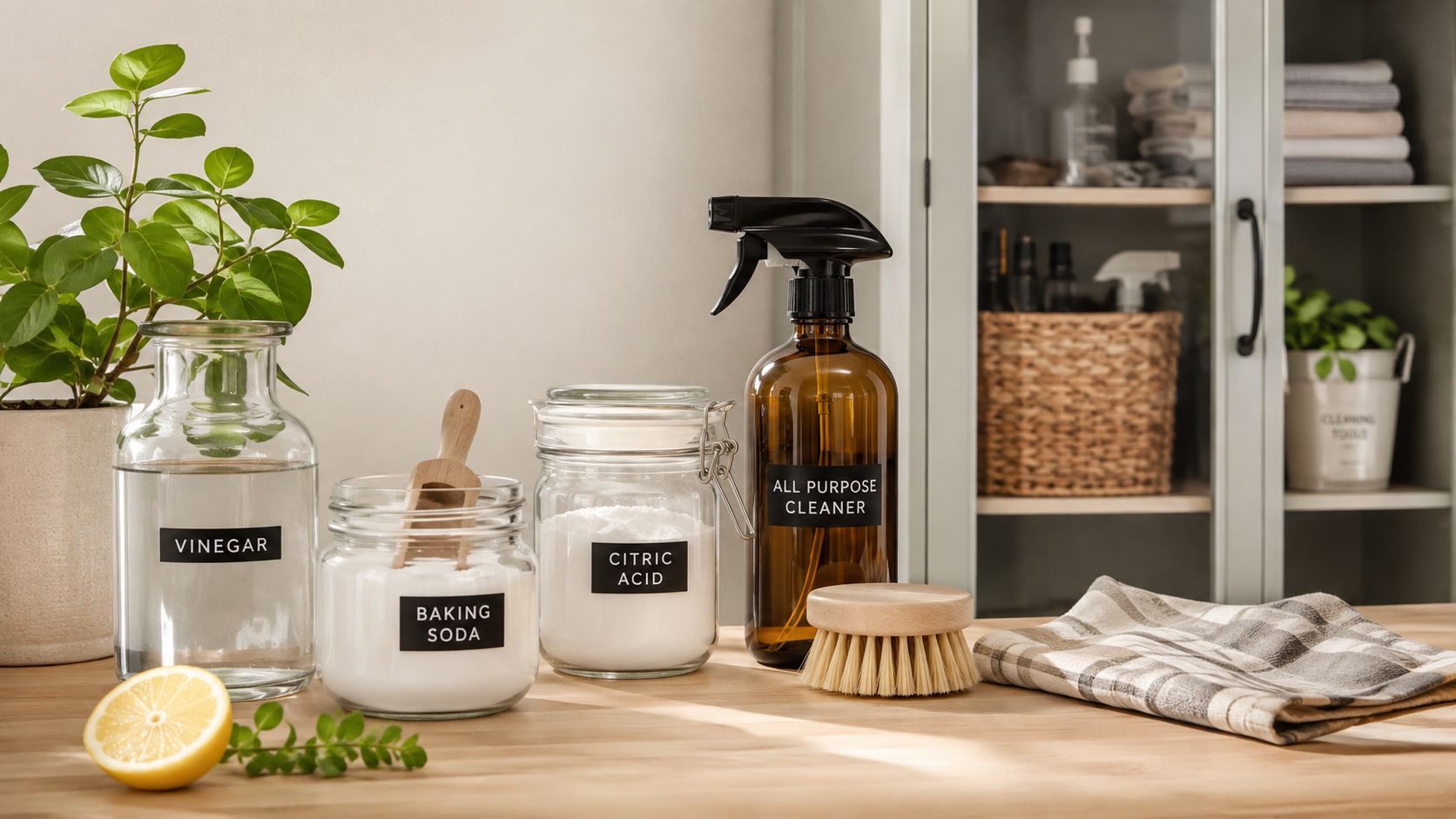
DIY cleaning can reduce the number of commercial formulas in your cabinet, but “homemade” doesn't eliminate all safety concerns. Vinegar, baking soda, castile soap, and citric acid each behave differently, so use them for suitable tasks rather than mixing everything together.
Simple options for everyday soil
- Vinegar solution: Dilute vinegar with water for compatible hard surfaces and mineral deposits. Don't use acidic cleaners on natural stone such as marble or granite unless the surface manufacturer approves them.
- Baking soda paste: Add water to baking soda for a mild abrasive paste on suitable surfaces. Test first because powders can dull delicate finishes.
- Castile soap solution: Use a small, properly diluted amount for washable surfaces. Excess soap can leave a film.
- Citric acid solution: Reserve it for compatible scale and mineral buildup, and follow careful dilution and surface guidance.
Never mix vinegar with bleach, ammonia, or other products. Keep every homemade solution in a clearly labeled container with its ingredients, dilution, and preparation date. Don't transfer cleaners into food or drink bottles.
Storage matters as much as selection
Store commercial and homemade cleaners in their original or clearly labeled containers, closed tightly and out of reach of children and pets. Keep concentrates separate from ready-to-use solutions, and don't leave a bucket, spray bottle, or open container unattended during cleaning.
For additional guidance on combining household ingredients, review vinegar and baking soda cleaning. If symptoms persist despite changing products, ask a healthcare professional whether the issue may involve allergy, irritation, asthma, or another condition.
Sunny Day Pro Services offers recurring house cleaning, deep cleaning, move-in and move-out cleaning, and post-construction cleanup in Wayland, Newton, Needham, Wellesley, Weston, and nearby Massachusetts communities, with eco-friendly options for households concerned about fragrance and airborne irritants. Visit Sunny Day Pro Services to request a quote and discuss a cleaning plan that fits your home and sensitivity concerns.

