
Is Chlorine and Bleach the Same Thing? An Expert Explains in 2026
Is chlorine and bleach the same thing? Learn the critical differences in chemical makeup, concentration, and safe use for your home and pool from our experts.
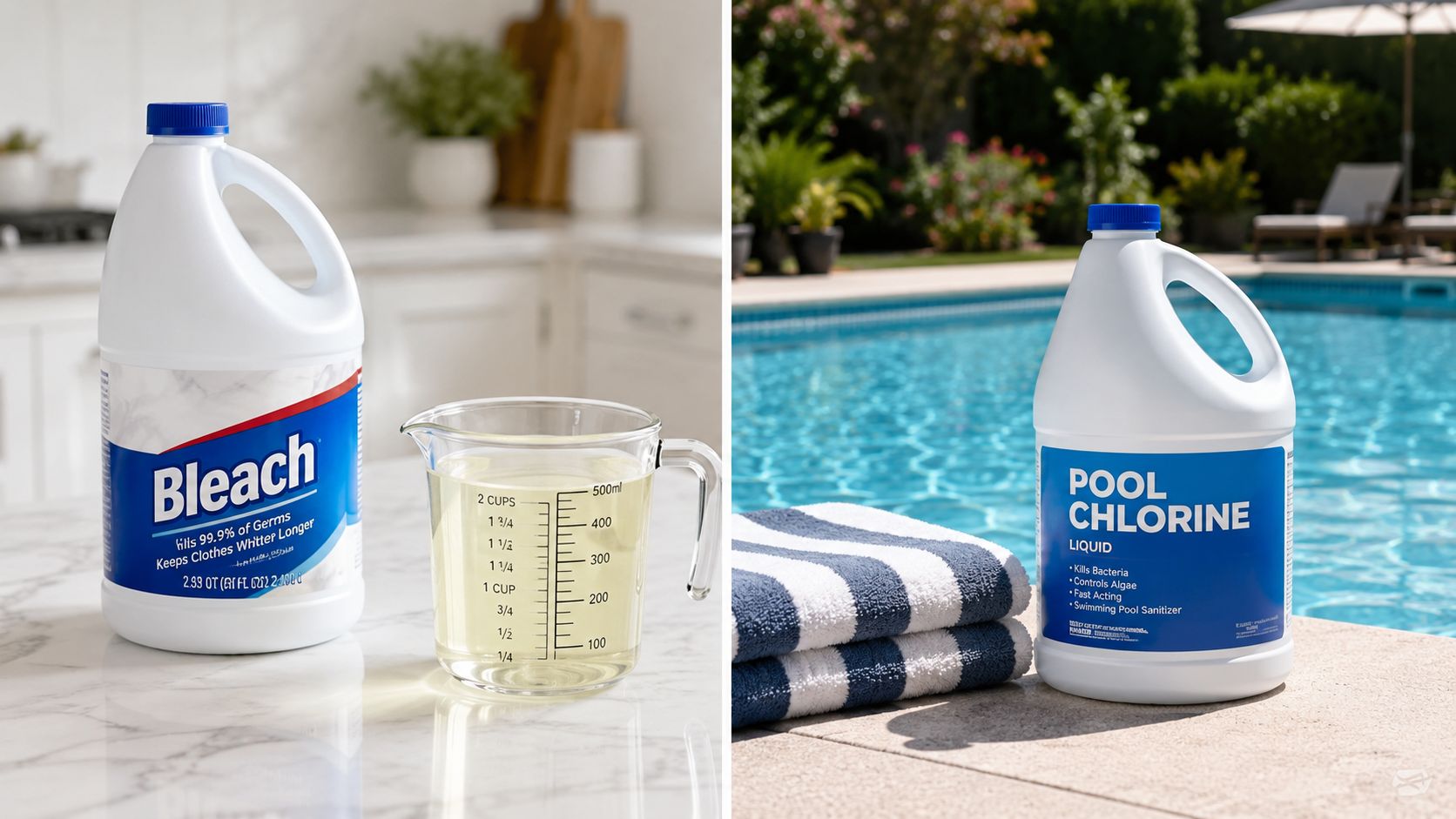
It’s a common question we hear from homeowners across the Greater Boston area: Is chlorine and bleach the same thing? The short answer is no, but they're definitely related. Think of them as chemical cousins—similar genetics, but different roles in the family. Let's clear up the confusion and explain what separates them, how to use each one safely, and why you can't just swap one for the other.
As cleaning experts with years of hands-on experience, we know how important it is to use the right product for the job. Using the wrong one can be ineffective, damage your property, or even be dangerous. This guide will give you the authoritative, practical information you need to clean and disinfect like a pro.
Table of Contents
- Can I use scented or splash-less bleach in my pool?
- How long does bleach last before it loses effectiveness?
- Is chlorine bleach bad for the environment?
- What is the difference between chlorine and pool shock?
The Key Differences Between Chlorine and Bleach
People often use the words "chlorine" and "bleach" interchangeably, but this common mix-up can lead to some risky situations. While both get their powerful sanitizing ability from chlorine, they are chemically distinct products with different strengths, designed for completely different jobs.
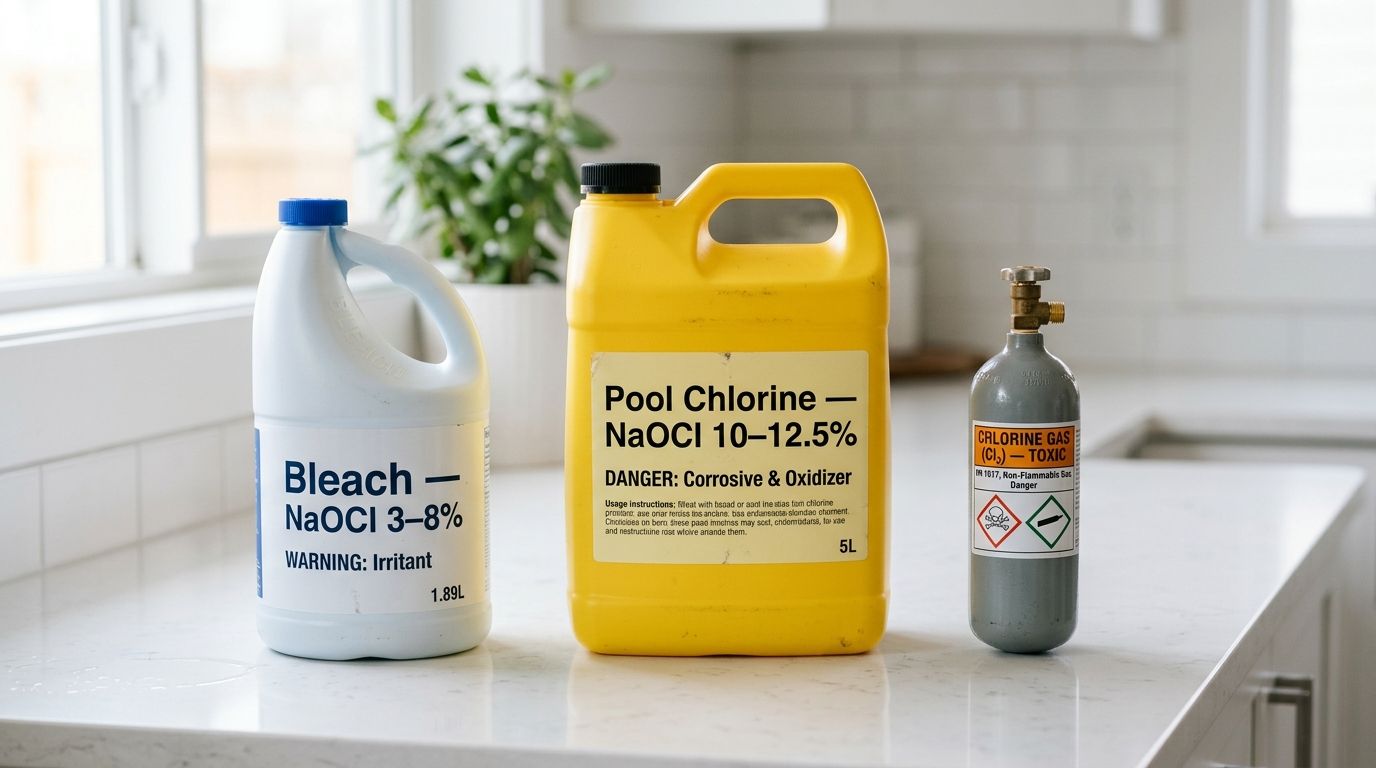
The biggest difference comes down to their chemical state and concentration.
- Elemental Chlorine (Cl₂) is a pure, toxic gas. It's used for heavy-duty industrial purposes, like treating municipal water supplies, and is not something you'd ever find on a consumer shelf.
- Household Bleach is a water-based solution of sodium hypochlorite (NaOCl). The "chlorine" in your laundry bleach is locked into this compound, making it safe for household use.
- Liquid Pool Chlorine is also a sodium hypochlorite solution, but it's much more concentrated.
Here’s the main takeaway: the "chlorine" in bleach and pool shock is actually a compound called sodium hypochlorite. Pure, elemental chlorine is a dangerous gas not sold to consumers.
Chlorine vs. Bleach: A Quick Comparison
To put these differences in perspective, here's a side-by-side comparison of the three common forms.
This simple breakdown highlights why it's so important to use the right product for the right task. Using pool chlorine for laundry would be a disaster, and household bleach is too weak to properly sanitize a swimming pool.
Understanding the Chemistry of Your Cleaners
To truly understand the difference, you have to look at what's in the bottle. The active ingredient in both household bleach and liquid pool chlorine is a compound called sodium hypochlorite, which you'll see on labels as NaOCl. This is the chemical that does the heavy lifting, whether it's whitening your clothes or killing algae in a pool. So when you buy a jug of Clorox or liquid pool shock, you're essentially buying a solution of sodium hypochlorite and water.
The Elemental Difference
So, why all the confusion around the word "chlorine"? The term gets used loosely, but the distinction is critical. Chlorine (Cl) is a basic element on the periodic table, like oxygen or carbon. When two chlorine atoms join, they form chlorine gas (Cl₂), a highly toxic, greenish-yellow gas. This is worlds away from the stabilized liquid you use at home.
A great way to think about this is the relationship between carbon, graphite, and diamonds. They are all forms of carbon, but their atomic structures make them completely different substances with vastly different properties. The graphite in your pencil is soft and gray, while a diamond is one of the hardest substances on earth.
In the same way, pure chlorine gas is the raw, dangerous element, while the sodium hypochlorite in your bleach is a specific, useful compound created from it.
From Gas to Liquid Sanitizer
How do manufacturers turn a dangerous gas into a safe, effective liquid cleaner? The process involves bubbling pure chlorine gas through a solution of sodium hydroxide (lye). This chemical reaction creates an entirely new substance: sodium hypochlorite, which dissolves into the water.
This transformation is key. The volatile gas is converted into a stable liquid that can be safely bottled and used for cleaning and disinfection. Answering the question, "Is chlorine the same as bleach?" really comes down to this distinction. While they share a common chemical origin, the bleach in your laundry room is a completely different, safer compound than the elemental chlorine gas it's derived from.
Comparing Concentration and Sanitizing Strength
The biggest practical difference between the bleach under your sink and the chlorine you put in your pool isn't what they are, but how strong they are. Both products use sodium hypochlorite for their disinfecting muscle, but the concentration is worlds apart. That difference in strength dictates everything about how you use them.
Think of it this way: household bleach is designed for small-scale jobs like whitening laundry or wiping down a kitchen counter. Pool chlorine, on the other hand, is built to treat thousands of gallons of water. The potency has to match the task.
Dissecting the Percentages
The numbers on the label tell the whole story. The concentration of sodium hypochlorite is the key metric here.
- Household Bleach: Typically contains 3% to 8% sodium hypochlorite. A standard bottle of Clorox, for example, is around 7.5%.
- Liquid Pool Chlorine: This is a much more potent solution, usually formulated with 10% to 12.5% sodium hypochlorite.
- Granular "Pool Shock": These powerful granules, often made with calcium hypochlorite, are in another league entirely, with effective chlorine concentrations that can exceed 65%.
This infographic does a great job of showing how the same base element, chlorine, gets turned into very different products for very different jobs.
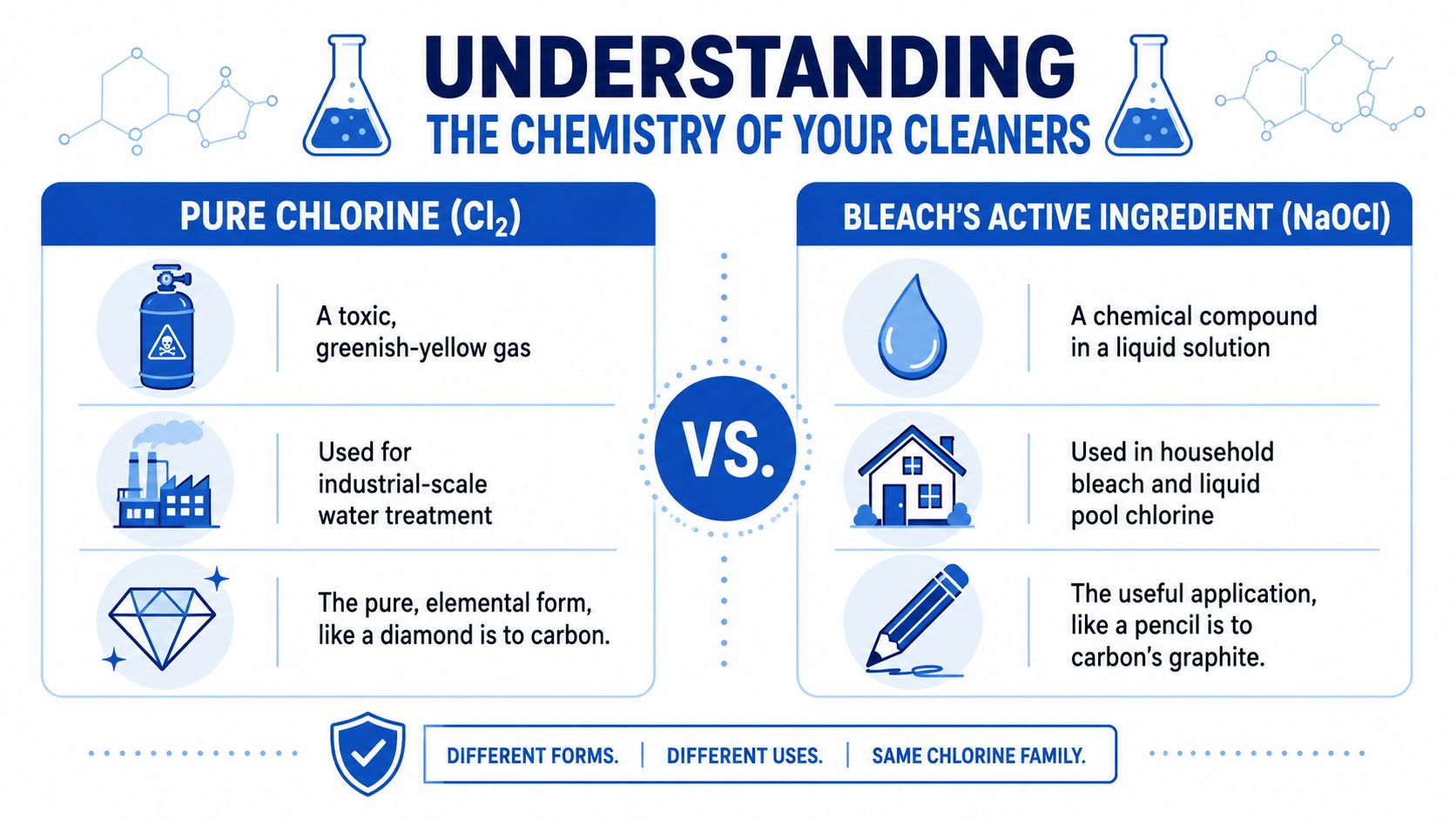
As you can see, one is engineered for wiping down a countertop, and the other is built to keep a massive volume of water clean and safe.
Can You Use Household Bleach in a Pool?
This brings us to a question we hear all the time from homeowners in Newton and Wellesley: can you just dump a jug of laundry bleach into your pool? While technically, yes, you can, it's an impractical and inefficient idea.
Since household bleach is about half the strength of liquid pool chlorine, you'd have to use twice as much to get the same sanitizing effect. For a standard 20,000-gallon pool, that adds up fast, making it a far more expensive and labor-intensive option. You also must be careful to only use plain, unscented bleach without any additives, as those extras can make your pool water cloudy. Many pool owners have tried this, and you can read about their experiences on Reddit.
Using the right tool for the job is always the best approach. On that note, properly sanitizing fabrics is its own science. For anyone interested, you can learn more about sanitizing clothes in our dedicated article. Ultimately, while bleach and pool chlorine are chemically related, their different strengths make them specialists, not substitutes.
Choosing the Right Product for Each Job
Picking the right sanitizer boils down to knowing the job you’re tackling. You wouldn't use a sledgehammer to hang a picture, and the same logic applies here—you don’t want to bring pool-grade chemicals into your kitchen. It’s all about matching the product's strength and formula to the task at hand.
Using Household Bleach for Cleaning
For everyday disinfecting on hard, non-porous surfaces—think kitchen countertops, bathroom sinks, and sealed tile floors—standard household bleach is a fantastic and budget-friendly choice. Its lower concentration of sodium hypochlorite is much safer for indoor use, provided you dilute it properly.
When used correctly, the U.S. Environmental Protection Agency (EPA) confirms that bleach kills 99.9% of common bacteria and viruses.
Expert Tip: The go-to dilution ratio for disinfecting surfaces is about ⅓ cup of bleach per 1 gallon of water. This simple mix is perfect for wiping down doorknobs, light switches, and other high-touch areas. For a deeper dive, Homes & Gardens offers some great insights on product use differences.
A word of caution: always test bleach on a hidden spot first. It’s notorious for causing permanent discoloration on colored fabrics and grout, and it can damage delicate surfaces. Natural stone like marble and granite is especially vulnerable, as bleach's alkalinity can etch the surface. If you're dealing with sensitive materials, gentler alternatives may be a better fit. Our guide on cleaning with vinegar and baking soda covers some great options.
Using Pool Chlorine for Water Treatment
Pool chlorine, on the other hand, is a completely different beast. Whether you're using liquid chlorine or granular shock, these products are highly concentrated to sanitize the huge volume of a 20,000-gallon swimming pool.
Their purpose is to maintain a stable level of "free chlorine" that constantly fights off bacteria, algae, and organic debris. Pool-grade products also contain crucial additives like cyanuric acid, which acts as a stabilizer. This protects the chlorine from being rapidly degraded by the sun's UV rays—a feature household bleach lacks.
Household bleach is designed for small-scale surface disinfecting; pool chlorine is engineered for large-volume water treatment.
This is precisely why grabbing a jug of Clorox to "shock" your pool is a bad idea. You'd have to use a ridiculous—and expensive—amount to get the job done, and it would lack the stabilized protection needed to keep your pool clean for more than a few hours.
Critical Safety Hazards You Must Avoid
We've covered the chemistry, but this next part is arguably the most important: how to handle these powerful chemicals safely. Both regular household bleach and concentrated pool chlorine are serious business, and overlooking safety can lead to genuinely dangerous situations.
Let me be crystal clear about the single most important rule: never, ever mix bleach with other household cleaners. This isn't just a friendly suggestion; it's a hard-and-fast rule based on chemistry. Certain combinations create toxic gases, and the consequences can be immediate and severe.
The Dangers of Mixing Chemicals
It’s tempting to think that if one cleaner is good, two must be better. When it comes to bleach, that logic is a recipe for disaster.
Here are the two most common—and dangerous—mixtures to avoid at all costs:
- Bleach + Ammonia: This combination creates chloramine gas. Inhaling it can cause coughing, wheezing, nausea, and intense irritation to your eyes, nose, and throat. In high concentrations, it can cause serious lung damage.
- Bleach + Acidic Cleaners: Mixing bleach with acidic products (like toilet bowl cleaners, some glass cleaners, or even vinegar) produces pure chlorine gas. This is the same toxic gas used industrially, and exposure can cause severe respiratory distress and can even be fatal.
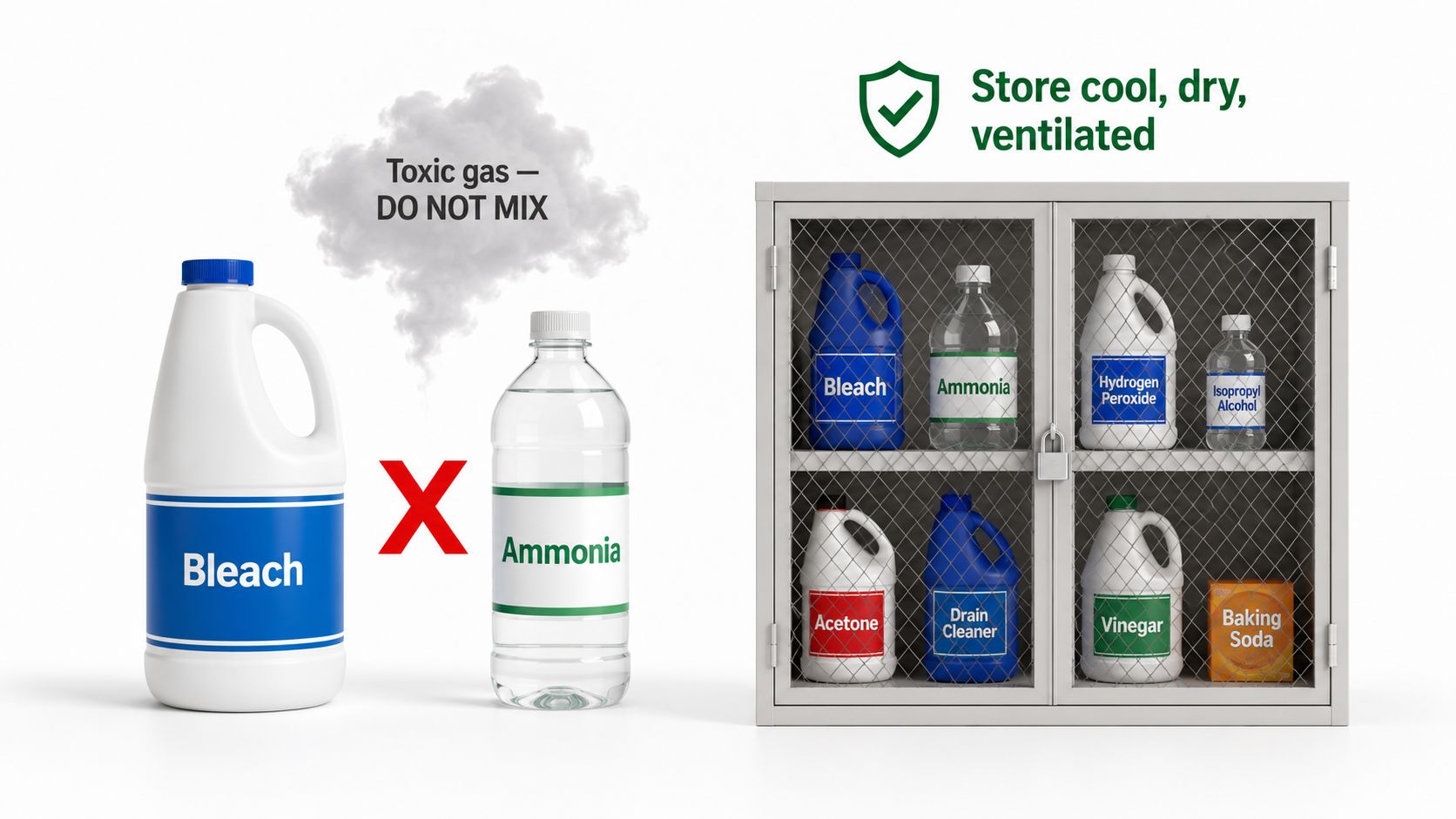
The bottom line is simple: Never play chemist under your sink. Use one product at a time. If you need to switch, rinse the surface thoroughly with plain water first.
Proper Storage and Handling Protocols
Proper handling is more than just avoiding bad chemical cocktails. How and where you store these products is just as crucial for preventing accidents, especially in homes with children and pets.
Follow these non-negotiable rules for storing bleach and pool chemicals:
- Store them in a cool, dry, and well-ventilated area, out of direct sunlight, which degrades the active ingredients.
- Keep them in their original, clearly labeled containers with the caps sealed tight.
- Store them up high on a shelf or inside a locked cabinet, well out of reach of children and pets.
- Keep them physically separate from other chemicals, especially acids and ammonia, to prevent dangerous reactions in case of a spill.
Following these rules is the best way to ensure these cleaners remain helpful tools instead of household hazards. If you're looking for alternatives, exploring low-VOC cleaning products can be a great next step.
When to Call a Professional for Cleaning
There’s a certain satisfaction in tackling a tough cleaning job yourself, but sometimes, the DIY route with powerful chemicals is a risk not worth taking. Even when you know the rules, using a potent chemical like bleach can cause permanent, expensive damage to your home.
We see it all the time—a simple mistake leads to an irreversible problem. For instance, a bleach solution that’s slightly too strong can instantly strip the color from grout, leaving your bathroom tile looking patchy and worn. Unfortunately, once that color is gone, the only fix is to re-grout the entire area.
Protecting Your Valuable Surfaces
Some materials are particularly sensitive to sodium hypochlorite, and a mishap can be disastrous.
- Marble and Granite: Bleach can etch the protective sealant on these natural stones, dulling the finish and leaving the porous stone underneath exposed to future stains.
- Hardwood and Laminate: An accidental spill can be enough to strip the finish and discolor your floors, a problem that often requires professional refinishing to fix.
If you're facing stubborn mildew, deeply stained grout, or you’re nervous about cleaning a delicate surface like a new marble backsplash, it’s time to call in a professional. Protecting your investment is always the smartest move.
A professional cleaning team has the training, experience, and specialized products to handle these jobs safely. They know which formulas to use on specific materials to get a deep clean without causing harm. For homeowners in communities like Newton or Wellesley, calling experts from Sunny Day Pro Services ensures your home gets the care it deserves. Why risk a costly mistake when you can guarantee a flawless result?
Frequently Asked Questions About Chlorine and Bleach
We've covered the science, but how does this apply to real life? Let's dive into some of the most common questions we get from homeowners every day.
Can I use scented or splash-less bleach in my pool?
Absolutely not. You should never add scented, "splash-less," or any kind of "color-safe" bleach to your swimming pool. These specialty products contain thickeners, surfactants, and fragrances that will wreak havoc on your pool's water chemistry, likely resulting in a foamy, cloudy mess. If you're in a real pinch, the only acceptable option is plain, unscented household bleach where sodium hypochlorite is the only active ingredient.
How long does bleach last before it loses effectiveness?
Bleach has a surprisingly short shelf life. An unopened bottle starts to degrade after about six months, losing roughly 20% of its potency each year. Once opened, it degrades even faster. For maximum effectiveness, buy smaller bottles more frequently and store them in a cool, dark place away from sunlight.
Is chlorine bleach bad for the environment?
This is a common concern. When used as directed, household bleach breaks down into about 95–98% salt and water, which doesn't pose a major long-term threat. The bigger environmental impact comes from its energy-intensive manufacturing process and the harm caused by improperly dumping large, undiluted amounts into waterways. For those looking for greener cleaning solutions, options like white vinegar, hydrogen peroxide, and steam cleaners can handle many household jobs effectively.
What is the difference between chlorine and pool shock?
Think of pool shock as a highly concentrated, super-powered version of chlorine. Its job is to quickly raise your pool's free chlorine level to obliterate bacteria, algae, and other contaminants that routine chlorination can't handle. While liquid pool chlorine contains 10–12.5% sodium hypochlorite, granular shock (like calcium hypochlorite) can have a chlorine concentration of 65% or even higher. Shock is a powerful tool for periodic, intensive treatments—not your daily maintenance chemical. It’s the "reset button" for your pool’s water.

