
Kitchen Remodel Return on Investment Explained
Understand kitchen remodel return on investment with 2026 cost-vs-value data, Massachusetts-specific tips, and a clear framework to maximize your resale value.

A minor kitchen remodel averages $28,458 in cost and $32,141 in added resale value, or roughly 113% ROI nationally. That benchmark doesn't mean every kitchen creates a profit, because project scale and scope matter far more than the fact that the work happens in a kitchen.
Massachusetts homeowners often lose kitchen remodel return on investment by spending on finishes buyers admire but won't fully pay for. The better strategy is controlled scope, durable materials, a layout that fits the neighborhood, and a clean presentation that lets the work show at appraisal.
Table of Contents
What Kitchen Remodel Return on Investment Really Means
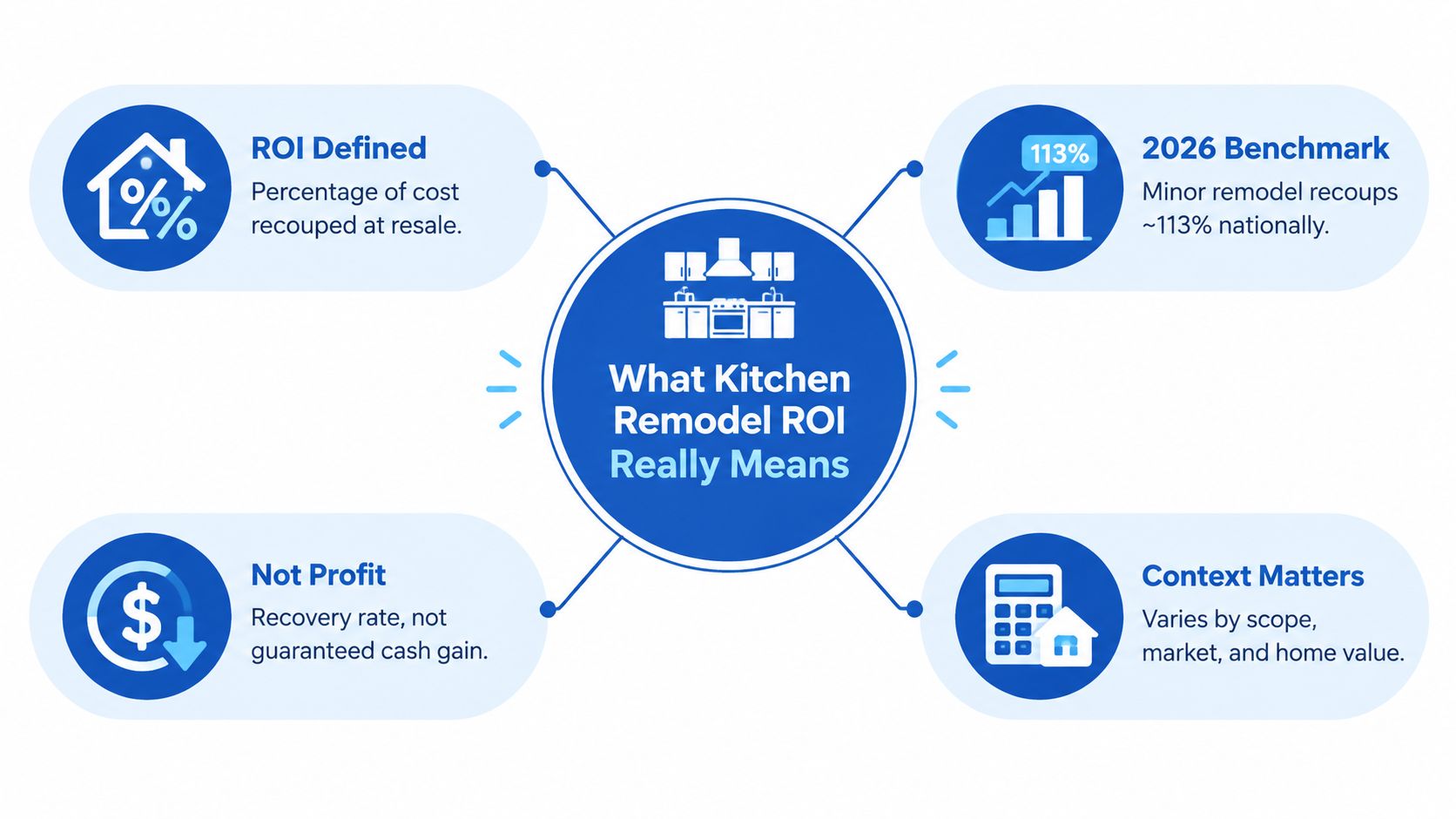
Kitchen remodel return on investment measures the share of project cost recovered through added resale value. It isn't the same as cash profit, and it doesn't include the years of daily enjoyment you receive from a more functional room.
The core calculation is:
(Added resale value minus project cost) ÷ project cost = net ROI
A project costing $28,458 and adding $32,141 in resale value represents about 112.9% cost recouped, according to the 2025 Zonda Cost vs. Value kitchen remodeling figures. The broader benchmark is also summarized by Zillow's kitchen remodel ROI guide, which reports approximately $28,458 in cost, $32,141 in added value, and roughly 113% ROI for a minor remodel.
Percentage recovery matters more than the biggest resale number
A larger project can add more dollars while producing a weaker percentage return. A $150,000 upscale remodel could add more absolute value than a $30,000 refresh, yet the smaller project may recover a greater share of its cost because it avoids expensive structural work and luxury selections that local buyers don't value dollar for dollar.
Two kitchens with identical square footage can also produce different results. Buyers in a renovated Newton home may expect a different finish level from buyers in a Western Massachusetts property, while appraisers look at neighborhood comparables, the home's overall price tier, and whether the kitchen is materially better than nearby alternatives.
Practical rule: Treat national ROI as a yardstick, not a promise. Your local comparable sales determine whether the project makes financial sense.
The highest-return decisions usually happen before demolition. Choose the right tier, protect the layout unless it fails, coordinate cabinetry and flooring, and reserve premium spending for improvements buyers can see and use.
How the 2026 Cost vs Value Report Breaks Down Kitchen Tiers
The national figures make the central lesson hard to miss. Minor work leads the kitchen categories, while larger and more luxurious projects recover progressively less of their cost. The figures below reflect the 2025 Zonda and recurring Cost vs. Value benchmarks summarized in Kitchen Cabinet Kings' 2026 kitchen ROI report.
| Tier | Average Project Cost | Average Resale Value | Percentage Recouped | Best Fit |
|---|---|---|---|---|
| Minor midrange remodel | About $28,000 to $28,458 | About $32,141 | About 112.6% to 113% | Resale preparation and dated but functional kitchens |
| Major midrange remodel | About $82,793 to $82,800 | Not separately stated in the verified benchmark | About 50.9% to 51% | Owners who need meaningful functional improvement |
| Upscale remodel | About $164,000 | Often about $49,000 to $59,000 recovered at resale | Roughly 36% to 38% | Long-term enjoyment, not short-term resale recovery |
The minor tier generally means a targeted update rather than a complete rebuild. Cabinets may be refaced or refreshed, counters replaced, lighting modernized, and flooring repaired or replaced without moving every plumbing and electrical connection. That restraint keeps labor and hidden-condition exposure under control.
A major midrange project can involve more extensive replacement and a revised layout. The Zillow Cost vs. Value discussion reports a major midrange average cost of $82,793 and approximately 51% ROI. In Greater Boston and Worcester County, contractor pricing can rise faster than the buyer ceiling for the neighborhood, which makes an overbuilt kitchen especially difficult to recover.
Upscale work faces the widest gap. Custom cabinetry, premium appliances, specialty stone, and complex fabrication can create a beautiful room, but buyers may compare it with homes that offer similar function at a lower price. A luxury kitchen makes sense when you intend to enjoy it, not when you expect every upgraded dollar to return at closing.
How to Calculate Your Own Kitchen Remodel ROI
Start with the formula, then replace national assumptions with evidence from your own market:
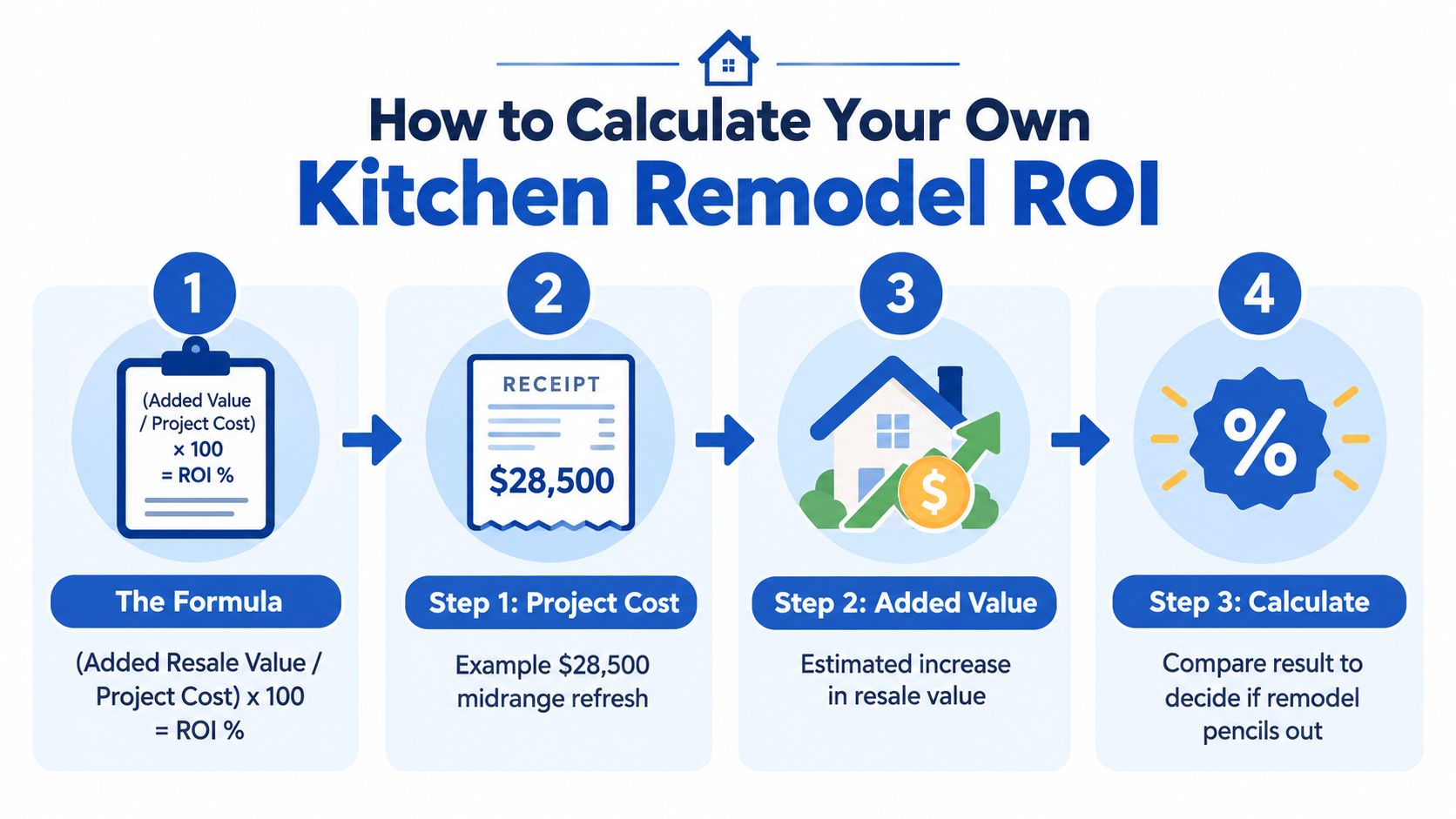
(Added resale value ÷ project cost) × 100 = gross ROI
For a simple illustration, suppose a midrange refresh costs $28,500 and you estimate $32,200 in added resale value. The gross recovery is approximately 113%, while the net gain after subtracting project cost is $3,700, or about 13% net ROI. Those figures are an illustration of the calculation, not a prediction for a specific Massachusetts property.
Build the estimate from comparable homes
National averages can frame the discussion, but local sales should drive your estimate. Ask a real estate professional to identify six to ten comparable kitchens sold in the same ZIP code within the past six to twelve months, then narrow the comparison to homes with similar age, size, condition, and buyer profile. Those quantities belong to the decision process described here, not to the national Cost vs. Value benchmark.
Check whether updated kitchens sell closer to the top of the local range, whether dated kitchens trigger price reductions, and whether buyers in your area prefer renovated character homes or clean contemporary finishes. A kitchen that's already competitive may not justify a complete replacement.
Include every line item
Your project cost must include demolition, disposal, permits, design, delivery, installation, electrical work, plumbing, finish repairs, and contingency planning. Compare cabinet refacing with replacement, quartz with granite, LVP with tile, and standard appliance packages with premium tiers.
A bid that looks attractive because it excludes floor preparation or finish carpentry isn't a strong ROI bid. Before signing, compare the proposal with the kitchen remodel financing guide and confirm that the payment plan won't push you into a scope that local buyers won't support.
Tile and Flooring Choices That Move the Value Needle
Homeowners often spend carefully on cabinets and then treat the floor as an afterthought. That's a mistake. Buyers read the floor as evidence of durability, maintenance, and installation quality, especially in Massachusetts homes where wet boots, salt, and seasonal moisture put hard surfaces under constant stress.
Matte porcelain tile in a neutral tone is usually the strongest resale choice. A 12-by-24 or 24-by-24 format creates a calmer field with fewer grout joints, provided the subfloor is flat and the installer plans the layout before setting tile. A warm gray, soft beige, or restrained stone-look porcelain typically appeals to more buyers than a high-gloss pattern or bold encaustic design.
| Flooring Type | Typical Installed Cost per Sq Ft | Estimated Recoup | Buyer Appeal |
|---|---|---|---|
| Neutral matte porcelain | $4 to $7 | Strong relative value when installed correctly | Broad, durable, and easy to coordinate |
| Natural stone | About $20 | Can recoup less proportionally than porcelain | Premium appearance, higher maintenance expectations |
| Luxury vinyl plank | Varies by product and installation | Useful where comfort and moisture resistance matter | Broad appeal, but quality and transitions matter |
| Engineered wood | Varies by product and installation | Depends heavily on continuity with adjacent rooms | Warm appearance, vulnerable to awkward material breaks |
The installed price comparison is a practical illustration, not a verified national statistic. A $4 to $7 per square foot porcelain installation can outperform a $20 natural stone installation at resale when buyers value clean design, easy care, and dependable performance more than material prestige.
Let the floor support the whole first impression
Avoid forcing a wood-to-tile transition that stops in the middle of a sightline or creates a narrow visual strip. If the kitchen opens to existing hardwood, match the direction and tone thoughtfully, or use porcelain that complements the surrounding wood without pretending to be an exact match.
Heated floors can be a sensible comfort upgrade under tile in cold Massachusetts climates, particularly near exterior doors. They may improve daily enjoyment, but don't assume the feature alone will produce a matching resale premium.
For more guidance on selecting resilient surfaces, compare the practical recommendations in this guide to flooring for high-traffic areas. The best resale floor is the one that looks intentional, survives household traffic, and doesn't make the next buyer plan a replacement.
Refresh vs Midrange vs Upscale Where ROI Turns
The ROI curve changes when the project stops solving visible problems and starts purchasing personal preference. A refresh can correct dated surfaces and weak presentation. A midrange remodel can improve function. An upscale project often adds craftsmanship and luxury that the market may not fully price into the home.
| Remodel Tier | Typical Project Cost | Approx 2026 Recoup | Best Fit |
|---|---|---|---|
| Refresh | Near the minor benchmark of about $28,458 | Near 113% | Owners preparing to sell or correcting dated finishes |
| Midrange | Near the major benchmark of about $82,793 | About 50.9% to 51% nationally | Owners who need layout or infrastructure improvements |
| Upscale | About $164,000 | Roughly 36% to 38% | Long-term owners prioritizing personal use |
A refresh scope might include cabinet refacing, new counters, a faucet, lighting, paint, backsplash work, and a neutral porcelain floor. It earns its way back by improving the features buyers see immediately without paying for a full demolition.
A midrange remodel can justify a modest layout adjustment, such as correcting an inefficient work path or creating a better connection to the dining area. The improvement must be obvious in daily use. Moving walls, plumbing, and electrical solely to achieve a different aesthetic often consumes the budget without creating equivalent buyer value.
An upscale remodel may include custom cabinetry, premium appliances, and natural stone surfaces. Those choices can be excellent for an owner who plans to stay, but the verified national pattern shows that upscale projects recover only about 36% to 38%, compared with approximately 113% for minor work, as summarized by Kitchen Cabinet Kings' 2026 report.
Spend where buyers can verify the improvement. A better work path, sound cabinets, consistent flooring, and clean installation usually beat a luxury brand badge.
Scope discipline is the key. A modestly priced kitchen with strong proportions and professional installation can outperform a more expensive room filled with finishes that don't suit the house.
A Massachusetts Decision Framework Remodel or Sell As Is
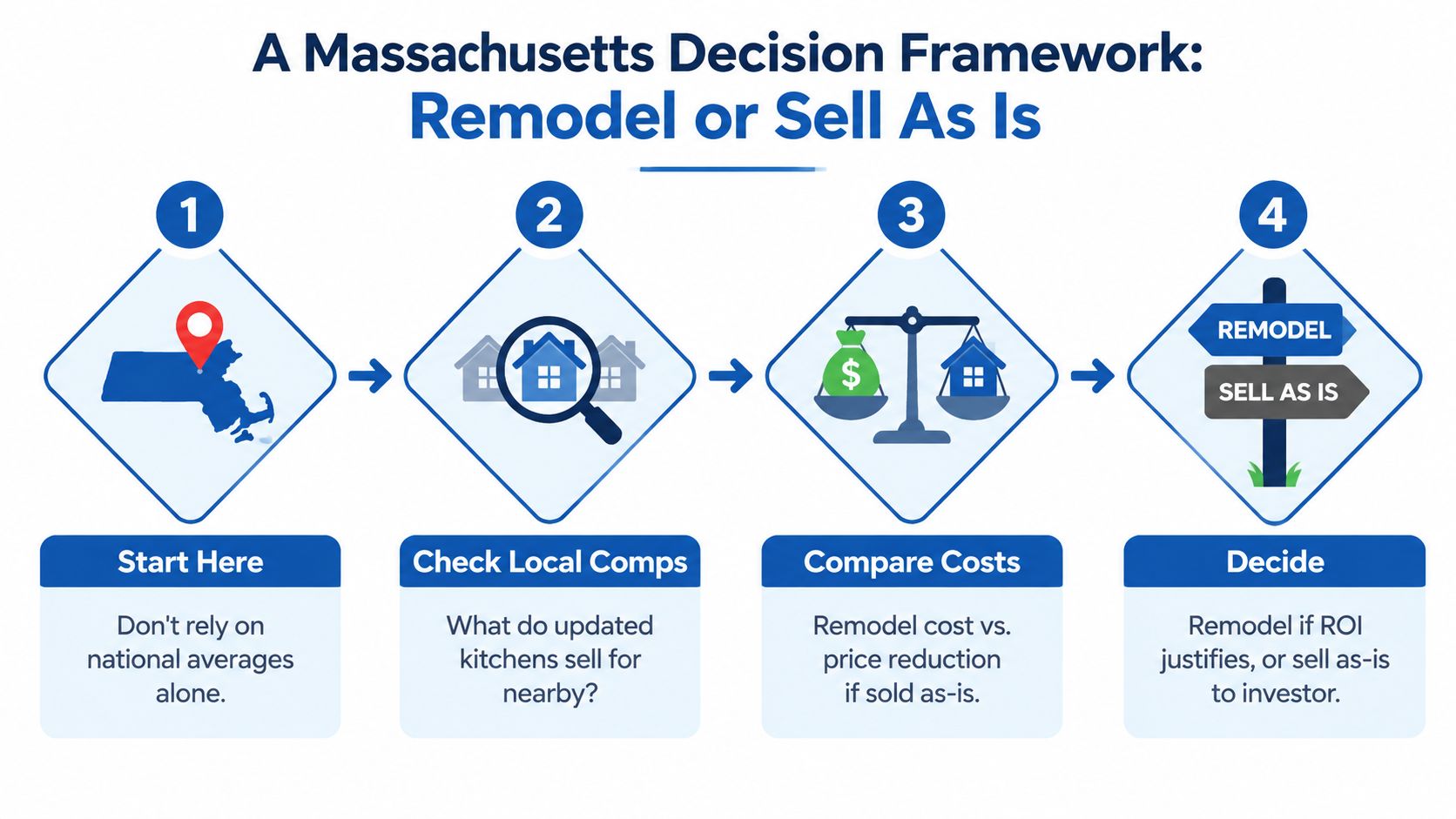
Massachusetts homeowners shouldn't make this decision from a national percentage alone. A kitchen in Wayland, Newton, Needham, Wellesley, or Weston competes within a different resale environment from a property in Western Mass, and older homes often carry constraints that don't appear in the first contractor estimate.
Start with local evidence
Ask a local agent or appraiser to review recent comparable sales in the same town and, when possible, within a tight radius. Look at:
- Updated versus original kitchens: Identify whether renovated kitchens command stronger offers or photograph better.
- Days on market: Compare similar listings and note whether dated kitchens sit longer or require pricing changes.
- Buyer expectations: Determine whether nearby homes offer modern cabinetry, durable flooring, and current lighting.
- As-is alternatives: Estimate the likely price adjustment if you list without remodeling.
The comparison should include the full remodel bid, carrying costs during construction, permits, inspections, and the risk of discovering outdated wiring or concealed moisture. Older Massachusetts housing stock can turn a cosmetic plan into an infrastructure project when electrical systems, plumbing, or walls need correction.
Match the scope to your holding period
If you're an owner-occupant staying for several years, prioritize the layout, storage, lighting, and materials you'll use every day. A higher-end choice can be rational when the enjoyment period is long and the design remains appropriate for the home.
If you're an investor or expect to list soon, stay near the refresh tier. Correct visible defects, use durable neutral finishes, and avoid custom choices that narrow the buyer pool.
Permit timelines and inspection requirements also matter. Greater Boston labor pricing can make the same scope less attractive than it would be in Western Mass, while winter access can affect deliveries, staging, and project sequencing. Get a written scope that identifies who handles permits, inspections, protection of adjacent rooms, and cleanup.
How Cleaning and Staging Protect the Appraisal
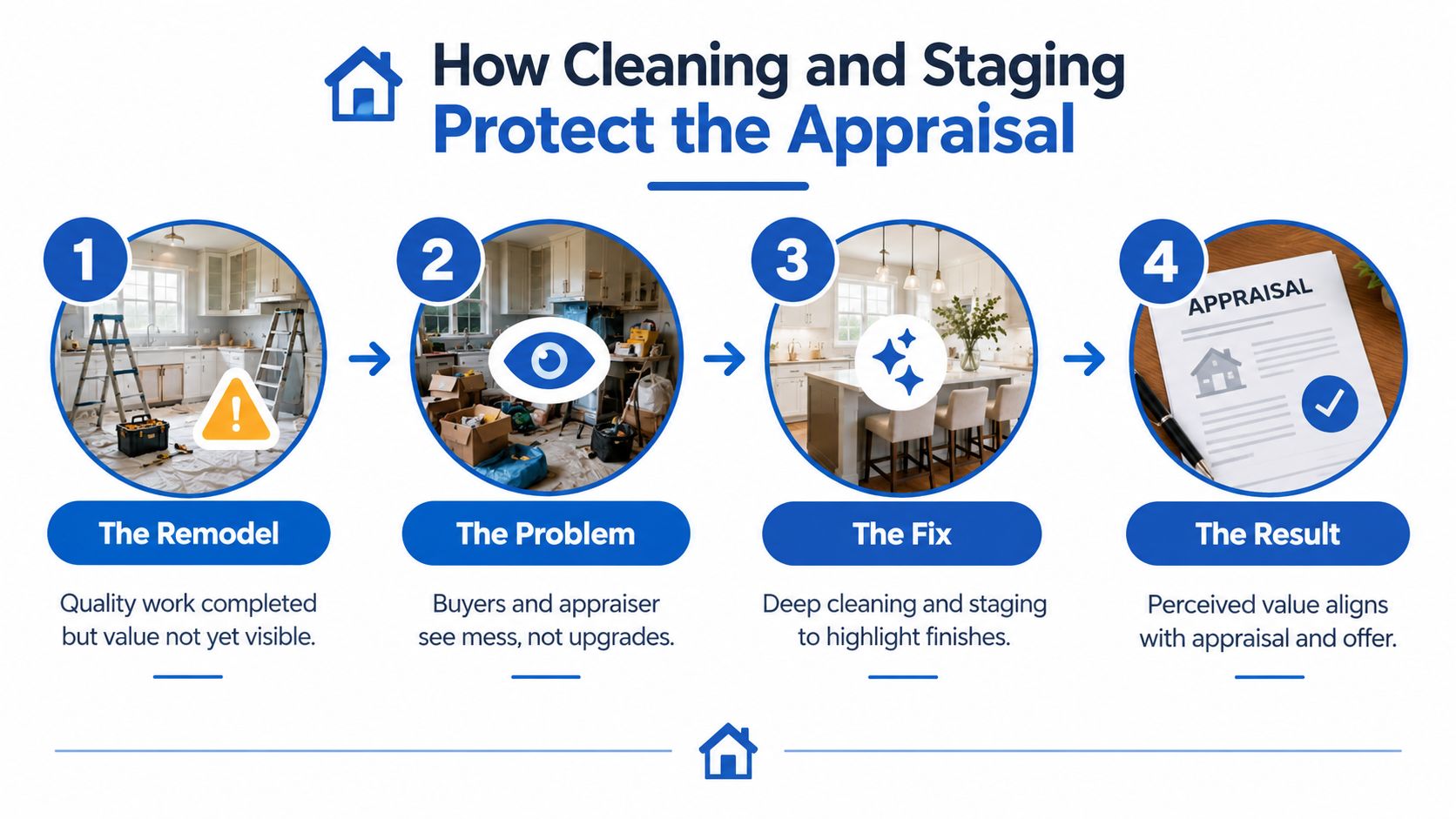
A Massachusetts homeowner can complete a controlled remodel and still present a weak value story if the finished room looks neglected. Consider a representative scenario: the homeowner replaced dated counters, cabinets, and flooring, then spent close to the project's full cost. During the first appraisal pass, stained grout, construction dust, crowded counters, and an unfinished transition between old and new flooring drew attention away from the upgrades.
A professional cleaning reset the baseline. Staging then made the kitchen feel larger, brighter, and deliberately maintained, with clear countertops, repaired caulk lines, spotless tile, consistent lighting, and a restrained accent palette. The final sale price exceeded the appraiser's initial estimate after the home showed cleanly and competed effectively.
This isn't a claim that cleaning creates appraisal value by itself. Cleaning protects the value already invested in materials and labor.
Remove the signals buyers interpret as unfinished
Before listing, inspect the details that communicate maintenance quality:
- Grout: Remove discoloration and construction residue, then confirm joints are sound.
- Caulk: Replace failed or uneven lines around sinks, counters, backsplashes, and trim.
- Surfaces: Polish counters, remove fingerprints, clean appliance fronts, and address scratches.
- Transitions: Finish every edge where new flooring meets old flooring, trim, or cabinetry.
- Air and floors: Eliminate odors, clean HVAC vents, and remove salt and moisture residue from entry mats and kitchen floors.
Stage with restraint. Keep only a few useful, coordinated items on the counters, remove personal clutter, and open window treatments so natural light reaches the work area. Buyers should notice the cabinetry, floor, and layout before they notice the homeowner's belongings.
For a pre-listing reset or post-construction cleanup, review the available real estate cleaning services. The finished presentation should make the renovation look complete, cared for, and ready to use.
Your High Leverage Kitchen ROI Checklist
Start with the scope, not the wish list. Compare a refresh, midrange remodel, and upscale project against nearby comparable sales before you authorize demolition.
Protect the money already committed
- Test the layout first: Don't move walls, plumbing, or appliances unless the change solves a clear daily-use problem.
- Choose durable finishes: Favor well-built cabinetry, practical counters, reliable appliances, coordinated lighting, and properly installed porcelain tile.
- Keep the neighborhood in view: A kitchen should feel improved, not strangely overbuilt for the surrounding homes.
- Price the complete project: Include permits, demolition, delivery, installation, finish work, repairs, and cleanup.
- Document the work: Save permits, invoices, warranties, product details, and material selections for the next buyer and appraiser.
Massachusetts projects need additional scrutiny. Account for older-home constraints, inspection requirements, permit timing, winter access, and labor differences between Greater Boston and Western Mass. Ask a local agent which features are producing offers, not merely compliments.
Finish like a buyer is arriving tomorrow
Deep-clean grout and flooring, repair caulk, polish counters, eliminate odors, remove clutter, and stage a small number of useful items. If the remodel is already complete, present it as a maintained, move-in-ready improvement rather than a design experiment.
The strongest kitchen remodel return on investment comes from several modest decisions working together. A sound layout, durable floor, coordinated finishes, careful installation, and a spotless presentation can protect more value than a single extravagant selection.
Sunny Day Pro Services provides expert tile and flooring installation, post-construction cleanup, deep cleaning, and real estate cleaning for homeowners across Wayland, Newton, Needham, Wellesley, Weston, and nearby Massachusetts communities. Visit Sunny Day Pro Services to request a quote and protect the finish, presentation, and resale impact of your kitchen remodel.

