
Post Construction Cleaning Estimate: How It Is Calculated
Understand how post construction cleaning estimates are calculated. Learn about scope, square footage, debris, labor, and specialty cleaning costs.

A kitchen remodel can be finished on paper while the home still feels unusable. Cabinets are installed, the new floor is down, and the trades have packed up, but drywall dust coats the baseboards, adhesive marks remain on the flooring, and bits of packaging are tucked behind appliances. Then two cleaning companies inspect the same space and return with very different quotes.
That difference usually comes from scope, not guesswork or profit margin. A reliable post construction cleaning estimate accounts for the dust type, debris volume, surface sensitivity, access, safety controls, and the condition required before people can occupy the property. A square-foot figure can be a useful starting point, but it can't describe the whole job.
Table of Contents
- What an estimator should measure
- Debris can change the first visit
- Labor is the main planning variable
- Rough clean removes the worksite burden
- Light clean prepares finished surfaces
- Final clean supports the handoff
Why Post-Construction Cleaning Estimates Vary So Much
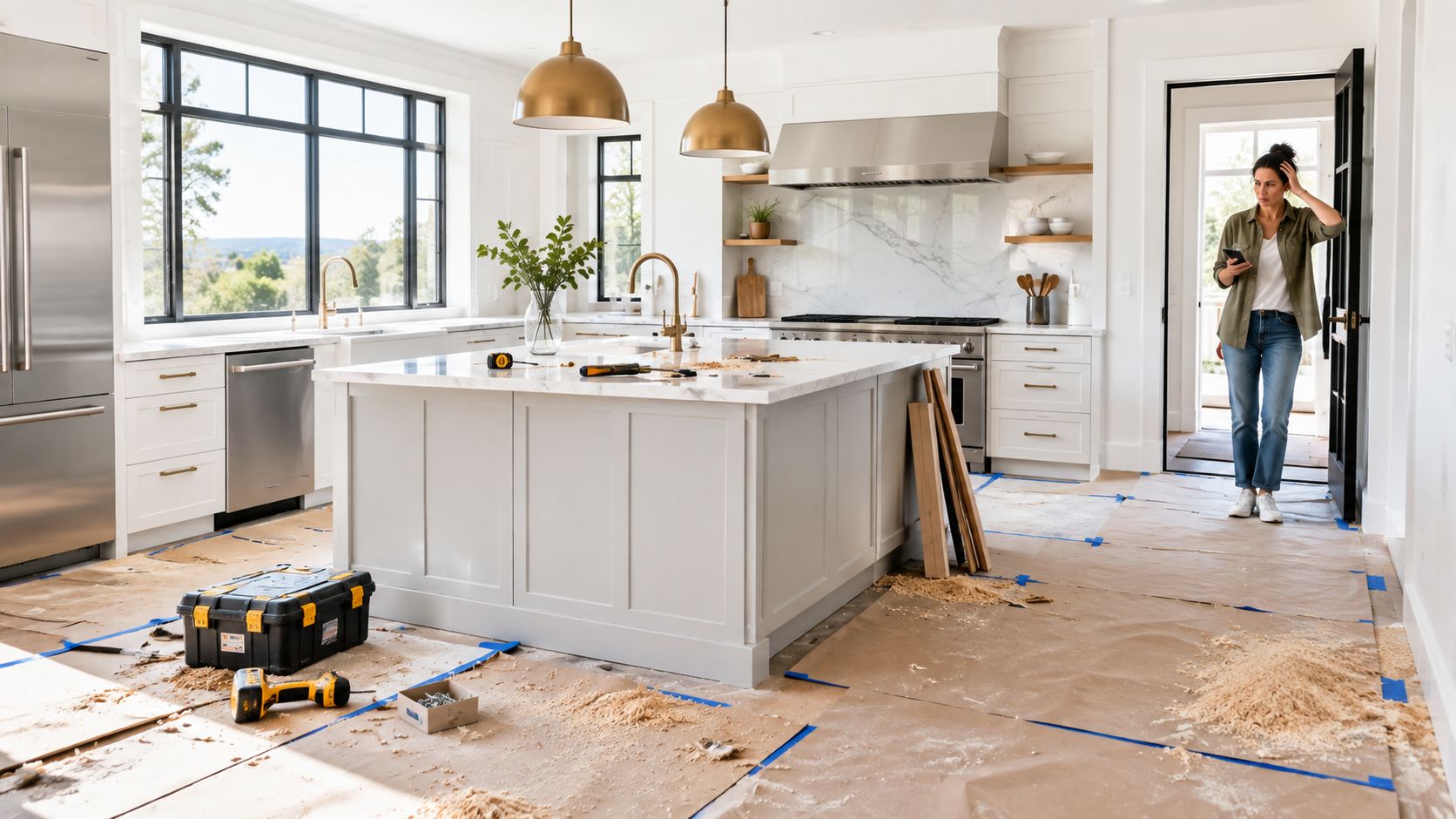
Consider two Massachusetts kitchens with similar floor areas. The first had cabinets replaced, limited drywall work, and trades who removed most of their packaging. The second involved wall demolition, tile cutting, floor adhesive, countertop installation, and sanding. Both may appear to be “one kitchen” in a basic quote request, yet the second requires more collection, more detailed surface work, and more careful residue removal.
The construction market itself helps explain why no universal cleaning price exists. U.S. construction spending reached an estimated seasonally adjusted annual rate of $2.1362 trillion in June 2025, including $1.6219 trillion in private construction and $883.1 billion in residential construction, according to the June 2025 construction spending report from the U.S. Census Bureau. A small renovation, a new single-family home, and a large commercial build-out produce very different cleaning conditions.
The label on the quote isn't the scope
A low flat-rate quote may cover only loose debris, visible dust, and a quick floor pass. A higher quote may include cabinet interiors, window tracks, fixture wiping, adhesive removal, detailed vacuuming, and a return visit after dust settles. Neither price can be judged until the included work is written down.
The cleanable area also differs from the property's total footprint. Mechanical rooms, unfinished areas, inaccessible storage spaces, exterior zones, stairs, and high surfaces may require separate treatment or exclusion. A provider who prices from a floor plan alone may miss the features that consume the most labor.
Practical rule: Compare the tasks in each bid, not just the final number.
A credible estimate should identify at least:
- Project type: Renovation, new construction, addition, commercial build-out, or repair work.
- Cleanable area: Finished square footage, rooms, floors, stairs, and high-dust zones.
- Construction stage: Whether trades are finished and tools, materials, and waste have been removed.
- Cleaning phase: Rough clean, light clean, final clean, or touch-up visit.
- Residue and waste: Drywall dust, grout haze, paint, adhesive, packaging, rubble, and other materials.
- Access conditions: Elevators, stairs, parking distance, locked areas, high ceilings, and occupied rooms.
Two contractors can therefore inspect the same address and make different assumptions. The best estimate makes those assumptions visible before work starts.
Key Factors That Determine Your Cleaning Cost
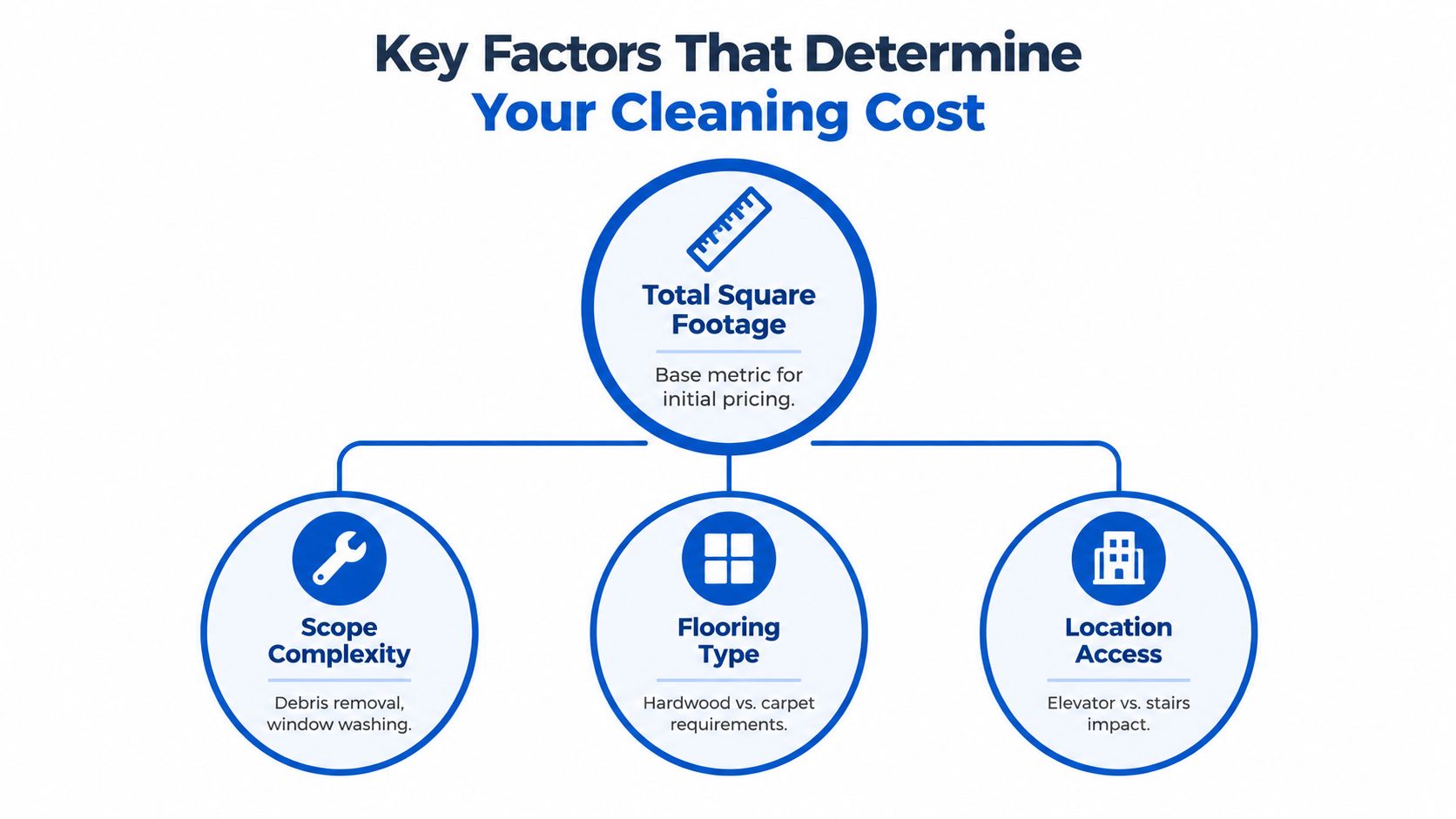
Cleanable square footage provides the first measurement, but it shouldn't become the entire pricing model. A wide-open floor with limited residue may move efficiently, while a smaller home filled with cabinetry, bathrooms, glass, stairs, and fixtures can demand much more detailed work.
What an estimator should measure
Start with finished floor area, then record the features that interrupt a simple floor calculation:
- Rooms and floors: Count bedrooms, bathrooms, kitchens, finished basements, additions, and separate levels.
- Windows and glass: Note interior panes, tracks, screens, mirrors, glass doors, and difficult access.
- Cabinetry and built-ins: Interior shelves and drawers take additional passes, especially when fine dust has settled inside.
- Fixtures and appliances: Include lighting, plumbing fixtures, range hoods, refrigerators, ovens, and other installed equipment.
- Floor surfaces: Hardwood, tile, natural stone, vinyl, and carpet each require different products and techniques.
- Access: Stairs, elevators, long carrying routes, limited parking, and occupied areas affect crew movement.
A useful formula is cleanable square footage divided by a phase-specific production rate equals estimated labor hours. The rate should change according to the condition of the site, not remain fixed across every room.
Debris can change the first visit
Construction debris may include cardboard, plastic, wood offcuts, drywall, tile fragments, metal, concrete, and packaging. Loose material has to be collected, loaded, transported, sorted, and disposed of before detailed cleaning can proceed. OSHA requires construction work areas, passageways, stairs, and surrounding areas to remain clear of scrap lumber, protruding nails, and other debris, as described in its construction housekeeping standard.
The estimate should separate debris hauling from dust removal. Otherwise, a quote that looks inexpensive may just move disposal, loading, or sorting into a later change order.
Labor is the main planning variable
Post-construction cleaning is labor-intensive because workers must repeatedly move around installed finishes and remove residue without damaging them. As a neutral benchmark for the surrounding construction labor environment, the Bureau of Labor Statistics lists median hourly wages of $22.80 for construction laborers and $29.31 for carpenters, with mean wages of $25.39 and $31.96, respectively, in its construction occupations data. Those figures aren't cleaning-service prices, but they show why an estimate should be built around crew hours, equipment, consumables, transportation, disposal, insurance, and possible rework.
Ask whether the quote includes inside cabinets, windows, appliances, exterior areas, hazardous-material handling, and inspection corrections. Clear inclusions make competing bids comparable.
Understanding the Three Phases of Construction Cleaning
A professional estimate should distinguish rough clean, light clean, and final clean. Each phase solves a different problem, and combining them into one vague “post-construction cleaning” line makes it difficult to know what you're buying.
Rough clean removes the worksite burden
The rough clean happens after major construction activity has ended or after a defined phase is complete. Workers remove loose packaging, scrap, larger debris, heavy dust, and leftover materials so finish surfaces can be accessed.
This phase may involve:
- Bagging and consolidating waste.
- Collecting wood, drywall, tile, plastic, and packaging.
- Vacuuming heavy dust from floors and ledges.
- Clearing stairs, walkways, and work zones.
- Preparing rooms for installation or detailed finish cleaning.
A published estimating benchmark describes a rough-clean rate of approximately 250 square feet per labor-hour for a 20,000-square-foot commercial space, calculated from a four-person crew working 20 hours, as discussed in this post-construction bidding benchmark. That figure is a planning reference, not a promise. Adhesive, grout haze, cabinetry, glazing, delicate finishes, and occupied-site restrictions can reduce productivity.
Light clean prepares finished surfaces
The light clean addresses the dust and residue left after rough debris is gone. Crews may vacuum corners, wipe walls and trim, clean fixtures, mop floors, and remove the remaining construction film from accessible surfaces.
The work becomes slower when a room contains many installed items. A large empty room may be straightforward, while a compact bathroom with tile, grout lines, plumbing fixtures, mirrors, glass, cabinets, and hardware requires frequent tool changes and careful hand detailing.
Final clean supports the handoff
The final clean is the finish-sensitive pass before inspection, showing, tenant turnover, or move-in. It commonly includes detailed dust removal, floor care, interior glass, fixtures, baseboards, doors, cabinets, and residue removal where the surface allows it.
A quote should state whether it includes:
- Paint or sticker removal.
- Grout-haze treatment.
- Adhesive or caulk residue.
- Interior window tracks.
- Wall washing.
- Floor polishing or specialty floor care.
- Final inspection corrections.
- A return visit after punch-list work.
A single square-foot price across all three phases often produces a distorted estimate. For a practical room-by-room preparation list, use this post-construction cleaning checklist, then ask the provider to mark each item as included, excluded, or separately priced.
The Hidden Cost of Dust and Hazardous Materials
The gray film on a countertop may look like ordinary construction dust, but its source determines the cleaning method. Drywall dust, sawdust, concrete dust, mortar, grout, tile residue, insulation fibers, lead dust, and asbestos-containing debris shouldn't be treated as interchangeable materials.

Ordinary residue versus silica dust
Ordinary surface dust may call for controlled vacuuming, damp wiping, appropriate microfiber tools, and repeated passes. Silica-generating materials such as concrete, mortar, grout, stone, and tile require a different safety conversation.
OSHA says dust containing silica on work surfaces and equipment should be cleaned with wet methods or a HEPA-filtered vacuum when feasible. Dry sweeping and compressed air are generally prohibited because they can put respirable particles back into the air. OSHA identifies an action level of 25 micrograms per cubic meter and a permissible exposure limit of 50 micrograms per cubic meter, measured as an eight-hour time-weighted average, in its construction silica guidance.
That can add setup time, HEPA equipment, wet-cleaning consumables, personal protective equipment, controlled filter handling, and exposure-control documentation. The estimator should ask what was cut, ground, sanded, or demolished, and whether dust entered HVAC returns, closets, textured surfaces, or occupied rooms.
Older painted surfaces need a separate decision
Lead-related work shouldn't be folded into a standard final-clean price. EPA guidance gives post-abatement dust clearance thresholds of 5 micrograms per square foot on floors, 40 micrograms per square foot on interior window sills, and 100 micrograms per square foot in window troughs, as stated in its lead safety guidance.
Those thresholds are not ordinary housekeeping targets. If a project involves sanding, cutting, or demolishing painted surfaces in an older Massachusetts home, the estimate should clarify whether certified lead-safe practices, containment, HEPA vacuuming, wet wiping, clearance testing, or a qualified abatement contractor is required.
A routine cleaning quote should never imply that regulated lead or asbestos remediation is included unless the provider is qualified and the scope says so.
Before requesting a quote, photograph the residue and tell the estimator which materials created it. A provider can price ordinary drywall dust differently from a site that needs controlled silica procedures, and neither should be confused with hazardous-material remediation. Guidance on removing ordinary drywall residue is available in this drywall dust cleaning resource.
Occupancy Readiness and Indoor Air Quality Costs
A property can look clean and still fail a practical move-in test. Dust may remain on vent covers, inside return grilles, on cabinet tops, in window tracks, beneath appliances, or on high-touch surfaces. If the work disturbed the HVAC system, the cleaning scope needs to address more than what a person can see from standing height.
Define what “ready” means
Before accepting a quote, decide who will occupy the property and what condition they need. A homeowner may prioritize bedrooms, kitchens, floors, and cabinet interiors. A property manager may need a documented walkthrough for a tenant handoff. A real-estate professional may need clean glass, trim, floors, and entry areas before photography or showing.
An occupancy-readiness checklist can include:
- Dust control: Confirm that finished rooms were isolated from active work and that migration paths were cleaned.
- HVAC handoff: Ask whether filters, vents, returns, and accessible grilles are included.
- High-touch surfaces: Include handles, switches, railings, controls, and plumbing fixtures.
- Hidden edges: Check cabinet interiors, drawer tracks, window tracks, baseboards, and appliance gaps.
- Floor and grout review: Identify whether fine dust, grout haze, adhesive, or polish requires a specialized pass.
- Final walkthrough: Establish who checks the work and how corrections are handled.
Construction-dust guidance recommends controlling migration, using HEPA filtration, damp-wiping instead of dry sweeping, and changing HVAC filters after dusty phases, as outlined in this construction dust and indoor-air-quality guidance. The estimate should state whether those actions are included or remain the homeowner's responsibility.
Visible cleaning and air handling are connected
A crew may finish the floors and counters, only for a return visit to become necessary after dust moves from an unfinished zone through the air-handling system. That isn't always a cleaning failure. It can happen when trades continue working after the first pass, when filters remain in place, or when sealed work zones are opened before final dust control.
A better quote separates the base cleaning scope from optional readiness provisions. Those provisions might cover filter replacement, accessible vent and return cleaning, air-purifier operation, sealed-zone breakdown, or a post-clean inspection. The exact inclusion matters more than a broad promise of “move-in ready.”
Occupancy question: What must be clean, controlled, and inspected before your family, tenants, buyers, or staff enter the space?
The answer helps determine whether you need one final pass or phased visits. It also prevents a low initial bid from becoming expensive after dust migrates into finished rooms and requires additional labor.
How to Get an Accurate Estimate in Massachusetts
Homeowners in Wayland, Newton, Needham, Wellesley, Weston, and nearby communities can improve quote accuracy before the estimator arrives. The aim isn't to make the property look cleaner for the inspection. It's to provide enough information for the provider to price the actual conditions.
Prepare an estimate-readiness file
Gather the project details that affect labor, safety, and disposal:
- Project history: Record the renovation or construction type, major demolition, and whether work is complete.
- Material list: Identify drywall, concrete, tile, grout, insulation, flooring adhesive, painted surfaces, and stone.
- Dust history: Note where cutting, grinding, sanding, or demolition occurred and whether dust reached HVAC returns.
- Site photographs: Photograph floors, cabinet interiors, window tracks, residue, debris piles, stairs, and access routes.
- Area information: Provide finished square footage, room count, floors, bathrooms, windows, cabinets, and appliances.
- Trade status: Confirm whether tools, leftover materials, dumpsters, and construction debris will be gone before cleaning.
- Safety concerns: Disclose suspected lead, asbestos, silica, or other material concerns before anyone begins work.
Separate cleaning from waste handling
Massachusetts defines construction and demolition waste as building materials and rubble from construction, remodeling, repair, or demolition. State rules also require solid-waste facilities to remove or divert waste-ban materials from disposal to the greatest extent possible, while municipal guidance warns that construction debris doesn't belong with regular household trash, as explained in the Massachusetts solid-waste management regulations.
That means your quote should identify bagging, sorting, loading, hauling, recycling or transfer-station fees, and disposal of prohibited materials. A property with a dumpster already on site may have a different scope from one where the cleaning company must arrange transport. Material type and debris volume also affect the handling plan.
Compare bids line by line
Use a written cleaning service quote guide when reviewing proposals. Ask each provider to identify the phase, crew assumptions, labor hours, equipment, included rooms, exclusions, disposal responsibilities, hazardous-material limits, inspection process, and return-visit terms.
Don't choose a quote solely because it has the lowest total. Choose the proposal that makes the final condition clear, separates ordinary cleaning from regulated work, and gives you a fair way to compare the actual scope.
Sunny Day Pro Services offers post-construction cleanups for Massachusetts homeowners and can build a quote around the property size, construction details, debris, residue, and final-clean requirements. Visit Sunny Day Pro Services to request an estimate and discuss the cleaning scope before your remodel reaches handoff.

