
Professional Housekeeping Services: A Massachusetts Guide
Explore professional housekeeping services in MA. Learn about recurring, deep, move-in/out, and post-construction cleaning, pricing, and hiring tips.
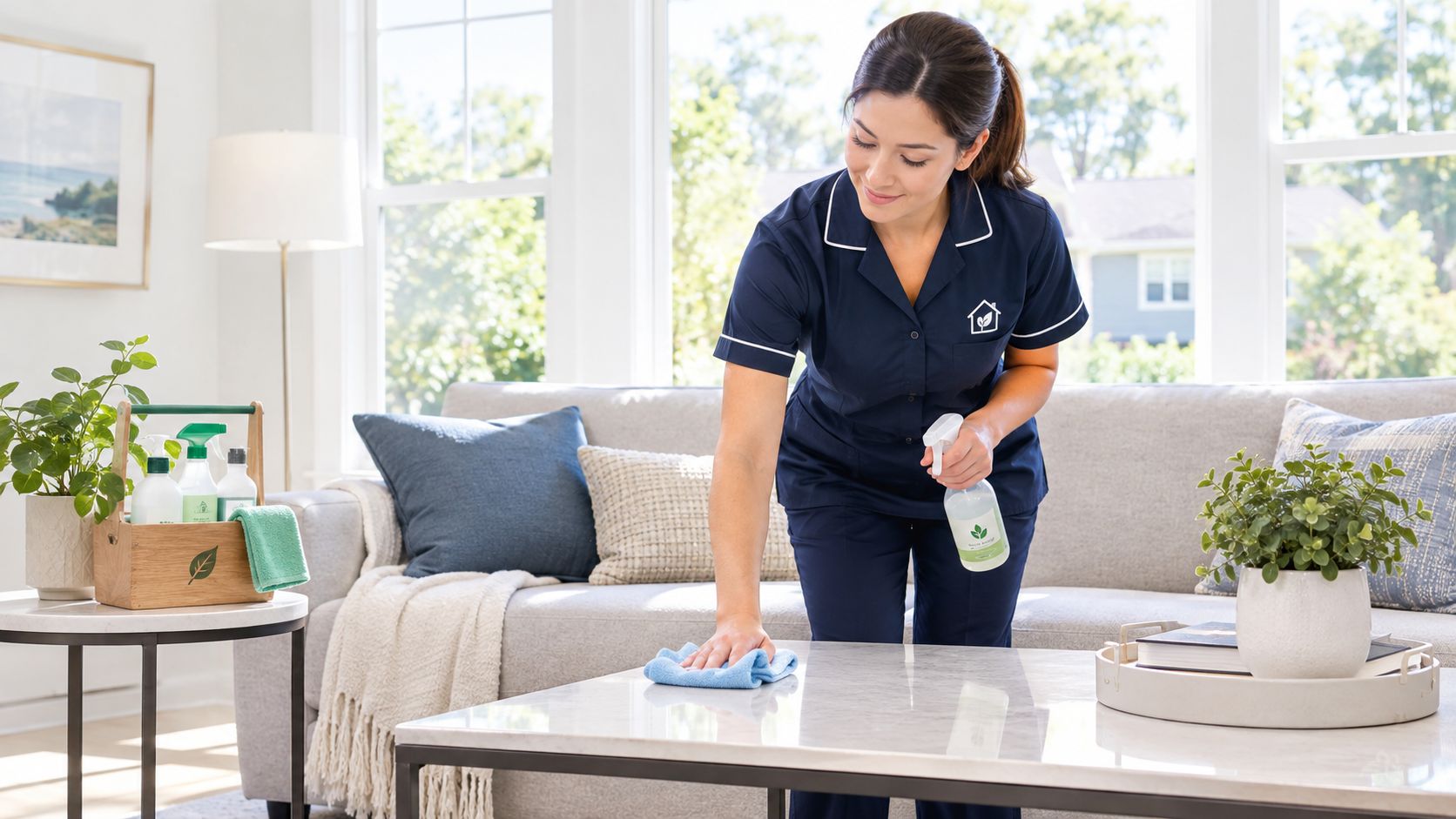
Professional housekeeping services are customizable cleaning arrangements, including recurring, deep, move-in/move-out, and post-construction cleaning, hired to save busy Massachusetts homeowners time and deliver reliably spotless homes. The home cleaning services market is projected to reach $79.06 billion in 2026 and $134.05 billion by 2032, reflecting how widely households are outsourcing routine maintenance.
You know the situation. The school calendar is full, the mudroom has become a storage area, and the kitchen needs more than a quick pass with a spray bottle. In the greater Wayland and Newton area, homeowners also deal with renovation dust, seasonal pollen, large properties, frequent guests, and the demands of buying or selling a home.
I've hired enough cleaning teams across the Boston suburbs to know that the cheapest quote rarely tells you what you're buying. The important questions are more practical: What type of service does your home need? What tasks are included? Who is accountable if something is missed?
Table of Contents
Understanding Professional Housekeeping Services
A professional housekeeping appointment should match the condition and purpose of the home. A family in Wellesley that needs reliable maintenance has a different problem from a Newton homeowner preparing for a closing, and neither needs the same workflow as a Wayland household finishing a major renovation.
The global cleaning services market was valued at $442.1 billion in 2025, projected to reach $470.8 billion in 2026 and $770.8 billion by 2033, according to the domestic cleaning services market outlook. That scale matters because professional housekeeping is no longer an informal favor or occasional tidy-up. It's a structured service category with recurring plans, specialized equipment, trained labor, scheduling systems, and defined quality expectations.
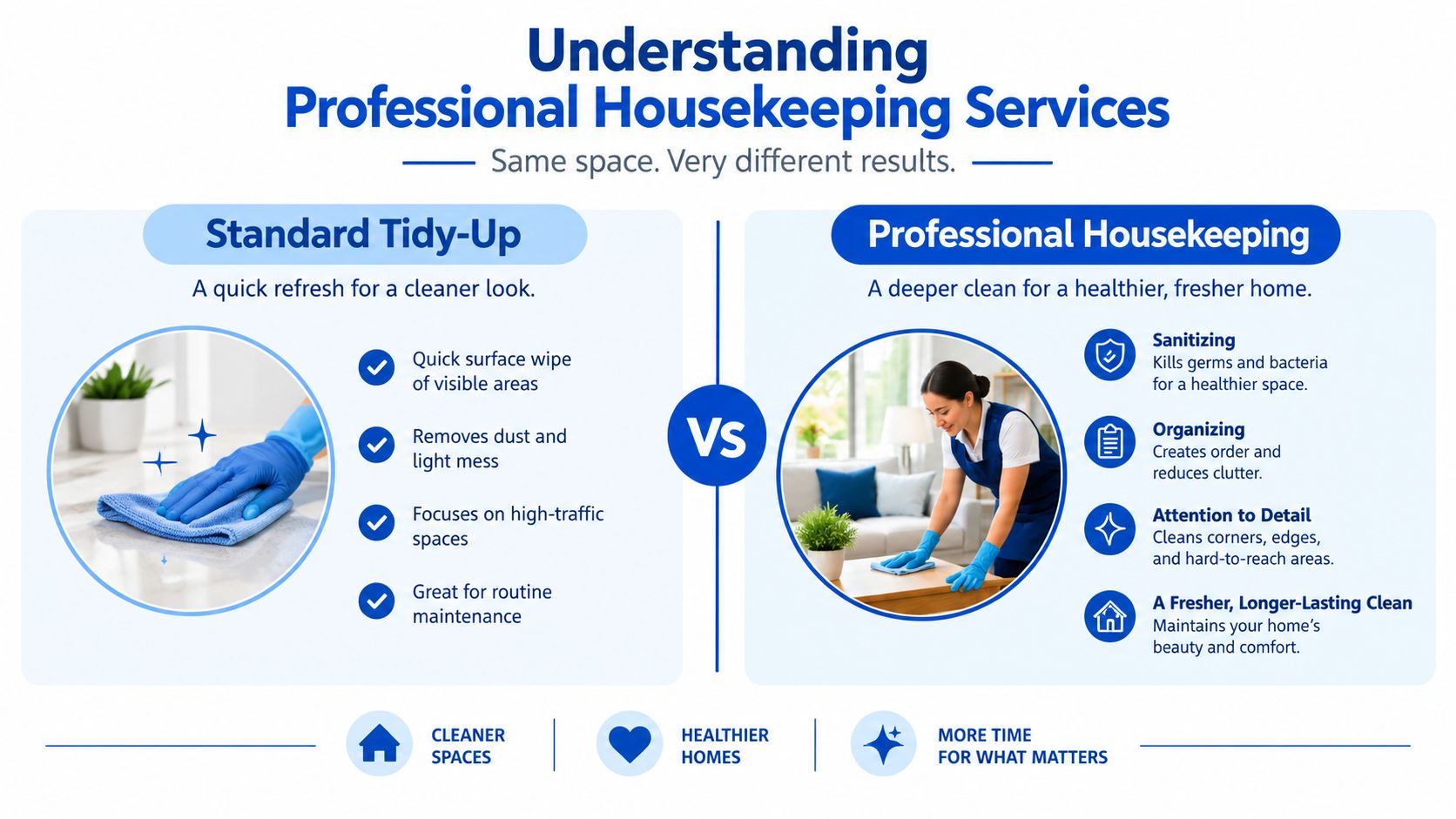
Four service types homeowners actually use
Recurring cleaning handles maintenance. Weekly, biweekly, or monthly visits can cover kitchens, bathrooms, floors, dusting, high-touch surfaces, and agreed household tasks such as changing linens. This option suits busy professionals, families with children, and property managers who need a dependable baseline rather than a dramatic reset every time.
Deep cleaning targets accumulated buildup and neglected details. That can include baseboards, cabinet fronts, grout, fixtures, corners, and areas behind or beneath movable furniture. I recommend it before starting a recurring plan if the home has gone a long time without professional attention.
Move-in and move-out cleaning supports a property transition. The scope commonly expands to inside cabinets, appliances, closets, trim, and corners because the home is empty and every surface is visible. Sellers use it to improve presentation, while buyers use it to start with a clean baseline.
Post-construction cleanup is different again. Renovations leave fine dust on horizontal surfaces, inside drawers, around trim, and in ventilation-adjacent areas. A crew needs to work methodically and coordinate with contractors, flooring installers, and homeowners instead of treating the project like a normal residential visit.
Match the service to the situation
A quick standard tidy-up may make a room look presentable. A professional service should produce a defined result that you can inspect. That difference is especially important in older homes around Newton and Wellesley, where intricate trim, hardwood floors, tile details, and multiple levels can expand the work substantially.
Hotels use room-capacity benchmarks because labor and quality are directly connected. A commonly used housekeeping range is 12 to 18 rooms per attendant during an eight-hour shift, while checkout rooms often take 20 to 35 minutes and stayover rooms about 15 to 25 minutes, as described in this hotel housekeeping management guide. Residential homes don't translate perfectly into hotel rooms, but the principle applies: more rooms, more clutter, more surfaces, and more detail require more time.
Benefits of Hiring Local Housekeeping Professionals
Convenience is only the first benefit. The stronger argument for hiring a professional team is that the service creates a repeatable system for a home that otherwise keeps slipping back into disorder.
A recurring plan protects time. Busy homeowners in Wayland, Weston, and Needham often don't need help because they lack cleaning knowledge. They need help because cleaning competes with work, childcare, errands, and home maintenance. A scheduled visit removes the need to negotiate the task every weekend.
The right service solves a specific problem
For a household with pets or seasonal allergies, a thorough cleaning routine can reduce the amount of visible dust, hair, and tracked-in debris. It won't eliminate every indoor-air concern, but consistent attention to floors, upholstery, bathrooms, and high-touch areas creates a cleaner living environment than sporadic surface wiping.
Deep cleaning serves a different purpose. It reaches neglected areas that routine visits may not cover, including buildup around fixtures, dust on trim, and residue in kitchens and bathrooms. The practical payoff is a home that's easier to maintain afterward, because the team isn't repeatedly working through layers of old grime.
Move-in and move-out cleaning protects the timeline of a transaction. A buyer can focus on unpacking instead of scrubbing cabinet interiors. A seller or landlord can present an empty property without distracting residue, fingerprints, or debris. For real estate professionals, a dependable cleaning appointment also reduces one more variable between listing preparation, showing activity, and turnover.
Post-construction cleaning deserves the most caution. Fine renovation dust settles after the contractors leave and can remain on surfaces that look clean at first glance. Professionals can work room by room, use appropriate tools for the material, and identify areas that need a second pass instead of assuming the project is finished because the visible debris is gone.
Practical rule: If the home has a deadline, renovation history, or a noticeable buildup problem, don't book a basic maintenance visit and hope it stretches far enough. Buy the service designed for the condition.
Local knowledge affects the result
A local team understands that a large Colonial in Weston, a compact Newton condo, and a busy Wayland family home require different scheduling and access plans. Travel time, parking, stairs, floor materials, pets, and renovation coordination all affect the appointment. A useful local house-cleaning evaluation should focus on scope and accountability, not just whether a provider advertises a low starting price.
Industry measurement also shows why labor planning matters. Housekeeping operators increasingly track hours per occupied room and minutes per occupied room, with reported HPOR benchmarks of 0.711 hours for select-service properties and 0.843 hours for full-service properties. Select-service room attendants improved from 24.01 minutes per occupied room to 22.82 minutes, according to this 2025 labor-cost benchmarking report. A home-cleaning company may use different measures, but the lesson is clear: organized routes, realistic assignments, and adequate time support consistent quality.
How to Prepare Your Home for a Cleaning Service
Preparation doesn't mean cleaning the home before the cleaners arrive. It means removing obstacles that force the crew to spend paid time sorting, searching, or moving personal belongings instead of cleaning.
Start with surfaces. Put away clothing, toys, paperwork, dishes, toiletries, and loose items from counters, floors, stairs, and furniture. If you want a particular desk, dresser, or countertop cleaned thoroughly, the team needs access to the surface.

Use this preparation checklist
Clear the working areas. Pick up floor items and move small objects from surfaces. Don't expect a cleaner to decide where personal belongings belong.
Secure valuables and sensitive documents. Put jewelry, cash, medication, passports, financial papers, and fragile heirlooms in a private location. This protects your property and prevents confusion.
Create clear pathways. Open the rooms, open interior doors, and make sure the crew can reach bedrooms, bathrooms, utility areas, and stairways. Tell the provider about rooms that should remain closed.
Make a pet plan. Keep dogs, cats, and other animals in a safe room or arrange another location if they become anxious around vacuums, unfamiliar people, or open doors. Share feeding or access instructions in advance.
Confirm entry details. Decide whether someone will be home, whether a key or smart-lock code will be used, and who should receive completion updates. Never leave access instructions vague.
Identify delicate surfaces. Point out natural stone, unfinished wood, specialty finishes, antique fixtures, delicate grout, or flooring with specific care requirements. A cleaner can't protect a material they don't know about.
Separate add-ons from the main scope. Laundry, linen changes, interior appliances, cabinets, and organizing may require extra time. Write them down before the appointment rather than mentioning them as the crew is packing up.
A professional cleaning checklist helps both sides agree on priorities. The best preparation is a short written note that identifies the rooms, surfaces, exclusions, pets, access method, and any deadline.
A clear home and a clear scope give cleaners the best chance to deliver a detailed result.
Eco-Friendly Cleaning vs Standard Options
The green-versus-standard decision should start with household needs, not marketing language. Families with young children, pets, fragrance sensitivities, or environmental priorities may prefer lower-impact products. Other homeowners may prioritize a particular disinfecting or degreasing capability for kitchens, bathrooms, or post-construction residue.
Consumer preference is moving toward greener options. One industry source reports that 41% of consumers prefer eco-friendly cleaning products, while 78% globally prioritize green cleaning solutions, as summarized in this eco-friendly cleaning market coverage. Those figures describe preferences, not a guarantee that every green product performs equally well.
Compare the actual trade-offs
| Cleaning approach | Often suits | What to confirm |
|---|---|---|
| Standard products | Homes needing strong degreasing, mineral-residue removal, or familiar product performance | Product names, ventilation practices, surface compatibility, and fragrance policies |
| Eco-friendly products | Households prioritizing reduced chemical exposure, lower fragrance, or environmental considerations | Ingredients, certifications, substitutions, and whether the products handle the requested soil |
| Hybrid approach | Homes that want gentler routine products with targeted solutions for difficult areas | Which products are used in each room and who approves exceptions |
“Eco-friendly” doesn't automatically mean harmless, and “standard” doesn't automatically mean unsafe. Ask the provider to identify the products used on stone, hardwood, painted cabinets, tile, and glass. A cleaner who uses the same product everywhere can damage finishes regardless of the label.
Green options can also make sense for recurring maintenance because the team can address soil before it becomes heavy buildup. Standard products may be more suitable for a concentrated move-out or renovation cleanup, depending on the material and residue. The right provider should explain the choice instead of treating “green” as a slogan.
The most useful conversation includes your priorities: fragrance, children, pets, asthma concerns, flooring, countertops, and the level of detail expected. Review the provider's eco-friendly cleaning product guidance, then ask which products the crew will bring to your home.
Why Choose Sunny Day Pro Services
In a Wayland or Newton home, the right cleaning company should make the scope clear before the crew arrives. You should receive a written quote, a room-by-room checklist, reliable arrival updates, and a defined process for correcting missed work. A low headline price means little if the provider leaves the details unresolved.
Sunny Day Pro Services serves homeowners in Wayland, Newton, Needham, Wellesley, Weston, and surrounding Massachusetts communities. Its services cover recurring maintenance, deep cleaning, move-in/move-out cleaning, and post-construction cleanup. Flexible scheduling and eco-friendly options give households room to match the service with the property, the household, and the requested level of detail.
Accountability matters more than buzzwords
A background-checked team sets a clearer standard for home access and trust. A satisfaction guarantee gives you a stated remedy when the completed work falls short. Ask how either policy works in practice, including who handles the complaint, how quickly the company responds, and whether the crew returns to correct the problem.
For pricing in the greater Wayland and Newton area, compare quotes by service type and scope rather than by the starting figure alone. A recurring visit, a detailed deep clean, a move-related appointment, and post-construction cleanup require different time and preparation. The quote should reflect the home's size, condition, access, pets, frequency, and requested add-ons.
Sunny Day Pro Services also handles tile and flooring installation for porcelain, ceramic, marble, and granite, as well as custom backsplashes and full-room remodels. That combination can help during renovation work when one homeowner needs finish installation followed by detailed cleanup.
The booking process is straightforward
Request a fast quote. Describe the property, service type, rooms, condition, access details, pets, and deadline. Photos can clarify unusual conditions.
Choose the service and schedule. Select recurring, deep, move-related, or post-construction cleaning. List every add-on that belongs in the scope.
Review the expectations. Confirm what the team will clean, what it will not handle, which products are appropriate, and how corrections are managed.
Inspect the result. Check priority areas against the agreed scope and report missed work promptly. A satisfaction guarantee should produce a practical resolution.
Online access now affects the buying decision. The cleaning industry trends overview reports that 62% of cleaning bookings are made through mobile apps or online platforms and 41% of households use recurring cleaning services. The practical standard is clear: choose a provider that is reachable, organized, and able to document what it promised.
Questions to Ask Before Hiring a Housekeeper
A low quote can become expensive after missed tasks, surprise add-ons, or a second company hired to finish the job. Before booking, ask questions that expose the provider's staffing, scope, pricing, and correction process. In the Wayland and Newton area, the right questions matter more than polished website copy.
Protect your home and your schedule
Are your cleaners background-checked and trained? Ask who will enter your home, how the team is trained, and whether the same cleaners usually return for recurring visits. Frequent staffing changes can affect consistency and security.
Are you insured? Request proof of applicable insurance. Ask exactly what happens if a cleaner damages hardwood, natural stone, an appliance, or a valuable item. Avoid companies that answer vaguely or refuse documentation.
Who supplies the products and equipment? Confirm that the crew brings vacuums, microfiber cloths, mops, and cleaning solutions. For natural stone, hardwood, specialty tile, pets, or fragrance sensitivities, request product details before the first visit.
What exactly is included in the service? Get the room list and task list in writing. Confirm whether inside appliances, cabinets, baseboards, blinds, laundry, linen changes, and interior windows are included or priced as add-ons.
How do you price my home? A reliable quote should reflect the home's size, condition, room count, floors, access, pets, service frequency, and special requests. In Wayland and Newton, a large multi-level property should not be priced from a vague square-foot figure alone. Ask whether the quote covers the first visit, which may require more work than recurring maintenance.
What happens if something is missed? Ask how quickly the company responds, whether it sends a team back, and which exclusions apply. “We guarantee quality” means little without a defined correction process and a clear contact person.
What is your cancellation and lockout policy? Review notice periods, fees, arrival windows, and access instructions before starting recurring service. These terms matter when work, school, travel, or weather changes your schedule.
Can you handle move-out or post-construction work? Routine housekeeping does not prove that a company can remove renovation dust, detail an empty property, or meet a closing deadline. Ask for examples of relevant service scopes, not unsupported performance claims.
Look for operational proof
Google describes E-E-A-T as Experience, Expertise, Authoritativeness, and Trustworthiness. Its Search Quality Rater Guidelines explanation explains that raters use these concepts in evaluation, rather than treating E-E-A-T as a direct ranking factor. For homeowners, the same framework points to practical evidence: experienced staff, defined services, transparent policies, and honest limits.
Google's helpful-content guidance asks who created content, how it was created, and why it was created, as explained in its guidance for creating helpful content. Apply those questions to a cleaning company's website. You should be able to identify the business, service area, cleaning process, and method for handling complaints.
Article and FAQ structured data can help search engines interpret visible content, but the markup must match what visitors can read. This featured-snippet optimization resource notes that FAQ markup should not represent questions and answers absent from the page.
Sunny Day Pro Services offers recurring, deep, move-in/move-out, and post-construction cleaning, along with flexible scheduling, eco-friendly options, background-checked teams, and a satisfaction guarantee. Visit Sunny Day Pro Services to request a quote for a Wayland, Newton, or nearby Massachusetts home and confirm the service scope before booking.

