
10 Shower Tile Remodel Ideas for 2026
Explore top shower tile remodel ideas for 2026. From large-format porcelain to classic subway tile, get expert design tips for your Massachusetts home.

Is your morning shower less of a reset and more of a running list of what's gone wrong in your bathroom? Maybe the grout is cracked, the tile pattern feels stuck in another decade, or the whole enclosure looks tired no matter how much you clean it. That's usually the point when homeowners start browsing shower tile remodel ideas and realize there's a big gap between a pretty inspiration photo and a shower that performs well for years.
A shower remodel changes how the whole bathroom feels. It can make a compact hall bath feel brighter, give a primary bath a calmer spa look, or bring a dated shower in line with the rest of the house. But tile choice isn't just about color and shape. In the Boston suburbs, where homeowners expect finishes to hold up, the smartest remodels balance style, cleaning, slip resistance, and moisture control.
The big design shift over the last decade has been the move away from small, grout-heavy layouts and toward larger-format tile and slab-style looks, especially as homeowners have pushed for easier maintenance and a more integrated finish, according to Flack's Flooring shower tile design guidance. That change makes sense in the field. Grout lines are often the first thing people notice when a shower starts to age.
Below are 10 shower tile remodel ideas that work in real homes, not just in showrooms. Each one comes with the installer's perspective. What looks great, what ages well, where the labor goes, and where it's worth spending more for a better result. For homeowners in Wayland, Newton, Needham, Wellesley, Weston, and nearby communities, these are the choices that tend to deliver both beauty and fewer regrets.
1. Large Format Porcelain Tiles
Large-format porcelain is one of the safest recommendations I can make for a shower remodel. It gives you a clean, modern surface, fewer grout joints, and a layout that doesn't fight the room. In a Newton primary bath, a white matte wall tile in a larger format can make the enclosure feel calmer and taller. In a Boston condo, a concrete-look porcelain can read sleek without feeling cold.
Porcelain is also one of the strongest practical choices for wet areas. Industry guidance commonly treats porcelain as a top pick for shower enclosures because of its very low water absorption, which helps reduce staining, moisture intrusion, and maintenance burden, as explained in Lowe's walk-in shower tile guidance. That's the kind of advantage homeowners feel years later, not just on install day.
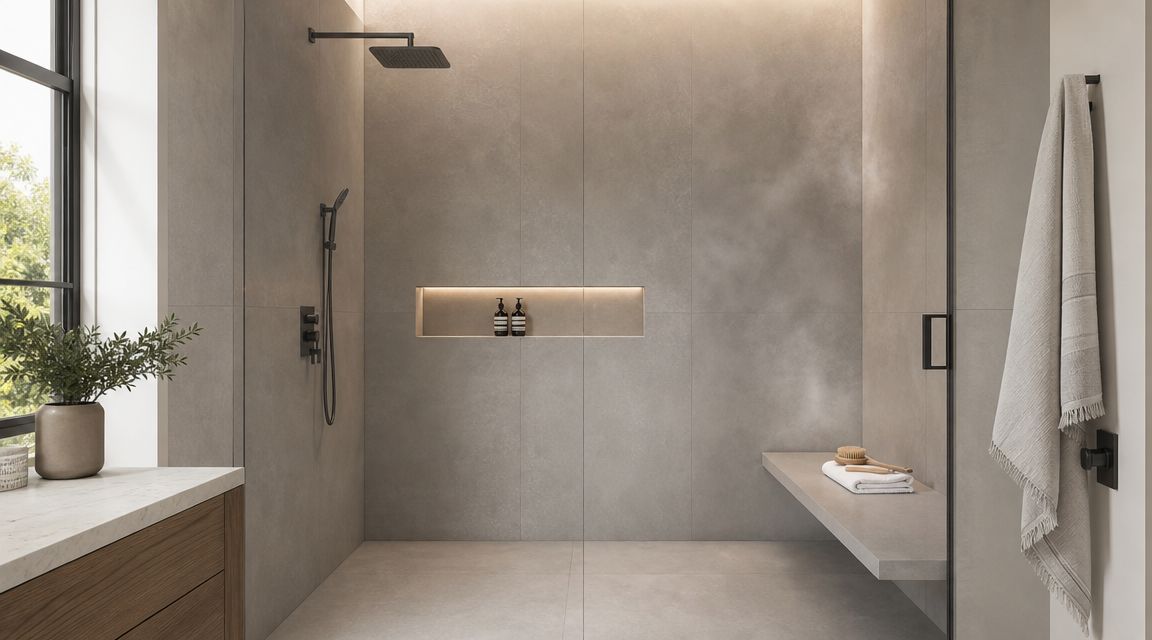
What works best in real installations
Large tile works best when the walls are flat. If they aren't, the tile will tell on the installer immediately. Lippage, awkward cuts, and crooked reveals around the niche all become more obvious with bigger pieces.
A few practical rules matter here:
- Flatten the substrate first: Cement backer board, proper shimming, and careful prep matter more with large tile than with smaller formats.
- Use mortar rated for porcelain: The tile is dense, and the setting materials need to match the product.
- Keep the layout simple: Oversized porcelain looks best with minimal interruptions and consistent joint spacing.
Practical rule: Large-format tile hides visual clutter, but it doesn't hide prep mistakes.
In Wellesley and Weston homes, marble-look porcelain in larger sizes is especially popular because it gives that upscale slab-style appearance without the upkeep burden of natural marble. If you're comparing options, Sunny Day Pro Services has a useful overview of porcelain tile installation considerations.
For resale, neutral tones usually age better than trend-driven colors. Gray, warm white, soft greige, and restrained stone looks tend to stay relevant longer than anything too dramatic.
2. Subway Tile with Modern Grout
Subway tile stays popular for one reason. It's flexible. It can lean classic in a colonial-style home in Needham, feel cleaner and more minimal in a Wayland bath, or bridge old and new in a Newton renovation where the rest of the house still has original character.
The tile itself is familiar. The grout choice is what changes the whole read of the shower. White subway with matching grout looks quieter and more contemporary. White subway with charcoal grout looks sharper, more graphic, and less forgiving of layout mistakes.
Where this style wins and where it can miss
This is a great choice when you want a timeless wall surface and don't need the room to prove anything. It's also easier to repair later than many patterned installations because replacement pieces are usually easier to source.
The trade-off is maintenance and visual busyness. Smaller tile means more joints. More joints mean more cleaning, more alignment checks during install, and more places where mildew can show if the shower isn't detailed correctly.
A few installer notes make a difference:
- Use caulk in changes of plane: Inside corners and transitions should be properly treated, not rigidly grouted.
- Be careful with dark grout: It hides staining better, but every uneven joint and spacing issue becomes more visible.
- Consider higher-performance grout: In a busy family bath, better grout can make daily maintenance easier.
I usually tell homeowners this style succeeds when the installer respects the pattern. A cheap subway tile job looks cheap because every inconsistency gets repeated across the whole wall. A well-set subway tile shower feels deliberate, even if the material itself is modest.
For traditional homes in the Boston suburbs, this remains one of the easiest ways to refresh a shower without making the bathroom feel disconnected from the rest of the house.
3. Natural Stone Tile
Natural stone changes the mood of a shower immediately. Marble softens the room. Slate adds texture and weight. Granite can bring drama when the veining and color are right. In Weston and Wellesley homes, natural stone still carries a level of presence that porcelain imitations don't fully duplicate.
That said, stone is where design ambition needs a reality check. It can be beautiful, but it asks more from both the installer and the homeowner. Stone can be more absorbent than porcelain, and in shower work, I generally treat it as a material that needs more planning, more protection, and more honest conversations up front.
Best use of stone in a shower
The smartest approach is often restraint. Use natural stone where it has the most impact and the least exposure. A feature wall, bench face, or niche surround can deliver the look without turning the whole enclosure into a maintenance project. Earlier, I noted that lower-porosity materials tend to perform better in wet areas, which is why I often reserve more absorbent stone for accent zones.
Stone gives you character. It also gives you responsibility.
Homeowners desiring genuine materials should expect proper sealing, careful cleaner selection, and a little more vigilance over time. Honed finishes are usually a better choice than polished ones in a shower because they offer a softer look and better footing under wet conditions.
A few practical points help avoid common mistakes:
- Seal before and after grouting when needed: Some stones benefit from protection during the install process.
- Avoid acidic cleaners: They can damage or dull certain stone surfaces.
- Keep grout color supportive, not competitive: Neutral grout usually lets the stone do the work.
If you're weighing luxury against upkeep, compare the long-term demands before you commit. Sunny Day Pro Services covers some of those planning considerations in this guide to marble tile installation cost.
Stone can be worth it. It just needs to be chosen by someone who values the look enough to care for it properly.
4. Mosaic and Glass Tile Accents
Accent tile works best when it stays in its lane. A band of glass mosaic, a recessed niche in a geometric mosaic sheet, or a narrow vertical strip can wake up a simple shower without overwhelming it. In Needham and Wellesley bathrooms, this is often the move that makes a remodel feel custom rather than off-the-shelf.
Where people go wrong is turning the whole shower into a patchwork of tiny pieces. It can look busy fast, and small-format installations bring a lot of grout with them. Tile inspiration galleries show just how broad shower tile design has become, with collections like Floor & Decor's shower idea gallery presenting many different looks across ceramic, porcelain, stone, and patterned tile. That variety is great for design freedom, but it also makes editing more important.
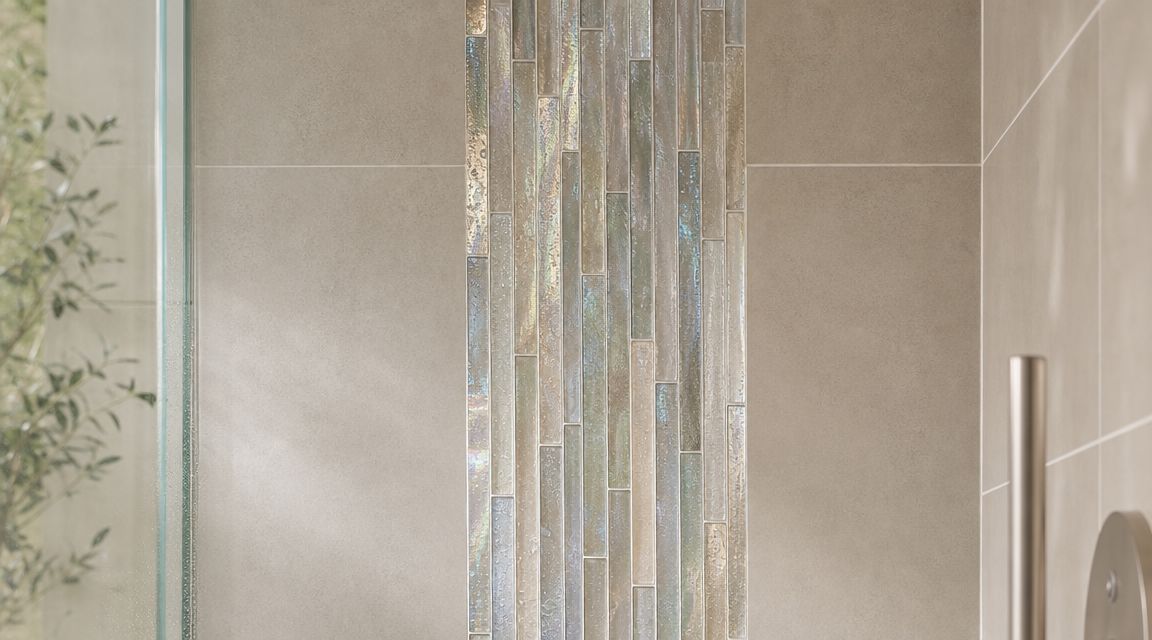
Smart ways to use accent tile
The best installations usually pair accent materials with a calm field tile. Large porcelain on most walls, then mosaic in one place, is a safer formula than trying to make every surface interesting.
Use accents intentionally:
- Frame a niche: This draws attention to a functional feature and contains the detail.
- Run a vertical stripe: It adds height and can align with a fixture wall.
- Highlight one wall only: That keeps the shower from feeling chopped up.
Glass tile can be beautiful because it catches light, but it also needs careful setting and cutting. The edges, adhesive coverage, and backing conditions matter. Mosaic sheets save time in theory, but they still need adjustment to prevent sheet lines from telegraphing through the finished wall.
In a compact shower, one accent area usually beats a full decorative treatment. The eye gets a focal point, and the rest of the enclosure stays easier to clean and easier to live with.
5. Textured and Slip-Resistant Tiles
If the shower floor feels slick, the design has already failed a basic test. This is why textured and slip-resistant tile deserves more attention than it usually gets. It may not be the first thing homeowners pin to an inspiration board, but it's one of the first things they appreciate once the shower is in daily use.
In family homes around Newton and Wayland, I like subtle texture more than aggressive texture. A lightly structured porcelain floor can provide better footing without turning routine cleaning into a chore. Deep grooves, heavy relief, and overly rough surfaces often look good in a sample and become annoying in real life.
Balancing safety with maintenance
The best floor tile for a shower usually lands in the middle. Enough texture to help underfoot. Not so much that soap residue clings to every depression. Pairing a textured floor with smoother wall tile usually gives the right balance.
A few decisions matter here:
- Keep wall and floor jobs separate: Smooth walls are easier to wipe down. The floor can carry the traction role.
- Watch the finish, not just the color: Two gray porcelains can behave very differently when wet.
- Ask how it cleans: If the tile traps residue, you'll notice quickly.
For smaller showers, tile guidance often favors large-format tile, vertical patterns, and light finishes to reduce visual clutter and make the room feel bigger, while also reducing grout line density, according to clé's small bathroom shower tile ideas. That principle helps on walls especially well, while the shower floor still needs a texture and size that performs safely.
If you're choosing among floor and wall materials together, Sunny Day Pro Services outlines useful selection factors in how to choose tile for a bathroom.
Textured tile is a practical choice, but practical doesn't have to look institutional. The good products today can feel polished, quiet, and still safety-minded.
6. Geometric Pattern Tiles
Geometric tile is for homeowners who want the shower to have a point of view. Hexagons, chevrons, and interlocking shapes can give a bathroom real personality, especially in newer homes where the architecture is cleaner and more minimal. In Needham or Newton, a geometric feature wall can make a plain shower feel custom to the house.
The mistake is using too much of it. Pattern has visual weight. Once every wall starts competing, the room can feel smaller and busier than it is.
Layout matters more than homeowners expect
Geometric tile is less forgiving than plain field tile. Alignment at corners, pattern centering, and cuts around valves all have to be planned before the first piece goes up. If the layout drifts, the eye finds it immediately.
A strong pattern needs discipline. If the lines don't land where they should, the whole wall looks off.
That's why I usually recommend one patterned wall or a contained zone rather than full coverage. A hex wall behind the shower fixtures, for example, can create a focal point while the surrounding walls stay simple.
Keep these points in mind:
- Pair it with solids: Let one tile be expressive and the other stay quiet.
- Mock up fixture locations early: Valve trim and shower niches can interrupt a pattern awkwardly if they aren't planned.
- Check repeat and batch consistency: Patterned products need a close look before installation starts.
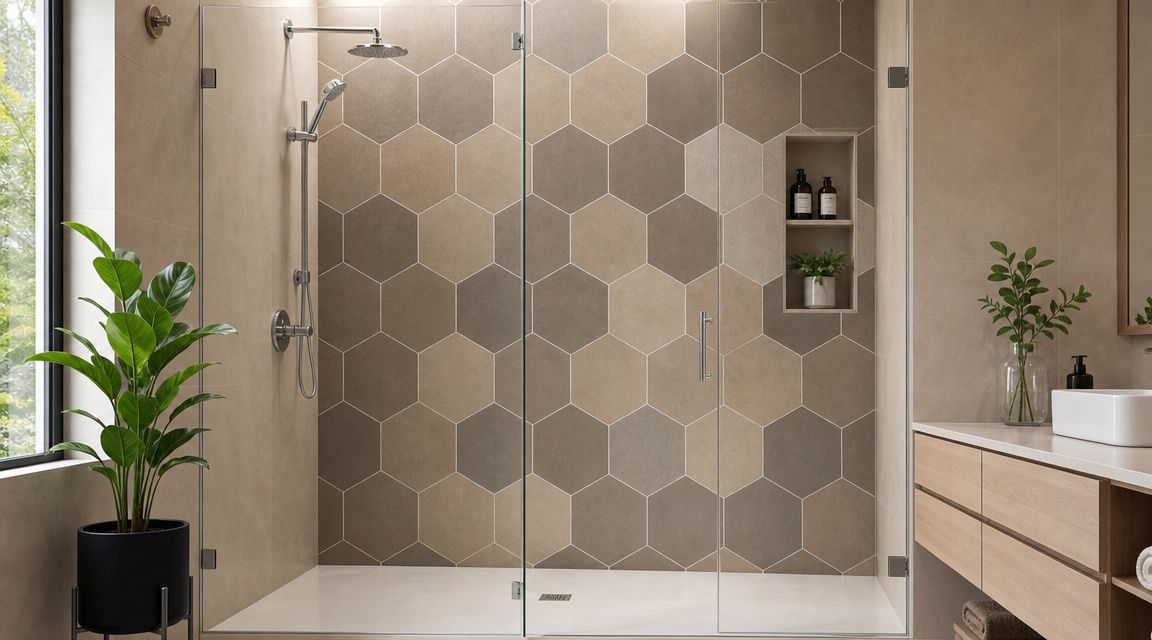
Geometric tile works best when the installer and homeowner both know where to stop. The restraint is part of the success.
7. Marble-Look Porcelain
This is one of the best shower tile remodel ideas for homeowners who want an upscale look without a stone maintenance routine. Marble-look porcelain has improved dramatically. Better printing, more convincing veining, and larger formats have made it a dependable choice for spa-style bathrooms in Weston, Wayland, and beyond.
It solves a common problem. Homeowners love the softness and movement of marble, but they don't always want the sealing, the cleaner restrictions, or the extra caution that comes with real stone. Porcelain gives them a version of that look that fits everyday use better.
How to make it look expensive instead of fake
The trick is product selection and layout. Cheap marble-look tile usually repeats too obviously, has veining that feels flat, or uses a finish that doesn't match the visual. Better products vary the faces more naturally and look more convincing once spread across the walls.
A few ways to improve the result:
- Review multiple cartons before install: You want a balanced mix of faces, not the same print clustered together.
- Use larger formats when the room allows: Bigger pieces support the slab-style effect people usually want.
- Choose a finish that fits the setting: Matte or honed often reads better in a shower than high polish.
This style also pairs well with simple niches, warm metal trim, and restrained grout. In a Newton remodel, a Calacatta-look porcelain on the walls with a quiet floor tile can create the luxury feel people want without making the bathroom high maintenance.
For many households, this is the sweet spot. It gives the design payoff of natural stone inspiration while staying practical enough for real daily use.
8. Terrazzo-Style and Speckled Tiles
Terrazzo-style tile has a lot of personality. It can feel playful, retro, artistic, or surprisingly elegant depending on the color palette. In a shower, though, the smartest use is usually selective. A speckled feature wall, a niche backdrop, or one framed panel can add character without making the room feel restless.
I like this look in homes that already have some design confidence. In a Needham powder-room conversion or a secondary bath in Newton, terrazzo-style tile can bring energy where a plain surface might feel forgettable.
Where terrazzo-style tile performs best
The pattern does a lot of visual work, so the rest of the shower should calm it down. Simple plumbing fixtures, straightforward glass, and a quiet companion tile usually make the whole composition stronger.
Use it well by following a few rules:
- Treat it as a statement surface: One feature area often has more impact than full enclosure coverage.
- Keep grout neutral: Let the tile pattern lead instead of adding another competing element.
- Check color consistency before setting: Speckled designs can shift more than homeowners expect across batches.
Busy tile can hide everyday spotting better than a flat solid color, but it also locks you into a stronger visual identity.
This style isn't for every home, and that's fine. If your goal is broad resale neutrality, there are safer paths. But if you want a bathroom that feels more personal and less catalog-driven, terrazzo-style porcelain can deliver that without sacrificing durability.
Used carefully, it adds charm. Used everywhere, it can wear out its welcome.
9. Subway Tile with Contrasting Border Frames
This is a more refined version of standard subway tile. Instead of stopping at a simple field of white tile, the installation uses a border frame, trim, or contrasting perimeter detail to create structure. It works especially well in transitional bathrooms where you want some architectural definition but don't want a highly modern or highly decorative wall.
In older Newton or Wellesley homes, this can be a smart way to respect the house while still freshening the bathroom. The shower feels more custom, but the core material remains familiar and durable.
Why this approach feels more finished
Border framing gives the eye a stopping point. It can outline a shower wall, frame a niche, or create a panel effect that echoes millwork elsewhere in the home. Black trim with white subway tile feels crisp and current. A stone border can soften the contrast and read more traditional.
The details need to be planned, not improvised. Border thickness, corner treatment, and alignment with fixtures all matter. If the frame dies awkwardly into a corner or misses the niche lines, the whole concept looks accidental.
A few ways to get it right:
- Align the frame with major elements: Valve trim, shower head centerline, and niche edges should all be considered.
- Use trim pieces designed for clean terminations when possible: They usually finish better than improvised edge solutions.
- Keep the field tile quiet: The border is the detail. The main wall doesn't need to compete.
This style works best for homeowners who like classic materials but still want the shower to feel intentionally designed. It's subtle, which is part of why it tends to age well.
10. Holistic Moisture Management Systems with Tile
The most important shower remodel idea isn't visible in the finished photos. It's the moisture management system behind the tile. Homeowners understandably focus on tile shape, color, and pattern first. Installers know the shower succeeds or fails at the waterproofing layer, the substrate, the transitions, and the way the full assembly is built.
This is not optional. A beautiful shower over weak prep is just a delayed repair bill.
What a lasting shower system actually includes
The best remodels optimize the whole system, including substrate, waterproofing membrane, mortar, and tile, rather than focusing only on the visible finish, as described in the earlier cited Lowe's guidance. That systems-based thinking is what separates a shower that still performs years from now from one that starts showing trouble early.
Here's the video I'd want any homeowner to watch before approving a shower build:
A proper shower assembly usually requires:
- A stable substrate: Walls and floors need to be flat, secure, and suitable for tile.
- A real waterproofing strategy: Membranes, seams, corners, penetrations, and drain transitions all need to work together.
- Correct treatment at movement points: Corners and changes of plane need flexibility where appropriate.
- Ventilation that supports the assembly: A good shower still benefits from a bathroom that dries properly after use.
Most shower failures start behind the tile, not on the face of it.
This matters even more in walk-in showers, curbless entries, and custom wet-room style layouts where water management is broader and less forgiving. In high-end showers in Weston or Wellesley, the most expensive finish in the room still depends on the least glamorous work behind it.
When homeowners ask which shower tile remodel ideas last the longest, this is the honest answer. The lasting ones are the showers where the tile selection and the moisture-control system were planned together from the start.
10 Shower Tile Remodel Ideas: Comparison
From Idea to Installation Bringing Your Vision to Life
Good shower design starts with taste, but lasting shower remodeling starts with decisions that hold up after the excitement of the remodel is over. That's why the best shower tile remodel ideas aren't just attractive on a screen. They make sense for the size of the room, the way your household uses the space, the amount of maintenance you're willing to take on, and the quality of the assembly behind the surface.
For some homeowners, that means large-format porcelain because it reduces visual clutter and cuts down on grout maintenance. For others, it means subway tile with a sharper grout strategy, marble-look porcelain for a luxury feel without stone upkeep, or a restrained accent wall that adds personality without making the shower harder to clean. There isn't one right answer for every bathroom. There is a right answer for your bathroom, your house, and your priorities.
In the Boston suburbs, that local context matters. A sleek walk-in shower in a newer Weston home may call for oversized porcelain, warm metal trim, and a quiet niche. A bath remodel in a Newton Victorian may benefit from subway tile, border framing, and details that feel appropriate to the architecture. A busy family bathroom in Needham may need safer floor traction, low-fuss surfaces, and a layout that makes cleanup easier at the end of the week.
The practical trade-offs are where most remodel decisions get better. Natural stone can be beautiful, but it asks more of the homeowner. Patterned tile can be striking, but it needs discipline in layout and a calm supporting cast. Texture helps with safety, but too much texture can turn routine cleaning into a chore. Large-format tile creates a continuous look, but only if the wall prep is excellent. These aren't reasons to avoid those materials. They're reasons to choose with your eyes open.
The biggest decision still isn't visible after the project is finished. Waterproofing, substrate prep, drain integration, and movement-joint treatment are what protect the framing, subfloor, and surrounding finishes. If those parts are skipped, rushed, or improvised, even premium tile won't save the project. Homeowners often shop for tile first and ask about waterproofing later. The better sequence is to plan both together.
That's the difference a professional installer brings to the process. An experienced tile team doesn't just help you choose something attractive. They help you avoid combinations that fight the space, identify products that will age well, build a layout that makes sense at corners and fixture walls, and install the full shower as a moisture-managed system. That's what gives a remodel staying power.
For homeowners in Wayland, Newton, Needham, Wellesley, Weston, and surrounding Massachusetts communities, Sunny Day Pro Services brings that combination of design judgment and technical execution. Whether you want a clean modern porcelain shower, a timeless subway layout, a stone feature, or a full custom enclosure, the goal is the same. Build something beautiful that performs the way a shower should.
If you're ready to move from inspiration photos to a real plan, get expert guidance before the first tile is ordered. The right layout, the right material, and the right installation system will save far more frustration than any trend ever could.
If you're planning a shower remodel in Wayland, Newton, Needham, Wellesley, Weston, or a nearby community, Sunny Day Pro Services can help you choose the right tile, build the right waterproof system, and install a shower that looks sharp and lasts. Reach out for a professional consultation and quote.

