
Slip Resistant Tile: Selection & Ratings
Selecting slip resistant tile for your bath, kitchen, or patio? Our 2026 expert guide covers ratings (DCOF, R-rating) to help you pick the best materials.
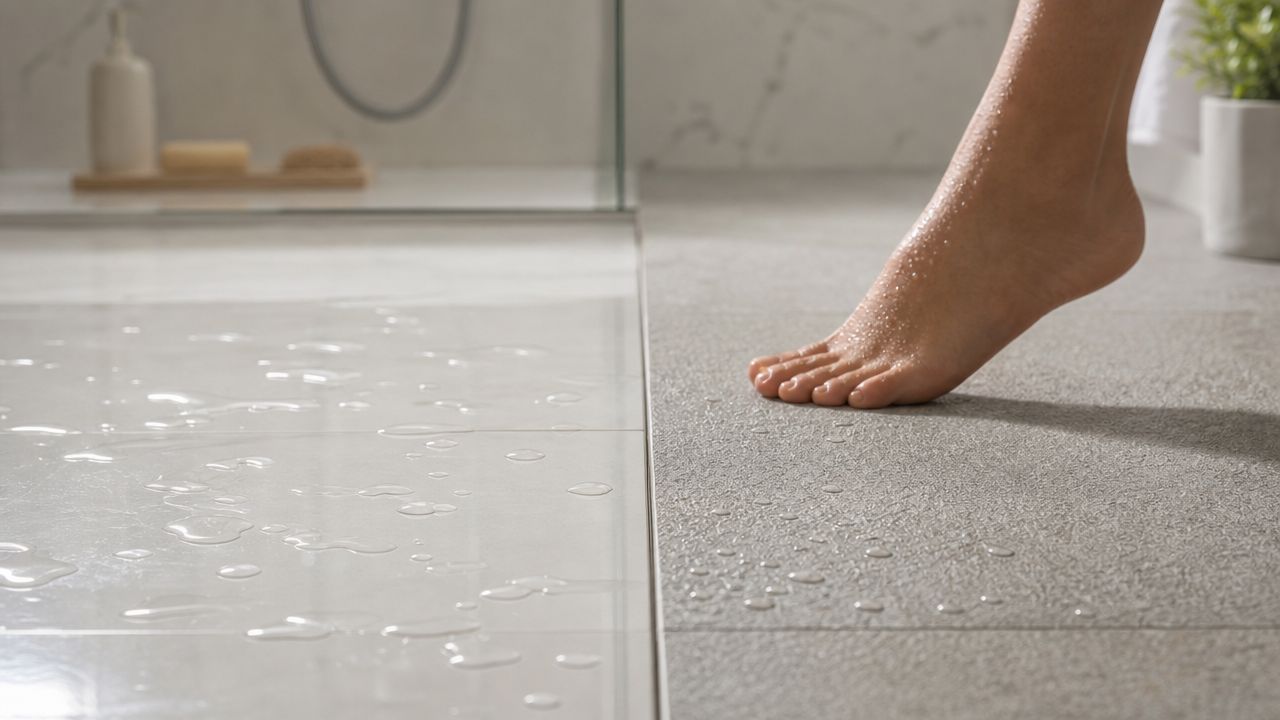
A lot of homeowners start looking into slip resistant tile right after a close call. The floor is wet from a shower, a dog tracks in slush from outside, or someone turns too fast in socks on a smooth kitchen tile. Nobody plans for that split second when a foot slides and your stomach drops, but it's often the moment flooring stops being just a design choice.
In Massachusetts homes, that risk shows up in very ordinary places. Bathrooms stay damp. Mudrooms take on snow, salt, and sand. Kitchen floors pick up grease and water. If you want a floor that looks good and feels solid underfoot all year, you need to think beyond color and pattern. You need traction, cleanability, and a surface that fits how your home gets used.
Table of Contents
- Can I make my current tile floor less slippery
- Does slip resistant tile feel rough on bare feet
- Is all porcelain tile slip resistant
- Is slip resistant tile harder to clean
- What's the best slip resistant tile for Massachusetts homes
Why Safe Flooring Is a Non-Negotiable Upgrade
A slick floor changes how people move through a house. Parents start warning kids to slow down near the tub. Older relatives brace themselves stepping out of the shower. You notice yourself taking shorter, more careful steps in the kitchen after mopping. That kind of tension wears on you.
Slip resistant tile solves a real problem because it deals with the floor where the risk starts. It gives your foot more purchase when the surface gets wet, which makes everyday spaces feel more stable and less stressful to use.
In practice, safety isn't the only reason people make this upgrade. Homeowners usually want three things at the same time:
- Better footing in wet areas: Bathrooms, laundry rooms, and entries are the usual trouble spots.
- A floor that holds up: Tile works well in busy homes because it can handle traffic, moisture, and regular cleaning.
- A finished look that fits the house: The right tile doesn't have to look industrial or overly rough.
A safe floor should feel normal to live on. If you have to think about every step, the surface isn't doing its job.
The other reason this matters in Massachusetts is seasonality. Winter brings meltwater, grit, road salt, and boots. Spring brings mud. Summer means wet feet coming in from outside. A floor that looks beautiful in a showroom can become frustrating fast if it turns slick the first time weather gets involved.
That's why slip resistance needs to be part of the selection from the start, not an afterthought once the tile is already installed.
Decoding Slip Resistance Ratings and Standards
Most homeowners don't need to memorize testing standards. They do need to know which numbers matter when comparing tile.
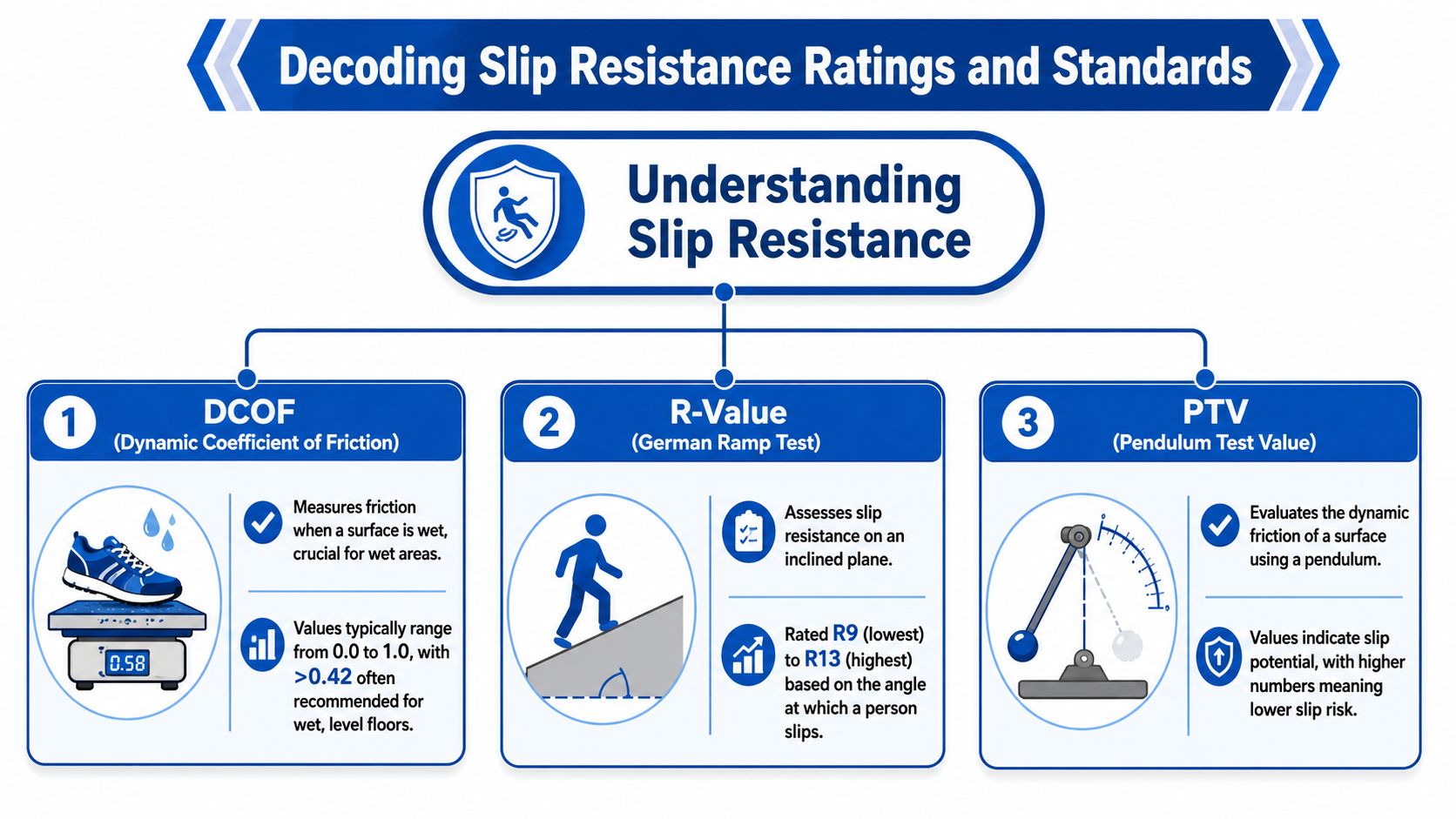
The key rating in North America is DCOF, or Dynamic Coefficient of Friction. It measures traction while moving, not traction while standing still. That matters because most slips happen in motion. Your foot is already stepping, turning, or shifting weight.
What DCOF actually tells you
For wet interior floors, the commonly cited U.S. benchmark is ANSI A326.3's DCOF threshold of 0.42 or greater for level surfaces intended to be walked on when wet, which is why specifiers focus on measured wet traction instead of judging a tile by how glossy it looks on the shelf, as explained by Crossville's guide to slip resistance and DCOF.
That number matters in a practical way:
- Below the wet-area benchmark: Usually better for dry rooms where slip resistance isn't the main concern.
- At the wet-area benchmark: Generally appropriate for level interior areas that may get wet.
- Higher traction products: Worth considering when the area sees more water, more mess, or more risk.
A common mistake is assuming a shiny tile is always slippery and a matte tile is always safe. Finish influences traction, but appearance alone doesn't tell the full story. The spec sheet does.
This visual gives a good overview of the main systems you may see when shopping.
How to read the R scale
You may also run into the R9 to R13 scale. This system is often used alongside DCOF and gives another way to think about surface grip. In that range, R9 is the least slip-resistant and R13 the most slip-resistant, as noted in SolidShape's overview of tile slip resistance ratings.
For a homeowner, the value of the R scale is context. It helps separate a lightly slip resistant surface from a much more aggressive one.
Practical rule: Don't buy floor tile for a wet room until you've looked at the actual product data. The box, sample board, and website photos won't tell you enough.
Here's the simple version of how I explain it:
- DCOF helps you judge wet traction on walked-on surfaces.
- R ratings help compare how aggressively slip resistant one surface is versus another.
- Neither number replaces common sense: Soap film, grease, mud, and cleaners can still make a good tile perform worse if the floor isn't maintained.
If you're comparing several options, ask for the technical data sheet. A homeowner who can read that sheet makes better decisions than someone choosing by color alone.
Comparing Slip Resistant Tile Materials and Finishes
People often ask which material is safest, as if porcelain, ceramic, or stone automatically determines traction. It doesn't work that way. In real jobs, the surface finish usually matters more than the material category printed on the tag.
Material matters less than most people think
For floor selection, what matters most is the measured traction of the finished tile. As covered in the rating section above, slip risk is driven by how the surface performs under wet conditions, not just by whether the tile is porcelain, ceramic, or stone.
Porcelain is a common choice for Massachusetts homes because it's dense, durable, and available in a wide range of textures. Ceramic can work well in lower-demand spaces. Natural stone can offer strong grip depending on the finish, but it usually asks more from the homeowner in ongoing care. Quarry-style surfaces tend to offer a lot of traction, though they bring a more utilitarian look.
Finish is where safety and maintenance collide
At this point, the main trade-off occurs.
A polished tile may look clean and elegant, but it's usually a poor fit for floors that get wet. A heavily structured tile gives better grip, but it can hold onto dirt, especially in mudrooms and entries where boots bring in grit and salt. Matte and lightly textured finishes often land in the sweet spot for residential spaces because they balance traction, comfort, and easier cleaning.
If you're choosing for a busy household, these are the usual patterns:
- Glossy finishes: Better reserved for walls or dry, low-risk rooms.
- Matte finishes: Often the easiest all-around answer for kitchens and bathrooms.
- Textured or structured finishes: Stronger choice for shower floors, entries, and some exterior areas.
- Natural cleft or rough stone looks: Good grip, but more maintenance and a stronger visual presence.
Here's a practical comparison to narrow the field.
| Material | Typical DCOF Range | Durability | Maintenance Level | Best For |
|---|---|---|---|---|
| Textured Porcelain | Varies by product. Check manufacturer spec sheet. | High | Low to moderate | Bathrooms, kitchens, mudrooms, patios |
| Matte Ceramic | Varies by product. Check manufacturer spec sheet. | Moderate | Low | Bathrooms, laundry rooms, lighter-use interiors |
| Natural Stone | Varies by stone and finish | Moderate to high | Moderate to high | Bathrooms, entries, premium feature spaces |
| Quarry or Unglazed Style Tile | Varies by product | High | Moderate | Mudrooms, utility spaces, high-grip zones |
For homes with constant foot traffic, pets, and outdoor mess, it also helps to compare your flooring choices against other wear-heavy options. This guide on high traffic tile flooring is useful if you're trying to balance traction with long-term durability.
Where to Install Slip Resistant Tile in Your Home
The right tile depends on where it's going. A bathroom floor, a front entry, and a backyard patio all deal with different kinds of moisture and different kinds of dirt.
Bathrooms and showers
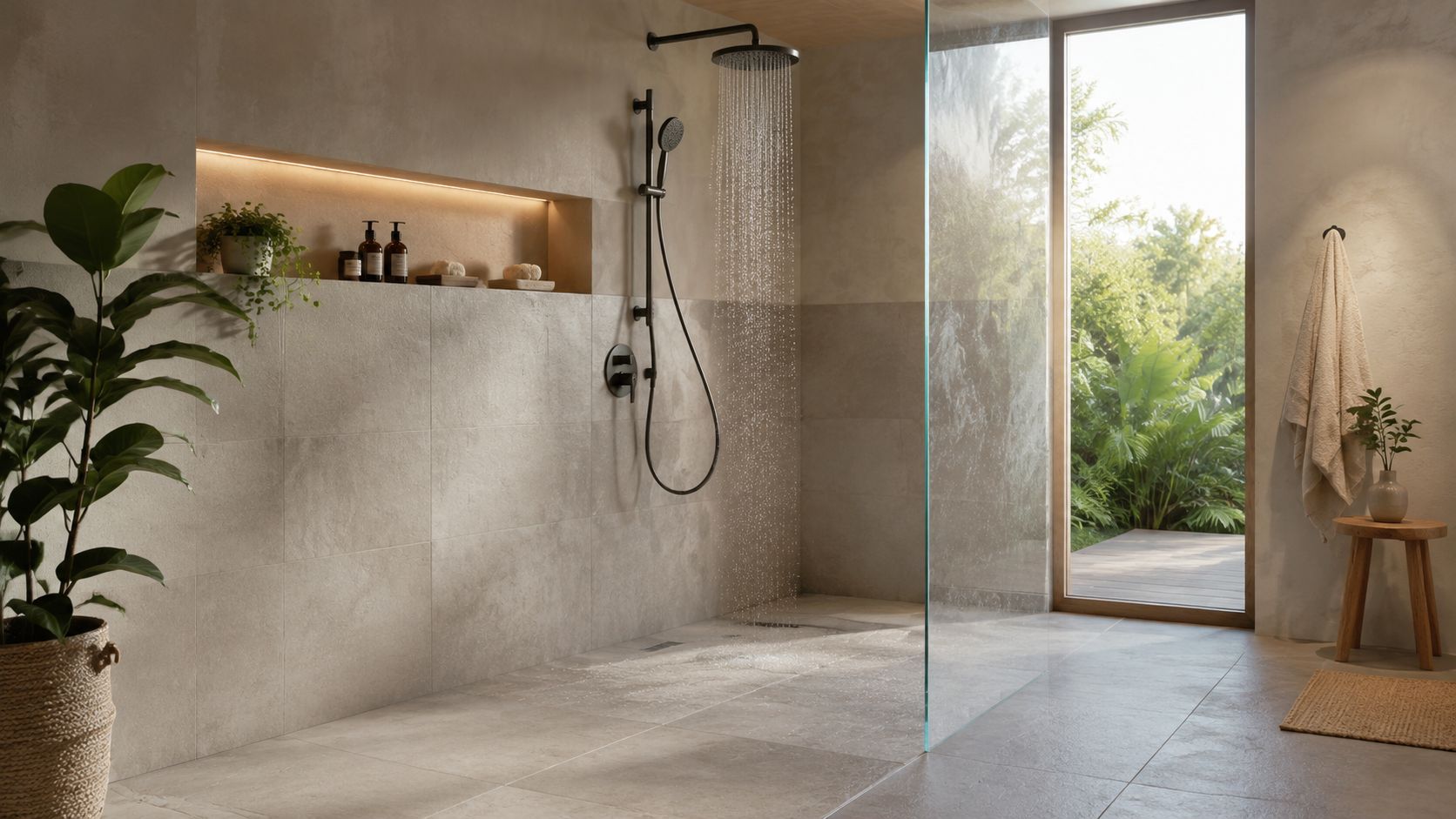
Bathrooms need traction without feeling harsh under bare feet. For the main bathroom floor, many homeowners do well with a matte or lightly textured porcelain tile that's comfortable to stand on and easy to keep clean.
Shower floors usually need more grip than the rest of the room. For higher-moisture or higher-risk applications, many manufacturers and guidance documents target DCOF 0.60 or greater as a stronger benchmark, which is why that level is often treated as important for areas like shower floors, according to Johnson Tiles' slip resistance guidance.
Good fits here include:
- Small-format porcelain mosaics: More grout joints can improve footing.
- Textured porcelain: Easier to coordinate with larger bathroom floor tile.
- Certain stone finishes: Best when the homeowner understands the upkeep.
Kitchens and laundry rooms
These spaces deal with quick spills, not constant standing water. That changes the decision. You want enough grip for safety, but not so much texture that grease, dust, and mop residue become a headache.
For most kitchens, a matte porcelain floor is the practical choice. It hides smudges better than polished tile and doesn't fight you during cleaning. Laundry rooms benefit from the same thinking, especially around washers, utility sinks, and exterior doors.
In kitchens, the wrong tile usually fails in two ways. It either gets slick when damp, or it grabs every bit of grime and becomes hard to clean.
Entryways and mudrooms
Massachusetts weather really affects tile selection. Snow melts off boots. Sand and salt grind into the surface. Spring and fall bring mud. The best mudroom tile isn't just slip resistant. It also needs to hide dirt reasonably well and clean up without constant scrubbing.
Textured porcelain is usually the strongest fit because it handles moisture and grit better than more delicate surfaces. Mid-tone colors also help. Very dark tile can show salt residue. Very light tile can make every muddy footprint obvious.
Outdoor patios and walkways
Exterior tile has a different job. It needs traction in wet weather and has to stand up to freeze-thaw conditions common in Massachusetts. For most homes, that points people toward outdoor-rated porcelain with a more structured surface.
Avoid choosing exterior tile as if it were just an extension of your indoor living room. Outdoor surfaces need a tougher finish, better grip, and proper installation details so water moves off the surface instead of sitting on it.
Installation and Maintenance for Lasting Safety
A slip resistant tile can lose a lot of its value if it's installed badly or cared for the wrong way. Safety comes from the full system: substrate, layout, slope, grout, and cleaning habits.
Installation details that affect traction
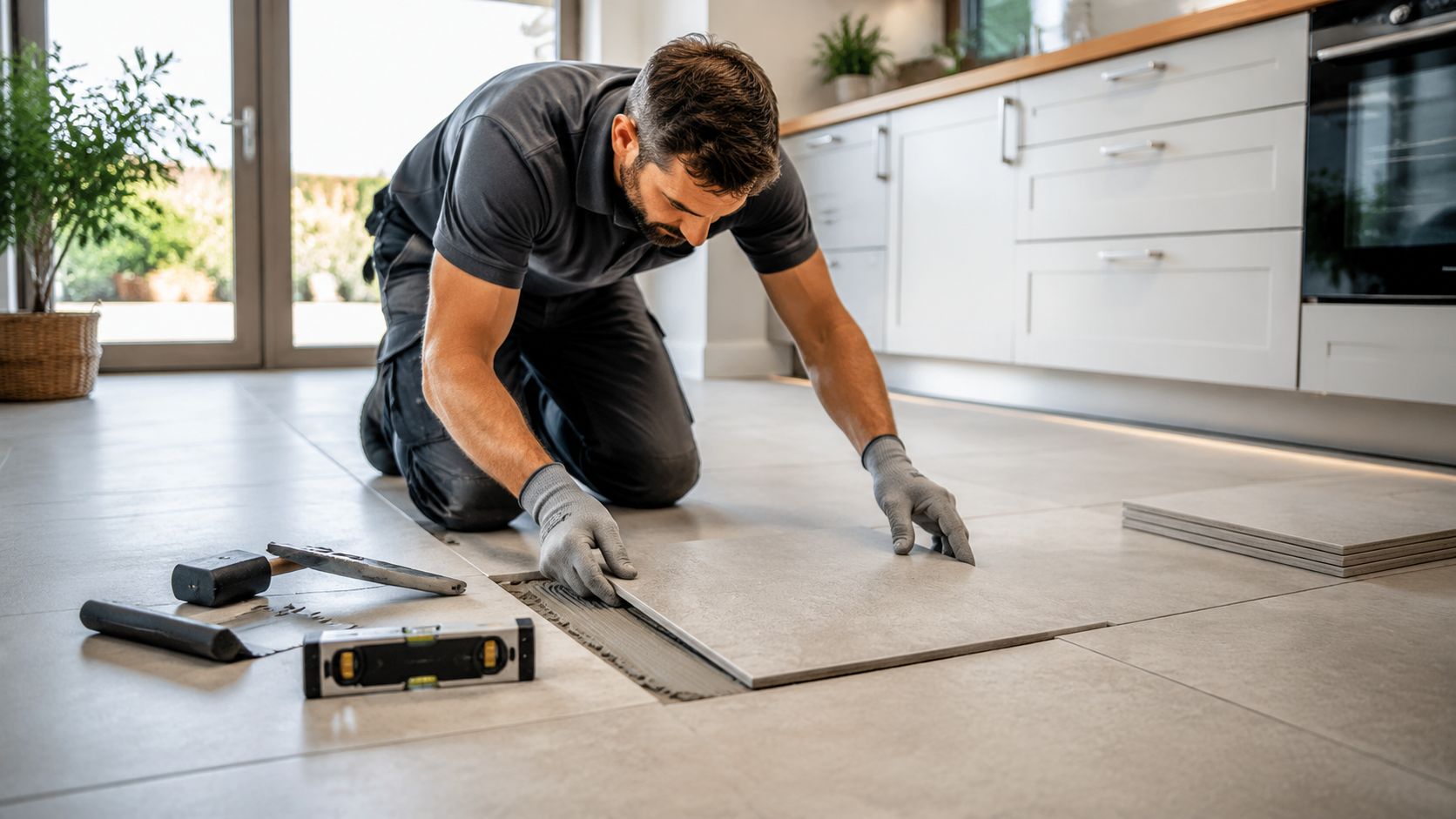
The surface has to be flat where it should be flat and sloped where it should be sloped. Uneven tile edges create trip points. Poor shower pitch leaves standing water. Oversized tile on a small shower floor can make it harder to form a clean slope and reduce the extra grip that comes from more grout joints.
A few details matter more than homeowners expect:
- Proper substrate prep: Tile won't stay safe on a floor that moves.
- Correct wet-area slope: Especially important in showers and exterior areas.
- Thoughtful tile size selection: Smaller formats often work better on shower floors and awkward transitions.
- Clean grout installation: Grout lines can help traction, but only when the layout is planned well.
Cleaning methods that preserve slip resistance
The biggest maintenance mistake is leaving behind a film. Soap residue, grease, mop solution, and dirty rinse water can all make a textured floor perform worse. People blame the tile when the actual problem is buildup.
Use a cleaner that matches the tile type and rinse thoroughly when needed. Avoid waxes, shine boosters, or anything that leaves a coating. On textured floors, a soft brush or scrub attachment often works better than trying to mop dirt across the peaks and valleys of the surface.
If you want a solid starting point for care, this guide on the best way to clean tile floors covers practical routines that help preserve both appearance and grip.
Maintenance note: A textured tile still needs to be clean to stay safe. Dirt in the texture can reduce the traction you paid for.
Balancing Safety Aesthetics and Your Budget
Most homeowners don't want a floor that looks commercial. They want something clean, modern, and easy to live with. That's reasonable. The good news is you don't have to choose between a safe floor and an attractive one.
Where homeowners usually compromise too early
The first compromise usually happens in the showroom. A polished sample catches the light, feels smooth in the hand, and looks high-end. Then it ends up in a bathroom, mudroom, or kitchen where real life hits it with wet shoes, dog paws, and winter slush.
The second compromise happens on the opposite end. Someone chooses an aggressively textured tile for maximum grip, then finds it harder to clean than expected. In a Massachusetts entry, that means mud and salt collecting in the surface texture all winter.
That's why the best choice is often not the most dramatic one. It's the tile that lands in the middle and does all three jobs well: looks good, grips well enough, and cleans without a fight.
A smarter way to choose
A good decision process looks like this:
- Match the finish to the room: Shower floors need more grip than a powder room.
- Think about who lives there: Kids, older adults, and pets change what “practical” means.
- Assess maintenance: If a tile looks like it will trap dirt, it probably will.
- Separate wall taste from floor performance: You can use smoother, shinier material on walls and safer finishes underfoot.
Budget matters, but cheap tile in the wrong finish often costs more in frustration than a better-selected product. A solid matte or lightly textured porcelain usually gives homeowners the most value because it balances appearance, durability, and day-to-day use.
Why a Massachusetts Pro Should Handle Your Tile Installation
Even the right tile can fail if the install is off. Lippage creates trip hazards. Weak subfloor prep leads to movement. Poor layout around entries, tubs, and shower pans can leave you with a floor that's harder to clean and less safe to walk on.
That risk goes up in Massachusetts homes because floors deal with seasonal moisture, tracked-in grit, and temperature swings. Bathrooms, mudrooms, and exterior transitions need careful prep and product selection, not just neat-looking grout joints.
If you're planning a bathroom project, it helps to look at the full process, not just the tile sample. This article on bathroom tile installation is a useful reference for how layout, waterproofing, and finish selection work together.
For homeowners in Wayland, Newton, Needham, Wellesley, Weston, and nearby communities, professional installation is what turns a good product choice into a floor that performs the way it should.
Frequently Asked Questions About Slip Resistant Tile
Can I make my current tile floor less slippery
Sometimes, but it depends on the tile and the problem. If the floor feels slick because of residue, a proper deep cleaning may improve traction. If the tile itself has a smooth, glossy finish that isn't suited to the space, coatings and temporary treatments may help somewhat, but they usually aren't the same as installing a surface designed for wet-foot traffic from the start.
Does slip resistant tile feel rough on bare feet
Not always. There's a big difference between a lightly textured matte finish and a heavily structured outdoor surface. Many residential bathroom and kitchen tiles are made to improve grip without feeling abrasive. The key is choosing the right texture for the room instead of assuming more roughness is always better.
Is all porcelain tile slip resistant
No. Porcelain is a material category, not a traction guarantee. Some porcelain tile is excellent for wet areas. Some is better suited to dry spaces or walls. Always look at the finish and the manufacturer's technical data rather than assuming porcelain alone makes a tile safe.
Is slip resistant tile harder to clean
Some products are, yes. Deep texture can hold dirt more than a smoother matte surface. That doesn't mean you should avoid textured tile. It means you should use stronger texture where the safety benefit justifies the extra cleaning, such as shower floors, entries, and exterior areas.
What's the best slip resistant tile for Massachusetts homes
For many homes here, textured or matte porcelain is the practical answer. It handles wet weather, muddy shoes, and regular cleaning well. The best specific tile depends on the room, the amount of moisture, and how much maintenance you want to take on.
If you're choosing tile for a bathroom, kitchen, mudroom, or patio and want a floor that looks right and performs well in real Massachusetts conditions, Sunny Day Pro Services can help you plan the right installation and next steps.

